


OPPO R15 Pro review: Red devil
The R15 Pro marries exquisite design with top-notch performance.

OPPO has managed to swiftly rise up the ranks in the smartphone segment over the last three years through a combination of aggressive marketing and a vast network of offline stores. Unlike brands like Xiaomi, which primarily sells phones online, OPPO built its business by focusing on the retail industry, opening tens of thousands of retail stores across Asian markets. The strategy has paid off handsomely for the brand, with OPPO now the fourth-largest smartphone vendor in the world. In fact, Xiaomi is now emulating the same retail model in India and China to maintain its sales momentum.
Aggressive advertising is only one half of the equation, however, and the product itself needs to match up to expectations for consumers to part with their cash. From the beginning, OPPO has focused on camera quality as a core tenet on its phones, and the manufacturer — along with sister brand Vivo — was one of the first to focus on selfie cameras.
That’s the case with the R15 Pro as well: the phone has great cameras combined with an excellent display and a stunning design that grabs eyeballs. OPPO is starting to expand into Western markets, and while the R15 Pro isn’t on sale outside of Asia just yet, it gives us an insight into the direction the brand is taking.
OPPO R15 Pro

Price: $550
Bottom line: The R15 Pro builds on last year’s R11s with an all-new design and a Super AMOLED display that’s one of the best in its category. The Ruby Red color option in particular looks incredible, and is easily one of the most evocative phones of 2018.
Pros:
- Fantastic design
- Great AMOLED screen
- Decent camera
Cons:
- MicroUSB charging port
- ColorOS needs a lot of work
See at OPPO

OPPO R15 Pro What I like
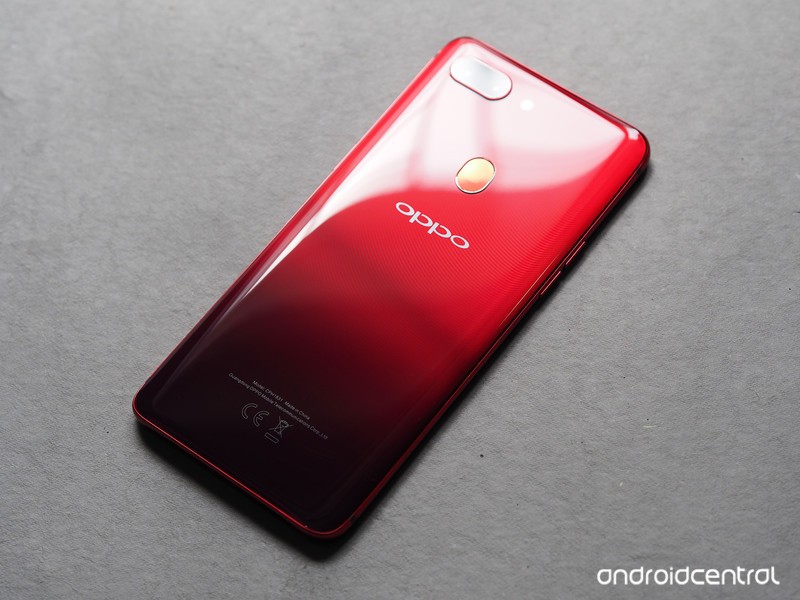
Like most phones launched this year, the R15 Pro comes with a glass front and back, with Gorilla Glass 5 protection on both sides. The highlight of the phone is the gradient pattern at the back — based on how the light strikes the device, it alternates from a vibrant red to a more crimson hue. In short, it looks stunning.
OPPO calls this particular option Ruby Red, and it’s easily one of the best designs the company has come up with thus far. The effect isn’t quite as iridescent as the Honor 10, but it is striking nonetheless.
OnePlus used the R11 as a model for the OnePlus 5 last year, but things are different this time around. Although both the R15 Pro and the OnePlus 6 offer the same 6.28-inch display, there are major differences in the design language — the R15 Pro doesn’t have rounded edges, and is marginally narrower and thicker at the back.
The R15 Pro has a power button on the right and volume buttons on the left, and there’s a headphone jack located at the bottom of the device. You get a single speaker, and it gets sufficiently loud and detailed — but it obviously isn’t as good as phones that offer stereo speakers.
The 6.28-inch Super AMOLED display is fantastic, offering vibrant colors, excellent contrast, and great viewing angles. I had no issues reading the screen in harsh sunlight, and the panel goes all the way down to 2 nits, making it conducive for reading at night. You don’t get the option to select from sRGB or DCI-P3 modes, but there is a setting to adjust the color balance. And like most phones available today, you get a blue light filter for night-time reading.
The color at the back switches from a vibrant red to a crimson hue, and it looks incredible.
On the subject of battery life, I was easily able to get day’s worth of battery consistently from the 3400mAh unit on the R15 Pro. The one downside in this area is that the phone charges over Micro-USB, like the Vivo X21. There’s no place for a Micro-USB port on a $500 phone in 2018, but for what it’s worth both Vivo and OPPO finally made the switch to USB-C with their latest flagships.
The phone features OPPO’s VOOC fast charging solution, which works in the same fashion as Dash Charge. OnePlus, in fact, licenses VOOC from OPPO and rebrands it to Dash Charge. VOOC works at 5V and 4A, resulting in a 20W charge. You get a proprietary wall charger along with a Micro-USB cable in the box, and using a third-party charger will limit the charging output to 10W.
With VOOC fast charging, you’ll be able to top up from zero to 57% in just 30 minutes, and it takes just over an hour and a half for the battery to fully charge. As is the case with most Chinese manufacturers, ColorOS comes with a host of battery-saving optimizations that let the device eke out the most out of the battery.
| Screen | 6.28-inch FHD+ Super AMOLED |
| Chipset | Snapdragon 660 |
| RAM | 6GB |
| Storage | 128GB |
| Rear Camera 1 | 16MP, ƒ/1.7 |
| Rear Camera 2 | 20MP, ƒ/1.7 |
| Front Camera | 20MP, ƒ/2.0 |
| Battery | 3400mAh |
| Connectivity | Wi-Fi 802.11 ac, BT 5.0 |
| Security | Fingerprint sensor |
| Colors | Ruby Red |
| Dimensions | 156.5 x 75.2 x 8mm |
| Weight | 180g |
| Price | $550 |
Whereas OnePlus is all about offering flagship-level performance at the $500 mark, OPPO’s main area of focus is the camera department. OPPO’s tagline continues to be “Camera Phone”, making it clear where the brand’s priorities lie. The dual 16MP + 20MP shooter on the R15 Pro does a fantastic job taking photos in daylight conditions, and is much better at handling low-light scenarios when seen against its predecessors.
While the OnePlus 6 isn’t quite a carbon copy of the R15 Pro, it uses most of the same internal components. As noted above, both phones feature the same 6.28-inch display, and the R15 Pro also has the same 16MP + 20MP dual camera arrangement at the back — including the same sensors. The OnePlus 6 has a slight edge in this area as the R15 Pro is missing out on the Snapdragon 845’s excellent image signal processor, but in most everyday shooting conditions the R15 Pro manages to hold its own in this category.
The camera app itself is identical to what you’d find on the OnePlus 6, with OPPO offering an AI-assisted selfie mode that automatically removes blemishes and cleans up your portraits. The AI feature also recognizes over 120 scenes — much like the P20 Pro. The rear camera has portrait mode, and you’ll be able to choose from various soft lighting options, including film light, tone light, and more.


OPPO also offers a face unlock feature on the R15 Pro, facilitated by the 20MP camera at the front. The feature is just as fast as what you’d find on OnePlus phones, with OPPO stating that it uses 120 different points to identify your facial patterns accurately.
If you’re not looking to use the face unlock feature, the fingerprint sensor on the R15 Pro works reliably in everyday situations. The oblong nature of the sensor ensures there’s more than enough surface area to authenticate, and it is just as fast as other phones in this category. Unlike the OnePlus 6, the R15 Pro is rated IP67 for dust and water resistance. The phone also has NFC, facilitating Google Pay.
Like last year’s R11 and R11s, the R15 Pro is powered by a Snapdragon 660, one of the best chipsets you’ll find in this category. The phone also comes with 6GB of RAM and 128GB of storage as standard, and the secondary SIM card slot doubles up as a microSD slot. I faced zero issues using the phone on a day-to-day basis, and while ColorOS has its share of quirks, it doesn’t affect the performance of the device in any way.
The R15 Pro also has a dedicated gaming mode that mutes incoming notifications when you’re in the middle of a game.

OPPO R15 Pro What needs work
Like most other Chinese manufacturers, OPPO offers a custom skin on its phones, called ColorOS. The latest version is the Android 8.1 Oreo-based ColorOS 5.0, and it includes several new features and even more customization options. You get navigation gestures much like those found on OxygenOS, retooled icons, and a new AI feature that speeds up app launch times by predicting your usage behavior.
ColorOS has plenty of customizability, but it is heavily skinned.
While the customization options are welcome, the interface itself needs a lot of work. There’s no app launcher, the settings pane needs an overhaul, and there’s a lot of duplication when it comes to the stock apps. That’s understandable given that there’s no Play Store in China, but the international version of ColorOS also comes with OPPO’s suite of apps.
For all of its foibles, ColorOS isn’t anywhere as bad as Vivo’s Funtouch OS. Install a custom launcher and an icon pack and you won’t even notice a majority of the interface quirks. In this regard, ColorOS is more akin to EMU and MIUI — there’s a lot of customization available should you want it, but you can get rid of it if you prefer a cleaner look.
OPPO R15 Pro Should you buy it?
OnePlus admitted last year that it sources components from OPPO as a way of saving costs, and even though the company announced that it sold a million units of the OnePlus 6, that’s nowhere enough the volume needed to justify the low price.
That’s where OPPO comes in: the brand is currently the fourth-largest smartphone manufacturer globally, and it has a much bigger presence in China and India, allowing it to secure better deals with component makers. Reusing components between companies makes sense from a business perspective, and unlike last year, both devices are distinct enough that most consumers don’t care about the fact that both brands are owned by the same corporate entity.
Overall, the R15 Pro is a great addition to OPPO’s mid-range portfolio. The phone builds on what we saw last year with the R11 and R11s, introducing a new Super AMOLED display and much better cameras. The design has also received an overhaul, and the Ruby Red option is one of the best-looking phones you’ll see in 2018.
4
out of 5
The R15 Pro isn’t actually up for sale outside of a few Asian markets, so it’s highly unlikely you’ll be able to get your hands on one. That said, the phone is a bellwether for OPPO’s ambitions in the mid-range segment as the brand starts making its foray into Western markets.
See at OPPO
Oxford researchers think we’re probably alone in the universe — here’s why
It’s a brainteaser asked by everyone from SETI enthusiasts to the couple of fans who liked the Suicide Squad movie: Are we all alone in the universe? While science has yet to give us an answer on the second part of that conundrum, a new paper from philosophers at the U.K.’s University of Oxford chimes in on the possibility of other alien civilizations — and, sadly, they don’t think it’s looking too good for E.T. and friends.
Their research paper explores the so-called Fermi Paradox, aka the answer to the question “where is everyone else?” Discussions surrounding this topic often involve the Drake equation, a probabilistic estimation of the number of active, communicative extraterrestrial civilizations in our galaxy, based on seven variables. The possible results are an argument that has raged for decades, leading to some investigators concluding that there’s a 53 to 99.6 percent chance that we’re alone in the galaxy, and just a 39 to 85 percent chance we’re alone in the universe.
“Our paper looks at the assumption about ‘reasonable probability,’” Dr. Anders Sandberg, one of the three authors, told Digital Trends. “Normally we speak of one-in-a-million chances and higher, but of course a probability can be arbitrarily small. People tend to be biased when they plug numbers into the Drake equation to make a rough estimate of how many alien civilizations are out there.
“We point out that in addition to estimating numbers, one really needs to estimate how certain they are: If you just multiply them together without taking into account that some of them could have very different values, the result becomes misleading. We demonstrated that if one either take past guesstimates and use their range as a crude estimate of how uncertain we are, or try to sketch what science currently know and estimate how uncertain that is, the paradox goes away.”
Ultimately, they suggest that, even if you’re a really optimistic researcher who thinks there are likely to be lots of alien civilizations, an honest uncertainty estimate “will force you to admit that there is a pretty big chance that we are alone.”
However, Sandberg doesn’t think this means we should stop searching. “Quite the opposite,” he said. “We should acknowledge that there is a nontrivial chance that it will all be for nothing, but given how important it is to figure out if we are alone — among other things it tells us a bit about our own chances of survival — we should not stop. In fact, the search for extraterrestrial intelligence is bringing us important knowledge and ideas about life, intelligence, and technology.”
Check out the researchers’ paper to see if their argument convinces you.
Editors’ Recommendations
- This algorithm identifies the key ingredients to winning a debate
- From vaping to drones, 8 tech trends we may look back on and cringe
- Debating between Apple and Samsung phones? Open your eyes a little wider
- Get your Sagan on with 60 awe-inspiring photos of the final frontier
- MIT trained an A.I. using morbid Reddit captions, and it became a psychopath
Future SD cards could be as fast as an SSD — and hold more than your hard drive
Future SD cards could operate as fast as a speedy solid-state drive (SSD), while others could hold more than data than your current computer. The SD Express will allow up to 985 megabytes per second, while the SD Ultra Capacity has the potential to hold a whopping 128 TB of data. The SD Association unveiled both new card formats on Wednesday, June 27.
The SD Express offers some serious speed by integrating PCI Express and NVMe interfaces, existing tools that essentially turn the small cards into a removable SSD, the SD Association suggests. That design requires a second set of metal connectors on the card, but aligning those additional pins with the extra row on UHS-II cards will help allow the new card category launch with compatible devices already on the market, along with offering backward compatibility.
The 985 MB per second maximum speed offers a boost over the UHS-II card speed of 600 MB per second. That enhanced speed allows the cards to keep up with high-resolution cameras, including shooting virtual reality, 8K and continuous bursts of RAW photos. Serving as a removable SSD drive, the cards can also be used for running mobile applications that require more speed, along with uses for IoT devices and automotive. The association says the first types of SD Express cards will be SDXC and SDHC, as well as the new SDUC.
The second new card type is designed not for speed, but for big capacities. SD Ultra Capacity, or SDUC, has the potential to fit up to 128 TB on a standard-sized SD card. The SDUC card system is defined as cards holding between 2 TB and 128 TB, but exactly what storage options hit the market will depend on the manufacturers.
SD Association sets the standards for memory cards but doesn’t manufacturer them — so while there are now two new SD card categories, it is unclear just how long before it is actually possible to buy one. Fast, high-capacity memory cards are among the highest priced options. A 512 GB UHS-I SanDisk runs for about $300 on Amazon, for example.
The new card types were announced during Mobile World Congress Shanghai.
Editors’ Recommendations
- Here is how to choose the best SD cards for your camera
- Photo FOMO: Faster memory cards, color-neutral filters, and ‘Adventury’ bags
- How to pick the right MicroSD card for the Nintendo Switch
- Photo FOMO: Stash 5 years of footage on this card; daily photos boost well-being
- Panasonic Lumix GH5S review
Future SD cards could be as fast as an SSD — and hold more than your hard drive
Future SD cards could operate as fast as a speedy solid-state drive (SSD), while others could hold more than data than your current computer. The SD Express will allow up to 985 megabytes per second, while the SD Ultra Capacity has the potential to hold a whopping 128 TB of data. The SD Association unveiled both new card formats on Wednesday, June 27.
The SD Express offers some serious speed by integrating PCI Express and NVMe interfaces, existing tools that essentially turn the small cards into a removable SSD, the SD Association suggests. That design requires a second set of metal connectors on the card, but aligning those additional pins with the extra row on UHS-II cards will help allow the new card category launch with compatible devices already on the market, along with offering backward compatibility.
The 985 MB per second maximum speed offers a boost over the UHS-II card speed of 600 MB per second. That enhanced speed allows the cards to keep up with high-resolution cameras, including shooting virtual reality, 8K and continuous bursts of RAW photos. Serving as a removable SSD drive, the cards can also be used for running mobile applications that require more speed, along with uses for IoT devices and automotive. The association says the first types of SD Express cards will be SDXC and SDHC, as well as the new SDUC.
The second new card type is designed not for speed, but for big capacities. SD Ultra Capacity, or SDUC, has the potential to fit up to 128 TB on a standard-sized SD card. The SDUC card system is defined as cards holding between 2 TB and 128 TB, but exactly what storage options hit the market will depend on the manufacturers.
SD Association sets the standards for memory cards but doesn’t manufacturer them — so while there are now two new SD card categories, it is unclear just how long before it is actually possible to buy one. Fast, high-capacity memory cards are among the highest priced options. A 512 GB UHS-I SanDisk runs for about $300 on Amazon, for example.
The new card types were announced during Mobile World Congress Shanghai.
Editors’ Recommendations
- Here is how to choose the best SD cards for your camera
- Photo FOMO: Faster memory cards, color-neutral filters, and ‘Adventury’ bags
- How to pick the right MicroSD card for the Nintendo Switch
- Photo FOMO: Stash 5 years of footage on this card; daily photos boost well-being
- Panasonic Lumix GH5S review
The future of surveillance: Watch this A.I. security camera spot a shoplifter
Whether it is facial recognition tech that is (allegedly) able to pick a wanted criminal out of a crowd of thousands or aerial drones which use image recognition smarts to predict fights before they take place, there is no doubt that we are living through a major paradigm shift for automated surveillance technology. But this kind of tech can have more grounded, everyday applications, too — like helping prevent shoplifters stealing goods from their local mom-and-pop corner store.
That is something seemingly demonstrated by a new artificial intelligence security camera called the “A.I. Guardman,” built by Japanese telecommunication company NTT East and startup Earth Eyes Corp. The camera uses a special pose detection system to identify behavior it deems to be suspicious. In the event that this kind of behavior is spotted, it sends an alert to the store owner’s smartphone, allowing them to take action.
While it’s seemingly not been the subject of any specific peer-reviewed papers, the camera has reportedly been shown to be capable of reducing shoplifting by up to 40 percent. Positive-sounding numbers are to be expected from a marketing department, but the technology in this case comes from a reputable source: Being based on open-source technology first developed by Carnegie Mellon University.
As noted, technology such as this is not unheard of. Heck, while it is a bit less advanced, we have even covered homebrew hacks such as a home security camera system designed to set off the garden sprinklers whenever a neighbor’s cat enters uninvited. What is promising about this technology, however, is the fact that it is a plug-and-play system which can be easily installed by shopkeepers without them necessarily having to have much technical knowledge.
Figures given to The Verge suggest that the camera will go on sale at the end of next month, priced in the vicinity of $2,150, with an extra $40 monthly subscription to cover the necessary cloud computing-based video analysis. NTT is planning to roll the camera out in 10,000 stores over the next three years.
In other words, we suggest that you get your shoplifting done as soon as possible. (Note to would-be shoplifters: We’re kidding!)
Editors’ Recommendations
- Facial recognition tech picks a suspect out of a crowd of 50,000 in China
- Report: Microsoft is building checkout-less store tech to take on Amazon
- Everything you need to know about the Samsung Galaxy Note 9
- Like a vice principal in the sky, this A.I. spots fights before they happen
- Horizon Robotics’ smart security camera uses A.I. for serious facial recognition
Microsoft wants artificial intelligence to catch cheaters on Xbox Live
The U.S. Patent and Trademark Office published a patent application filed by Microsoft that describes a method of cheat detection for games on a platform level using machine learning. The idea is to bring cheat detection outside the game itself given platforms like Xbox Live and PlayStation Network can’t detect any wrongdoings within the game. To do this, Microsoft proposes using artificial intelligence.
“A platform that hosts third-party games may not be able to detect cheating that occurs in third-party games, even where achievements in third-party games are managed at the platform level,” the patent states. “When the third-party game notifies the game platform of the improperly awarded achievement, the game platform may award the player an item in response to the achievement, thereby rewarding the cheating behavior.”
According to Microsoft, artificial intelligence would be trained to track interactions between games and gaming platforms such as Xbox Live. These “interactions” would include notifications of achievements, game scores reported to the platform, and/or a player rank achieved on the platform based upon game activities. If something abnormal is spotted, the data would be analyzed for possible cheating behaviors.
The problem is that the player data would be huge, thus recognizing cheating patterns within all that data would be easier for artificial intelligence to handle than manual techniques used by humans — and quicker, too. To create a cheating detection system on any given gaming network, it needs to start with a goals management module that provides the player with rewards based on their completed goals.
“The goals management module confirms that the player’s information meets the relevant policy, and then updates the goals information in the user accounts database to show that the goal has been met (and to award any items for meeting the goal),” the patent states. “Goals information also may contain information regarding the meeting of goals in other platform activities.”
Joining the goals management module would be a cheating detection module. Games would provide this module with information regarding gameplay and the progress of the player. Two classifying functions within this model, both trained by machine learning, would examine the patterns provided by the game to determine if the player’s account should be flagged for cheating. In other words, artificial intelligence will compare the gamer’s activities with data comprised of non-cheating gameplay to see if there’s a deviation worth flagging.
If the cheating detection module suspects foul play, the player’s account is then sent over to the enforcement module. Actions taken against the player may be based on his/her history: A first offense may be manually dealt by a human using a slight scolding in an email. A repeat offender may automatically be suspended or permanently banned from the network.
Microsoft filed its patent, “Detecting Cheating in Games with Machine Learning,” in May 2017. The U.S. Patent and Trademark Office published the application on Thursday, June 28.
Editors’ Recommendations
- Uber could soon know if you’re drunk before the car arrives to pick you up
- Waze enlists A.I.-powered analytics company Anodot to improve driver experience
- The fastest cars in the world
- The 50 best NES games of all time
- ‘Fallout 4’ and ‘The Division’ come to Xbox Game Pass, and that’s just the start
With faster, modern interface, Corel Painter 2019 expands digital art tools
Previous
Next
1 of 8

Corel

Corel

Corel

Corel

Corel

Corel

Corel

Corel
The digital art canvas Painter now has a modern, user requested interface. This week, Corel launched Painter 2019 with an updated interface, more speed, and new brushes. The update uses a redesigned user interface with a dark theme to keep the focus on the artwork and larger, refined icons for simplifying tool access.
Chris Pierce, the Corel product manager for Digital Arts, said the new user interface includes several user-requested updates. The task involved redesigning more than 650 icons along with switching the traditional light design to a dark theme. The dark theme is the new default for the program, while users can customize the interface, including switching back to the old colors while keeping the updated icons. The update also enhances the program for use on high-resolution monitors.
“Knowing our users live in Painter every day, we’ve modernized its look and feel to make the experience of creating art more fluid, streamlined, and enjoyable,” Pierce said. “These elegant updates make all the difference not only in terms of overall comfort but also to the efficiency of your workflow.”
Inside the enhanced workflow, the color options are more easily accessible with the option to pin the Temporal Colors Selector to any part of the workspace. The program will also now suggest complementary colors after using the color selector.
Corel says that, along with the new look, Painter 2019 also has several performance updates. Brushes are up to 50 percent faster while document rendering after zooming or panning has also improved. Support for the latest processors and GPUs mean that artists using a computer with AVX2 see the most speed improvements.
Painter’s brushes that mimic the real thing have also expanded in the 2019 version. Stamps is an entirely new category designed to add a specific pattern either one time, like adding a tattoo, or several times to create a background pattern, like with a flame. Unlike a brush, stamps remain separate when dragging the mouse across the canvas.
The update also includes five new pattern pens. Additional brushes were also added throughout, expanding the existing categories such as airbrushes, thick paint, watercolor, and blenders.
The update also includes new gesture controls for Windows touch devices. Two-finger rotate, pan and zoom options are included along with a double tap to reset the view. Using a stylus or mouse, a click and drag works as a new zoom shortcut.
Painter 2019 is now available, retailing for $429 or as a $229 upgrade for existing users.
Editors’ Recommendations
- MacOS Mojave brings Dark Mode, stacking, and a redesigned App Store to Macs
- Capture One makes batch editing and presets faster with latest update
- Here’s everything we know about the 2019 iPhone
- Qualcomm’s new chips aim to give security cameras A.I. smarts
- Massive Gmail redesign rollout will begin in earnest in July
Nuheara IQbuds Dynamic True Wireless Earbuds Review


Headphones are generally simple devices, with the purpose of intimately pumping tunes into our ears. In recent years, we’ve seen several updates to the traditional formula, such as wire-cut solutions and active noise-cancellation, but the general idea remains.
However, if you’ve taken a deeper look, a couple cool developments have also risen to make the headphone more than what is dictated by its musical roots. The Nuheara IQbuds are one of these innovative selected few.

They aren’t just truly wireless earbuds for convenient music listening on-the-go, but also pack intelligent noise adjustment, from canceling noise to amplifying ambient speech. We’ll cover the benefits of this neat system in our review.
Design
On the surface, the Nuheara IQbuds aren’t a big deviation from the slew of true wireless earbuds we’ve seen emerge as of late. That is, an entirely plastic construction and basic, pod-like shape. Nuheara has adopted a lot of what works for this type of headphone, such as a compact and ergonomic design. The earpieces have maybe a bit more girth than average, but this is expected from the extra technology packed in.

You’ll also see the common series of electrical plates on their undersides. These match up with corresponding pins within carrying case for effortless charging. A note is that unlike many of the type, the silos for the buds don’t have a latching mechanism (i.e. magnetic or clip). You get a lack of finesse sense, as the buds easily wobble when seated. However, the tolerance is tight enough that the contact points reliably match up, and closing the lid locks the buds in place.

In typical fashion, the case has its own battery pack, able to charge the IQbuds 4x over (at about 5 hours of playback at a time, that’s 20 hours from a full case). This is great, but if you care about slimness, the case may be a bit thick for your taste. It’s definitely pocket-able, but you’ll have a clear bulge (may be especially concerning for skinny jean wearers).
Nuheara didn’t go easy on the case’s LED indicators. There are six sizable lights in total (which switch between red and green), and it can look like a light show when they’re all lit up.

It’s not complicated; there are three indications shown. The two red interior lights are dedicated to the status of their corresponding earpieces (red for charging and green for fully charged). The four at the front display whether the case is open or not. They’re mainly used to show battery level of the case (they light up green from left to right per 25% of battery capacity). However, every time you place the buds in and close the lid, you’ll see a left and right flash of red (the buds are charging) or green (the buds are already fully charged).

Primary 4-step battery level indication of the case. There’s a small button that will toggle the lights.

You’ll see these two lights flash when you close the case, to show that the earpieces are properly inserted and charging.
Also included in the box is a very generous selection of ear tips. There are no foam tips, but four different sizes of either round or oval silicone tips. We had no problem getting a secure and fully-sealing tip.
Function
The IQbuds are top-notch when it comes to fit. The contour of the earpieces match up with the ear opening immaculately, and the angled and appropriately long nozzle (coupled with the various tip sizes) makes for an effortless insertion. You should even be able to work out with them; they stay in place as good as any true wireless earbud that we’ve tried.
 Packaging contents. Charging the case is done through a microUSB port on the back.
Regarding water resistance, Nuheara claims that they’re waterproof but didn’t formally certify them with an IP ingress rating. The company says that the internal components are coated with nano-proof water protection tech that is plentiful, so take that as you will.
The interface of the IQbuds is touch. Both earbuds have a touch panel on their outside surfaces. We’re a little wary of touch controls on true wireless earbuds due to past failed attempts, but it works pretty reliably on the IQbuds. Nuheara limits the number of functions (only within a single tap, double tap, or long tap), so there’s only a slight learning curve.

The outer, flat surface is the touch pad.

The earpiece contour and angle of the nozzle make for a great fit.
The left bud just handles play/pause or answering/ending phone calls, while the right bud turns off or switches among the dynamic sound features. Double tapping on either bud toggles the phone’s virtual assistant. One other control is a longer-press, which puts the buds into Pairing mode.

App tutorial shows how the system works

How to don the earpieces

The available functions. Note that there’s no volume or track controls. There’s no power switch either; the buds turn off when you place them in the case.
To unlock the capabilities of the IQbuds, you must install the company’s app. Within it, you’ll be able to select between presets to suit your current environment. Nuheara has options for settings we are often in, like the office, traveling, outdoor, etc. These specifically tune the earbuds transmission to be most beneficial in these situations.
For instance, if you’re outdoors, you may want to still be able to hear cars approaching. A typical sound isolation system won’t pick and choose what to isolate (hence, the “intelligence” notion behind the IQbuds), and could potentially make for a dangerous situation if you’re walking about outdoors. You can adjust the audio as you desire (complete silence or more/less ambient noise).

Nuheara’s available presets that tunes sound for common situations.

You can easily choose how much of the world to include or tune out of your audio.

Furthermore, you can isolate just speech to come through if you want.
A big advantage of this system is that you can go about your day without having to take the earbuds out. Typically, you have to take your headphones
AT&T Fined $5.25M for Two 911 Outages that Affected 15,000+ Emergency Calls
AT&T is paying the Federal Communications Commission a $5.25 million fine to settle an investigation into a pair of 2017 outages that blocked over 15,000 people from making 911 calls.
According to the FCC [PDF], during a five hour outage on March 8, 2017, 12,600 unique users across the United States saw their emergency 911 calls fail, while during a 47 minute outage on May 1, 2,600 users had 911 calls fail.
The outages, which impacted AT&T’s Voice over LTE network used by many modern smartphones, were caused by planned network changes that were implemented on those days that inadvertently interfered with the routing of 911 calls.
During the March outage, the FCC says that AT&T also failed to “quickly, clearly, and fully notify” affected 911 call centers. These kinds of outages are “unacceptable” and according to the FFC, carriers have a responsibility to both prevent outages and in the event of an outage, notify call centers immediately.
Such preventable outages are unacceptable. Robust and reliable 911 service is a national priority, as repeatedly expressed by both Congress and the Commission. Carriers have a responsibility to both prevent outages and, if they do take place, quickly inform the Commission and affected 911 call centers. FCC rules mandate that mobile phone service providers “transmit all wireless 911 calls” and inform 911 call centers of any 911 network outage that lasts 30 minutes or more.
In addition to paying a $5.25 million fine to end the investigation, AT&T is also required to implement “proactive system changes” to reduce the likelihood and impact of future 911 outages, improve its processes for notifying 911 call centers of future outages, ensure reliable 911 call completion, and file regular compliance reports with the FCC.
Tag: AT&T
Discuss this article in our forums
Instagram Stories Gain Support for Adding Soundtracks
Instagram today updated its Stories feature with the ability to add a soundtrack for background music, with Instagram offering thousands of popular songs to choose from.
You can add music to Stories by tapping to add a sticker and then choosing the new “Music” sticker that’s available in the list alongside other stickers like Location, Mention, Hashtag, and more.
Tapping on the Music sticker opens up a library that includes thousands of songs, with search tools for finding a specific mood or genre, along with a list of what’s popular. You can press the play button to hear a preview of a song.
Once a song is selected, you can then fast forward and rewind to choose the exact part of the song that fits your story. Songs can also be chosen before taking a video by swiping to the new “Music” option located under the record button. From here, you can choose a song, select a portion of the song, and then record a video as the song plays.
Instagram Stories with songs attached will play the song and a sticker will be added with the song title and the artist name.
Along with music options in Instagram Stories, Instagram today also announced that Stories has 400 million daily active users.
Instagram says the music sticker is available in Instagram 51, which is the latest version of the Instagram app in the iOS App Store. [Direct Link]
Tag: Instagram
Discuss this article in our forums
 AIVAnet