


HMD Global is releasing the $159 Nokia 3.1 in the U.S. in early July
HMD Global has successfully revived the Nokia brand, and you could do much worse than a Nokia phone these days. While the likes of the Nokia 8 Sirocco often make all the headlines, there are some excellent midrange Nokia phones that are seriously worth considering, such as the Nokia 3.1, which Nokia has announced will be coming to the U.S.
The phone will be available in the U.S. starting on July 2, and you’ll be able to get your hands on it from the likes of Amazon and Best Buy for $159 — which is actually a very decent price given the specs.
Key Specs
CPU: MediaTek MT6750
Memory: 2/3GB
Storage: 16/32GB
MicroSD storage: Yes, up to 256GB
Screen size: 5.2-inches
Resolution: 720 x 1,440
Connectivity: Bluetooth 4.2, NFC
Battery: 2,990mAh
Size: 146.3 x 68.7 x 8.7 mm
Weight: 4.97oz
Operating System: Android 8.0 Oreo
The Nokia 3.1 may not feature an edge-to-edge display like some of the recent flagship phones, but it’s not a bad-looking phone given the price. On the front, you’ll find a 5.2-inch display with a HD+ resolution and an 18:9 aspect ratio, giving it a pretty modern look. On the back of the phone, you’ll find a minimalistic look with a single-lens sensor and the Nokia logo. The phone is available in a few color options, including Blue/Copper, Black/Chrome, and White/Iron.
Under the hood, the phone is relatively powerful for the price. It boasts a MediaTek MT6750 processor coupled with either 2GB or 3GB of RAM and either 16GB or 32GB of storage, though the U.S. version seems limited to the 2GB RAM/16GB storage variant. TIf you want more storage, you can make use of the MicroSD card slot, which gives you up to 256GB of extra storage.
Perhaps one of the best things about the phone is its software — it features Android One, meaning it has a stock version of Android that gets timely updates straight from Google. That’s pretty helpful — not only is the stock Android experience the cleanest and arguably the easiest to use, but speedy updates help ensure that the phone stays as secure as possible.
We’ll update this article as we get more information about the Nokia 3.1 and its release.
Editors’ Recommendations
- New Nokia 5.1, 3.1, and 2.1 boast updated chipsets and bigger displays
- Nokia 6.1 has Android One, takes funky ‘Bothie’ pictures, and is yours for $270
- Nokia 6.1 review
- The best cheap phones you can buy
- Alcatel is bringing its new budget phones, the Alcatel 1X and 3V, to the U.S.
Leaked Snapdragon 1000 details suggest it could go head-to-head with Intel
New details about the rumored Qualcomm Snapdragon 1000 system on chip (SoC) suggest that it will be powerful enough to compete directly with Intel’s Y- and U-series Core processors, but do so with a lower power draw. Better yet, we’re told it’s physically smaller too, despite being much larger than Qualcomm’s typical Snapdragon SoCs.
Qualcomm’s Snapdragon processors are typically used in mobile devices such as smartphones and tablets. They offer good general processing and graphics performance at a lower power draw than chips from the typical desktop manufacturers like Intel and AMD. However, laptop manufacturers have begun to offer Qualcomm-equipped systems to those wanting an alternative option and the Snapdragon 1000 could be the most impressive offering in that space to date.
The latest details come from a report by German website, WinFuture, which claims that it will be an even more powerful chip than the already laptop-oriented Snapdragon 850 (a higher-clocked, optimized for Windows PCs SoC). Ars Technica translates that the Snapdragon 1000 will have a total power draw of 12w, which puts it squarely between Intel’s 4.5w and 15w Y- and U-series Core CPUs.
That power draw is much higher than the upcoming 6.5w pulled by Snapdragon 850 and there’s a larger physical footprint to go with it. Where the 850 measures 12 x 12mm, the 1000 is said to be as large as 20 x 15mm. However, as Ars Technica highlights, that’s still much smaller than Intel’s comparable offerings. It is slated to be roughly as powerful though, with claimed performance around that of 2017 Intel Core CPUs.
If that turns out to be true, that would mean a significant new wrinkle in the Windows laptop canvas, as it could mean smaller devices, with lower-profile cooling options and better battery life all in one package. While we’ll need to wait to hear the official announcements to learn how accurate these early claims are, if they turn out to be true, Qualcomm could become a serious competitor in the laptop hardware space in the near future.
With AMD’s Ryzen CPU drive over the past year and its intriguing APU offerings providing serious graphical competition for Intel, the portable computing market is more intriguing and wide today than it’s been in years. Considering how much desktop PC gamers have suffered in the past year, that’s a refreshing change of pace.
Editors’ Recommendations
- Leak indicates ‘Fortnite’ is heading for the Nintendo Switch at long last
- HPE’s 145,000-core supercomputer could help manage U.S. nuclear stock
- The difference between diesel- and gasoline-powered cars
- High-end Always Connected Windows 10 PCs may pack Snapdragon 1000 in 2018
- The best keyboards for Android that will help you type efficiently in 2018
The $159 Nokia 3.1 is now available in the U.S. from Amazon, Best Buy
The phone officially launches on July 2.
Late last month, Nokia took the wraps off of three new mid-to-low range Android phones. One of the handsets the company announced, the Nokia 3.1 (or Nokia 3 (2018)), is now officially up for pre-order in the United States.
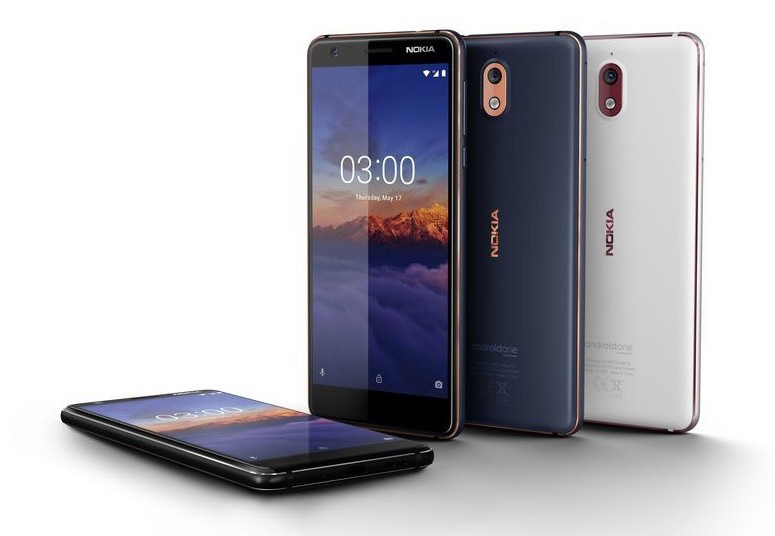
The Nokia 3.1 is an Android One phone, meaning that it comes with a Google-endorsed build of Android and promises for fast software updates and regular security patches. Powering the handset is the octa-core MediaTek 6750 processor and 2GB RAM.
Android One promises some performance and consistency not typically seen at this price.
You get 16GB of storage for saving local files, and if that’s not enough room, you can easily expand it with a microSD card. There’s also a 13MP rear-facing camera, 8MP front camera, and a 2990mAh battery.
On the front of the Nokia 3.1 is a modern-feeling 18:9 screen that measures in at 5.2-inches with a resolution of 1440×720. The back is made out of polycarbonate, but an aluminum frame adds some welcome heft and a premium feel to the phone — and really, at this price you don’t expect anything more than that. The Nokia 3.1 comes in three colors — black, blue and white — with different accenting metal frame colors.
The Nokia 3.1 carries a price tag of just $159, and pre-orders are live on Amazon right now with Best Buy and B&H to follow. If you’d rather wait for the instant gratification of having it arrive right after ordering, the phone officially launches in the U.S. on July 2.
See at Amazon
The Android P feature I’m most excited for will actually help me use my phone less
Self-discipline is key, but there’s nothing wrong with a helping hand.

Google’s got a lot in the pipeline for Android P. There’s a brand-new gesture system, updated UI for settings and the notification tray, and even machine learning that aims to help extend your battery life as much as possible.
There’s a lot to get excited about with this latest incarnation of Android, but among all these things, something that I think will be the most helpful in day-to-day use is the integration of Google’s Digital Wellbeing initiative.
As the name suggests, Digital Wellbeing is all about making us more aware of how we use our phones. It can be easy to admit that you spend a lot of time aimlessly swiping and scrolling on your screen, but without the right set of tools and data at your disposal, it can be hard to do anything constructive about this.
Android P is littered with tools to keep you conscious and aware of how much you’re using your phone.
In Android P, Google’s scattering its Digital Wellbeing platform throughout various parts of the OS — one of the highlights being the Android Dashboard. Like we heard about at Google I/O, the Dashboard will provide a glanceable overview of how you’re using your phone. You’ll see how much time you’ve spent on your phone, what apps you’re using the most, how many times you’ve unlocked your device, etc. If you want to dive even deeper, you can see how much time you use a certain application over the course of 24 hours or multiple days.
There’s a lot of data being presented, and it’s all here with the intent of helping you be aware of what’s really going on with your phone. You might know that you use Twitter a lot, but it can be easy to forget that those little check-ins throughout the day can add up faster than you expect.

However, that data is just one small tool of the toolbox Google’s giving to you in Android P. Along with the Dashboard, you’ll find:
- App Timer — You can set limits on how long you want to use an app during the day. Once that time limit is reached, the app will be blocked out until the following day.
- Do Not Disturb will turn on when you flip your phone over and place it face-down on a table, desk, etc.
- After setting a bedtime, your phone’s display will slowly transition to grayscale to help prevent you from getting sucked in late at night.
- YouTube recommends you jump off your phone and take a break if you’ve been watching videos for a certain amount of time.
There are apps that try to mimic some of what’s offered here, but all of this reigns far superior since it’s baked right into Android itself.
Smartphone addiction is a very real thing. Per a study that Motorola released in February earlier this year, it was found that 44% of smartphone users feel constantly compelled to check their phone, 29% are daydreaming of when they can use their phone next when they don’t have it with them, and 60% want to have a better phone-life balance.
Google’s included everything you need to have a better phone-life balance.
Based on what we’ve seen so far from Google’s Digital Wellbeing, all of the tools are here to try and achieve that balance.
Sure, you could override App Timer to keep browsing Twitter or ignore YouTube’s recommendations to take a break from your binge-watching session, but if you’re already taking the step to enable these safeguards, chances are you’re going to be compelled to follow them. And, in Android P, those safeguards are just a couple taps away.
We’ve seen some companies like Light Phone try and solve the phone addiction topic by creating hardware that’s designed specifically to omit addictive features and apps, but spending $400 on a phone that purposefully does less than a $99 Android Go phone is really tough sell.

By giving these tools to the billions of people that already have Android phones, Google’s enabling everyone to take better control of their life. These efforts might seem insincere to some people considering that Google stands to gain absolutely nothing from this, but in my eyes, it’s a rare effort of selfless goodwill from one of the world’s largest companies.
As someone who uses their phone throughout the day for both work and play, I’m excited for Android P to tap me on my shoulder now and then to let me know I should put my phone down and so something else. Smartphones are designed to be addictive, and almost all of them do a damn good job at being just that.
If Google wants to encourage me to make fewer excuses for getting consumed in my Pixel 2, I’m all for it.
Google’s Digital Wellbeing initiative: Everything you need to know
What do you do with your old phone after buying a new one?
Out with the old and in with the new.
Whether you buy phones outright or pay for them on monthly installment plans through your carrier, upgrading to the latest and greatest mobile tech is always an exciting time.

However, after you finally take a break from playing around with your new toy, there comes a time when you need to figure out what to do with your old phone. Should you sell it? Keep it for old-times sake? Maybe find someplace you can recycle it at?
There are a lot of different ways to answer this question, and to help break it down, here’s how the AC forum community responded to it.
NexusGirlX
06-21-2018 06:00 AM“
Normally I keep all of them. I recently tried to sell two of my S7 Edge phones, my Note 8 and a few iPhones. All I got was lowball offers so I figured I would just keep the phones.
We have a guy at my job who was in prison for a while and has been doing some good things in his life and even got his monitor taken off and is proving he’s a good guy in everything he does. He didn’t even have a…
Reply
tony bag o donuts
06-21-2018 10:41 AM“
I keep my very first device.
I have a few low cost Android devices as a backup, but I typically sell them on swappa to help pay for a newer device.Reply
Morty2264
06-21-2018 03:54 PM“
Very interesting thread – love it! I keep my old one as a backup in case something happens to my new phone. Lately, however, my brother and boyfriend will make use of my backup phone (s) until they get new ones. 😃
Reply
Rukbat
06-23-2018 02:44 PM“
I go back to an old Motorola MicroTAC. The only phones I haven’t kept are mobiles (yes, we used to have a radio mounted in the trunk and a control head with a handset on the hump, under the dashboard) and my bag phones. But by the time I buy a new phone, the last one isn’t worth anything – it’s not worth the trouble of putting a phone on Letgo for $150, only to get offers of $50.
Reply
I’ve kept a few phones over the years that have some sort of sentimental value to them, but for the most part, I usually go the route of selling them to help lower the cost of whatever I’m upgrading to.
What about you? What do you do with your old phone after you buy a new one?
Join the conversation in the forums!
The $100 Samsung Connect combines mesh networking with a smart home hub
It also adds voice control to your home network.
The Samsung Connect home mesh Wi-Fi network extender is down to $99.99 on Amazon. This 3-pack was selling for $200 and before March was going for as much as $300. This is the best price we’ve ever seen and the first time it has gone this low.

The Connect is a mesh networking system and a smart home hub. It has the functionality of a SmartThings Hub built into it so it can control sensors, lights like Philips Hue smart bulbs, video doorbells like Nest, and other smart appliances. It can also cover up to 4,500 square feet in wireless signal. The adaptive technology goes for the clearest and fastest channels. The free app allows you to see everything that’s connected, create guest access, set up parental controls, and more. It’s all very easy to setup, too, taking just minutes to install.
See on Amazon
These are all the phones Xiaomi is releasing in 2018
Do you know what phones Xiaomi’s coming out with this year?

You may not be all that familiar with Xiaomi if you live in the U.S., but for folks in China, India, and other parts of the globe, Xiaomi is one of the most popular consumer technology brands in the business.
Xiaomi crafts a variety of gadgets and gizmos, ranging from laptops, smart vacuums, and even electric bicycles, but its bread and butter lies with smartphones.
Each year sees Xiaomi kick out a heap of phones, and because of this, keeping track of what’s available and what’s still down the pipeline can be a chore. To help keep you in the loop, here’s a list of everything the company’s coming out within 2018.
The phones we’re still expecting
Xiaomi Mi Mix 3

The Xiaomi Mi Mix 2.
Ever since 2016, Xiaomi’s Mi Mix series has easily been the most interesting in its entire portfolio. The company kicked off the bezel-less trend in 2016 with the first Mi Mix, followed it up in 2017 with the Mi Mix 2, and this year, we’re expecting Xiaomi to keep the trend going with the Mi Mix 3.
We’re still waiting for the rumor mill to get going for the Mix 3, but based on past releases, we should see the phone come out between October and December. The price tag will be big, the bezels will be thin, and the specs will be overly powerful.
With so many other phones trying to shrink bezel sizes, it’ll be interesting to see if Xiaomi succumbs to the notch on the Mi Mix 3 or tries something a bit more experimental similar to the Vivo NEX.
Xiaomi Mi A2

The Xiaomi Mi A1.
The Mi A2 is expected to be the global version of the already-released Mi 6X, so while there won’t be any real surprises here, there’s one big differentiator that’ll make the Mi A2 stand apart from its sibling — its software.
Similar to its predecessor, the Mi A2 is expected to ship with Android One. In addition to fast updates and regular security patches, this also means a completely stock build of Android instead of Xiaomi’s own MIUI interface.
Last year’s Mi A1 was announced in early September, so that’s likely when we’ll learn more about the Mi A2.
Xiaomi Mi Max 3

The Xiaomi Mi Max 2.
If you wanted a phone with unrivaled battery life and a monstrous display last year, one of the go-to picks was the Xiaomi Mi Max 2. The Mi Max 2 impressed with a 5,300 mAh battery and 6.44-inch screen, and rumors are pointing to an even more stunning successor in 2018 with the Mi Max 3.
According to the rumor mill right now, the Mi Max 3 will sport a 6.99-inch Full HD+ IPS LCD panel along with an even bigger 5,500 mAh battery.
Other specs might include the powerful Snapdragon 710 processor, 4/6GB RAM, and dual 20MP + 5MP rear cameras.
The phones that have been released
Xiaomi Redmi Note 5

One of the first phones Xiaomi released in 2018 was the Redmi Note 5, and it did a great job at setting the stage for the rest of the company’s portfolio for the rest of the year.
Launched in February, the Redmi Note 5 has an 18:9 display with slim bezels and a 2160 x 1080 resolution. It measures in at 5.99-inches and uses a pretty good LCD panel. The 12MP camera on the back is the same one found on the Mi A1 and it’s powered by the capable Snapdragon 625.
Add all that together with a beefy 4,000 mAh battery, and you end up with one well-rounded package.
In regards to price, the Redmi Note 5 retails for ₹9,999 (around $146) for the model with 3GB RAM, but you can step up to a 4GB RAM option that costs ₹11,999 ($176).
Xiaomi Redmi Note 5: Everything you need to know
Xiaomi Redmi Note 5 Pro

Shortly after the Note 5 was released, the Note 5 Pro followed it up as a more powerful smartphone that still came in at a price point that’s manageable for most people.
The display is the exact same one found on the regular Note 5 but it swaps out the Snapdragon 625 for the more powerful 636. You also get more RAM with your choice between 4GB and a whopping 6GB!
As for the camera situation, Xiaomi keeps the 12MP rear camera from the Note 5 but pairs it with a second 5MP lens on the Note 5 Pro. The dual camera setup allows the Note 5 Pro to pull-off the famous portrait style shots that have been huge in 2018, and when you’re ready to take selfies, you’ll find an impressive 20MP camera up front.
The Note 5 Pro is a bit more expensive with a starting price of ₹13,999 / $205 with 4GB RAM (₹16,999 / $249 for 6GB RAM), but it still offers a tremendous amount of value considering all the tech packed inside.
Xiaomi Redmi Note 5 Pro review: King of the hill
Xiaomi Redmi 5

If you like what you’re seeing with the Note 5 and Note 5 Pro but still wish they were a bit cheaper, Xiaomi’s got a solution in the form of the Redmi 5.
The Redmi 5 costs just ₹7,999 (about $125) and punches way above its asking price.
Design-wise, the Redmi 5 is very similar to the Redmi Note 5. There’s an 18:9 5.7-inch 1440 x 720 IPS LCD display and very slim bezels. The rear camera is a single 12MP sensor and has a 5MP camera on the front for all your selfies.
Under the hood, the Redmi 5 offers the Snapdragon 450, 2, 3, or 4GB RAM, and a 3,300 mAh battery.
Xiaomi Redmi 5 launches in India: Everything you need to know
Xiaomi Black Shark

Gaming phones have recently become a popular niche in the Android space, and trying to best the Razer Phone, Xiaomi released the Black Shark in mid-April.
Right off the bat, the Black Shark impresses with a totally unique design that helps it stand out from all of Xiaomi’s other phones. The black and green color combo is stunning to look at, and the X-style layout on the back is supposed to make the phone easier to grip and hold onto during an intense gaming session.
Some of the specs include a 5.99-inch Full HD+ display, Snapdragon 845 processor, up to 8GB RAM, and a 12MP + 20MP camera combo on the back. Oh, and did I mention the Black Shark even has its own liquid cooling system?
The starting price for the Xiaomi Black Shark is about $480, so while it’s not cheap, is a lot more affordable than Razer’s $800 competition.
Xiaomi’s $480 Black Shark gaming phone is designed to take on the Razer Phone
Xiaomi Mi Mix 2S

Before we (hopefully) get our hands on the Mi Mix 3 later in the year, Xiaomi decided to throw a bone to hold us over with the Mi Mix 2S. The Mi Mix 2S is nearly identical to the Mi Mix 2, but it offers a few key upgrades under the hood that make it a vastly better product.
First and foremost, the Mi Mix 2S has Qualcomm’s impressive Snapdragon 845 at the heart of it. The 845 is one of the best mobile processors on the market right now, and because of it and 6 or 8GB RAM, the Mi MIx 2S absolutely flies.
The 2S also comes with dual 12MP cameras on the back (the second of which is a 2x telephoto lens), 3,400 mAh battery, Android Oreo, and was the very first Xiaomi phone to ship with wireless charging.
Pricing starts out at $530, and considering the Mi Mix 2S’ futuristic design and bleeding-edge specs, that’s a steal.
Xiaomi Mi Mix 2S preview: Great hardware backed by vastly improved software
Xiaomi Mi 6X

The Xiaomi Mi 6X is yet another mid-range / budget phone from the company, but there’s one aspect that makes it particularly interesting. Later in the year, the Mi 6X will be re-released as the Mi A2 with Android One. Android One is an initiative Google’s been running for a couple years now, and all phones that are part of it ship with a stock build of Android and often get quick updates to new software versions and security patches.
All of the hardware from the 6X will carry over the A2, and boy is there some good stuff to talk about.
The Mi 6X comes equipped with a 5.99-inch Full HD+ display, Snapdragon 636 processor, up to 6GB RAM, and a 3,010 mAh battery. Other notable specs include 12MP + 20MP cameras on the back, Bluetooth 5.0, and an IR blaster.
Pricing starts out at around $250 for the model with 4GB RAM and 64GB storage and maxes out at $315 if you opt for 6GB RAM and 128GB storage.
Xiaomi Mi 6X offers upgraded cameras and Snapdragon 660 for just $250
Xiaomi Redmi S2 / Y2

The next phone on our list goes by the Redmi S2 or Redmi Y2 depending on where you buy it, and it essentially takes the design of the Mi 6X, downgrades a few of the specs, and cuts the price to make it even more affordable.
You’ll still find a 5.99-inch 18:9 screen around front, but the resolution is dropped down to 1440 x 720. There are dual 12MP + 5MP cameras on the back, 16MP front-facing camera, Snapdragon 625, and your choice of 3 or 4GB RAM.
Pricing for the Redmi S2 / Y2 starts at just $146.
See at Xiaomi
Xiaomi Mi 8

Xiaomi’s often been notorious for taking heavy inspiration from Apple for some of its products, and that theme is on full display with the Mi 8.
The Mi 8 was very clearly inspired by the iPhone X, featuring a wide notch at the top of the 6.21-inch 2248 x 1080 AMOLED screen and dual cameras on the back (12MP + 12MP) in a vertical setup with an LED flash separating them in the middle. It’s not subtle in the slightest, but then again, it’s not a bad look at all.
Internal specs for the Mi 8 include the Snapdragon 845, 6GB RAM, 20MP front-facing camera, and a 3,400 mAh battery. Xiaomi even included an infrared lens in the notch to mimic Apple’s FaceID.
The Xiaomi Mi 8 starts at $420, and along with it, you can pick up the Explorer Edition for $580 that comes with an in-screen fingerprint sensor and transparent glass back.
The Xiaomi Mi 8 is a blatant iPhone X ripoff with a full-sized notch
Xiaomi Mi 8 SE

Alongside the Mi 8, Xiaomi also revealed the Mi 8 SE. The Mi 8 SE has a very similar design compared to the Mi 8, but as you might expect, comes with less-impressive specs and a more affordable price.
The Snapdragon 845 has been replaced by the Qualcomm Snapdragon 710, and while that may sound like a downgrade, you really shouldn’t notice any difference in speed. The 710 is essentially a version of the 845 that’s been modified for mid-range smartphones, and it’s easily one of the most exciting processors Qualcomm’s come out in some time.
Other specs for the Mi 8 SE include a 5.8-inch AMOLED display, 12MP + 5MP rear cameras, 20MP selfie camera, 3,120 mAh battery, and a starting price of only $280.
The $280 Xiaomi Mi 8 SE is the world’s first phone with a Snapdragon 710
Xiaomi Redmi 6 / 6A

Xiaomi announced the Redmi 6 and 6A on June 12, and to no surprise at all, these are two more budget phones that aim to offer a quality experience for folks that don’t want to spend a ton of cash.
The 6 and 6A are very similar phones, with both sharing a 3,000 mAh battery, 5MP selfie camera, and a 5.45-inch 1440 x 720 screen with an 18:9 ratio. The 6A is powered by the MediaTek Helio P22 processor and comes with your choice of 3 or 4GB RAM and 32 or 64GB of storage, whereas the 6A uses the Helio A22 and only comes in one configuration with 2GB RAM and 16GB of storage.
You can pick up the Redmi 6 between $125 and $155 while the 6A costs a measly $95.
Xiaomi Redmi 6/6A bring face unlock and 18:9 displays to the entry-level segment
Xiaomi Redmi 6 Pro

Hot on the heels of the Redmi 6 and 6A, Xiaomi announced the Redmi 6 Pro in late June as a more powerful variant of the above two phones that still comes in at a very affordable price.
Starting first with the design, the Redmi 6 Pro offers an updated aesthetic with vertical rear cameras and a notch in its display. Those cameras come in at 12MP and 5MP for a nice dual lens setup, while the screen measures in at 5.84-inches with a resolution of 2280 x 1080.
Inside the Redmi 6 Pro is the Snapdragon 625, 3/4GB RAM, 32/64GB storage, MIUI 9.0, and a huge 4,000 mAh battery.
Pricing for the Redmi 6 Pro starts out at around $153 and it’s available to purchase in China right now.
See at Xiaomi
Updated June 25, 2018: Added the Xiaomi Redmi 6 Pro and Mi Max 3 to the list.
Android P features we love: Better, faster biometrics

Biometrics have been around for a while, but Google is taking things to another level and distinguishing “strong” biometrics versus ‘weak” biometrics in Android P.
Android P will have a lot of small-sounding but very significant changes to Android’s core. We see that with every upgraded version of Android, and often these changes are surrounding security. Google has a vested interest in keeping Android secure enough that the average user doesn’t need to worry about the how or the why — the company needs you on the internet and using internet services to make money. In Android P we’ll see one big change to the most convenient thing that ever happened to keep your phone secure: biometrics.
Biometrics is letting part of you prove that it’s really you.
Biometrics is the “art” of using a unique-to-you body feature as a secure way to identify yourself. We’re most familiar with fingerprint scanners, but biometrics cover facial recognition and iris scanning and even voice printing. Anything that’s uniquely you can be used as your identity with the right equipment and algorithms looking at it. Fingerprint scanning makes it easy to put a lock on your phone’s screen, and from a user standpoint, it’s what got people to start doing it. The next step will be accurate facial recognition. We already see companies using it and calling it secure, and it’s been part of Android since Ice Cream Sandwich though Google will tell you it’s not a secure method to unlock your data.
That’s about to change. With Android P, Google is adding an entirely new security model for biometrics. Building on a feature-set introduced in Android 8.0, Google has a new way to verify the accuracy of biometric data, a new set of features that can use the idea to test the accuracy, a new model that splits biometric security into weak and strong, and finally a public API that developers can use to tap into this whenever they need to properly identify the user.
What makes biometrics “strong”?

Google introduced what it calls SAR/IAR metrics (Spoof Acceptance Rate / Imposter Acceptance Rate) that measure how, and how easily, an attacker (that’s the common word security pros use for “person who wants in your phone”) can get around a properly built biometric security implementation. Think of someone using a good photo of your face to fool face unlock and that’s spoofing while changing the way you look to fool a face scanner as Imposter attempts.
Culling the weak is hard work. Thankfully, Google is doing it all.
These SAR/IAR scores are used to determine if a biometric security system is strong or weak. Using a score of 7% (that means 93% percent effective 100% of the time) because that’s the score given to a proper implementation of a fingerprint scanner in a modern Android phone as the baseline, strong biometrics will have access that weak biometrics won’t.
Both methods are OK to use to unlock your phone. But biometrics classified as weak won’t be able to authenticate for payments or access an auth-bound key (a special authentication key that an app has created only for its own use) for any type of monetary transactions. You’ll also be required to use a strong biometric feature or manually enter a password or pin after four hours of not using your phone if you use weak biometrics to sign in. Most importantly, weak biometrics won’t be able to use the new Android P BiometricPrompt API to say you are really you.
Let Google do the work and developers use an API

The BiometricPrompt API depends on strong biometric features returning a value that says you are a match before it acts as successful. This means it will be more difficult to fool a face scanner with a photo, for example. By having a way for every developer to tap into a set of known strong authentication techniques, developers won’t have to implement their own or depend on weaker and less secure methods. This is a big deal to the IT security team at your bank. It’s also a big deal to anyone who wants to trust that an app or service is properly built to keep your identity and login safe.
Developers will be able to use the BiometricPrompt API with a support library to allow older versions of Android to benefit, too.
We won’t notice a difference other than not being able to use sub-standard ways of proving who we are to give access to sensitive data about ourselves. We don’t need to notice a difference, and something like this new API is best when we don’t — it was done correctly because it’s invisible to the user. It’s what marketing people like to call “magical,” because we don’t know or need to know how it works as long as it works all of the time.
We expect Google to make use of this new feature with the Pixel 3’s login prompt, and a support library allows a developer to use the new API on older devices. These are the kinds of changes Android needs to move forward and it’s great seeing them done. Here’s hoping its as successful in practice as it looks on paper.
Android P
- Android P: Everything you need to know
- Android P Beta hands-on: The best and worst features
- All the big Android announcements from Google I/O 2018
- Will my phone get Android P?
- How to manually update your Pixel to Android P
- Join the Discussion
Amazon’s Whole Foods Market discount for Prime members goes nationwide June 27
Shop and save.
In May, Amazon announced a new benefit for Prime members that would let them use it at Whole Foods Market stores to get a 10% discount on almost everything in the store. When it was first announced, it was only available in Florida. Then the service expanded to 12 more states. Now, starting June 27, the service expands to cover the entire country. You will soon be able to use your Prime membership at all regular Whole Foods Markets across the country and all of the Whole Foods Market 365 stores.

All you’ll need to do is update your Whole Foods Market app and add your Prime account to it. When you check out in-store, you can scan the Prime Code on the app to get your discount. You’ll also be able to get deals exclusive to Prime members at each store.
Some Prime members live in a sweet spot that not only gets them the 10% savings benefit of Prime but also free two-hour delivery of Whole Foods groceries (as long as it’s over $35). The markets for that include Atlanta, Austin, Baltimore, Boston, Cincinnati, Dallas, Denver, Los Angeles, Philadelphia, Richmond, Sacramento, San Diego, San Francisco and Virginia Beach.
You can try all of this out even if you’re not a Prime member yet. Just sign up for a 30-day free trial and see if the benefits work for you. For regular Whole Foods Market customers, it really seems like a no-brainer.
There are plenty of reasons to be a Prime member, not the least of which is the upcoming Prime Day. It’s a huge sales event exclusive to Prime members, and we’re certain there are going to be a lot more savings to see then.
See on Amazon
Add some color to your home with these $39 Philips Hue bulbs
16 million color options.

Right now you can pick up the Philips Hue White and Color Ambiance smart bulbs for just $38.99 each. This is a savings of $11 from the regular price on these bulbs, and outside of a brief Black Friday sale, the best price they’ve sold for in a year. Each bulb has more than 16 million color options that can be controlled by the app or even via Amazon’s Alexa, Google’s Assistant, or Siri.
In order for the lights to work, you will need the Philips Hue Smart Bridge, which is down to $52 from $60 today. For $15 more, you can get the 2-bulb starter kit, which comes with the Bridge and two white bulbs that you can use in your home as well.
See at Amazon
 AIVAnet