


Apple Orders ‘Little Voices’ Series from Producer J.J. Abrams, Featuring Original Music by Sara Bareilles
As its stable of original television shows increases, Apple has now ordered a new half-hour dramedy called “Little Voices” straight to series (via Variety). The show comes from executive producers J.J. Abrams and Sara Bareilles, and is described as a love letter to “the diverse musicality of New York.”
Little Voices will explore the lives of characters in their early 20s as they struggle to find their “authentic voice,” and with Bareilles as executive producer the show will also debut original songs throughout the ten episode first season.
J.J. Abrams via Wikimedia Commons
Screenwriter Jessie Nelson (“I Am Sam”, “Stepmom”, and “Corrina, Corrina”) will serve as the showrunner, and is set to write, executive produce, and direct the first episode. No word on actors who will be cast in the show has been given.
Little Voices marks the first time a show from Apple will be connected to J.J. Abrams’ Bad Robot Productions, which also produces current shows like “Westworld” on HBO, “Castle Rock” on Hulu, and brought previous series like “Fringe” and “Lost” to the air.
Apple is quickly collecting shows, the first of which are rumored to premiere sometime before March 2019. Recent show announcements include the Hailee Steinfeld starring “Dickinson”, an adaptation of Isaac Asimov’s “Foundation” series, an animated show called “Central Park” from the creator of “Bob’s Burgers”, and more.
Tag: Apple’s Hollywood ambitions
Discuss this article in our forums
Moto Z3 Play hands-on: Dual cameras meet Moto Mods
The Moto Z2 Play was Motorola’s most successful smartphone in a long time and today the company announced its follow up, the Moto Z3 Play. Designed with the features that made its predecessor popular and a few updates to bring it line with a phone in 2018, does the new phone fit in Moto’s affordable premium Z Play range? Let’s find out!
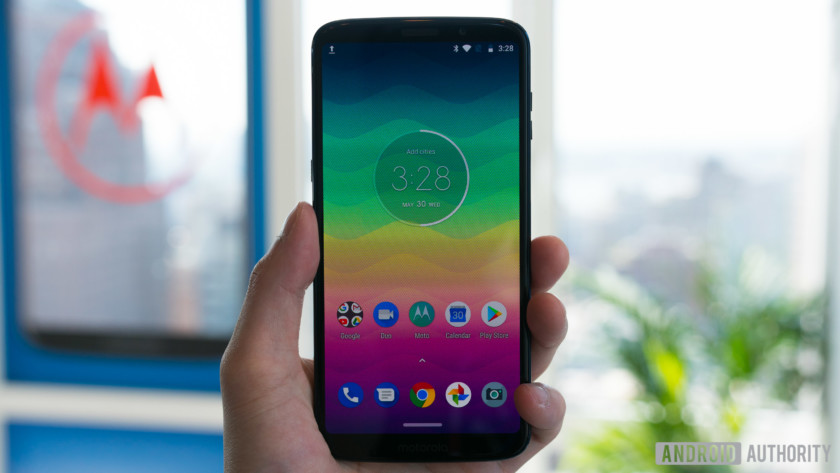
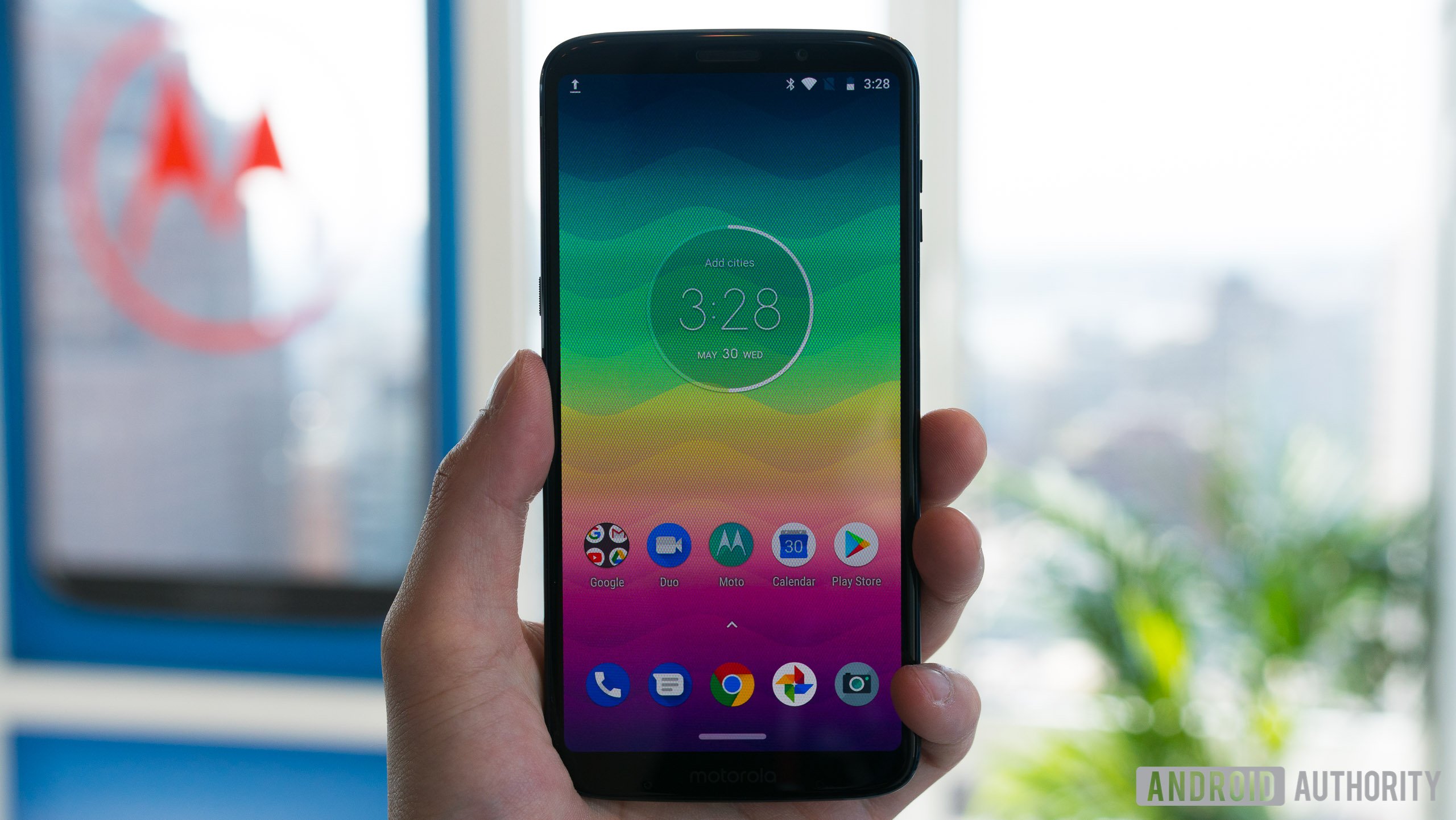
The Moto Z3 Play is focused on solving a few key pain points in the smartphone market. This begins with the display, which is the largest noticeable difference over the Moto Z2 Play. The display is taller, with narrower bezels, thanks to its 18:9 resolution. The taller aspect ratio offers a screen-to-body ratio of 79 percent. The Super AMOLED panel offers FHD+ resolution, alongside the characteristic vibrant colors and deep blacks of AMOLED screens.
The Moto Z3 Play is focused on solving a few key pain points in the smartphone market, starting with the display
Motorola opted for Gorilla Glass 3 on the front and back over the newer Gorilla Glass 5 standard as the company found little difference in the scratch resistance performance. Between the two panels is a 6000-series aluminum metal shell, which adds a nice feel. This is further compounded by an impressive 6.75mm thickness. It certainly delivers on the premium experience Motorola’s been pushing for.
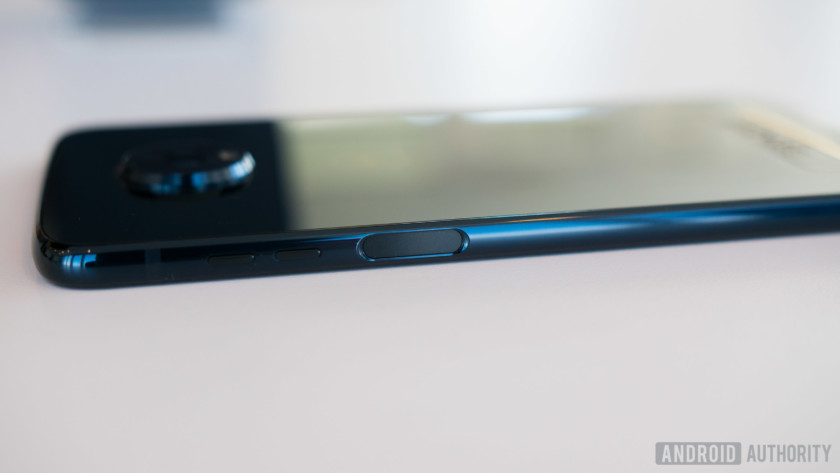
The biggest change with the larger display is the fingerprint sensor, which has now moved to the right of the phone. Unlike other devices with a right fingerprint sensor – like recent Sony devices – the fingerprint sensor doesn’t double up as the power button. Instead, Motorola moved the power button to the left of the Moto Z3 Play. While this may seem annoying, it’s not that big of a deal, especially as you don’t interact with the power button a lot during a day. By keeping them separate, the fingerprint sensor remains lightning fast too.
Editor’s Pick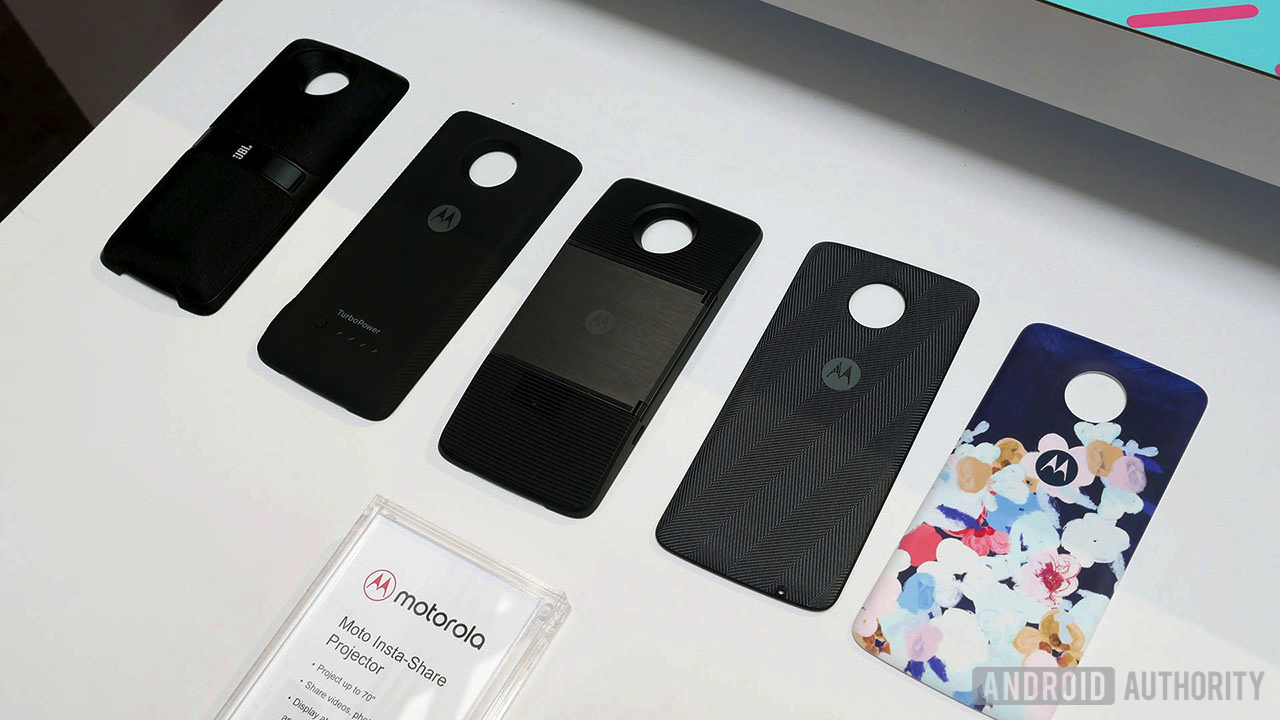
The full list of current and upcoming Moto Mods
While we’ve seen many smartphone makers try and fail to sell smartphones with “modular” hardware features, Motorola seems to have been the most successful with its Moto Mods. Okay, they may not technically be “modular” …
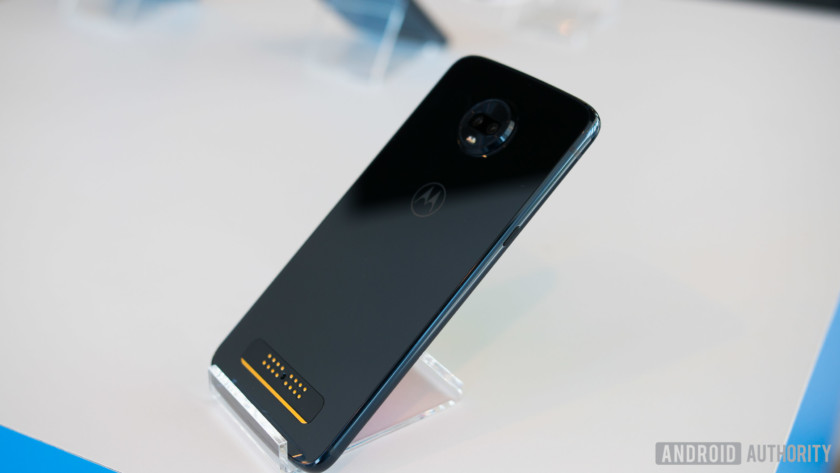
The design and overall footprint of the Moto Z3 Play is almost identical to other Moto Z devices, and it’s compatible with all 14 of the current Moto Mods. The company plans to bundle the Moto Z3 Play with a Moto Mod in the box, because apparently it increases overall adoption of the Mods concept. Unsurprisingly, the Moto Z3 Play also drops the headphone jack, which we’ve come to expect from most smartphones in 2018.
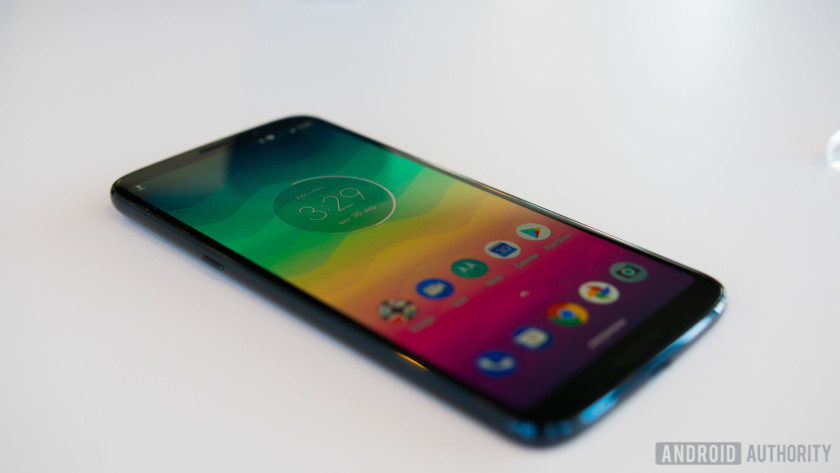
The Moto Z3 Play is powered by a Snapdragon 636 processor, which Motorola says offers 30 percent faster performance than the Moto Z2 Play. In the U.S., the Moto Z3 Play comes with 4GB of RAM and 64GB of internal storage while globally, there will also be additional variants offering up to 6GB of RAM and up to 128GB of storage. The battery is still 3,000mAh with TurboCharging, and it should offer similar battery life to the Moto Z2 Play.
Read: The best mid-range phones you can get right now
The Moto Z3 Play also supports Cat 12 LTE, offering 600Mbps download speeds and 24-bit audio. There’s also 4 mics with far-field capability and a 7-core DSP for natural language processing — used for the crystal talk feature, which aims to offer more clarity in calls even when you’re surrounded by loud background noises.
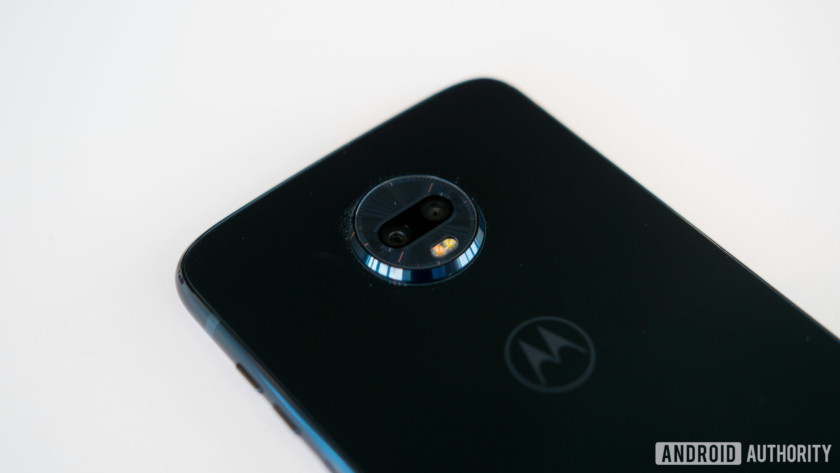
The other major change is on the phone’s back, where Moto Z3 Play now sports two cameras. The main camera is a 12MP shooter with an f/1.7 aperture and a 1.4-micron pixel size, while the secondary 5MP sensor is used to capture depth information. The main camera supports dual autofocus pixel and offers zero shutter lag as with previous Moto Z devices. The front facing camera has also received a boost, now using an 8MP sensor with an f/2.0 aperture and a 1.12-micron pixel size. The front and rear cameras both offer portrait mode, although the secondary camera on the rear allows for more features in the rear portrait mode.
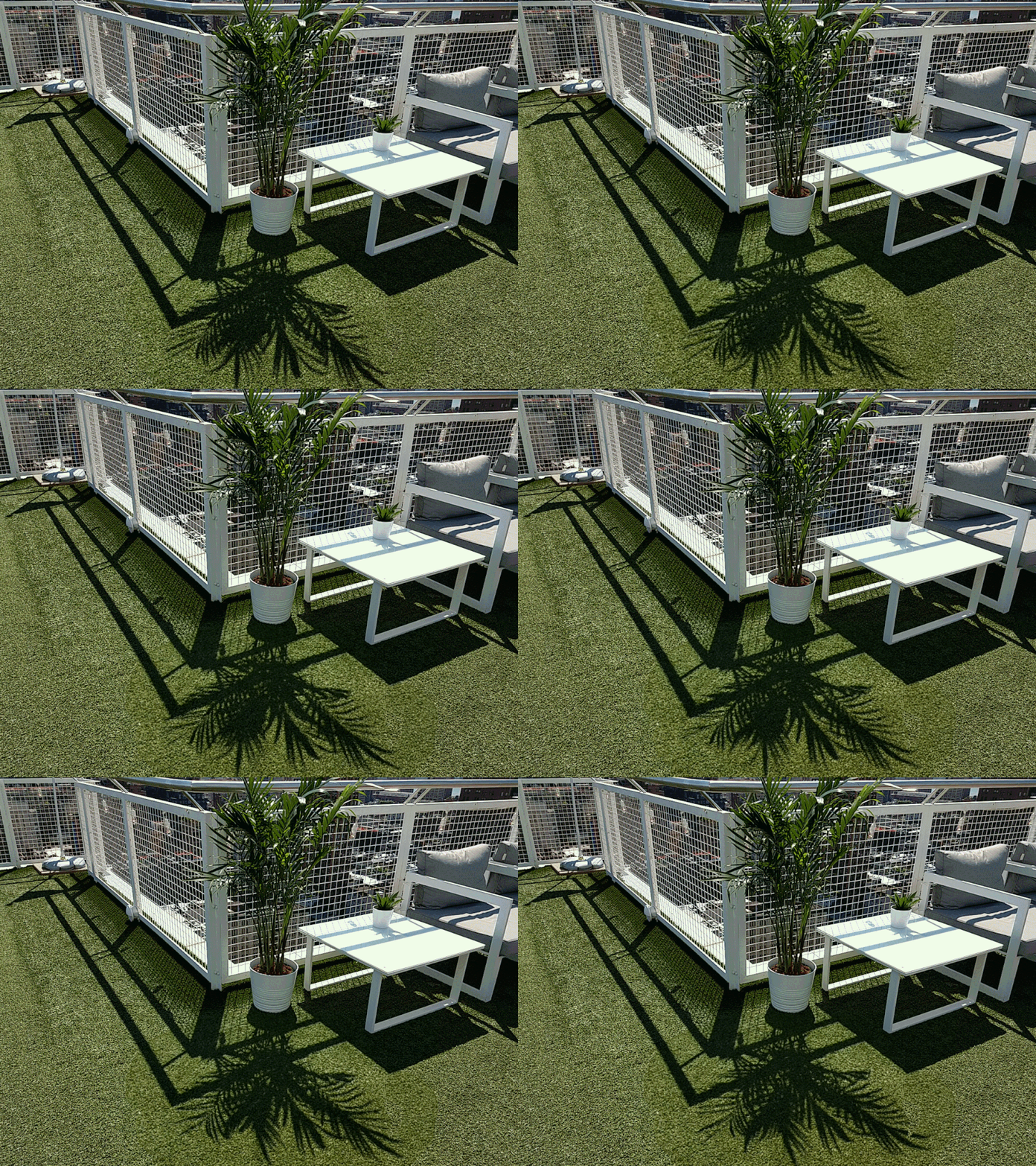
The big new addition to the camera experience is the cinemagraphs feature, which lets you capture a picture with motion and then pick where the motion is. You could capture a plant swaying in the wind, as well as the shadow, and freeze the motion of the plant while the shadow continues moving. The image is then saved as a GIF, so it’s easy to share on social media or with your friends and family. The feature works rather well and can add a unique touch to otherwise boring scenes. The camera also supports Google Lens natively in the camera app, which brings all the Google Lens features you’d expect.
Moto Z3 Play camera samples

The Moto Z3 Play runs on Android 8.1 out of the box and Motorola will support two OS upgrades during the life of the phone. It offers the nearly stock Android experience we’ve come to expect from Motorola, with new features in areas where it feels the Android OS needs some tweaking.
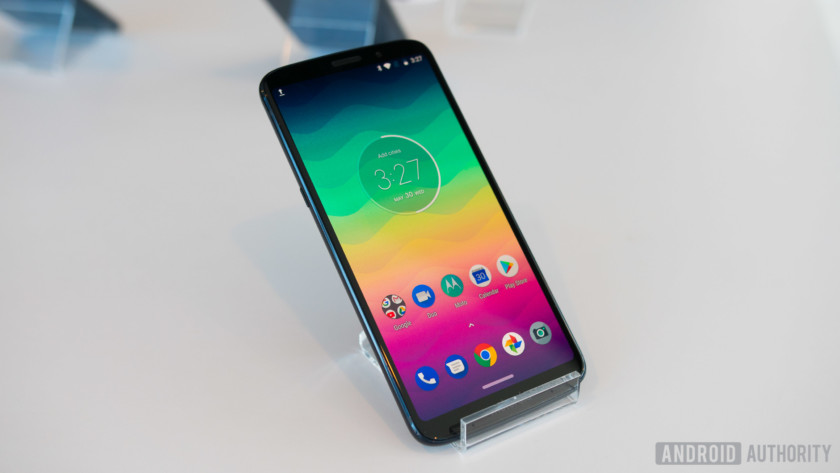
One of those new features is the Moto Z3 Play’s gesture-based navigation, an onscreen equivalent to the same feature found on previous Moto Z devices. Swiping left on the gesture bar takes you back a step, while swiping right opens the recent apps menu. Tapping the gesture bar brings up the home screen, while long pressing the bar opens the Google Home screen. This is like the navigation feature found on Android P, which will be coming to the Moto Z3 Play not long after Google officially releases its new OS.
$499 unlocked
The unlocked Moto Z3 Play will be available for $499, bundled with the Moto Mod battery pack in the U.S.. The Moto Z3 Play will be available globally with the Moto Mod JBL speaker, although exact variants, pricing and bundled Mods will depend on your country. The Moto Z3 Play will support most U.S. carriers when it launches later this summer.
What do you think of the Moto Z3 Play? Do you plan to buy one? Let us know in the comments below!
Read next: Moto Z3 Play specs and features walkthrough
Hands-on: The Asus ROG gaming phone is a beast
Asus isn’t known for its high-end phones. Traditionally, they’ve skirted the mid-range and attempted to bring a lot of value to the consumer at a lower price. That changed a bit with the ZenFone 5Z, which packs a Qualcomm Snapdragon 845 among other high-end specs. While this seemed like a pretty beefy phone on its own, Asus has upped the ante with the announcement of the ROG Phone.
This is our Asus ROG Phone hands-on.

ROG, or Republic of Gamers, is Asus’ high-end gaming brand for their laptops and peripherals. This includes things like mice and gaming headsets, and — traditionally — flashy branding and RGB lighting. With the ROG Phone, Asus is bringing those aspects to Android. Not only does thing phone have flashy branding and RGB lighting, but it brings the specs to match.
See also:
Razer Phone review
Gaming laptop and peripheral giant Razer surprised everyone with its entry into the smartphone space, born from the acquisition of contentious, but fondly remembered Nextbit. The result of this new partnership is one of the most …
The Asus ROG Phone is sporting a Qualcomm Snapdragon 845, 8 GB of RAM, a 4,000 mAh battery, and 128 or 512 GB of storage. This is a special edition of the 845 as well, which is overclocked to 2.96 GHz. The higher-end model takes the crown as the highest-spec’ed Android phone on the market today, beating out the previous leader, the OnePlus 6. This phone is also sporting a 90Hz AMOLED display, losing to Razer in raw speed, but arguably beating them in quality. AMOLED displays traditionally have much better color and contrast than LCD’s, and Asus’ model looked great in person.

The back of the device looks quite aggressive, with the glowing ROG logo stamped in the center being surrounded by sharp edges and exhaust windows. This phone screams “gamer” like no other phone we’ve seen before, and it matches very well with the rest of Asus’ ROG lineup. The rear cameras are dual 12 and 8 megapixel shooters and have some AR capabilities. Asus didn’t talk about these at all at the launch, so while they’re likely fine, they clearly aren’t the focus of this device. The front camera is 8 megapixels.
| Display | 6.0-inch, 18:9, 2160×1080, AMOLED with 90Hz refresh rate |
| CPU | Exclusive Qualcomm Snapdragon 845 chip @2.96GHz |
| GPU | Qualcomm Adreno 630 |
| RAM | 8GB |
| OS | Android 8.1 Oreo with custom “ROG Gaming” ZenUI skin |
| Storage | 128GB / 512GB |
| Rear camera | 12MP + 8MP (120-degree wide-angle) |
| Front camera | 8MP |
| Fingerprint scanner | Yes |
| Battery | 4,000mAh, USB Type-C, 20W fast charging |
| Speakers | Dual front-facing stereo speakers with smart amplifier |
| Sensors | Accelerometer, e-compass, proximity sensor, Hall sensor, ambient-light sensor, fingerprint sensor, gyroscope, 2 x ultrasonic AirTriggers |
| Connectivity | 802.11a/b/g/n/ac/ad 2×2 MIMO Wi-Fi Direct and WiGig 802.11ad wireless display support Bluetooth 5.0 and NFC, 3.5mm headphone jack |
| Dimensions | 158.8 x 76.2 x 8.6mm |
| Weight | 200g |
On the bottom of the Asus ROG you’ll find a USB Type-C port and a headphone jack, and you’ll find two more USB Type-C ports on the lefthand side of the device. While this may look a little strange, it’s made to accommodate the variety of accessories Asus is shipping with this phone.
 Asus
Asus
The first Asus ROG Phone accessory is a heatsink that mounts to the back of the phone. This has a fan in it to keep the phone cool, and includes an additional USB Type-C port and a headphone jack so you can keep charged while gaming. This is extremely useful placement for a USB Type-C port, because it means you can charge your phone and use headphones while using your device in landscape mode. Because most mobile games are played in this way, it made a lot of sense for Asus to create this attachment.

The second Asus ROG phone accessory is a gamepad for the device which can stream wirelessly to your TV. This gamepad connects via the USB Type-C port on the bottom of the phone, and connects wirelessly to a special receiver inserted into your TV. This allows you to play on your TV as if you were using a wireless Nintendo Switch, and opens up quite a lot of possibility for couch gamers.
 Asus
Asus
Asus is also selling a dock that helps connect your ROG Phone to any monitor. This opens up support for keyboards and mice as well, meaning you could play competitive mobile games with a full mouse and keyboard setup. Using this in competitive games could get a little controversial, but it’s great seeing the Samsung Dex getting some competition.
 Asus
Asus
The last accessory being sold alongside the Asus ROG Phone gaming phone is a screen-enabled shell device that effectively turns this phone into a high-end Nintendo DS. This peripheral is essentially a shell with a screen and triggers, and the phone can power this to enable a high-end gaming or emulation machine. This accessory is probably my personal favorite, because it gives your phone a complete second use case.
Pricing and availability of both the Asus ROG Phone and accessories has yet to be announced, but we’re sure it won’t be cheap. The ROG line has traditionally been very premium for Asus, and we could see them taking the same approach with this device.
Asus ROG Phone image gallery

What do you think of the Asus ROG Phone? Is it a true competitor to the Razer phone?
Let us know your thoughts in the comments section below.
TSA hopes Windows 10 upgrades will keep its systems safe for travelers
The United States Transportation Security Administration (TSA), and several other arms of the Department of Homeland Security (DHS), are in the midst of a transition to Windows 10, and the process is scheduled to be completed before the end of the year. TSA CIO Russel Roberts cited better security as part of the agency’s decision to migrate to Microsoft’s latest version of Windows.
“It should be a significant enhancement for the security,” Roberts said in an interview with Federal News Radio. “We are addressing the multiple tools to detect, monitor, and respond and that all ties into Windows 10. That will help us with the new computers and all the end points out there.”
The migration to Windows 10 started in 2016, and so far, it has been a smooth process. The operating system update coincides with the agency’s recent completion of a hardware upgrade of its laptops and desktops. Together, these upgrades help lower TSA’s cybersecurity risks, Roberts said.
Although TSA explored sleeker form factors for its hardware refresh, like thin clients, Roberts decided against drastic changes. Instead, he opted to maintain the same hardware form factors that the agency wanted replaced. New form factors may be explored again when the agency performs its next hardware refresh in three to five years.
When Microsoft launched Windows 10, it changed from a software license to a software-as-a-service, or SaaS, model, essentially turning its Windows business into a Windows-as-a-service platform. Windows 10’s SaaS model means that the operating system and the built-in antivirus tool are kept continuously updated by Microsoft. The TSA also wants to use the SaaS model for its custom software, like the air marshal scheduling program.
“My philosophy is to move the easy ones and move those into a SaaS tool,” Roberts said. “Then we could build some new ones that would allow us to shut down six or seven others. That is a little more challenging than it would seem on the surface.” In addition to Windows 10, Roberts is also looking at moving to Microsoft’s cloud-based Office 365 productivity suite.
TSA and DHS aren’t the only U.S. agencies that are switching to Windows 10. Prior to joining DHS as CIO, Dr. John Zangardi had helped the Department of Defense (DoD) upgrade as many as four million PCs to Windows 10. As part of DHS, the Federal Emergency Management Agency and Immigration and Customs Enforcement are also in the process of upgrading to Windows 10, Fed Tech Magazine reported, as is the United States Coast Guard.
In addition to the recent hardware upgrades, the agency also replaced its routers. Routers recently became a hot news topic after the FBI issued a warning for consumers to reset and reboot their devices to combat Russian hacking.
Editors’ Recommendations
- How to move Windows 10 to an SSD
- Everything you need to know about the Windows 10 April 2018 Update
- Windows 10 can hear you now with expanded dictation features and more
- Windows 10 ‘Lean’ shows up in a preview build for Windows Insiders
- Windows is back on your phone, and this time it’s a good thing
Explore our planet through an immersive AR experience with the Earth app
As outdoor enthusiasts, we care deeply about the planet we live on. There is always more to learn about our changing world including past, present, and future information. AstroReality has launched the project Earth on Kickstarter — a 3D hand-painted globe that, when paired with a unique application, can provide in-depth information about the planet we live on. The physical globe is brought to life with the AR/A.I.-driven app to help you learn about our past, present, and future on Earth.
The AstroReality application displays information in several categories including the migration and habitats of animals both past and present; biomes, crops, and plants of the world; geology highlighting the formation and evolution of our physical planet; environmental issues including climate change; anthropology focused on the human experience; and meteorology centered around the world’s weather systems. The technology takes you on an interactive journey through time, highlighting the planet’s rich geological history and providing visual evidence of how climate change is impacting our world.
The application is multi-layered and loaded with basic geographic information such as landmarks, latitude and longitude, time zones, and regions. Complicated visualization overlays provide information on heatmaps, cloud atlases, point maps, texture maps, and more. In addition to the augmented reality aspect provided by the immersive application, you can also control Earth with your voice.
While you explore the painted globe with your hands, you can speak to Gaea — the company’s smart voice technology powered by Microsoft LUIS — to direct the app to provide you with the exact information you’re seeking. When you just start using the app, you can even ask Gaea to help you navigate around the app and unlock features you may not have discovered on your own. For example, you can ask Gaea to run a timeline of cloud coverage for today or ask about the behavior of killer whales — the possibilities are virtually limitless.
Earth serves as an educational tool that utilizes art, science, and technology in order to make knowledge about our planet more accessible to the public in a fun and interactive form. It was designed using poly-resin density, 3D printing, and paint applied with a precise printing resolution along with a hand-painted layer on each product. From schools to everyday explorers, model collectors, and outdoor enthusiasts — Earth has something to offer to everyone.
Although crowdfunding products are not guaranteed, Earth has exceeded its funding goal, but as always, proceed with caution when it comes to crowdfunding projects. A $200 pledge on the company’s Kickstarter campaign page awards you the best chance of getting your hands on one of the first Earth models.
Editors’ Recommendations
- To unlock secrets of evolution, scientists want to sequence all life on Earth
- Get your Sagan on with 60 awe-inspiring photos of the final frontier
- NASA and ESA will team up to bring Martian soil samples back to Earth
- ‘Pokémon Go’ is gamifying garbage and wants your help on Earth Day
- Great heights and spectacular sights: The 17 coolest buildings on Earth
The Nik collection lives on with DxO Labs update — but at a cost
The Nik Collection is no longer nixed — on Wednesday, June 6, DxO Labs launched the Nik Collection 2018 by DxO, a bug-squashing and compatibility update for the Photoshop and Lightroom plug-ins long favorited by photographers. Several of the Nik features are also migrating into DxO PhotoLab, which also sees an update today as version 1.2 adds U-Point technology for local adjustments.
Both updates come as DxO Labs faces bankruptcy and refocuses the company on four software programs while discontinuing the DxO One camera. The company says it expects to leave bankruptcy in a few months after refocusing on the software and reorganizing the company.
The Nik Collection 2018 by DxO
The update doesn’t exactly add anything new to the Nik collection, but it does bring the set of seven plug-ins back from the dead. Google originally acquired the Nik Collection in 2012 with the purchase of Nik Software, the company also behind Snapseed. But after making the plug-ins free in 2016, Google stopped updating them. The company announced the end of the Nik collection last year, when the plug-ins, at the time, were already no longer fully compatible with Photoshop. DxO Labs stepped in to save the plug-ins by purchasing the collection from Google, then spent six months updating code that hadn’t been touched in years.
The seven plug-ins that have been updated are Analog Efex Pro for analog film simulation, Color Efex Pro for color correction and effects, Dfine for noise reduction, HDR Efex Pro for high-dynamic range photography, Sharpener Pro for enhancing finer details, Silver Efex Pro for black and white images, and finally Viveza for adjusting color and tone in a specific area rather than the entire image
Photographers who have worked with Nik before won’t notice any new tools, but the plug-ins are now fully compatible with the latest version of Adobe Photoshop, Lightroom, and Photoshop Elements running in current operating systems.
Customers also get support in four different languages on DxO’s website for the Nik Collection. The support area is also slated to expand with tutorials on using the plug-ins.
DxO Labs won’t continue to focus on minor compatibility updates, however. The team says that, now that the plug-ins are once again compatible, DxO is welcoming feedback from users. The compatibility update is only the first stage and the team expects to broaden the plug-ins in the future.
If there is a downside to the Nik Collection coming back to life, it’s that the plug-ins are being offered once again as paid downloads. The entire set of seven plug-ins will retail for $69, with a $19 discount for the launch valid until July 1. That is a steep drop from the original $500 cost for the entire set, which Google later dropped to $150 before making it free.
DxO Photo Lab 1.2
DxO Labs is also integrating some of the technology into the company’s original software. DxO Photo Lab 1.2 now includes U Point technology — inherited from the Nik collection — along with a handful of other new features.
U Point is a type of local adjustment that only affects a portion of the image rather than the image as a whole. The edit is non-destructive when working with a RAW file, which means any changes can be undone or tweaked later. With U Point, photo editors place a point on the image, then use a menu off that point to make specific adjustments only to that area. The three-section menu controls local adjustments like exposure and contrast, but the U Point menu can also be customized to see specific local controls.
The photo editor also now has HSL — hue, saturation, and luminance — adjustments, along with Selective Tone, a tool designed specifically to aid in recovering highlights and shadows that are too bright or too dark, respectively. The updated app now also reorganizes local settings by light, color, and detail. New cameras are also supported, including the Panasonic G9, TZ90, and GF9; the Canon EOS Rebel T7; and the iPhone 8 Plus and iPhone X.
The update is free for existing DxO Photo Lab users, while new users can try a 30-day trial or purchase the software for $129 for the Essential version or $199 for the Elite version.
Editors’ Recommendations
- DxO Labs files for bankruptcy, but will launch Nik Collection update in June
- Photo FOMO: Fujifilm X-H1 sees bug fixes, Premiere Pro gets 360 plug-in
- Adobe enables faster workflow with updates to XD, InDesign, and Illustrator
- Lightroom’s overhauled camera profiles make your RAW photos pop
- Apple’s iOS 11.3 is now available for download on the iPhone and iPad
RIP, DxO One: The iPhone add-on camera won’t survive DxO’s bankruptcy
David Elrich/Digital Trends
The DxO One, one of the best smartphone add-on cameras ever made, won’t live past the first generation. After entering bankruptcy earlier this year, DxO Labs announced the discontinuation of the DxO One on Wednesday, June 6.
DxO Labs stopped selling the DxO One in March, but the company’s distributors will continue to sell the camera until supplies run out. Distributors will also continue to offer support for current users of the camera. The camera is currently available from a handful of retailers, including B&H and Best Buy.
The discontinuation means that DxO Labs will no longer develop firmware for the DxO One, software updates that have expanded the compact camera’s features several times since the launch in 2015. Updates added features like the ability to shoot without a physical connection to the iPhone and the option to stream to Facebook Live. While the camera won’t see any updates directly from DxO One, the company isn’t yet out of the bankruptcy process and may share additional details on firmware updates after legal proceedings.
While the company plans to emerge from the bankruptcy in a few months, the legal proceedings allow it to restructure, creating a new focus on software and ending the company’s hardware venture. DxO Labs says it doesn’t have plans to design another generation of the DxO One in the future.
Instead, the company is redirecting focus on four software programs: DxO PhotoLab, the DxO ViewPoint, DxO FilmPack and the recently acquired Nik Collection. The company announced updates to the Nik Collection and DxO Photo Lab today, bringing updated compatibility to the plugins bought from Google while adding some of that tech into DxO’s original software.
The DxO One is a standalone camera that uses a smartphone to access the camera’s controls. Unlike other attempts to add a larger sensor and brighter lens to a phone, the DxO one used a physical connection to the camera for performance compared to Wi-Fi-only add-on cameras. The One originally launched with a Lightning connector for use with iOS devices, and late last year DxO launched an early access for an Android version.
DxO Labs filed for Chapter 11 bankruptcy on March 7. In a statement earlier this year, the company said they expected the bankruptcy to be brief and suggested the proceedings wouldn’t impact customers. Last year, DxO Labs split from DxO Mark, the side of the company that tests and analyzes camera sensors and lenses., including smartphone cameras.
Editors’ Recommendations
- DxO Labs files for bankruptcy, but will launch Nik Collection update in June
- We tried some of the RED Hydrogen One’s crazy tech: Here’s what you need to know
- Here’s everything you need to know about the Huawei P20
- How to get the most out of the Huawei P20 Pro’s fantastic camera
- This camera melted during a rocket launch, but it’s not what it seems
The Moto Z3 Play has been announced – here’s everything you need to know
Julian Chokkattu/Digital Trends
Motorola is filling out its 2018 range nicely — we’ve seen the Moto G6 and the Moto E5, and we’re just waiting on the midrange and above devices to complete the lot. You can mark another entry off the list though, as the Motorola Moto Z3 Play has been released, and it’s a doozy of a midrange device. From the new specs to the updated design, here’s everything you need to know.
An updated, fresh design
The Moto Z2 Play was a good-looking device, but the chunky bezels placed it firmly in a bygone age of smartphone design. That’s no longer the case with the Z3 Play, as Motorola embraces a bezel-less future with a brand-new design.
Because of the continued use of Moto Mods, there are limits on what Motorola can change without breaking functionality with older Mods, and this means that the new Moto Z3 Play is pretty much the same size and thickness as the Moto Z2 Play and Z Play — but the shrinking of bezels on the sides and the top means that a huge 6.01-inch Super AMOLED display can be squeezed into the front of the device. It’s not as starkly bezel-less as the Samsung Galaxy S9 — it’s more like the LG G6‘s approach to bezels — but it’s still a marked difference from the past design. Like the previous Z Play phones, there’s no water-resistance here — just a splash-resistant coating.
After a detour into metal town for the Z2 Play, glass is back on the Moto Z3 Play, and the smooth material coats the front and back of the device, with an aluminum frame around the edges. Granted, this means the Moto Z3 Play will be more prone to breakages than the last model, but it makes such a difference in style that we really don’t care. You’ll find the fingerprint sensor around the right side of the device, just below the volume keys — and this will also function as the power key. We’re unsure of how this will work in practice, and we’re looking forward to testing it out.
The Z-range’s long rock-and-roll tradition is also set to continue — yes, the camera bump is back, and that means the Moto Z3 Play won’t be able to rest flat on its back without rocking back and forth. Still, that’s an annoyance, but nothing new for the range. Longtime fans are likely used to it anyway. What fans likely won’t be used to though is the removal of the headphone jack.
Motorola has finally done what it’s been threatening to do for a good few years and nixed the venerable port on the Z Play-range, which had persisted with the simple hole long after the main flagship Z-series got rid of it a few years back. Whether this will cause a few fans to reconsider their upgrades remains to be seen, but Motorola has included a USB-C dongle in the box to replace the jack.
Powerful new specs
What would a new hardware cycle be like without a refresh of the specs available? Despite being firmly within the midrange market in terms of hardware power, the Moto Z Play-range has never let us down in the past, and it seems the Moto Z3 Play will be continuing that fine heritage with some pretty decent specs.
Key Specs
CPU: Qualcomm Snapdragon 636
Memory: 4GB
Storage: 32/64GB
MicroSD storage: Yes, up to 2TB
Screen size: 6.01 inches
Resolution: 2,160 x 1,080 pixels
Connectivity: LTE, GSM, UMTS
Battery: 3,000mAh
Size: 156.5 x 76.5 x 6.75 mm
Weight: 156 g (5.50 oz)
Operating system: Android 8.1 Oreo
The phone is powered by Qualcomm’s Snapdragon 636, and that processor should provide some zippy speed and smooth performance for most users, and while it’s obviously not going to trade blows with the big boys, it should hold up well over time. Qualcomm claims the processor is up to 40 percent faster than the previous Snapdragon 630, and that should translate to some better speed when in standard use. With Android 8.1 Oreo included from purchase, that should mean some pretty snappy performance.
Multi-tasking should be a breeze, too, thanks to the ample 4GB of RAM present in the hardware. For context, that’s the same amount of RAM you’ll find in the Samsung Galaxy S9, and while RAM’s impact on performance can be limited, it does mean the Z3 Play should be able to handle switching between multiple apps and tasks with relative ease. Buyers will have the choice between models with 32GB or 64GB of onboard storage, but regardless of your choice, you’ll be able to boost that storage by up to 2TB with a MicroSD card.
Finally, it’s all powered by a 3,000mAh battery. That might not sound like a lot, but it’s the same size battery that we saw on last year’s Z2 Play, and that phone managed a two-day battery life — so we’re looking forward to seeing whether Motorola has managed to squeeze any extra battery life from the upgraded hardware and software. When the battery does finally give up the ghost, Motorola’s TurboPower fast charging will be able to refill it pretty quickly. Despite the glass back there’s no wireless charging — but you will be able to add that with a Moto Mod.
Brand-new camera
It’s fair to say the camera has been something of a weak link in Motorola’s midrange phones. The Z Play and Z2 Play had decent snappers, but they exhibited shutter lag and sub-par low-light performance — will the Moto Z3 Play be able to conquer that weakness?
The initial signs are good — Motorola has upgraded to two lenses on the back of the Z3 Play with a 12-megapixel primary camera and a 5MP secondary. The primary 12MP lens is much the same lens we saw on the Z2 Play, complete with f/1.7 aperture and a sensor size of 1.4um. The second lens will mostly be used for depth-sensing, according to Motorola, so you can expect to see some additional use of “bokeh” — or background blur — that depth-of-field effect that mimics high-end DSLR cameras. There’s also an 8MP selfie camera around the front, and we expect that to be a decent selfie snapper, especially thanks to the wide-angle 84-degree lens.
Software and special features
Android 8.1 Oreo is joined by some of Motorola’s favorite features — Moto Voice, Moto Display, and Moto Actions. Moto Actions uses specific gestures to access specific functions — double chop your hand to trigger the flash, or twist your wrist to quickly open the camera. Moto Voice accesses device-specific features with just the user’s voice, and Moto Display governs the ambient display, fading in notifications to save battery, and also removing blue light from your display at night.
As mentioned earlier, there’s also full Moto Mod support, so if you’ve amassed a large collection of Moto Mods, you can rest easy knowing you’ll be able to attach your speaker-boosting JBL Soundboost, Hasselblad camera mod, or Moto TurboPower battery pack right off the bat.
Availability and price
If you can’t wait to get your hands on the Moto Z3 Play then you’ll be pleased to know it will be available in Brazil from June 6, and will roll out globally throughout June. You’ll be able to pick it up in the U.S. from Sprint and U.S. Cellular, and it will be sold unlocked with a Motorola battery mod for $500 from retailers including Best Buy, Walmart, Target, Fry’s, and B&H Photo. The Moto Z3 Play will also be sold as a Prime Exclusive Phone on Amazon.com.
Editors’ Recommendations
- Moto Z3 Play vs. Moto Z2 Play vs. Moto Z Play: Should you upgrade?
- Moto Z3 Play hands-on review
- Here’s everything we know about the Motorola Moto Z3 flagship
- Your ultimate guide to Motorola’s 2018 smartphone lineup
- Here are Moto G6 tips and tricks to help you master your new phone
Moto Z3 Play vs. Moto Z2 Play vs. Moto Z Play: Should you upgrade?
Julian Chokkattu/Digital Trends
Motorola’s newest phone is here, and it’s the mid-range Moto Z3 Play. The Z Play series isn’t just known to be the cheaper Motorola phones that work with Moto Mods, but they have traditionally had excellent battery life.
If you have an original Moto Z Play or a Moto Z2 Play, is it worth upgrading? It’s a good idea especially if you have a few Moto Mods lying around, since they’ll still work with the new phone, but we’ve put them all head-to-head in a specs comparison to find out.
Specs
Moto Z3 Play
Moto Z2 Play
Moto Z Play
Size
156.5 x 76.5 x 6.75 mm (6.16 x 3.01 x 0.27 inches)
156.2 x 76.2 x 6 mm (6.15 x 3.00 x 0.24 inches)
156.4 x 76.4 x 7 mm (6.16 x 3.01 x 0.28 inches)
Weight
156 grams (5.50 ounces)
145 grams (5.11 ounces)
165 grams (5.82 ounces)
Screen size
6.01-inch Super AMOLED display
5.5-inch Super AMOLED display
5.5-inch Super AMOLED display
Screen resolution
2,160 x 1,080 pixels (402 pixels per inch)
1,920 x 1,080 pixels (401 pixels per inch)
1,920 x 1,080 pixels (403 pixels per inch)
Operating system
Android 8.1 Oreo
Android 7.1.1 Nougat (Oreo in certain markets)
Android 8.0 Oreo
Storage space
32GB, 64GB
32GB (with 3GB RAM), 64GB (with 4GB RAM)
32GB
MicroSD card slot
Yes, up to 2TB
Yes, up to 2TB
Yes, up to 2TB
Tap-to-pay services
Google Pay
Google Pay
Google Pay
Processor
Qualcomm Snapdragon 636
Qualcomm Snapdragon 626
Qualcomm Snapdragon 625
RAM
4GB
3GB (with 32GB storage), 4GB (with 64GB storage)
3GB
Camera
Dual 12MP and 5MP rear, 8MP front
12MP rear, 5MP front
16MP rear, 5MP front
Video
Up to 4K @ 30 frames per second, 720p @ 120 fps
Up to 4K @ 30 frames per second, 720p @ 120 fps
Up to 4K @ 30 frames per second, 720p @ 120 fps
Bluetooth version
Bluetooth 5
Bluetooth 4.2
Bluetooth 4.0
Ports
USB-C
3.5mm headphone jack, USB-C
3.5mm headphone jack, USB-C
Fingerprint sensor
Yes
Yes (front)
Yes (front)
Water resistance
Splash-resistant coating
Splash-resistant coating
Splash-resistant coating
Battery
3,000mAh
TurboPower charging
3,000mAh
TurboPower charging
3,510mAh
TurboPower charging
App marketplace
Google Play Store
Google Play Store
Google Play Store
Network support
Sprint, U.S. Cellular
Most major carriers
Most major carriers
Colors
Deep Indigo
Lunar Grey, Fine Gold
Black/Silver/Black Slate, White/Fine Gold/Sugar White
Price
$500 (with battery mod)
$500
$400
Buy from
Motorola, Amazon
Motorola, Amazon, Verizon
Motorola, Amazon
Review score
Hands-on review
3.5 out of 5 stars
Hands-on review
Performance, battery life, and charging
Julian Chokkattu/Digital Trends
As befits the price, you’re not going to find the world’s top hardware in these phones. But the Snapdragon 600-series chips are nothing to be sneezed at, and the Z Play range has a fine history of snappy performance. We haven’t had chance to properly test the Z3 Play yet, but we’re confident the Snapdragon 636 will eclipse the capabilities of the older Snapdragon 626 and 625 in the Z2 Play and Z Play, respectively. Motorola said it should offer a 30 percent boost in performance over the Z2 Play.
It’s the Moto Z Play that wins the battery capacity test on paper though, with a larger 3,510mAh battery, compared to the 3,000mAh on both the Z2 and Z3 Play. And the results are the same in real life testing — the Moto Z Play has fantastic battery life that can easily go for two days. The Z2 Play performs well too, though not to the same extent. Motorola said we should see the same battery life as the Z2 Play on the Z3 Play, though we’ll have to test it ourselves to see if that claim rings true. In terms of charging, you’ll find Motorola’s TurboPower fast charging on each of these phones, though there’s no wireless charging without a Moto Mod.
The original Moto Z Play takes the cake for battery life, but the newer Z3 Play should obliterate it with performance, and still keep the lights running for quite a while. It takes the win.
Winner: Moto Z3 Play
Design and durability
With all three of these phones being compatible with the same Moto Mods, Motorola’s scope for redesign is somewhat limited, and that’s probably why these three phones are fairly similar in dimensions and general build. The Z Play and Z2 Play are definitely examples from their own time, with fairly hefty bezels surrounding the screen. Of the three, we think the Z3 Play easily takes the win for best design. It’s quite different from its predecessors, and the bezel-less design makes it look oh-so-2018. There is one major difference, though, and that’s the fingerprint sensor. It’s now on the side of the Z3 Play, instead of sitting on the front, which means it should still be accessible when the phone is on a flat surface.
Glass is fragile, and the Z Play and Z3 Play suffer in this regard — they’re just not going be as durable as the Z2 Play’s metal back. None of these phones have any significant water-resistance, as a splash-resistant coating is all you’re going to get. In a major turn of events, the Z3 Play will be the first phone in the Z Play-range to come without a headphone jack, so that’s something to keep in mind if you don’t have a pair of wired headphones, or don’t want to fuss with dongles.
Despite winning some serious points for style, the Z3 Play’s fingerprint sensor isn’t as convenient as if it was on the front; its use of Gorilla Glass 3 makes it less durable than its metal predecessor; and the lack of a headphone jack can turn it into a deal-breaker for some people. This one’s a draw, especially since some of these pain points are subjective.
Winner: Tie
Display
Julian Chokkattu/Digital Trends
Mid-range phones may require some cost-cutting in areas, but Motorola has never skimped on screen tech in its Z Play-range. Each of these phones has a massive Super AMOLED display, and they’re sharp and vibrant. The Z3 Play has an advantage thanks to the shrinking of the bezels, allowing for a longer and larger 6.01-inch display in a similar-sized body. It also has a slightly higher resolution at 2,160 x 1,080, though it’s unlikely you’ll notice a difference in sharpness between all three phones.
The 18:9 aspect ratio simply means there’s more screen to be had, and it’s enough for us to award the Z3 Play the win here.
Winner: Moto Z3 Play
Camera
Julian Chokkattu/Digital Trends
Motorola’s Z Play-range has always had something of a mixed bag where cameras are concerned. The Z Play and Z2 Play’s cameras were capable, but nothing special, and both struggled to perform well in low lighting. The Z3 Play will be equipped with the Z Play-range’s first ever dual camera suite, the same 12-megapixel lens from the Z2 Play coupled with a 5-megapixel lens that’s there mostly for adding the sought-after “bokeh” effect. We expect more or less of the same in general camera performance — capable daytime photos, with less than stellar low light.
The Portrait Mode on the Z3 Play is available on both the front and rear camera, and the phone has a neat feature called Cinemagraph, which lets you create a GIF with one specified part of it in motion, and the other static. It’s a little gimmicky, but it is a fun feature. Google Lens is also now built in right into the Z3 Play’s camera.
On the front of the Z3 Play is an 8-megapixel lens — an improvement over the 5-megapixel lenses on the other phones. All three are capable of recording 4K video at 30 frames per second, as well as slow motion video at 120 fps with a 720p resolution.
The Moto Z3 Play has the stronger specifications, and we’re confident it’ll be superior here.
Winner: Moto Z3 Play
Special features
Julian Chokkattu/Digital Trends
If you’re thinking of buying a Moto Z phone, it’s likely you’re aware of Moto Mods. Each Moto Mod adds new functionality, whether that be the speaker-boosting JBL Soundboost, the Hasselblad camera mod, or the Moto TurboPower battery pack. They’re incredibly easy to use, and they differentiate the Moto Z-range from other phones — but they can be expensive additions.
You’ll find much the same software additions across all three phones too. Moto Actions allows users to access features on their phones with specific gestures — double chop your hand to trigger the flash, or twist your wrist to quickly to open the camera. Moto Voice allows users to access device-specific features with just their voice — and Google Assistant does everything else. Moto Display saves power by fading in notifications onto your lock screen, and removes blue light from your display at night.
All of these cool special features are present on each of these phones, so it’s a tie.
Winner: Tie
Software and updates
While Motorola packs special features into its phones, the visual interface of all three phones is remarkably close to stock Android, which keeps performance snappy and familiar. It starts getting a peculiar when you look at the update schedule though — while the Z3 Play will launch on Android 8.1 Oreo, the Z2 Play is currently languishing in Android 7.1.1 Nougat (has Oreo in some markets). What makes this weird is the Z Play has received an update to Android 8.0 Oreo — effectively updating it past the newer Z2 Play. It’s confusing.
Motorola confirmed with Digital Trends that the Z3 Play will get two version updates of Android, and we’ll have to take the company’s word for it. It will certainly get Android P when it comes out later this year. The Moto Z3 Play wins simply because it’ll be supported for longer — though it’s tough to say this with certainty.
Winner: Moto Z3 Play
Price
The Moto Z3 Play will be coming unlocked this summer from a variety of retailers, and it will also be available on Sprint and U.S. Cellular. It will cost $500, but that includes the Motorola battery Moto Mod. The company hasn’t shared the price of the phone itself yet, without a mod.
The Moto Z2 Play is currently available from $500 from Amazon, Motorola, and Verizon. If you buy it unlocked from Motorola, you’ll also get a free Moto Mod projector too. You can also get the Moto Z Play from Motorola now, with a free Moto Mod, or from Amazon, with prices starting from $400.
Overall winner: Moto Z3 Play
While Moto Mods are cool, they’re something of a shackle on future phone development, since no Moto Z can deviate from the general design without breaking functionality of old mods. Thankfully, the Moto Z3 Play seems to avoid seeming stale with a fun new design, an update to the camera suite, and some impressive new specs. Motorola hasn’t misstepped — the Z3 Play is definitely a worthy upgrade, though we’ll need to test the battery to see if it comes close to the original Moto Z Play.
Editors’ Recommendations
- Moto G6 vs. Moto G6 Play: Is the G6 worth the extra cash?
- The Moto Z3 Play has been announced – here’s everything you need to know
- Moto Z3 Play hands-on review
- Moto E5 Plus vs. E5 Play: Which budget phone is the better value?
- Moto G6 vs. Moto G5: Is it time to crown a new budget king?
Moto Z3 Play hands-on review
Research Center:
Moto Z3 Play
What do you want the most in a smartphone? Better battery life, according to a 2018 poll, but that’s hardly surprising. We spend quite a bit of time glued to our screens, and better battery life helps keep us online even longer. But smartphone manufacturers have been keen on slimming down our phones instead of slapping in bigger batteries to last more than a day (with a few exceptions). Well, Motorola has figured out how make a phone that’s slimmer than all the latest iPhones and still provides a full day or more of battery life.
The Moto Z3 Play is the latest entry in the Moto Z series, known for the snappable Moto Mods you can attach to the back of the phones. The higher-end Moto Z2 Force is the flagship, with top-notch specifications, but the Play series is the midtier range that sits in the $400 to $500 price category. We had a chance to spend some time with the Z3 Play, which is super-slim, offers capable performance, and should pack great battery life.
Slimming everything down
The Moto Z3 Play is just 6.75mm thin, or 0.26 inches. For comparison’s sake, the iPhone X is 0.30 inches thin. It doesn’t sound like much of a difference, but thinness is one of the first things you’ll notice about the Z3 Play when it’s in your hand. It makes the phone quite lightweight (156 grams), which definitely helps with ergonomics. That being said, it’s not as slim as its predecessor, which sits at 0.23 inches.
There’s a 6.01-inch screen on the front, but the phone doesn’t feel too large. Why? The Lenovo-owned company drastically slimmed down the bezels or edges surrounding the display. It makes the phone look a lot more sleek and contemporary. There’s still a bit of a chin and a top bezel, but we’re quite happy with the way the Z3 Play looks. You might be satisfied to see no notch here.
The power button sits on the left edge in a convenient position, and a volume rocker is just as accessible on the right. The phone’s thinness, lightweight nature, and the rounded corners on all four sides make it comfortable and ergonomic to hold in the palm. We still would have liked to see a curved back, though, like on the original Moto X.
Thinness is one of the first things you’ll notice about the Z3 Play when it’s in your hand.
Flip it over to the back, and you’ll see a glaring downside of such a thin phone: The camera bump. Motorola hasn’t been shy to include huge camera bumps in all its smartphones, and there’s no difference here. The camera bump on the back of the Z3 Play is big and annoying, because it means the phone doesn’t sit flat when you’re using it on a desk. The fix is to just use a Moto Mod case that makes the whole back uniform, but it’ll make the phone thicker. The benefit, though, is that with a slimmer base, adding mods won’t increase the thickness of the phone too much.
There’s also now Gorilla Glass 3 on the front and back of the phone, adding an extra degree of quality. Sadly, that doesn’t mean there’s wireless charging. It’s purely for aesthetic purposes, which means you’ll want to keep a mod on the back to protect the phone from shattering at the first drop. Conveniently, there’s a separate wireless charging mod you can slap to the back of the phone for $30, and it doesn’t add much heft.
Julian Chokkattu/Digital Trends
The 6-inch Super AMOLED screen is bright enough to see outdoors. It’s sharp with a 2,160 x 1,080 pixel resolution, and the colors look a tad oversaturated. It does have an 18:9 aspect ratio, like most new smartphones. We’ll have to take a closer look at the screen to see how it stacks up to the competition, but we’re sure it will be more than satisfactory.
Interestingly enough, the fingerprint sensor is now on the right edge of the phone, rather than on the front. It’s easy to reach with the thumb or index finger, depending on how you hold the phone, but we’ll have to use the phone more and register our fingerprint to see how natural it feels. Alternatively, there’s a face unlock feature, in case you want to ignore the unusually-placed fingerprint sensor.
Interestingly enough, the fingerprint sensor is now on the right edge of the phone, rather than on the front.
A USB Type-C charging port is on the bottom edge of the phone, and disappointingly, the top earpiece is the only speaker. We haven’t had a chance to listen to music of videos through it, but we can’t imagine it will sound good. Motorola will be sure to tell you to just add a speaker mod to the back of the phone, and to give credit, the JBL SoundBoost 2 speaker mod we’ve tried does sound pretty great.
There is no headphone jack on the Moto Z3 Play, which now means all of the 2018 Moto Z phones will likely not have a headphone jack (unless Motorola oddly adds it back into the rumored Moto Z3 Force). There’s no reason why Motorola removed it — the Z2 Play, which was thinner, had a headphone jack. We’re disappointed to see it gone on this mid-range device.
Speaking of mods, the phone’s dimensions are almost exactly the same as the other Moto Z smartphones. That means all of Motorola’s 14 mods will still snap perfectly without fail — good news if you own an older Moto Z phone and have some mods lying around.
There’s no official IP-rated water resistance, but Motorola does say an advanced “nano-coating technology” protects the Z3 Play from splashes of water and spills. We get there may be some complications with the Moto Mod pogo pins, but if the company can bring water resistance to the cheaper Moto X4, it should be a feature in the Moto Z3 Play.
Speedier performance, lightweight software
As a midtier phone, the Moto Z3 Play runs a midrange processor — the Qualcomm Snapdragon 636 with 4GB of RAM, which Motorola said should offer 30 percent more speed than the Moto Z2 Play. In our brief time with the phone, swiping throughout the Android operating system, we didn’t run into any problems with performance. You’ll find 32GB and 64GB storage variants, and there’s a MicroSD card slot in case you want to add more space.
Julian Chokkattu/Digital Trends
The phone is not going to be as powerful as the similarly priced OnePlus 6, which is a good reason to just buy OnePlus’ phone, but the Snapdragon 636 should be more than sufficient for most people’s usage. We’ll test the Z3 Play with some graphically intensive games to see how it fares.
The Snapdragon 636 should be more than sufficient for most people’s usage.
The Moto Z3 Play runs Android 8.1 Oreo, and there aren’t many changes that Motorola added to stock Android. There are the usual Moto Actions, which include gestures to quickly access features such as the camera and flashlight, one-button navigation similar to Android P, Moto Voice to trigger actions faster, and more. We didn’t see much bloatware on the phone.
The new navigation system is even better than what’s available in Android P. The bar at the bottom acts as a home button, and you can slide it to the right to open Recents, and to the left to go back. Just swipe up from the dock to open the app drawer. It’s simple, and easy to use. The traditional navigation bar is also available if you prefer it.
Motorola said you can expect to see two Android version upgrades to the Moto Z3 Play.
Battery life
The Moto Z3 Play has the same battery as its predecessor, and Motorola claims the phone should last about the same amount of time. That means you should expect around two days of battery life with light usage, and with high use, expect a little under 50 percent to be left at the end of a work day. That’s far better than most flagship smartphones, and we’ll be testing it further to see if the battery still remains a key highlight of this phone.
Moto Z3 Play Compared To
Alcatel 3V
Moto E5 Plus
Sony Xperia XA2 Ultra
Nokia 7 Plus
Porsche Design Huawei Mate 10
Google Pixel 2 XL
Maze Alpha 4G
ZTE Blade Z Max
ZTE Max XL
Meizu M3 Max
ZTE ZMax Pro
Blu Pure XL
Huawei Mate 8
ZTE Grand X Max+
LG G Flex
One of the ways Motorola will be pushing the Moto Z3 Play is with a battery mod bundle that comes with the phone. We added the mod to the Z3, and the phone still manages to feel exceptionally thin. It’s a great way to boost battery life even further when you’re demanding a lot from the phone.
You’ll be able to charge the phone up quickly thanks to Motorola’s 15W TurboPower charging technology, which the company said should deliver “half a day’s power in half an hour.”
Capable cameras
Dual cameras on smartphones are all the rage, and Motorola’s jumping on the bandwagon. The rear camera bump houses a 12-megapixel f/1.7 lens and a 5-megapixel depth-sensing lens.
The camera produced solid photos of the New York skyline on an overcast day, retaining good color accuracy and detail. We weren’t able to test it in low light, but we’ll make sure to put it through its paces.
In terms of extra features, there’s Spot Color, which singles out one color in photos (as seen on other Motorola phones), as well as Cutout mode, face filters, and more.
Two of the most important camera features are Portrait Mode and Cinemagraphs. The former blurs out the background of a subject, producing photos with a cool blur effect. In our brief testing, it seemed to perform well enough, but we’ll need more time to make sure. Cinemagraphs lets you capture up to 10 seconds of a video, and then you can choose to keep one part of the video in motion, and freeze the rest. The result is a neat GIF that’s fun to share on social media, but it’s still a bit gimmicky.
Cinemagraph
Google Lens is now built right into the camera app, and it’ll let you use the power of Google Assistant to identify object and landmarks, grab text from real-world objects, and more.
The front camera has improved to 8-megapixels with an f/2.0 aperture, and it should be capable of producing decent selfies. You can also shoot portrait mode photos with the front camera.
In our experience, it’s the camera that often falls short on budget smartphones, and it’s likely what will lose some points for the Moto Z3 Play. So far, the features on board coupled with our brief time with the camera hasn’t inspired us to take a lot of photos with this phone. We’ll need more testing to see how it stacks up to others in this price range, such as the OnePlus 6.
Price and availability
The Moto Z3 Play will come bundled with a battery mod, and will cost $500. It’s available now in Brazil, but it will come to the U.S. this summer at Sprint and U.S. Cellular. An unlocked version will also be available at Best Buy, Walmart, Target, Fry’s, and B&H Photo, and it will also be an Amazon Prime Exclusive Phone. Details about the unlocked version’s availability haven’t been announced. We also don’t know how much the phone will cost without the mod, but we expect it will sit somewhere around the $450 range, if not a little less.
Considering the OnePlus 6 offers so much more phone at just $30 more (compared to the Z3 Play bundle), it’s going to be hard to recommend the Z3 Play over the OnePlus. The Moto Mods — some of which are certainly compelling — are one reason to go for the Z3 Play, but the thing we want to see most is if it delivers excellent battery life. We’ll have more details in our full review.

