


Amazon Fire TV Cube review from CordCutters.com

It’s good. It’s really good. But is it going to kill Android TV or Apple TV?
Well, Amazon went and did it. It combined its uber-popular Fire TV with its even more popular Echo Dot, mashing up the two into a cube. The result? Pretty predictable, actually. You’ve got a Fire TV with exactly the sort of hands-free voice control you’d expect.
But that’s just the start of the Fire TV Cube story. Where things start to get interesting is when you consider that hands-free control like that — paired with CEC and IR control of other devices connected to your TV — mean that the Fire TV Cube is sort of the ultimate hands-free remote control. Right?
Welllll, not quite.
Read: Amazon Fire TV Cube review
New RAMpage attack affects all Android phones released since 2012 [Update]
RAMpage can access passwords, photos, documents, and more.
Updated June 29, 2018: Shortly after news broke on RAMpage, Google reached out to Android Central with the following statement: “We have worked closely with the team from Vrije Universiteit, and though this vulnerability isn’t a practical concern for the overwhelming majority of users, we appreciate any effort to protect them and advance the field of security research. While we recognize the theoretical proof of concept from the researchers, we are not aware of any exploit against Android devices.”
There’s a new security vulnerability, boys and girls. It’s called RAMpage and is the latest type of Rowhammer attack to hit the scene.

RAMpage was discovered by a group of eight academics across three different universities and the official research paper was published on June 28, 2018. It reads as follows:
RAMpage breaks the most fundamental isolation between user applications and the operating system. While apps are typically not permitted to read data from other apps, a malicious program can craft a RAMpage exploit to get administrative control and get hold of secrets stored in the device.
As for what kind of secrets RAMpage could access, the paper notes that “this might include your passwords stored in a password manager or browser, your personal photos, emails, instant messages and even business-critical documents.”
RAMpage targets the ION subsystem in Android which is a memory allocation driver that was first launched by Google alongside Android 4.0 Ice Cream Sandwich. However, even though Android’s the focus of the attack right now, it’s expected that RAMpage could also impact iOS devices, desktops, and more.
Because RAMpage targets ION, gadgets that use LPDDR2/3/4 RAM are all impacted. In other words, if your Android phone was released during or after 2012, it’s vulnerable to the attack.
The research going into RAMpage is still quite new, but now that a spotlight is being placed on it, hopefully we’ll see Google and other OEMs do their part to get devices patched up for users around the globe.
Read through the full research paper here
LinkedIn Mobile App Gains QR Code Scanner and Translation Service
LinkedIn is adding a couple of new features to its iOS app that should make it easier for users to expand their professional networks on the service.
For the first time, QR codes can now be used to connect with other user profiles. This can be done by either tapping the QR code icon in the Home tab search bar to launch the QR scanner, or uploading a photo of a code taken with your device’s camera. As you’d expect, LinkedIn profile codes can also be shared easily over email or messaging platforms as well as displayed on websites and relevant merchandise.
In addition, the LinkedIn app will soon boast a translation feature powered by Microsoft Text Analytics (the same API that provides translations for Skype, Office, and Twitter). The feature, which supports over 60 languages, is accessed via a “See Translation” button that will appears in relevant LinkedIn feed posts, as well as on users’ profile and recent activity screens.
As of writing, the translation feature is only available on the desktop and mobile web versions of LinkedIn, but the company says it will be accessible in its mobile apps in the coming weeks.
LinkedIn is a free download for iPhone available on the App Store. [Direct Link]
Tag: LinkedIn
Discuss this article in our forums
Apple CarPlay and Android Auto react quicker than native infotainment systems
In its latest automotive safety report, the AAA Foundation for Traffic Safety measured the distraction times required for drivers to complete typical in-car infotainment tasks and the results showed Google’s Android Auto and Apple’s Carplay were significantly faster on average than car manufacturer’s native infotainment systems. The smartphone apps were 24 percent (five seconds) faster when making phone calls and 31 percent (15 seconds) faster programming navigation than standard car systems.
Even with faster performance than in-car systems, however, the smartphone apps were overly demanding. According to the AAA, drivers double their crash risk when they take their eyes off the road for more than two seconds. The group stated that distracted driving causes 3,500 deaths and 390,000 injuries annually.
AAA placed a positive spin on the CarPlay and Android Auto performance, however, even though the driver demand was still significant with the smartphone apps.
“Google and Apple are proving that it is possible to reduce the level of demand in-vehicle infotainment technology places on drivers,” David Yang, executive director of the AAA Foundation for Traffic Safety, said in a statement. “While improvements are necessary before any of the systems can be considered safe to use while driving, this research shows that smartphone-based software has the potential to offer a simpler, more familiar design that is less confusing to drivers, and therefore less demanding.”
The Foundation for Traffic Safety measured visual and mental demands on drivers completing typical infotainment tasks with five 2017 and 2018 vehicles. University of Utah researchers compared the demand on drivers with CarPlay, Android Auto, and the vehicles’ standard systems.
The researchers considered CarPlay and Android Auto roughly equivalent in visual demand, mental demand, and the time needed to complete infotainment tasks. Overall, the group rated the smartphone apps “moderately demanding” and the native systems “very highly demanding.”
AAA recommends that vehicle manufacturers and industry suppliers combine their efforts to develop infotainment technology with low driver demand levels.
“Automakers are experts at building safer cars, but Google and Apple are more skilled at building safer vehicle infotainment technology,” Marshall Doney, AAA president and CEO, said in a statement. “By leveraging their strengths, the two industries must work together to significantly improve the design, functionality, and safety of these technologies.”
Editors’ Recommendations
- Residents in this Florida city will soon let their cars do the talking
- ‘Battlefield V’ minimum system specs mirror those of ‘Battlefield 1’
- 2018 Toyota owners are tuning out the automaker’s Entune 3.0 App Suite
- Volvo is bringing Google Assistant to your car, even if you don’t use Android
- Infiniti finally warms up to CarPlay as it builds a new infotainment system
CIMON the ‘flying brain’ is heading to the space station
Airbus
SpaceX’s Friday-morning mission to the International Space Station (ISS) will include a new crew member quite unlike any other.
The name of the new addition is CIMON (pronounced Simon) and it’s being sent to act as a mobile autonomous assistance system.
Still not sure? Think HAL 9000 in 2001: A Space Odyssey, Moon‘s GERTY, and Holly in the BBC’s Red Dwarf.
Developed by Airbus and Germany’s DLR space agency, and powered by IBM’s Watson supercomputer, CIMON will be the first form of artificial intelligence (A.I.) to arrive on the space station, where it’ll aid the astronauts with their research work and presumably become their buddy, as well.
CIMON, which stands for Crew Interacitve MObile companioN, is about the size of a volleyball and has a display built in. It can see, hear, talk, and comprehend, and its A.I. smarts mean that the more it interacts with crew members, the more abilities it will develop.
Fourteen built-in fans will enable the 11-pound (5 kg) robot to float in any direction once inside the weightless environment of the space station. The near-spherical robot will be able to turn toward an astronaut when it’s spoken to, as well as nod and shake its head during a conversation. It will even follow an astronaut autonomously or on command.
Besides helping the crew, it’s hoped CIMON’s presence will offer researchers an understanding of the benefits and drawbacks of having an A.I. assistant on board. “Spaceflight missions put the crew under a substantial amount of stress and workload, and it is thought that A.I. could provide operational support to crew members,” NASA said.
It’s “a kind of flying brain”
Speaking earlier this year about the technology, Manfred Jaumann, Airbus’s head of microgravity payloads, described CIMON as “a kind of flying brain.”
Airbus hopes CIMON will become “a genuine colleague” of the astronauts during its stay on the space station.
“With CIMON, crew members can do more than just work through a schematic view of prescribed checklists and procedures; they can also engage with their assistant,” Airbus said. “In this way, CIMON makes work easier for the astronauts when carrying out everyday routine tasks, helps to increase efficiency, facilitates mission success, and improves security, as it can also serve as an early warning system for technical problems.”
Current ISS astronaut Alexander Gerst will work with CIMON on three specific tasks, one of which involves performing a complex medical experiment using the robot as an intelligent flying camera. CIMON will also show detailed instructions on what steps to take, displaying relevant text, images, and video on its screen.
But what if CIMON ends up going haywire like HAL 9000, causing chaos on the space station? German space agency physicist Christian Karrasch insists there’s nothing to worry about. “He’s a friendly guy and he has this hard power-off button.”
With reassurances like that, the six crew members must be pretty excited to meet CIMON when it arrives Monday. It won’t, however, be the first high-tech bot to visit the orbiting research lab. In its 20-year history, the ISS has also hosted Japan’s Kirobo, a floating camera sphere called Int-Ball, and a humanoid robot by the name of Robonaut.
Editors’ Recommendations
- Robot bees on Mars — NASA funding a swarm of drones to explore the Red Planet
- Here’s what art looks like in 2018: Spheres that react to your presence
- This bird-inspired morphing drone can slim down to fit through tight spaces
- University of Michigan hopes new drone facility pushes students to great heights
- Germany plans to put Airbus and Audi’s cool flying taxi concept into the sky
Google reportedly planning to launch a game platform to rival PlayStation and Xbox
Google is said to be working on a game streaming service and an Android-based gaming console.

It looks like Google is planning to launch a game streaming service to take on the likes of PlayStation and Xbox. We’ve been hearing rumors of a subscription-based game streaming service — codenamed Yeti — from as far back as February, with the company said to be working on an Android-based gaming console to complement the streaming service.
Jason Schreier over at Kotaku has more details on Google’s plans for a gaming platform. It looks like Google execs met with video game companies at the Game Developers Conference earlier this year to gauge interest in the company’s streaming platform, and there’s a possibility that Google is looking to buy out game studios entirely as a content play.
A streaming service eliminates the need for beefy hardware, as the processing is done elsewhere. That’s the same approach NVIDIA took with its own game streaming service, GeForce NOW, and it looks like Google is trying to emulate the same strategy. Offloading the hardware component to the cloud allows any device to play visually-intensive titles, and while previous attempts at making such a service scale to a wider audience have failed (remember OnLive?), if there’s anyone that can sort out the technical details, it’s Google.
Another feature that Google is allegedly working on is tight integration with YouTube. If you’re stuck at a particular part of a game and need a few hints, you’ll be able to activate an overlay with the press of a button that brings up a walkthrough of that game on YouTube. That sounds like a neat idea, but once again we’ll need to see how it works in real-world scenarios.
As for the gaming console that is rumored to accompany the streaming service, details are light on what sort of hardware it will offer and what dedicated games it will offer. One of the reasons NVIDIA’s Shield works so well for gaming is that it has a dedicated library of games optimized for the platform, and it remains to be seen if Google will take a similar approach.
For now, Google’s game streaming service sounds like an ambitious idea, but the company has been known to abandon endeavours that don’t meet its expectations. It’ll be interesting to see what comes out of this project, but the idea of a subscription-based game streaming service from Google certainly sounds exciting.
Android Gaming

- Best Android games
- Best free Android games
- Best games with no in-app purchases
- Best action games for Android
- Best RPGs for Android
- All the Android gaming news!
OPPO R15 Pro review: Red devil
The R15 Pro marries exquisite design with top-notch performance.

OPPO has managed to swiftly rise up the ranks in the smartphone segment over the last three years through a combination of aggressive marketing and a vast network of offline stores. Unlike brands like Xiaomi, which primarily sells phones online, OPPO built its business by focusing on the retail industry, opening tens of thousands of retail stores across Asian markets. The strategy has paid off handsomely for the brand, with OPPO now the fourth-largest smartphone vendor in the world. In fact, Xiaomi is now emulating the same retail model in India and China to maintain its sales momentum.
Aggressive advertising is only one half of the equation, however, and the product itself needs to match up to expectations for consumers to part with their cash. From the beginning, OPPO has focused on camera quality as a core tenet on its phones, and the manufacturer — along with sister brand Vivo — was one of the first to focus on selfie cameras.
That’s the case with the R15 Pro as well: the phone has great cameras combined with an excellent display and a stunning design that grabs eyeballs. OPPO is starting to expand into Western markets, and while the R15 Pro isn’t on sale outside of Asia just yet, it gives us an insight into the direction the brand is taking.
OPPO R15 Pro
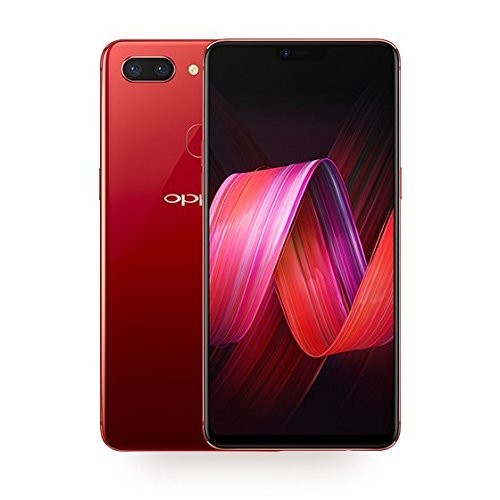
Price: $550
Bottom line: The R15 Pro builds on last year’s R11s with an all-new design and a Super AMOLED display that’s one of the best in its category. The Ruby Red color option in particular looks incredible, and is easily one of the most evocative phones of 2018.
Pros:
- Fantastic design
- Great AMOLED screen
- Decent camera
Cons:
- MicroUSB charging port
- ColorOS needs a lot of work
See at OPPO

OPPO R15 Pro What I like
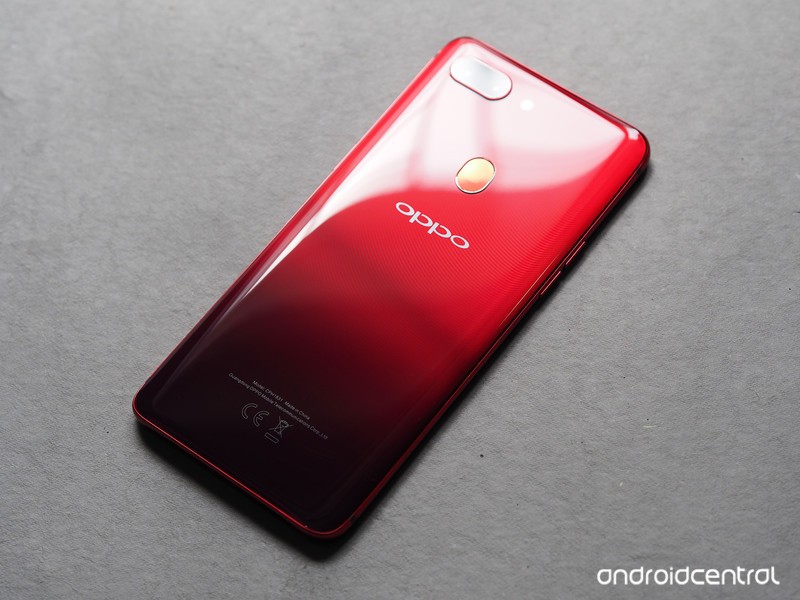
Like most phones launched this year, the R15 Pro comes with a glass front and back, with Gorilla Glass 5 protection on both sides. The highlight of the phone is the gradient pattern at the back — based on how the light strikes the device, it alternates from a vibrant red to a more crimson hue. In short, it looks stunning.
OPPO calls this particular option Ruby Red, and it’s easily one of the best designs the company has come up with thus far. The effect isn’t quite as iridescent as the Honor 10, but it is striking nonetheless.
OnePlus used the R11 as a model for the OnePlus 5 last year, but things are different this time around. Although both the R15 Pro and the OnePlus 6 offer the same 6.28-inch display, there are major differences in the design language — the R15 Pro doesn’t have rounded edges, and is marginally narrower and thicker at the back.
The R15 Pro has a power button on the right and volume buttons on the left, and there’s a headphone jack located at the bottom of the device. You get a single speaker, and it gets sufficiently loud and detailed — but it obviously isn’t as good as phones that offer stereo speakers.
The 6.28-inch Super AMOLED display is fantastic, offering vibrant colors, excellent contrast, and great viewing angles. I had no issues reading the screen in harsh sunlight, and the panel goes all the way down to 2 nits, making it conducive for reading at night. You don’t get the option to select from sRGB or DCI-P3 modes, but there is a setting to adjust the color balance. And like most phones available today, you get a blue light filter for night-time reading.
The color at the back switches from a vibrant red to a crimson hue, and it looks incredible.
On the subject of battery life, I was easily able to get day’s worth of battery consistently from the 3400mAh unit on the R15 Pro. The one downside in this area is that the phone charges over Micro-USB, like the Vivo X21. There’s no place for a Micro-USB port on a $500 phone in 2018, but for what it’s worth both Vivo and OPPO finally made the switch to USB-C with their latest flagships.
The phone features OPPO’s VOOC fast charging solution, which works in the same fashion as Dash Charge. OnePlus, in fact, licenses VOOC from OPPO and rebrands it to Dash Charge. VOOC works at 5V and 4A, resulting in a 20W charge. You get a proprietary wall charger along with a Micro-USB cable in the box, and using a third-party charger will limit the charging output to 10W.
With VOOC fast charging, you’ll be able to top up from zero to 57% in just 30 minutes, and it takes just over an hour and a half for the battery to fully charge. As is the case with most Chinese manufacturers, ColorOS comes with a host of battery-saving optimizations that let the device eke out the most out of the battery.
| Screen | 6.28-inch FHD+ Super AMOLED |
| Chipset | Snapdragon 660 |
| RAM | 6GB |
| Storage | 128GB |
| Rear Camera 1 | 16MP, ƒ/1.7 |
| Rear Camera 2 | 20MP, ƒ/1.7 |
| Front Camera | 20MP, ƒ/2.0 |
| Battery | 3400mAh |
| Connectivity | Wi-Fi 802.11 ac, BT 5.0 |
| Security | Fingerprint sensor |
| Colors | Ruby Red |
| Dimensions | 156.5 x 75.2 x 8mm |
| Weight | 180g |
| Price | $550 |
Whereas OnePlus is all about offering flagship-level performance at the $500 mark, OPPO’s main area of focus is the camera department. OPPO’s tagline continues to be “Camera Phone”, making it clear where the brand’s priorities lie. The dual 16MP + 20MP shooter on the R15 Pro does a fantastic job taking photos in daylight conditions, and is much better at handling low-light scenarios when seen against its predecessors.
While the OnePlus 6 isn’t quite a carbon copy of the R15 Pro, it uses most of the same internal components. As noted above, both phones feature the same 6.28-inch display, and the R15 Pro also has the same 16MP + 20MP dual camera arrangement at the back — including the same sensors. The OnePlus 6 has a slight edge in this area as the R15 Pro is missing out on the Snapdragon 845’s excellent image signal processor, but in most everyday shooting conditions the R15 Pro manages to hold its own in this category.
The camera app itself is identical to what you’d find on the OnePlus 6, with OPPO offering an AI-assisted selfie mode that automatically removes blemishes and cleans up your portraits. The AI feature also recognizes over 120 scenes — much like the P20 Pro. The rear camera has portrait mode, and you’ll be able to choose from various soft lighting options, including film light, tone light, and more.
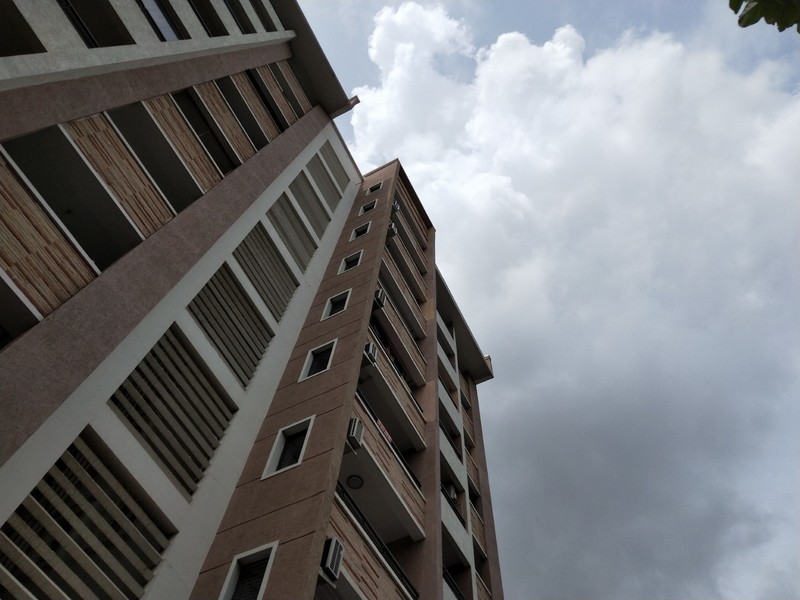
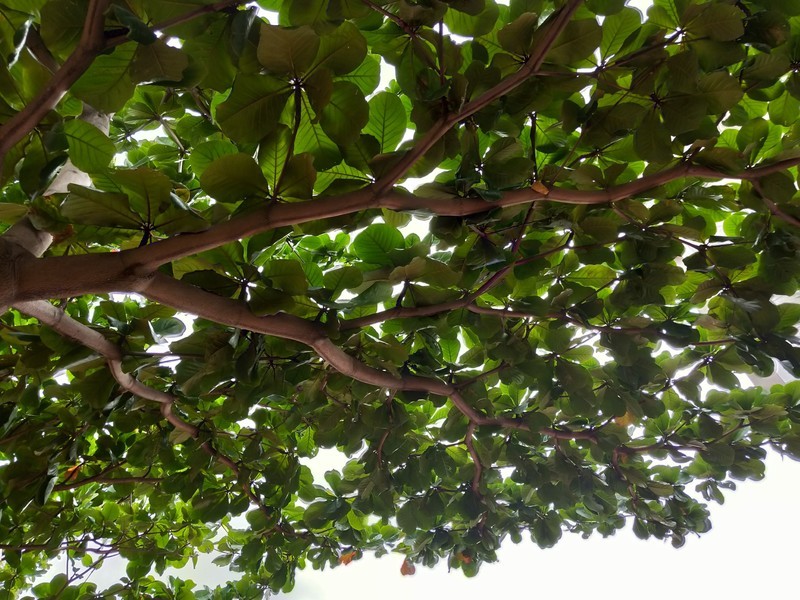
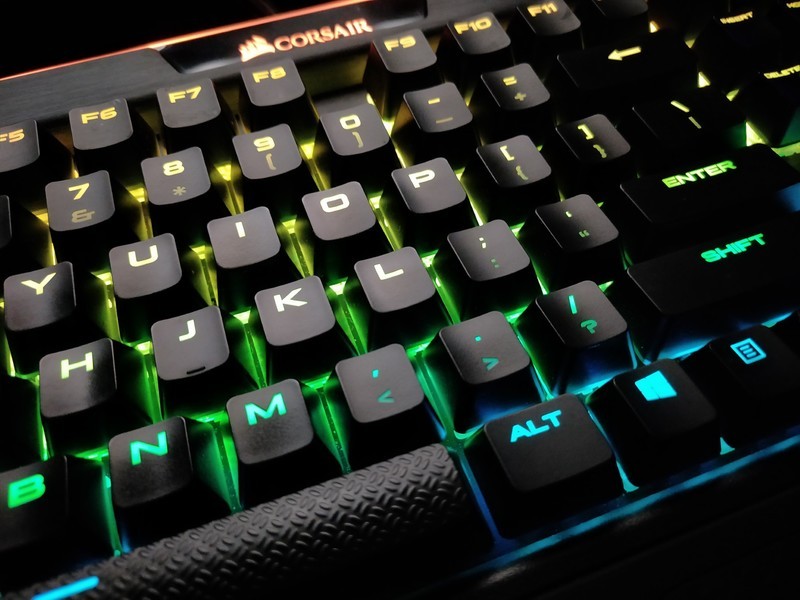
OPPO also offers a face unlock feature on the R15 Pro, facilitated by the 20MP camera at the front. The feature is just as fast as what you’d find on OnePlus phones, with OPPO stating that it uses 120 different points to identify your facial patterns accurately.
If you’re not looking to use the face unlock feature, the fingerprint sensor on the R15 Pro works reliably in everyday situations. The oblong nature of the sensor ensures there’s more than enough surface area to authenticate, and it is just as fast as other phones in this category. Unlike the OnePlus 6, the R15 Pro is rated IP67 for dust and water resistance. The phone also has NFC, facilitating Google Pay.
Like last year’s R11 and R11s, the R15 Pro is powered by a Snapdragon 660, one of the best chipsets you’ll find in this category. The phone also comes with 6GB of RAM and 128GB of storage as standard, and the secondary SIM card slot doubles up as a microSD slot. I faced zero issues using the phone on a day-to-day basis, and while ColorOS has its share of quirks, it doesn’t affect the performance of the device in any way.
The R15 Pro also has a dedicated gaming mode that mutes incoming notifications when you’re in the middle of a game.

OPPO R15 Pro What needs work
Like most other Chinese manufacturers, OPPO offers a custom skin on its phones, called ColorOS. The latest version is the Android 8.1 Oreo-based ColorOS 5.0, and it includes several new features and even more customization options. You get navigation gestures much like those found on OxygenOS, retooled icons, and a new AI feature that speeds up app launch times by predicting your usage behavior.
ColorOS has plenty of customizability, but it is heavily skinned.
While the customization options are welcome, the interface itself needs a lot of work. There’s no app launcher, the settings pane needs an overhaul, and there’s a lot of duplication when it comes to the stock apps. That’s understandable given that there’s no Play Store in China, but the international version of ColorOS also comes with OPPO’s suite of apps.
For all of its foibles, ColorOS isn’t anywhere as bad as Vivo’s Funtouch OS. Install a custom launcher and an icon pack and you won’t even notice a majority of the interface quirks. In this regard, ColorOS is more akin to EMU and MIUI — there’s a lot of customization available should you want it, but you can get rid of it if you prefer a cleaner look.
OPPO R15 Pro Should you buy it?
OnePlus admitted last year that it sources components from OPPO as a way of saving costs, and even though the company announced that it sold a million units of the OnePlus 6, that’s nowhere enough the volume needed to justify the low price.
That’s where OPPO comes in: the brand is currently the fourth-largest smartphone manufacturer globally, and it has a much bigger presence in China and India, allowing it to secure better deals with component makers. Reusing components between companies makes sense from a business perspective, and unlike last year, both devices are distinct enough that most consumers don’t care about the fact that both brands are owned by the same corporate entity.
Overall, the R15 Pro is a great addition to OPPO’s mid-range portfolio. The phone builds on what we saw last year with the R11 and R11s, introducing a new Super AMOLED display and much better cameras. The design has also received an overhaul, and the Ruby Red option is one of the best-looking phones you’ll see in 2018.
4
out of 5
The R15 Pro isn’t actually up for sale outside of a few Asian markets, so it’s highly unlikely you’ll be able to get your hands on one. That said, the phone is a bellwether for OPPO’s ambitions in the mid-range segment as the brand starts making its foray into Western markets.
See at OPPO
Oxford researchers think we’re probably alone in the universe — here’s why
It’s a brainteaser asked by everyone from SETI enthusiasts to the couple of fans who liked the Suicide Squad movie: Are we all alone in the universe? While science has yet to give us an answer on the second part of that conundrum, a new paper from philosophers at the U.K.’s University of Oxford chimes in on the possibility of other alien civilizations — and, sadly, they don’t think it’s looking too good for E.T. and friends.
Their research paper explores the so-called Fermi Paradox, aka the answer to the question “where is everyone else?” Discussions surrounding this topic often involve the Drake equation, a probabilistic estimation of the number of active, communicative extraterrestrial civilizations in our galaxy, based on seven variables. The possible results are an argument that has raged for decades, leading to some investigators concluding that there’s a 53 to 99.6 percent chance that we’re alone in the galaxy, and just a 39 to 85 percent chance we’re alone in the universe.
“Our paper looks at the assumption about ‘reasonable probability,’” Dr. Anders Sandberg, one of the three authors, told Digital Trends. “Normally we speak of one-in-a-million chances and higher, but of course a probability can be arbitrarily small. People tend to be biased when they plug numbers into the Drake equation to make a rough estimate of how many alien civilizations are out there.
“We point out that in addition to estimating numbers, one really needs to estimate how certain they are: If you just multiply them together without taking into account that some of them could have very different values, the result becomes misleading. We demonstrated that if one either take past guesstimates and use their range as a crude estimate of how uncertain we are, or try to sketch what science currently know and estimate how uncertain that is, the paradox goes away.”
Ultimately, they suggest that, even if you’re a really optimistic researcher who thinks there are likely to be lots of alien civilizations, an honest uncertainty estimate “will force you to admit that there is a pretty big chance that we are alone.”
However, Sandberg doesn’t think this means we should stop searching. “Quite the opposite,” he said. “We should acknowledge that there is a nontrivial chance that it will all be for nothing, but given how important it is to figure out if we are alone — among other things it tells us a bit about our own chances of survival — we should not stop. In fact, the search for extraterrestrial intelligence is bringing us important knowledge and ideas about life, intelligence, and technology.”
Check out the researchers’ paper to see if their argument convinces you.
Editors’ Recommendations
- This algorithm identifies the key ingredients to winning a debate
- From vaping to drones, 8 tech trends we may look back on and cringe
- Debating between Apple and Samsung phones? Open your eyes a little wider
- Get your Sagan on with 60 awe-inspiring photos of the final frontier
- MIT trained an A.I. using morbid Reddit captions, and it became a psychopath
Future SD cards could be as fast as an SSD — and hold more than your hard drive
Future SD cards could operate as fast as a speedy solid-state drive (SSD), while others could hold more than data than your current computer. The SD Express will allow up to 985 megabytes per second, while the SD Ultra Capacity has the potential to hold a whopping 128 TB of data. The SD Association unveiled both new card formats on Wednesday, June 27.
The SD Express offers some serious speed by integrating PCI Express and NVMe interfaces, existing tools that essentially turn the small cards into a removable SSD, the SD Association suggests. That design requires a second set of metal connectors on the card, but aligning those additional pins with the extra row on UHS-II cards will help allow the new card category launch with compatible devices already on the market, along with offering backward compatibility.
The 985 MB per second maximum speed offers a boost over the UHS-II card speed of 600 MB per second. That enhanced speed allows the cards to keep up with high-resolution cameras, including shooting virtual reality, 8K and continuous bursts of RAW photos. Serving as a removable SSD drive, the cards can also be used for running mobile applications that require more speed, along with uses for IoT devices and automotive. The association says the first types of SD Express cards will be SDXC and SDHC, as well as the new SDUC.
The second new card type is designed not for speed, but for big capacities. SD Ultra Capacity, or SDUC, has the potential to fit up to 128 TB on a standard-sized SD card. The SDUC card system is defined as cards holding between 2 TB and 128 TB, but exactly what storage options hit the market will depend on the manufacturers.
SD Association sets the standards for memory cards but doesn’t manufacturer them — so while there are now two new SD card categories, it is unclear just how long before it is actually possible to buy one. Fast, high-capacity memory cards are among the highest priced options. A 512 GB UHS-I SanDisk runs for about $300 on Amazon, for example.
The new card types were announced during Mobile World Congress Shanghai.
Editors’ Recommendations
- Here is how to choose the best SD cards for your camera
- Photo FOMO: Faster memory cards, color-neutral filters, and ‘Adventury’ bags
- How to pick the right MicroSD card for the Nintendo Switch
- Photo FOMO: Stash 5 years of footage on this card; daily photos boost well-being
- Panasonic Lumix GH5S review
Future SD cards could be as fast as an SSD — and hold more than your hard drive
Future SD cards could operate as fast as a speedy solid-state drive (SSD), while others could hold more than data than your current computer. The SD Express will allow up to 985 megabytes per second, while the SD Ultra Capacity has the potential to hold a whopping 128 TB of data. The SD Association unveiled both new card formats on Wednesday, June 27.
The SD Express offers some serious speed by integrating PCI Express and NVMe interfaces, existing tools that essentially turn the small cards into a removable SSD, the SD Association suggests. That design requires a second set of metal connectors on the card, but aligning those additional pins with the extra row on UHS-II cards will help allow the new card category launch with compatible devices already on the market, along with offering backward compatibility.
The 985 MB per second maximum speed offers a boost over the UHS-II card speed of 600 MB per second. That enhanced speed allows the cards to keep up with high-resolution cameras, including shooting virtual reality, 8K and continuous bursts of RAW photos. Serving as a removable SSD drive, the cards can also be used for running mobile applications that require more speed, along with uses for IoT devices and automotive. The association says the first types of SD Express cards will be SDXC and SDHC, as well as the new SDUC.
The second new card type is designed not for speed, but for big capacities. SD Ultra Capacity, or SDUC, has the potential to fit up to 128 TB on a standard-sized SD card. The SDUC card system is defined as cards holding between 2 TB and 128 TB, but exactly what storage options hit the market will depend on the manufacturers.
SD Association sets the standards for memory cards but doesn’t manufacturer them — so while there are now two new SD card categories, it is unclear just how long before it is actually possible to buy one. Fast, high-capacity memory cards are among the highest priced options. A 512 GB UHS-I SanDisk runs for about $300 on Amazon, for example.
The new card types were announced during Mobile World Congress Shanghai.
Editors’ Recommendations
- Here is how to choose the best SD cards for your camera
- Photo FOMO: Faster memory cards, color-neutral filters, and ‘Adventury’ bags
- How to pick the right MicroSD card for the Nintendo Switch
- Photo FOMO: Stash 5 years of footage on this card; daily photos boost well-being
- Panasonic Lumix GH5S review
 AIVAnet