


Here’s a real version of that endlessly spinning top from ‘Inception’
Remember how, in Christopher Nolan’s Inception, Leonardo DiCaprio’s character Dom Cobb uses a spinning top to work out whether he’s awake or dreaming? If the top spins a few times and then topples over, Cobb knows he’s awake. If it keeps spinning in perpetuity, he understands that he’s asleep. Well, the team behind a new Kickstarter campaign just blurred the lines between reality and the dreamworld in a big way — courtesy of a metal top that’s capable of spinning for hours on end.
Called Limbo, the metal spinning top achieves this by way of a hidden silent mechanism which functions as a gyro, and keeps the top running for as long as the battery still has some juice left in it. Inside the top, there’s a rechargeable battery, a special asymmetric flywheel motor, a high-end motion sensor, and an advanced system-on-a-chip which constantly monitors Limbo’s stability and applies dozens of motion corrections every second.
Essentially, the in-built accelerometer senses the direction and spin speed of the top, and then uses an algorithm to adjust the power of its motor accordingly. When Limbo senses that it is slowing down, the motor accelerates — and so does the top.
“What makes Limbo so magical is its ability to learn and adapt to the surface it’s spinning on,” Tom Ben Yehuda, chief technology officer at manufacturer Fearless Toys Ltd., told Digital Trends. “It was surprising even for us to witness how clever the control algorithms proved to be. We’ve tried to spin it on some really crazy objects. The first time we spun Limbo on a tomato it was really confused, but in a few seconds time the algorithm figured out the surface and it was like, ‘yeah, I can do that!’
Yehuda said that the biggest engineering challenge of the project was squeezing its myriad components into less than three cubic centimeters of space, the equivalent of roughly half a teaspoon. The finished assembly weighs only around 16 grams in an effort to maximize its efficiency.
If you’re in doubt about how well it works, don’t be: The team has just received an official record from the team at the Guinness World Record for longest spinning mechanical top. Their record? 27 hours, 9 minutes and 24 seconds. Considering most tops spin for mere minutes, that’s astonishing.
As ever, we offer our usual cautions about the potential risks of pledging for crowdfunding campaigns. However, if you’re keen to get your hands on a Limbo spinning top, you can head over to the project’s Kickstarter page. A Limbo top starts at $49, although you’ll have to be quick to secure this price point. Shipping is set to take place in December.
Editors’ Recommendations
- Awesome Tech You Can’t Buy Yet: Smart Rubik’s Cubes, diving drones, robot artists
- LG V35 ThinQ: Here’s everything you need to know about LG’s newest flagship
- Acer Nitro 5 Spin review
- Here’s what we know about the Atari VCS retro hybrid console
Oppo Find X hands-on review
Research Center:
Oppo Find X
It’s hard not to be excited by the Oppo Find X. It has a space-age style that will turn heads, flagship specifications that’d make the Galaxy S9 Plus think twice before asking for a fight, and a spotlight feature that’s both pure Oppo, and a fun solution to current smartphone design challenges. What’s not to like? Well, the price isn’t one we’re keen on, but more on that later.
Comfortable design
Get the Oppo Find X in your hand and you’ll want it to stay there. This is a supremely comfortable phone to hold, masterfully shaped to match the palm of your hand without spilling over due to size, or slipping out due to a glossy body. It’s still reflective, a fingerprint magnet, and shiny, but it never wanted to break free from our grip.
This is a supremely comfortable phone to hold.
We’ve seen two colors — a red and a purple — but these bright hues are only accented on the main body, before coming into their own along the sides. It looks stunning.
It’s at this point you’ll notice something different about the Find X. There’s no camera on the back or the front. Has Oppo gone mad? The camera is quite often our number one reason for choosing one device over another, and getting rid of it would be like zapping phones back in time by more than a decade. No, Oppo has brought back a feature we loved the first time we saw it on the Oppo N3 in 2014 — a motorized camera array.
Andy Boxall/Digital Trends
It’s about as flashy as phone features get. Tap the camera icon and the top of the phone silently rises out of the body, revealing a dual-lens camera on the back and a single lens over the screen. The raised camera section is about a centimeter in height, and by the time the camera app is opened and the viewfinder active, it has completed its mechanical mission. It’s not irritatingly long to wait, but it’s definitely not as fast as direct access to the camera from a home screen, such as in iOS.
Oppo’s confident on the reliability of the mechanism, and said it has been tested to 300,000 extensions.
We know what you’re thinking. This is a gadget waiting to go wrong. Hopefully not. Oppo’s confident on the reliability of the mechanism, and said it has been tested to 300,000 extensions, which Oppo claims is the equivalent to about five years of average use. It doesn’t wobble around, and it doesn’t poke out so far that you’ll worry about it snapping off. However, there is a gap between it and the body when extended that could let dirt and grime accumulate over time, and of course its existence means the phone is not water resistant.
Full screen display, ‘O-Face’
However, these are the compromises one must make to have the front of the phone made up of entirely all screen — a 93.8 percent screen-to-body ratio — without the dreaded notch. Oppo has also implemented face unlock, which it has made the mistake of calling O-Face, reducing the feature to little more than a tasteless joke. It’s a shame, because O Face works rather well. We registered our face and tried it out. Wake the phone and the camera array rises before recognizing you and unlocking the phone.
Put alongside the iPhone X, the time difference is minimal and there was no need to swipe the screen to complete the action on the Find X. There’s no fingerprint sensor on the Find X, but Oppo says the 3D scanning camera is secure enough for use with payments. We couldn’t find a manual override to keep the camera extended, making it slow to use in environments where you may want to take a photo quickly. There is a shortcut on the lock screen, but O Face had usually unlocked the screen before we swiped it, slowing the process of opening the camera.
Software and specs
The software on the Find X we tried was still being finalized, and it’s also the Chinese version of Oppo’s Color OS user interface. The Find X will be sold in France, Spain, Italy, and the Netherlands — Oppo’s first major entry into Europe — and eventually in the U.K. and the U.S. too. When it does arrive, Google Play will be installed, along with Google Assistant, Google Lens, and an alternate version of Color OS.
Oppo Find X Compared To
Samsung Galaxy S9
Nokia 7 Plus
HTC U12 Plus
LG G7 ThinQ
Moto Z3 Play
LG V35 ThinQ
Motorola Moto G6
Moto G6 Plus
Xiaomi Mi Mix 2S
Honor 10
Moto E5 Plus
Sony Xperia XA2 Ultra
Huawei P20 Pro
Nuu G3
Cat S61
Oppo is also introducing artificial intelligence features with the Find X, including scene recognition in the camera, and special portrait lighting modes. We tried this out briefly after launch and it recognized an indoor environment, and food too. It wasn’t as fast as the Huawei AI system, nor as doddering as LG’s. The AI, along with the phone itself, is driven by a Snapdragon 845 processor and 8GB of RAM, plus 256GB of internal storage. This is a seriously high-spec device.
Price and availability
High-end specifications, cutting-edge design, and motorized cameras also mean a high price tag. The Find X will cost 1,000 euros when it goes on sale in August, which converts over to $1,156. That’s iPhone X money, making the Find X very expensive indeed. Apple gets to charge that because it’s Apple. Oppo doesn’t have the same brand recognition yet, so the Find X — despite all its flash and ability — will be a hard sell.
A special edition phone made in collaboration with Lamborghini will be a harder sell at about $1,965.
A special edition phone made in collaboration with Lamborghini will be an even harder sell at 1,700 euros, or about $1,965; but it does have one supremely desirable feature — Super VOOC charging. The Find X has standard fast-charging VOOC, which is Oppo’s speedy battery charging technology. We saw Super VOOC demonstrated at MWC 2016, and this is the first time it will be used in a production phone. It charges the battery from zero to 100 percent in just 35 minutes. That’s a hugely desirable feature. The Lamborghini special edition has a textured carbon fiber body too.
The partnership was touted along the same lines as that between Porsche Design and Huawei, with Lamborghini saying the Find X was the first collaboration between the two companies. It’s not known how much input Lamborghini had in the design, and the only model of the phone we’ve seen was set behind glass, but the design looked identical.
The Find X is genuinely exciting. Whether it’s 1,000 euros worth of exciting will only become clear when we’ve spent some more time with the phone, and most importantly seen the final Euro/US version of the software. But the joy of seeing the camera rise and fall isn’t going to quickly get old, and we suspect we’ll see many of the design elements from the Find X in other devices in the future.
Instagram’s IGTV is a new Stories-like home for vertical long-form videos
Instagram is celebrating a billion users by giving video platforms a twist with a new app designed for vertical, mobile-first video. On Wednesday, June 20, Instagram officially launched the previously rumored IGTV, a spot for vertical videos up to one hour in length with Story-like fullscreen swipe controls. The new video-focused platform that Instagram co-founder and CEO Kevin Systrom calls “our most exciting feature to date” is both a separate app and accessible inside Instagram.
Rather than working as a YouTube or Facebook Watch clone, IGTV feels more like a mix between Stories and the more traditional online video platforms because of both the user interface and the fact that IGTV is a mobile-first platform. That smartphone focus means IGTV uses the vertical videos that don’t require rotating the device for a full-screen view.
Instead of interrupting that full-screen view with navigation controls, IGTV uses swipe-based gestures to navigate to different videos. The app will open directly into a video that starts playing automatically, not a home screen to pick and choose videos. A swipe up, Instagram says, will pull up additional videos, sectioned off into tabs for different categories, including For You, Following, Popular, and Continue Watching. That swipe up navigation also includes a search tool.
While the full-screen design and gestures feel more like watching Stories, IGTV borrows a few more expected features from platforms like YouTube and Vimeo. The platform is divided into channels, with one channel for each user. And while IGTV is designed for mobile viewing, the videos can be uploaded through the app or from a desktop.
IGTV has a one-hour time limit, a big jump from Instagram’s one-minute cap on videos shared inside the feed. The videos also have the same like, comment, and direct shortcuts as content in the Instagram feed.
IGTV will be a separate Instagram app, but the long-form videos will also be integrated into Instagram itself. Instagram shared a screenshot showing the familiar Instagram but with an icon for IGTV with pop-out notifications.
IGTV continues the focus on video for Instagram’s parent company, Facebook. As video stats for online interaction continue to climb, Facebook has made several moves to encourage video sharing across the company’s different platforms. On Tuesday, June 19, Facebook expanded videos with new polls and an interactive game show-like feature for creatives. Instagram’s one-minute cap has kept the video focus on short-form sharing — at the company’s latest earnings call, Mark Zuckerberg had called Stories the future of video sharing.
The popularity of Instagram Stories over other apps variations suggests a video app with similar features may do well among the Instagram crowd, but just how well is yet to be determined. Instagram is a popular home for professional photographers as well as casual users and social influencers — IGTV’s vertical format could mean more influencers sharing than pro-videographers. nstagram says IGTV is coming out “over the next few weeks” for both iOS and Android.
Editors’ Recommendations
- Shop Stories, not stores, with Instagram’s latest update
- You might soon be watching a lot more video on Instagram
- From video chat to AR filters, Instagram builds long list of new tools
- Upload Stories faster — or preview the entire thing — with new Instagram tools
- Don’t drown your phone for an Instagram — GoPro now has Stories built in
Best Car Chargers for Google Pixel and Pixel 2
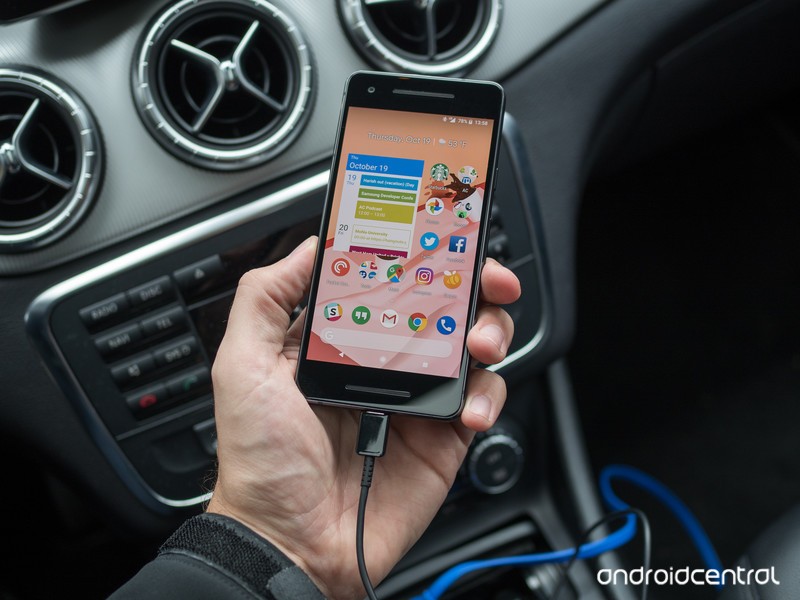
Here are our favorite USB car chargers to keep your Pixel topped up on the road.
We’ve all been there (some of us more than others): you hop in your car ready hit the road, and then you check your phone — it’s dying at a rapid pace! You’ve barely enough battery to get to your destination, let alone for the rest of the day once you get there.
Well, that’s what car chargers are for, and if you have a Google Pixel or Pixel 2, this list should be particularly resonant for you. Here are some of the best car chargers you can buy for your Pixel or Pixel 2.
- Aukey USB-C PD
- Aukey Quick Charge 3.0
- Spigen 30W
Aukey Car Charger with 27W USB-C PD and 5V/2.4A USB-A

Aukey’s charger features both a USB-C port and a USB-A port, which is great for giving you the best options to charge all modern phones. You can charge your Pixel or Pixel 2 over USB-C at a full 27W, which is the “rapid charge” rate you’d get from the in-box wall charger. At the same time, you can charge another device over USB-A at a respectable 5V/2.4A — enough to get any other phone charged up pretty quickly. This is the way to go if you have multiple devices (or people) in the car with different charging systems.
With 27W of output, this Aukey charger can even charge up USB-C tablets and laptops, which is another big plus.
The fastest possible charging speeds, plus an extra USB port for your copilot’s phone, wrapped up into one small device that barely protrudes from your car’s outlet. All this for just $20. Remember, you’ll have to bring your own USB-C cable to use this charger.
See at Amazon
Aukey Car Charger with 5V/3A USB-C and Quick Charge 3.0 USB-A
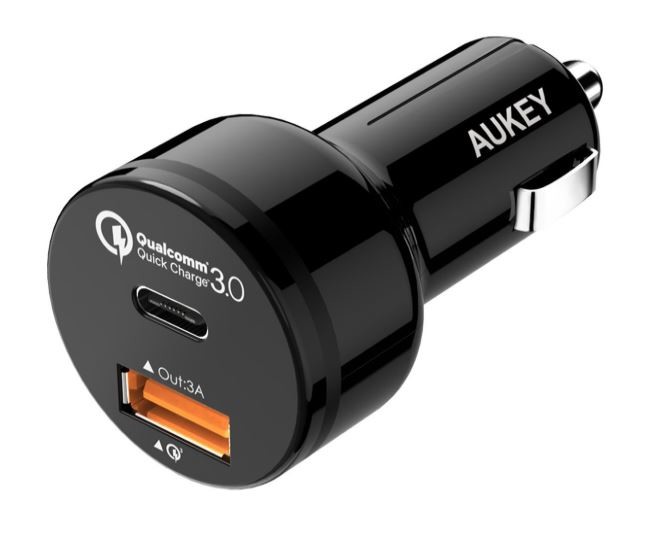
Aukey makes a slightly different version of its car charger, and you have to look at the details to tell which one you’re getting — the quickest way to tell is that this model has Quick Charge 3.0 branding. The rest of the casing is the same, which is to say it’s compact and doesn’t stand out.
This version of the charger has a USB-C port with 15W of output, which will still charge up your Pixel or Pixel 2 quickly but doesn’t match wall charging speeds. In return, the USB-A port below it has Quick Charge 3.0, which will charge most other modern Android phones extremely fast, just as they would from a wall charger.
It’s a small trade-off, and really depends whether you value being able to rapidly charge your Pixel or other USB-C PD devices more than getting top-speed phone charging on the USB-A port. It’s also a tad cheaper, coming in at $16.
See at Amazon
Spigen 30W Quick Charge 3.0 Dual USB-A car charger
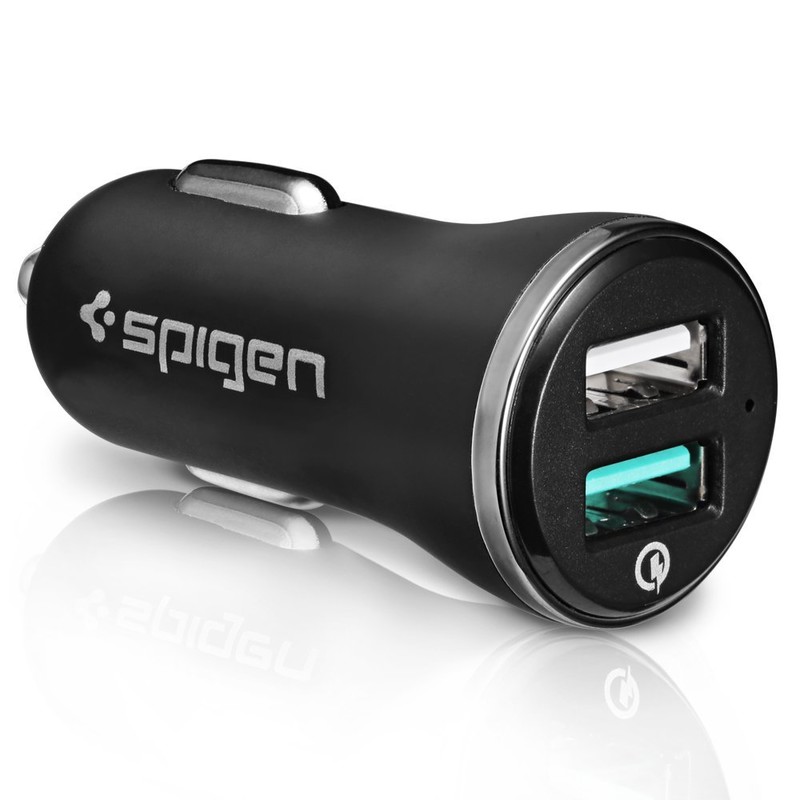
Spigen is a popular brand in smartphone accessories, and its dual USB car charger is a high-quality part that won’t overheat your Pixel or Pixel 2. While it’s not USB-C PD compliant since it uses USB-A, it supports Qualcomm’s Quick Charge 3.0 standard, which still offers pretty quick speeds for Pixels and can also charge up other phones extra fast.
The beauty of the Spigen charger is that it supports a total of 30W between the two ports, so even with two phones plugged in they’ll both charge up at the maximum rate. The best part? It’s only $10 — for some people, that’s worth giving up USB-C PD for.
See at Amazon
Your picks?
Are you using an awesome USB-C charger that we didn’t mention? Let us know in the comments below!
Google Pixel 2 and Pixel 2 XL
- Pixel 2 FAQ: Everything you need to know!
- Google Pixel 2 and 2 XL review: The new standard
- Google Pixel 2 specs
- Google Pixel 2 vs. Pixel 2 XL: What’s the difference?
- Join our Pixel 2 forums
Best Buy
Verizon
Google Store
Project Fi
Update June 2018: Belkin’s car charger has been removed, replaced by a new Aukey charger that has both 27W USB-C PD and a second USB port for another device. The original Aukey charger and inexpensive Spigen option remain.
These are the Nokia phones that have been updated to Android Oreo
Follow Oreo’s rollout to Nokia phones right here!
Software updates have long been one of Android’s pain points, but one OEM that’s proven to excel in these regards is Nokia.
HMD Global is producing some of the best mid-to-low-range Android phones right now, and the company does an excellent job at ensuring the phones it releases are updated to new software versions as quickly as possible.
If you have a Nokia phone and are wondering when Oreo is heading your way, keep reading below!
Nokia 2

The Nokia 2 first got its taste of 8.0 Oreo on June 20, 2018. The update’s initially rolling out to the Nokia 2 through the Nokia Phones Beta Labs, which you can easily sign up for on Nokia’s website if you aren’t already.
Nokia usually pushes its big software updates to all users after about a month or from sharing it with the Beta Labs, so we should expect 8.0 to roll out to all Nokia 2 users at some point in July.
Nokia 3

Going a small step up from the Nokia 2, the Nokia 3 is rocking and rolling with Android Oreo as we speak.
Nokia first pushed 8.0 to the phone through Beta Labs on February 26, and on April 11, it went live for all users.
Nokia 5

Moving right along to the Nokia 5, Nokia released 8.0 to Beta Labs way back on December 12, 2017. A little more than a month later, 8.0 Oreo was made available for all Nokia 5 owners on January 30, 2018.
A few months later, Nokia released Android 8.1 Oreo to the Nokia 5 as a full public release on March 28.
Nokia 6

The Nokia 6 is was one of the best mid-range phones of 2017, and so far throughout its life, Nokia’s done an exceptional job at keeping it up to date with the latest software.
Through the Beta Labs program, 8.0 arrived on the phone on December 12, 2017. The public version of 8.0 then followed on January 30, 2018, and March 28 saw the full release of 8.1.
Nokia 8

Last but not least, Nokia’s big 2017 flagship — the Nokia 8. On October 25, 2017, Nokia released 8.0 Oreo to users of the phone enrolled in Beta Labs. On November 24, the final 8.0 build was pushed to all owners.
Not too long after that, Nokia launched 8.1 Oreo through Beta Labs on January 23, 2018. After a short time of testing, 8.1 made its way to everyone on February 14.
Android Oreo
- Android Oreo review!
- Everything new in Android Oreo
- How to get Android Oreo on your Pixel or Nexus
- Oreo will make you love notifications again
- Will my phone get Android Oreo?
- Join the Discussion
Pressure cookers, mechanical keyboards, hard drives, and more are all discounted today
Whether you’re looking for new tech gear or household items, we’ve got you covered.
We found plenty of great deals today that include big discounts on the Instant Pot pressure cooker, the Corsair K95 mechanical keyboard, the FireCuda hard drive, and more! Time’s running out to take advantage of these prices, so hurry!
View the rest of the deals
If you want to know about the deals as soon as they are happening, you’ll want to follow Thrifter on Twitter, and sign up for the newsletter, because missing out on a great deal stinks!
Samsung Galaxy S7 Oreo update: Which versions have received it
Follow Oreo’s journey to the S7 series right here.
The Samsung Galaxy S7 is far from Samsung’s latest and greatest, but it’s still kicking thanks to an update to Android Oreo. The new software has recently started making its way to the S7 and S7 Edge, and these are the versions of which it’s arrived on so far.

United States
AT&T
Galaxy S7 and S7 Edge owners started receiving the long-overdue Oreo update on Saturday, June 9, and it’s available as build number G93xAUCU4CRE4.
The update comes in at 1789MB (at least for the S7 Edge) and comes with the April 2018 security patch. That’s pretty outdated at this point, but it’s better than what we had before Oreo’s arrival.
Verizon
Oh, Verizon. Big Red tried rolling out the Oreo update for the S7 and S7 Edge twice, and each time, pulled it without much explanation. However, assuming that third time’s the charm, this third (and hopefully final) release of Oreo for the Verizon Galaxy S7 series should be the real deal.
Android 8.0 Oreo started hitting S7 handsets on Verizon shortly after AT&T on Monday, June 11 and the firmware version is updated to G930VVRU4CRE5 and G935VVRU4CRE5 for the S7 and S7 Edge, respectively.
Similar to AT&T, the April 2018 security patch is included with the update.
Sprint
Following AT&T and Verizon, Sprint began updating its Galaxy S7 and S7 Edge during the week of June 18.
This is the exact same Oreo update you’ll find on other carriers, meaning you’ll get features like Google’s Autofill for easier password entry, notification dots, picture-in-picture video, etc.
Canada
Rogers / Fido
Rogers, one of the largest Canadian carriers, recently updated its Android Oreo release schedule for its supported phones to reveal that 8.0 Oreo is heading to the Galaxy S7 and S7 Edge on Monday, June 11.
Also, since Fido is owned by Rogers, anyone that purchased a Galaxy S7 / S7 Edge through Fido should expect Oreo to arrive on their phones beginning on that same day.
Unlocked
UK
According to various reports on Reddit, the unlocked version of the Galaxy S7 and S7 Edge have begun receiving over-the-air updates that bump them up to Android 8.0 Oreo / Samsung Experience 9.0 – the same software found on the Galaxy S9 series.
The model numbers getting the update include SM-G930F and SM-G935F, and Oreo should change their build numbers to G930FXXU2ERD5 and G935FXXU2ERD5, respectively.
You’ll know you’ve been graced with Oreo’s good fortune when you have a 1.27GB update file waiting for you.
Updated June 20, 2018: Updated this list to include Sprint.
Android Oreo
- Android Oreo review!
- Everything new in Android Oreo
- How to get Android Oreo on your Pixel or Nexus
- Oreo will make you love notifications again
- Will my phone get Android Oreo?
- Join the Discussion
What’s new on Amazon Prime Video, Netflix and Hulu in July 2018
 Iliza Shlesinger’s “Elder Millennial” special hits Netflix in July. (Image credit: Netflix)
The best of the streaming giants is yet to come.

So you’re looking for some way to avoid the outdoors. To instead waste away your summer inside, watching the very best that the streaming services have to offer. We feel ya. It’s just too damn hot out there. And there are bugs. And ultraviolet rays shooting through the sky at the speed of … ultraviolet rays.
It’s scary out there. Let’s stay inside.
The problem is knowing that’s on. What’s good on streaming TV. What new stuff we have to watch.
We’ve got your full list of what’s new at CordCutters.com. Check it out:
What’s new on Netflix for July 2018What’s new on Amazon Prime Video for July 2018What’s new on Hulu for July 2018
Introducing CordCutters.com
- The hardware you need
- All about streaming services
- What channels are on which service
- FREE over-the-air TV
- How to watch sports
- Join the discussion
Get the latest deals
Instagram announces IGTV — a new app for watching long-form videos
IGTV content will also be sprinkled throughout the main Instagram app.
On June 20, Instagram announced its next big addition to the popular photo and video-centric social network — IGTV.

IGTV is Instagram’s big push into the world of long-form video content, and while you can already create and consume videos on Instagram through Stories and regular posts, these are all limited to just a few seconds. With IGTV, videos can be a max of 60-minutes-long.
Videos made for IGTV will all be presented in a vertical format similar to what we’ve seen from shows on Snapchat. According to Instagram, “IGTV is built for how you actually use your phone: vertical and full screen.”


IGTV will soon be integrated into Instagram, with new IGTV bubbles appearing on the profiles of people you follow. Along with that, Instagram’s also creating an entirely separate IGTV app that’ll start playing videos as soon as you open it. Through the new app, you’ll be able to watch videos from people you follow and creators Instagram thinks you’ll be interested in.
As for who can create content for IGTV, Instagram notes that “anyone can be a creator on IGTV and upload videos in the app or on the web.”
IGTV will be making its way to users over the coming weeks.
Instagram’s ‘Data Download’ lets you save all your content offline
Get Netgear’s Orbi mesh networking system and CM700 cable modem for $314
It’s always better when we’re together.
Netgear is bundling the Orbi mesh-networking system and the CM700 cable modem together for just $313.98.

The Netgear Orbi mesh networking system is $294.38 by itself. The CM700 cable modem is around $90 with the on-page coupon. So the bundle is really helping you save if you’re looking for extreme Wi-Fi coverage.
Honestly, this system is a bit overkill for the average Internet consumer. You might not have Internet fast enough to make use of everything it’s capable of. This would be ideal for a small office or business, though. The CM700 is a 32×8 DOCSIS 3.0 cable modem capable of download speeds up to 1.4Gbps. The Orbi mesh networking kit includes three Orbi wireless satellites. It covers more than 6,000 square feet in a Wi-Fi blanket. If you did invest in this, you could think of it as future-proofing as these will be able to cover anything your ISP throws at you for years to come.
See on Amazon
 AIVAnet