


AT&T Follows Time Warner Acquisition With Reveal of Live ‘WatchTV’ Service and New Unlimited Phone Plans
One week after completing its acquisition of Time Warner, AT&T today announced the impending launch of an all-new live TV service called “WatchTV,” which unsurprisingly includes many channels under the Time Warner umbrella (via Engadget). This appears to be the service not focused on sports that AT&T CEO Randall Stephenson said in April would be coming very soon.
The announcement came alongside AT&T’s reveal of two new unlimited wireless plans, called “AT&T Unlimited &More” and “AT&T Unlimited &More Premium.” WatchTV will be directly tied into these cellular plans, offering plan subscribers access to the TV service at no additional cost.
The service includes 30+ live channels, over 15,000 TV shows and movies on demand, and will be available on “virtually every” smartphone, tablet, browser, and streaming device. Subscribers to &More Premium will be able to add one of several premium services for no extra charge: HBO, SHOWTIME, Cinemax, Starz, Amazon Music Unlimited, Pandora Premium, or VRV.
Here’s the full list of channels available on WatchTV at launch:
- A&E
- AMC
- Animal Planet
- Audience
- BBC World News
- BBC America
- Boomerang
- Cartoon Network
- CNN
- Discovery
- Food Network
- FYI
- Hallmark Channel
- Hallmark Movies & Mysteries
- HGTV
- History
- HLN
- IFC
- Investigation Discovery
- Lifetime
- Lifetime Movies
- OWN
- Sundance TV
- TBS
- TCM
- TLC
- TNT
- TRU TV
- Velocity
- Viceland
- WE TV
Channels coming soon after launch include:
- BET
- Comedy Central
- MTV 2
- Nicktoons
- Teennick
- VH1
The &More Premium plan (starting at $80/month for an individual line) offers WatchTV, a premium service add-on, 15GB of high-speed tethering, access to 1080p high definition video, and a $15 monthly credit to put towards DirecTV, DirecTV Now, or U-verse TV, similar to the carrier’s current unlimited plans. On the lower tier, &More (starting at $70/month) offers WatchTV, a $15 monthly credit to DirecTV Now, access to 480p video, and up to 4G LTE unlimited data.
AT&T didn’t give many other details about the new unlimited plans, but said that more information will be coming when they launch, which is expected sometime next week. Additionally, the company confirmed that WatchTV will be available as a $15/month standalone live TV streaming service for those not on an AT&T unlimited cellular plan, and those details will also come at a later time.
Tags: AT&T, Time Warner
Discuss this article in our forums
Bitter lawmakers tell Google to justify Huawei link, after AI military deal ends
After Google decided not to renew a contract with the U.S. Department of Defense, lawmakers in the United States have written a strongly worded letter to CEO Sundar Pichai voicing concerns over what it calls a, “strategic partnership,” with Chinese smartphone brand Huawei. Once again, the letter refers to alleged security concerns over Huawei, and adds it’s disappointed, “that Google apparently is more willing to support the Chinese Communist Party than the U.S. military.”
The letter confirms that Google has backed away from the controversial Project Maven deal it made with the Department of Defense, in which it would assist with the creation of artificial intelligence to enhance drone strike targeting systems. Google’s involvement caused an internal rift, with 4,000 Google employees putting their names on a petition urging Pichai to end the deal, and to publish a policy statement saying the company would never build technology used for warfare.
Google attempted to calm the situation with an explanation over the project’s aim, which it claimed was non-offensive and would help computers identify and avoid civilian casualties; but it was argued this technology would also would enable a AI system capable of selecting humans for targeting. Approximately a dozen Google employees are said to have resigned over Project Maven, which in the ultra-competitive world of artificial intelligence, may have been a cause for concern at the firm.
Bitter response
The expertise provided by Google to the Department of Defense on Project Maven will inevitably be missed. The June 20 letter to the company makes it clear Google’s decision is the driving force behind it. In it, almost mirroring the internal response Google employees had to Maven, the five Senators and Members of Congress urge Pichai to reconsider the partnership with Huawei, then directly adds, “particularly since your company recently refused to renew a key research partnership, Project Maven, with the Department of Defense.”
It closes by asking for a response with a, “rationale for your decision to partner with Huawei but not the U.S. military, as well as your plans to mitigate the grave risks of working with Huawei.”
In response, Google told Reuters it has dozens of agreements with international manufacturers, that it doesn’t provide special access to Google user data, and it has numerous security and privacy agreements in place to protect the data. Google added it looked forward to responding further.
Google released its policy on developing AI technology on June 8, confirming it won’t develop for weaponry; but would still work with the military on other applications. Huawei and ZTE, another Chinese technology company, have faced heavy criticism over alleged privacy and security issues in the U.S. during 2018.
Editors’ Recommendations
- Google reportedly plans to end involvement with Project Maven
- Huawei to refocus its efforts on other markets in the face of U.S. roadblocks
- Google done weaponizing A.I., will still work with military and governments
- Huawei sees strong rise in profit for 2017, despite U.S. opposition
- New blow for ZTE and Huawei: Devices pulled from military base stores
Hulu: Everything you need to know
From $7.99 to $39.99 per month, Hulu has a lot to offer.
Video streaming services are more popular than they’ve ever been, and one of the companies that’s been leading this charge since the beginning is Hulu.
Founded in October of 2007, Hulu has long been one of the most popular services for TV fanatics. It’s gone through a lot of changes over the years, and the point we’ve now reached is pretty darn great.
Whether you’re just now hearing about Hulu or want some clarification about its live television plan, you’ve come to the right place. Here’s everything you need to know about Hulu!
On-demand streaming starts at just $7.99

Similar to Netflix, Hulu gives its users on-demand access to a library that contains thousands of movies, TV shows, and original programs crafted exclusively for Hulu.
The cheapest plan costs $7.99/month, and while you get access to all of the shows Hulu has to offer, you’ll watch them with small commercial breaks throughout. These commercials aren’t nearly as bad as the ones you get with traditional TV programming, but they can interrupt the flow of the story if you’re especially engrossed in something like The Handmaid’s Tale.
Thankfully, Hulu has a more expensive $11.99/month plan that gets rid of these commercial breaks. Some shows still come attached with a small ad before they start, but you won’t have to deal with any interruptions once it gets going.
You can get live TV, too

If you want even more content to watch, Hulu manages to stand out on its own by also including a plan called “Hulu with Live TV.” For $39.99/month, Hulu with Live TV allows you to watch more than 50 live channels across a variety of genres in addition to the platform’s on-demand content with limited commercials.
Some of the channels included with this plan are ABC, Food Network, Cartoon Network, HGTV, TBS, History Channel, ESPN, and plenty more.
You can also enhance your viewing experience with add-ons for HBO, Cinemax, Showtime, a more powerful cloud DVR, and increase the number of screens you can watch on at once.
There are Hulu apps for just about everything

No matter what device you have, chances are you can download a Hulu app for it.
Hulu’s available on Android, iOS, Roku, Xbox, Amazon Fire TV, Chromecast, etc. Heck, there’s even a Hulu app for Nintendo Switch!
The Hulu with Live TV plan is available on a slightly smaller list of gadgets, however, with one of the most notable omissions being Android TV.
Check out the full list of Hulu’s supported devices
Hulu comes included with Sprint’s unlimited plans
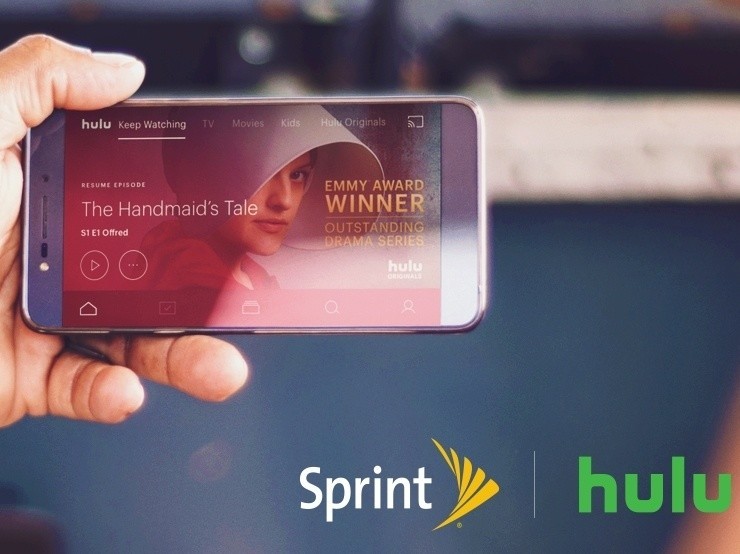
If you subscribe to Sprint for your wireless phone service, we’ve got good Hulu news for you!
As long as you’re paying for Sprint Unlimited Freedom, you get Hulu’s $7.99/month Limited Commercials plan included for free.
Commercials aren’t fun, but for the price of free, you really can’t complain about them.
Learn more at Sprint
New customer? You can get a one-month free trial!
Hulu’s easily one of the best entertainment deals around, and if you’re not on Sprint and unsure if it’s a good fit for you, Hulu lets you test-drive the service completely free for one full month.
If you sign up for Hulu with Live TV, you’ll get a week-long free trial before your credit card is charged.
See at Hulu
Amazon Fire TV Cube is officially available today!
And be sure to check out those trade-in discounts.
 Today’s the day, folks. Amazon Fire TV Cube is officially available. And that means a couple things. First is that for those who preordered, it’ll be in your mailbox or on your doorstep (or wherever you receive boxes of things) today. Not tomorrow, today. If you order one today, it can be here tomorrow. Because that’s how ordering things online works.
The other thing you need to know is that Amazon is still offering up to $35 off a new Fire TV Cube if you trade in your old streaming device. That includes devices from Roku, Apple TV, and Chromecast, and it’s something you should definitely look into.
Otherwise, Amazon Fire TV Cube will run you $119 — though it does still also come with a $10 credit to Amazon Prime Video when you activate your Cube. Huzzah!
See at Amazon
Introducing CordCutters.com
- The hardware you need
- All about streaming services
- What channels are on which service
- FREE over-the-air TV
- How to watch sports
- Join the discussion
Get the latest deals
How to Identify and Remove Unnecessary Apps on Your iPhone and iPad
With so many paid-for and free apps available on the App Store these days, it’s easy to reach a point where you have so many of them on your iPhone or iPad that a sizable proportion are simply forgotten about, and soon storage space starts to become an issue.
Fortunately, there’s an easy way that you can keep tabs on which apps you use the most and which ones have basically become redundant to you, and are just adding needless clutter to your home screen and eating up storage. Follow the steps below to learn how it’s done.
How to Identify and Delete Redundant iOS Apps
Launch the Settings app on your iPhone or iPad.
Tap General.
Tap iPhone Storage.
A list of all the apps (including stock apps) on your iOS device will load in order of size, with the largest apps listed first. Scroll down the list and look at the Last Used: date underneath the title of each app. If it’s been several weeks or months since you opened an app, or it says Never Used, then consider uninstalling it – tap the app in the list.
Two uninstall options are presented on this screen. Tap Offload App to unload the app but preserve any documents and data (these are reinstated if you later reinstall the app) or tap Delete App to remove the app and all related data from your device.
If you tend to download a lot of apps that often get left unused, consider enabling the iPhone Storage menu recommendation to automatically Offload Unused Apps when you’re low on storage. If you uninstall a purchased app but later decide that you want to use it (and it’s still available in the App Store) simply follow the steps below.
How to Reinstall Deleted Apps
Launch the App Store app on your iPhone or iPad.
Tap the Today tab if it isn’t selected already.
Tap your circular profile photo at the top-right of the Today screen to access the account settings screen.
Tap Purchased.
In the Purchased screen, tap the Not on this iPhone/iPad tab.
Scroll through the list of purchased apps to find the one that you want to reinstate, and tap the cloud download icon next to it to re-download and install.
Related Roundup: iOS 11
Discuss this article in our forums
Ohio wants to use camera drones to monitor highway traffic
Drone technology is continuing to find multiple uses beyond snapping fancy photographs from up high and shooting gorgeous tracking shots for filmmakers.
The latest initiative to hit our radar is taking place in Ohio, which will look into the idea of using the remotely controlled flying machines to monitor traffic conditions along a stretch of highway.
Such work is usually carried out by fixed ground-based cameras, but their viewing range is limited. Helicopters, too, can be called upon, but with pilot and fuel costs to consider, such aircraft can be hugely expensive compared to a diminutive, battery-powered drone.
The Ohio Department of Transportation’s DriveOhio Division, which coordinates “smart mobility” initiatives, is working with Ohio State University’s College of Engineering on a three-year, $6-million project to learn more about how drones can be used to effectively monitor traffic conditions.
The research will take place along the Smart Mobility Corridor, a 35-mile stretch of U.S. Route 33 that already hosts a range of initiatives for connected roadway infrastructure.
The planned system would see data from drones sent to the Ohio Department of Transportation’s Traffic Management Center, where it can be assessed and, if necessary, acted upon to keep traffic flowing. The ground-based cameras would continue to operate, and also be used to help build a broad picture of what’s happening on the road.
The team, however, has plenty of prep work to be getting on with before it can launch its first drone over the highway. This includes building a safe and reliable platform that would allow the drones to be flown beyond the line of sight, which, in most cases, current regulations forbid.
Ohio State professor and Aerospace Research Center director Jim Gregory promised the platform will be able to achieve its safety goals, saying, “Our collaborative work will pave the way for the ultimate vision of safe flight of unmanned aircraft systems throughout Ohio and beyond.”
Although not part of the Ohio trial, drones could also be placed at multiple points along a highway, with each one hooked up to a power cord. This would enable them to fly around the clock, albeit from a fixed position. Such technology is already available and being used in a number of settings.
Quadcopters can also be seen flying over the busy roads of Bordeaux, France, where police are using them to catch dodgy drivers. In the space of just a few months, the trial operation led to the handing out of hundreds of fines for traffic violations. Ohio’s research, on the other hand, appears to be aimed more toward spotting traffic jams, accidents, and other hazards rather than going after speedsters.
Editors’ Recommendations
- Drone services edge closer with 10 new projects from major tech firms
- 7 ambitious DARPA projects that will help out the military of the future
- There is a good reason why this drone flies near aircraft
- Uber’s flying cars get a boost from government assistance
- World’s first highway test facility for autonomous vehicles opens in Michigan
Germany plans to put Airbus and Audi’s cool flying taxi concept into the sky
Remember that awesome mobility concept called Pop.up that showed up at the Geneva Auto Show in 2017 and returned again this year, redesigned as Pop.up Next?
Part car and part quadcopter, the electric-powered Pop.up Next is a collaboration between Airbus, Audi, and design house Italdesign.
The exciting news is that the Pop.up Next has been greenlit for tests, taking it a step toward becoming part of a flying taxi service for city dwellers.
As per Bloomberg, the German government this week signed a letter of intent with Airbus and Volkswagen’s Audi unit to test the flying machine in and around Audi’s home city of Ingolstadt.
A specific date hasn’t yet been set for the trial to begin, but with a slew of other companies already testing working prototypes, those behind the project will be keen to get Pop-Up Next off the ground at the earliest opportunity.
Commenting on plans for the unique design, German transport minister Andreas Scheuer said in a statement,“Flying taxis aren’t a vision any longer, they can take us off into a new dimension of mobility.”
He added, “They’re a huge opportunity for companies and young startups that already develop this technology very concretely and successfully.”
So what exactly will the first Pop.Up Next testers be stepping into? Well, if the upcoming prototype is anything like the current design, they’ll find a machine that’s made up of two main parts — the ground module, essentially a futuristic-looking two-seat car; and the drone module, which connects to the top of the car before flying it off to its destination.
Both modules operate using autonomous technology so the occupants can simply program where they want to go and let the machine do the rest.
In the words of those building the system, Pop.Up Next “aims to give time back to commuters, freeing them from the need to drive, through a flexible, shared, and adaptable new way of moving within cities.”
Bernd Martens, Audi’s board member for procurement and the president of Italdesign, has described Pop.Up Next as “an ambitious vision that could permanently change our urban life in the future.”
The complexity of the system presents many big challenges for engineers working on the project, and means it’ll be some time before we know for sure if it has any chance of becoming a common sight in our towns and cities. But it’s definitely great to see the project moving toward the next stage of development.
Other designs for compact, vertical take-off and landing aircraft — ones comprising a single unit rather than two parts like Pop.Up Next —include the 184 from Chinese company EHang, Uber’s Elevate machine, and the German-made Volocopter. Besides Pop-up Next, Airbus is also backing the self-piloting Vahana air taxi.
Editors’ Recommendations
- Kitty Hawk’s personal flying vehicle takes to the skies
- Check out these wacky designs from Boeing’s $2 million passenger drone contest
- Awesome Tech You Can’t Buy Yet: Smart Rubik’s Cubes, diving drones, robot artists
- Audi e-tron Vision Gran Turismo concept drives off the screen and onto the track
- Workhorse Group’s drones are now delivering packages in Ohio
Amazon Prime Exclusive Phones: Everything you need to know
Prime Exclusive Phones consist of quality handsets at discounted prices — exclusively for Amazon Prime subscribers.

It’s hard to keep track of all the perks that come with an Amazon Prime membership, but if you’re an Android fan, one of the best ones is easily Amazon’s Prime Exclusive Phones.
Prime Exclusive Phones are sold exclusively to Amazon Prime members, and this program allows you to purchase quality phones from LG, Motorola, and others at discounted rates. Here’s everything you need to know!
June 21, 2018 — Moto Z3 Play and Moto G6 Play are now in the Prime Exclusive lineup

The Moto Z3 Play is a solid upgrade to last year’s Z2 Play, but the $499 retail price doesn’t really make it stand out in this segment. Thankfully, Amazon is now making the Z3 Play available via its Prime Exclusive lineup, knocking $50 off the price of the device. The Prime variant of the Z3 Play retails for $449, and is now up for sale for Prime subscribers.
The Z3 Play offers a 6.0-inch FHD+ Super AMOLED screen, Snapdragon 636, dual 12MP + 5MP cameras at the back, 8MP front shooter, 4GB of RAM, 64GB of internal memory, microSD slot, and a 3000mAh battery. Motorola is bundling a Moto Power Pack with every unit for free, with the Moto Mod offering a 2200mAh battery capacity.
And for a limited time, Amazon will throw in a Moto Smart Speaker with Amazon Alexa for free with every purchase of the Moto Z3 Play. The Moto Mod by itself retails for $149, so combine that with the $50 discount and the Prime variant of the Moto Z3 Play is a pretty great deal.
Prime members can now pick up the Moto Z3 Play from Amazon, with the phone set for an official release on June 29.
See at Amazon
As for the Moto G6 Play, it is the more affordable variant of the Moto G6, and Prime members can get their hands on the device for $189, $10 off its retail price.
As a refresher, the Moto G6 Play features a 5.7-inch HD+ 18:9 panel, and is powered by the Snapdragon 427. You also get 3GB of RAM and 32GB of storage, a microSD slot, 13MP rear camera, 5MP front camera, and a massive 4000mAh battery.
Both phones come with a host of Amazon apps pre-installed, including the Amazon Widget, Amazon Shopping, and Amazon Alexa. You’ll also be able to set Alexa as the default voice assistant on either device should you wish to do so.
See at Amazon
May 30, 2018 — Motorola’s Moto G6 joins the mix!

The Moto G line is one of the most popular in the budget smartphone market, and the Moto G6 is one of the best entries yet.
Motorola’s retail price for the G6 is $250, but being a part of Amazon’s Prime Exclusive program, that price is lowered to just $235.
For that price, you’re getting a 5.7-inch Full HD+ display with an 18:9 aspect ratio, Snapdragon 450 processor, 3GB RAM, 32GB of expandable storage (up to 128GB), 3,000 mAh battery, 12MP + 5MP dual rear cameras, and Android 8.0 Oreo.
Something that is unique to the Prime Exclusive Moto G6 is built-in Alexa. To get its attention, just double press the power button and start asking away.
See at Amazon
May 22, 2018 — The LG K30 joins the lineup with a price of $140

The latest phone entering the Prime Exclusive program is LG’s K30. It’s got a 5.3-inch 1280 x 720 screen on the front in addition to on-screen navigation buttons and a 5MP selfie camera. Plastic is the material of choice for the K30’s design, and on the back, you’ll find an 8MP shooter along with a fingerprint sensor.
Other specs include the Snapdragon 425, 2GB RAM, 16GB of internal storage (expandable up to 2TB), and Android 7.1 Nougat.
You’ll pay $139.99 for the K30.
See at Amazon
What phones are available?
Amazon’s list of Prime Exclusive Phones is always changing, and as it does, we’ll be updating this list to reflect the most current lineup. As it stands right now, these are the phones you can get through the Prime Exclusive program —
- LG G6+ ($519.99)
- LG G6 ($419.99)
- LG Q6 ($189.99)
- LG K30 ($139.99)
- LG X Charge ($169.99)
- Moto E4 ($119.99)
- Moto X4 ($279.99)
- Moto G5 Plus ($204.99)
- Moto G6 ($234.99)
- Moto G6 Play ($189)
- Moto Z3 Play ($449)
Can anyone buy the phones?
Nope.
In order to purchase Prime Exclusive Phones, you’ll need to have an active subscription to Amazon Prime.
Amazon Prime costs $119 for 12 months or $39 for 3 months, and along with access to these phones, you also get free two-day shipping, access to shows/movies on Prime Video, free Kindle e-books, and much, much more.
How are they so much cheaper?
Prime Exclusive Phones are considerably cheaper than their non-Prime counterparts, but how can this be?
No matter which one you choose, all Prime Exclusive Phones come with pre-installed Amazon apps, including Amazon Shopping, Prime Video, Amazon Kindle, Amazon Music, etc.
There used to be advertisements on the lock screen of every Prime Exclusive phone, too, but Amazon changed this is February by simply kicking the price up of all its phones by $20 and removed the ads.
Amazon Echo vs. Dot vs. Tap vs. Spot vs. Show: Which should you buy?
Updated 5/30/2018 — Add the Moto G6 to the list!
Easily transform your boring bike into an ebike with the GeoOrbital Wheel
As many popular transportation options make the switch to electric, bicycles are definitely not getting left behind. But if you aren’t interested in splurging on a fully electric bike, a company called GeoOrbital may just have the perfect solution for you. The GeoOrbital wheel is a fully contained electric update that snaps on to virtually any bike in place of the front wheel. In less than 60 seconds, it lets you go from sweaty morning commuter to electric-powered ease.
Powered by a 500W Brushless DC motor and Panasonic 36V Lithium-Ion battery, the wheel lasts for roughly 30 miles on a single charge, or up to 50 miles when using pedal-assistance. It won’t exactly achieve racing speeds but it does offer the ability to go from zero to 20 miles per hour in just six seconds — an impressive feat for any bicycle. All that power is tucked away within the triangular gear house that replaces a normal bike wheel’s spokes. Additional batteries help power longer rides but even without electric support, a dead GeoOrbital just leaves you with a normal bike.
The wheel’s orbital design is admittedly modeled after the hubless wheel made popular recently by the light cycles 2010’s TRON: Legacy. The only part of the GeoOrbital system that isn’t housed within the snap-on front wheel is a throttle piece which clips onto your handlebars and features a power button and a discreet string of lights to indicate remaining battery life.
The company also says it solved the problem of flat tires, and constant tire pressure checks that cyclists frequently face, thanks to constructing its tires out of high-density foam. GeoOrbital promises that it will feel and act like a regular bike tire, except that it’s also flat-proof. A USB outlet built into the GeoOrbital wheel allows you to charge your phone (or bike lights for night rides) while you’re on the move.
After launching via Kickstarter, GeoOrbital was a massive success, amassing more than $1.2 million in funding — which easily surpassed its modest goal of $75,000. Now available for purchase, the GeoOrbital wheel retails for $995 via the brand’s website, which also offers a riding jacket, a mini bike frame, replacement clip-on throttles, extra batteries, and a host of other accessories. Judging by the high volume of glowing reviews, it appears as though GeoOrbital remains one of the few Kickstarter campaigns that offered a game-changing product, met a high demand, and continues to flourish.
Editors’ Recommendations
- Here’s all the best tech gear and gadgetry that survived Shark Tank
- Ford GoBike ebikes come to San Francisco to conquer those steep hills
- Acton BLINK QU4TRO review
- Scoot your commute! Here are the 9 best electric scooters on the market
- The best bicycle lights
Here’s how to convert your vinyl into a digital format
Getty Images/HEX
Analog music is awesome, but it sure isn’t convenient. Because though putting on your favorite album on a turntable at home is great, you can’t take it with you on the go. Plus, if you have a rare or inherited copy of a record that you love, it will only offer a limited number of plays before you need to find another. The playing life of your vinyl can be improved by properly setting up your turntable and using the best methods to clean your records, but if you truly want to hold onto those sounds forever, you should consider digitizing that analog sound.
Doing so will not only preserve the record for future listeners and allow you to take entire albums with you on the go, but it will also give you a convenient means for cleaning up noisy records using a bevy of simple software applications.
The only question: How do you do it without running out of patience and money?
The hardware
Sadly, there is no catch-all method for digitizing your vinyl collection. The exact process depends on what kind of equipment you have. Some turntables come with built-in phono pre-amps; others don’t and rely on a receiver with a built-in phono pre-amp or a stand-alone phono pre-amp. Many modern turntables feature both a built-in pre-amp and USB output, allowing you to quickly and efficiently convert that musty copy of Steely Dan’s Can’t Buy a Thrill with little effort.
That’s not to say you can’t convert your vinyl to a digital format without an integrated USB output, but opting for a turntable built with said output makes the process far easier. Below are two such offerings we recommend; if these don’t work for you, check out our rundown of the best turntables.
Sony PS-HX500 ($330 to $400)
If you’re deeply invested into a large collection of vinyl records, a high-quality player like the Sony PS-HX500 might be worth your money. The player is outfitted with a high-quality Texas Instruments digital audio converter (DAC) that transfers at a minimum of 16-bit resolution (that’s CD quality). That’s just the minimum, though — this bad boy can transfer files up to 5.6MHz DSD, which no other record player can do. If you’re an audiophile, this is simply the best choice.
Available at:
Amazon
Audio Technica AT-LP120 USB ($249)
Audio Technica’s AT-LP120 USB isn’t stylish, but it’s a mainstay as far as budget turntables go. It comes equipped with selectable integrated pre-amp (so outboard phono pre-amps are unnecessary) and a USB output that’s compatible with both PC and Mac systems, not to mention three speeds (33 1/3, 45, and 78 rpm) and the ability to rip at 16-bit/44.1kHz and 16-bit/48kHz sample rates. Best of all, it offers admirable sound for the price.
Available at:
Amazon
Aside from your turntable, you will also need a few cables in order to make the necessary connections. If your turntable lacks a USB output, for instance, you will need a stereo RCA cable and an RCA-to-3.5mm cord. Both cables are relatively affordable — typically under $10 — at your local electronics store or online sites like Amazon. You also need a computer with a “Line-in” port and enough space to save the resulting files, as well as a little patience, given you must play an album in real-time in order to properly record and convert it.
Further, you can always purchase a dedicated phono pre-amp if neither your A/V receiver nor your turntable has one. There is a wealth of pre-amps on the market, ranging anywhere from $20 to upward of $1,500, but opting for a nicer device will nearly always result in heightened clarity and a more natural soundscape. In the unlikely case that you’ve gotten this far but don’t actually have a record collection, we can help there too.
 AIVAnet