


Angela Ahrendts Talks Apple Retail in New Interview: ‘Retail is Not Dying, But it Has to Evolve’
Apple senior vice president of retail Angela Ahrendts gave a new interview today at Cannes Lions, an annual international festival in France that celebrates individuals and companies in creative spaces. During her talk, Ahrendts discussed a variety of topics related to Apple and its pivot away from retail “stores” over the last few years to become community gathering places (via NBC News).
Thank you to the creative community who joined us at #CannesLions today to hear about #TodayatApple and how our retail experience inspires learning, unlocks creativity and encourages human connection. pic.twitter.com/64i4NL9SeY
— Angela Ahrendts (@AngelaAhrendts) June 20, 2018
Ahrendts’ discussion also included Apple vice president of marketing communications Tor Myhren, and the SVP of retail explained that Apple’s approach is to be “in the human business” and to “humanize technology.”
I love the creative arts… that’s kind of when we came up with the tagline: maybe we’re in the human business. Maybe the largest tech company has these 65,000 kids and maybe it’s our job to humanize technology.
Looking to the future of retail in general, Ahrendts mentioned numbers from an analytic firm that suggest while the majority of shopping will move online, many customers will still venture out to physical locations to finalize a purchase. This means that shoppers will use apps and online websites to research products and items, and perhaps reserve them for in-store pickup, much like Apple already does today.
You have your instincts and you use a lot of smart outside guys, and the smart outside guys they don’t say retail is dying. They say digital is gonna grow at three times the rate of physical, but in the next five years… 75 percent of people will shop online, shop to learn [about what they want to buy], but 75 percent of business will still be done in physical stores.
Because of this, Ahrendts explained that “retail isn’t going away” or “dying,” but it will have to “evolve” as time passes. Apple has already made moves to change up Apple retail locations with next-generation layouts that emphasize communal gathering and encourage interactivity during Today at Apple sessions. This plays into another of Ahrendts’ talking points in the interview, when she said, “I think [retail] has to serve a bigger purpose than just selling.”
Some really interesting insight on the future of retail from Apple’s @AngelaAhrendts!
For more expert insights and sign up for a #CannesLions Digital Pass, available here https://t.co/VB1kN9uzpt pic.twitter.com/AsBKbSURe2
— Cannes Lions (@Cannes_Lions) June 20, 2018
Ahrendts also discussed an internal social network that Apple calls “Loop,” which was built for the company to measure how well it is doing in its retail mission to keep customers happy, accomplished through surveying both customers and retail employees. Loop is examined by Ph.D. students and results in data that helps Apple executives “improve systems” surrounding its retail business.
Ahrendts went on to discuss Apple store employees:
“They are not hired to sell,” she said. “There is no commission, no quotas. What we’ve tried to do is keep uniting them around the big vision and the impact we want to make.”
Ahrendts routinely discusses Apple’s next-generation retail plans in interviews, and last year even appeared onstage at the iPhone X event to briefly talk about retail and Today at Apple sessions. Shortly following that September event, Ahrendts climbed to the 13th spot on Fortune’s Most Powerful Women list for 2017, jumping from 14th in 2016 and 16th in 2015.
Tags: Angela Ahrendts, Apple retail
Discuss this article in our forums
Disney Outbids Comcast for Fox’s Assets With $71.3 Billion Cash and Stock Deal
21st Century Fox and the Walt Disney Company today announced a new deal that increases the value of Disney’s original December 2017 offer from $28 a share at $52.4 billion to $38 a share at $71.3 billion, with a new cash component. This agreement “is superior to the proposal” from Comcast made earlier this month, according to an unnamed representative speaking for Fox (via The Wall Street Journal).
Additionally, the new Fox-Disney deal states that Fox shareholders will be able to receive their consideration “in the form of cash or stock,” subject to 50/50 proration. The updated deal comes six months after Disney first announced its intent to acquire certain parts of 21st Century Fox, including Twentieth Century Fox Film and Television Studios, Fox-related cable and international TV businesses, and Fox’s 30 percent stake in Hulu, among other assets.
Comcast entered as a competitor earlier in June at $35 per share for a total of $65 billion — an offer that Disney has now beat. Fox has mentioned in the past that talks with Disney were more advanced than any other potential buyer, and it appears that the two companies are trying to work out a deal that values Fox’s assets in the wake of Comcast’s increased bid.
Nothing is finalized yet, however, and if shareholders are thought to be favoring a cash-heavy deal, people familiar with the matter told WSJ that Disney is “in position to inject cash into its offer.”
Some Fox shareholders might prefer a premium cash offer like the one Comcast is offering, even though the capital gains would be taxable. Other shareholders, particularly the large institutional shareholders that are Fox’s biggest investors, tend to care much less about taxes, Mr. Willens added.
With either company, the deal will have to face regulatory hurdles and get approved by the Justice Department. However, Comcast waited to make its bid on Fox until a U.S. District Court Judge approved of the merger between AT&T and Time Warner, which set a precedent for similar cases. According to Comcast, the court’s approval should “nullify” any of Fox’s regulatory concerns, which is the reason Fox rejected Comcast’s original offer in April 2018.
Tags: Disney, Comcast, Fox
Discuss this article in our forums
Nurturing a Multibillion Dollar Monster: How Gaming Companies Are Keeping You Online

“10anniversary” (CC BY-SA 2.0) by Ryzom
Online gaming has become a multibillion-dollar industry over the last two decades. According to Newzoo’s Global Games Market Report, software revenue across the spectrum topped $116 billion in 2017. That figure was 10.7% up on the previous year, with experts predicting similar levels of growth as we move towards 2020 and beyond. With the market booming and millions of players gaming online every day, the major brands are now having to think about customer service, efficiency and reliability more than ever. Indeed, when you consider that a mobile game such as Pokémon Go has 65 million monthly users and five million active daily players, even the smallest glitch can have catastrophic effects.
Online Games Aren’t Immune from Outages

“Server Too Busy Because Of The…” (CC BY-SA 2.0) by schoschie
In fact, these problems are made worse when a person or group deliberately try to disrupt a service. Niantic found this out the hard way in 2016 when a group of hackers going by the name PoodleCorp took aim at the company’s servers. The DDoS attack was, according to the group, a “lil test” in preparation of something much larger. Although the claims were never fully verified, the Pokémon Go servers were down in both the US and UK for an extended period of time. Of course, it’s not just Pokémon Go that’s been hit with outages. Following a dispute among gamers back in 2013, a team of hackers took down Dota 2, League of Legends and Quake Live as part of a punishment attack.
What’s obvious here is that those with the technical know-how can cause carnage if they really want to. However, what are the major gaming companies doing to mitigate the risks of unexpected outages? Security is clearly the first line of defense against cybercriminals. Building a complex cloud architecture complete with subnets should be the starting point for any MMO. On top of this, web application firewalls (WAFs) have also proved an effective way to protect online apps from hackers. When the first lines of defense fail, the major gaming companies are now using server load balancing to mitigate downtime.
Finding the Right Balance is Crucial

“power & space” (CC BY 2.0) by tvol
For smaller businesses, HAProxy software offers an open source solution for load balancing. Because the software taps into application and network layers, it allows businesses to balance server loads and improve reliability and website speed. As a small business solution, HAProxy is desirable because it’s cost effective. However, for companies running global networks like Fortnite, on-edge load balancing is a more robust option. Using an on-edge load balancing system, gaming companies not only have the power to combat outages but filter traffic, mitigate large-scale DDoS attacks and offer a disaster recovery solution. Although this software is far from perfect, it’s one of the main reasons online games have become more reliable in recent years.
Naturally, with billions of dollars flowing through the industry, people will always want to upset the applecart. However, the technology is out there to help prevent any unwanted disruptions. As tough as it is, gaming brands like Niantic and Activision Blizzard Inc. are certainly doing all they can to provide a 24/7 service. Is it perfect? Obviously not, but things are getting better and this, in turn, is why the industry is growing at an unprecedented rate.
Pair your smart mattress with Eight Sleep’s A.I.-powered Sleep Coach
For something so important, it can really be quite hard to get. We’re talking, of course, about a good night’s sleep. But between all the blue screens we have around us and the not-quite-comfortable mattresses we attempt to sleep on for eight hours, feeling fully rested can be a challenge in and of itself. But it’s a challenge the team at Eight Sleep is ready to take on. Back in 2016, the company launched the Smart Mattress to help us get some shut-eye, and now, two years later, it’s back with an A.I.-powered personal sleep coach.
Available now in the Eight iOS and Android apps, this new companion app will complement your existing Smart Mattress, and leverages the 2.5 million nights of sleep data the company has tracked thus far. Eight has taken this data and run it through its own neural networks to create real-time benchmarks of individuals’ sleep based on their own sleeping patterns and other key metrics, including gender, age, and location. Insights are then turned into action, as the app provides directions as to how to improve sleep.
“Sleep deprivation is costing the U.S. economy $400 billion each year. The A.I.-powered Sleep Coach is our answer to this,” Eight co-founder and CEO Matteo Franceschetti said. “Thanks to the accuracy and volume of data that we gather, we are able to offer users unique insights into their sleep unlike any other consumer product in the market. This is just the start of seeing our vision realized, of a future in which technology and data make health care more scientific and consistent.”
Now, once you sleep on your Eight Smart Mattress, you’ll automatically have access to your data from the new Sleep Coach. All insights will be displayed in the Eight app, and will be adjusted based on your sleep patterns. You may get feedback like, “Great job! You got 7 hours and 43 minutes of sleep last night. That is 30 minutes more than your average this month.”
Or, “You sleep like a rock! This week you’ve tossed and turned on average 10 times per night. This is much lower than the average for people your age, which is 25 toss and turns per night.”
Or perhaps, “Your percentage of REM sleep was 15% last night. This is lower than the healthy range of 20-25%. Lack of REM is caused by lack of sleep and can lead to fatigue and in the long-term memory loss. Try sleeping 30 minutes more tonight.”
Best of all, you don’t have to worry about donning a wearable or doing anything special to access these insights — the Smart Mattress and Sleep Coach integrate automatically to your benefit.
The company’s first foray into the realm of sleep came with its sleep tracker, which was launched in early 2014. Now sold to customers in over 50 countries, the sleep tracker promises to “finely differentiate and track movement, bed and room temperature, breathing rate, heart rate,” and thereby “infer sleep stages, sleep quality, time slept, and more” to provide its wearer with the information he or she needs to get a better night’s sleep.
A couple of years later, Eight Sleep took things a step further. Its mattress replaces traditional un-smart mattresses by combining higher comfort with breakthrough technology. Designed with four layers of responsive and high-density foam (to keep you cozy), and a technology layer (to keep you informed), this is one mattress you probably won’t want to leave in the morning.
As for the smart capabilities, the Eight Smart Mattress tracks over 15 sleep factors, including heart rate, breathing rate, deep and light sleep, time slept, and tosses and turns. The mattress actually allows for two people’s sleep to be tracked at the same time, and can also be controlled to suit both your and your bedfellow’s preferences. For example, if you prefer to sleep in a slightly colder environment but your partner wants it a bit warmer, the mattress can accommodate you both. Moreover, the mattress itself serves as an alarm, and promises to “wake you up with the right time with a smart alarm, which senses when you’re in a stage of light sleep.”
And because this is the 21st century and all our appliances are connected, this mattress can communicate with your lights, your door lock, your coffee machine, and thermostat. Because really, you should stay in bed for as long as humanly possible.
“The reason we’ve moved onto building a better bed is that through analysis of millions of hours of sleep data from over 10,000 users, it’s become apparent that bed quality is very important to good sleep, and that there was opportunity to design a better mattress,” said Alexandra Zatarain, co-founder and chief marketing officer of Eight Sleep. “And so we’ve designed a mattress built for the highest comfort, with a smart layer embedded right in.”
The smart mattress from Eight Sleep starts at $699, with prices varying by bed size.
Updated on June 20: Added news about the new A.I.-powered Sleep Coach from Eight.
Editors’ Recommendations
- The best sleeping pads
- Trouble sleeping? The Dreem headset promises to help — if you can keep it on
- Insomnia keeping you up? The Reverie Sleep Coach may help
- Trouble sleeping? These 6 products can help you rest easier
- SleepScore app aims to take your slumber to new depths
How to use Google Podcasts
Need some help navigating Google’s new Podcasts app? We’ve got you 👍

After launching a podcast interface in the Google Search app in mid-March, Google’s finally come out with a proper, standalone app for keeping up to date with all of your favorite audio-only shows.
Google Podcasts is a very simple app, but even so, it can be helpful knowing exactly how to make your way through it. As such, we’ve put together a short list of some basic how-tos to help make you a Google Podcasts pro in no time at all.
Let’s get started!
- How to search for a podcast
- How to subscribe / unsubscribe to a podcast
- How to control playback settings
- How to edit your podcasts
- How to add shortcuts to your home screen
- How to download a podcast
- How to manage your download settings
How to search for a podcast
Tap the magnifying glass in the upper-left corner.
Type in the name of the podcast you’re looking for.
Tap on the podcast you want from the search results.


How to subscribe / unsubscribe to a podcast
Tap on a recommended podcast from the homepage or one you’ve searched for.
Tab the Subscribe button near the top-left.


Alternatively, you can unsubscribe by doing the following:
Tap on a podcast you’re currently subscribed to.
Tab the Subscribed button.
Tap Unsubscribe.

How to control playback settings
Tap on the playback bar at the very bottom.
Tap the icon with the 10 to rewind 10 seconds.
Tap the icon with the 30 to fast-forward 30 seconds.
Tap the 1.0x bubble at the bottom-right to control playback speed.


How to edit your podcasts
Tap the three dots at the very top-right.
Tap Edit your podcasts.


From here, you can choose to either delete/unsubscribe from your podcasts or reposition how they’re displayed on the home screen. To delete/unsubscribe:
Tap on the podcast(s) you want to delete.
Tap the trash icon at the top-right.


If you want to change the order in which your podcasts are displayed:
Hold down on a podcast and then move it to where you want.
Tap the arrow at the top-left when you’re done.


How to add shortcuts to your home screen
Tap on the podcast you want.
Tap the three arrows near the top right.
Tap Add to home screen.
Tap Add automatically or hold and drag the icon to put the shortcut exactly where you want it.


How to download a podcast
Tap on a podcast.
Tap the episode you want to download.
Tap the download icon (it’s the one with an arrow pointing down).


How to manage your download settings
Tap the three dots at the top-right.
Tap Settings.
Tap Remove completed episodes to automatically remove downloaded podcasts after 24 hours, 7 days, or never.
Tap Remove unfinished episodes to automatically remove these after 30 days, 90 days, or never.


Get your podcast on!
With those tips under your belt, you’re ready to start using Google Podcast for all of your podcasting needs! If you have a question on how something works or want to share your thoughts on Google’s new Podcasts app, leave a comment down below!
Download: Google Podcasts (free)
Logitech’s one-day sale has discounted mice, keyboards, speakers, and more
These prices won’t last long!

As part of its Gold Box deals of the day, Amazon has a variety of Logitech PC accessories on sale, with prices starting at $14. Some of these items are back down to all-time low prices, others are at the best price we’ve seen since the holidays.
There are a few different mice on sale, including the popular MX Master, a portable webcam, speakers, and even keyboards, so you’ll want to check these all out before the prices jump back up.
Some of the deals include:
- MX Master Wireless Precision Mouse – $49.99 (Was $75)
- MX Master 2S Wireless Mouse – $59.99 (Was $100)
- C615 Fold-and-Go Webcam – $29.99 (Was $70)
- K400 Plus Wireless Touch TV Keyboard – $17.98 (Was $40)
- MK520 Keyboard & Mouse Combo – $24.99 (Was $60)
- MX900 Performance Keyboard & MX Master Mouse – $129.99 (Was $180)
- Z523 Speaker System with Subwoofer – $49.99 (Was $100)
Be sure to check out the full sale here to make sure you don’t miss any of the other deals.
See at Amazon
Deal: Get 75GB of full-speed data from Verizon for just $95 a month!

While many carriers “unlimited” plans cap speeds after somewhere after 22GB of data usage, Verizon is now offering a new Above Unlimted plan that will keep your data running at full speed three times as long. For just $95 a month, you’ll get an unlimited plan with 75GB of full-speed data before speeds are reduced. The plan also comes with unlimited talk & text — Mexico & Canada included.
Verizon’s NEW Above Unlimited Plan
- 75GB of full speed data each month before your speeds are reduced during congestion (other plans will reduce your speeds after you use 22GB of data)
- Your unlimited call minutes can be used for calls both to and from Mexico and Canada
- Your unlimited text messages can be used to text over 200 countries in the world
- You can use 512MB of data each day when traveling in Mexico or Canada for free
- Includes 5 TravelPasses each month, which lets you use your cell phone plan in more than 130 countries at no additional charge
- Includes 15GB of mobile hotspot data
- This plan is great for those who use a lot of data and don’t want their speeds reduced each month when they go over their limit. It’s a huge amount of full-speed data, with carriers usually offering only 22 or 23GB of full speed data each month.
BYOD Offer
For a limited time only, if you bring your own smartphone to Verizon and switch from another carrier, you can receive a prepaid MasterCard with $150 credit!
See at Verizon

Fortnite on iOS Has Now Earned $100M Since Launch
Popular battle royale game Fortnite has earned more than $100 million in revenue in its first 90 days of availability on iOS devices, according to new data shared by app analytics firm Sensor Tower.
The figure means Epic Games’ title for iPhone and iPad has become the second-fastest app to reach the milestone in its category. Clash Royale retains the top revenue record, earning the same amount in only 51 days.

It took Fortnite’s mobile players 90 days to spend $100 million in the game. We looked at how this compared to its rivals above. Among them, Clash Royale managed the fastest time from launch to the $100 million milestone on iOS, accomplishing the feat in just 51 days. Fortnite, however, reached this point nearly three months faster than Knives Out and Honor of Kings, at 173 and 179 days, respectively.
When it was in beta, Fortnite earned more than $1.5 million, and during its first month of availability on iPads and iPhones, the game brought in $25 million. It only took two weeks for that to double to $50 million. Six weeks later, that figure has also doubled, which is all the more impressive given that Fortnite was invite-only for the first three months.

Fortnite is free to download, but encourages players to buy “V-Bucks” in the app so they can purchase customization items like emotes, outfits, gliders, and more. The minimum in-app purchase is $9.99 for 1,000 V-Bucks, but players can spend more if they want. Players are also able to earn V-Bucks in game, but must invest a lot of play time to do so.
PUBG, another battle royale game that launched shortly after Fortnite, has not been as successful – Sensor Tower estimates that it has grossed around $5.2 million on iOS, and attributes the lower figure in part to its loot box monetization strategy. While Fortnite offers unique items available for a limited amount of time, PUGB only allows players to purchase randomized boxes that can result in duplicate and non-useful items.
Tag: Fortnite
Discuss this article in our forums
Oppo Find X review: Finding space
When we’ve talked about full-screen phones in 2018, that’s meant around an 80 percent screen-to-body ratio with a small bottom bezel and a notch housing the front camera. The front-facing camera is an integral part of the phone so this design was necessary — until now.
With the Oppo Find X, the Chinese company follows in the footsteps of fellow BBK-owned phone company Vivo, hiding the camera in the top of the phone. However, Oppo’s approach is a little different the Vivo’s NEX, and feels pretty unique.
Design
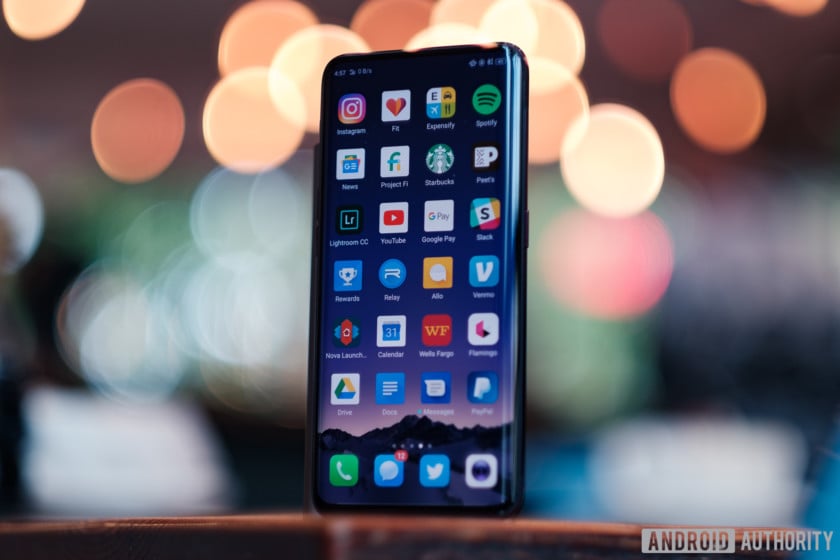
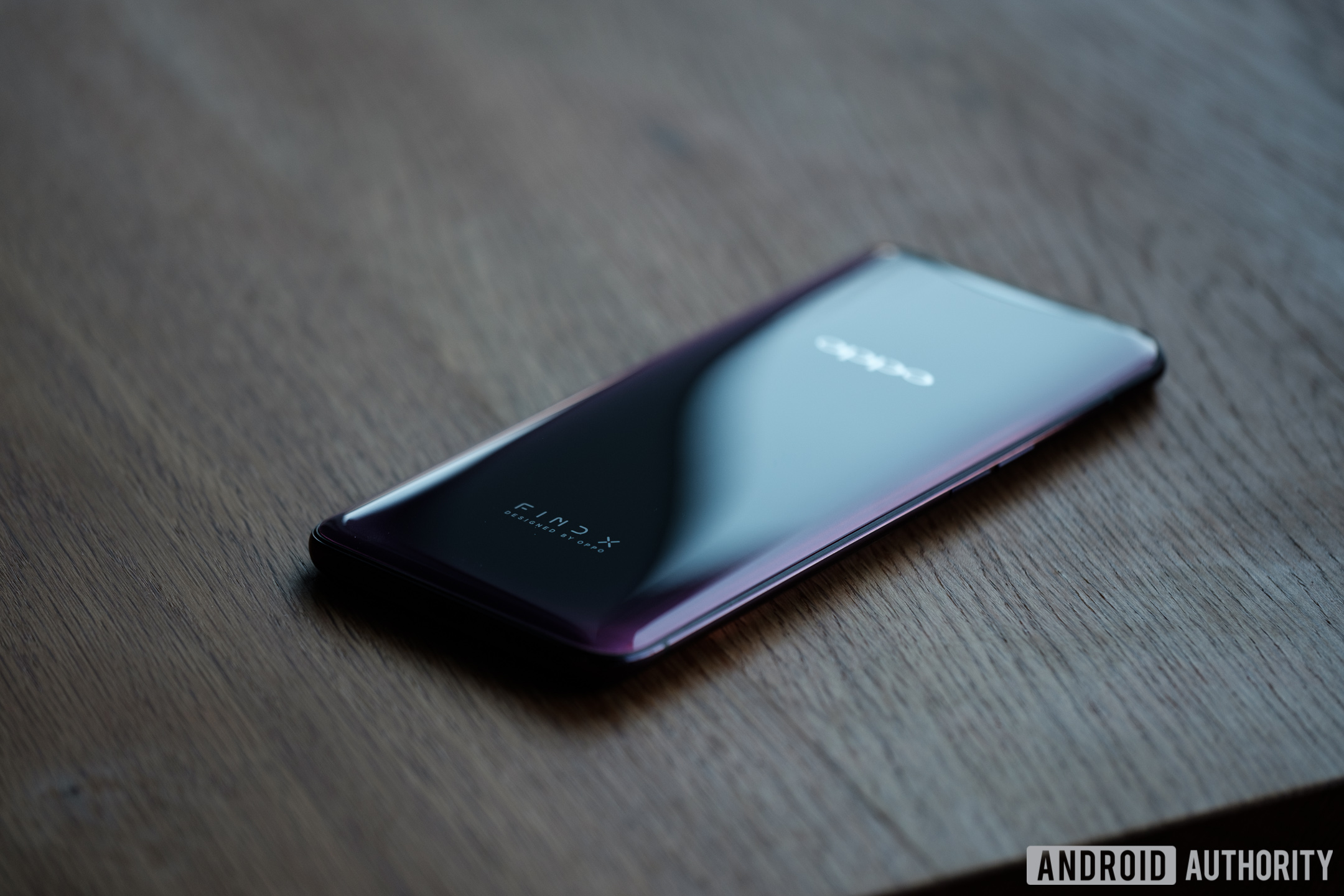
The Oppo Find X is a stunning phone. With beveled edges, a beautiful gradient back design and probably the highest screen-to-body ratio available, this thing is quite the looker. The body feels quite similar to the Samsung Galaxy S9 with its curved sides — even the top and bottom contour inwards to create a nearly uniform design.
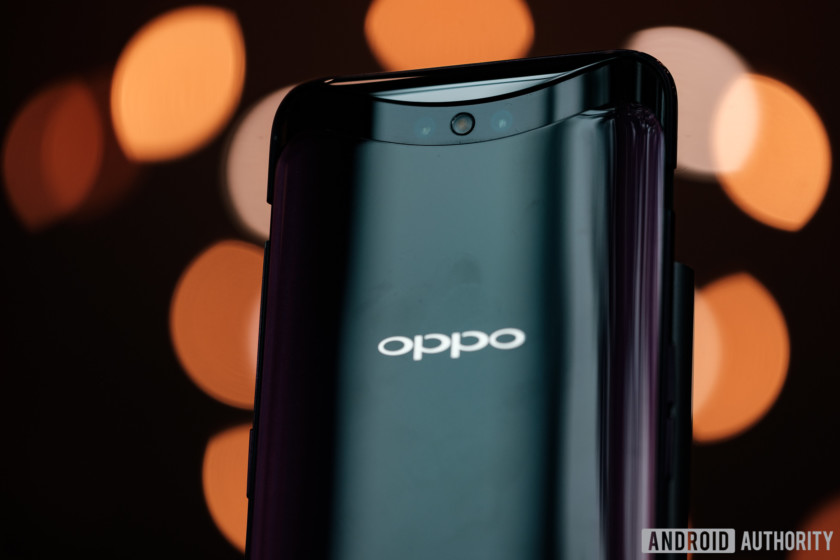
The most obvious design component here is the omission of the rear and front-facing cameras. While Vivo’s NEX showcased the dual rear cameras on the back of the device, the Oppo Find X takes this design to the next level.
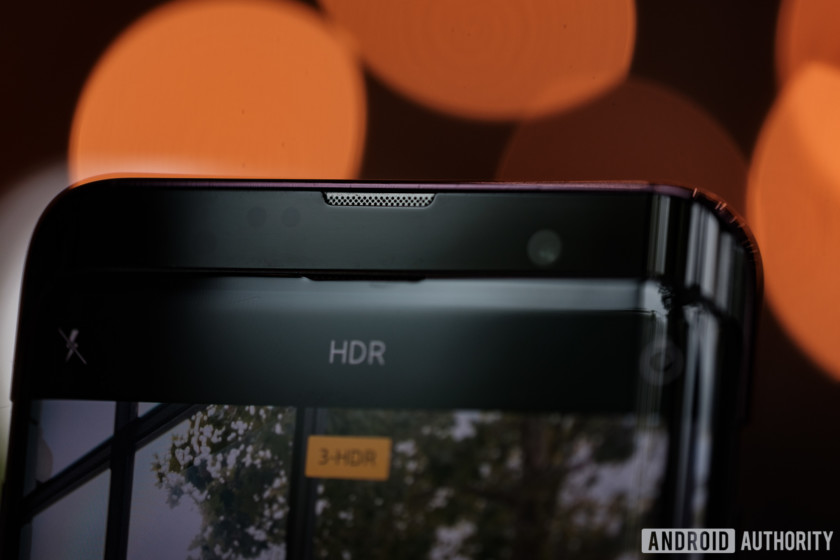
The small curved window on the rear of the phone would make you think the cameras were hiding in the shadows, but in reality the camera mechanism is much more unique. When you launch an app using the camera, the Oppo Find X will lift the shaded window to reveal the cameras beneath.
I know what you’re thinking. Moving parts are a bad idea. I would agree here.
Moving parts seem like a bad idea, but I commend Oppo for trying something innovative
Oppo claims the camera module can be raised and lowered over 300 thousand times, but the phone prompts you to use the camera much more often than you would on a daily basis. The device has no fingerprint reader, instead relying on a 3D face scanning feature, which uses infrared light to create a depth map of your face. It works well, but moving the camera module up and down every time you unlock your phone seems like a bad idea. It remains to be seen how durable it will actually end up being.
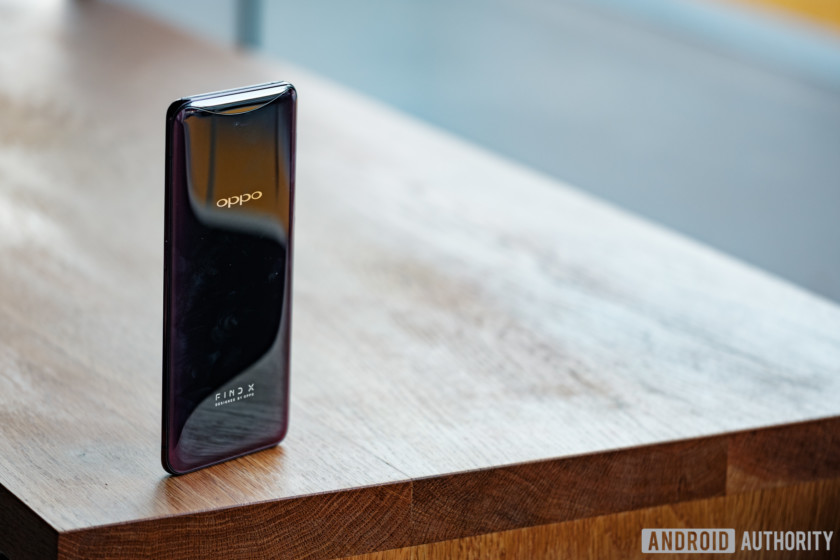
The device will be available in Bordeaux red and glacier blue. Be warned the red is definitely purple — at least the one I used was. Nonetheless, the phone is gorgeous. The color is a sloping gradient, transitioning from black in the center to purple on the rims. It looks great, and reminds me a bit of how the OnePlus 6 mirror black edition reflects light.
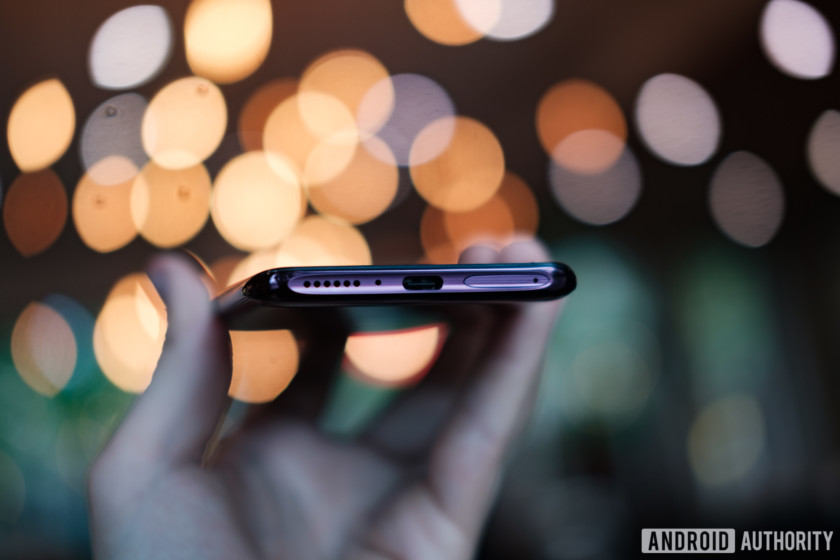
The right side of the phone houses the power button while the you’ll find the volume rocker on the left side. The bottom of this phone is a little different. It’s got the standard USB Type-C port and bottom firing speakers, but Oppo also opted to place the SIM card tray on the other side of the charging port. I think this is perfect positioning, especially there’s no headphone jack. This placement adds a form of symmetry to the phone. Only the power button and volume rockers off axis. Heck, even the word Oppo is a palindrome.
See also:
Which manufacturer updates its phones fastest? Android Oreo edition
As Android Oreo approaches its first anniversary, and Android P looms on the horizon, we thought it was time for a bit of a retrospective.
Android Oreo, the latest major Android version, officially released n Aug. …
Overall, this is one of the most beautiful phones I’ve ever used. Xiaomi told me that its Mi Mix was accepted into some museums as an art piece. I think Oppo deserves to fight for that title.
Display
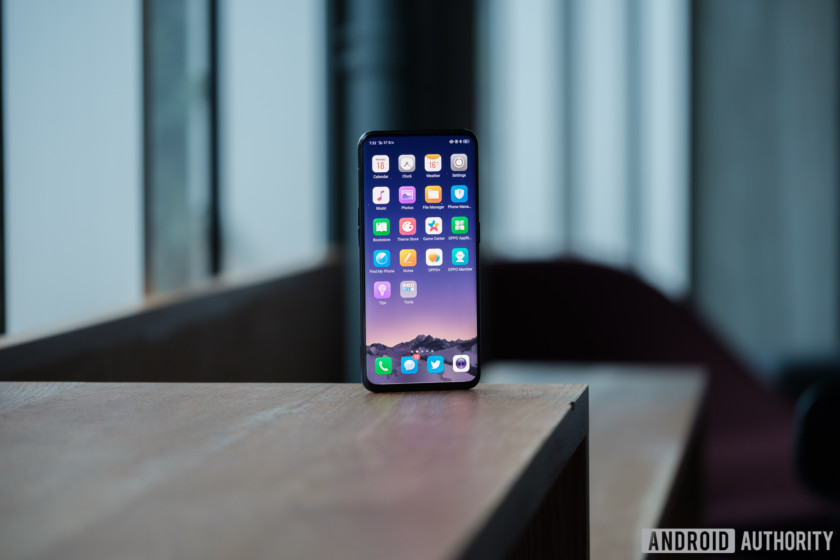
Besides the camera module, the display is definitely the most striking aspect of this device. The face of the phone is almost completely display, clocking a screen-to-body ratio of 93.8 percent. This is one of the highest screen-to-body ratios we’ve ever seen, only rivaled by the Vivo NEX. The phone’s bottom bezel is comparable to that of the OnePlus 6. It’s often said the newest Oppo phone is the reference design for whatever OnePlus releases next. I’d be happy for the 6T to look this good.
The display is also fairly massive in general, with a size of 6.42 inches and a 19.5:9 aspect ratio. This display is curved as well, so if you’ve used a recent Samsung phone you’ll know how that feels. Unfortunately, this can lead to some awkward handling especially while taking photos. Edge detection isn’t great here, and I’ve heard Vivo’s software detects accidental presses much better.
The phone’s 1,080 x 2,340 AMOLED display looks phenomenal. Colors are punchy and vibrant, and I have nearly no issues with it. I’d also like to give a nod to how dim this display can get. I’m the kind of masochist that reads Reddit and Twitter instead of sleeping, so it’s nice to have a display that doesn’t hurt my eyes.
Performance

With some of the latest hardware available on the market, the Oppo Find X performs admirably. The one issue I saw with performance which I also saw on Oppo’s R15 Pro was poor RAM management. My model has 8GB of RAM, but keeping just a few apps open used almost 4.5 GB. Having more RAM to work with doesn’t give you an excuse to manage it badly, and I hope Oppo spends some resources making its skin a bit less taxing.
If you’re into benchmark scores, we ran the Oppo Find X Plus through Geekbench 4 and 3D Mark. Antutu didn’t want to run on this phone for some reason.
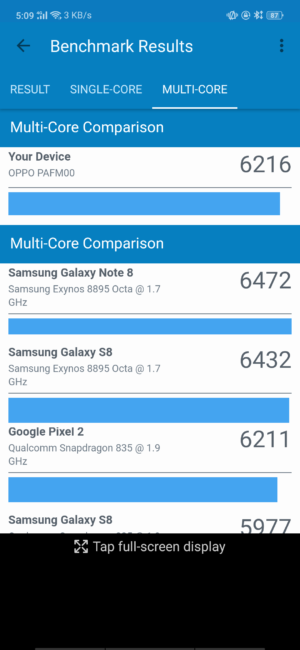
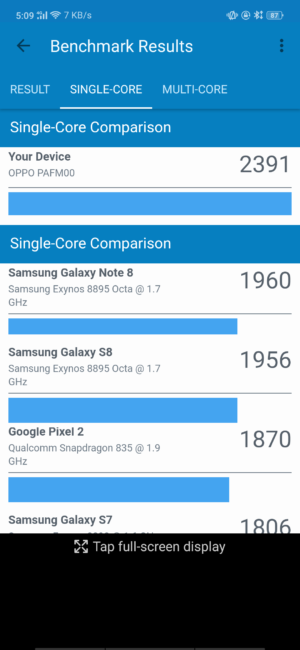
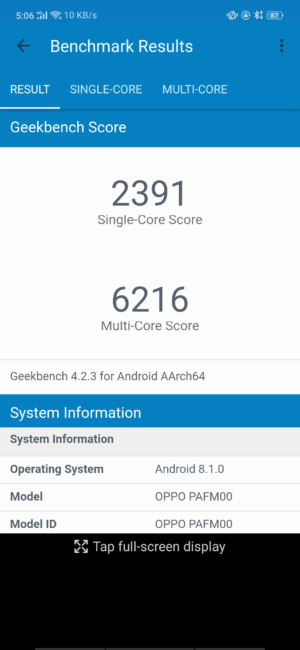
Geekbench 4 gave the Oppo Find X a single-core score of 2,391. In comparison, the OnePlus 6 scored 2,454, while the Galaxy S9 scored 2,144. The Find X achieved a multi-core score of 6,216, while the OnePlus 6 scored 8,967, and the Galaxy S9 scored 8,116. Ouch.


The Oppo Find X scored 4,148 in 3D Mark, while the OnePlus 6 and Galaxy S9 scored 4,680 and 4,672, respectively.
Hardware
As I mentioned earlier, the Oppo Find X competes head to head with the latest and greatest from Samsung, OnePlus, and more. No more Snapdragon 600 series — this phone is the real deal.
The Find X packs a Qualcomm Snapdragon 845, 8GB of RAM, 256GB of internal storage, and a 3,730mAh battery. This kept the device running smoothly the entire week or so I had to use it, and I really didn’t notice any hiccups during this time.
This phone flies, packing Qualcomm’s latest Snapdragon 845 chipset
Weirdly enough, Oppo omitted a fingerprint reader this time around, which really pushes the user to use the 3D face unlock feature. I was pretty hesitant of this at first, because the phone needs to physically open the top portion of the device to reveal the front-facing camera. While I’m not a huge fan of moving parts being actuated every time you want to unlock your phone, I was surprised how fast the process was. It seemed like the phone was unlocked before I even noticed the camera opening and closing itself. I tried to get some friends to unlock the phone quite a few times and it proved secure every time, so I’m pretty confident in Oppo’s engineering.

This 3D face unlock feature works similarly to how the iPhone X and Xiaomi Mi 8 explorer edition do, using infrared light to get an accurate depth map of your face. This makes the phone much more accurate — up to twice as accurate as its fingerprint reader according to Oppo (which doesn’t exist anyway). It’s unfortunate that BBK opted to include the in-screen reader in the Vivo NEX but not the Oppo Find X — I would have liked to see that here.
Editor’s Pick
Best True Wireless Earbuds
What are the best options out there?Sadly you wont find a headphone jack on this device, but Oppo includes a dongle in the box.
There isn’t any water resistance rating on this phone, but I’m not sure how Oppo would make this water resistant. Having the entire top of the phone lift to reveal the cameras is a cool concept, but bad things will happen if you use it in the rain.
There isn’t any expandable storage available on this device. Oppo instead opts for a dual-SIM tray. I would have preferred it added support for a microSD card in this space like many other manufacturers. 256GB is ample storage for a lot of people, but it’s always nice to have more options.
Battery
This device’s 3,730mAh battery performed really, really well. As noted in my Oppo R15 Pro review Oppo doesn’t meter screen-on time in its ColorOS skin, but I got a solid day and a half with this thing before needing to charge it. I don’t play mobile games, but I still use my phone quite a lot in an average day. I’m often jumping back and forth between Twitter, Chrome, Reddit, and a number of messaging apps throughout the day.
See also:
OPPO R15 Pro review: Notch what I was hoping for
Oppo is a company consistently adopting the latest trends to stay relevant in the market. The R9 added dual cameras to compete head-to-head with flagships from Huawei and Honor, and the R11s slimmed down its …
The Find X uses Oppo’s VOOC fast-charging standard, and it juices up the device very quickly. The company has finally moved to USB Type-C after much deliberation, which is really great to see, considering I only have like one microUSB cable left in my house.
Unfortunately there is no wireless charging in this device. We would have liked to see that here since the body is made of glass, but such is life.
Camera

Despite being hidden inside the phone, the cameras aren’t actually that bad.
The rear-facing 16 and 20MP cameras perform quite decently. I found they tended to overexpose images more often than not, but the dynamic range was pretty darn solid. If you want to take a look at the images for yourself, you can see our gallery below, or pixel peep by taking a look at the source files here.
The 25MP front facing camera performed just as well. Selfies seemed to have nice skin tones, but could have been a bit sharper in my opinion.
The biggest issue I encountered with the camera was how long it took to actually launch. Though the mechanism opens up pretty immediately when you launch the camera app, the live view didn’t appear for three or four seconds. Oppo definitely needs to fix this, because it made catching fleeting moments hard.
Don’t miss:
Best Android smartphone cameras (April 2018)
In recent years, smartphones have effectively replaced point-and-shoot cameras, and many even outperform them. For many of us, these portable computers have become our main camera, making photo quality a priority when picking a new smartphone. …
Oppo included a portrait mode in this device, and it performed quite a bit better than I expected. Despite the live view’s slowness, the processing did a good job of separating the subject from the background. It still suffers from the over-exposure issues of the general camera, though.
The camera module got dirty very easily. Just keeping the phone in my pocket normally collected quite a bit of dirt and lint, and left me wishing I kept a cloth with me to clean it out every now and then.

Software
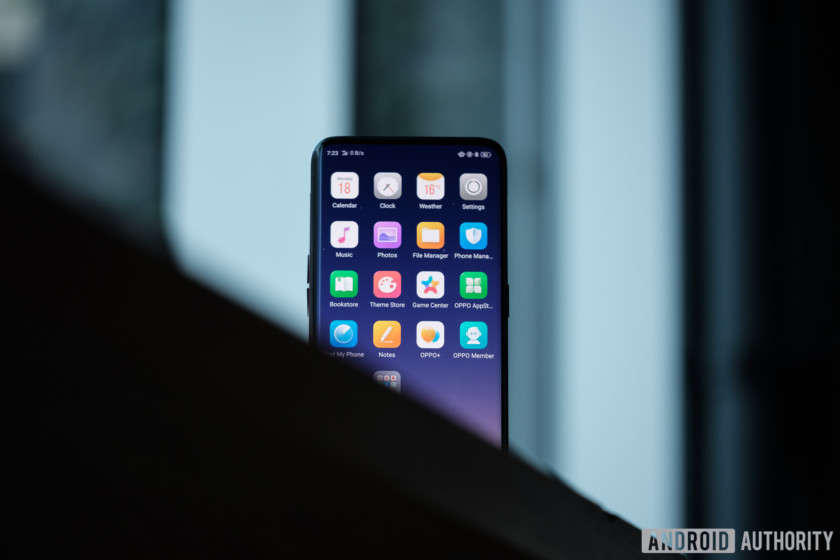
If you’re not familiar with ColorOS, it’s basically iOS. There isn’t an app drawer, and all your apps will be spread across your home screens as you download them. You can still make folders and such, but I prefer to hide most of my apps to get as stock an experience as possible.
ColorOS 5.1 is based on Android 8.1 Oreo. I’m glad to see it updated to the latest Oreo version, because the R15 Pro was still stuck on Android 8.0. While ColorOS on the R15 Pro felt slow and laggy, it really flies on this device. This is more than likely due to the Snapdragon 845, but it’s still nice to use an Oppo phone that doesn’t feel like I’m making huge performance compromises.
There was an entire suite of apps installed on this phone out of the box, but I ran the Chinese version. Oppo has announced this phone is coming to the U.S. and some other markets, which will probably come with the Google Play store pre-installed. I had to download the Google Play store from the Oppo app store, but you likely won’t have that issue.
I’m really not a fan of this software, but it’s not terrible. I’d still use a custom launcher like Nova to make the experience more manageable, but I used ColorOS during my time with the device so you won’t have to. You’re welcome.
Specs
| Display | 6.42-inch AMOLED 2,340 x 1,080 resolution 19.5:9 aspect ratio |
| Processor | Snapdragon 845 Octa-core, up to 2.8Ghz |
| RAM | 8GB LPDDR4 |
| Storage | 256GB |
| MicroSD | No |
| Camera | Rear: 16MP sensor with f/2.0 aperture + 20MP sensors with f/2.2 aperture
Front: 25MP |
| Battery | 3,730mAh Non-removable VOOC Flash Charge (5V/4.5A) |
| SIM | Dual nano-SIM |
| Headphone jack | No |
| IP rating | No |
| Software | Android 8.1 Oreo with ColorOS 5.1 |
| Fingerprint scanner | No |
| Other features | 3D facial recognition |
Gallery
Pricing, availability, and final thoughts
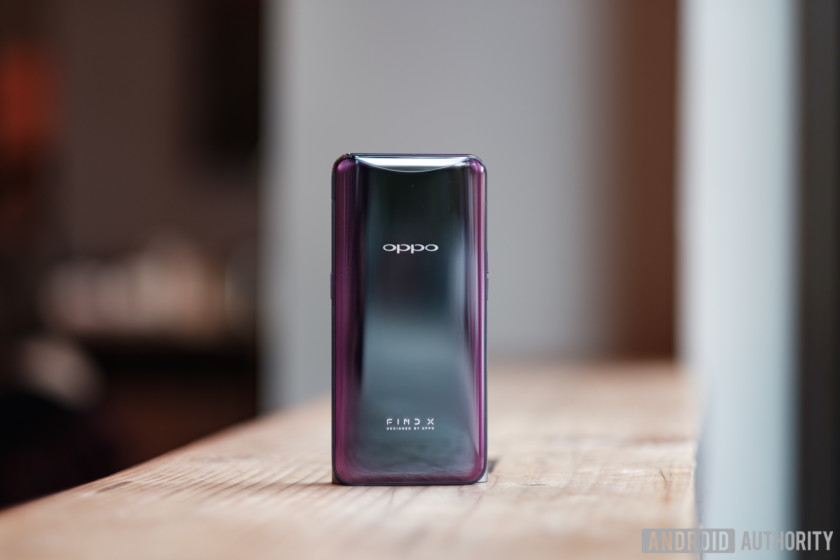
The Oppo Find X is coming to multiple markets, including China, Europe, and even the U.S.. We’ve only heard details about the launch in Europe so far, where it will cost 999 euros (~$1,157) and be available in August.
Oppo is also launching a special Lamborghini edition of this device, with 512GB of storage and Super VOOC fast charging. This phone will have a smaller 3,400 mAh cell, but will be able to charge from zero to 100 percent in 35 minutes.
Overall, I really like the Oppo Find X. It needs some software updates to fix the sub-par palm rejection and laggy camera, but the 3D face unlock and enormous screen impressed me quite a bit. This feels like a second generation product in its first iteration, and I’m happy to see Oppo pushing the boundaries of smartphone design. I’m eager to see what Google and Samsung announce for the rest of 2018, but Oppo and Vivo are making other manufacturers seem pretty outdated.
We’ll likely see more traditional flagships adopt the truly bezel-less standard in 2019. If you want one now, the Find X is one of your only options.
What are your thoughts on the Oppo Find X? Is this the future of smartphones? Let us know your thoughts in the comments section below.
Norway tests its first all-electric plane with passenger flights eyed for 2025
Avinor
While a growing number of outfits are developing electric-powered vertical take-off and landing aircraft, the plan to use them for taxi-like services in urban areas mean it may be some time before we see the machines appear in a commercial setting.
In the meantime, several companies are working to incorporate battery technology into regular-looking airplanes for greener, quieter, and more efficient flights.
With a view to launching a commercial service using electric planes within seven years — and electrifying the entirety of its local air transport by 2040 — Norway this week witnessed its first-ever electric-powered flight in an Alpha Electro G2 plane, built by Slovenian company Pipistrel, Reuters reported.
The flight was piloted by Norwegian transport minister Ketil Solvik-Olsen and also had on board Dag Falk-Petersen, head of state-run Avinor, which operates most of the country’s airports.
As planned, the flight lasted just a few minutes, taking the pair around Oslo airport before landing safely.
Solvik-Olsen said the demonstration flight was proof that a commercial service using electric-powered planes “is not a far-off vision of the future but a reality achievable within a few years.”
The nation is seen as an ideal place for short-hop services using electric aircraft as it has a large number of remote islands, as well as fjords that could be crossed at speed.
“Electric aircraft are set to significantly improve the environmental consequences of the aviation industry,” Falk-Petersen said in a release. “It could also be cheaper to fly as operating costs for several aircraft models will be considerably lowered, which will have an impact on ticket prices.”
According to Pipistrel, its two-seat Alpha Electro motor has around 50 kilowatts of power and a battery of 21 kWh, enough to keep the aircraft in the air for up to an hour. Range is currently about 80 miles (130 km). Without anyone on board, the Alpha Electro weighs 770 pounds (350 kg) but can handle a maximum take-off weight of 1212 pounds (550 kg).
Current challenges with electric-plane technology include the heavy weight of batteries and limited range, but these are expected to be conquered in the coming years.
Indeed, moving toward overcoming such predicaments, a number of other companies are developing hybrid-electric planes, among them Airbus, which is working with Siemens and Rolls-Royce to develop a larger passenger aircraft in a bid to transform the short-haul market. The E-Fan X program plans to use a 2-megawatt electric motor alongside three jet engines on a BAe 146 aircraft, with a second electric motor replacing another of the jet engines at a later date. With current battery technology, the plane is too big to be electric-only, though such a design is the ultimate goal.
Editors’ Recommendations
- Uber’s flying cars get a boost from government assistance
- Southwest plane suffers in-flight engine failure, 1 fatality confirmed
- Watch Richard Branson’s Virgin Galactic test its tourist spaceplane
- After 17 hours, the first nonstop flight from Australia to U.K. touches down
- Airbus’ odd-looking BelugaXL aircraft is one step closer to its maiden flight
 AIVAnet