


Is the LG V35 worth its $900 asking price?
Checking in with the AC forums.
On May 30, LG announced a brand new flagship called the V35 ThinQ. The phone’s a mashup between the LG G7 and the V30, using the V30’s design and notch-free display with the G7’s upgraded internals and cameras.

It’s an interesting mix, to say the least, but one that’ll cost you a pretty penny. The V35 will set you back $900 on AT&T and Project Fi (the two carriers it’s being sold at), and with a price that large, phones like the Galaxy S9 and Pixel 2 easily undercut it between $200 and $300.
With that being the case, are you even considering buying the V35 ThinQ? Our forum users recently answered this very question, and this is what they had to say.
Almeuit
05-30-2018 11:36 AM“
$900? LOL.
Reply
Laura Knotek
05-30-2018 05:21 PM“
This is way too overpriced for a carrier-exclusive device. $600 would be a more reasonable price.
Reply
eric12341
05-30-2018 03:40 PM“
$100 cheaper than the iPhone X and is more capable.
Reply
ScottsoNJ
05-30-2018 12:34 PM“
for the first 2 weeks. After that it will $699…. if they plan to sell any phones that is
Reply
What do you think? Is the V35 worth $900?
Join the conversation in the forums!
LG V30 + V30S ThinQ
- LG V30S hands-on: A 2017 phone with 2018’s buzzwords
- LG V30S specs
- LG V30 review: The no-BS flagship
- Top LG V30 camera features
- Full LG V30 specs
- Join our LG V30 forums
Amazon
Best Buy
Verizon
AT&T
Alcatel 1X Android Go phone launching in the U.S. next week for $99
The phone will be sold at Amazon, Best Buy, and Walmart.
Alcatel showed off a lot of phones at MWC this past February, but one that caught our attention the most was the Alcatel 1X. The 1X is Alcatel’s first Android Go smartphone, meaning that it offers an Android experience optimized for lower-end hardware at a very affordable price.

The Alcatel 1X is made out of plastic but features a suede-like back that should offer a great deal of texture. There’s a fingerprint sensor below the 8MP rear camera and around the front is a 5-inch 480 x 960 display with an 18:9 aspect ratio.
Inside the 1X, you’ll find a MediaTek MT6739 processor, 1GB RAM, 16GB of expandable storage (up to 32GB), and a 2,460 mAh battery. Also included is a 5MP selfie camera, support for all GSM networks, and Android 8.0 Oreo (Go Edition).
Those specs may not sound all that impressive on their own, but that quickly changes when you factor in the 1X’s price of just $99.99.
You’ll be able to purchase the Alcatel 1X next week from Amazon, and in the coming weeks, it’ll roll out to Best Buy and Walmart.
See at Amazon
Marcelo Claure is no longer the CEO of Sprint
Claure’s now serving the company as Executive Chairman.
In late April, T-Mobile and Sprint announced the two brands were merging together to form one new company to spearhead the 5G revolution. Current T-Mobile CEO John Legere will act as CEO of the new venture, but as part of the deal, Sprint CEO Marcelo Claure will be stepping down from his existing role.

May 30, 2018, was officially Claure’s last day. His new position within the company will be Executive Chairman and Sprint CFO Michel Combes is being promoted as the company’s new CEO — at least until the merger is officially completed.
Claure became CEO in 2014, and in a thread on Twitter, highlighted the transformed company culture, Sprint Says Thanks initiative, the Hulu partnership, and more as some of his most memorable accomplishments.
As for Michel Combes, he joined Sprint just a few months back in January as a replacement for former CFO Tarek Robbiati. Prior to his time at Sprint, Combes was acting as CEO of Alcatel-Lucent at the time it was being sold to Nokia.
T-Mobile and Sprint Merger FAQ: The good, the bad, and the ugly
Carriers

- Which unlimited plan should you buy?
- Verizon’s Unlimited plans: Everything you need to know
- Everything you need to know about the T-Mobile ONE unlimited plan
- Everything you need to know about the AT&T Unlimited plan
- Everything you need to know about Sprint’s Unlimited Freedom plan
- Join the Discussion

NVIDIA Shield TV Android 8.0 Oreo update rollout on hold for bugfixes [update]
 NVIDIA Shield TV is still the gold standard for Android TV. It starts at $179 on Amazon.
The only Android TV box you should buy just got better.
Update: NVIDIA seems to have found some bugs in the 8.0 update during the early stages of the rollout, and has paused the update while fixes are applied.

Big news for those of you who have NVIDIA Shield TV — which, by the way, is the only Android TV box you should consider right now. The Android 8.0 Oreo update (which brings it up to the latest major version of Android) is available starting today.
This’ll bring along a major update to the user interface. You’ll get new sections along the left side of the screen, with your favorite apps (customizable, of course), play next (where what you’ve been watching and playing recently will appear) and channels (which is what apps are now called, sort of).
In addition, Amazon Prime Video will get a major refresh, Plex Media Service is improved, and a whole bunch more.
And, of course, Google Assistant still plays a big role here, and that means you can take advantage of all the smart stuff you’ve got scattered throughout your home, accessible via the Shield remote or game controller.

A few other things NVIDIA says to look out for:
- Hold the back button to access to the settings menu from the home screen
- A higher polling rate for gaming mice for NVIDIA GameStream
- Improved support for game controllers like the Shield controller, Xbox 360 and DualShock controllers
- Can connect to Wifi without disconnecting Ethernet
- Improves Bluetooth re-pairing
To update your Shield TV, just head into the settings menu, then About, then choose the update option.
NVIDIA Shield Android TV
- Read our Shield Android TV review
- The latest Shield Android TV news
- Shield vs. Shield Pro: Which should I buy?
- Join the forum discussion
- Complete Shield Android TV specs
Amazon
YouTube Music Premium doesn’t make sense, and that’s exactly why it exists
 Audio-only and casting to Google Home are Premium features, but please don’t pay YouTube Music Premium to get them.
Let’s call a spade a spade: This is a price jump.
YouTube made several announcements this month, from the announcement of a “brand-new” YouTube Music to the evolution of YouTube Red into YouTube Premium. There were many things to get excited about in the new YouTube Music, but one thing made absolutely no sense: the pricing for YouTube Music Premium.
Well, the pricing makes a tiny amount of sense, but only in one way: YouTube Music Premium is here so that you feel better about paying more for the same service millions of subscribers have enjoyed for years.
Confusingly easy: The Google Play Music combo pack

There’s no point in denying how confusing Google’s subscription offerings for music have been for years now to the average consumer, but up until May of 2018, things were actually pretty easy to sum up:
If you subscribed to one of Google’s music/media apps, you subscribed to all three of them.
If you signed up for Google Play Music back in 2013 when it was called All Access, you paid $7.99/month ($9.99/month is the price today), and you have an unlimited subscription in Google Play Music, YouTube Red, and premium service in YouTube Music. And to early adopters still paying $7.99 today, meaning that you have saved $120 over the life of your subscription. Good for you.
If you signed up for YouTube Red back in 2015, you paid $9.99/month, and you have an unlimited subscription in Google Play Music, YouTube Red, and premium service in YouTube Music.

This meant that while there may be some surface confusion about which subscription to get, the bottom line was dead simple: you buy one, you get them all.
Enter YouTube Music Premium
With the new Premium models, YouTube is splitting up if benefits. Now, you can:
- Pay $9.99/month for YouTube Music Premium to get rid of ads and enable background/offline playback in YouTube Music. (This includes the audio-only mode and the ability to cast to Chromecast Audio devices like Google Home).
- Pay $11.99/month for YouTube Premium to get rid of ads and enable background/offline playback in YouTube, YouTube Music, YouTube Kids, YouTube Gaming, YouTube VR and Google Play Music (maybe), AND access to YouTube Originals content.
Google Play Music’s inclusion in YouTube Premium for new subscribers is unclear. We know that anyone currently subscribing to YouTube Red will continue to receive Google Play Music, and Google Play Music subscribers will get all YouTube Premium benefits in addition to their current GPM subscription (and early adopter price, if you have it).

YouTube Music premium is 83% the price of YouTube Premium with less than 20% of the benefits. While it matches the subscription prices for Spotify Premium and Apple Music, no one in their right mind should pay for YouTube Music Premium. You will be dramatically overpaying for your benefits. Pay for YouTube Premium instead.
Price hikes are a part of any long-term service. Netflix has raised prices, Amazon Prime has raised prices, and Hulu has used subscription add-ons for channels, No Commercials, and Live TV to stave off doing the same. Even with a $2 price hike, YouTube Premium is still a great value, eliminating ads and giving us background and offline capabilities for the most popular video platform in the world.

But the bottom line should be this: if you haven’t bought YouTube Red yet, go sign up now to lock in $10/month before the price goes up.
YouTube Red ($9.99/month individual, $11.99/month family)
These are all the Moto phones Motorola is releasing in 2018
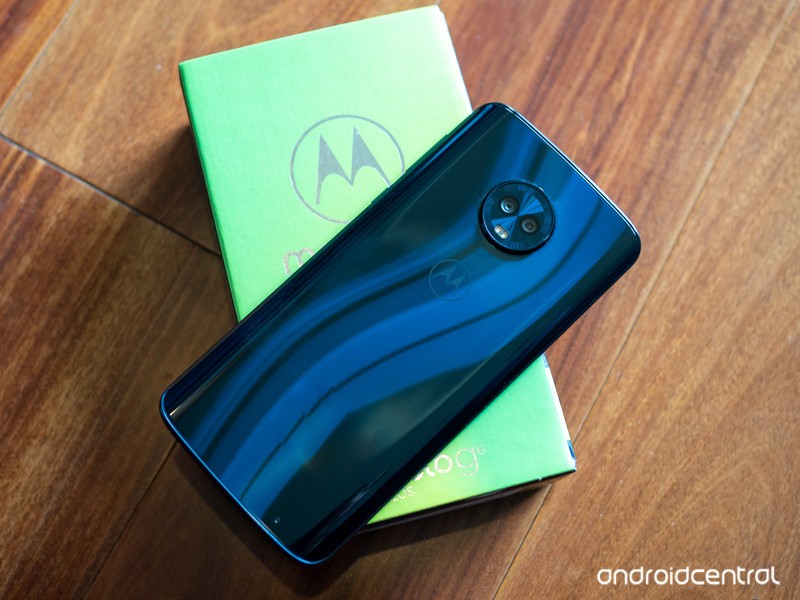
2018 is shaping up to be a big year for Motorola.
Ever since its acquisition by Lenovo, Motorola’s turned into a company that’s not shy about releasing a lot of different phones each year. This allows for a lot of choices, but it can also make trying to pick the perfect phone a bit headache-inducing. No matter your opinion on Motorola’s release cycle, however, there’s no denying that 2018 is already shaping up to be an exciting year for the company.
We’ve seen a ton of leaks, rumors, renders and more for Motorola’s lineup of phones for 2018 ever since the beginning of the year, and this is everything we know so far.
The phones that are still on their way
Motorola One Power
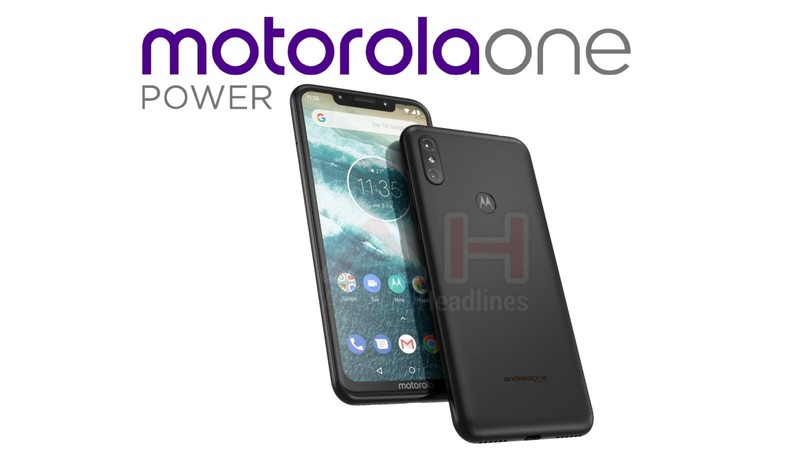
The wildcard on this list easily goes to the Motorola One Power. We didn’t have any idea such a phone existed until late May, and based on what we know so far, it looks quite a bit different from the rest of Motorola’s 2018 handsets.
First off, the overall design language isn’t anything like the rest of this year’s Moto phones. There’s a giant notch at the top of the screen, vertical dual cameras on the back, and what appears to be a metal unibody.
Android One branding suggests that this phone will be among the first Motorola phones to get software updates and new security patches, and the full-on “Motorola” branding is unique from the short-hand “Moto” tag on the rest of the company’s products.
Moto Z3/Z3 Play
Next, let’s talk about Motorola’s highest-end and most premium phones for 2018 – the Moto Z3 and Z3 Play.
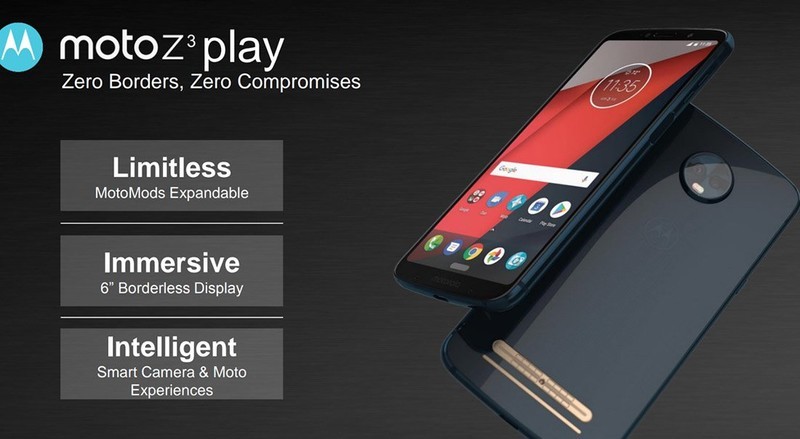
Just like last year, we’re expecting Motorola to release two entries in its Z-series in 2018. The regular Moto Z3 will be the most powerful of the two, whereas the Z3 Play will come with slightly lower specs and a more affordable price tag. Specifications for these two phones are mostly up in the air, but what does seem like a sure bet is slimmer bezels.
Both the Moto Z3 and Z3 Play will supposedly come with 6-inch FHD+ displays, and like we saw through a lot of 2017, bezels surrounding these panels are going to be cut down considerably. The Z3 (pictured below) has the slimmest bezels of the two, but the Z3 Play still looks a lot more modern when compared to the Z2 Play.
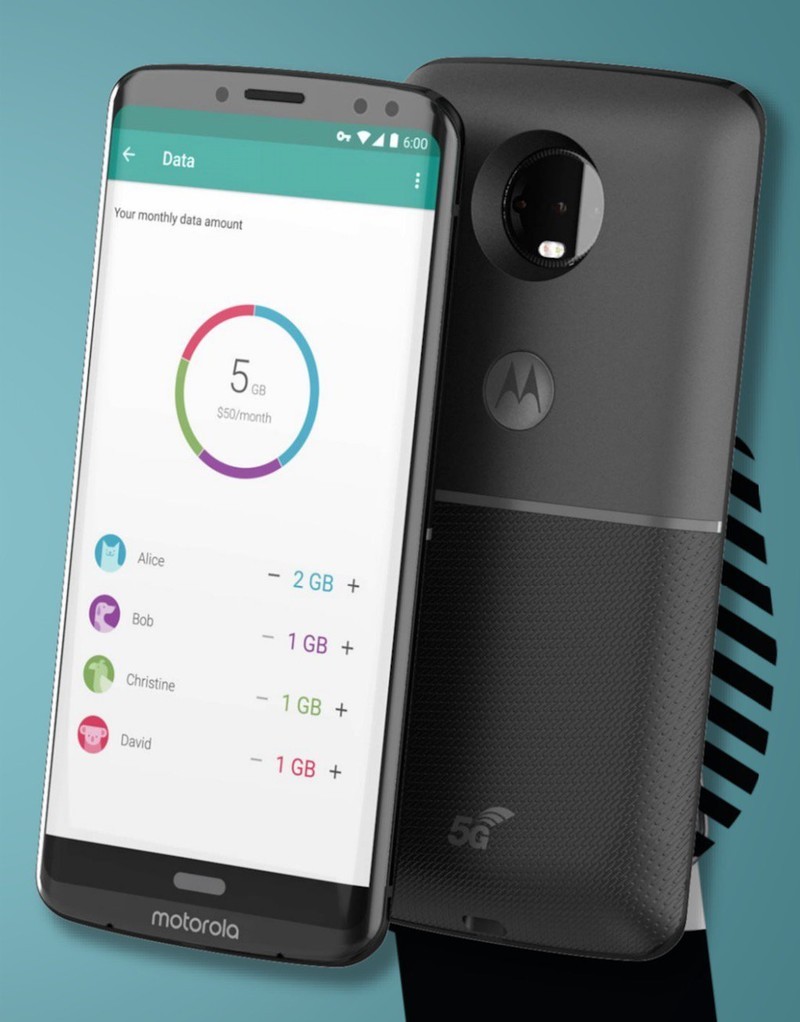
Something that’s got our attention with these two renders is the lack of a physical fingerprint sensor. It’s possible that Motorola will be opting for one that lies underneath the display like we saw with Vivo at CES 2018, a facial recognition system, or a combination of the two. It’s too early to say for certain, but we’ll likely see at least one of these things make an appearance.
Along with showing off the phone itself, the image of the Z3 also reveals a new Moto Mod. It may not look like anything at first glance, but the “5G” branding near the bottom suggests that this Mod will allow the Z3 to get 5G data speeds. Furthermore, the monthly data allotment page is taken right from the Project Fi app and could be a hint that more Moto phones will find their way to Google’s MVNO.
Moto X5
If you’re not about the Moto Mod life but still want a quality phone from Motorola, the X series has proven to be the way to go. Our first look at the Moto X5 shows a very similar design compared to the X4, but there are a couple key differences.
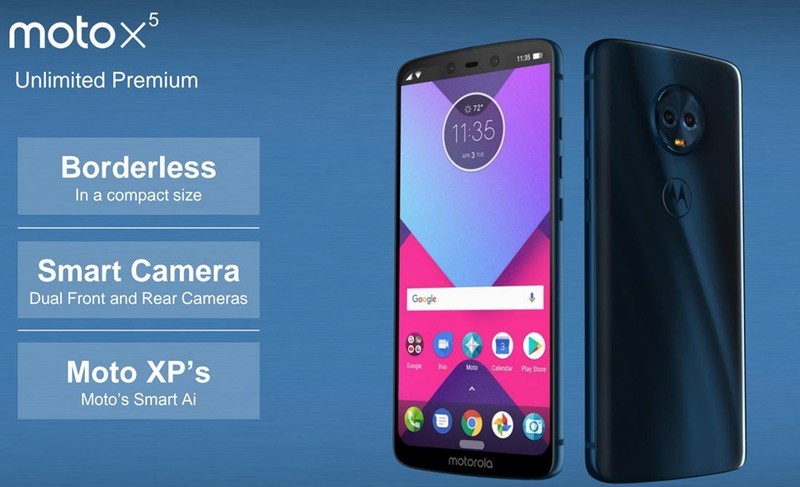
Just like the Z3/Z3 Play, we’re looking at a tall display with slim bezels on all sides. However, unlike those two phones, the X5 appears to have a notch near the top just like another phone with an X in its name. This is one trend I was really hoping wouldn’t catch on, but if it has to make its way into one Moto phone, so be it.
The screen on the X5 is said to measure in at 5.9-inches with a FHD+ resolution, there are dual cameras on the front and back, and there’s also mention of “Moto’s Smart AI.”
Unfortunately, it’s possible none of this will mean anything. A report surfaced in early March suggesting that Motorola had canceled the Moto X5, meaning it won’t be released at all. As a big fan of the X4, this would be incredibly disappointing if it turns out to be true.
The phones that have been released
Moto G6/G6 Plus/G6 Play
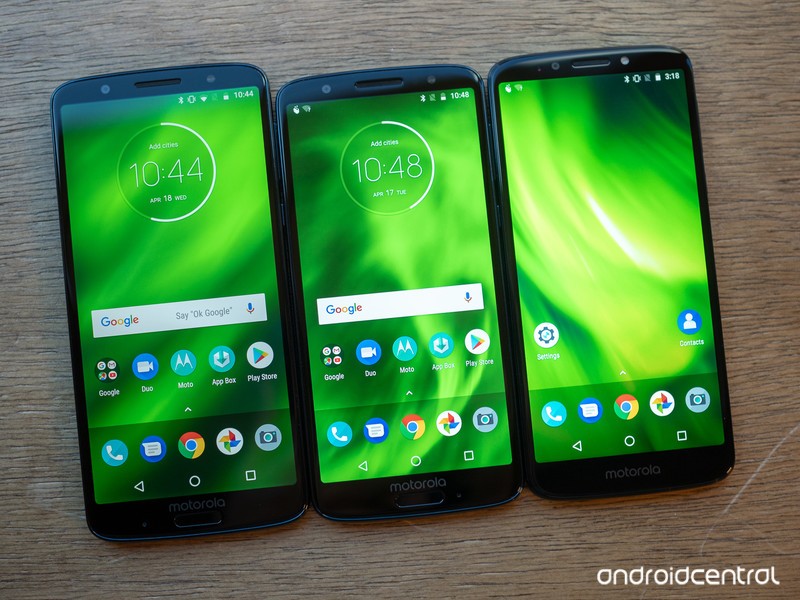
Motorola’s Moto G series has been its most popular (and profitable) since the very first Moto G that came out in 2013, and this year’s entries have proven to be some of the best so far.
For 2018, Motorola released three G phones — the Moto G6, G6 Play, and G6 Plus. The Play is the most affordable of the bunch, with the G6 Plus being the flagship entry and the regular G6 finding home in between the two.
While the G6 Play is made out of a shiny plastic, the G6 and G6 Plus both have glass bodies that look and feel much nicer than their asking prices. Add that together with dual cameras, 18:9 screens, and Snapdragon processors, and there’s a lot to like here.
Moto G6, G6 Play, and G6 Plus: Everything you need to know!
Moto E5/E5 Plus/E5 Play
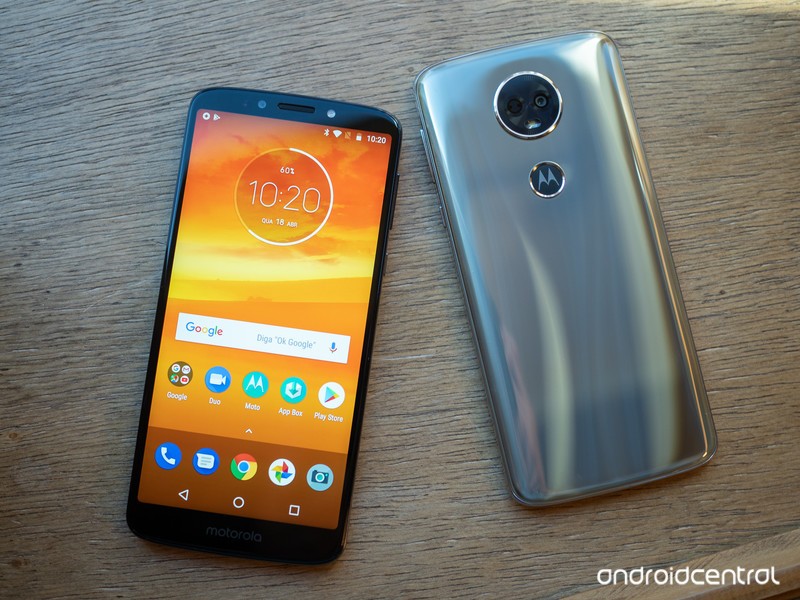
Similar to the G series, Motorola released three entries in its E5 series this year in the forms of the Moto E5, Moto E5 Plus, and Moto E5 Play.
The E5 Play is the cheapest phone in Motorola’s 2018 portfolio, touting a plastic body, 16:9 display, removable battery, and pretty low specs.
The E5 and E5 Plus still won’t blow your socks off, but they’re a bit more modern with glass designs, big, 18:9 screens, and respectable specs across the board. Oh, and did we mention the E5 Plus has a gigantic 5,000 mAh battery? 😳
If this year’s G6 phones are too rich for your blood, the E5 models are absolutely worth a look.
Moto E5, E5 Plus and E5 Play: Everything you need to know!
Updated May 2018: I’ve refreshed this list with all the latest phones announced by Motorola!
Google Lens is now available via the default camera app for some phones
Smart Text Selection and Style Match are also rolling out.
Google announced quite a few new features for Google Lens at its I/O conference in early May, and now the company’s confirmed that those are now rolling out to Android users everywhere.

The two big features for Lens are Style Match and Smart Text Selection, with the former allowing you to scan various objects around you and show things that are similar to it. For example, scanning a shirt with Lens will show other clothing items with the same design/aesthetic and provide quick links for buying them, too.
I’m personally most excited about Smart Text Selection, a feature that enables you to scan the text on a book, letter, etc., copy it, and then paste it into a text field on your phone. I’m not sure how I’ll use that in my day-to-day workflow, but it’s insanely cool.


Last but certainly not least, Google Lens is now making its way into your phone’s main camera app. This is something that was also announced at I/O, and supported phones include ones from Google’s own Pixel line, Sony, LG, Motorola, Nokia, OnePlus, Asus, TCL, Xiaomi, BQ, and Transsion.
If you don’t own a compatible phone from one of the above brands, Google also says that it’ll soon have a dedicated Lens app you can download.
What’s new in Google Lens at Google I/O 2018
 AIVAnet