


Forget delivering to your home, this drone places packages right in your hands
Why it matters to you
A drone delivery systems which delivers packages to individual people, not addresses, could be useful for emergency deliveries.
Drone deliveries are in the weird position of seeming both totally futuristic and also old news. While most of us haven’t yet been the recipient of a drone delivery (although they are happening), it’s also been a whole four years since Amazon first showed off concept footage of its Prime Air drone service. A U.K.-based product design and development firm, Cambridge Consultants, is here to put a new spin on the idea, however, and it’s pretty darn cool.
Nicknamed DelivAir, the concept is to use drones not just to deliver packages to your address, but right into your hands, regardless of where you are in the world. To do that, it uses GPS to track your phone location, since this is a much more accurate way of determining where you’re likely to be at any given moment than simply heading to the address you’re registered at. Once it’s in range, it uses image recognition technology to identify the correct recipient. The person expecting a delivery then confirms their identity by way of a flashed coded pattern sent by the phone LED flash, after which the drone drops your package down via a winch.
“The initial point of this project was to figure out a way to do drone deliveries while keeping the drone safely away from people,” engineer Sunil Gujral told Digital Trends. “Getting a powerful winch in a small package was one of the biggest challenges we faced, and required us to develop a bespoke winding mechanism.”
The concept may sound a little silly, but the idea of ultra-precise drone deliveries actually makes a whole lot of sense. One possible scenario in which this could be useful involves confidential deliveries. A more likely one might involve emergency deliveries — such as delivering an EpiPen or a defibrillator to a person in need — when they are away from home. “Particularly in cases where people’s lives are at risk after a natural disaster, drones such as this could come in very quickly and deliver individual packages of either food or medicine,” Gujral continued.
So when will such drone deliveries start taking place? Not for a while, sadly.
“Right now, this is a fully functional prototype,” Gujral said. “Everything you see in our demo video is possible and implemented. If you have a phone with the app and you’re in a locale where drone delivery is legally permitted, our drone can automatically fly to where your phone is and deliver a package. The caveat, of course, is that the number of places where you can fly a drone is still limited. That’s why we’re still describing this as a concept at this stage.”
From horror fests to shoot-’em-ups, here are the 20 best Oculus Rift games
The Oculus Rift had a tough go of it out of the gate. Delayed shipments and a sparse library of games made its first six months on the market rocky, to say the least. Then, in late 2016, the delayed Oculus Touch controllers arrived, upping the impressiveness of most games by giving players full motion control with each hand. Now, well into its second year of life, the Oculus Rift continues to impress with a steady stream of solid experiences. From first-person shooters to frightful psychological horror games to quirky puzzlers to co-op games, the platform has something for everyone. We’ve combed through its library to compile the best Oculus Rift games available on the VR headset today.
Lone Echo
Numerous VR experiences have attempted to capture the feeling of floating in space, but the Oculus exclusive title Lone Echo is the only one to do it in a way that feels accurate. In reality, most of your actions involve simple maintenance fixes to a space station, but through the excellent Oculus Touch controllers, all of your movements have an immersion to them that few VR games have been able to replicate thus far. With a strong sci-fi story and a wonderfully realized space setting, Lone Echo‘s several hours of play are the best way to visit space from your living room.
Wilson’s Heart
One of the more ambitious Oculus Rift games to date, Wilson’s Heart serves up psychological horror through the immersive experience of VR. Set in the 1940s, the game follows hospital patient Robert Wilson, who wakes up only to realize that his heart has been replaced by a perplexing device. You play as Wilson, but you’re not the only one with disturbing woes. As you make your way down spooky, tight corridors, you’ll meet an eccentric cast of characters, all of whom want to find out how and why they have been poked and prodded by the dastardly hospital staff. Full of jump scares and eerie realizations, Wilson’s Heart makes great use of the Touch controllers to get you into the thick of its mind-altering horrors.
Superhot VR
Conceived as an alternate expression of experimental first-person shooter Superhot, Superhot VR adapts the stop-motion mechanic to your arms as you wield Oculus Touch controllers. When you move your hands around, the bullets rain in from enemies, but if you stop to consider your next move, you’ll receive a welcome bullet remission. The goal remains the same — to advance to the exit in each room — but in VR, the intensity is amplified. Dismembering foes in VR will get your blood pumping. You must move your hands methodically to succeed, but Superhot VR‘s ingenious design makes it a constant delight.
Job Simulator: The 2050 Archives
A testament to how VR excels at turning menial tasks into engaging, even sometimes transformative experiences, Owlchemy Labs’ Job Simulator: The 2050 Archives pretty much plays as advertised. Yet, the mundane becomes fascinating in VR. Who would have thought? The year is 2050, and humans have automated every job. To spice up your unburdened human life, you can now use a VR headset to simulate what “honest work” was all about. You can ring up chips and drinks as a convenience store clerk, fix cars as a mechanic, man the griddle as a short-order cook, or process paperwork as a run-of-the-mill 9-to-5 office worker. Of course, this is what robots thought work was like, so it may be different and much funnier than you remember.
The Unspoken
This is the closest you can get to being a wizard at home. Oculus exclusive The Unspoken from heralded developer Insomniac Games does an exceedingly impressive job of making you feel like you’re doing a lot of wizarding work without demanding much of you. The Unspoken is an urban fantasy filled with customizable wizards and spell casters, and you just happen to be one of them. The wide array of spells deployed via Oculus Touch controllers almost feel as if they are truly being guided from your fingertips. There’s some exploration here and a dreary game world, but the meat of the experience comes from the duels that help you advance through the ranks of a wizard fight club. Unlike the fight club you’re thinking of, it’s okay to talk about this one. We recommend you play it, too.
Star Trek: Bridge Crew
Quite possibly the best multiplayer VR experience to date, Star Trek: Bridge Crew lets users play out their childhood fantasies of joining the likes of James T. Kirk, Montgomery Scott, Hikaru Sulu, and Pavel Chekov as a member of a Starfleet crew. Players work in teams of four, with each person in one of four roles — pilot, engineer, tactician, or captain. Each job — best acted out with an Oculus Touch controller, but playable with an Xbox One controller — asks players to tinker with a computer panel. Bridge Crew excels as a cooperative game due to the need to work together to find success. It really does feel like you’re living inside an episode of Star Trek.
Simply put, if you have a group to play with, Bridge Crew should be at the top of your wish list.
Robo Recall
Originally designed as a pack-in game for the Oculus Touch controllers, Robo Recall is a frantic shoot-em-up designed to make it easy for you to look cool while blowing robots to bits. You play as Agent 34 of the robot manufacturing company RoboReady. Your job at the company is to remove defective units from the production line, but a virus has turned the robots against their creators, and now you must take them out. While Robo Recall boils down to a series of timed shooting galleries, it’s much more interesting than your average on rails FPS. You can pick up enemies and fling them into other robots with a swipe of your hand, and you can even catch bullets in the air and whirl them back to turn the infected robots into nothing more than a pile of parts. Robo Recall shows off the brilliance of the Oculus Touch controllers. Best of all, it’s free-to-play.
Arizona Sunshine
One of the only full-fledged first person shooters available in VR, Arizona Sunshine drops you into the smoldering heat of an American Southwest that is currently littered with zombies. Using the Oculus Touch, you can aim, shoot, and reload dozens of weapons. More open than other shooters in VR, Arizona Sunshine has a campaign mode that lets players explore the deserts and caves in search of an escape. After the campaign is finished, there are both single- and multiplayer horde modes, which force you to fight off hordes of the undead. Arizona Sunshine is a fast-paced gore-fest filled with bloodied, hungry zombies. It’s slick and demonstrates how the Oculus Rift can deliver complete packages with multiple game modes.
Chronos
For people used to playing traditional video games and looking to ease into the world of VR, Chronos is a great option. An easy comparison is Dark Souls. It’s a game full of pitched sword duels in which you have to carefully land blows and defend against the attacks of your foes to stay alive. Chronos eschews the usual VR approach of the first-person viewpoint — in which you see the game through the eyes of the character you’re playing as — in favor of the third-person view, where you watch and control the action from a separate perspective, much like a camera recording an event.
Edge of Nowhere
Insomniac Games took a stab at doing horror in virtual reality in a way that’s different from nearly every other game of that genre on the platform. Rather than go the usual route, using a first-person perspective that has you playing as if you’re in the shoes (and seeing through the eyes) of the protagonist, it puts the camera behind the main character, just like in Chronos. The result is a more psychological, stealthy take on horror. Edge of Nowhere is another of those VR games that feels like it could easily exist as a more traditional game, but it does some experimentation with the platform to find new ways to scare players.
Netflix is raising its prices in the U.S. — again
Netflix is about to get a little bit more expensive.
First reported by Mashable and confirmed by Business Insider, streaming video service Netflix is raising prices for users in the U.S. The price hike will begin today for new subscribers, while those who currently have accounts will be officially notified of the change starting on October 19 and will be given 30 days notice before their monthly bill is increased. All subscribers will be paying the new prices by the end of this year.

Thankfully, Netflix’s basic $7.99 plan will remain untouched. However, the price of Netflix’s most popular “standard” plan that includes HD and two simultaneous streams will be upped from $9.99 per month to $10.99 per month, and the company’s premium service, which includes 4K resolution and four simultaneous streams, will be upped from $11.99 to $13.99 monthly.
In a recently released statement regarding these price increases, Netflix had the following to say:
From time to time, Netflix plans and pricing are adjusted as we add more exclusive TV shows and movies, introduce new product features and improve the overall Netflix experience to help members find something great to watch even faster.
Though these price increases may upset some, it’s worth noting that much of this money will likely be going to acquiring more content and creating and continuing more original series, documentaries, and movies. In addition, Netflix’s premium plan is still cheaper than HBO (priced at $15 per month) and its standard plan is a dollar less than Hulu’s commercial-free plan ($11.99 per month).
In August, Netflix raised its prices in Canada by between $1 and $2 per subscriber.
Thoughts? Questions?
If you’re a U.S. Netflix subscriber, how do you feel about Netflix’s price increase? Has it put you off, or do you feel the extra couple of dollars is worth it? Let us know in the comments!
Win your own Pixel 2 XL package from Android Central Digital Offers!
You just can’t ignore a giveaway this good!
The Pixel 2 XL is the latest phone released from Google and it sure looks like a special phone. The larger of the two phones unveiled, it features a bigger screen with smaller bezels and all the rad new features like Google Lens, Active Edge, and of course the upgraded cameras. With its sleek and unique design, it’s a true marvel to behold — and it can be yours for free thanks to Android Central Digital Offers!
Right now we’re giving away a Pixel 2 XL to one lucky reader — but that’s not all! We’re also including a new DayDream View and a Google Home so you can get the most out of your Pixel 2 XL. It’s free to enter, so don’t delay! With a total value of over $970, you won’t want to miss out on this great opportunity to snag some new tech!
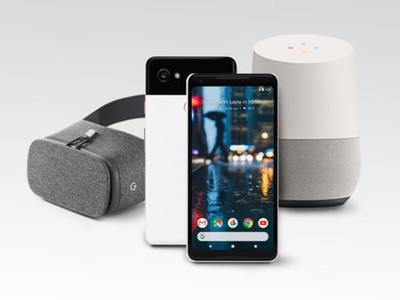
The Pixel 2 XL features some must-have specs from a 2017 smartphone including front-facing dual speakers, a brilliant display, and (unfortunately) a move away from the traditional headphone jack. Coupled with a new VR headset and a Google Home speaker and you got quite the prize package just waiting to be won — maybe by you?
This contest is open to all legal residents of the United States who are eighteen (18) years of age or older as of the date of entry. Don’t delay! A winner could be you!
Enter to win the Pixel 2 XL prize package!
Google Assistant will finally be able to identify songs
Song identification will be rolling out to the Google Assistant soon, but there’s no exact timeline quite yet.
The Google Assistant is a truly commendable piece of software and perhaps one of Google’s most impressive projects to date. However, despite all of the new features and tricks the Assistant’s picked up over the past year, one constant that’s remained is its infuriating inability to identify songs. Thankfully, this will all be changing very soon.
Ever since its debut, asking the Google Assistant “What song is this?” or “What’s playing right now?” would return a response of “I can’t identify songs yet.” And, every time this response was issued, a little part of our souls would die. Google, why would a feature that’s been available in the regular Google Search app for years not make its way to the Assistant? What did we do to deserve this special sort of hell?

Image credit: Android Police
We may never know the answer to that, but what we do know is that the folks at Android Police managed to get the Assistant to identify a song on the recently announced Pixel 2. Asking the Assistant to identify a song will now show a listening bar at the bottom like we’ve seen in Google Search before, and once the song is found, you’ll get a card with lyrics, artist info, and links for apps that you can listen to it in.
Song identification will be rolling out to all other devices with the Google Assistant in the near future, and although we don’t have an exact time frame quite yet, it’s still reassuring to know that there’s a light at the end of this offensively long tunnel.
Google Pixel 2 and Pixel 2 XL
- Google Pixel 2 and 2 XL hands-on: Act two is great
- Google Pixel 2 specs
- Google Pixel 2 vs. Pixel 2 XL: What’s the difference?
- Pixel 2 vs iPhone 8: Camera Showdown
- Pixel 2 FAQ: Everything you need to know!
- Join our Pixel 2 forums
Google Store
Project Fi
Verizon
MrMobile goes hands-on with the new Pixel 2 and Pixel 2 XL!
When Google dropped its first Pixel smartphone last year, I was not impressed. I dogged it for its lack of waterproofing, its derivative design, and for having a custom launcher when I expected pure stock Android. But then an important thing happened: I used the Pixel. And in short order, its instantaneous responsiveness ruined me for every other Android phone out there.
Yesterday in San Francisco, Google announced a couple successors to those original Pixels. The Pixel 2 and Pixel 2 XL correct some of their predecessors’ shortcomings … while also introducing a couple more. Join me for the MrMobile hands-on with the Pixel 2 and Pixel 2 XL, and stick around till the end for a lingering look at the new PixelBook! And be sure to check out Android Central’s detailed dive on the same!
Stay social, my friends
- YouTube
- The Web
- Snapchat
Google Pixel 2 vs. Pixel: Should you upgrade?

Is it time to send your 2016 Pixel to that farm in the country where it can run free?
It’s that time of year again. We get to the new Pixel 2, a phone that we want to spend our money on, even if we have a really good phone in our pockets already.
The 2016 Pixel is still a damn good phone. Let’s get that out of the way first thing. Unless yours is broken, you don’t need to buy something new. We all know this every time a new phone is released or our current model is replaced by one with a higher number, but it’s OK to do something (or buy something) because you want to, not because you need to. With that in mind, let’s talk about how they match up against each other so all of us can decide what we’re going to do.
Pixel 2 vs. Pixel: specs comparison
What’s changed

At first glance, the Pixel and Pixel 2 look very much the same. You have a 5-inch “FHD” (marketing speak for 1080p) OLED display with great big bezels on the top and bottom, on-screen navigation buttons, and an aluminum back with the top third cut off and replaced by glass. Even the logo and fingerprint sensor are the same and in the same spot. But that’s where the similarity ends.
For starters, the Pixel 2 puts a speaker in both of those bezels. For folks who wanted quasi-stereo front-facing speakers, the Pixel 2 now has you covered. We’re not yet sure how good they will sound, but the Pixel 2 should be louder and more clear than its predecessor, which is what a lot of people wanted. Unfortunately, another change is that the Pixel 2 doesn’t have a headphone jack, which not nearly as many people wanted. Google, we applaud your courage in removing the 3.5 mm headphone jack.
The Pixel 2 headphone adapter costs $20
Another new trick from the Pixel 2 is Active Edge. In early 2017 HTC showed off a squeezable phone, where the act of tightening your grip acted as a type of switch or button and could launch an app or service. Google adds this in the Pixel 2 lineup, and we saw how you can launch Assistant just by gripping the phone tighter.

Since the original Pixel doesn’t have the hardware mechanisms in place, this feature isn’t coming to the 2016 model. Some think it’s a gimmick, others simply love it, but either way, it’s a big convenience feature the OG Pixel isn’t going to have.
The new Snapdragon is a big deal

The biggest differences are things you can’t see. The Pixel 2 uses the Qualcomm Snapdragon 835 which is not only faster but offers improved wireless support for the next generation. It’s also more power efficient than the Snapdragon 821 in the original Pixel, which is how CPU evolution works. Having a higher clock speed can hurt that efficiency, but you have to assume that Google was smart and the phone’s 2,700 mAh (which is 70 mAh smaller than the 2016 version) will be adequate for most users and last the day.
The Snapdragon 821 is a great SoC. The Snapdragon 835 is a better one.
Another area where the better CPU might matter is in Daydream. You’re not going to tax the 821 that’s inside the original by just doing “phone stuff.” You need to open intensive 3D games or put it inside a Daydream headset. And it was possible to push the original Pixel so hard while using it for Daydream that it got too hot and had to throttle the CPU, leading to a pretty poor experience in VR unless you stopped and let it cool down.
This ties in well with the next difference, which is multimedia. The Snapdragon 835 offers better multimedia input abilities through the camera as well as better output support for what you see on the screen. The new Spectra 180 ISP supports things like HDR 4K recording at 30fps while hardware accelerated features like face detection are running. The Adreno 540 GPU supports 4K 60fps output on both the internal display and an external display, at the same time. The multimedia package even has DX12 support in case you wanted to play FIFA 18 when Microsoft releases their ARM Windows 10 machines. Google isn’t supporting all of these features, but do know that there were some very healthy upgrades here.
Check out the Pixel 2 specs
Finally, the Snapdragon 835 outclasses the 821 when it comes to LTE network technology. The 835 has a CAT 16 modem, with 3×20 MHz carrier aggregation and 256-QAM on the download. In simpler terms, while it’s not a gigabit device, it can reach speeds of 800Mbps.
Of course, your network has to be ready and none of them are outside of a few select testing areas. The Snapdragon 835 is the first SoC that theoretically offers faster LTE speeds than it does Wi-Fi (802.11 ad WI-Fi with speeds of 867 Mbps). This means you will get the fastest speeds possible from your network even though it’s not Gigabit ready.
Again, we’re not saying the 2016 Pixel’s Snapdragon 821 was bad. Outside of thermal issues when wrapped up in a hot felt VR headset, there are very few people complaining about performance. But it’s silly to ignore the boost in power and efficiency that comes with the newer Snapdragon 835.
What stays the same

The Pixel 2 was running a “special” version of Android Oreo when Google showed it to everyone at the launch event. That means there will be a new version of Android, at least for the Pixel 2 family. It’s still technically Android 8.0, but it has some meaningful differences to the version that shipped on the Pixels and Nexus phones earlier this year.
Most of the Google Experience will also come to the original 2016 Pixel.
What we are sure of is that Google was clear about a good many of the software features coming to the original. You’ll have Google Lens, a smarter Google Assistant, and will be ready for Daydream 2 if you keep your “old” Pixel. We imagine that tweaked launcher with the new Google bar on the bottom is also coming (love it or hate it) but we’re not sure about the new camera features like portrait mode and foodmojis. That just might need the newer Snapdragon.
You’ll also still get fast updates direct from Google on your 2016 Pixel until it reaches its end-of-life. But we’ve not heard anything about Google tacking another year onto the update promise to match the Pixel 2 and its 3-year guarantee.
When it comes to the software and all the things you can do with it, your 2016 Pixel will give you just about the same experience as the Pixel 2. This is just how Google does things and something we’ve seen since the Nexus program. It’s a smart move because it keeps people who may not want to buy a new phone every year happy with the brand.
One other big difference

Google has promised a full three years of OS support for the Pixel 2. While three years has been the standard for security-related updates for a while, this means you will get the next three years worth of Android updates, too. Chances are that means Android P, Android Q, and Android R.
This is a really the biggest upgrade. Outside of Apple who contracts its own in-house design for all the internal parts of an iPhone, no other company making smartphones does this. Three years worth of full software upgrades means your phone will have all the features Google develops between the day you buy it and the day the battery is so bad that it needs to be replaced.
Many of us switch phones every year so this isn’t as important. But in the grand scheme of things, this is the Pixel 2’s killer feature.
So should you upgrade?
Usually, this section comes with a disclaimer about your needs and a long list of reasons for both options. Not this time.
If you can live without a headphone jack or really want to have two front speakers, and have the money to spend, upgrade to the Pixel 2. The good news is that if you don’t have the money to spend or aren’t in love with the new changes, your 2016 Pixel is going to be fine for another 12 months even if it’s no longer “the best.”
When you have to think before you buy the newer model, the company making them is doing it right.
The Snapdragon 835 is tempting, especially the new connectivity upgrades. Carriers are pushing out the next generation network faster than anyone thought, and if it comes to your area in 2018 you’ll be able to take advantage of fatter pipes and faster speeds in a more significant way. The better quality network will be nice for anyone using a recent phone, but the latest today is ready for more of what happens tomorrow. If you’re into Daydream you really should be looking at the Pixel 2 XL, but the smaller Pixel 2 will still be a better experience than the original. And there’s no telling what developers will release through 2018 that can take advantage of the beefier 835. We’ve seen that happen before.
Finally, if you plan to keep your phone for three years, the Pixel 2’s new longer support promise makes it a must.
It’s a tough decision for people who aren’t worried about changing every year to make sure they have the latest and best. And that’s a good thing.
See at Verizon
What about you?
Are you upgrading to the Pixel 2 from the original, or any other phone? Jump into the comments and tell us all why (or why not). Both decisions are good ones, and it’s always interesting to hear all sides when it comes to who is buying and why. The feedback just might change your mind, or make you even happier about your decision.
Where to buy the Pixel 2
Google Pixel 2 and Pixel 2 XL
- Google Pixel 2 and 2 XL hands-on: Act two is great
- Google Pixel 2 specs
- Google Pixel 2 vs. Pixel 2 XL: What’s the difference?
- Pixel 2 vs iPhone 8: Camera Showdown
- Pixel 2 FAQ: Everything you need to know!
- Join our Pixel 2 forums
Google Store
Project Fi
Verizon
Harman’s Cortana-powered speaker may go on sale soon for $200
Harman Kardon’s Cortana-powered speaker might be hitting stores sometime soon. The Verge reports that a listing for the Invoke with Cortana has shown up in Microsoft’s store alongside a $200 price tag.
We got a peek at the speaker in May at Computex 2017 though we haven’t been able to experience its capabilities for ourselves quite yet. Along with the Invoke, Harman Kardon recently announced three new Google Assistant-powered JBL Link speakers as well as an Alexa-enabled speaker dubbed the Allure — completing its virtual assistant trifecta.
The Invoke is a little pricier than the Amazon Echo and the Google Home, which are $100 and $129, respectively, but it does come with six months of free Skype calling to mobile and landline phones in the US. We still don’t have a launch date yet, but this appearance is a pretty good indication that we should expect such an announcement sometime soon.
Via: The Verge, WalkingCat (Twitter)
Source: Microsoft
Vice President Pence vows US astronauts will return to the moon
NASA has been talking a big game about Mars for awhile now, but there’s been a lingering question of how it will get there. After all, the agency just doesn’t have the budget to put astronauts on the red planet. Back in June, the Associate Administrator of Human Exploration and Operations for NASA, Bill Gerstenmaier, confirmed as much. Now, Vice President Mike Pence, who leads President Trump’s Space Council, has confirmed a shift in destination. The immediate goal for US space exploration is to return astronauts to the moon.
In a Wall Street Journal op-ed yesterday and in a speech at the National Air and Space Museum today, the Vice President vowed that America would once again become a leader in space. He touts “human exploration and discovery” as the new focus of America’s space program. This “means establishing a renewed American presence on the moon, a vital strategic goal. And from the foundation of the moon, America will be the first nation to bring mankind to Mars.”
There have been two prevailing (and opposing) views when it comes to US endeavors in human spaceflight. One camp maintains that returning to the moon is a mistake. NASA has already been there; it should work hard and set our sights on Mars and beyond. The other feels that Mars is too much of a reach, and that the moon will be easier to achieve in a short time frame. Mars may be a medium-to-long-term goal, but NASA should use the moon as a jumping-off point. It’s not surprising that the Trump administration is valuing short-term gains over a longer, more ambitious project. The US will get to Mars eventually, according to Pence, but the moon is where the current focus lies.
Last week, NASA and Russia’s space agency Roscosmos announced that they would continue to work together on human exploration, specifically mentioning the lunar Deep Space Gateway outpost that NASA currently has planned. It’s possible that Pence’s intention is to move forward with this program in cooperation with international partners, though considering his op-ed’s emphasis on security and defense, the only thing that is clear at this point is the US will likely put astronauts in orbit of (and perhaps on) the moon in the next decade.
Source: The Wall Street Journal
CBS will stream nine ‘Star Trek’ episodes this year instead of eight
This week, CBS shared some more positive All Access subscription numbers thanks to Star Trek: Discovery and announced that it would be extending the first chapter of season one by one episode. The initial plan was to air eight episodes as part of the first chapter and the remaining seven episodes of the season beginning in January. Now, there will be nine episodes in the first chunk and six airing at the start of next year.
The premiere of the show drew in a record number of subscriptions for CBS All Access — the network’s digital, on demand streaming service — and it was the most streamed premiere of any CBS show. “The build up to the show’s premiere led us to a record-setting month, week and ultimately day of sign-ups,” CBS Interactive President Marc DeBevoise said in a statement. “The second week of the series has also exceeded our expectations and is a credit to the brilliant and dedicated work of the show’s entire creative team and cast. We can’t wait for fans to see what comes next for the U.S.S. Discovery and its crew.” While these numbers are surely good for the network and its streaming service, it highlights what CBS might be missing out on by not making the show a regular, on-air series.
The ninth and final episode of this season’s first chapter will debut on Sunday, November 12th.
Via: Slashfilm
Source: CBS
 AIVAnet