



OnePlus OTA update for CM 11S (38R) is out!

For the lucky OnePlus One owners that managed to grab the limited device, an OTA update has just been released for the device running Cyanogenmod 11S dubbed 38R.
The new 38R update is aimed at improving the responsiveness of the touchscreen, introduces a new lockscreen, as well as the ability to take RAW photos. ANT+ is now supported, as well as a ton of bug fixes. Here’s the full list of changes in the update:
- Added method for users to report bugs directly to Cyanogen.
- Added pause button during video recording.
- Improved battery life.
- Fixed issues with camera exposure compensation stuck in ‘auto’.
- Fixed issues with ‘4G Preferred’ option not connecting to 3G data.
- Fixed issues with delay in torch activation.
- Fixed issues with unresponsive screen requiring reboot.
- Fixed issues with static in speaker when changing volume while headset plugged in.
- Fixed issues with rotation not triggering when rotated slowly.
- Fixed issues with Quiet Hours / system UI causing battery drain on last day of month.
- Fixed issues with camera not starting when LED torch is already on.
- Fixed issues with Bluetooth volume low on connection.
So if it took you this long to hit the update button on your OnePlus One, and the RAW compatibility wasn’t enough to convince you, then what are you waiting for? Hit that update button now and let us know what you think of the performance of the device following this update in the comments below.
Deals, Discounts, Freebies, and More! Click here to save today!
The post OnePlus OTA update for CM 11S (38R) is out! appeared first on AndroidGuys.
.CPlase_panel display:none;
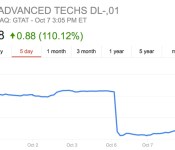
GT Advanced CEO Sold Off Stock Ahead of iPhone 6 Announcement
GT Advanced CEO Thomas Gutierrez sold over 9,000 shares of GT Advanced stock just a day before Apple announced the iPhone 6, reports The Wall Street Journal. The September 8 sale netted him approximately $160,000 at an average price of $17.38, before the company’s stock dropped 13 percent to $14.94 on September 9 after it became clear the iPhone 6 and iPhone 6 Plus did not include sapphire screens.
Along with the $160,000 he earned on September 8, Gutierrez sold shares on several other occasions throughout 2014, earning him more than 10 million dollars as GT stock rose on rumors that Apple would use its sapphire for the new iPhones.
In a filing, GT said Gutierrez’s share sale was part of a pre-arranged plan put in place on March 14, 2014. But there was no obvious pattern to his sales.
In May, June and July, Gutierrez sold shares within the first three days of the month. But then he didn’t sell additional shares until Sept. 8, two days after he received 15,902 previously restricted shares. (Gutierrez forfeited the remaining 6,670 shares to cover tax obligations.)
GT Advanced filed for Chapter 11 bankruptcy protection on Monday, promising to continue operations as it goes through a transitional phase to reorganize its business. “Today’s filing does not mean we are going out of business,” said Gutierrez. “Rather, it provides us with the opportunity to continue to execute our business plan on stronger footing, maintain operations of our diversified business, and improve our balance sheet.”

Apple and GT Advanced first partnered in late 2013, with Apple building a 700-employee manufacturing facility in Mesa, Arizona that’s run by GT Advanced. The deal also saw Apple funding GT’s purchase of furnaces and other sapphire-making equipment through a $578 million loan, doled out over several months and subjected to certain capacity requirements.
Under the terms of the agreement between Apple and GT Advanced, GT Advanced is required to pay back the $578 million loan over the course of five years. If the loan is not paid back, Apple is entitled to the equipment that GT Advanced purchased. When a deal was struck between the two companies, GT Advanced noted that sapphire production for Apple would result in substantially lower gross margins, but was confident that a recurring revenue stream would be beneficial for growth in the long run.
Apple was widely expected to include sapphire display covers from GT Advanced on some iPhone 6 models, and it is unclear why sapphire was not used at all. GT filings did, however, suggest that the company saw poor sapphire yield rates, which may have impacted Apple’s decision to stick with alternate materials. Apple is not subjected to any type of commitment to purchase sapphire from GT Advanced, and though the Apple Watch does indeed include a sapphire cover, it is unclear whether the sapphire being used is sourced from GT.
GT’s stock dropped approximately 90 percent after the company’s bankruptcy announcement and has seen little gain since then.
.CPlase_panel display:none;

Apple Releases Second OS X Yosemite Golden Master Candidate to Developers
Apple today released a second golden master candidate of OS X Yosemite to developers, a week after releasing the first candidate golden master and the fourth public beta.
The latest Yosemite update can be downloaded from the Mac App Store and through Apple’s Mac Dev Center.

OS X Yosemite brings a flatter, more modern look to OS X, with an emphasis on translucency and redesigned dock, windows, and more. It also includes a multitude of new features, such as improved integration with iOS 8 through Continuity, a new “Today” view in Notification Center that offers integration with third-party apps, a retooled Spotlight search with new data sources, and several new features for apps like Mail, Safari, and Messages.
Over the course of the beta testing period, each Developer Preview has added new features and refined the look and performance of OS X Yosemite, although changes have become less obvious in more recent builds as Apple begins finalizing Yosemite ahead of its public release, which is expected in late October.
.CPlase_panel display:none;

Laboratory-grown penises will be available in five years, say researchers

No snark here, dear readers: We sincerely hope you never lose a body part, especially not one of your reproductive organs. In the event that do you suffer a terrible accident, or if you were born with some kind of abnormality, there’s a team of researchers dedicated to making sure patients not only recover these organs, but go on to live normal lives. That group comes from Wake Forest Institute for Regenerative Medicine, where scientists are not only working on lab-grown vaginas, but also testing laboratory-made penises. If all goes according to plan, they should be ready for use in about five years.
That’s an optimistic claim, that it could take just five years for this technique to reach real-world patients. Incredibly enough, too, the scientists’ research is based on studies of rabbits, of all things. In their trials, the researchers cleansed the donor penis in detergent to remove all the living cells, leaving behind a collagen frame where scientists then seed penile cells harvested from the patient himself. These include smooth muscle cells and endothelial cells, which are necessary for erectile function. The entire process took several weeks, but in tests, the rabbits who received transplants were later able to mate and even reproduce. Now, after years of testing, the team is ready to try this procedure on humans.
If successful, this would mean a higher quality of life for men unfortunate to be born with an abnormal penis, or to suffer a catastrophic injury. As Vice notes, penile replacement surgeries currently involve encasing a prosthetic with skin taken from the patient’s arm or thigh. Only with this new procedure would men be able to regain erectile function. It’s worth noting, however, that precisely because this method requires the use of the patient’s own penile cells, it won’t be of use to transgendered female-to-male patients hoping to undergo sex reassignment surgery.
Image credit: UIG via Getty Images
Filed under: Wearables, Science
Via: Vice
Source: The Guardian, Wake Forest School of Medicine
.CPlase_panel display:none;

Square Cash for iOS sends funds to nearby pals over Bluetooth

Square Cash made its debut earlier this year, allowing you to repay your pals after a night of drinks without actually exchanging bills. After adding the ability to beam funds via text message back in August, the payments outfit tossed in another option today. Using the iOS 8 version of app, you can now send money over Bluetooth LE — so long as your friends are in range. You know, for immediately reimbursing the person at the other end of the table who just picked up the entire check. The software will display when Cash users are nearby (within 250 feet), and allows you to approve or reject requests by swiping of a push notification. While Cash is also available for Android, the new Bluetooth feature is iOS-only for now.
.CPlase_panel display:none;

Virtual reality can’t cause PTSD, but it can treat it

Usually when we talk about virtual reality on Engadget, we talk about it in terms of entertainment, but it’s important to remember that the technology can be much more than a mere toy. It’s ability to substitute reality for any imaginable experience has been shown to have real, measurable effects on people, to the extent that one developer used it to cure his own diplopia. Popular Science magazine is now asking if the experience is real enough to inflict post-traumatic stress disorder on VR gamers. The short answer is no, probably not — but virtual reality technology has been used to help treat the disorder.
A project at the University of Southern California has been exploring VR as a form of therapy since about 2005. It’s called Virtual Reality Exposure Therapy, and the procedure is apparently effective enough to been adopted by over 60 facilities, including military bases, university centers and VA hospitals. It allows therapists to recreate a trauma in a controlled environment. By leveraging virtual reality headgear (though not specifically the Oculus Rift), directional audio, force feedback and olfactory stimuli, a trained therapist can help patients confront their trauma at their own pace.
Researchers think he system could be used to help prevent trauma as well, and are working on adapting it into a training program for both stress resilience and PTS diagnosis. Of course, if virtual reality is real enough to treat the disorder, could it still cause it? Rizzo doesn’t think so. “I think that somebody would have to be psychologically compromised to begin with to mistake the events that go on in the virtual world for real events,” he explains. We’re betting he hasn’t played Alien: Isolation in VR yet.
Filed under: Science
Source: USC, Popular Science
.CPlase_panel display:none;

USB file transfer support comes in latest Chrome OS update
Chances are many of you Android lovers out there also have a Chromebook. Whether you use it as your daily laptop, or just as your casual lightweight browser, it is something that you want to keep updated when updates go out. A new updated build of the Chrome OS is rolling to Chromebooks that brings along build number 38.0.2125.101 (Platform version: 6158.49.0). This update is rolling out for all Chrome OS devices, minus Chromeboxes.

Updates to the Chrome OS aren’t always HUGE deals, but this update brings in something that many have been itching for since Chromebooks first started landing in consumers hands, MTP support. MTP stands for Media Transfer Protocol and is what you need to make life simple when transferring images, videos and files to and from the Chromebook to and from your Android devices. MTP support on the Chromebook isn’t entirely new, but it is new to the stable channel of the Chrome OS. There for making it something the average user will love to have access too finally.
The update also makes mention of a set of features to enhance touch screen accessibility, for Chromebooks like the Lenovo N20p. They don’t give details on the posting, but they do in comments in the Git about the update. Many of which are beyond my understanding.
Source: Google Chrome Releases
//<![CDATA[
ord = window.ord || Math.floor(Math.random()*1E16);
document.write('‘);
//]]>
The post USB file transfer support comes in latest Chrome OS update appeared first on AndroidSPIN.
.CPlase_panel display:none;

Verizon announces HTC Desire 612 with XLTE and BoomSound, out Oct 9th
Tomorrow HTC has an event scheduled in New York. We have suspected a few phone offerings to spring up, but many of us are more interested in their new stand alone camera, the re-camera. None of that means much in regards to this information though as Verizon has announced the availability of a new entry-level HTC device that will be available for customers to pick starting October 9th. Meet the HTC Desire 612.

The HTC Desire 612 packs a 1.2 GHz quad-core processor, likely the Qualcomm 400. The device will carry 8GB internal storage with micro SD support with confirmation of 128GB compatibility. You will find an 8 MP rear camera and your selfie taking 1.3MP front facing camera. It will push Android 4.4 KitKat to a 4.7-inch HD display. Like its big brothers, the Desire 612 will have dual front-facing BoomSound speakers, is Verizon XLTE-ready and carries a 2,040 mAh battery.
Verizon leaves the RAM out of the press release that hit their site, but I imagine it will be the same as the Desire 610 that was put out on AT&T a few months back, which is 1GB. However, previous leaks about the device claimed 1.5GBs.
Pricing details are left blank beyond a 2-year contract offering for free. AT&T offers the Desire 610 for $199.99. Verizon Edge will also be available for qualified buyers.
Source: Verizon
//<![CDATA[
ord = window.ord || Math.floor(Math.random()*1E16);
document.write('‘);
//]]>
The post Verizon announces HTC Desire 612 with XLTE and BoomSound, out Oct 9th appeared first on AndroidSPIN.
.CPlase_panel display:none;

Hands-Free Siri Interactions Result in Highest Levels of Mental Distraction While Driving
Used as an in-car hands-free system, Siri causes a high level of mental distraction while driving, according to research conducted by the AAA Foundation for Traffic Safety. In a thorough study [PDF] that measured the cognitive workload of 45 drivers completing in-car tasks using various voice-based technologies, Siri’s high complexity and low intuitiveness resulted in some of the highest levels of mental distraction.
Using a five-category rating system, researchers measured Siri-based interactions like sending and receiving text messages and emails, updating Facebook or Twitter, and modifying calendar appointments. Various measurements to record distraction were taken during three separate experiments, in-car on residential streets, without driving, and in a driving simulator.

Researchers tested Siri on an iPhone 5 with iOS 7, using a microphone and voice commands to make the setup both hands-free and eyes-free, with drivers unable to look at or make contact with the phone.
Siri was found to produce the highest mental workload on the researchers’ scale, and use of Siri in a car even resulted in two crashes during the simulator study. It was also given the lowest rating of intuitiveness along with the highest rating of complexity, due to its lack of consistency and its inflexibility when it came to voice commands.

Common issues involved inconsistencies in which Siri would produce different responses to seemingly identical commands. In other circumstances, Siri required exact phrases to accomplish specific tasks, and subtle deviations from that phrasing would result in a failure.
When there was a failure to properly dictate a message, it required starting over since there was no way to modify/edit a message or command. Siri also made mistakes such as calling someone other than the desired person from the phone contact list. Some participants also reported frustration with Siri’s occasional sarcasm and wit.
According to the researchers, interactions with Siri may improve over time as the voice assistant is able to learn accents and other characteristics of a user’s voice, but many commands resulted in overly complex interactions that could be fixed via “improvements to the software design.”
Though the AAA study looked at the distraction level when using Siri directly on an iPhone, it did not look at CarPlay, Apple’s new in-dash system that the company says is a “smarter, safer way to use your iPhone in the car.” Other similar in-dash systems did, however, result in high levels of cognitive workload in a companion study, but cognitive demand varied highly based on the number of comprehension errors and the number of steps required to complete an action.
Early CarPlay reviews have suggested that the system’s Siri integration is improved compared to Siri on the iPhone, as it was judged to be easy to use with simple menus and navigation.
The study comes ahead of a set of voluntary guidelines the AAA is planning to create, encouraging users to minimize their cognitive distraction by cutting back on the use of voice-based technologies while driving. According to the AAA, voice-based interactions within a vehicle result in “significant impairments” to driving that may “adversely affect traffic safety.”
.CPlase_panel display:none;

‘Ledge’ Protects Wrists From Sharp MacBook Edges [Mac Blog]
The Ledge MacBook accessory, currently available through Kickstarter, is designed to attach to the edge of a MacBook to turn the sharp front edge into a more comfortable, rounded edge, alleviating the irritation that some users feel when using a MacBook.
Complaints about the sharp edges of the MacBook have been around for years, and a number of solutions have surfaced, but few are as elegant as the Ledge, which blends in perfectly with the aluminum of newer laptops like the Retina MacBook Pro and the MacBook Air.
https://www.kickstarter.com/projects/appliedinc/ledge-for-macbook-made-in-usa/widget/video.html
We have been MacBook users for many years, owning different models along the way. They have all shared one design trait. Sharp edges. No matter which MacBook model we have used, the sharp edges where we rested our wrists and forearms was uncomfortable and irritating.
Searching for a solution, we found nothing acceptable. Nothing existed that was made for MacBook. We decided to create our own solution. Ledge began with several sketches, and led to a staggering amount of prototypes, but the end results were better than we ever expected. It becomes an extension of your MacBook.
Ledge, which comes in two left/right pieces, is designed to install on any MacBook in just a few seconds, attaching onto the edge of the chassis via 3M adhesive. Ledge adds little extra bulk, and because it is made from the same aluminum as the MacBook, it is unobtrusive and blends in well. Ledge is fully portable and can remain attached to a MacBook at all times.

Ledge is available via Kickstarter starting at $29 for a single set for the first backers, with pricing going up to $39 after the first 20 purchases. Colored Ledge sets, in pink, gold, or black, are also available for $49, and a Silver finish double pack can be purchased for $85.
Ledge is compatible with MacBook and MacBook Pros from 2008 and later, the Retina MacBook Pro, and the MacBook Air from 2010 and later.
.CPlase_panel display:none;
 AIVAnet