



In and out: a look at HTC’s two-year executive exodus

If you get offered a high-level position with HTC, run. At least, that’s the reputation the Taiwan-based manufacturer has unfortunately built over the last two years. Since 2012, no fewer than 22 members of its senior management have left the company. Some took off for personal reasons; others faced criminal charges; and still others moved on to different companies. Many of these exits have been attributed to HTC’s state of health, as the smartphone (and soon to be smartwatch) maker has made costly mistakes and experienced a string of decreasing profits stretching back to the end of 2011. Let’s take a look at each major departure from the beginning until the present day.
April 2012

Just eight months after signing a $300 million deal with Beats Electronics, making it possible for HTC to use the headphone company’s sound profiles in its handsets, CFO Winston Yung — the executive in charge of penning the transaction — was booted from his role and transferred into corporate development. CEO Peter Chou denied rumors that his ouster was related to the deal, despite the fact that HTC sold a huge chunk of its stake just three months later (and the remainder a year after that). Unfortunately, Beats wasn’t the only possible reason why Yung may have been shown the door; HTC’s finances were in a significant downward spiral, something that continues to adversely affect the company today.
As for Yung’s role in corporate development, his contributions (if any) have remained largely private; even his LinkedIn page mentions April 2012 was the end of his HTC career. Yung is now a partner for McKinsey & Company in Hong Kong.
November 2012

HTC announced that CMO John Wang (the brains behind the “quietly brilliant” campaign) would be leaving the company in December, although the process to replace him began the previous March. It didn’t reveal details on what happened. It’s clear, however, that Chou wanted to move his company’s marketing efforts in another direction, since Wang was replaced by Benjamin Ho, a former CMO for Motorola. When Ho began in January, his first assignment was nicknamed “Marketing 2.0,” which focused on mass-market brand outreach and “holistic marketing.”
March 2013
March was a hard month for the UK branch. Just a week prior to the launch of the original HTC One, UK Director Phil Roberson left the company, citing the pressures of work and wanting to spend more time with his wife. (He now works for Vodafone.) Roberson was with HTC for less than two years before being replaced by Philip Blair, VP of product and operations for Europe, the Middle East and Africa.
The very next week, UK head of sales Michael Coombes and head of marketing James Atkins followed Roberson’s lead. No reason for departure was given at the time, but it wasn’t long before the pair announced that they founded a phone company of their own called Kazam; its website currently offers two Android smartphones and a featurephone.
April and May 2013

The snowball grew and picked up speed shortly after HTC launched the One and the First, its unsuccessful AT&T-exclusive “Facebook Phone.” During this tumultuous time, seven high-profile company representatives parted ways with the company: Chief Product Officer Kouji Kodera, South Asia CEO Lennard Hoornik, Global Retail Marketing Director Rebecca Rowland, Director of Digital Marketing John Starkweather, Global Digital Service head Elizabeth Griffin, VP of Global Communications Jason Gordon and Product Strategy Manager Eric Lin.
After being with the company for three years, Kodera left “to pursue other interests,” according to an official HTC statement; soon afterward he founded a wearable startup called Zero360. Hoornik, who had already been on leave for two months for unknown reasons, joined Dyson the following month. Rowland moved to Microsoft and then Amazon; Starkweather headed to AT&T; Griffin left to work for Nintendo; Gordon is now with an unannounced startup and Lin now works on Microsoft’s Skype team.
The departure of so many big names within the company sparked a number of rumors about unhappy conditions within HTC’s walls. These flames were further fanned by a tweet from Lin, encouraging his former colleagues to follow his lead in leaving the company. Around the same time, a source close to The Verge that said the company was in “utter free fall.”
June 2013
In case those seven departures weren’t enough to arouse suspicion, the company’s COO Matthew Costello stepped down from his position. According to an internal email, Costello stayed on as an executive advisor in Europe, although later that year he came on as COO of Beats; it likely is no coincidence that he was on the company’s board of directors. Curiously, some analysts actually felt that his exit was a good sign for HTC: Bamboo Lin, an analyst from SinoPac Securities, told Bloomberg Businessweek that the company had too many executives, and a moderate streamlining would be beneficial.
August and September 2013

This may have been the biggest sting of the year for HTC, as three of the company’s top designers were arrested (and later indicted) for leaking trade secrets, falsifying expenses and receiving kickbacks from suppliers. VP of Product Design Thomas Chien, R&D Director Bill Wu and Senior Manager of Design and Innovation Justin Huang had been planning to leave the company and start a smartphone maker of their own. The trio leaked plans of the unannounced Sense 6.0 design to an outside partner who they intended to do business with. The men faced millions of dollars in fines and at least 10 years in prison per charge.
Additionally, HTC China President Ray Yam was demoted to a position overseeing the development of emerging business. He’s since moved on to become managing director for Electrolux.
October 2013
After being with HTC for just four months, Global VP of PR and Communications Lorain Wong left the company for personal reasons. Although she agreed to stay on as a consultant for a few months, she has since accepted a role as the CMO of Global Cloud Xchange, which owns a large, private, undersea fiber-optic cable system.
April 2014

The next person to leave the company was Senior VP of Design and User Experience Scott Croyle, who took over for Kodera nearly a year earlier and was responsible for the One M8′s design and hardware development. No official reasons were given. This was a significant blow to the company; given HTC’s attention to design, losing two chief designers in less than a full year didn’t look good, to say the least. HTC claims that this is part of a long-term transition and that Croyle will stick around in a consultancy role and will be focused on “special projects.” According to his LinkedIn page, however, his time with HTC officially came to a close in April.
July 2014
Hold this cat. The latest hits to the company’s senior management took place yesterday, as Ho and President of Engineering and Operations Fred Liu announced their resignation and retirement, respectively. During Ho’s short tenure, he was responsible for HTC’s $1 billion “Here’s to Change” campaign featuring Robert Downey Jr., which our sources tell us led to the exec’s departure. Ho will reportedly remain with the company until the end of the year, though it’ll likely be in a limited capacity.
As for Liu, he’s wrapping up a lengthy 16-year stint with HTC, but he’s not leaving entirely — not yet, at least. Bloomberg reports that he’s simply dropping day-to-day operations and transitioning into a “strategic advisory role.”
Although Liu’s departure could easily be nothing more than retirement, given his tenure, there still seems to be a pattern of saving face by transitioning to smaller roles, a path taken by many other executives who’ve left HTC in the last two years. In fact, one source told The Verge that at least one of the two were “fired in a nice way.”
Wrap-up

Aside from the trio of indictments late last year, the list of departing executives can be split into two camps. Several of them, primarily in design and product management, appear to have left of their own accord, suggesting that they were unhappy with the company’s direction or were wrapped up in other chaotic elements of the business. This doesn’t come as a surprise, since plenty of reports have corroborated this theory in the past year. Several others, mostly in marketing and operations, seem to have been compelled to resign, often shortly after the company’s costliest mistakes: The Beats partnership, the HTC First and the Robert Downey Jr. marketing campaign, to name a few.
On a positive note, this indicates that a cleansing is taking place within HTC’s headquarters; the folks responsible for the company’s biggest blunders in the last two years are no longer there, and bringing in fresh blood is arguably a good thing for most companies — especially those that are experiencing internal strife and financial downturn. On the other hand, can it find enough new talent eager to take on the challenge of jumping on board, given the company’s current struggles? As long as the answer is yes, there’s little reason to suspect that HTC can’t undo its negative reputation and reverse its misfortunes. If the answer is no, however, the company’s in for another couple rough years.
[Image credits: Getty Images]
Filed under: Cellphones, Wireless, Mobile, HTC

Formula E racers unite to accelerate EV innovation

A new, high-profile and all-electric motorsport will debut on the city streets of Beijing this September, and it’s called Formula E. While it’s a form of entertainment like any racing series, the championship has a far greater aspiration than just putting on a good show, and that’s to accelerate the development of new technology that can benefit consumer EVs. “The real purpose is to drive innovation… to put the most talented engineers onto a problem and solve it,” Sylvain Filippi, Chief Technology Officer of the Virgin Racing team, told us.
“This is the first series to do anything like this; it’s very unique in the respect,” added Virgin driver Sam Bird while chatting to us on a Formula E test day at the UK’s Donington Park circuit. The teams have only a handful of these days to send their identical cars round the track, and tinker with their setups before the first competitive race. The longer-term goal of Formula E isn’t forgotten even in these precious moments, however.
“In the petrol racing world… it usually takes at least ten years for technology to trickle down to road cars. In the electric car industry we can do that in six months,” Filippi said. Beyond trying to improve all the individual components that make up an electric vehicle, “the overall efficiency of the system” is key. “Most of this is battery-related… and software, which by definition can translate to road cars very, very quickly.”
And it’s not just Virgin Racing that’s committed to delivering new and better technologies for the consumer market. “We are all in agreement… we should not waste energy and resources on developing aerodynamic and chassis technologies, because it’s not needed for the car industry,” Filippi told us of the unwritten arrangement between the ten Formula E teams. “We are going to focus our energy on the power train.”
Reece de Ville contributed to this report.
Filed under: Transportation

Microsoft closing Xbox Entertainment Studios

As part of its massive round of layoffs, Microsoft is closing Xbox Entertainment Studios (XES), the wing dedicated to producing original video content for the Xbox platform. All is not lost however, as Halo: Nightfall, the Spielberg-produced Halo TV series and Signal to Noise (whose first episode chronicles Atari’s rise and fall) will all still continue as planned. We were also told that the studio’s Nancy Tellem along with Jordan Levin and “some” of the XES team will remain on staff and working on the aforementioned in-production programming. In an email today (pasted in full after the break) Xbox head Phil Spencer notes that change is never easy, but he believes the studio closure will help the company “better align with longterm goals.” We’ve reached out to the affected studios about what this means for them and will update this post should we hear back.
Recode’s sources paint a different picture, however, saying that the studio was disorganized and lacked a fully established business model. Both of which turned off any studio partners and thusly complicating securing any more premium content.
“I hope you have had a chance to read today’s mails from Satya. I wanted to take a moment to share a few thoughts on what this means for our team and some of the changes we are making as a result.
In last week’s mail outlining some of the steps towards creating the culture and organization to bring our ambitions to life, Satya called out the strategic importance of Xbox as a strong consumer brand, a creative center for gaming and a leader in bold innovation. Every member of Team Xbox should be incredibly proud of the impact and reach your work has within the walls of Microsoft, with our developer community and most importantly, with consumers.
Microsoft is the productivity and platform company for a mobile-first and cloud-first world, and games are the single biggest digital life category in a mobile-first world. Success in this category, by growing a robust Xbox business, brings additional value to Microsoft. I have stated this before, but for Xbox to be successful, we must remain committed to being a consumer-driven organization with the mission of meeting the high expectations of a passionate fan base, to create the best games and to drive technical innovation.
As part of the planned reduction to our overall workforce announced today and in light of our organization’s mission, we plan to streamline a handful of portfolio and engineering development efforts across Xbox. One such plan is that, in the coming months, we expect to close Xbox Entertainment Studios. I would like to take this opportunity to recognize the accomplishments from the entire team in XES. They have built an impressive slate of original programming and pioneered interactive entertainment on Xbox, such as the innovative reality series ‘Every Street United’ that succeeded in uniting audiences around the globe during the recent World Cup.
I am pleased that Nancy, Jordan and members of the XES team remain committed to new, original programming already in production like the upcoming documentary series ‘Signal to Noise’ whose first installment takes on the rise and fall of gaming icon Atari and of course, the upcoming game franchise series ‘Halo: Nightfall,’ and the ‘Halo’ Television series which will continue as planned with 343 Industries. Xbox will continue to support and deliver interactive sports content like ‘NFL on Xbox,’ and we will continue toenhance our entertainment offering on console by innovating the TV experience through the monthly console updates. Additionally, our app partnerships with world-class content providers bringing entertainment, sports and TV content to Xbox customers around the world are not impacted by this organizational change in any way and remain an important component of our Xbox strategy.
Change is never easy, but I believe the changes announced today help us better align with our long-term goals. We have an incredible opportunity ahead of us to define what the next generation of gaming looks like for the growing Xbox community. I have a great deal of confidence in this team and know that with clarity of focus on our mission and our customers we can accomplish great things together. We already have.
Thank you again for all you do for Xbox.
Phil
Filed under: Gaming, Home Entertainment, HD, Microsoft
Via: Recode

Snowden reports NSA employees intercept, share private nude photos

Edward Snowden is currently holed up in Russia, but the Guardian recently paid him a visit, and today published an interview today in which the former government contractor discussed numerous privacy violations, including the “routine enough” practice of intercepting nude photos shared privately through email and other means. According to Snowden, NSA employees come across nude photos on a regular basis, but rather than labeling such content as irrelevant, they often pass it along to colleagues. “They turn around in their chair and they show their co-worker. And their co-worker says: ‘Oh hey, that’s great. Send that to Bill down the way.’ And then Bill sends it to George, George sends it to Tom. And sooner or later this person’s whole life has been seen by all of these other people.”
Snowden reports that violations are often overlooked, with management unaware of specific instances due to the weak auditing in place with individual employee computers. In fact, he states that access to such content is seen as a “fringe benefit” of working in a surveillance position. You’ll likely disagree. “The fact that your private images, records of your private lives, records of your intimate moments have been taken from your private communications stream, from the intended recipient and given to the government without any specific authorization, without any specific need, is itself a violation of your rights.” You can see more in this excerpt of Snowden’s Guardian interview. The unabridged version is due to appear tomorrow.
[Photo credit: AP/Pavel Golovkin]
Filed under: Internet
Via: Ars Technica
Source: The Guardian
NVIDIA’s Shield tablet leaks with Tegra Note styling

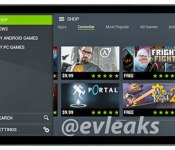
We’ve been hearing rumblings about NVIDIA’s slate-style Shield successor, and now we have a face to go with the info. Thanks to noted leaker @evleaks, we’re given a glimpse of the gaming tablet’s front side. From the looks of it, speakers line the top and bottom (or left and right in landscape) of the display with what appears to be a front-facing camera as well. All told, the gunmetal gray color scheme drapes a design that resembles last year’s Tegra Note. As far as internals go, previous rumblings point to 7.9-inch screen with 2GB of RAM and a quad-core Tegra K1 CPU, complete with Unreal Engine 4 abilities. What remains to be see is if that controller we got a peek at a while back is an accessory to wrangle traditional controls or if the new NVIDIA slate will also double as a home console for PC title streaming. We shouldn’t’ have to wait long for a proper introduction though, as the company has already hinted that the official reveal will happen before the end of 2014.
Filed under: Gaming, Tablets, NVIDIA
Source: @evleaks
Xbox Live and PlayStation Network are both having issues, but Nintendo Network is fine

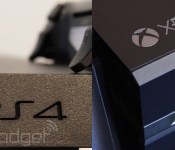
Excited to play the Destiny on PlayStation Network? You’re not the only one, and demand as the game’s beta opened its doors today seems to have the service stumbling. A message on the PlayStation Knowledge Center says PSN access is “Intermittently available” so if it’s working, great but don’t be surprised if you notice some odd behavior. Xbox fans shouldn’t be too quick to point fingers though, since besides waiting another week to try out an early version of Bungie’s next big game you may also experience issues with Xbox Live. The Xbox Live Dashboard points out problems for some users signing in or accessing the Video and Music services, but says there is a team working on it and promises another updated within the half hour. Since Nintendo Network appears to be running just fine, we can only assume which culprit is behind this.
Update: The PlayStation Network status has been upgraded to “online” so go forth and beta test freely.
Having Xbox Live connectivity issues on the Xbox One? The proper teams are on it! More updates being posted here: http://t.co/99xfLNeme4 ^AC
– Xbox Support (1-5) (@XboxSupport) July 17, 2014
If you are having issues connecting to PSN, please try again later. Thanks for your patience as we look into it.
– Ask PlayStation (@AskPlayStation) July 17, 2014
Filed under: Gaming, HD, Sony, Microsoft
Via: Joystiq (1), (2)

PlayStation 4 still best-selling console, six months running

It looks like Sony still has bragging rights that the PlayStation 4 is the top-selling console. Not to be outdone by the latest NPD report, the PlayStation Twitter account announced that the Sony’s new console is still outselling the Xbox One, for the sixth month in a row. Yesterday, Microsoft said that following the Xbox One’s $100 price drop it’d seen a “strong spike in interest” and sales of the console jumped by “more than double” the previous month. It’s worth noting however, that Redmond didn’t release specific sales numbers for May and, to be fair, neither did Sony. The latest report from the NPD Group plays it a bit vague, too, but says that combined sales of the PlayStation 4 and Xbox One were higher than combined totals for the PlayStation 3 and Xbox 360. What’s more, compared to last June, hardware sales saw a 106 percent increase overall. Sales of home consoles combined represented a 200 percent jump compared to last year, which is likely due to the two new consoles being available.
In terms of software, the reason most people buy new consoles in the first place, six of the same games from last month’s top ten remain the same. including Mario Kart 8, Wolfenstein: The New Order and Watch Dogs. However, overall software sales for June dipped some 67 percent compared to last year, which the NPD group attributes to last June’s launches of The Last of Us on PS3, Animal Crossing: New Leaf on Nintendo’s 3DS handheld and the disc-based version of Minecraft for the Xbox 360. It seems like the summer drought is a bit drier this year than last, but hey, at least we’ve got the Destiny beta now, right?
Breaking news: PS4 is #1 top-selling US next-gen console in June, 6th month in a row. Thanks for your support! ❤ pic.twitter.com/r5bTKg4wYf
– PlayStation (@PlayStation) July 17, 2014
Ok, #NPD time: Hardware sales still jumping (up 106% to $292.7M) while game sales fall again (down 5% to $298.2M). Accessories were up 1%
– Ian Sherr (@iansherr) July 17, 2014
Filed under: Gaming, Home Entertainment, HD, Sony, Microsoft, Nintendo
Source: PlayStation (Twitter), Xbox Wire
With big ambitions, 120 Sports aims to be the internet’s ESPN

Despite being crowded by major networks such as Fox Sports, NBC Sports and, of course, ESPN, surely this space could still make room for one more. At least that’s what the new, young brand 120 Sports is hoping for. As opposed to the rest of them, however, 120 Sports isn’t trying to make broadcast TV its bread and butter; instead, it is seeking all-digital avenues to distribute video content, with a website and mobile applications that offer 24/7 sports coverage, live and on-demand. But, perhaps most importantly, it’s delivering content without requiring authentication from a cable or satellite provider, and that’s something made possible by having some high-profile backing.
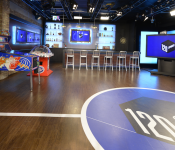
Thanks to partnerships with Time Inc. and MLB’s Advanced Media branch, both of which have equity stakes in the network, 120 Sports is able to access copyrighted content to use in its daily, two-minute segments. Such content, produced at the Harpo Studios campus (Oprah’s old stomping grounds) in Chicago consists of roughly 10 hours of live programming every day, featuring on-air talent, like former NBA player Antoine Walker, and other guest analysts. Then there’s NHL and NASCAR on the content side, both also part of the project; Jason Coyle, president of 120 Sports, told us that the network is actively working to strike more programming deals with entities from other sports. Before doing any of that, though, Coyle believes it must win over you, the sports fan. “We want to listen [to the viewers] before we make our next move.” Coyle said. “It could be more programming throughout the day. It could be more social features. It could be more sports-specific programming.”

“Whatever we did, we needed to be fundamentally different than television, without also undermining [it].”
Those social features he’s referring to are key to the core of what 120 Sports is doing. The quick-bite shows on the network all use social media as a way to keep fans engaged — not just with what’s being discussed (news, highlights and more), but also the hosts and guests. “ESPN meets Twitter, infused with the soul and pace of digital, with great journalism and talent,” Coyle replied when I asked him to describe his network. In the grand scheme of things, 120 Sports may not be ready to compete toe to toe with the media heavyweight that is ESPN, not right now anyway. But that’s not something that necessarily concerns Coyle and 120 Sports. “We started with the initial premise that, whatever we did, we needed to be fundamentally different than television, without also undermining [it],” he stated. “We needed to create a product that was really different, with all the qualities, but also being social- and mobile-focused. Having editorial credibility was also important.”

“We just want to become part of the media diet of sports fans.”
Naturally, that “mobile-focused” mentality means having a footprint on smartphones and tablets. To do so, 120 Sports has had an iOS app since it launched last month, which was recently followed by the network’s arrival on Google’s Android platform. “As we go to Android, we’re looking to grow an audience base there and continue to expand our programming,” Coyle told me. “As we start to grow our audience, I think you’ll see us continue to expand our offering. We’re really excited about whatever might come next.” What’s ahead could, perhaps, be heading to streaming devices including Apple TV and Roku — or, better yet, adding support for AirPlay and Chromecast to its apps.
At the end of the day, Coyle told me that, for 120 Sports, it’s all about earning a way into each fan’s day, not about ESPN or any other existing sports network. “We just want to become part of the media diet of sports fans,” he stated. “We think we have a chance to become a trusted brand, right alongside the rest of them.”
Filed under: Home Entertainment, Internet, HD, Mobile

IRL: A 24-inch AOC monitor that doubles as a gigantic Android tablet

What can you do with 24 inches of Jelly Bean that you can’t do with 10? Manufacturers like Acer, Asus and ViewSonic have been building oversized Android-powered devices for a couple years now; I was determined to find out why, so I spent a few weeks with AOC’s own all-in-one. The hybrid external monitor will run you $370 on Amazon — more than twice what you’ll pay for a comparable 1080p screen — but this pricier model adds stock Android 4.2.2 with a touchscreen interface. With the tap of a button, the integrated quad-core processor and eight gigs of storage spring into action, effectively converting this otherwise ordinary monitor into a complete Android-powered machine. There’s even an integrated 720p webcam, and with stock Jelly Bean on board, you can install whatever apps you’d like from Google Play.
But where exactly should you install such a device? Based on the AOC A2472PW4T’s marketing materials, it seems that the company thinks its all-in-one would be a good fit for the kitchen. So that’s where I put it. There aren’t any water-resistant elements to speak of, so I kept it away from the sink and did my best to avoid spills. Greasy fingers are inevitable when you’re preparing a scratch-made meal, however, so I did a fair amount of wiping after I worked through my one and only Android-powered cooking session.
I’ve used a laptop to display web recipes before, but this was my first experience cooking with an app. I went with the first one I spotted in the category, Allthecooks, which had plenty of user-submitted options and a handy shopping list feature that could sync with my phone. I typed in my two key ingredients of chicken and maple syrup (of which I seem to have an infinite supply) and after a few taps and swipes, I landed on lunch. The finished product looked nothing like the picture, but I can hardly fault AOC for my inability to follow instructions. It tasted delicious, at least, though I’m still not convinced that protein and syrup should ever meet on the dinner plate.

Even though I’ve since moved the AiO back to my desk, I consider my first (and probably last) Android-in-the-kitchen experience to be a success. I just don’t need a gigantic tablet in my life. Thankfully, there’s quite a bit of flexibility here. The display tilts at either 15 or 57 degrees, depending on whether you want to use the AiO as a monitor or as an extra-large slate. There’s a standard VGA connector and an HDMI port, so you can plug in just about any PC.
On the “Smart All-in-One” microsite, AOC plays up the device’s multimedia capabilities, including what the company describes as “superior sound,” which supposedly comes from the integrated 2-watt speakers. The music I played sounded distorted and tinny — “superior” to a low-end smartphone, perhaps, but not much else. You also get an audio input, headphone jack, an SD card slot, three USB ports and even an Ethernet port. There’s also integrated WiFi — getting online is as easy as it is with an Android tablet or a smartphone. You can attach a wired keyboard and mouse, using the same peripherals with Android as you do with your PC.

PC mode (or Mac mode, in this case) is my preference going forward. If you prefer Android to Windows or Mac OS, or your home doesn’t have enough computers to go around, it might make sense to use the AOC with Android, but the mobile operating system is designed for media consumption, not creation — Jelly Bean can’t replace a desktop OS, regardless of how large it may scale. If you’re looking for a very basic all-in-one, this should meet your needs, but while it’s capable of serving as a dedicated second screen to your laptop or a primary display for your desktop, there are plenty of far cheaper alternatives that offer better performance in a slimmer form factor, to boot.
Watch This App: Wear Unlock

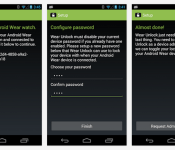
So you’ve got an Android Wear device and now you’re looking for some Android apps to go along with it. We’ve got you covered. Our Watch This App column is designed to help educate readers in the various apps available for the platform and highlight the best of the bunch. Watch This App: Wear Unlock… Read more »
The post Watch This App: Wear Unlock appeared first on SmarterWatching.
Read the rest at SmarterWatching.com!
The post Watch This App: Wear Unlock appeared first on AndroidGuys.
 AIVAnet