


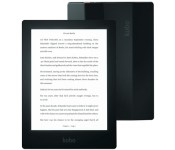
How would you change Kobo’s Aura HD e-reader?

Canadian e-reader company Kobo had a dream. That dream was to ignore commercial convention and ask its most hardcore of users what they would want from their dream e-reader — a bit like How Would You Change, in that respect. The result was the Aura HD, a 6.8-inch slate with a high-res (for an e-reader) display, impressive storage and a best-in-class front light. In our opinion, the hardware was gorgeous, but the software left a lot to be desired, not to mention that Kobo’s bookstore isn’t as strong as Amazon’s. Still, what we want to ask is, if you bought one of these, what did you think of it? Head on over to the forum and spill your brains.
Source: Engadget Product Forums

Whirlpool’s new machine freshens your clothes in 10 minutes flat

Odds are that you’re used to ironing some of your clothes to keep them wrinkle-free, or taking them to the dry cleaners when you can’t (or just won’t) put them through a washing machine. No great shakes, right? Well, Procter & Gamble and Whirlpool apparently believe that these are terrible burdens — the two have unveiled Swash, an appliance that freshens your clothing one piece at a time. The device uses the combination of heat and a special solution (held in “Swash pods”) to eliminate wrinkles and smells in your apparel without either damaging it or requiring time-consuming care; your duds should be (almost) as good as new in roughly 10 minutes. It doesn’t require water, and it can handle delicate materials like cashmere and lace. At first blush, it looks like a good way to save a favorite coat or sweater from the ravages of time.
However, this is most definitely an extravagance. While Reviewed.com found that Swash worked as advertised, you’ll really have to despise dry cleaning to justify the running costs — the device by itself is $499, and each 12-pack of pods is $7. That could quickly add up if you’re using the machine multiple times a week. It’s also not going to remove stains, so you’ll still be in dire straits if you spill a drink on your shirt right before a big date. You can buy the Swash at Bloomingdale’s this September, but you’ll want to think carefully about your typical attire before you splurge on a unit. Just how badly do you want to dress to impress?
Filed under: Household, Wearables
Source: Swash, BusinessWire

Revisiting the Apollo 11 Moon landing 45 years later

Today marks the 45th anniversary of the Apollo 11 mission where Buzz Aldrin, Neil Armstrong and Michael Collins made their trip to the Moon. Sure, you could say that there’s likely more tech in our pockets than what was used to put those three into out of the atmosphere. For whatever reason, though, powering up an Android device or an iPhone isn’t nearly as impressive as the fact that we shot humans into outer space and that they walked on the nearest hard surface. Join us as we celebrate that monumental event in the gallery below. For even more, be sure to check out the recent Reddit Ask Me Anything session with Aldrin. Spoiler: he thinks that Gravity is the best depiction of astronauts in zero-G he’s ever seen.
[Image credit: NASA]
Filed under: Science
Source: Apollo Archive, NASA

Gionee’s next smartphone promises to be the thinnest ever

If you thought Gionee’s Elife S5.5 was ridiculously thin, you’d better hold on to your hat. China has certified an upcoming Android handset from the company, codenamed the GN9005, that reportedly measures 5mm (0.2in) thick; that’s half a centimeter less than the wafer-like Elife S5.5, and possibly the thinnest smartphone to date. You will be giving up some bells and whistles in the name of a super-slim profile, mind you. This device will have a strictly middling 4.8-inch 720p AMOLED screen, a slow quad-core 1.2GHz processor and a modest 2,050mAh battery. The 1GB of RAM, 16GB of storage, 8-megapixel rear camera and 5-megapixel front shooter won’t impress, either. Still, Gionee will get to claim some serious bragging rights — at least, so long as it’s not upstaged between now and the GN9005′s launch.
Filed under: Cellphones, Mobile
Via: Engadget Chinese (translated)
Source: TENAA (translated)

Weekends with Engadget: Tokyo’s vending machines, new buyer’s guides and more!

This week, we learned about the dangers of stem cell treatment, explored the world of 3D motion capture and went on a vending machine shopping spree in Tokyo. Read on for Engadget’s news highlights from the last seven days. Oh, and be sure to subscribe to our Flipboard magazine!

Experimental stem cell treatment causes woman to grow parts of a nose on her spine
Stem cells have the potential to be one of modern medicine’s most promising advances and we’re still learning a lot about how they work. A paralyzed woman in the US discovered this, after an experimental treatment caused her to grow a nose-like tumor on her back.

What you need to know about 3D motion capture
The virtual simians in Dawn of the Planet of the Apes are impressively lifelike, but 3D motion capture animations haven’t always been so awe-inspiring. Read on as Steve Dent explains the history behind this century-old technique.

Nike’s new baseball glove construction doesn’t take months to break in
If you’ve ever had to break in a new baseball glove, you know that the process take time — usually a few months at best. Not so with Nike’s new fielding mitt.

Why Tesla Motors can’t sell cars in most of the United States
Why is it so hard to buy a Tesla? It’s a combination of archaic laws and a stubborn automotive industry.

The top 15 smartphones you can buy right now
What are the top smartphones on the market today? Our new buyer’s guide has you covered. Boom! You’re welcome.

Sapphire phone displays are tough, but the realities are even tougher
What do 45th wedding anniversaries and next gen smartphones have in common? Sapphire, that’s what. This nearly indestructible gemstone makes the toughest displays on earth, but not without a hefty cost.

Surviving on Tokyo’s vending machines
Japan has more vending machines per capita than anywhere else on Earth. Follow along as Mat Smith tries to live off nothing but vending machines as he travels around Tokyo.

Hacking the friendly skies: creating apps for wearables at 36,000 feet
“In-flight hackathon,” you say? By partnering with American Airlines, Wearable World aims to equip wearable startups with the tools they need to build apps that ease the burden of flying.

Microsoft cuts 18,000 jobs as part of its largest layoff ever
Microsoft announced the biggest round of layoffs in company history, giving 18,000 workers their walking papers. CEO Satya Nadella explained that the company’s new strategy is designed to make it “more agile” moving forward.

Samsung ATIV Book 9 2014 Edition review: big screen, even bigger price
Samsung’s latest ultrabook is here. How does the ATIV Book 9 2014 Edition hold up to the competition? Check out Dana’s review for all the details.

Search engine turns the tables on hackers by exposing their info

Want to see a textbook definition of irony? Look no further than Indexeus, a search engine that primarily exposes the info of malicious hackers caught up in the very sort of data breaches that they inflict on others. As it was originally structured, people had to “donate” $1 for every record they wanted to purge from the engine’s index; in other words, they had to pay to avoid the wrath of their fellow thieves. This was ostensibly to create “awareness” of susceptibility to attacks, but critics have complained that it amounts to extortion.
You no longer have to pay, however. Indexeus founder Jason Relinquo tells security guru Brian Krebs that blacklisting is now free due to the EU’s “right to be forgotten;” he can’t charge for a service that’s supposed to be gratis. That purported desire to obey the law is rather odd when the indexed content is illegal by nature. Look at it this way, though — if any targeted hackers are having second thoughts about their paths in life, this may be the excuse they need to make a clean break.
[Image credit: Patrick Lux via Getty Images]
Filed under: Internet
Via: Krebs on Security
Source: Indexeus

Gadget Rewind 2005: Samsung YEPP YP-W3 (limited edition)

In 1999, Samsung launched the YEPP series aiming to deliver some of the smallest MP3 players on the market. These devices went beyond mere MP3 playback functionality with built-in FM tuners and voice recorders. By 2005, however, Samsung was looking for a better way to make its YEPP players stand out from the portable media players crowding the market. Its solution was the limited edition YP-W3: a diamond-studded MP3 player fashioned in the style of a pocket watch.
The YP-W3 wasn’t just for the glitterati, as it came in a variety of gem-free formats ranging from 256MB of internal flash storage, all the way up to 1GB. If you had the means, though, the version ringed with 0.007-carat diamonds embedded in a mirrored white-gold exterior was clearly the optimum choice. Its round display was fronted by a sapphire glass window — which even today is still a costly add-on — and had an enhanced white LCD for increased clarity.
Similar to today’s smartwatches, the YP-W3′s display could present the time as digital numerals or in the style of a traditional analog clock face. Volume, fast-forward and rewind buttons circled the display, with additional function keys and a mini-USB port along the edges. The full limited-edition package included EP-1 headphones and gem certification for the bling. There was also a belt clip, a carrying pouch and necklace chain so you could choose how to display your retro-futuristic fashion sense.
The YP-W3 was a smart option for consumers seeking a flexible MP3 player as it was compatible with a wide array of file formats and could also tune into FM broadcasts. If something on the radio really struck a chord, users could even record those songs directly to the device. And sound quality wasn’t so much an issue as Samsung also attempted to circumvent the poor bit rates of digital media at the time by including SRS Wow software. This feature load came with a drawback though, as the YP-W3 could only last for eight hours on a single charge of its rechargeable li-polymer battery. That’s a far cry from the day-plus battery life most consumers enjoy today — especially when you consider all that music’s being streamed and consumed on a smartphone.
Did you own a YEPP YP-W3? Add it to your Engadget profile as a device you had (or still have) and join the discussion to reminisce or share photos of your device with other like-minded gadget fans.

Inhabitat’s Week in Green: stadiums with modular housing, Tesla Model 3 and a tower of mushrooms

Soccer fans around the world are going through withdrawal now that the World Cup is over, and in Brazil, people are beginning to think about what should be done with the 12 stadiums that were built or renovated for the tournament. A pair of French architects has come up with a brilliant idea: Convert the stadiums into affordable housing. Solar panels come in all shapes and sizes — but rarely do they come in the shape of a huge duck. A team of London-based designers has submitted a proposal to build a 12-story duck-shaped renewable energy generator for the Land Art Generator Initiative, which will be held later this year in Copenhagen.
Meanwhile, Jamaica launched the world’s largest wind-solar hybrid installation, and global clean energy investment surged in the second quarter of 2014, driven by big wind and solar deals and installations of small-scale, rooftop solar photovoltaics. California is currently experiencing a drought of historic proportions, but that isn’t stopping one company from extracting water from the Southern California desert for its bottled water operations. A new report finds that Nestlé is quietly removing undisclosed amounts of water from the state for Arrowhead bottled water.
The world’s first tower made of mushrooms recently debuted at Brooklyn’s PS1 museum, and Inhabitat caught up with architect David Benjamin to discuss the groundbreaking structure. The tower is made from mycelium (mushroom root) bio-bricks, and it is being used to test the viability of mushrooms as a building material. Elsewhere on the green architecture front, the design firm Chartier-Corbasson released plans for a skyscraper made entirely from its residents’ trash. As time passes and residents produce more trash, the tower would grow taller. And in Singapore, architect Moshe Safdie unveiled plans for a massive biodome with a circular waterfall that descends from the center of the roof.
In green transportation news, Tesla CEO Elon Musk announced that the company’s latest sedan would be called the Model 3 when it goes on sale in 2017. The electric car will be both cheaper and smaller than the Model S, and it’s expected to sell for about $35,000. Tesla also passed an important milestone in June as its rapidly expanding Supercharger network delivered more than one gigawatt hour of energy to Model S electric vehicles across the country. According to Tesla, the Supercharger network has saved 168,000 gallons of gas and offset 4.2 million pounds of carbon dioxide. The city of Helsinki wants to do away with personal cars altogether within the next 10 years by launching an integrated transit system that will make public transit more convenient and easier to use than commuting by automobile. And in Japan, Ferrari designer Ken Okuyama has drafted plans for a luxury sleeper train that looks like a boutique hotel on rails. The deluxe train looks futuristic on the outside and decadently retro on the inside, and the entire 10-car train only carries 34 passengers.
Teenagers continue to pave the way with some of the world’s most innovative projects. The latest wiz kid is Thomas Suarez, a 15-year-old who claims to have designed a 3D printer that is 10 times faster and more reliable than anything currently on the market. In other 3D printing news, the company Kudo3D recently unveiled the Titan 1, a printer that can print bigger objects faster than its competitors. The Titan 1 reached its Kickstarter goal of $50,000 within two minutes of launching the campaign, and it raised a total of $687,116. In other green design news, the folks at Oru Kayak have created the world’s first origami-inspired, flat-pack kayak. The one-of-a-kind kayak is now for sale, and you can get a $50 discount with this coupon code. The Spanish company peSeta and American designer Marc Jacobs have collaborated to create a beret with a turntable mounted on it. And a new report issued by China Labor Watch reveals several instances of child labor in a Samsung supplier’s factory in China.
Filed under: Internet

ZTE continues the trend toward minimizing Android customization

For all its beauty, Android’s openness is the reason why manufacturers and carriers are able to make their own tweaks to the OS. Some companies go as far as completely forking the platform, and we know how terrible that can be — though there are exceptions like Amazon’s Fire ecosystem, which offers a solid experience overall. Thankfully, manufacturers are beginning to realize it’s much better to deliver Android as Google intended, or at least as close to it as possible (e.g. HTC’s Sense 6). Chinese outfit ZTE will join this movement very soon, announcing that the Google Now launcher will be set as the default home screen on its future smartphones, starting with the launch of the Blade Vec 4G next week. Naturally, doing so means giving buyers a cleaner look right out of the box; plus, it puts all of the search giant’s services front and center, including the Play store and, of course, Google Now. Most importantly, it’s definitely going to make Google happy.
Filed under: Cellphones, Software, Mobile, Google
Via: PocketNow, Android Police
Source: ZTE

Control high-speed photography from your phone with this camera trigger

High-speed photography can be daunting if you’re not a seasoned pro. You may have a fast camera and flash, but you probably don’t have the gear (or people) you’d need to get that frozen-in-time look in most situations. MIOPS’ new camera trigger might make it easier to take high-speed shots all by your lonesome, though. By itself, it can tell a DSLR to take a shot and fire your flash when it detects light, motion or sound; you can capture lightning the moment it strikes, or your cat the moment it bolts across the room. The device supports external sensors like pressure pads, too.
It really comes alive if you pay for the Ultimate variant, which adds remote control from a Bluetooth-equipped Android or iOS device. Unlike most trigger apps, MIOPS’ mobile software lets you set up capture scenarios that only take pictures under very specific conditions. You can tell your taking time-lapse photos as soon as it gets dark, and snap additional lightning pictures if a big storm brews; in short, you shouldn’t have to keep a close watch over your camera.
MIOPS is looking to crowdfunding to get its peripheral off the ground. If you’re intrigued by the idea, you can pledge $189 for the Basic unit, or $229 for Ultimate. Everything should ship in December, so long as everything goes according to plan. That’s a lot of money to spend for a specialized tool, but it might pay off if you’re keen to shoot more than just the usual portraits and still life scenes.
Filed under: Cameras, Peripherals
Via: PetaPixel
Source: Kickstarter
 AIVAnet