



iTunes by the Numbers: Billings up 25% Year-Over-Year, $20B Paid to Devs, 75B App Downloads [iOS Blog]
 During its financial results call covering the third fiscal quarter (second calendar quarter) of 2014, Apple shared details on the success of its iTunes Store, which has become an increasingly important revenue source for the company in recent years, mainly due to the ever-growing popularity of the App Store.
For the first fiscal nine months of the year, Apple CEO Tim Cook said iTunes software and services were the fastest growing part of Apple’s business. iTunes billings grew 25 percent year over year to an all time quarterly high, largely due to the App Store.
In the third quarter, iTunes generated $4.5 billion, an increase of 12 percent year over year. There have been 75 billion cumulative App Store downloads, and Apple has now paid a total of $20 billion to developers. In January of 2014, Apple had paid out $15 billion, meaning $5 billion of that total has been paid out in 2014 alone.
During the call, Tim Cook said that he expects iOS 8 with more than 4,000 APIs and the company’s new developer language, Swift, to result in significant growth and improvement for apps and the App Store.
Overall, Apple posted revenue of $37.4 billion and a net quarterly profit of $7.7 billion, or $1.28 per diluted share, compared to revenue of $35.3 billion and net quarterly profit of $9.5 billion ($1.07 per diluted share) in the year-ago quarter. Year over year, Apple’s revenue is up 6 percent and its profit is up 12 percent.
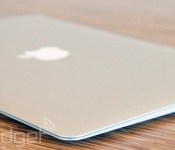
China and Macs power Apple’s growth as iPad demand wanes

Apple had a very strong second quarter. iPhone sales were up significantly over Q2 2013 and the company pocketed $700 million more in profit than it did during the same period last year, even though iPad sales slipped slightly. The company’s third quarter results, released today, reflect a similar trend. At $37.4 billion, revenue is up $2.3 billion over the same period last year, thanks in no small part to boosted sales in Asia. iPhone and Mac adoption remains strong, with 13- and 18-percent increases over the same period in 2013, respectively, but iPad and iPod sales both slipped, registering 9-percent and 36-percent respective drops. Apple sold 35 million iPhones during Q3 of this year, compared to 31 million in 2013, while iPad sales dropped to 13.3 million, from 14.6 million last year.
Still, Apple fell short of expectations. During its Q2 conference call in April, in what’s typically a conservative estimate, reps suggested that Q3 revenue could approach $38 billion. Earnings were $600 million shy of that amount, however, with revenue of $37.4 billion and a $7.7 billion net profit, but bested Q3 2013, when Apple posted revenue of $35.3 billion and a $6.9 billion profit. Tim Cook doesn’t seem to be concerned about the drop in iPad sales. “This isn’t something that worries us,” he told the Wall Street Journal. Meanwhile, Apple’s projecting boosted revenue in Q4, between $37 and $40 billion — the company reportedly has quite a few new products in the pipeline, which could impact its balance sheet for the rest of the year. A smartwatch is expected soon, following several related hires, while a larger iPhone may appear this fall alongside the launch of iOS 8.
Filed under: Cellphones, Laptops, Tablets, Mobile, Apple
Source: Apple

Government turns to robots for security interviews

National Center for Credibility Assessment is looking to bring the process of doling out national security clearances into the future. As it does more often than not, “the future” in this case means robots. Alright, well not robots exactly but a virtual avatar powered by a computer program. When you apply for security clearance, you first have to fill out a form that requires you to disclose all past drug use, crimes and mental health issues. Those same subjects are then revisited with an actual human, but the NCCA thinks it might be more effective to jump straight to an interview with a computer. In a study Army trainees were put through a mock interview with a racially ambiguous avatar. Turns out the pretend applicants were much more likely to admit to mental health problems or alcohol abuse when speaking to the computer than they were when filling out a form. Not only that, but at the end of the interview they simply volunteered additional info after being asked if their was anything else they’d like to talk about.
The program behind the interrogator is able to recognize responses from the subject and follow multiple branches of conversation, but it’s not quite a proper artificial intelligence. It’s more like a menu triggered by vocal cues. But by turning to machines, the government could reduce gender or cultural bias in interviews while also eliciting more honest responses from subjects. Though, the current system still includes connecting people up to traditional polygraph equipment and follow up interviews would need to be conducted with actual human beings. But the NCCA is still hopeful that they can save the government both time and money. We can only assume future iterations will include a proper AI and the ability to recognize human emotion.
Via: Motherboard
Source: NCCA
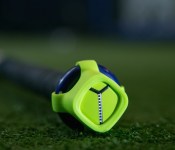
Zepp takes a swing at baseball with its tiny data analyzer

As someone who doesn’t play baseball often, if ever, I need all the help I can get. But since America’s Pastime isn’t my first sport of choice to practice, I’m okay admitting how extremely terrible I am at it. For others, however, things might be a little different. Whether it’s kids who are just starting to play the game or those who would like to make a career out of it, Zepp Labs, creator of the GolfSense, believes it has made something that can help them along the way. Enter the Zepp baseball swing analyzer, an itty-bitty sensor that attaches to a baseball bat and can be utilized to record a ton of useful information, with the ultimate goal being to use this data to help improve your skills. Zepp also does the same for other sports — that same sensor works with golf or tennis sessions; you just need a different mounting kit for each.
On the baseball (or softball) front, it’s as easy as placing the sensor inside the rubbery holster and, subsequently, securing it around the bottom of the bat. At roughly six grams (the rubber mount adds 13 grams), the only element reminding you of its existence is the big, bright, greenish-yellow color it features; otherwise you wouldn’t even know it’s there. Once you actually get going, the companion app, available for iOS and Android, takes care of showing you the results of your swings, including how fast you’re hitting the ball and the amount of time it takes for you to make contact. Additionally, Zepp’s device can determine the exact shape and angles of your swing, which you, or your coach, can later analyze and break down to determine what you need to do better next time out. The app does a great job of compiling all that data and making it fun to look at — for example, the 3D viewer lets you see your swing from various angles, from start to finish.

Of course, not everyone is able to perform at the same level, and that’s why Zepp made it easy to adjust goals depending on where people think they fit in. In my case, I set up a session with a Bat Speed Impact goal of 73MPH, to which I fell extremely short by taking a swing of 59MPH. Embarrassing, I know, but it got even worse: At one point, I managed to completely miss a ball that wasn’t even pitched at me (!). Thankfully, I had other people around who could make better use of the tiny device. Regardless of my subpar baseball skills, though, the Zepp sensor performs as advertised. At $150, it may not be for everyone, but there’s definitely a market for it.
“The biggest thing in this wearable space is capturing meaningful data and [using] it properly.”
Zepp Labs CEO Jason Fass told me that his product, despite its short history, has already been adopted by “a number” of Major League Baseball teams, though he didn’t go into any further specifics. “The target market isn’t just kids,” he said. “I think the biggest thing in this wearable space is capturing meaningful data and [using] it properly.” Fass also said to me that while the focus right now is on the current-generation Zepp sensor, the plan is to continue to expand the technology to more sports next year, including both types of football, which could mean some competition for Adidas’ miCoach ecosystem.
Filed under: Misc, Peripherals, Wearables
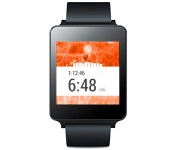
Watch This App: Strava Running and Cycling GPS

Biking, jogging, and running gets even better now that Strava offers support for Android Wear. Users can now start and stop activities using their voice, keeping smartphones tucked away neatly and securely. No more worrying about dropping your handset as you pull it out to check your stats. A wonderful app for those who spend… Read more »
The post Watch This App: Strava Running and Cycling GPS appeared first on SmarterWatching.
Read the rest at SmarterWatching.com!
The post Watch This App: Strava Running and Cycling GPS appeared first on AndroidGuys.
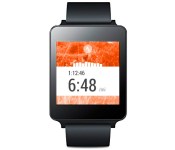
Watch This App: Strava Running and Cycling GPS

Biking, jogging, and running gets even better now that Strava offers support for Android Wear. Users can now start and stop activities using their voice, keeping smartphones tucked away neatly and securely. No more worrying about dropping your handset as you pull it out to check your stats. A wonderful app for those who spend… Read more »
The post Watch This App: Strava Running and Cycling GPS appeared first on SmarterWatching.
Read the rest at SmarterWatching.com!
The post Watch This App: Strava Running and Cycling GPS appeared first on AndroidGuys.

New plugin-free web games run (almost) as well as their desktop counterparts

So far, sophisticated 3D web games have typically required either a plugin (think Quake Live) or a special environment where they can run native code. While those are just dandy, they aren’t really web games, are they? That’s going to change shortly, as Trendy Entertainment has revealed plans to launch truly web-based versions of both Dungeon Defenders Eternity and the upcoming Dungeon Defenders II. Both Unreal Engine-based titles use a mix of open standards like WebGL, Web Audio and Mozilla’s heavily tuned JavaScript web code (asm.js) to handle desktop-level 3D and sound in your browser at “near native” speeds. You may not notice the difference at all, provided you’re on a reasonably quick PC.
If you’re interested in giving either base defense game a spin, you might want to check out the Firefox 31 update arriving at the same time. Mozilla’s latest browser includes tweaks for game-related performance, as well as some handy features whether or not you intend to play; it enables parental controls on supporting sites, malware blocking for downloads and a search field on the new tab page. You don’t need Firefox if you’re only eager to try Dungeon Defenders, but you may want to swing by the source links to see if anything else in the upgrade tickles your fancy.
Source: Mozilla Blog, Firefox Notes
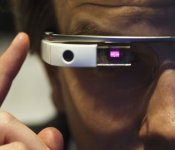
eBay brings its RedLaser barcode-scanner app to Google Glass

You might know eBay as the website where you can buy a rare NES game for a hundred grand, but the company also has its own barcode scanner, called RedLaser. It’s been out on Android and iOS for a while, and now the company is bringing it to Google Glass, allowing you to quite literally buy whatever you set your sights on. Like the existing app, the Glass version scans barcodes and spits back a list of current prices at different retailers. From there, you can find a brick-and-mortar store nearby, complete with directions, if you need them. And, of course, like any good online retailer, eBay will show a list of related products, similar to whatever it is you just searched for. All told, we’re guessing you can probably spare a few minutes to stop what you’re doing and use the phone app instead, but let’s be honest: Scanning stuff with your eye sounds pretty fun. Just be aware, though, that if you want to purchase something, you will in fact have to pick up your phone — the app will send an email notification to your mobile device so you can complete the transaction.
[Image credit: Angel Navarrete/Bloomberg via Getty Images]
Filed under: Google
Source: RedLaser, Glass Store

Yo and the app hype machine

Yo is a notifications app where all it does is send the word “Yo” to your friends. That’s it. Just “Yo.” Of course, silly single-purpose apps like these are a dime a dozen — remember those fart apps of old? — but the thing that sets Yo apart is that it’s actually attracted a whole lot of attention. More than a million dollars worth, in fact. Yep, this seemingly frivolous app has recently raised around $1.5 million in funding, giving it a valuation close to $10 million. It’s also apparently been downloaded more than 2 million times since its tongue-in-cheek April Fool’s Day debut.
Crazy? Well, yes, perhaps. But it’s not entirely unusual. In case you need a refresher (and probably a laugh or two), here’s a look at some of the more overhyped apps in the past few years. Have any other ideas? Leave a comment and let us know of any apps we’ve missed.

The cloud keeps Microsoft afloat while it reconsiders hardware and content

We always want to know how Microsoft is doing, but today we’re paying especially close attention: The company just released its earnings for its fourth fiscal quarter, the first full quarter that new CEO Satya Nadella was on the job. Also, let’s not forget that Microsoft just announced it’s cutting 18,000 jobs and axing Xbox Entertainment Studios. So how’d the company do? Not bad, actually: The company says revenue is up, mostly thanks to its strong cloud business (previously led by Nadella himself). In particular, Microsoft has its loyal business customers to thank: The company saw big gains in commercial cloud revenue, Windows licenses (natch) and server products. Other honorable mentions include Bing, which gained 40 percent in revenue; Microsoft Office 365 subscriptions; and revenue from PC makers.
Largely missing from the report: mentions of hardware. Though the company’s new mobile business helped revenue a bit, the company also had to take a $38 million hit on Surface inventory. Basically, then, there are few surprises here: Microsoft made the most money off its bread and butter — things like enterprise services, the cloud and its core Windows business. And to be honest, we could have expected as much. Consider that just last week, Nadella posted an open letter to employees, reiterating that cloud and productivity tools were the future.
All told, the company generated $4.61 billion in profit on $23.38 billion in revenue. To put that in perspective, revenue is up 18 percent over the year-ago period, and profit only fell by a modest 7 percent — that’s not bad considering Microsoft recently closed its massive $7 billion purchase of Nokia’s mobile division.
Image credit: Associated Press
Developing…
 AIVAnet