



The battle for virtual reality: Google, Samsung, Sony and Oculus VR

Back in June, Google revealed Cardboard: an open-source attempt at mobile virtual reality. Heck, even the “hardware” is open source –here are instructions to make your own, right now!
But the concept is more than a low-tech solution to mobile VR. It’s emblematic of Google’s approach to virtual reality: use the phone that’s already in your pocket. Samsung’s taking the same approach later this year with Gear VR, only it’s also partnering with Oculus VR on the software side.
This stands in stark contrast to the PC-dependent, ultra-high-res experience Oculus VR and Facebook are aiming to achieve. The Oculus Rift headset both literally and figuratively kickstarted the re-birth of virtual reality in modern technology. It remains the peak of technological achievement in virtual reality. And now, the medium is splintering into two distinct futures: one of entertainment, the other of immersion.
“PRESENCE”

That word — “presence” — is at the heart of virtual reality. Game industry veteran Michael Abrash — formerly of Valve, where he worked on research and development; currently of Oculus VR, where he serves as “Chief Scientist” — described this ideal for VR during a talk in January 2014:
“It’s the sense of being someplace else while in virtual reality; many people feel as if they’ve been teleported. Presence is an incredibly powerful sensation, and it’s unique to VR; there’s no way to create it in any other medium.”
The medium’s history is littered with failed attempts, even from gaming’s biggest players (Nintendo’s Virtual Boy, anyone?).
Indeed, that’s the “magic” of virtual reality: being whisked away, instantly, to another world. You’re not looking at another world on a screen — you’re there. At least, that’s when VR works. The medium’s history is littered with failed attempts, even from gaming’s biggest players (Nintendo’s Virtual Boy, anyone?). But with Oculus Rift, even the first demos shown on a duct-taped, slapdash prototype were incredibly impressive. It just worked, even if it was clearly rough around the edges. And even with those early demos, a PC was required to power them. The same can be said for Sony’s Project Morpheus, powered by a $400 game console.
One early demo, dubbed “Tuscany” for its visual nods to the Italian region, wasn’t much to look at. The art was low-resolution; the in-world lighting was barely there; the level of detail in general was pretty low. But even with bare bones demos like Tuscany, the world was believable because the demo’s framerate was high enough and the headset was capable of refreshing video fast enough for it to seem real. Those demos seem rough now by contrast, but they’re still far ahead of what we’ve seen running on VR headsets powered by mobile phone processors.
MOBILE VR AS IT STANDS TODAY

We’ve heard very positive things from folks who’ve tried Samsung’s VR headset. The so-called “Gear VR” is still a development kit, and it’s powered by a Galaxy S4; we’re told that the consumer version will use a newer phone (maybe the Note 4?) with more horsepower. Though our sources only experienced a few demos, they repeatedly described them as “impressive,” specifically with the caveat “for a phone.”
Samsung still hasn’t officially acknowledged that its VR headset exists (that’s a real render of it above). Gear VR is said to be be unveiled in Germany at IFA, just a few weeks from now.
Google’s Cardboard has received similarly positive, though guarded, responses. TechCrunch‘s Greg Kumparak wrote back in June, “It’s actually kind of freaking wonderful. Is it an Oculus Rift killer? Hah – of course not. It’s made of cardboard. But it’s still awesome.” As he demonstrated in a video (above), a handful of apps — including major known quantities like YouTube and Google Earth — can be used in Cardboard right now, employing phones that already exist (there’s a Nexus 5 in the demonstration).
It’s certainly a different take. Rather than aim to provide “presence,” Google’s approach to VR seeks to provide an alternate viewing experience for existing content. YouTube, for instance, is simply an interactive VR app for viewing non-VR content. That’s not a bad thing, necessarily — it could act as an intro to VR for the mass market — but it’s not the same as providing “presence.”
Another VR device powered by mobile tech, GameFace Labs’ “GameFace” prototype, further highlights this difference. The same Tuscany demo running on the GameFace headset, scaled down for a mobile processor, provided a markedly different experience than what we’ve tried on the Oculus Rift. Are you still “in” Tuscany? Sure! But it looks an awful lot like Virtual Tuscany, rather than “Oh man, I’m in Tuscany!”
Though GameFace is impressive, the second Oculus Rift dev kit is an order of magnitude more adept. Beyond a much higher resolution screen, the second Rift dev kit comes with an additional camera for depth-tracking (just to barely scratch the surface of technical differences). That’s not meant as a slight at GFL, but to highlight how different these two approaches are to virtual reality. Simply put, they’re intended to deliver different experiences.
WHERE CASUAL AND BLEEDING EDGE VR DIVERGE
Unlike film or video games, where technical prowess can be trumped by other factors, major VR leaders argue that it’s a worthless medium without “presence.” To create presence, Oculus VR founder and Rift creator Palmer Luckey says that the tech has to be of a certain quality — specs that exceed the most advanced smartphones. Even the Rift’s second dev kit, which is far more technologically capable than the competition, is far from what he thinks is required for “good consumer virtual reality.” That means super high-res screens, high refresh rates (“90 Hz or higher”), and fast processors (read: actual computers, with dedicated graphics processing) to make all that happen. Luckey’s told me in interview after interview that standalone, untethered VR is the future of the medium (see above). But 10 years from now “future,” not 2014.
Google argues that the best time to get VR going — regardless of technological capability — is right now.
“We could theoretically plunk down a Titan in there. There’s nothing stopping us. But people will say, ‘This is hot! It only lasts for five minutes!’,” NVIDIA product manager Mithun Chandrasekhar told us in a recent interview. We asked about the limitations around mobile VR, and he joked that NVIDIA could — theoretically — put an expensive, high-powered GPU in a VR headset.
Of course, it’d be incredibly hot, heavy, and would require immense battery power.
Even if NVIDIA could shrink the GPU down in size and weight, power issues would overcome horsepower limitations. Battery technology simply isn’t keeping up with processor technology. “Battery is probably the biggest limitation,” Chandrasekhar said.
Google argues that the best time to get VR going — regardless of technological capability — is right now. “We want everyone to experience virtual reality in a simple, fun, and inexpensive way. That’s the goal of the Cardboard project,” the Cardboard website reads. Beyond expanding the reach of virtual reality, Google specifically calls out developers that it hopes will, “build the next generation of immersive digital experiences.” Silly as it might look, Google Cardboard and other mobile VR solutions look to offer a foundational experience for both the development community — you know, the folks who make this stuff really amazing — and for mainstream, non-technophiles.
TWO PATHS, ONE RESULT

Chances are, you don’t have a 4K screen on your smartphone. You might soon, but you probably don’t just yet. When you do — when we all do — the concept of mobile VR will seem a bit less gimmicky and a bit more like a real product. When processors are more capable, when batteries last longer, and the line between PC and mobile phone blurs just a bit more, mobile VR won’t feel like such a foundational step on the way to the promise of “presence.”
For now, mobile VR can serve as a taste of the medium. An amuse-bouche to the medium. A gateway drug to the presence you’ll find on devices like the Oculus Rift and Project Morpheus. And that’s not a bad thing! Before long, devices like Rift and Morpheus will be rudimentary, their abilities easily accomplished on mobile, and the two virtual reality paths will (at least in part) rejoin.
Whether the goal is growing the medium, getting to market early, providing “presence,” or something else entirely, the result is the same: we all get to play with a bunch of rad VR headsets. Oh, and hopefully witness the birth of a major new medium. No big.
[Image credit: Valve (Steam Dev Days 2014 slide), SamMobile (Gear VR)]
Filed under: Cellphones, Gaming, Wearables, Software, HD, Mobile, Samsung, Sony, Google, Facebook

Google Play gets a section for offline games

In an ideal world, your smartphone and tablet would always be online (and you’d still have an unlimited data plan), but that’s just not the case. Problem is, some Android games require a connection even after you’ve completed your download, but others do not. It’s that latter list that Google’s breaking out into its own section in Play, called “Offline Games.” There you’ll find Asphalt 8, Dots, Jetpack Joyride, Assassin’s Creed Pirates and a few others — 54 games in all. That’s a shockingly slim selection, so this list is hardly all-inclusive, but if you’re in the market for a game to play on your next flight or subway ride, it’s a good place to start.
Filed under: Gaming, Internet, Google
Via: Android Community
Source: Google Play

Cortana won’t sound like Cortana on UK Windows Phones

Now that Microsoft is rolling Windows Phone 8.1 out to handsets, users can now start chatting with its new virtual assistant, Cortana. Right now, she’s limited to the US, but the Cortana man at Microsoft, Marcus Ash, has tweeted that “barring an unforeseen issue,” the UK developer preview will go live in “less than two weeks” and, wait for it, not feature the reassuring tones of Jen Taylor, the original talent behind Halo’s Cortana. Like Apple’s Siri, Cortana will adopt a British accent when it rolls out, presumably to make owners feel more comfortable when interacting with the digital sidekick. Sure, she’ll still take notes, dictate messages and offer up calendar alerts and reminders, she just won’t sound like the Cortana you’ve relied upon during many a gaming session (unless you indulge in a bit of location trickery).
Filed under: Cellphones, Internet, Software, Mobile, Microsoft
Via: PhoneArena
Source: Marcus Ash (Twitter)

Samsung Galaxy Alpha leaks out yet again

The world got a glimpse of the Samsung Galaxy Alpha recently which revealed some of the specs for the upcoming device as pretty much a smaller Galaxy S5. The device, which sports a 4.7-inch Super AMOLED display has leaked yet again, offering another look at what seems a better looking Samsung Galaxy S5. The images… Read more »
The post Samsung Galaxy Alpha leaks out yet again appeared first on AndroidGuys.

Apple’s Quarterly Spending Points to Major Product Launches, Significant Revenue Growth
Looking at Apple’s quarterly SEC quarterly filing, Katy Huberty of Morgan Stanley believes Apple’s revenue is poised to explode in the coming quarters. Huberty based her prediction on increases in Apple’s off-balance sheet commitments, which have a historical correlation with revenue growth.
Off-balance sheet commitments are those investments in components and services that are involved in the mass production and launch of new devices. These line items include component purchases, manufacturing process equipment investments, advertising, and other services. Huberty notes that Apple’s total spending in these areas has climbed 46 percent yearly and 36 percent quarterly in fiscal Q3 2014, making last quarter’s jump the largest spending increase since Apple first launched the iPhone in 2007.
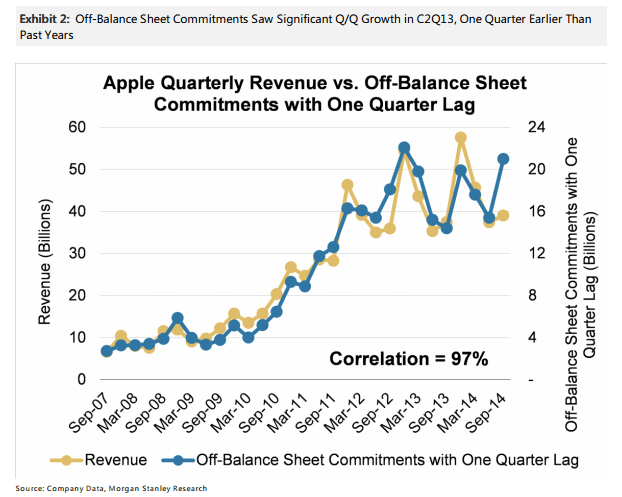
Huberty, not surprisingly, attributes this spending increase to Apple’s iPhone 6 and iWatch wearable, both of which are expected to launch later this year. These new products, along with services such as mobile payments, could accelerate growth and boost margins.
Apple has the opportunity to take share in slower growth smartphone and tablet markets with larger screens and new services. New product categories like iWatch, and services like payments could further boost growth.
Apple is rumored to be launching its next-generation iPhone 6, refreshed iPad models and a new iWatch smartwatch later this year. The company may also update its Mac hardware to coincide with the debut of OS X Yosemite.
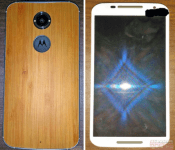
Alleged Moto X+1 poses for the camera

Motorola did a great job with the Moto X last year. That phone offered great user experience for a relatively affordable price. We say relatively because of its specifications, but that’s the thing with Moto X, despite not being at the very top as far as specifications go it offered so much for the price…. Read more »
The post Alleged Moto X+1 poses for the camera appeared first on AndroidGuys.
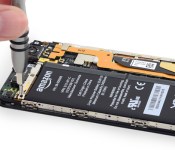
Repairing the Fire Phone’s cameras is more difficult than you think

The intrepid disassemblers over at iFixit have torn Amazon’s Fire phone asunder in order to determine how repairable it is, but what did they find? At first blush, things seemed promising, with standard Torx screws holding the chassis together, but after that things started to get sticky. The battery, for instance, is attached with an adhesive tab, but the five front-facing cameras are all held in place with liberal dollops of glue. So much so, in fact, that do-it-yourself repairs are nearly impossible unless you’re patient enough to melt each component out of its adhesive prison. Getting spare parts isn’t ideal either, since the components share so many resources that you can’t just replace one piece — you’ve got to buy the lot. That’s why the phone scored a measly 3 out of 10 for repairability, which is yet another reason not to buy one.
Filed under: Cellphones, Mobile, Amazon
Source: iFixit

Apple Begins Mass Production of 4.7-Inch iPhone 6, 5.5-Inch Model and iPads Start in September
China media sources (via GforGames) report that mass production of Apple’s 4.7-inch iPhone is underway ahead of the phone’s expected fall launch. These same sources claim the 5.5-inch version of the iPhone 6 has not entered mass production, further suggesting that the launch timeframe for this larger iPhone model is still uncertain.

Besides the iPhone 6, Apple also is preparing the next-generation iPad Air and Retina iPad mini for mass production starting in September. Apple is expected to unveil its new iPads, possibly alongside the iWatch, at an October event that also will likely be used to announce the public release of OS X Yosemite.
As Apple prepares to launch new iPhones and iPads later this year, the company’s Asian suppliers are gearing up to boost production by as much as 85 percent by Q4 2014. Some of this increased production may be handled by Foxconn robots, “Foxbots”, with the company reportedly deploying as many as 10,000 robots at a cost of up to $25,000 each.
Anticipation for Apple’s fall lineup of devices is high, fueled by comments from Apple executives that suggest the company will enter new product categories with a device lineup that is the best it has had in 25 years.

Watch This App: Music Boss

So you’ve got an Android Wear device and now you’re looking for some Android apps to go along with it. We’ve got you covered. Our Watch This App column is designed to help educate readers in the various apps available for the platform and highlight the best of the bunch. Watch This App: Music Boss Listing to music on…… Read more »
The post Watch This App: Music Boss appeared first on AndroidGuys.

US to write privacy rulebook for commercial and civilian drones

You may not be able to fly your drone wherever you want, but there’s no rules on what you can actually do with it. That’s likely to change, with Politico reporting that President Obama will tell the NTIA to draw up privacy guidelines for unmanned aerial vehicles. The rulebook will only cover commercial and hobbyist activities, but should stop nefarious eyes from straying too close to your bathroom window when you’re not looking. Military and law-enforcement hardware, meanwhile, will require separate rules, which is likely to come from individual states. When asked, the White House gave issued a standard no comment, but let slip that an “inter-agency process” was underway to co-ordinate America’s stance on drone use. Of course, since commercial drone use is still banned in the US — with some exceptions — there’s at least time for the government to thrash out a cohesive policy on the matter.
Filed under: Robots, Transportation
Source: Politico
 AIVAnet