


Windows Phone’s next update will support smart cases and giant devices

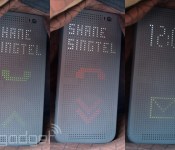
Windows Phone 8.1 may have only just reached the general public, but it’s already in line for a surprisingly large update. Microsoft has posted developer documents (sign-in required) for Windows Phone 8.1 GDR1, a tweak that fills in a few key hardware and software gaps. Aside from previously revealed folder support, the upgrade will allow for smart cases akin to HTC’s Dot View or LG’s QuickCircle. Phone makers will get to run special apps when the cover is closed, and specify what happens when it’s open. This seemingly simple addition could be important, since The Verge claims that HTC is preparing a Windows Phone version of the new One — such a device would need smart cover features to perform the same tricks as its Android counterpart.
The revision should also enable more of the tablet-sized phones that are all the rage in some corners of the globe. It’ll support a 1,280 x 768 resolution on screens as large as 7 inches, and there’s a new 1,280 x 800 option useful for larger devices that use software navigation buttons. Other upgrades are smaller, but should be important in the long run — the update should bring high-quality voice over LTE, higher-quality Bluetooth music (through aptX) and manufacturer-defined custom lock screens. There’s no confirmed schedule for when GDR1 would arrive, but Microsoft is clearly getting close. It won’t be surprising if the next big wave of Windows Phones ships with the new features built in.
Filed under: Cellphones, Mobile, Microsoft, HTC, Nokia
Via: NokiaPowerUser, WPCentral
Source: Microsoft (1), (2)

Gadget Rewind 2005: BenQ Z2

BenQ may not be a familiar name to some — at least not in the US — but its roots in the electronics industry date back to the ’80s. The company, formerly a division of Acer, was spun off in 2001 in an attempt to build a brand name for itself. With a background in manufacturing, BenQ began building devices for companies like Nokia and Motorola; devices that were mostly for sale in Asian markets. Soon, it started its own line of mobile handsets and in 2005, BenQ announced a cube-like multimedia device called the Z2. It was poised to compete with the other camera-toting and music-playing cellphones at the time, while also targeting the youth market with its unique form factor and colorful exteriors. Curious to know more? Check out our gallery below.
Filed under: Cellphones, Mobile

Inhabitat’s Week in Green: bonsai in space, rising sea levels and the blood of horseshoe crabs
Each week our friends at Inhabitat recap the week’s most interesting green developments and clean tech news for us — it’s the Week in Green.

Google has a long list of environmental initiatives — and its latest project is to outfit its Street View cars with environmental sensors to track down methane emissions that contribute to climate change. But when it comes to futuristic transportation, there’s no greater innovator than Elon Musk. The serial entrepreneur recently appeared on The Colbert Report, where he discussed Tesla, the Hyperloop and SpaceX.
In other space news, this week NASA scientists suggested that future moon dwellers could live in the hundreds of caves that dot the surface of the moon. It’s believed that the caves would protect humans from sun radiation, meteors and the wild temperature swings on the moon. Japanese artist Azuma Makoto also captured our imagination this week by sending a bonsai tree into space and snapping some gorgeous photos as it orbited the Earth. The time when space exploration was limited to a pair of superpowers — the USA and the Soviet Union — is long gone; these days, several other countries are looking to explore faraway planets. The United Arab Emirates just announced that it’s setting up a Space Agency – and it plans to send an unmanned probe to Mars by 2021. There’s still plenty to explore on our own planet, though. A giant hole in the earth, about 262 feet in diameter, was recently discovered in Russia’s far north, and scientists are baffled about the cause of the chasm.
Sea levels are rising, and if we continue the course we’re on, they’re likely to continue to rise significantly. Case in point: The amazing Cape Romano dome homes located off the coast of Florida are now being swallowed up by rising sea levels. On the topic of sea-level rise, this week Inhabitat interviewed architect Koen Olthuis about how cities can adapt to rising sea levels. His response? Embrace the water by building on it instead of running from it. In other ocean-related news, Captain Charles Moore, the man who discovered the Great Pacific Garbage Patch back in 1997, recently returned to the Pacific and discovered that permanent islands of plastic now exist within the patch. And you won’t believe what people are doing to horseshoe crabs — every year, over 250,000 of the creatures are captured so that humans can harvest their blue blood.
What if you could transform your entire house with the push of a button? That’s precisely the idea behind the Sharifi-ha House, which features rotating rooms that swing outwards to soak up sunlight and provide additional space. Football season is fast approaching, and when it begins, the San Francisco 49ers will move into their new home at Levi’s Stadium, the country’s first LEED Gold-certified NFL stadium. The stadium is equipped with photovoltaic panels that will generate enough energy to power all 10 games each season. A historic farm in the Dutch countryside also received a green energy upgrade with the addition of a modernist solar shed that provides 100 percent of the farm’s energy needs. And Sainsbury’s, a popular UK grocery store, just became the first in the country to be totally powered by food waste. The store recently split from the national power grid in favor of food power created through the anaerobic digestion of food scraps.
On the wearable-technology front, the productivity blogger Maneesh Sethi has developed the “Pavlok” wristband, which shocks you into forming better habits. If you don’t meet your goals — whether it’s exercising or simply arriving to work on time — the device will deliver a jolt of electric current to your wrist. But if you want a bracelet that will help you instead of hurt you, you might be better off with the Safelet, a wristband that signals for help when you’re in danger. Using a Bluetooth-connected app, the Safelet calls the police or the other emergency services when its wearer is in trouble. And in what could be a major breakthrough for STD prevention, an Australian biotech firm has developed a gel that actually fights STDs and has proven effective in killing 99.9 percent of viruses. A condom that uses the gel has received approval for release in Australia, and it could hit shelves within the next few months.

Solar cells cool themselves to produce more power

Solar power cells need to stay relatively cool for the sake of both efficiency and longevity, but active cooling (like ventilation) isn’t practical; it’s expensive, and may block the very rays the cells are supposed to collect. To tackle this problem, Stanford University researchers have created a new form of solar cell that cools itself. The technique embeds a pattern of very small cone and pyramid shapes into the collector’s silica surface, bouncing hot infrared wavelengths away while letting in the visible light that generates the most energy.
The result is a heavily optimized panel that not only scoops up more power, but avoids cooking itself to death — it’s very nearly ideal, according to scientists. The Stanford team has a long way to go (it still has to try the self-cooling tech outdoors), but it foresees commercial products. Don’t be surprised if you can eventually install a refined solar array at home that not only powers more of your gadgets, but doesn’t need to be replaced after suffering through a few too many scorching summers.
[Top image credit: AP Photo/Ebrahim Noroozi]

Filed under: Science
Via: Treehugger, LaserFocusWorld
Source: Optical Society, OpticsInfoBase

Homer for iPhone lets you peek at the apps your friends use

Ever had the urge to peek at your friends’ phone screens, whether it’s to learn about their favorite apps or simply pry into their digital lives? Well, you can now do that without having to either strike up an awkward conversation or get overly nosy. PayPal co-founder Max Levchin and the HVF crew have launched Homer, an iPhone app that lets you share your app picks with fellow users. All you do is take screenshots of your home screens and submit them; Homer scans the pictures and identifies the apps, making it easy to compare them with pals in your contacts or on social networks.
As you’d hope, there’s some privacy features baked in. Besides the voluntary nature of screen captures, you can hide individual apps you’d rather keep a secret — you don’t have to share your Tinder addiction with the rest of the world. There’s no mention of Homer versions for other platforms (or people outside the US, for that matter), but you can try it today if you have both an iPhone and an unquenchable curiosity about your buddies’ mobile habits.
Filed under: Cellphones, Internet, Mobile
Via: GigaOM

Turn your Android phone into a PC gamepad with this new app

So you want a gamepad to play that new platformer on your Windows PC, but you don’t relish the idea of buying an expensive peripheral that will collect dust after you’re done. Are you stuck using the keyboard? Not if Ideum has its way — it’s updating its GestureWorks Gameplay virtual controller app with Android support, letting you use your phone or tablet to steer the action instead of either a real gamepad or on-screen buttons. You can still tailor the controls for specific titles, so you won’t have to settle for a sub-par experience just because you jumped from Castle Crashers to Bastion. The new software supports more graphics standards, too, so more of your favorite games should be compatible.
You’ll have to spend $15 to get the full version of the new Gameplay app, which should be available on Steam either now or very shortly. That’s relatively costly for a utility, but the Android upgrade extends the software’s usefulness beyond tablets — it could save you from buying gamepads for most any Windows PC, and it will visiting friends join in on multiplayer sessions without having to bring dedicated hardware.
Filed under: Cellphones, Gaming, Software
Source: GestureWorks
A Motorola Nexus 6 Reportedly in Our Future

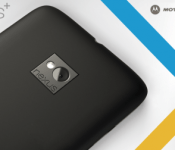
A new report has come about that is suggesting Motorola will be the manufacturer of the Nexus 6. Speculation from the community pointed to LG giving another go at the the Nexus phone, but according to Android Police, Motorola and Google have a phone in the works with the codename Shamu. Why Shamu? This phone is going to be HUGE is my guess.
The Moto Nexus 6 from this report says that it will rock a 5.9-inch display, and will be due out this November. That is usually the time when Google announces their new Nexus devices, and the report also mentioned it will be available on all major carriers. The evidence is there, and we know that Google hasn’t given up on their Nexus line, so let us know what you think about a 5.9-inch Moto Nexus 6.
Source: 9to5google
//<![CDATA[
ord = window.ord || Math.floor(Math.random()*1E16);
document.write('’);
//]]>
The post A Motorola Nexus 6 Reportedly in Our Future appeared first on AndroidSPIN.

HTC Desire 610 gets launched by AT&T

First we heard rumors that AT&T will release the HTC Desire 610, and then they confirmed the availability of it just a few days ago. Now AT&T has officially launched the HTC Desire 610, you can grab it for just 99 cents with a 2-year contract, and if you are interested in getting it without… Read more »
The post HTC Desire 610 gets launched by AT&T appeared first on AndroidGuys.

Weekends with Engadget: Bose sues Beats, OS X Yosemite preview and more!

This week, we looked at the top 12 tablets available, watched Bose sue Beats, took the OS X Yosemite public beta for a test drive and reviewed the Oppo Find 7. Read on for Engadget’s news highlights from the last seven days. Oh, and be sure to subscribe to our Flipboard magazine!

Now that Apple is buying Beats, Bose sues over noise-cancelling patents
Just inches away from officially being part of Apple, Beats is now being sued by Bose. According to the latter, Dr. Dre’s Studio line of wireless headphones infringe on one of plaintiff’s noise-cancelling patents. What a bummer.

The battle for virtual reality: Google, Samsung, Sony and Oculus VR
The history of VR is riddled with missteps like the Nintendo Virtual Boy, but that hasn’t stopped today’s major players from investing in the medium. Even despite the limits of current tech, Google says the best time for VR is right now.

Oppo Find 7 review: A solid phone that faces stiff competition
What you’re looking at is the Oppo Find 7. This Android-powered handset has a gorgeous Quad HD display and plenty of horsepower under the hood, but can it compete with the Galaxy S5 or LG G3? Read our review and find out.

Facebook’s new Save feature lets you read top ten lists later
Don’t have the time to catch up on every baby picture and Buzzfeed ‘quiz’ in your Facebook feed? Of course you don’t. But thanks to a new feature called Save, users can now archive music, links and more for later viewing.

What you need to know about the Apollo 11 moon landing
Yesterday marked the 45th anniversary of humankind’s first steps on the lunar surface. Read on for everything you need to know about Apollo 11′s historic voyage to our planet’s moon.

Want to fly a drone? Don’t do it here
You’ve probably never tried to pilot your drone through a nuclear power plant, but that’s not the only sort of no-fly zone that should be avoided. Check out this map of locations where you should never fly your UAV.

Atari’s betting its future on gays and gamblers
Atari, once a giant of the gaming industry, stands on the precipice of irrelevance. But now, the company’s betting its future on on the LGBT community with its upcoming game called Pridefest.

NVIDIA’s new Shield is a tablet built for gaming
NIVIDIA’s second generation Shield claims to be the “ultimate tablet for gamers.” But is this 8-inch, Android-powered slate all it’s cracked up to be?

OS X Yosemite preview: the Mac gets a major makeover
The public beta of Apple’s next desktop OS goes live tomorrow, but before you dive in head first, check out our preview. Click through for Dana Wollman’s take on OS X Yosemite.

The top 12 tablets you can buy right now
Deciding to buy a slate is easy. But choosing which one, that’s a different story. Check out the Engadget Buyer’s Guide for our top 12 favorite tablets that you can buy right now.

Filmmaker Ridley Scott is tackling a Phillip K. Dick project for Amazon

The works of author Phillip K. Dick have proven fertile ground for classic sci-fi movies like Total Recall and A Scanner Darkly, and The Man in the High Castle is up next. Except, well, it’s making its debut on the small screen, by way of Amazon Studios and executive producer Ridley Scott (pictured above), according to Deadline. For the unfamiliar, Castle takes place in a 1962 where the Allied Powers were defeated in World War II, and, as a result, Germany and Japan began an occupation of the United States — Scott’s sci-fi phase apparently isn’t stopping anytime soon. With the legendary filmmaker working on Halo: Nightfall, the Prometheus and Blade Runner sequels and now this, we’re even tempted to call it a trend.
[Image credit: AFP/Getty Images]
Filed under: Gaming, Home Entertainment, HD, Amazon
Source: Deadline
 AIVAnet