



Spotify’s iOS app gets equalizer feature with custom settings and 22 presets

Spotify’s latest iOS app update rolls out today and adds a new equalizer to playback functionality. “A lot of our users have been asking for a built-in equalizer for a while now and it’s currently one of our most requested features on iOS,” says Sten Garmark, VP for Product at Spotify. The update also folds the Discover function into the Browse tab on iPhones and adds a redesigned Artist page to the iPad iteration, featuring musicians’ latest releases and… merchandise. Android users have been able to add third-party equalizers to music playback on dedicated music apps for years, although there’s no word from Spotify as to when these new feature will hit Google’s mobile OS. We’re hoping that equalizer will help even out music playback — even if you’re only packing underwhelming in-box buds.
Source: Spotify (iTunes)

Opportunity rover breaks record for longest distance driven off-Earth

When the Opportunity rover landed on the red planet in 2004, NASA only intended to drive it for about 1 kilometer (0.62 miles) within 90 Martian days. But the rover turned out to be a hardy Mars explorer, and on its 14th year on the planet, it has finally broken the record for the longest distance a vehicle has driven outside Earth. The Opportunity has recently accrued 25.01 miles of driving on another world, dethroning Soviet Union’s Lunokhod 2 rover, which drove 24.2 miles on the moon in 1973. While that’s a huge accomplishment for a vehicle that was never supposed to last for more than year, Mars Exploration Rover Manager John Callas says what truly matters is “not how many miles the rover has racked up, but how much exploration and discovery we have accomplished over that distance.” So, what’s next for this tough ole machine? Not retirement, that’s for sure. NASA’s hoping it still has what it takes to drive just a bit further and reach the next major investigation site more than a mile from where it is today.

[Image credit:NASA/JPL-Caltech/MSSS/NMMNHS]
Filed under: Science
Source: NASA

Cortana now taps into Foursquare to give you recommendations for lunch

It turns out that Microsoft had bigger plans for Foursquare than just search and maps for Bing. The check-in service is now accessible by Redmond’s digital assistant, Cortana, as spotted on Reddit by Neowin. The addition apparently makes for customizable, local recommendations based on your whereabouts, and presumably, your account history too. As Winbeta notes, because the Cortana updates take place on Microsoft’s servers, you won’t need to download a software patch to take advantage of them either. Whether the blue helper will get to love bees, though, is up to her creators.

@hellojao @bdsams Nice. @MikeCalcagno and his team made 4sq integration happen.
– Marcus Ash (@marcusash) July 29, 2014
Filed under: Cellphones, Mobile, Microsoft
Source: Reddit, Marcus Ash (Twitter)

Rhapsody bets on carrier partnerships to grow its music service

Rhapsody International, the parent company of music-streaming services Rhapsody and Napster, has just announced it is now home to two million paid subscribers. That sum may not seem like a lot at first glance, especially when compared to the 10 million figure Spotify revealed back in May, but Rhapsody still sees this as a great accomplishment. Even though it continues to play catch-up to crowd-favorite Spotify, Rhapsody claims this makes it the clear “number two” streaming service in terms of adoption, ahead of others like Rdio, Deezer and Beats Music. The two million premium subscribers to date, which combines accounts from Rhapsody, Rhapsody unRadio and Napster, have been made possible largely by the company’s international expansions and partnerships with carriers — in the US under the Rhapsody brand, Napster everywhere else.
Today, as part of this mobile-focused strategy, Rhapsody is teaming up with French network SFR to launch Napster Discovery (aka Rhapsody unRadio here in the States), an ad-free, Pandora-like unlimited music service that lets users listen to any track they want for €3.95 per month. Across the pond, in Latin America, Movistar will be offering Napster’s paid music service to customers who haven’t had access to it before, including those in Argentina, Chile and Uruguay, with more countries expected to be added by the end of the year. With joint ventures like these, Rhapsody hopes to keep growing and, more importantly, remain relevant in a space so obviously owned by the giant force that is Spotify.

“We believe really strongly there can be multiple products to serve different people.”
Rhapsody’s SVP, Americas and Chief Product Officer, Paul Springer, told us it’s also about the approach his team takes with each audience, curating the listening experience based on a user’s location, since people in different countries may not have the same artist preferences. Springer believes features of this kind are why Rhapsody has a chance among music lovers, and why it can co-exist with Spotify. “We believe really strongly there can be multiple products to serve different people,” he said. “There’s room for both [Rhapsody and Spotify], because we have a product that will suit you.”
For Rhapsody, the challenge isn’t having a product that’s worth it, but rather convincing people that it’s a better choice than Spotify or a newcomer like Beats Music. And that’s where the carriers come in: because they make it easy for potential subs to sign up, before the rest of the streaming services even have a chance to get to them.
Filed under: Home Entertainment, Portable Audio/Video, Internet, Mobile
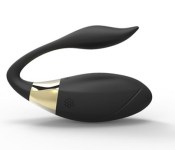
The game controller that trains your pelvic floor muscles

The high-tech pelvic floor trainer space just became more competitive. Remember kGoal? Well, a Kickstarter campaign’s looking to fund the production of a similar device called Skea (short for Smart Kegel Exercise Aid), which boasts something kGoal doesn’t offer. See, Skea’s creators want to make kegel exercises more enjoyable, so they added a gaming aspect to it, turning the device into a kegel-exerciser-and-game-controller-in-one. If the start-up does raise the $38,000 it needs to go into production, a Skea package will come with an iOS or Android game called Alice in Continent (these exercises are supposed to solve incontinence in women, if you’re unaware). It’s an endless runner with all the usual obstacles, and to jump over them, the user needs to squeeze Skea with their pelvic floor muscles. As one tester said: “It’s like playing Temple Run with Fitbit. Just that I don’t use fingers but use my pelvic muscles!” Also, when the user squeezes the device, it… vibrates to confirm that she’s doing things right.
In addition to helping improve bladder control, the gadget promises all the usual benefits of kegel exercises, including preparing pelvic muscles for pregnancy and improving sensations in women. At this point in time, the campaign is nowhere near its funding goal, but if you want to take a chance at getting a Skea by December, you’ll need to pledge at least $85.
Source: Kickstarter

Google’s next Nexus device is reportedly a super-sized phablet

Don’t get too excited, but rumors are starting to break regarding Google’s sixth Nexus phone: an oversized handset codenamed “Shamu.” According to Android Police, the device is rumored to be a 5.9-inch handset made by Motorola — leveraging Google’s tradition of naming Nexus devices after sea creatures as a clever way to hint at the phone’s size. Supposedly, this device will surface in November with a fingerprint scanner. Sadly, there isn’t a lot of evidence floating around for this one: just an Google error report and a bit of good faith.
While Android Police says it’s not comfortable with showing its source information in its original form, the rumor get some credit for appearing in Google’s issue tracker: “Shamu” is listed in the build number for a Android L HTTPS bug. It’s probable that this really is the code name for a new Nexus, but the specifics are still unclear. That said, The Information is also reporting a phablet-sized device between Google and Motorola — one that may even include always-on voice control. Neat rumors to mull over — just keep it salty until we hear something official.
[Image credit: Aleksey Butov]
Filed under: Cellphones, Google
Via: Ars Technica
Source: The Information, Android Police

LG’s 105-inch 4K TV is here, if you can afford it

Sure, Samsung just launched its 105-inch ultrawidescreen, Ultra HD TV, but if spending $120,000 on such a screen is probably out of reach there may be a solution. For the the budget minded-consumer, we’d recommend taking a look at LG’s 105-inch 4K (they call it 5K, because of the expanded number of pixels horiontally) set. Beyond coming with an integrated speaker (value!), if we’re reading this machine-translated Korean press release correctly, in Korea it’s priced at 120 million won, or about $117,000 and will start shipping in just a few days. That way, you can buy one of these and a nice 65-inch TV for your kids instead of that college education they wanted. During CES we’d heard that the MSRP would be around $70,000 US so we’re still hoping for even more savings on this side of the Pacific — of course, as much as we like high-res TVs we’re not sure any of them are worth two Teslas.
Filed under: Home Entertainment, HD, LG
Source: LG

‘The Last of Us’ looks better on PS4 but it’s not perfect

Just over a year ago, Sony and developer Naughty Dog unleashed the emotionally wrenching The Last of Us on the PlayStation 3. And while the post-apocalyptic tale was heralded at the time for its affecting narrative, the game’s technical prowess didn’t go unnoticed either, with many critics impressed by how well the game looked and sounded on the seven year-old PS3. Tomorrow marks the release of The Last of Us: Remastered on the PlayStation 4, which, as the title implies, is last year’s game with a fresh coat of paint afforded by the PS4′s more powerful hardware. How much of a leap is it, though? The tech-minded crew at Digital Foundry has put Naughty Dog’s latest under their microscope and notes that while there are some aspects of the game that best even PS4-native releases, there are still a handful of bits that betray those advancements:
“There are elements that remain far ahead of the majority of next-gen titles, but it is clear that it is a game of its technological era.”
In particular, Digital Foundry calls out the game’s anti-aliasing (smoothing out jagged edges on certain bits of a scene, like power lines or the edge of a door) and certain aspects of its lighting as being relics of TLoU:R‘s original platform. Perhaps the games’ most notable improvement is its doubled framerate, which aims for a Call-of-Duty-esque 60 frames per-second and a boost in resolution to 1080p, natively. Those improvements aren’t without caveats (degraded shadow quality that’s being addressed with a day-one patch), however, as NeoGAF was quick to point out and start a now 50-page thread about.
In my experience playing the game, though, these perceived setbacks are minor once you actually pick up a DualShock 4. Sure, when you’re comparing screenshots — or compressed GIFs — that’s one thing, but if you’re running through the game and not actively looking for any technical shortcomings they’re harder to notice.

Filed under: Gaming, Home Entertainment, HD

Engadget Daily: credit card skimming, floating ‘Star Wars’ holograms and more!

Today, we investigated the tech behind credit card skimming, looked at floating 3D video, learned about next gen lithium ion batteries and checked our Uber passenger ratings. Read on for Engadget’s news highlights from the last 24 hours.

What you need to know about card skimming
Let’s face it, credit card fraud is much more commonplace than we like to imagine. But even worse, thieves need only a few cleverly concealed gadgets to pull it off. Read on for more information about how to identify hijacked ATMs and keep your monies safe.

Russia offers a $110,000 bounty if you can crack Tor
Remember Edward Snowden’s favorite browser called Tor? Well, Russia is offering a $110,000 to anyone who can successfully crack it. As long as you work for the Russian government, that is.

Floating 3D video shows ‘Star Wars’ holograms are closer than we think
It might not be as iconic as Princess Leia’s Star Wars debut, but the space probe you’re looking at is an incredibly realistic “360-degree video object.” And it can be viewed from any angle in the room.

Next-generation lithium cells will double your phone’s battery life
All too familiar with the woes of short battery life? Thanks to researchers at Stanford, next-gen lithium batteries will be able to hold twice the charge of their predecessors.
You also might like:

Self-driving mini truck put to the test by US Marines

Automakers aren’t the only ones working to implement self-driving technology. The US Marine Corps has teamed up with TORC Robotics’ (among others) to work on a Jeep-esque option outfitted with the company’s Ground Unmanned Support Surrogate system — or GUSS to save the mouthful. Here, GUSS is used to power a self-driving version of the Marine two-seater truck dubbed the Internally Transportable Vehicle (ITV). As the name suggests, the compact option can be carried on a helicopter or plane for deployment, and its beacon can either send it to a specific location or maneuver it via remote control. As you may recall, TORC’s GUSS system was installed on a Polaris 6×6 ATV a few years back, so the tech has been through its share of tests. The goal is for the vehicle to be used to deliver supplies (up to 1,600 pounds or evacuate wounded soldiers by determining its own route or being controlled from afar at a speed of 8 MPH. An unmanned ITV reamains in the testing phase, but the team sees similar options in the field in the next five years.
[Photo credit: TORC Robotics]
Filed under: Transportation
Via: Ars Technica
Source: Fox News
 AIVAnet