


Flying the uncertain skies with the latest Phantom drone

“Does it shoot?” That’s the first question an enthusiastic kid asks as I test-fly the DJI Phantom 2 Vision+ in a London park. When the child’s father finally catches up, his first question is: “How much is one of those?” In my incredibly short career as a drone pilot, I’ve been reminded how the human imagination withers with age. A couple of weeks with the DJI drone would teach me quite a few things; not only about human perception of these flying devices, but also about the future of our skies.
The answer to the boy’s question is no, it doesn’t shoot… unless you’re talking about video. The answer to dad’s question is much less open to interpretation — the Phantom 2 Vision+ costs $1,299, which includes a 1080p camera built in, plus a three-way brushless gimbal (the part that keeps the camera stable). The Vision+ is a ready-to-fly, all-in-one video-recording drone that lets amateurs like me record silky-smooth, almost cinematic aerial video. A fact that brings us to something of a fork in the road where drones are concerned.
Remote-control drones have been used by the military, academic research teams, big-budget video productions and the private sector. They’re also popular with home-brew and hobby enthusiasts, but other than the odd $50 toy, they’ve never really crossed over to the mainstream. DJI isn’t the only company that makes consumer-friendly drones, but it’s the company leading the market. Its Phantom models require no assembly, and are (relatively) easy to fly. They have an impressive flying range, a decent 20 or so minutes of airtime per charge and a host of other premium features (including GPS, return to home and different flying modes). The Phantom 2 Vision+, with its built-in camera and smooth video (the first Phantoms with cameras were marred by unstable footage), could bring quadcopters, aerial photography and a whole bunch of privacy issues firmly into public consciousness.

After my maiden flight, I take the Vision+ on a trip to the seaside town of Bournemouth, UK, on a sunny Saturday. It’s mid-spring and a steady flow of ice-cream-holding day-trippers crowds the promenade; small groups of people dot the beach. I’ll admit, I’m nervous about flying the drone. Am I allowed to? Are there laws against this (the UK Civil Aviation Authority has regulations, peppered with terms like “substantially” and “near”)? These are the questions in my mind.
The Vision+ shows you what the built-in camera sees in real time, often referred to as First Person View (FPV), through an app for your phone. The same app is where you change camera settings, angle (through 90 degrees) and swap between photo and video modes. It also locates your drone on a map (should it tank while out of sight), and displays battery status. If you have a GPS lock at takeoff, there are fail-safes that bring the drone back to you when battery levels are critically low. You don’t want to rely on fail-safes, though. Having real-time info is immensely reassuring.

That’s until the connection between app and drone breaks. This happens one time as I’m flying above the sea. I still have full control of the Vision+; I just can’t rely on FPV for navigation. Basic flying may be simple, but it’s still easy to get in a pickle. Forward on the controller relates to the direction the drone is facing; when it’s facing you, pushing forward will fly it toward you. Sometimes, when trying to avoid something, it’s easy to fly in the wrong direction (often it’s better to shoot straight up). On this occasion, the video connection restores after about 20 seconds. Long enough that I decide to play it safe and bring the Vision+ back in to land. Besides, a small crowd has gathered behind me on the promenade; they’re either curious onlookers, or the beginnings of a mob.
Later, I take the Vision+ to a quiet location by a harbor. The weather is bright and sunny, with a moderate wind. Setting up the Vision+ for flight isn’t difficult, but the last and vital step is to let the drone get a GPS lock — which takes about 30 seconds. Without it, the drone could drift in the wind and disappear entirely. With GPS lock, when you take your hands off the controller, it’ll keep its location.

On one flight, I lost the GPS signal, and within seconds the drone drifted 50 feet — fortunately close to the ground, before ditching. Another use for the GPS is restricted flying zones. With this info loaded, you can’t launch your drone near an airport. Or, if you’re a bit farther away, you can only fly to a certain altitude. Aviation authorities are still catching up with what to do about consumer drones, but incidents are already taking place that could lead to more restrictive legislation.
At nearly 900 feet above the harbor, I completely lose sight of the Vision+. Thanks to the app, I can see what it is seeing. But I can’t see it. It feels weird. You know it’s up there, and you can control it, but it’s also unsettling — like riding a bicycle with your eyes closed. Before going out of sight, the Vision+ attracts the attention of a local kite flier. He marches over, informing me he’d seen these things online, and that “they go for, what, about £200?” He seems confident with his assessment of what the Vision+ is worth. He tells me I should definitely mention how high it flies in my review. It flies to at least 876 feet. Maybe more, but this is the point I chicken out and bring it down to a manageable (and visible) level. Pro tip: This descent feels like it takes forever, especially when you’re being scrutinized watched by a know-it-all kite flier.

The only other time the Vision+ goes out of visible range is on my second-ever flight. I had it high enough that there was no chance of collisions, with a clear line of sight for its return. The truth is, no matter how confident you are, even with a video feed, flying blind is dangerous. I guided the drone back using the FPV until I got a visual on it, but had that link broken (like it did on later flights) I’d have been stuck hoping the GPS/return-to-home mechanism came through.
On assignment, I lug the Vision+ halfway around the planet to Hawaii. Fortunately, the drone is incredibly light (1.2kg/2.8 pounds). I bought a backpack built for transporting the Vision+, and I’m happy I did. The case is also light, but rugged, and the drone feels safe inside. It’s on this trip I realize how popular DJI’s Phantom line is. I spot a number of them, most with GoPros (only the “Vision” models come with a camera built in). While the camera on the Vision+ is decent, the video can appear washed out sometimes, or fuzzy when you move the drone quickly (it’s full HD, and also takes 14-megapixel photos). If you want to add your own camera, the popular choice is a GoPro. It’s conveniently sized, and has plenty of accessories for attaching it to DJI drones.

It’s in Hawaii that I get a sense of what might be over the horizon in the world of drone flying. Coincidentally, I’m at a GoPro event. It’s here I meet, and share the skies with, a number of other pilots for the first time. Standing between two trees, looking out over Kuilima Cove, I meet Roland. I assume he’s part of the GoPro party, filming for them. I introduce myself, and learn that Roland’s just here on vacation, a drone enthusiast out in the wild, soaking up the coastal views with his DJI Phantom. He tells me he likes to push them “pretty hard,” and that he’s lost one already (he spares no more details than that). His Phantom hovers over a group of kayakers heading out from the beach. One of them looks up and sees the drone, giving a wave as they pass underneath. Roland’s not using FPV; he’s just a skilled pilot, and manages to float his craft in the right place from quite far away. If the DJI app has taught me one thing, it’s that my depth perception is questionable at best; terrible at worst.
It’s later when I am flying the Vision+ on the other side of the cape that I have a wake-up call. My drone is high, with the camera facing straight down. On my FPV, I see another DJI drone come into view and fly directly underneath mine. It’s not Roland; it’s yet another pilot. We’re both flying above some surfers in the water. I’ve spotted it, but I don’t know if the other pilot has spotted me. Neither of us can see each other, so we’re unable to communicate at all. If I take my Vision+ any lower, we’ll have a real risk of collision, and with many people below and eight spinning rotors in play, it’s risky at best. I bring it in to land to be on the safe side. As fun as flying the drone is, it’s a test of your nerves at times.
In the weeks I’ve had the DJI drone, a number of newcomers join the consumer-friendly UAV market. Kickstarter has seen two action/sport–specific ‘copters get funded, like Pocket Drone before them. DJI is no doubt already cooking up its next craft, too. That’s a lot drones headed for inexperienced hands. My fear is that as numbers increase, people will start flying them in populated or built-up areas. How many news stories will it take before lawmakers re-think current legislation?

When I started flying the Vision+, I expected the public to be suspicious. In reality, everyone I met was genuinely curious, or entertained by it. Even when they were aware it had a camera, they seemed OK with it. No one ever told me to move along, or that I shouldn’t be flying/filming here. I fear that won’t be the case for long.
Anxieties aside, I’m hooked on flying the DJI. Already I’ve been researching scenic locations and accessories to geek out on. At $1,299 (for the camera-enabled model), it’s not cheap. But, with new competition on the way, DJI will want to maintain its head start. Given the amount of time between its original Vision and the Vision+ (less than four months), it might not be too long until the next model takes off.
With more drones in the skies, the potential for accidents can only increase. How long before there’s a defining case, or a change in public perception due to increased privacy concerns? Perhaps, like the cameraphone, the gradual introduction of more flying cameras will lead us to adapt and become more comfortable with them. The only thing for sure is that with drones like the Vision+, that future isn’t far around the corner, and the skies will be buzzing with people ready to film it.
Source: DJI

HTC said the new One would help swing a profit, and it did

Though HTC lost money last quarter, it had just launched its One M8 flagship to great reviews, and promised the new handset would put a halt to the red ink. The (unaudited) numbers are now in and back up that boast. The company scored a NT$2.8 billion profit ($92 million) on NT$65 billion ($2.2 billion) in revenue, nearly matching sales from last year and turning around a streak of losses. That’s a far cry from the Samsungs of the world, but still a shot of good news for the beleaguered company. To cash in on the new One’s success, HTC recently launched a plastic-bodied version called the One M8 Ace and a cut-down One Mini. Whether those will help it keep up the momentum next quarter remains to be seen — it often gets the post-flagship blues.
Filed under: Cellphones, Mobile, HTC
Source: HTC (PDF)

Google forced to ‘forget’ history of Merrill Lynch CEO’s incompetence

Welcome to the happy Google search page. Where links to historical articles can be deleted at the request of cowards people with fragile reputations. Where the former boss of Merrill Lynch, Stan O’Neal, is a fresh, dynamic and highly employable banker, rather than a disgraced executive who contributed to the sub-prime lending crisis of 2007. Where truth-telling journalists like Robert Peston wake up to find that their articles have been cast into oblivion within the EU, thanks to a blanket ruling by a bunch of clueless laywers the European Court of Justice. Where facts and opinions no longer count for anything if someone, somewhere doesn’t like them.
Via: BusinessInsider
Source: BBC News

This is what a day’s worth of transatlantic air travel looks like (video)

The seas between Europe and North America are mighty quiet on any given day, but 30,000 feet above some 2,500 planes follow tracks (like invisible highways) between both continents, landing in gateway cities like London and New York or flying far beyond. Of course, not all of those aircraft are carrying commercial passengers — cargo, military and private flights make up a great deal of that traffic — but regardless of their purpose and destination, that kind of volume is a spectacular sight to behold. NATS, the UK’s National Air Traffic Services, created a video render to help visualize the 1,400-odd flights it handles each day. The agency helps provide aircraft separation via pilot reports rather than radar, which is only accessible to flights near land. With limited technology at their disposal, it’s a lot of work for controllers, as you can clearly see in the video after the break.
Filed under: Transportation
Via: @GogoCCO (Twitter)
Source: NATS
London’s black cab body takes Uber drivers to court but delays chance of making real change

If last month’s protest wasn’t a big enough hint, London’s black cabbies are far from pleased with losing business to disruptive competitor Uber. The Licensed Taxi Drivers Association (LTDA) is adamant that Uber operates outside the law, as private vehicles aren’t allowed to carry taximeters. Transport for London (TfL) has plainly concluded the way Uber calculates fares using a mobile app is not the same as operating a taximeter, and is completely legal. Tired of constantly repeating itself, TfL has referred the dispute to London’s High Court, and this escalation offers a glimmer of hope to black cabbies, in that the law or the current interpretation of it could change to validate the taximeter argument.
A decision is expected to be at least several months away, and Uber is even trying to appease black cabbies by offering them space on its mobile platform. The LTDA appears to have made one particularly rash decision in its pursuit of Uber, however, shooting itself in the foot and significantly delaying any judgement by the High Court.
In a statement from TfL today, it once again reiterated its stance on the taximeter dispute. It also noted that the LTDA has decided to target some Uber drivers directly, on the basis they’re committing a crime by using apps to work out fares. They’ll eventually have to appear at Westminster Magistrates’ Court, but calling out individual drivers isn’t really addressing the industry as a whole, which includes other companies that are adopting an Uber-like business model such as Hailo. While there are “ongoing criminal proceedings” that’ll take a while to play out as is, the High Court won’t be getting involved, meaning any definitive resolution on the taximeter issue “will not be delivered for some considerable time.” The LTDA might be going after Uber and to some extent TfL, but it appears that for now it’s only making trouble for itself.
Filed under: Transportation
Via: The Next Web
“OK Google” hotword is now available in a bunch of new languages

Google Now is a really useful service which keeps on getting better and better. For some it is more useful than for others. Google Now launcher offers you the benefit of activating voice search on which ever home screen you’re in while the Moto X is a completely different story thanks to its custom chip and some nifty software which makes it possible for users to activate voice search even when the phone is locked.
Up until now you had to use the service in English (US or UK) in order to activate voice search, but if you update your Google Search app to version 3.5 you won’t be that limited any longer. Presuming you also have Google Services 5.0 which rolled out to Android devices recently. Google decided to include a bunch of new languages to the service, so that people would be able to activate voice search while using the service in their native language. If you’re using any of the following languages you should be able to activate the service: English (all accents), Spanish (Spain and Mexico), German, French, Italian, Russian, Portugese (Brazilian only), Korean, Japanese.
Share your thoughts once you try it out. Presuming you’re using the service in one of the listed languages (excluding English of course).
Source: Google Play Store
Via: Pocketnow
The post “OK Google” hotword is now available in a bunch of new languages appeared first on AndroidGuys.

Floatify – Stacked expandable notification center for your Android device

Despite Android having arguably the best way to handle the notifications out of the mobile platforms, there is always room for improvement when it comes to how notifications are displayed and interacted with.
An app that has caught our attention to offer an alternative to the way in which notifications are managed is Floatify, which will provide you with a floating window with stacked notifications.
Check it out in action in the video below:
Floatify is customisable and even supports icon packs, with the developer claiming low battery consumption. It’s a free app and definitely worth a try to see if you prefer this alternative way to handle notifications.
The post Floatify – Stacked expandable notification center for your Android device appeared first on AndroidGuys.

eBay will soon let you pick up purchases from 650 Argos stores

If you love to eBay but are constantly making trips to the Post Office to collect a missed delivery, your nearest Argos store could soon come to your rescue. The two companies have extended their click-and-collect partnership, which began with 50 eBay sellers and 150 stores in September, to encompass 650 stores and over 65,000 eBay sellers by the end of this year. That means where the click and collect delivery option is available at the eBay checkout, you select your nearest store and pick up your purchase(s) whenever it’s convenient. With Amazon installing more click-and-collect lockers across the UK, eBay also wants to fit around people’s busy schedules. Argos gets more people in through its doors too, allowing it to do something that Amazon isn’t able to (yet): get face-to-face with customers.
Filed under: Household, Internet
Source: Argos

Report Claims September 25 Launch for iPhone 6, 16GB 5.5-Inch ‘iPhone Air’
Apple will look to announce the iPhone 6 on Monday, September 15th ahead of a launch on Thursday, September 25, according to various Chinese media reports citing “inside sources” (Google Translate, via GForGames). The sources also claim that the larger 5.5-inch iPhone will be called the “iPhone Air”, with the 16GB version selling in China for 5,998 yuan ($965). Meanwhile, the 4.7-inch version will reportedly start at 5,288 ($850) for 32GB, which is the current price of the 16GB iPhone 5s in China.
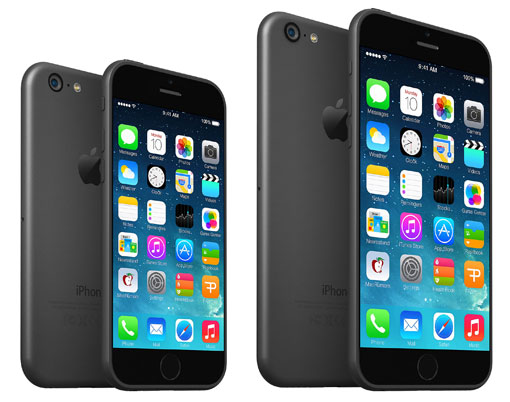
The report contrasts a story from Chinese web portal Tencent last month claiming that Apple would launch the 4.7-inch iPhone on Friday, September 19, which would be in line with the past two iPhone launches. Apple typically launches new products on a Friday, while a Thursday launch would be unlikely.
Furthermore, Apple abandoning on the 16 GB model on the 4.7-inch iPhone 6 would make it likely that the company does not include such an option on the bigger 5.5-inch version. A report from Wei Feng last month noted that Apple would offer a 128GB variant only for the 5.5-inch iPhone 6, stating that the storage size difference would act as a major differentiator between both models. It is possible that Apple may call the 5.5-inch iPhone 6 the iPhone Air, as suppliers were once rumored to be using that name when referring to the device.
It is unknown whether Apple will launch both the 4.7-inch and 5.5-inch iPhone 6 simultaneously. Bloomberg claimed last month that company would be doing so, as previous reports noted issues with display technology and battery life would delay the device’s launch.
Aside from a larger display, the iPhone 6 is expected to come with a thinner profile, a faster A8 processor, and other new features. The camera of the 5.5-inch iPhone 6 is also said to feature an optical image stabilization system, while the smaller 4.7-inch iPhone will use a new lens module.

New Video Shows Closer Look at Purported 4.7-Inch iPhone 6 Front Panel
Earlier this week, new photos of the iPhone 6′s alleged front panel surfaced, which followed an earlier leak of the component in April. Now, a new video from Chinese blog iFanr (Google Translate, via Nowhereelse.fr) appears to show a closer look of the black front panel, featuring a comparison to the current iPhone 5s.
Like the previous leak, the video shows the front panel having a thinner bezel and rounded edges, in line with rumors that the iPhone 6 will feature a thinner profile and a curved design. The hole for the front-facing camera is once again depicted to be on the left side of the earpiece, which differs from the location of the front camera of the iPhone 5s. When shown over the iPhone 5s, the alleged panel of the 4.7-inch iPhone 6 appears expectedly bigger, but still useable with one hand.
The 4.7-inch iPhone 6 is expected to launch later this fall, with reports suggesting a release date of either September 19 or September 25. It is also likely that Apple will launch a larger 5.5-inch iPhone 6, although it is unclear if the device will be released alongside the 4.7-inch version. Some reports have suggested that production issues will force Apple to launch the 5.5-inch version later this year or early next year, while others say that both versions of the iPhone 6 will launch at the same time.
In addition to a larger display and thinner profile, both models of the iPhone 6 are expected to come with a faster A8 processor and an enhanced camera. The 5.5-inch version is rumored to come with a number of exclusive features, including an optical image stabilization system and a bigger storage capacity.
 AIVAnet