


Weekends with Engadget: Android Wear review, ditching social media and more!

This week, we reviewed Google’s Android Wear platform, examined a few practical steps toward ditching social media, watched a sniper hit his target without looking and took a look at the phenomenon of social media activism. Read on for Engadget’s news highlights from the last seven days. Oh, and be sure to subscribe to our Flipboard magazine!

How to Disappear (almost) Completely: a practical guide
Ever thought of dumping social media for a more private life? In this week’s installment of How to Disappear, Dan Cooper discusses some practical first steps toward going completely off the grid. Disclaimer: it’s incredibly difficult. You can find part one here.

Android Wear review: Taking smartwatches in the right direction
Thanks to Google’s unifying Android Wear platform, the smartwatch market is poised to explode. But does this wearable OS have the right combination of user experience and functionality to win the hearts of the masses? Read on as Brad Molen breaks down everything you need to know about Android Wear.

Windows 9 will morph to fit the device it’s running on
ZDNet’s Mary Jo Foley is reporting that Microsoft’s next operating system (Windows 9) will ship as a three-in-one of sorts (desktop, tablet and mobile). Codenamed “Threshold,” the OS will recognize the hardware it’s running on and morph to the occasion.

‘Reading Rainbow’ is the most popular Kickstarter to date
After reaching over 105,000 backers this week, Reading Rainbow dethroned the original Pebble smartwatch as the most popular Kickstarter project ever. At its close on July 2nd, the endeavor had raised over five times its goal of $1 million.

What you need to know about social media activism
What do the “OccupyWallStreet” and “CancelColbert” hashtags have in common? They’re both examples of what’s been termed “social media activism.” Read on as Ben Gilbert dissects this modern form of protest and what it means to you.

Facebook used you like a lab rat and you probably don’t care
Smiles are contagious. So are depressing Facebook posts, apparently. In 2012, Zuckerberg and Co. manipulated its users’ happiness (gasp) by secretly bombarding their news feeds with waves of positive and negative stories.

NVIDIA’s Shield successor is a tablet
NVIDIA’s next Shield console might not be a “console” at all. According to a listing from the Global Certification Forum, the gaming company mistakenly leaked information about an upcoming “Shield Tablet,” including some specs.

The forgotten losers of the console wars
More than a few gaming consoles have spawned in the last 40 years, most of which you’ve probably never heard of. This week, a museum in southern Japan is opening its doors in celebration of 56 those historic (or infamous) consoles.

Watch a sniper nail his target from 500 yards without even ‘looking’ at it
What’s scarier than a regular ole’ sniper? One who doesn’t have to see the target. Armed with a futuristic targeting system and Smith Optics I/O Recon Goggles, this sharpshooter nails a target 500 yards away… while looking in another direction.

Garmin Forerunner 15 review: sports watch first, fitness tracker second
If you’re already an athlete or active jogger, Garmin’s new Forerunner 15 might be the fitness accessory you’ve been looking for. At $170 ($200 with the heart rate monitor), this somewhat bulky device combines the functionality of a sports watch with fitness tracking basics.
Filed under: Misc
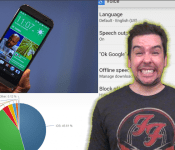
HTC Makes a Nice Profit! Android Almost Overtaking iOS Globally! – The ManDroid Show

Hello Android friends. Time the ManDroid Show that should have been up yesterday. Hopefully you America type people had a great 4th of July yesterday. Looks like HTC is finally rising from the money pit they were sinking in. Android is almost overtaking iOS in global users, and I have a feeling after Android L gets released officially, we will overtake that OS. Enjoy the show?
Android News
HTC back in black
Android overtaking iOS
Google Now everywhere
Sony Xperia Z3 Compact: http://androidspin.com/2014/07/03/sony-xperia-z3-compact-snapdragon-801-android-4-4-2/
//<![CDATA[
ord = window.ord || Math.floor(Math.random()*1E16);
document.write('’);
//]]>
The post HTC Makes a Nice Profit! Android Almost Overtaking iOS Globally! – The ManDroid Show appeared first on AndroidSPIN.

Recommended Reading: Colombia’s high-tech World Cup training and testing Facebook
Recommended Reading highlights the best long-form writing on technology and more in print and on the web. Some weeks, you’ll also find short reviews of books that we think are worth your time. We hope you enjoy the read.

Colombia’s High-Tech Advantage in its World Cup Match Against Brazil
by Matt Hartigan,
Fast CompanyPocket!function(d,i)if(!d.getElementById(i))var j=d.createElement(“script”);j.id=i;j.src=”https://widgets.getpocket.com/v1/j/btn.js?v=1″;var w=d.getElementById(i);d.body.appendChild(j);(document,”pocket-btn-js”);
Colombia certainly faced an uphill climb against Brazil at the World Cup, and the side turned to tech to increase its chance of winning throughout the tournament. During training, the Colombian national team leveraged Catapult: a wearable GPS system that maps players’ bodies in three-dimensional space to gauge the “load” placed on each athlete. Among a host of other features, the sensors transmit data to coaches and staff instantly at a range of up to 250-300 feet. Soccer isn’t the only sport using the system either, as the San Antonio Spurs implemented the system to track basketball prospects ahead of last week’s NBA Draft.
|
The Test We Can — and Should — Run on Facebook By now, you’ve likely heard about Facebook toying with our emotions with manipulated News Feed content. The backlash has certainly been significant, questioning the ethics of this sort of secret user testing. The Atlantic’s Kate Crawford examines questions surrounding the whole process while suggesting an opt-in model for future experimentation. Pocket!function(d,i)if(!d.getElementById(i))var j=d.createElement(“script”);j.id=i;j.src=”https://widgets.getpocket.com/v1/j/btn.js?v=1″;var w=d.getElementById(i);d.body.appendChild(j);(document,”pocket-btn-js”); |
Hospitals Are Mining Patients’ Credit Card Data to Predict Who Will Get Sick Too busy with work to prepare healthy meals over regular pizza deliveries? Well, soon your doctor could give you a phone call telling you to cut it out. Carolinas HealthCare System is examining the buying habits of 2 million patients to determine those at high risk and to offer care before they report to the office. Pocket!function(d,i)if(!d.getElementById(i))var j=d.createElement(“script”);j.id=i;j.src=”https://widgets.getpocket.com/v1/j/btn.js?v=1″;var w=d.getElementById(i);d.body.appendChild(j);(document,”pocket-btn-js”); |
|
Razr Burn: My Month With 2004′s Most Exciting Phone Back in the summer of 2004, many of us coveted the Motorola Razr V3 when it first made its debut. The ultra thin flip phone was a powerful and expensive option at the time, becoming one of the most recognizable handsets of all time. To celebrate its 10th birthday, one tech journalist opted for the Razr over an iPhone for a month, documenting the entire experience. Pocket!function(d,i)if(!d.getElementById(i))var j=d.createElement(“script”);j.id=i;j.src=”https://widgets.getpocket.com/v1/j/btn.js?v=1″;var w=d.getElementById(i);d.body.appendChild(j);(document,”pocket-btn-js”); |
Tracking the Digital Revolution, From Pong to ‘Gravity’ A new exhibit at London’s Barbican Center takes a look at the evolution of digital media from Pong in 1972 right up through experiments from designers, coders and others today. The New York TImes offers a brief synopsis of the collection, including the technical challenges of showcasing tech from the ’80s and ’90s as they were originally intended. Pocket!function(d,i)if(!d.getElementById(i))var j=d.createElement(“script”);j.id=i;j.src=”https://widgets.getpocket.com/v1/j/btn.js?v=1″;var w=d.getElementById(i);d.body.appendChild(j);(document,”pocket-btn-js”); |
[Photo credit: Clive Rose/Getty Images]
Filed under: Misc
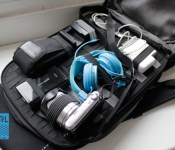
IRL: Living with the Cocoon Slim, a backpack made for gadget hoarders

When you run around town with a lot of technology, a good bag isn’t just nice to have — it’s a necessity. In any one given day at Engadget, we might be attending a product launch, interviewing people or taking all those lovely sample shots you see around the site. A regular courier bag or rucksack will likely do the job, but do you really want all your work-essential kit rattling around in a cross-city spin cycle? No, us neither.
Enter the Cocoon Slim. This bag was built for the urban gadget carrier, there’s simply no doubt about it. The backpack has two main sections. The primary one is where you’ll slide in your laptop (it fits up to 15 inches). In this same section is another pocket ideal for a tablet, e-reader or, in my case, a good old-fashioned book. While the outside of the Slim is made of “ballistic” nylon, the internal is a much more luxurious faux suede. This definitely makes me feel like my gadgets are not just protected from the elements, but also safe from each other. This, however, isn’t really the main event.
The Slim’s party trick — and what hooked me the moment I saw it — is the “grid-it” system in the second compartment. Basically, criss-crossing elastic straps make this an infinitely configurable gadget holder. Most of the bands are quite tight and thus better-suited for small items, but there are a few looser ones that let you tuck in larger items as well. I can get everything in from USB sticks right up to my NEX 3 camera. It’s a bit of a Fort Boyard-style puzzle to cram everything in the relatively small space, but that’s all part of the fun, I guess.
Once you’ve got everything packed up, then you’re ready to rock. Another strong point of the Slim is because everything is so tightly packed, the whole backpack feels small and compact. If you adjust the straps so they’re nice and snug, it almost feels like a parachute attached to your back (albeit a heavy one). This also leads me to one of the few downsides. If you’re doing a lot of walking, and have your laptop in standby, things can get very warm around your shoulders. Perhaps that’s OK in the wintertime, but in summer I found myself having to carry it by the top handle on more than one occasion to prevent, well, let’s face it, Sweaty Back Syndrome.
If there’s one more improvement I’d love to see, it would perhaps be an adjustable/expandable middle section. A bag packed with military precision is great until you’re given something else to carry. Which is often the case in my job, where you can find yourself with the bag and something in your hand. In desperate times I’ve managed to be pretty creative with the space available and get a surprising amount of irregular sized objects in there. I persist regardless, because it’s such a reliable perfumer day to day. And at $80, not pocket-unfriendly either.
Filed under: Peripherals
The evolution of the PC: A decade of design

Computers have gone through nothing short of a renaissance in the decade since Engadget was born. When we started in 2004, desktops still ruled the roost; laptops were frequently clunky; and tablets were niche devices for doctors.
That state of affairs didn’t last for long, though. Netbooks briefly took over the world, bringing tiny laptops to the masses. Ultrabooks proved that slim machines could still be powerful. And just about the entire PC market has had to confront the rise and domination of touchscreen-enabled mobile devices like smartphones and tablets. In short, it’s pretty remarkable how much of a difference 10 years can make in tech.
2004: Sony VAIO X505

Notable specs: 1.1GHz Pentium M processor, 20GB hard drive, 1.73-pound weight, 10.4-inch (1,024 x 768) display.
Sony didn’t realize it at the time, but it was laying the groundwork for the next decade of laptops with the VAIO X505. The 10-inch system was so featherlight and slender that it was easy to take anywhere, much like a netbook or Ultrabook. If it weren’t for the astronomical $2,999 price tag, it’s possible it could have started a mobile-computing revolution.
2005: IBM ThinkPad T43

Notable specs: 1.6GHz to 2.13GHz Pentium M processors, 30GB or larger hard drive, 6-pound weight, DVD drive, 14.1-inch (1,024 x 768 or 1,400 x 1,050) display.
The ThinkPad T43 was the swan song for an era of computing when laptops were mostly for globe-trotting professionals. One of the last PCs to bear the IBM name before Lenovo closed its acquisition of IBM’s PC business, it represented everything good about the ThinkPad badge: It was fast, well-built and relatively easy to carry in a briefcase.
2006: Dell XPS 700

Notable specs: Core 2 Duo or Core 2 Extreme processors, dual 320GB hard drives, dual DVD drives, dual GeForce 7900 GTX graphics.
Dell had built up a reputation for high-performance PCs well before 2006, but the XPS 700 was the system to own that year if you wanted a gaming desktop from a major brand. Its aggressive design still holds up today, and it was often as powerful as custom-built rigs. It was a dream machine at a time when you still needed a giant tower for serious online gaming.
2007: ASUS Eee PC 701

Notable specs: 800MHz or 900MHz Celeron M processors, 2GB to 8GB solid-state drives, 2-pound weight, 7-inch (800 x 480) display.
The Eee PC 701 marked the official start of the netbook craze, which lasted until the iPad’s arrival in 2010. Its screen, speed and storage were very modest even when new, but it showed that you didn’t need a big, expensive portable just to check your email at the coffee shop.
2008: Apple MacBook Air

Notable specs: 1.6GHz or 1.8GHz Core 2 Duo processors, 80GB hard drive or 64GB solid-state drive, 3-pound weight, 13.3-inch (1,280 x 800) display.
The archetypal Ultrabook. While it wasn’t without its quirks, the MacBook Air successfully bridged the gap between ultraportables and full laptops. It was fast enough for most tasks, yet light enough that you’d hardly notice it in your bag.
2009: HP Firebird

Notable specs: 2.66GHz or 2.83GHz Core 2 Quad processors, dual 250GB or 320GB hard drives, DVD or Blu-ray drives, dual GeForce 9800S graphics.
While HP’s Firebird line wasn’t perfect by any stretch, it showed how efficient desktops had become. You could get a reasonably quick, ready-made gaming PC that both looked good and didn’t swallow up too much surface area. It’s arguably the prototype for the small-yet-strong Steam Machines that would follow five years later.
2010: Lenovo IdeaCentre A300

Notable specs: 2.2GHz Core 2 Duo processor, 500GB hard drive, 21.5-inch (1,920 x 1,080) display.
Although the iMac is virtually synonymous with all-in-one computers, Lenovo’s sleekly designed IdeaCentre A300 was proof that Apple didn’t have a complete lock on the category. Rather than glom the computer on to the A300′s back, Lenovo tucked it away in the base. The result was a relatively subtle, stylish desktop that looked right at home in just about any environment.
2011: Samsung Chromebook Series 5

Notable specs: 1.66GHz Atom processor, 16GB solid-state drive, 3.3-pound weight, 12.1-inch (1,280 x 800) display.
Unlike the other PCs here, the Chromebook Series 5′s real revolution was its software — with Chrome OS, both Google and Samsung were betting that you only needed a web browser for most of your day-to-day computing. That was optimistic on a slow, Atom-based machine circa 2011, but the Series 5 helped launch a wave of stripped-down, affordable laptops that could do a lot without relying on conventional apps.
2012: Apple MacBook Pro with Retina display

Notable specs: 2.3GHz or 2.6GHz Core i7 processors, 256GB to 768GB solid-state drives, 4.5-pound weight, 15.4-inch (2,880 x 1,800) display.
Apple’s 2012 MacBook Pro redesign was just an iterative upgrade in some ways, but it was also a bellwether for where laptop design would go. It wasn’t just that extra-sharp Retina display that turned heads; this was also one of the first high-end, full-size laptops to ditch optical discs and hard drives in the name of both an easier-to-carry body and faster, flash-based storage.
2013: Acer Aspire R7

Notable specs: 1.8GHz Core i5 processor, 500GB hybrid hard drive, 15.6-inch (1,920 x 1,080) adjustable display.
Windows 8′s touch-friendly interface prompted a flood of PCs that tried to be everything to everyone, and that’s epitomized in Acer’s one-of-a-kind Aspire R7. Depending on how you adjusted its multi-hinged display, the R7 could serve as a desktop, laptop or tablet. It wasn’t especially good at any of these, but it revealed how eager PC makers were to keep you from buying mobile tablets.
2014: Microsoft Surface Pro 3

Notable specs: Core i3, i5 or i7 processor, 64GB to 512GB solid-state drive, 12-inch (2,160 x 1,440) display.
If you want a system emblematic of the changes to PCs in the past 10 years, you only need to look at Microsoft’s latest flagship device, the Surface Pro 3. So long as you get its (practically mandatory) keyboard cover, it blurs the lines between tablet and laptop — it’s as useful for watching movies on the couch as it is for serious media editing at your desk.
Jon Turi contributed to this post.
Filed under: Desktops, Laptops, Tablets, Apple, Samsung, Microsoft, HP, Dell, Acer, Lenovo

There can’t be only one: Technology’s singular obsession

Last week, Google announced the aptly named Android One, a plan to unite the myriad budget devices running its mobile operating system. But Sundar Pichai and crew aren’t alone in banking on the singular power of one. No, Google’s One is just one of many in the industry’s recent past. It turns out, everyone wants to be the one.
[Image: Getty]
Filed under: Cellphones, Misc, Laptops, Science, Internet, Software, Sony, Microsoft, HTC, Google, Acer
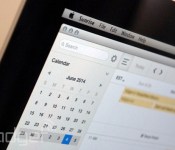
Sunrise’s social calendar app reaches the Mac

Sunrise has quickly become the calendar app of choice for some people, and for good reason. Besides its straightforward interface and support for all your social networks, it’s one of the few truly multi-platform schedulers you can find — as of this May, it can run on Android, iOS and the web. It hasn’t had a native desktop app, however, and the company is rectifying that by launching Sunrise for Mac. Not surprisingly, it’s more than just the iPad app writ large. In addition to the all the advantages that come with more screen real estate, you get both a mouse-friendly interface and native OS X notifications; there’s also a complete offline mode if you need to review your itinerary on a flight without WiFi.
As before, the big deal is integration with a slew of content providers. Sunrise’s Mac client handles both the standard calendars from Facebook, Google and Microsoft as well as a raft of features from online services that rarely show up in this kind of software. You can see your Evernote reminders and Foursquare check-ins, for instance, or use LinkedIn to find out more about the attendees at your next meeting. This won’t necessarily supplant either Apple’s stock calendar app or web-based tools, and Windows users are unfortunately out of luck for now. But hey, it’s free — if you’re interested in a Mac-friendly life organizer whose usefulness extends well beyond the desktop, it won’t hurt to give Sunrise a spin.
Filed under: Internet, Software
Via: 9to5 Mac
Source: Mac App Store, Sunrise

RoboHow is translating the internet for robot use

RoboEarth. No, it’s not a lame SNES game from 1994, it’s a cloud network that lets robots learn from the actions of other bots. It started over three years ago, and now, a new, related project has sprung from that initiative at the Institute for Artificial Intelligence at the University of Bremen in Germany. Called RoboHow, it seeks to translate info on the web meant for human consumption into something our electromechanical helpers can understand. Imagine a future in which you ask your house robot to whip you up something new for dinner; RoboHow would ingest your chosen recipes from Epicurious and turn them into instructions said bot can execute.
Of course, that means more than just turning English into bot-friendly 1′s and 0′s. RoboHow has to make explicit many parts of complex procedures that humans can simply infer — like how to turn on an oven, or where to find needed ingredients. The plan is to eventually enable robots to search the internet for info or instructions they need to complete assigned tasks without external (read: human) intervention. For now, people have to identify, demonstrate and feed RoboHow the right data, as bots left to their own devices would inevitably grab bad or incomplete information. So, it seems that our future robot overlords still need us meatbags around… for a little while longer, at least.
Image Credit: Gamma-Rapho via Getty Images
Filed under: Robots

The Big Picture: An astronaut’s view of Hurricane Arthur

While the solar panel from the ISS glides above North America, Hurricane Arthur moves up the east coast. Arthur, a category 2 storm, is the first of the season. The ISS captured this image yesterday, prior to its landfall in North Carolina this morning — leaving many locals no choice but to put holiday celebrations on hold and evacuate the area. Arthur is expected to strengthen, while astronauts on the Space Station continue to observe from above.
Filed under: Science
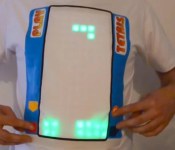
This playable Tetris T-shirt requires you to touch yourself

In the 30 years since Alexey Pajitnov first launched Tetris, the world’s most popular game has regularly been immortalized in fashion. Luxembourgian Mark Kreger wanted to do the same, but instead of cooking up a colorful print, he’s staving off boredom with something much more interactive: a playable Tetris T-shirt. Featuring 128 LEDs powered by an Arduino Uno microcontroller, Kreger’s marvellous tee requires only four rechargeable AA batteries to power the game. It’ll keep score and display level numbers — the only thing it appears to be lacking is the super-funky soundtrack.
Filed under: Gaming, Wearables
Via: Time
Source: Mark Kerger (YouTube)
 AIVAnet