


Verizon announces Xperia Tablet Z2 for July 17

Verizon on Wednesday announced the upcoming availability of the Sony Xperia Tablet Z2. Arriving on July 17, the tablet is exclusive to Verizon and will carry a $599 price tag. For a limited time customers can pick up the new device for $499.99 with a two-year service agreement. Those who pre-order the Xperia Tablet Z2 will receive a Sony Digital Noise Cancelling Headset for no extra cost.
Powered by Android 4.4.2, the 10.1-inch device is a waterproof and dust proof tablet capable of Verizon’s XLTE data services. Additional specifications include an 8.1-megapixel rear camera, front-facing 2.2 megapixel camera, 32GB internal storage, and a 6000mAh battery.
The post Verizon announces Xperia Tablet Z2 for July 17 appeared first on AndroidGuys.

RocketSkates let you zip along the sidewalk at a top speed of 12MPH

Let’s nip your enthusiasm right in the bud: No, these motorized skates you see above aren’t actually powered by rockets. Now hold on, don’t close the browser tab just yet. Just launched on Kickstarter, Acton’s RocketSkates do have a rather misleading name. But they’re actually quite the improvement over the Spnkix, the company’s previous effort at a pair of motorized skates (which, incidentally, unceremoniously crashed our podcast stage during CES 2013). Unlike the Spnkix, the RocketSkates are about six pounds lighter, have four hub motors instead of two, are 15 percent smaller and can zoom up to 12 miles per hour. Oh, and most notably, the RocketSkates don’t require a remote to operate. That’s right; just like regular skates, these motorized puppies can let you zip around the sidewalk completely hands-free.
Like its predecessor, you can wear most any regular shoe with the RocketSkates — simply strap it on and you’ll be ready to get started. It comes with either a large or small foot plate depending on the size of your feet. You’ll also have to decide which foot you want to be your lead skate; the lead tells the other skate what to do. To accelerate, simply tilt forward, and to slow down, just tilt back on your heels. Think of them as mini Segways for your feet. Peter Treadway, Acton’s co-founder and CTO, says they take a little while to get used to, though he says those new to skating could find it pretty easy to learn. There’s an onboard microprocessor in each one and both are powered by a lithium-ion battery pack.
Turning the skates on is as easy as pressing the power button on the back, and you can simply start rolling for the motors to kick in. Treadway demonstrated it at the Wearable Technologies Conference in San Francisco with a prototype model, and he did seem to glide smoothly around without much effort. He tells us you can walk in these RocketSkates as well, which is good if you need to go up a flight of stairs in between skate sessions.
Another feature that sets these RocketSkates apart is that it connects with a companion app, available on both iOS and Android, via Bluetooth. The app gives you a variety of information like how far you’ve traveled, mileage and your skates’ battery life. It can even track your route for you and let you compare it with others. There’s also a potential for “interactive gaming,” though Treadway tells us this might come later depending on what developers do with its SDK. Last but not least, you can use the app to wirelessly control the lead skate as if it were an RC car for a bit of fun.
The RocketSkates comes in three models — the R-6 lasts for 45 minutes or 6 miles and comes in “Rocket Red”; the R-8 lasts for 70 minutes or 8 miles and has a “Titanium Chrome” color; while the R-10 lasts for 90 minutes or 10 miles and is available in “Deep Space Black.” A pair of skates takes about 90 or so minutes to charge. Acton’s transportation designer, Jennifer Choy, gave us a bit of insight behind the RocketSkates unusual design. “The hexagon is represented in our brand, from our logo to our products … The ‘throttle’-like shape of a rocket converges to the logo. The button lighting up is meant to serve as an ‘electric’ flame.” She adds, “the RocketSkates is meant to invoke the feeling of a futuristic, industrial vehicle.”

If that sounds like an enticing proposition, you’ll have to pay a pretty penny for it. The regular retail prices for these skates are $499 for the R-6, $599 for the R-8 and $699 for the R-10. Still, it appears several people do find it appealing enough to shell out a few bucks. A few hours into the 45-day Kickstarter and Acton has already sold out of its “Rocket Deal” where you could get a pair of the R-6 skates for $199 each. If you hurry, you can still snag a pair for around $100 to $200 off the retail price, and developers can grab the $499 pack if they want a chance to dig around the SDK. If the skates do reach their goal of $50,000, you can expect the first units to ship starting this September.
Filed under: Wearables
Source: Acton RocketSkates (Kickstarter)
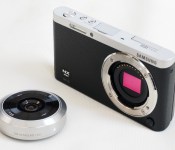
Samsung NX mini review: a $450 mirrorless cam that fits in your pocket

It’s been a long journey, but Samsung’s managed to build out a compelling camera lineup that has something for everyone. Pros can get the high-end NX30; cameraphone addicts can pick up the Galaxy K Zoom; and selfie fanatics will probably go for the $450 NX mini, a tiny interchangeable-lens camera with a flip-up LCD that fits in your pocket. It’s that latter model we’re checking out today, and while it’s hardly a professional workhorse, Samsung’s entry-level mirrorless cam is a practical choice for the largest demographic any electronics manufacturer could hope to target: regular people.
The biggest selling point here is a super-slim, lightweight body that you can slip into a handbag, or even a pants pocket. Without a lens attached, the NX mini is no larger than many compact point-and-shoots, and when you stick on the 9mm (24.3mm, 35mm equivalent) f/3.5 kit lens, it’s not much thicker. There’s a 1-inch, 20.5-megapixel CMOS sensor that’s identical in size to what you’ll get with very high-end compacts, like the $800 Sony RX100 M3, but quite a bit smaller than the APS-C sensor manufacturers include with mirrorless cameras like the Alpha 6000 or the aforementioned NX30.
Hardware

Of course, a slim design also means you’ll have to put up with some limitations. There are only a few buttons on the rear, and they’re adorably small. They’re adequate for petite hands, but many adults will need to use a fingertip to do things like accessing the menu, switching to a different mode or reviewing captured images. There are miniature buttons on the top, too, for turning on the power or launching into Samsung’s WiFi mode. Fortunately, the shutter release is nearly full-size, and once you launch the menu, you can adjust many settings simply by tapping the 3-inch, 480 x 320 touchscreen, which also flips up 180 degrees for self-portraits, or at any angle in between for shots below eye-level, or overhead if you flip the camera upside-down.
Another peculiarity is the microSD card slot, which Samsung’s now including with many of its point-and-shoot cameras. It’s not like microSD cards are difficult to come by or much more expensive than their full-size counterparts these days, but they are tricky to insert. Plus, they’re incompatible with most laptops for downloading pictures and video (without an adapter), and very easy to misplace. The battery, however, is large enough for full-day shoots, at 2,330mAh, and the camera charges via micro-USB, which I prefer personally, though some users will want to have an external charger (which you won’t find in the box).
User interface

As for the UI, there’s nothing out of the ordinary here. You can control just about everything using the touchscreen, though you can also use the four-way controller on the side to navigate if you prefer. Settings are limited, and therefore relatively straightforward, so you should be able to find what you’re looking for with only a few taps.
There is a dedicated mode button, but there’s no room for a dial, so you need to tap the screen to move among auto, smart, program, aperture or shutter priority and manual options. Once you’ve made your pick, you can tweak settings using a touchscreen function menu. In manual mode, this can be a bit cumbersome, since you need to go back in the menu to adjust aperture and shutter speed. But this probably isn’t a camera most owners will use with a manually dialed-in exposure.

There’s also a WiFi mode, which lets you access a variety of wireless sharing options. You can use MobileLink to send photos from the camera to a smartphone or tablet, or Remote Viewfinder, which miraculously lets you access all of the NX mini’s shooting modes, including manual, from another device. You also have access to Samsung Home Monitor, which requires its own smartphone app and lets you use the camera to keep an eye on a child, for example, assuming your camera and phone are connected to the same WiFi network. Additionally, you can back up photos via WiFi, post directly to the web or send pictures in an email, all directly from the camera.
Performance and battery life

I really enjoyed shooting with the NX mini. The camera performed as expected every time when shooting outdoors or in decent lighting conditions — low-light photos didn’t turn out nearly as well (more on that in the image quality section below). The camera is fairly quick to boot up and you only have to wait a moment for the bundled 9mm lens to extend. There is a noticeable amount of focus hunting, but in bright light you can fire off a shot very quickly. Dim scenes are another story, but the NX performed reasonably well when the (oddly green) focus-assist light was turned on.
The camera offers a few positive surprises on the performance front, including a 6 fps consecutive-shooting mode that lets you capture full-resolution RAW or JPEG images. If you’re willing to settle for 5-megapixel shots, you can also choose from three burst modes, including 10, 15 and 30 frames per second. The clever selfie mode launches as soon as you flip the display forward — you can access it directly even when the camera’s powered off. When you press the shutter release, the camera will start a three-second countdown, giving you enough time to reposition before it captures an image.

There’s a 1/16,000-second maximum shutter speed, letting you shoot at larger apertures in bright sunlight, though even at f/3.5, you won’t capture much bokeh (blurred backgrounds) due to the smaller sensor size. The sensitivity ranges from 160-12,800, or 25,600 in extended mode, while videos can be captured at 1080p, 720p, VGA or 320 x 240, all at 30 frames per second. Battery life is rated at 650 shots with the 9mm lens or 530 shots with the 9-27mm zoom lens. That should get you through a full day of shooting on vacation, assuming you don’t spend hours reviewing pictures on the display or transmitting photos via WiFi.
Image quality
The NX mini has a 1-inch sensor, so it’s reasonable to expect image quality to be superior to what you’d get with a typical point-and-shoot. But the camera’s no match for higher-end mirrorless models or even an entry-level DSLR. I did some casual shooting over the span of one month in San Francisco, Taipei and Austin, Texas. Results were generally quite solid with daytime shoots, but indoor photos and shots captured at night fell a bit short. The 9mm pancake lens excludes optical image stabilization, so captures at slower shutter speeds are often quite blurry, particularly when you’re holding the camera at a distance to shoot a selfie. Let’s take a look at some samples.

Here’s a typical group selfie. The camera opted for an f/3.5 aperture at 1/30 second, with a sensitivity of ISO 3200. That would have been fine when paired with image stabilization, but without OIS, what you get is a blurry mess. If you’re taking similar selfies in low light, capture several frames at once or use the built-in flash to guarantee a usable image.

This f/3.5, 1/30-second exposure was much more successful, thanks to a nearby table that helped to prop up the NX mini. Noise is barely visible at ISO 1600, even in the 1:1 inset view, and colors and exposure are accurate.

With instant access as soon as you flip up the LCD, it’s easy to capture spur-of-the-moment selfies, such as this f/3.5, 1/30-second exposure at ISO 1600. Unfortunately, the camera opted to focus on the background, though even details there are slightly blurry due to the absent OIS.

Ordinary daytime shots turn out just fine, such as this f/6.3, 1/125-second exposure in downtown Austin. Details are sharp, and there’s not much noise to speak of, thanks a sensitivity of ISO 200.

Like the supported selfie up above, this f/3.5, 1/8-second night scene in San Francisco is relatively sharp thanks to a nearby table, which served to anchor the camera. Captured at ISO 3200, noise is visible in the 1:1 inset, but wider views look fine.

We call this a Tuna taco (Tuna’s the cat). She held perfectly still for this f/3.5, 1/50-second shot, which sports relatively sharp details and low noise despite the high sensitivity of ISO 6400.
The NX mini shouldn’t be your first pick for shooting video. Quality is decent in brighter conditions, but without integrated image stabilization, hand-held shots are shaky at best, as you can see in the sample reel above. The camera also struggled with focus, especially when moving between subjects. The onboard microphone also failed to capture clear audio from a subject just a few feet away. Sharpness and exposure, however, are perfectly fine.
The competition

Samsung’s in a unique position with the NX mini. There isn’t anything quite like it from another manufacturer, though the $450 Nikon 1 S2 offers an attractive, colorful design with a similar sensor size and kit lens range. It’s also quite compact, though noticeably thicker than the NX. If you’re a pro looking for a high-quality camera that you can slip into a pocket, the $800 Sony RX100 M3 is a stronger contender, with a superior lens, better image and video quality and much more comprehensive manual controls. It also has a flip-up LCD and a pop-up electronic viewfinder.
If you’re in the market for a mirrorless camera, but you’re not set on the mini’s compact size, Sony’s $800 (with kit lens) Alpha 6000 is an excellent pick. The sensor is significantly larger, so you’ll get better image quality, particularly in low light, and Sony has a much broader selection of lenses available for its mirrorless series. Samsung’s NX30 is also a solid option, priced at about $800 with an 18-55mm lens. The NX mini is also available in a kit with a 9-27mm (24-73mm, 35mm equivalent) f/3.5-5.6 zoom lens for $450.
Wrap-up

I was skeptical when Samsung first demoed the NX mini, having seen several manufacturers fail to deliver a great camera within a very small package. Pentax’s infamous Q was tiny, but it was also spectacularly overpriced and an underperformer across the board, due in no small part to its small sensor and inadequate lenses. Nikon’s initial lineup of mirrorless cameras, the V1 and J1, fell short as well. Samsung’s NX mini introduction is well-timed, however, with young casual photographers now focused on style and selfies above all else. The NX mini is hardly the most capable mirrorless camera on the market, but at $450 with a lens, it’s a very solid buy.
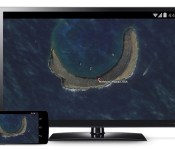
Chromecast update lets you mirror your Android screen on a TV

Google vowed that Android users would finally get official screen mirroring on Chromecast through an update, and it’s making good on that promise by rolling out the Chromecast 1.7 app today. Grab the new release and supporting devices (primarily from HTC, LG and Samsung) can send just about anything to a TV just by hitting a “cast screen” button. If you’re using a Nexus device, you don’t even have to launch any software — the feature will pop up in Android’s quick settings. You’re high and dry if your devices aren’t on Google’s compatibility list, but don’t worry too much. We hear there are third-party mirroring apps that can pick up the slack.
Filed under: Cellphones, Home Entertainment, Tablets, HD, Mobile, Google
Source: Google Chrome Blog

Chinese Court Rules Against Apple in Siri-Related Patent Dispute [iOS Blog]
Apple today faced a setback in it efforts to overturn a speech recognition patent held by Shanghai-based Zhizhen Internet Technology. According to Reuters, the Beijing First Intermediate Court ruled in favor of Zhizhen, upholding the validity of the patent and paving the way for Zhizhen’s existing infringement case against Apple to continue.

Apple said in a statement that it would appeal this decision with the Beijing Higher People’s Court.
“Apple believes deeply in protecting innovation, and we take intellectual property rights very seriously,” said a spokesman.
“Apple created Siri to provide customers with their own personal assistant by using their voice.
“Unfortunately, we were not aware of Zhizhen’s patent before we introduced Siri, and we do not believe we are using this patent.
“While a separate court considers this question, we remain open to reasonable discussions with Zhizhen.”
This patent is an integral part of an intellectual property infringement lawsuit first filed by Zhizhen against Apple in 2012. Zhizhen claims that Apple’s Siri voice assistant infringes upon patents that cover its own Xiaoi Robot voice assistant system for messaging clients.
The Xiaoi bot originated as a chat bot for MSN and similar networks, but has moved on to a number of platforms, including Android and iOS [App Store]. It has evolved to bear a striking similarity to Siri.
Zhizhen first introduced the Xiaoi Robot in 2003, filed for the related voice recognition patent in 2004, and was awarded rights to the technology in 2006.

4.7-Inch iPhone 6 Rear Shell Shown in High-Quality Photos and Video
Over the past six weeks, we’ve seen a few photos and even a video of what has been claimed to be the actual rear shell of the 4.7-inch iPhone 6, showing a nearly all-metal design with separate bands presumably to accommodate the antennas at the top and bottom.
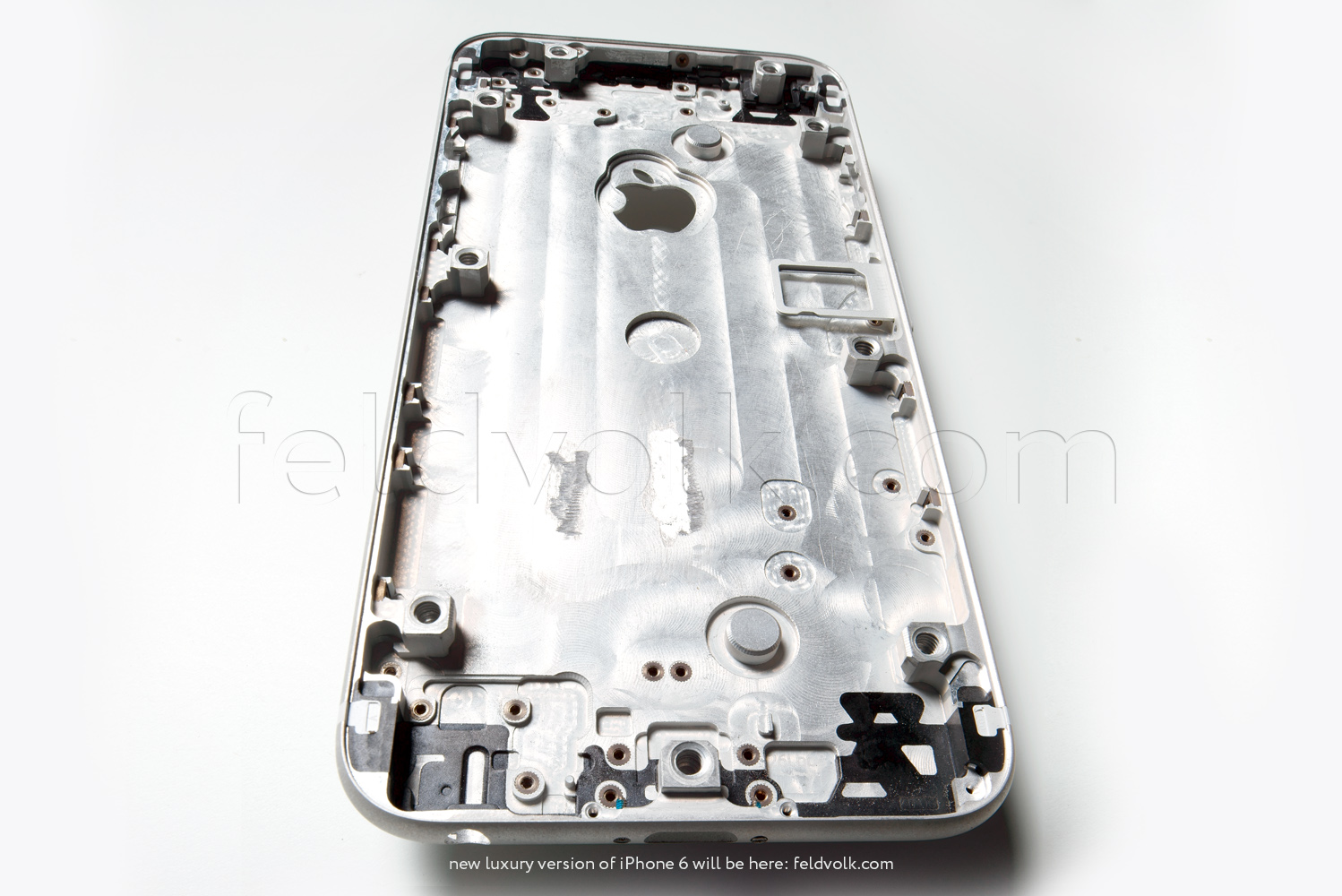 Inside of rear shell
(Click for larger)
MacRumors has now received a number of new photos and a video showing a similar version of the part. The first part comes via Feld & Volk [Facebook page], a Moscow-based company selling modified luxury versions of the iPhone. Feld & Volk says it has been working with the same factories that make spare parts for Apple products for more than six years, enabling it to get a head start on modifying the device for its customers. Feld & Volk has been using sapphire crystal on its high-end modified iPhones for several years, and says that its sapphire suppliers are the same ones Apple has begun working with more recently.
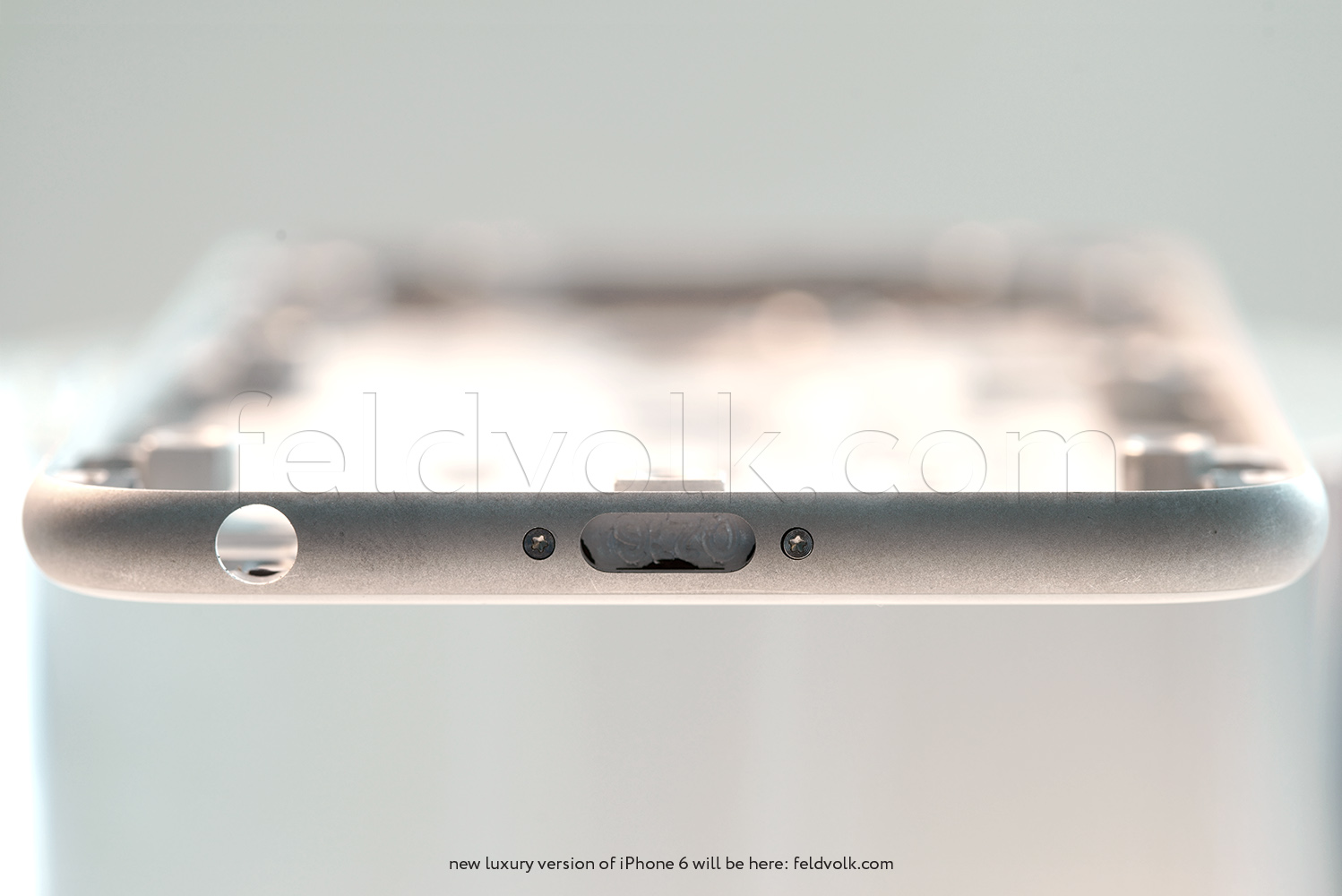 Bottom edge with holes for headphone jack and Lightning port – mic and speaker holes not yet cut
(Click for larger)
The part is shown on video and in a number of high-quality images, showing detail of the complex internals of the rear shell to accommodate the various features of the device. The part is not quite complete, with some features such as the full set of camera/mic/flash holes yet to be punched out of the shell, and Feld & Volk notes that some of physical features such as a number of screw holes shown on the part are actually from the manufacturing process and would be removed in later steps of production as the part is cleaned up.
As seen on previous leaks, the Apple logo is cut out of the shell, unlike on current iPhone models. Some have speculated that Apple may looking to incorporate a lighted logo, but more likely the company is simply planning to use a durable embedded logo as it does on its iPad models. Embedding a logo make of a non-metal material would also give the device another radio-transparent window that could be used to improve reception.
Read more 

Apple Tattled on Google to Draw FTC Attention to Similar Kids In-App Purchasing Issue
 Earlier this year, Apple entered into an agreement with the Federal Trade Commission, promising to provide $32 million in refunds to parents whose children purchased unauthorized in-app items.
As it turns out, while Apple was being targeted by the FTC for letting children make in-app purchases without parental consent, the company was attempting to get Google in trouble for doing the same thing. According to a report from Politico, head Apple lawyer Bruce Sewell sent the FTC a report highlighting the same in-app purchase issues in Google’s own Play store.
“I thought this article might be of some interest, particularly if you have not already seen it,” Apple general counsel Bruce Sewell wrote to FTC Chairwoman Edith Ramirez and Democratic Commissioner Julie Brill, pointing to a report that criticized Google’s app store over the same issue of unauthorized purchases. The previously undisclosed email was obtained by POLITICO through a Freedom of Information Act request.
Apple has long faced issues over in-app purchases, with the company first landing in hot water with the FTC after multiple parental complaints over children over-spending within apps and several high profile stories of children spending thousands of dollars. While most of the focus has been on Apple, Google too has faced the same issues, as children were able to make purchases for up to 30 minutes after a parent entered a password, much as they could in the App Store before Apple implemented specific changes.
Apple was not happy to be singled out by the FTC over in-app purchases, as the company had previously settled a lawsuit levied at it over the issue. Under the terms of the lawsuit, Apple had agreed to provide iTunes credit and cash refunds to parents, but the FTC demanded more.
At the time, Tim Cook said the FTC’s decision to sue over a previously settled case “smacked of double jeopardy,” but agreed to the terms as it didn’t “require us to do anything we weren’t already going to do.”
Apple officially began sending emails to affected iTunes users and issuing refunds in March. Google has thus far not been targeted by the FTC.

Sprint announces the LivePro; DLP Portable Projector and Mobile Hotspot Device
This morning Sprint has announced a new device that be available for consumer to purchase on July 11. The product is the LivePro and I must say, it seems rather interesting. The LivePro is a portable DLP pocket projector, but not like any we have seen before.

Hardware wise there are quite a few things to know about. Internally you have a 1.2GHz Qualcomm dual-core processor, 1GB of RAM, 4GB storage, (also a Micro SD card slot) and a 5,000 mAh battery. It can connect to Bluetooth, Wi-Fi and 3G/4G. It is also capable of Wi-Fi Miracast. Physical connectors on the back include HDMI, 3.5mm headphone jack, USB port and power supply. As for the projector aspect you are looking at DLP (Digital Light Processing) from Texas Instruments with a lamp brightness of 100 lumens and a bulb life of 20,000 hours. Image wise you are looking at a picture that can be 10-inches to 10 feet depending on the distance of the LivePro from the projected surface. The projected image quality is listed with a native resolution of 1280 x 800 and a maximum resolution of 1920 x 1080. The whole thing runs on Android 4.2 and can be controlled on a 4-inch touch screen found on the top of the device.

As you can see in the images, it isn’t a huge device either. It measures in at 4.7 x 4.7 x 1.1 inches and weighs just 14.1 ounces.
The LivePro doesn’t stop with it just being a really cool way to broadcast a movie, photos or presentation to a wall though. It also acts a mobile hotspot device to connect up to 8 devices to the internet. As well as act as an emergency battery backup to charge your phone through the USB port.

It is Google certified so you will have access to the Play Store directly on the device. While the 4GB internal storage (less considering the OS install and pre-installed apps) might put a hindrance on installing a ton of apps. I could see Plex, Hulu Plus and Netflix being the first few apps I would install to it. Hopefully AllCast Receiver functions on it as well. Some of that is fairly mute though since the device sports a direct HDMI input port and Miracast abilities.
“Whether it’s a boardroom proposal or backyard movie night, Sprint LivePro is a one-of-a-kind device that combines the enhanced LTE network capabilities of Sprint Spark with an easily portable projector that helps you get work done or keep the family entertained,” said David Owens, senior vice president of Product Development, Sprint. “Sprint LivePro has a high-quality projection display making it easy to share important information on a movie screen, wall or any other flat surface. Its mobile hotspot is powered by Sprint Spark, offering blazing-fast network speeds for downloading important videos or presentations on the Web.”
Sprint will make the LivePro available to anyone who wants it on July 11th. If you opt for a contract with Sprint service you will be tossing down $299. If you opt for the easy pay option you are looking at $18.75 a month for 24 months. Full price will hit your pocket-book at $449. Sprint also has a set of data packages to pair with the LivePro: 3GB for $34.99, 6GB for $49.99 and 12GB for $79.99. All prices are monthly of course.
For its size and its abilities, I could see this being pretty handy. Especially during the summer. I can already see myself pairing up a Braven speaker and hanging a sheet from the trees while camping and watching a movie. Anyone out there considering picking one up on the 11th? I might just have to go down to the Sprint store and at least take a look at it.
//<![CDATA[
ord = window.ord || Math.floor(Math.random()*1E16);
document.write('’);
//]]>
The post Sprint announces the LivePro; DLP Portable Projector and Mobile Hotspot Device appeared first on AndroidSPIN.
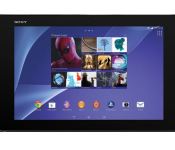
Pre-orders for the Sony Xperia Z2 Tablet with Verizon starts Tomorrow
We have heard rumors that the Sony Xperia Z2 Tablet would be making its way to Verizon. All rumors and leaks can now be tossed aside as Verizon has announced that they will offer up pre-orders for the new water-resistant behemoth starting tomorrow, July 10th.

There is a lot to love about this monster. The 1920 x 1200 resolution display with Sony’s TRILUMINOS and X-Reality engine is a pretty great place to start. Toss in a quad-core 2.3 GHZ Qualcomm processor, 3GB of RAM, 32 GB internal storage, micro SD card support and a 6000 mAh battery just to name a few. We can’t forget to mention that it is also IP55 and IP58 rated. Which means it is water-resistant and dust-proof. Yes, that means you can safely watch movies in the tub, pool side or even in the shower if you do so desire. The Xperia Z2 Tablet also has a 8.1MP rear camera and a 2.23MP front shooter.
As a bonus, if you order one you also get 90 days of free streaming music though Sony’s Music Unlimited service, 6 pre-selected movie download through Sony’s Video Unlimited and an exclusive early access pass to The Amazing Spider-Man 2 when it becomes available for digital download.
Hold on to your britches though, all of this will cost you a pretty penny, as one would expect. Verizon will be officially selling the tablet for $599.99. Ouch. However, for a limited time you can get it for $499.99 with a new two-year contract. If you pre-order it then Verizon will also through in a Digital Noise Cancelling Headset, the MDRNC31EM, for free. (while supplies last). If you want to hold off until it is in stores, then you will have to wait until July 17th.
Anyone considering this bad boy?
Via Verizon
//<![CDATA[
ord = window.ord || Math.floor(Math.random()*1E16);
document.write('’);
//]]>
The post Pre-orders for the Sony Xperia Z2 Tablet with Verizon starts Tomorrow appeared first on AndroidSPIN.

Vimeo Revamps Apple TV Channel With Streamlined Interface, Staff Favorites, and More [Mac Blog]
Video site Vimeo today announced a revamp of its Apple TV channel, simplifying the interface, launching a new “Staff Favorites” monthly feature, and making several other enhancements. The updates focus on improving video discovery and reducing the number of clicks it takes to access videos.

Simplified navigation
We took our old menu, cut it down to the essentials, and put it at the top of the screen for easy access. Discover awesome videos, keep up with your feed, tackle your Watch Later queue, and quickly get to your own videos, likes, and collections.
Watch our favorites
Don’t have time to watch every single Staff Pick? Our monthly Staff Favorites Albums highlight the best of the best. We’ve also added the winners of our Vimeo Weekend Challenges and a bunch of curated Channels so you can watch tons of amazing videos right away.
Vimeo is also featuring its growing On Demand trailer library, which integrates with the service’s Watch Later queue to make it easy to access content across devices. Enhanced Video Detail pages also include background images and additional metadata such as audience ratings and reviews.

Content providers are increasingly embracing Apple TV as a platform for distributing their content, with roughly 40 channels now available, although many of the services are currently limited to the United States or just a handful of other countries. Vimeo, however, is available worldwide for Apple TV users.
 AIVAnet