



Recover your stolen gold in Leo’s Fortune, now available on Google Play

One of the most critically acclaimed platform adventure games on iOS – Leo’s Fortune – is now available on Android, although it wasn’t actually supposed to release until tomorrow. If you don’t have an iOS device, you may still be familiar with the game as it was briefly shown off onstage at Google I/O this year.
The game, which received perfect scores for its iOS version from many media outlets and was the 2014 winner of the Apple Design Award, follows a teal, fluffy, mustached ball called Leopold who is searching for his fortune after it was stolen by a “cunning and mysterious thief.”
Throughout the game you take Leo, who was known as “Leopold the Golden,” Leopold the Fortunate” and “Grand Inventor of Greatest Engineering” until he was only a “fool” when his gold was stolen, on a quest through 24 beautifully designed levels and solve puzzles along the way as well.

I had a chance to play a pre-release version of the game and it really is all that people have said about it. Playing on my OnePlus One, the gameplay is fast and fluid with no lag, it is perfectly designed for a touchscreen with simple controls and the environments are extremely detailed. Some of the levels look exactly like what Donkey Kong Country would look like if it was made today and in high definition, also reminiscent of Rayman.
The only controls to the game are to either more forward or backward, jump up or push yourself down and the simple touchscreen controls are one of the game’s best qualities. There’s been too many times when I’ve tried to play a game with touchscreen controls and it was just confusing, but that’s not the case here. You can nearly effortlessly control Leo up and down hills, up steps, through loops and to press switches. It’s a platform game, which you all know what that means, but the gameplay is a little bit like classic Sonic, just not as fast paced. One way the developer went out of its way to ensure perfect controls for all, since once size doesn’t always fit all, is that you can either have invisible touchscreen controls that work wherever your fingers are on the screen or in the settings you can change it to be able to see buttons on-screen.


If touchscreen controls aren’t your thing, it also has gamepad support and the developer says that “certain game controllers and gamepads have specific minimum device requirements” and you should “check compatibility with your game controller or gamepad manufacturer.” I have a Moga Pro controller that I unfortunately couldn’t get to work with the game, but according to the Moga website, their controllers work with the iOS version.
If I had to rate the game, I’d give it a 5 out of 5, so if you’ve been searching for something new that you can get lost in, look no further than Leo’s Fortune as it’s definitely worth the $4.99 price tag.
The post Recover your stolen gold in Leo’s Fortune, now available on Google Play appeared first on AndroidGuys.

Motorola Briefly Explains the Moto 360′s Design in New Video

Who cannot wait for the Moto 360? Android Wear on a beautiful round watch is just scratching me where I itch, and I think that is the divide in the community. Some people out there prefer the square face simply because they are used to that design, but some of us who want something a little different are waiting for the Moto 360. Nothing wrong with either one, but you can’t say the 360 looks gorgeous.
The design of the Moto 360 is briefly explained in a new video Motorola uploaded today on their YouTube channel, and it will make some of your mouths water. They talk about how they wanted the 360 to look more like a watch, and we can all agree that they have accomplished that task. Check out the video below to get teased yet again with this beautiful piece of technology.
//<![CDATA[
ord = window.ord || Math.floor(Math.random()*1E16);
document.write('’);
//]]>
The post Motorola Briefly Explains the Moto 360′s Design in New Video appeared first on AndroidSPIN.

North Korea’s vision of the future looks like classic sci-fi

When a country is essentially cut off from the rest of the world, peculiar things can happen. In Cuba, the half-century-plus trade-embargo means antique Chevy Bel Airs roam the streets like pigeons, and apparently North Korea’s communist ideology translates to some pretty interesting views of the future. A tourism firm in the region gave a state-employed architect free reign to imagine how the mountains of Myohyangsan would appear with a high-rise bridge connecting them in one instance, and what a floating house/hovercraft hybrid (seriously) or a hotel and gondola in Nampo’s port would look like in others. The whole of the idea was to experiment with what a “sustainable tourism model” might resemble, according to CNN. And, if you ask us, the four-year project has a certain pulp sci-fi vibe to it. The concept drawings will be on display at Venice’s Architecture Biennale until November if you’d like a first-hand look, otherwise hit the source if you can’t make it to Italy by then.
Via: The Independent
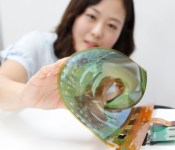
LG has a very flexible 18-inch display, promises 60-inch rollable TVs

It’s been a while since we’ve seen curved and flexible displays following LG’s G Flex and Samsung’s Galaxy Round smartphones. LG Display, is thinking bigger now. It’s announced that it’s been able to create an 18-inch OLED panel that has enough give and flexibility to roll into a tube that’s a mere 3cm across. The prototype currently has a resolution of 1,200 x 810, while it’s a new polyamide film on the back of the panel (instead of the typical plastic) which offers the panel substantially more flexibility — and it’s also even thinner.
Alongside the flexible demo, LG’s also crafted a transparent OLED panel which has triple the transmittance of existing see-through LCD displays — that means the picture looks much better and less hazy. According to LG Display’s SVP and Head of R&D, In-Byung Kang, he’s confident that “by 2017, we will successfully develop an Ultra HD flexible and transparent OLED panel of more than 60 inches.” Crank up that resolution and bring on the roll-up TVs.
Filed under: Displays, Home Entertainment, Science, LG
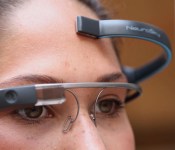
Control Google Glass with your mind… and a second headset

MindRDR shows up as a thin white line on Glass’s screen, which moves upwards the more the user concentrates. Once that line reaches the very top, it snaps a picture of whatever you want — you simply need to repeat the process to upload the image to a social network. In the future, though, its creators believe that the app could be a huge help to people who can’t move on their own. These include quadriplegics, those with multiple sclerosis, and especially those suffering from locked-in syndrome.

Supreme Court said Aereo is a cable company, so now it wants to be treated like one

Despite Aereo’s best efforts, the Supreme Court decided that its service was too much like cable TV and therefore its unlicensed streaming of TV broadcasts were illegal. Now, after putting its service on pause, Aereo has filed a letter with the US District Court saying that since the Court said it’s like a cable system, it is entitled to the same statutory license that cable companies pay broadcasters. CEO Chet Kanojia sent a message to users and supporters explaining “The Path Forward” with a link to the letter, but hasn’t laid out a timeline for the service’s return. That’s one of the reason’s broadcasters are still fighting the new move, saying (in the same letter) that it’s “astonishing for Aereo to contend the Supreme Court’s decision automatically transformed Aereo into a ‘cable system’ under Section 111 given its prior statements to this Court and the Supreme Court.”
[Image credit: AP]
Source: Aereo Blog, Aereo Letter

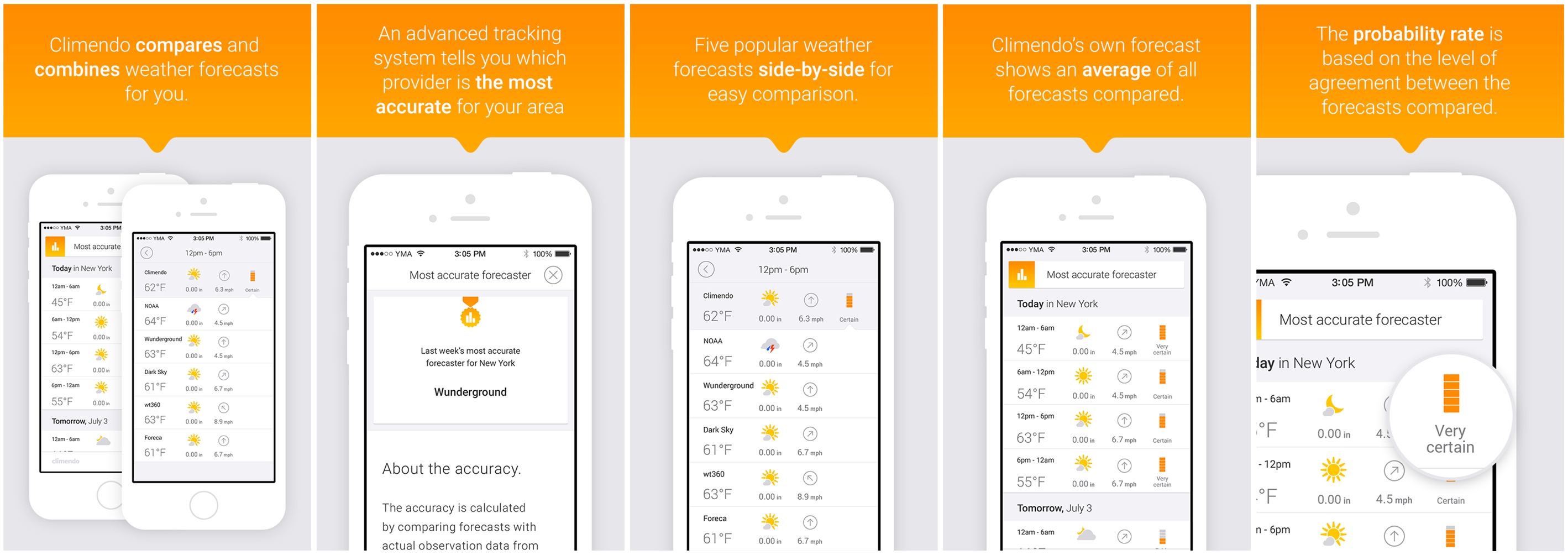
Climendo’s weather app compares forecasts to deliver the most accurate

Sure, your favorite weather app might look good, but can you really tell how accurate it is? Instead of relying on just one weather source to provide you with an overview of the week’s weather, Climendo wants to do things a little differently. It compares and combines data from the most popular and/or accurate providers to give you the most precise forecast possible. On top of that, it’ll also match predictions with historic data from professional weather stations, letting you know exactly which provider you can trust.
While the app launched in Sweden last year, it’s only now making a break for global success. It’s undergone a redesign, displaying a five-day forecast with six-hourly predictions of upcoming weather, which is supplied by 12 providers located in the US and Europe. They include NOAA, Forecast.io (Dark Sky), Weather Underground, Storm and TV2.dk, with more being added all the time. Based on their predictions (drawn from 10,000 weather stations around the world), the app generates an average forecast and calculates a probability rate (fairly uncertain, certain, fairly certain etc). The more readings that are similar, the higher the chances that you’ll experience the weather it tells you to plan for.
Currently, the app displays the temperature, the current weather condition and wind speed. However, the team says more detailed statistics will come to the app, breaking the data down so that “farmers, sailors, sun bathers, surfers can dig into what they think is the most important part to keep an eye on.” While the new features and design are currently only available to iOS users, the Android and web apps will receive a similar update in the coming weeks. Climendo is $0.99/69p for a limited time and can be downloaded from the App Store or Google Play.
Filed under: Internet, Software, Mobile
Source: Climendo, (App Store), (Google Play)
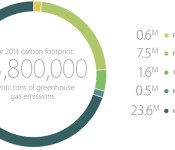
Apple Environmental Report: Carbon Footprint Down 3%, 145 U.S. Stores Now Using 100% Renewable Energy
Apple today released its 2014 Environmental Responsibility Report [PDF], posting the new information on its updated Environmental Initiatives website. The report, which covers fiscal 2013, highlights the progress Apple has made towards its environmental goals, which include reducing climate change by using renewable energy sources, using greener materials, and conserving “precious resources.”
Apple notes that its carbon footprint from energy use has dropped by 31 percent from fiscal 2011 to fiscal 2013, even though energy consumption has increased by 44 percent. The company also recalculated its 2012 emissions and found that its overall carbon footprint shrank by three percent from 2012 to 2013, its first decline.

Second, while focusing on our climate data, we decided to recalculate our 2012 emissions using our newest methodology — the same model we used to calculate our 2013 numbers. The new analysis shows that our carbon footprint actually shrank by 3 percent from 2012 to 2013. This marked the first time we’ve seen a year-over-year decline since we began tracking the numbers in 2009. While we’re excited about this progress, we know our work is far from done.
145 of Apple’s U.S. retail stores and all of its retail locations in Australia are powered using 100 percent renewable energy and energy efficiency programs implemented in its corporate offices have saved 28.5 million kWh of electricity and 751,000 therms of natural gas.
In addition, with its alternative commute programs for employees, which include a $100 transportation subsidy and biodiesel-powered buses, Apple has been able to avoid greenhouse gas emissions equivalent to 15,000 vehicles. A large section of the report is also dedicated to the company’s new campus, which “will be the most energy-efficient building of its kind,” powered by 100 percent renewable energy and populated with more than 7,000 trees.
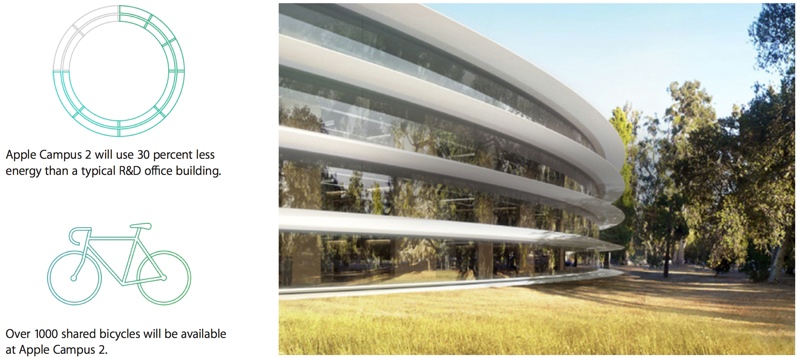
The report also highlights Apple’s commitment to recycling, its vow to use only clean, safe materials without harmful toxins, and its dedication to creating new products using less materials. Apple has now reached a worldwide recycling rate of 85 percent.
Apple ends the report with a list of challenges that it seeks to overcome, noting that its water consumption increased significantly in 2013 due to the work on its Apple 2 Campus. The company also cites the carbon emissions of its manufacturing partners as an area that it is “committed to addressing.”
Over the course of the past eight years, Apple has managed to reduce the carbon footprint of its Mac business by 27 percent, thanks to its focus on the environment. In addition to powering many of its retail stores with renewable energy, its data centers are powered with 100 percent renewable energy, as is its existing corporate location in Cupertino thanks to a 2012 energy overhaul.
Earlier this year, in celebration of Earth Day, Apple overhauled its Environmental Responsibility website and launched a “Better” video that explains its environmentally friendly values.

How To: Update the Google Play Store on your Android without an APK

It’s usually best to be on the latest version of the Google Play store app on your Android device since from time to time Google releases bug fixes, updates the UI and packs in even more new features.
 Most people either wait until the newest version hits their device or downloads an APK from somewhere on the Internet, but we wanted to tell you there’s a much simpler way and it requires no downloading APKs and sideloading the app. Here is what to do:
- Open the Google Play Store app
- Open the side slide-out menu by clicking the three lines at the top left
- Select “Settings”
- Scroll down until you see “Build version”
- Click on “Build version”
If a new build of the Play Store is available, you will be prompted to download and install it. If it’s already the latest, you will get a message that reads, “Google Play Store is up to date,” as you can see in the photo above.
The post How To: Update the Google Play Store on your Android without an APK appeared first on AndroidGuys.

Tor Project is being sued for enabling a revenge porn site

It’s almost a philosophical question: if you create a product used to commit a crime, are you as guilty as the criminal who wields it? This is the question being asked of the Tor Project, a collection of software that offers users complete anonymity online and serves as a portal to some of the web’s less reputable content. A Texas lawsuit is putting the technology under fire, accusing the organization of conspiring with an anonymous revenge porn website to shield it from “being held civilly and criminally accountable.” The plaintiff says is seeking damages of upwards of $1 million for Tor’s part in the alleged conspiracy.
Most of the lawsuit focuses on Pinkmeth, the pornography service that allegedly posted illegal nude images of the plaintiff, but Tor’s being hooked for the site’s use of its Hidden Service Protocol. Tor advertises this technology as a way to “let users publish web sties and other services without needing to reveal the location of the site,” and it’s the same kind of tech Silk Road and other illicit websites have used to hide from the long arm of the law. Tor’s privacy protocol isn’t inherently illegal, however, so the plaintiff will have to prove that Tor actively conspired with Pinkmeth to obscure illegal activities.
The plaintiff argues that Tor’s own descriptions of its services reveal that it knowingly assists websites like Pinkmeth in creating illegal services, similar to how some gun control advocates place responsibility on firearm manufactures for creating weapons that can be used for crime. It’s possible Tor’s part in the lawsuit will be tossed out under protection of the Telecommunications Act of 1996, but in the meantime it poses an interesting question: if a crime wasn’t possible without the use of a specific product, who is at fault? Let us know what you think in the comments below.
[Image credit: Bloomberg via Getty Images]
Filed under: Internet
Source: Scribd, Business Insider
 AIVAnet