



Twitch streams its first live concert tonight

If this weekend’s Lollapalooza festival doesn’t have enough electronic music for you, tonight you can catch a live DJ set from Steve Aoki (above) as he spins from Ibiza, Spain. The Twitch broadcast starts at 10 p.m. Eastern, so you might have to pull the neon hula-hoops and rainbow leggings out of the closet a bit earlier than you’re used to. It’s a free show of course, and you can watch it on basically every platform at hand — gaming console, mobile device or even via this Chromecasted browser tab on your flat-screen. If competitive gaming is more your style, however, the streaming behemoth has something more traditional in store for you. Following its PAX Prime booth broadcast, Twitch is doing a digital premiere of Die Noobs, a documentary following two decade-long online gaming pals as they finally meet in person and then train to compete in their first-ever eSports event.
Should the initial August 29th broadcast date not work with your personal schedule, there’ll be a rerun 24 hours later at 9 p.m. Eastern — maybe Google will have finally fessed up to its purchase by then.
Watch live video from SteveAoki on www.twitch.tv
[Image credit: Getty]
Filed under: Gaming, Home Entertainment, HD
Source: Twitch (1), (2)
.CPlase_panel display:none;

Samsung’s new UHD TV is the first to go from flat to curved on command

Samsung’s new TVs have pressed 4K and curved frames as features, but what if you want one that’s only curved sometimes? That’s where a bendable TV comes in, and Samsung says it will release the industry’s first one on August 1st in Korea. We got a peek at an 85-inch version in January at CES (check after the break for video of the demo unit), but the one going on sale is 78-inches. We’re not sure how much it will cost, but we’re betting the feature isn’t cheap. As usual, Samsung is dueling with its Korean counterpart LG, which showed off a flexible OLED TV at CES. Both recently announced 105-inch Ultra HDTVs for sale, and are furiously chasing the title of “best screen almost no one can afford to buy.” If this one gets a US release date, we’ll let you know which store window to look at it through.
Filed under: Displays, Home Entertainment, HD, Samsung
Source: Samsung Tomorrow (Korea)
.CPlase_panel display:none;

Danish researchers achieve fastest single-laser data transfer speeds ever

Looking for wicked fast internet? You may want to move to Denmark: researchers in DTU Photonics’ High-Speed Optical Communications Group (HSOC) have set a new world record for single-transmitter data transfer. Using a new kind of optical fiber, the team was able to achieve transfer speeds of 43 terabits per second. Not familiar with bit-based statistics? Try this: that’s more than five 1TB HDDs worth of data moved in less than one second. So, fast. The record was set using only a single laser transmitter, but faster speeds can (and have) been obtained using setups with hundreds of lasers. You can see the group’s official announcement at the source link below, assuming you can read North Germanic languages.
[Shutterstock / Kubais]
Filed under: Internet
Source: DTU
.CPlase_panel display:none;

Quentin Tarantino and Christopher Nolan want to save the future of movies on film

The movie industry has seen its share of struggles as we transition into a digital future, and likely no one has felt the pinch more than film company Kodak. The struggling outfit is getting a life-raft, though, in the form of several studios committing to buy a set amount of celluloid per year regardless of if any of their movies are even made using film. As The Wall Street Journal tells it, directors J.J. Abrams, Judd Apatow, Christopher Nolan and Quentin Tarantino — all who’ve professed their love for celluloid quite publicly — were part of the lobbying council for the business deal. Why? Because they adore the look and feel of working with the physical format. Nolan’s Interstellar and Abrams’ upcoming Star Wars are both being shot on film, but for better or worse, though, these filmmakers are a dying breed.
Kodak’s film sales have fallen a massive 96 percent since 2006, from 12.4 billion feet down to a paltry 449 million feet this year, largely because adding special effects and post-processing is faster when the source is a digital file to start. Ironically enough though, film is the only constant storage medium with digital movies even being scanned to it for archival purposes.
Film has a certain patina to it, though, with its grain, color reproduction and slight imperfections that a video-based movie just doesn’t compare to. And unlike digital, you can pull a reel out of the can from the 1930s and it’ll work on essentially any projector. That sounds almost trite until you stop to think about how many digital formats we’ve moved through in the past twenty years. It’s something that’s explored in detail in the documentary Side by Side, which turns the camera on filmmakers and gives insight into the divide between the two recording formats. Nolan is featured heavily in that, and his recent op-ed in WSJ echoes a lot of the points he made in the doc; that the likes of Netflix and the ubiquity of content on screens won’t replace people actually getting out to the theater.
[Image credit: Getty]
Filed under: Home Entertainment, HD
Via: A/V Club
Source: Wall Street Journal (1)
.CPlase_panel display:none;

Engadget Daily: Snapchat’s hefty price tag, life on the ISS and more!

Today, we ponder Snapchat’s estimated worth of $10 billion, look at life on the ISS, round up nine of our favorite wearables and learn about an app that lets you video call your doctor. Read on for Engadget’s news highlights from the last 24 hours.

Is Snapchat really worth $10 billion?
How much dough is Snapchat worth? According to Bloomberg, Yahoo-backed Alibaba is willing to drop a solid $10 billion on the messaging app. You had your chance Facebook.

The top 9 wearables you can buy right now
The Engadget Buyer’s Guide strikes again. This time, we rounded up nine of our favorite wearables that you can buy right now. You’re welcome.

‘Mario Kart 8′ couldn’t save Nintendo from a $97 million loss
Mario Kart 8 is a good game, but it takes more than one killer title to keep a company’s finances out of the red; Nintendo reported a total operating loss of $97 million. All eyes are on you, Super Smash Bros.

Life on the ISS as seen through social media
Ever wondered what it’s like to live on the International Space Station? Well, thanks to a few social media-savvy astronauts (who took a lot of pictures), you can get a pretty good idea of life outside our atmosphere.
You also might like:
.CPlase_panel display:none;

If you’re part of the ‘younger set with high income,’ you might like this purple potato

Potato breeding programs at Michigan State University and Texas A&M have been churning out modified spuds for the better part of a decade, if not longer, but thanks to A&M’s Creighton Miller, we now have a better idea of the ‘designer’ potato’s target market. “What we’re doing now is developing unique varieties that appeal to the younger set that is high-income that are willing to try something different,” he explained in an interview with AgriLife Today, holding a variety of product, including a “gourmet” potato sporting “red flesh with splashes of yellow.” Michigan State’s program, meanwhile, has developed a variety called “Raspberry.” According to a report in Txchnologist, that potato has vibrant red flesh and a skin that’s flavored like the fruit. You might get a good feel for how it tastes by taking a bite while it’s still garden-fresh, but that particular potato, along with another simply referred to as “MSQ558-2RR,” are likely destined to end their lives as thin-cut chips. De-licious.
[Photo credit: Texas A&M AgriLife Communications]
Filed under: Household, Science
Via: Txchnologist
Source: AgriLife Today
.CPlase_panel display:none;
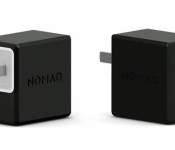
NomadPlus turns your iPhone’s wall plug into an external battery

Yes, you can technically buy external batteries that have their own plugs built-in. However, Nomad’s bring-your-own strategy is not just efficient, but cheap — the Plus will cost $39 ($20 if you use the code “nomadplus” within the next few days), or considerably less than a dedicated external battery like Mophie’s $50, 1,350mAh Power Reserve. You’ll have to wait until the end of November before you can pick one up, but it might be worth waiting if you don’t need the additional electricity right away.
Filed under: Cellphones, Peripherals, Mobile
Source: Nomad
.CPlase_panel display:none;

FCC Questions Verizon Plan to Throttle Some Unlimited Data Customers
Federal Communications Commission Chairman Tom Wheeler today sent a letter [PDF via Gigaom] to Verizon Wireless, questioning its plan to throttle customers that have unlimited data plans during peak usage times. Verizon first announced its intention to throttle high-usage customers on grandfathered unlimited LTE plans last week.
In the letter, Wheeler says that he is “deeply troubled” by Verizon’s decision to throttle its unlimited users, as the company described its efforts as necessary for “Network Optimization.” Wheeler stated that he does not believe slowing the data speeds for select users falls under the “reasonable network management” umbrella.

“Reasonable network management” concerns the technical management of your network; it is not a loophole designed to enhance your revenue streams. It is disturbing to me that Verizon Wireless would base its “network management” on distinctions among its customers’ data plans, rather than on network architecture or technology.
Wheeler goes on to ask Verizon to answer a series of questions, requesting that the company explain its rationale for treating customers differently based on data plan type and questioning whether Verizon’s new throttling policy is justified under the FCC’s Open Internet rules. Wheeler also questions the necessity of cutting data speeds on the much more efficient 4G LTE network.
In a statement to The Wall Street Journal Verizon said that it would respond to the Chairman’s letter following a review of the content.
“We will officially respond to the Chairman’s letter once we have received and reviewed it,” Verizon Wireless said in a statement. “However, what we announced last week was a highly targeted and very limited network optimization effort, only targeting cell cites experiencing high demand. The purpose is to ensure there is capacity for everyone in those limited circumstances, and that high users don’t limit capacity for others.”
Verizon plans to begin throttling high-usage LTE customers accessing congested network cells beginning on October 1. The company says the change will only affect users with grandfathered unlimited plans not under contract who rank in the top five percent of data users.
At the time of its announcement, Verizon said that the top five percent consisted of customers who used 4.7GB of data each month, and those customers may experience slow data speeds “when using certain high bandwidth applications, such as streaming high-definition video or during real-time, online gaming” when connected to a cell site “experiencing heavy demand.”
Verizon, which has long restricted 3G data usage for unlimited users, is not the first wireless carrier that has implemented LTE usage restrictions for customers on grandfathered unlimited plans. Other carriers, like AT&T, have similar policies and restrict key features from unlimited data plan holders in an effort to encourage them to switch to pay-by-usage tiered data plans.
.CPlase_panel display:none;
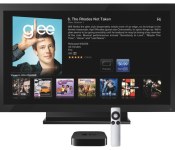
Latest Apple television rumors: not this year

Despite years of rumors about what Apple might, could or should do to revolutionize the TV experience, the company hasn’t done much beyond releasing (and occasionally updating) its Apple TV set-top box. The Information reports that engineers working on the long-rumored project to go further, have been told not to expect a launch this year, and are targeting 2015. If true, the leaks today reflect mostly the same situation as they did about two years ago, with Apple trying to talk cable operators and studios into a sort of joint operation. That way, viewers could watch live TV or cloud-stored recordings / VOD (plus apps and gaming) all through Apple’s box and UI. Of course, working out how everyone will get paid and trying to convince operators like Comcast to give up their hold on the (often troubling) relationship with customers hasn’t been easy and the usual “people in the know” say those negotiations are to blame for the slow progress.
Source: The Information
.CPlase_panel display:none;

BitTorrent’s Bleep messenger is a secure, decentralized chat platform

There’s a distinctive sound your computer makes when an online friend is trying to get your attention. Sometimes its high pitched, other times its a low, warm tone, but regardless of your chat software, the onomatopoeia probably reads something like “bleep” which — by no coincidence, we’re sure — is what BitTorrent is calling its new messaging platform. Unlike Google Hangouts, AIM or Skype, however, Bleep is a decentralized communication platform, design specifically to protect user metadata and anonymity.
“Our big idea was to apply distributed technology to conversations,” BitTorrent’s Jaehee Lee write on the company’s blog. “That means no servers required.” Instead of sending your chat communications to a central company server to be redistributed to your peers, Bleep uses the same kind of peer-to-peer communication technology used for decentralized file sharing to carry and distribute encrypted messages and metadata. BitTorrent does not (and can’t) track who you’re talking to, what you’re saying or when your conversations happened.
The company says the chat program is being designed to enable a more open internet, and will empower users to communicate without fear of eavesdroppers. That said, it’s still quite early: the chat platform is only available in an invite-only pre-alpha for Windows 7 and 8 desktop users, and the installed client can only be used on one device and cannot be moved. Offline messaging isn’t supported either – though voice calls are available to online contacts and particularly guarded users can sign in with an unlisted, incognito mode. Ready for a discreet conversation? Check out the source link below to sign up for the pre-alpha.
Filed under: Internet
Source: BitTorrent, BitTorrent, BitTorrent
.CPlase_panel display:none;
 AIVAnet