



Distiller builds a social network for whiskey lovers

If you’re a whiskey drinker, finding the perfect bottle can be a daunting quest; just because something is well-rated doesn’t mean that it suits your tastes. You’re about to get some help from your friends, though, as Distiller has turned its recommendation service into a full-fledged social network. You can now follow others with similar palates to see what they say about that Colonel E.H. Taylor or Lagavulin you’ve been meaning to try. You can also leave comments, and everyone has a “top shelf” in their profile to reflect their absolute favorites. Distiller can’t promise that others will share your love of Bulleit Bourbon, but it should be easier to find that like-minded connoisseur. Swing by Apple’s App Store or Google Play to give this social spirit service a try.
Filed under: Cellphones, Internet, Mobile
Source: App Store, Google Play
.CPlase_panel display:none;

Nanobots get tiny propellers for targeted drug delivery

Nanobots need the proper propulsion system if they’re going to be used to deliver drugs to targeted areas. Take for example this teeny-tiny corkscrew-shaped propeller made out of silica and nickel that’s developed by a group of German and Israeli scientists. The team says it’s around 100 times smaller than the diameter of a red blood cell at 70 nanometers in width and 400 nanometers in length, so it can swim through blood and other fluids without getting caught in protein chains and the like. In order to make a nanopropeller this small, its creators had to forego giving it a motor of its own — it needs to be controlled externally by a weak rotating magnetic field.
The lack of an internal motor doesn’t seem to affect its performance, though: it successfully swam through hyaluronan gel, a material found throughout the human body, during a lab test. Since the propeller is incredibly small, it can be used to target not just extracellular locations, but also materials inside cells, giving it huge potential in medicine. Its creators believe, for instance, that it can be used to deliver tiny doses of radiation, even to sensitive areas of the body such as the retina. It’ll take a looong time for that to happen, though, so head over to ACS Nano where you can read the team’s study on this minuscule propeller.
Filed under: Science
Via: Gizmag
Source: American Technion Society, ACS Nano
.CPlase_panel display:none;

Indiegogo has a new iOS app for mobile crowdfunding

Like giving money to ambitious projects but hate using your computer? Well, that’s pretty weird. We think that’s weird. Thankfully for you, though, the folks at Indiegogo think that’s totally awesome, and they wanna cater to your whims with a new iOS app (yes, an Android version is on the way). Guess what it’s called! If you guessed “Indiegogo,” you’re spot on. And frankly, we appreciate your gusto.
So, what can you do with said app? Well, back projects for one. There’s also discovery, and you can follow campaigns as they work toward funding goals. That said, as always, buyer beware: Indiegogo projects make no guarantee of delivery. And with Indiegogo, even if a project doesn’t reach its funding goal, the project owner keeps the money they raised. Wanna know even more about crowdfunding services? We’ve got you covered right here. And if you wanna snag the new Indiegogo app from the iTunes App Store, it’s free and available here.
Filed under: Cellphones, Handhelds, Software, Mobile, Apple
Via: The Next Web
Source: iTunes App Store, Indiegogo
.CPlase_panel display:none;
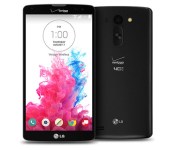
LG’s G Vista looks like the G3 but lacks the power and resolution

What do you get when you cross a 5.7-inch screen with 960×540 resolution and a 3,200mAH battery? Pretty sparse pixel density, that’s for sure, but the new LG G Vista for Verizon will keep smartphone-ing through a day and then some. Aimed at the mid-range crowd who want a flagship feel, the G Vista strongly resembles the top-end G3 with an even narrower bezel. But don’t be confused: on top of the meager qHD screen, it gets by with a quad-core 1.2GHz chip, 1.5GB of RAM, 8GB of storage, microSD and an 8-megapixel rear/1.3-megapixel front camera. On the plus side, it does have LTE, Android 4.4.2, LG software like Knock Code and a prodigious 15 hours of talk time. For all that, you’ll pay $100 with a 2-year contract, or $400 off contract with Verizon’s Edge. A little pricy considering the competition, but not a bad mid-range option if you’re set on Big Red.
Filed under: Cellphones, Mobile, Verizon, LG
Source: Verizon
.CPlase_panel display:none;
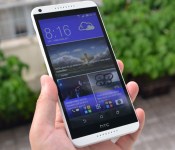
HTC Desire 816 review: A mid-range M8 let down by sluggish cameras

HTC may have some problems behind closed doors, but outside, it’s still widely regarded as one of the world’s top phone makers. We already gave this year’s One M8 flagship a rather jolly review, and now it’s time to see if the same qualities are preserved in its mid-range counterpart, the Desire 816. Indeed, back at Mobile World Congress, HTC called this $390 LTE phablet the “flagship mid-range” to emphasize its competitiveness. But has it lived up to its name? Or is it too little, too late in a world full of affordable options? Let’s find out.
Hardware

Where the One M8 features a nicely curved metal body, the Desire 816 takes the form of a flat plastic slab with rounded corners. What’s more, unlike the One X and the more recent E8, there’s no fancy plastic unibody construction on the Desire 816, which allows it to flex ever so slightly. Then there’s the size. At 156.6mm tall and 78.7mm wide, this gigantic phone certainly won’t be everyone’s cup of tea, but for HTC, it’s a much-needed weapon to suit the Asian market’s peculiar tastes. On a more positive note, the combination of the width and the matte finish allows for a sturdy single-hand grip. Even so, with that 5.5-inch display, you’ll definitely need your other hand for tapping and typing.
With the metallic power and volume buttons placed on the left, your left hand will quickly become the default choice for holding the phone, which I’m fine with. What I do find annoying is that the buttons rattle slightly when the phone is shaken, and it’s the same story with the volume keys on the M8. The other side of the phone is occupied by a long flap door, which reveals the nano-SIM slot (or slots, if it’s the dual-SIM 3G version) and the microSD reader, which supports cards as large as 128GB. Isn’t it great when you can swap out SIMs and memory cards without having to use a pin?

As with most recent HTC phones, the Desire 816 features front-facing stereo loudspeakers, each of which has its own amplifier to boost the volume — thankfully not to the point of distortion. Of course, you shouldn’t expect these speakers to replace your traditional ones, but having them facing toward you provides a better multimedia experience — complemented, of course, by that massive, high-quality IPS screen.
Unlike the matte front face and bezel, the back is coated in a glossy finish that helps highlight the curved edges and — though it was certainly unintentional — the plastic panel’s unevenness. As you’d expect, the gloss has a tendency to attract hand grease and scratches, but you can always slap on a case to solve that problem; and it still wouldn’t be too bulky, given the phone’s reasonable 7.9mm thickness and 165g weight.
For a while, I actually forgot that I was using a mid-range phone instead of a flagship.
There’s nothing really surprising about the internals: They’re perfectly adequate for general tasks. Having used the Desire 816 as my main phone for weeks, I can safely say that the 1.6GHz quad-core Snapdragon 400 SoC and 1.5GB of RAM let me browse the internet, watch videos and look at photos without many hiccups. Oh, and the LTE speed comes in handy as well. For a while, I actually forgot that I was using a mid-range phone instead of a flagship, and the generally smooth performance, plus the great multimedia experience, played a big part in this, despite the LCD’s relatively lower pixel density of 267 ppi. And even that I eventually got used to.

There were a few things I did miss. First of all, my UK edition Desire 816 lacks an NFC radio, meaning I couldn’t enjoy the convenience of sharing content using Android Beam, in which you place two NFC-enabled Android phones back to back, and then tap the content on the host device to initiate the direct data transfer. The lucky folks in Asia can get a Desire 816 with NFC, but only if it’s the LTE version.
My other gripe is HTC’s removal of the physical Android keys. Yes, I know, it’s been like this since the M8 (which I’m still a fan of), but I’m going to say this again: Why make me tap the screen twice — once to make the virtual keys appear, and again to pick the key — when I could just tap once? And no, forcing the virtual keys to remain on screen would be a waste of pixels. The right thing for HTC to do is to take a page out of OnePlus’ book: Let the user toggle between virtual and physical keys (though I insist the latter makes more sense). Help me, Peter Chou; you’re my only hope.
Last, but not least: I miss my speedy cameras. That’s right, while on paper the 13MP/5MP shooters sound generous, they’re simply not for the impatient. More on that later, though.
| HTC Desire 816 | |
|---|---|
| Price | £299.99; about $390 on Amazon |
| Dimensions | 156.6 x 78.7 x 7.9 mm (6.17 x 3.1 x 0.31 in.) |
| Weight | 165 g (5.82 oz) |
| Screen size | 5.5 inches |
| Screen resolution | 1,280 x 720 (267 ppi) |
| Screen type | IPS LCD |
| Battery | 2,600mAh |
| Internal storage | 8GB |
| External storage | microSD up to 128GB |
| Rear camera | 13MP, BSI sensor, f/2.2, 28mm lens |
| Front-facing cam | 5MP, BSI sensor |
| Video capture | 1080p |
| NFC | Depends on region |
| Radios | 2G: (850/900/1800/1900) 3G: (850/900/2100) with HSPA+ up to 42 Mbps LTE (EMEA): (800/900/1800/2600) LTE (Asia): (900/1800/2100/2600) (700 MHz for Taiwan, Australia) |
| Bluetooth | v4.0 with aptX |
| SoC | Qualcomm Snapdragon 400 |
| CPU | 1.6GHz quad-core |
| GPU | Adreno 305 |
| RAM | 1.5GB |
| Multimedia | DLNA |
| WiFi | 802.11b/g/n |
| Wireless Charging | N/A |
| Operating system | Android 4.4.2 (Sense 6.0) |
Software

Much like HTC’s other recent devices, the Desire 816 comes with the company’s Sense 6.0 UI, which is built on top of Android 4.4.2. You’ll find a thorough walkthrough of the software in our M8 review, but in summary, I find this to be an intuitive custom skin that also happens to be stylish. Sense UI has come a long way since the Windows Mobile days (we made a nice gallery covering its evolution), and version 6.0 is easily its best iteration — with much to offer.
Before we recap the phone’s various software features, I want to bring up a few handy setup tools that are often overlooked. For those migrating from an iPhone, you can use HTC’s Sync Manager desktop app to transfer your contacts, calendar, messages, photos, iTunes playlists, wallpaper, bookmarks and even apps to your new HTC phone, provided you have an iPhone backup file (generated by syncing with iTunes) on your computer. It’s even easier if you’re switching from another Android device: Just install the HTC Transfer Tool app, launch it on both devices and you’ll be able to transfer pretty much everything to your HTC phone, multimedia files included. If your old phone doesn’t use either OS, then you can try Bluetooth, but there’s no guarantee given the messy nature of Bluetooth on older devices.
Afterward, you can use the HTC Get Started tool to wirelessly set up your phone’s BlinkFeed news feeds, apps, sounds, bookmarks and wallpaper from the comfort of your computer screen, as pictured above.

Most of the M8′s essential software features are present here, including the BlinkFeed content aggregator on the leftmost home screen (you can disable this, but I personally use it every day), the integrated Video Highlights editing tool (with slick effects and soundtracks), the photo-editing tools, the bundled music player’s cool visualizer plus lyrics viewer, the self-explanatory Kid Mode and UI color themes. It’s definitely still a fun system to play with, and it shouldn’t intimidate the less technically minded, either.
Due to the lack of processing power and certain sensors, among other reasons, the Desire 816 misses out on Motion Launch, Fitbit integration, the Dot View case and some camera features (more on that in a moment). I can understand the technical limitations for those features, but not letting us set different wallpapers for the lock screen and the home screen is certainly a weird one (same goes for the One mini 2). Having said that, I’ve been pleased with how smooth and stable the system’s been running. You’d only notice the slower speed if you’re also coming from a recent flagship device — namely, those powered by a Snapdragon 800 or 801 chip.
Camera

I’ve generally been quite content with the Desire 816, but its cameras can be real nuisances. Don’t get me wrong: The 13-megapixel, f/2.2 main camera and the 5-megapixel front-facer deliver great detail. For both stills and videos, the main shooter does a decent job in well-lit indoor scenarios, but it has a tendency to underexpose when used in bright outdoor environments, and the dark spots are even darker as a result. It’s worth noting, though, that you should be able to fix that somewhat by manually choosing a different focal point. Normally I’d try HDR as well for taking stills in this kind of situation, but on my Desire 816, it was often more of a gamble with the vibrance you’d end up getting. In my outdoor comparison HDR shots, the Desire 816 did an obviously dull job, whereas the M8 yielded a faithful reproduction, and the OnePlus One only had a slightly green bias. At night, some HDR shots taken with the Desire 816 appeared washed out.
The cameras’ focusing or shutter response can be hilariously sluggish.
But HDR isn’t the biggest problem on the Desire 816. What annoys me the most is the cameras’ temperamental behavior: Their focusing or shutter response can be hilariously sluggish, to the point that it makes me wonder if there’s a bug. Either that or the phone really has a bad attitude (which means we’re one step closer to being overruled by artificial intelligence). On top of that, the shutter speed can be laggy even in slightly dimmer environments, so you might end up having to make multiple attempts, thus prolonging your suffering, before you eventually feel the urge to throw the phone across the room.

Funnily enough, both my colleague Jamie and I saw the same issue on the One mini 2, which has the same camera and produces similar images. It appears that HTC simply took away that fancy ImageChip 2 — the speedy image signal processor used by the M8, the M7 and even the original One mini. Worse yet, the front-facing cameras are inconsistent across different HTC models. At night, my selfies taken with the One mini 2 appeared much redder than their counterparts from the Desire 816 and the M8. On the flip side, during the daytime, the same phone managed to produce the most accurate selfies among the three, with the Desire 816 taking a slightly cooler tone, and the M8 pushing the contrast up a bit too much. Never mind that the M8 still beats them all with its wide-angle lens; I’m still baffled by how HTC could let the image quality vary so much across its phone lineup.
In terms of tools, all the basics are there: You get the same set of scenes (Night, HDR, Sweep panorama, Anti-shake, Portrait, Landscape, Macro and more) except for the M8′s Manual mode. All the fun filters are present, along with ISO settings, exposure compensation, aspect ratios and 10 levels of skin beautification. Sadly, you don’t get dual-capture or spherical-panorama modes, though the latter is probably for the best — it would be too painful to use with the Desire 816′s sluggish main camera. In short: You might want to look into other options if you’re used to a speedy camera.
Performance and battery life
| HTC Desire 816 | HTC One mini 2 | Sony Xperia T3 | OnePlus One | |
|---|---|---|---|---|
| Quadrant 2.0 | 13,172 | 10,141 | 10,495 | 25,306 |
| Vellamo 2.0 | 2,421 | 2,124 | 1,875 | 2,821 |
| 3DMark IS Unlimited | 4,830 | 4,695 | 4,766 | 19,474 |
| SunSpider 1.0.2 (ms) | 1,137.4 | 1,559.7 | 1,324.4 | 831.9 |
| GFXBench 3.0 Manhattan Offscreen(fps) | 1.7 | 1.7 | 1.8 | 11.9 |
| CF-Bench | 19,593 | 15,064 | 18,149 | 36,218 |
|
SunSpider: Lower scores are better; results compiled on Chrome. |
||||
As I mentioned earlier, HTC’s done a good job keeping the Desire 816 running smoothly most of the time (with the exception of that poky camera). Thanks to a 1.6GHz quad-core Snapdragon 400 chip and 1.5GB of RAM under the hood, the phone has no problem handling basic tasks, as I’ve confirmed with my few weeks of usage, and the benchmarks above agree as well. Of course, the Desire 816 is no 3D beast, but like the One mini 2, it still runs Asphalt 8: Airborne and Real Racing 3 smoothly even on the highest graphics settings. I should also add that those front-facing stereo speakers make for a great gaming experience.
The advantage of mid-range processors is that they sip much less power than their flagship counterparts, and this is certainly the case with the Desire 816. While 2,600mAh may seem like a small cell for such a big phone, it often lasts the entire day with at least 20 percent of juice remaining, and that’s with LTE radio connected most of the time to fuel my social networking and BlinkFeed addiction, as well as the occasional YouTube or Bluetooth music-streaming session. This gives me some leeway for using the phone as a WiFi hotspot. For the sake of benchmarking, I ran our standard battery-rundown test (video looping with WiFi enabled, and screen brightness set to 50 percent) and managed to squeeze out nine hours and 39 minutes of life. Not bad at all.
The competition

There are actually very few 5-plus-inch LTE phablets in this price tier, and they might not even be available in your area. For those residing in parts of Europe and Asia, the first one that comes to mind is Sony’s similarly priced Xperia T3 (pictured above). It’s slimmer and lighter, at 7mm thick and 148g, and it has similar specs as the Desire 816, except most are downsized a little: There’s a slightly smaller 5.3-inch IPS screen with the same 720p resolution. It’s also powered by a Snapdragon 400 chip, but clocked at 1.4GHz, not 1.6GHz. Then again, that might make up for the smaller 2,500mAh battery. The cameras are the ones that really let this Sony device down: On paper, the 8MP/1.1MP combo instantly loses appeal when compared to the Desire 816′s 13MP/5MP counterparts; plus based on our quick comparison, the Xperia T3′s cameras suffer from a lot of compression, noise and even slower capture speeds, albeit sometimes producing more vibrant colors. No thanks.
Another similarly priced and specced device is Samsung’s 5.25-inch Galaxy Grand 2. Don’t be mistaken: Instead of the original specs from November, I’m referring to the upgraded variant with a 720p screen instead of a WVGA one, and it also packs an LTE radio this time. Alas, the 8.95mm body is a tad thicker due to the removable 2,600mAh battery (a potential hazard for others, given the recent reports of Samsung battery fires), but that’s no worse than the quad-core chip being clocked at just 1.2GHz. Also, the phone only has 8MP/1.9MP cameras, though I’ve yet to test their quality.
Of course, if you can manage to get your hands on it, there’s always the OnePlus One, which offers flagship specs for the same price. The 5.5-inch screen comes with a much higher 1080p resolution, and the 13MP/5MP cameras are more responsive with better image performance. The obvious trade-off is that you’ll miss out on HTC’s Sense UI, but then again, some people may prefer CyanogenMod’s more basic Android interface.
Wrap-up

HTC deserves some credit for finding a niche space to compete in, and it’s done so with some success. In general, the Desire 816 came out as the most ideal choice among similarly specced Android phablets: It has better camera specs, front-facing speakers and a slick UI. It’s even a better deal than the One mini 2, which is essentially a slower Desire 816 with a smaller screen, plus a smaller battery, in a metallic chassis — the part that HTC’s charging you the premium for, yet it’s not quite the same smooth finish as the M8′s.
Of course, the Desire 816 isn’t perfect. As on the One mini 2, the cameras are sluggish and sometimes unpredictable, but when they do work, the photos come out nicely. That’s pretty much the only thing that’s stopping me from totally falling in love with the phone. The Desire 816′s only real threat is the OnePlus One (and eventually the Xiaomi Mi 4 in select regions), but given that it’s still a rare item, HTC should seize the moment, put up a good fight and fix those camera bugs.
Filed under: Cellphones, Mobile, HTC
.CPlase_panel display:none;
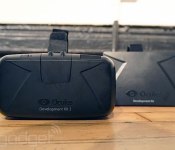
The second Oculus Rift headset uses the Samsung Note 3 screen, literally

Back when Oculus VR first showed off its second virtual reality development kit, the Facebook subsidiary wasn’t saying anything specific about the origins of its new, higher-resolution screen. But now that that second dev kit is shipping to pre-order customers, the teardowns have begun and we have a better idea of what it’s using: the screen from Samsung’s Note 3. Not a similar screen, but the screen directly taken from a Note 3 smartphone — an AMOLED pushing 1080 x 960 into each eye. Oculus VR even kept the touch module attached, though we’d strongly suggest against trying to use it while wearing the Rift headset.
As iFixit notes, the screen is being overclocked to run a higher refresh rate (75 Hz), which is important in creating what Oculus calls “low-persistence”. Hilariously, when the headset’s taken apart, you can see the directness of the screen’s use, camera-holes and all. Check out the video below for a full walkthrough of the new Rift dev kit.
Of course, Samsung and Oculus working together is interesting unto itself. We reported in May that Oculus VR and Samsung are collaborating on another VR headset — “Gear VR” — which Oculus is creating the software for while Samsung creates the hardware. That Samsung is providing the screen for Oculus’ new dev kit looks to be another component of the partnership.
Interested in learning more about the second Oculus Rift dev kit? Check out the video below!
Filed under: Cellphones, Gaming, Wearables, Software, HD, Mobile, Samsung, Facebook
Source: iFixit
.CPlase_panel display:none;

Recording industry sues Ford and GM over in-car CD ripping

Ford and GM both sell cars that’ll rip a CD to its internal HDD, so you never have to go without your jam in a pinch. Unfortunately, that same feature is now the target of outrage from the Alliance of Artists and Recording Companies, which has launched a class-action lawsuit against both the automakers, as well as AV unit outfits Denso and Clarion. The lobby group believes that the quartet need to pay royalties under the rules of the old Audio Home Recording Act, so that companies that made devices that “recorded” music had to pay musicians a fee as compensation for any future piracy. Considering the verdict in RIAA v. Diamond Multimedia that specifically exempted HDDs from the ruling and the fact that the head units can’t directly record songs from the radio, we think the AARC might be onto a loser.
Filed under: Home Entertainment, Transportation
Via: SlashGear
Source: Torrentfreak, (2) (.PDF)
.CPlase_panel display:none;
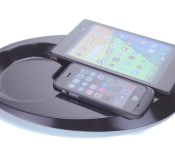
With Qi wireless charging, you’ll soon be able to charge your device from a small distance

It’s becoming more and more common to find mobile devices with wireless charging capability, either as a built-in feature or integrated into third-party cases. Progress has been somewhat hampered, however, by the fact that no universally adopted standard is available. Of the three major groups trying to corner the market, Qi — a standard created by the Wireless Power Consortium (WPC) — has arguably been the most successful at courting manufacturers and carriers (over 200 have signed up so far). The problem is, its abilities have been limited because it only uses a method called inductive charging; in other words, you can power up your smartphone as long as it’s sitting on a charging pad. Wireless, sure, but it’s still only marginally more convenient than simply plugging the handset in. Fortunately, Qi’s adding some crucial functionality later this year that will allow you to charge your device from nearly two inches away.
With version 1.2, the WPC is adding resonance charging to Qi’s features. This makes it so the receiver (the device that needs to be charged) and the transmitter (the charging pad or surface that’s pushing the power to the device) won’t need to physically touch each other anymore; now they can be up to 45mm (1.77 inches) apart. The new standard is backwards-compatible, so if you already have a smartphone or tablet with Qi built-in, you’ll be able to charge them up from as much as 35mm away. The standard also allows multiple devices to charge up at the same time, provided they’re both within range, and it will be capable of pushing as much as 2,000 watts to larger products like kitchen appliances.

Qi’s newfound ability to charge your gadgets from a distance is much more convenient for end users than what its current products offer. Using this technology, you might be able to place charging pucks under tables so your phone starts charging whenever you’re close by; you could put several devices in a Qi-compatible bucket, which would be very handy placed in between the two front seats in your car; and you won’t have to worry about placing your device on a precise spot to get it to charge.
Two competing wireless charging standards, Rezence and the Power Matters Alliance, already have adopted resonance charging, but the WPC claims that Qi is more power efficient and has a larger group of partners and products. Representatives couldn’t give specific stats on power efficiency yet, since the earliest products are still in development and results will vary from one device to another; that said, their initial estimates were somewhere between 70-80 percent. (Qi’s inductive chargers average about 85.)
We should expect to see the first v1.2 products arrive sometime later this year, although kitchen appliances using the standard likely won’t hit the market until 2015.
Filed under: Cellphones, Tablets, Wireless, Mobile
.CPlase_panel display:none;
Researcher Details USB-Based Attack That Circumvents All Known Protective Security Measures
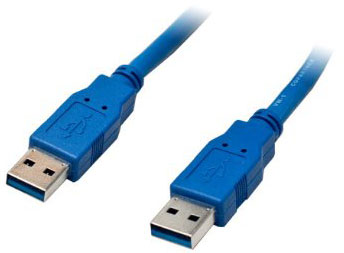 Security research Karsten Nohl of Berlin’s SR Labs has revealed a flaw in USB devices that potentially allows hackers to evade all known security measures used by a computer. In a report by Wired, Nohl says his BadUSB exploit is “almost like a magic trick” because “you cannot tell where the virus came from.”
The exploit takes advantage of a flaw that allows a hacker to tamper with the firmware that controls the functions of USB devices such as mice, thumb drives and keyboards.
Because BadUSB resides not in the flash memory storage of USB devices, but in the firmware that controls their basic functions, the attack code can remain hidden long after the contents of the device’s memory would appear to the average user to be deleted. And the two researchers say there’s no easy fix: The kind of compromise they’re demonstrating is nearly impossible to counter without banning the sharing of USB devices or filling your port with superglue.
“These problems can’t be patched,” says Nohl, who will join Lell in presenting the research at the Black Hat security conference in Las Vegas. “We’re exploiting the very way that USB is designed.”
Nohl, along with fellow SR Labs researcher Jakob Lell, will present additional details on this attack during a presentation at the annual Black Hat hacking conference, which will be held next week in Las Vegas. The title of his presentation is “Bad USB – On Accessories that Turn Evil.”
.CPlase_panel display:none;
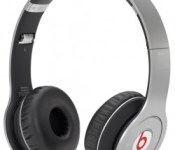
Apple Trimming 200 Employees From Beats Team to Streamline Overlapping Functions
 As part of its pending acquisition of Beats Electronics and Beats Music, Apple has begun making offers to Beats employees that will see roughly 200 of Beats’ 700 positions phased out over the next few months. News of the job cuts was first reported by 9to5Mac yesterday, with additional detail provided by the New York Post.
According to the reports, most of the job cuts will be in human resources, finance, and other areas where there is overlap between Apple and Beats staff. Some Beats employees will reportedly transfer to Apple’s headquarters in Cupertino, while others will remain at Beats’ current facility in the Los Angeles area.
Apple has issued a statement to Re/code confirming that some Beats employees have received only temporary offers from Apple as part of the transition.
Apple spokesman Tom Neumayr’s explanation: “We’re excited to have the Beats team join Apple, and we have extended job offers to every Beats employee. Because of some overlap in our operations, some offers are for a limited period and we’ll work hard during this time to find as many of these Beats employees as we can another permanent job within Apple.”
Apple’s $3 billion deal to acquire Beats and its headphone and streaming music businesses has been approved by European regulators, but will not be finalized until U.S. regulators sign off on the deal. Apple indicated at the time the acquisition was announced that it expects the deal to close this quarter.
.CPlase_panel display:none;
 AIVAnet