



OS X Yosemite Beta Failing to Download for Some Users
After announcing its OS X beta program at WWDC in June, Apple yesterday released the first beta version of the operating system to the public amid favorable reviews. For a growing number of people, the early impressions of OS X have not been positive due to a downloading issue that has prevented the installation of the OS.

Users in MacRumors forums, Apple support forums and on Reddit have complained about not being able to download OS X Yosemite from the Mac App Store. These users have successfully redeemed a promo code and initiated the installation, only to have it fail during the download process. This issue has persisted more than 24 hours after the beta was released, suggesting it is not a problem with server overload.
Can’t get OS X Yosemite to download properly. Maybe it’s the limit I can download per month or something. Gonna go to Starbucks and try it.
— Micah (Trivol) (@TheMajesticW0lf) July 25, 2014
All Apple’s online services are fully operational, and Apple support has not mentioned any potential issues that could interfere with OS X downloads. Several users have reported that using a VPN and selecting an alternative country such as Canada has solved the download issue, while others have chosen to delay the install indefinitely.
Apple’s beta program has made OS X Yosemite available to up to a million new, non-developer users who now are experiencing the OS for the first time. Beta users can check out our first impressions post as well as our forums for troubleshooting tips, known issues and more.

The Pirate Bay makes it even easier to torrent on the go

Regardless of what you may be searching for on The Pirate Bay, it wouldn’t hurt to be doing so with style and ease of use. In consideration of this, the popular (and controversial) torrent-sharing property has launched a brand new mobile site, featuring a rather subtle, less clustered look that should make browsing through it a much more enjoyable experience. As TorrentFreak points out, this is the first time Pirate Bay’s done a major design revamp in almost a decade, a change likely to be considered a breath of fresh air by its users, particularly those who like to use the website on devices like smartphones and tablets. The Pirate Bay doesn’t appear to be redirecting all mobile visitors to the new page yet, but you can check it out here right about now.
Via: TorrentFreak
Source: The Pirate Bay

A solar storm in 2012 just barely avoided devastating our planet

If you’ve spent time on a beach without protection, you probably have a good idea of just how damaging the sun can be. That gigantic star that gives us life from millions of miles away can also do great harm, as Earth nearly discovered during a powerful 2012 solar storm. According to NASA, during the July 23, 2012 event, a plasma cloud left the sun traveling at 3,000 kilometers (1,864 miles) per second, passing through Earth’s orbit. Our planet wasn’t in its path at the time, but would have been just a week before. Instead, it hit a STEREO (Solar TErrestrial RElations Observatory) spacecraft, which was able to capture tons of relevant data. According to a study, the cloud could have caused more than $2 trillion in damage, knocking out electrical, communication and other global networks. Unfortunately, it may not be possible to prevent such a disaster, and while life would go on, it would be a far departure from what we’re used to today.
Filed under: Science
Via: PHYS.ORG
Source: NASA

Lyft gets the green light to operate in New York City

Nearly two weeks after New York’s Attorney General, Eric T. Schneiderman, made a push to bar Lyft from offering its ridesharing service in New York City, both parties have finally come to an agreement. As a result, Lyft is now free to operate in all five boroughs of The Big Apple, after the company “agreed to operate in New York State in full compliance with existing laws and regulations.” In addition, Lyft has also assured state officials it will operate with commercial drivers only. But it wasn’t a complete win for the pink mustache company, as this agreement stipulates that Lyft must cease services in Buffalo and Rochester by next week, on August 1st.
“We are pleased that our offices have reached an agreement today with Lyft. We are firmly committed to the notion that regulators can work constructively with companies so that new ideas can come to the market — and that smart regulation should create an environment where innovators can compete,” reads the statement from the New York Attorney General and Superintendent. “We look forward to exploring solutions that enable companies in the sharing economy to operate and thrive throughout New York State.”
For its part, Lyft, which is set to officially launch tonight in NYC, says “this agreement is the first big step in finding a home for Lyft’s peer-to-peer model” in the Empire State. “We’ll continue to work with the TLC, Department of Financial Services, and the Attorney General’s office to craft new rules for peer-to-peer transportation in New York. We look forward to bringing the most affordable options to the areas that need it most, powered by their local residents.”
Filed under: Misc, Transportation
Source: Attorney General (NYSO), Lyft

The battle for virtual reality: Google, Samsung, Sony and Oculus VR

Back in June, Google revealed Cardboard: an open-source attempt at mobile virtual reality. Heck, even the “hardware” is open source –here are instructions to make your own, right now!
But the concept is more than a low-tech solution to mobile VR. It’s emblematic of Google’s approach to virtual reality: use the phone that’s already in your pocket. Samsung’s taking the same approach later this year with Gear VR, only it’s also partnering with Oculus VR on the software side.
This stands in stark contrast to the PC-dependent, ultra-high-res experience Oculus VR and Facebook are aiming to achieve. The Oculus Rift headset both literally and figuratively kickstarted the re-birth of virtual reality in modern technology. It remains the peak of technological achievement in virtual reality. And now, the medium is splintering into two distinct futures: one of entertainment, the other of immersion.
“PRESENCE”

That word — “presence” — is at the heart of virtual reality. Game industry veteran Michael Abrash — formerly of Valve, where he worked on research and development; currently of Oculus VR, where he serves as “Chief Scientist” — described this ideal for VR during a talk in January 2014:
“It’s the sense of being someplace else while in virtual reality; many people feel as if they’ve been teleported. Presence is an incredibly powerful sensation, and it’s unique to VR; there’s no way to create it in any other medium.”
The medium’s history is littered with failed attempts, even from gaming’s biggest players (Nintendo’s Virtual Boy, anyone?).
Indeed, that’s the “magic” of virtual reality: being whisked away, instantly, to another world. You’re not looking at another world on a screen — you’re there. At least, that’s when VR works. The medium’s history is littered with failed attempts, even from gaming’s biggest players (Nintendo’s Virtual Boy, anyone?). But with Oculus Rift, even the first demos shown on a duct-taped, slapdash prototype were incredibly impressive. It just worked, even if it was clearly rough around the edges. And even with those early demos, a PC was required to power them. The same can be said for Sony’s Project Morpheus, powered by a $400 game console.
One early demo, dubbed “Tuscany” for its visual nods to the Italian region, wasn’t much to look at. The art was low-resolution; the in-world lighting was barely there; the level of detail in general was pretty low. But even with bare bones demos like Tuscany, the world was believable because the demo’s framerate was high enough and the headset was capable of refreshing video fast enough for it to seem real. Those demos seem rough now by contrast, but they’re still far ahead of what we’ve seen running on VR headsets powered by mobile phone processors.
MOBILE VR AS IT STANDS TODAY

We’ve heard very positive things from folks who’ve tried Samsung’s VR headset. The so-called “Gear VR” is still a development kit, and it’s powered by a Galaxy S4; we’re told that the consumer version will use a newer phone (maybe the Note 4?) with more horsepower. Though our sources only experienced a few demos, they repeatedly described them as “impressive,” specifically with the caveat “for a phone.”
Samsung still hasn’t officially acknowledged that its VR headset exists (that’s a real render of it above). Gear VR is said to be be unveiled in Germany at IFA, just a few weeks from now.
Google’s Cardboard has received similarly positive, though guarded, responses. TechCrunch‘s Greg Kumparak wrote back in June, “It’s actually kind of freaking wonderful. Is it an Oculus Rift killer? Hah – of course not. It’s made of cardboard. But it’s still awesome.” As he demonstrated in a video (above), a handful of apps — including major known quantities like YouTube and Google Earth — can be used in Cardboard right now, employing phones that already exist (there’s a Nexus 5 in the demonstration).
It’s certainly a different take. Rather than aim to provide “presence,” Google’s approach to VR seeks to provide an alternate viewing experience for existing content. YouTube, for instance, is simply an interactive VR app for viewing non-VR content. That’s not a bad thing, necessarily — it could act as an intro to VR for the mass market — but it’s not the same as providing “presence.”
Another VR device powered by mobile tech, GameFace Labs’ “GameFace” prototype, further highlights this difference. The same Tuscany demo running on the GameFace headset, scaled down for a mobile processor, provided a markedly different experience than what we’ve tried on the Oculus Rift. Are you still “in” Tuscany? Sure! But it looks an awful lot like Virtual Tuscany, rather than “Oh man, I’m in Tuscany!”
Though GameFace is impressive, the second Oculus Rift dev kit is an order of magnitude more adept. Beyond a much higher resolution screen, the second Rift dev kit comes with an additional camera for depth-tracking (just to barely scratch the surface of technical differences). That’s not meant as a slight at GFL, but to highlight how different these two approaches are to virtual reality. Simply put, they’re intended to deliver different experiences.
WHERE CASUAL AND BLEEDING EDGE VR DIVERGE
Unlike film or video games, where technical prowess can be trumped by other factors, major VR leaders argue that it’s a worthless medium without “presence.” To create presence, Oculus VR founder and Rift creator Palmer Luckey says that the tech has to be of a certain quality — specs that exceed the most advanced smartphones. Even the Rift’s second dev kit, which is far more technologically capable than the competition, is far from what he thinks is required for “good consumer virtual reality.” That means super high-res screens, high refresh rates (“90 Hz or higher”), and fast processors (read: actual computers, with dedicated graphics processing) to make all that happen. Luckey’s told me in interview after interview that standalone, untethered VR is the future of the medium (see above). But 10 years from now “future,” not 2014.
Google argues that the best time to get VR going — regardless of technological capability — is right now.
“We could theoretically plunk down a Titan in there. There’s nothing stopping us. But people will say, ‘This is hot! It only lasts for five minutes!’,” NVIDIA product manager Mithun Chandrasekhar told us in a recent interview. We asked about the limitations around mobile VR, and he joked that NVIDIA could — theoretically — put an expensive, high-powered GPU in a VR headset.
Of course, it’d be incredibly hot, heavy, and would require immense battery power.
Even if NVIDIA could shrink the GPU down in size and weight, power issues would overcome horsepower limitations. Battery technology simply isn’t keeping up with processor technology. “Battery is probably the biggest limitation,” Chandrasekhar said.
Google argues that the best time to get VR going — regardless of technological capability — is right now. “We want everyone to experience virtual reality in a simple, fun, and inexpensive way. That’s the goal of the Cardboard project,” the Cardboard website reads. Beyond expanding the reach of virtual reality, Google specifically calls out developers that it hopes will, “build the next generation of immersive digital experiences.” Silly as it might look, Google Cardboard and other mobile VR solutions look to offer a foundational experience for both the development community — you know, the folks who make this stuff really amazing — and for mainstream, non-technophiles.
TWO PATHS, ONE RESULT

Chances are, you don’t have a 4K screen on your smartphone. You might soon, but you probably don’t just yet. When you do — when we all do — the concept of mobile VR will seem a bit less gimmicky and a bit more like a real product. When processors are more capable, when batteries last longer, and the line between PC and mobile phone blurs just a bit more, mobile VR won’t feel like such a foundational step on the way to the promise of “presence.”
For now, mobile VR can serve as a taste of the medium. An amuse-bouche to the medium. A gateway drug to the presence you’ll find on devices like the Oculus Rift and Project Morpheus. And that’s not a bad thing! Before long, devices like Rift and Morpheus will be rudimentary, their abilities easily accomplished on mobile, and the two virtual reality paths will (at least in part) rejoin.
Whether the goal is growing the medium, getting to market early, providing “presence,” or something else entirely, the result is the same: we all get to play with a bunch of rad VR headsets. Oh, and hopefully witness the birth of a major new medium. No big.
[Image credit: Valve (Steam Dev Days 2014 slide), SamMobile (Gear VR)]
Filed under: Cellphones, Gaming, Wearables, Software, HD, Mobile, Samsung, Sony, Google, Facebook
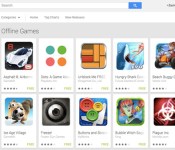
Google Play gets a section for offline games

In an ideal world, your smartphone and tablet would always be online (and you’d still have an unlimited data plan), but that’s just not the case. Problem is, some Android games require a connection even after you’ve completed your download, but others do not. It’s that latter list that Google’s breaking out into its own section in Play, called “Offline Games.” There you’ll find Asphalt 8, Dots, Jetpack Joyride, Assassin’s Creed Pirates and a few others — 54 games in all. That’s a shockingly slim selection, so this list is hardly all-inclusive, but if you’re in the market for a game to play on your next flight or subway ride, it’s a good place to start.
Filed under: Gaming, Internet, Google
Via: Android Community
Source: Google Play

Cortana won’t sound like Cortana on UK Windows Phones

Now that Microsoft is rolling Windows Phone 8.1 out to handsets, users can now start chatting with its new virtual assistant, Cortana. Right now, she’s limited to the US, but the Cortana man at Microsoft, Marcus Ash, has tweeted that “barring an unforeseen issue,” the UK developer preview will go live in “less than two weeks” and, wait for it, not feature the reassuring tones of Jen Taylor, the original talent behind Halo’s Cortana. Like Apple’s Siri, Cortana will adopt a British accent when it rolls out, presumably to make owners feel more comfortable when interacting with the digital sidekick. Sure, she’ll still take notes, dictate messages and offer up calendar alerts and reminders, she just won’t sound like the Cortana you’ve relied upon during many a gaming session (unless you indulge in a bit of location trickery).
Filed under: Cellphones, Internet, Software, Mobile, Microsoft
Via: PhoneArena
Source: Marcus Ash (Twitter)

Samsung Galaxy Alpha leaks out yet again

The world got a glimpse of the Samsung Galaxy Alpha recently which revealed some of the specs for the upcoming device as pretty much a smaller Galaxy S5. The device, which sports a 4.7-inch Super AMOLED display has leaked yet again, offering another look at what seems a better looking Samsung Galaxy S5. The images… Read more »
The post Samsung Galaxy Alpha leaks out yet again appeared first on AndroidGuys.

Apple’s Quarterly Spending Points to Major Product Launches, Significant Revenue Growth
Looking at Apple’s quarterly SEC quarterly filing, Katy Huberty of Morgan Stanley believes Apple’s revenue is poised to explode in the coming quarters. Huberty based her prediction on increases in Apple’s off-balance sheet commitments, which have a historical correlation with revenue growth.
Off-balance sheet commitments are those investments in components and services that are involved in the mass production and launch of new devices. These line items include component purchases, manufacturing process equipment investments, advertising, and other services. Huberty notes that Apple’s total spending in these areas has climbed 46 percent yearly and 36 percent quarterly in fiscal Q3 2014, making last quarter’s jump the largest spending increase since Apple first launched the iPhone in 2007.
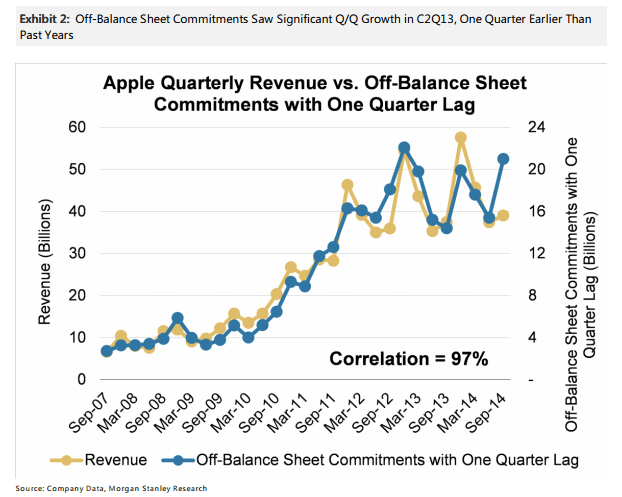
Huberty, not surprisingly, attributes this spending increase to Apple’s iPhone 6 and iWatch wearable, both of which are expected to launch later this year. These new products, along with services such as mobile payments, could accelerate growth and boost margins.
Apple has the opportunity to take share in slower growth smartphone and tablet markets with larger screens and new services. New product categories like iWatch, and services like payments could further boost growth.
Apple is rumored to be launching its next-generation iPhone 6, refreshed iPad models and a new iWatch smartwatch later this year. The company may also update its Mac hardware to coincide with the debut of OS X Yosemite.
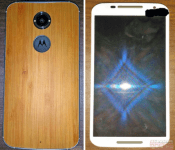
Alleged Moto X+1 poses for the camera

Motorola did a great job with the Moto X last year. That phone offered great user experience for a relatively affordable price. We say relatively because of its specifications, but that’s the thing with Moto X, despite not being at the very top as far as specifications go it offered so much for the price…. Read more »
The post Alleged Moto X+1 poses for the camera appeared first on AndroidGuys.
 AIVAnet