



Google is adding free WiFi to Uber cars in Philadelphia, but only for the summer

We have no scientific data to back this up, but we suspect most of you are not tough enough, not resilient enough, to work on a laptop in a moving vehicle without hurling. If you’re that special sort, though — or if you just like to have your phone on WiFi whenever possible — then you might appreciate what we’re about to tell you. Google just announced that it will provide free WiFi in Uber cabs — ostensibly so that people can keep working between meetings (preferably using Google Apps, says Google, winkwinknudgenudge). The move is just the latest in what seems to be a budding romance between the two companies — Uber is already built into Google Maps. In any case, as cool as this latest development may seem, it’s also quite limited: The service is restricted to Philadelphia, and it will only last through Labor Day. If you happen to live in the City of Brotherly Love, though, you can take advantage of this starting today. Just make sure you select a WiFi-enabled vehicle when booking the car.
Image source: Flickr/Adam Fagan
Filed under: Transportation, Google
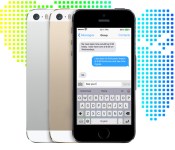
KeyPoint wants you to try its multilingual smart keyboard for iOS 8

There’s soon going to be a glut of custom keyboards for iOS 8, many of which will have word suggestions in multiple languages. However, they might not be as well-versed as KeyPoint Technologies’ upcoming Adaptxt for iOS. Besides supporting over 100 languages, the keyboard touts 30 dictionaries targeted at specific industries; it shouldn’t be flummoxed when you’re chatting with your accountant or lawyer. It will also be aware of both your location and the apps you’re running, so word predictions should change when you go on vacation or check out a favorite social network. KeyPoint is only taking sign-ups for a beta test at this stage — not surprising, since iOS 8 isn’t out yet — but it’s already promising that Adaptxt will be free on iPads and iPhones alike.
Filed under: Cellphones, Mobile
Source: Adaptxt
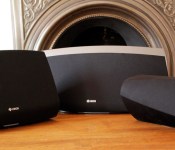
First look: ‘Heos by Denon’ wireless speakers take Sonos head on

Denon is no stranger to the home audio market. In fact it was making HiFi kit long before home streaming was even a thing. Times change, and new markets get new dominant players. For streaming, that means Sonos — company Denon is tackling head-on with its Heos range of internet-connected wireless speakers. With three products in the range (numbered 3, 5 and 7 — rather than 1, 3, and 5) there’s little doubt that Denon is gunning for a share of the Play series‘ market space. In this first look, we put both systems side by side to see how they stack up. We’ll give them a deeper dive at a later date, but for now head to the gallery to see how they compare.
Filed under: Home Entertainment
Source: Denon

Amazon has a new service for managing payments, named Amazon Wallet

Tried Apple’s Passbook and Google’s Wallet and not feeling satisfied? Perhaps Amazon’s flavor of mobile payment app will strike your fancy. It’s also named Wallet, and it arrived in beta form on the Google Play store recently. Like Apple and Google’s versions, Amazon Wallet collects your gift cards, loyalty programs, and membership cards in one place — on your phone — and pushes them to the cloud. Should you switch from, say, Apple’s iPhone to Amazon’s Fire phone, all that information would move over with you, tied to your Amazon account.
There’s another added benefit with Amazon’s service in that your other, far more important financial info is likely already part of Amazon’s system and connected to your profile. As a result, when you browse Amazon Wallet through the web, all that extra payment info is all in the same place.
It’s not clear when Amazon Wallet is coming out of beta (if ever), but for now, consider yourself a guinea pig if you’re jumping in.
Filed under: Cellphones, Handhelds, Software, Mobile, Amazon
Source: Google Play, Amazon

O2 Travel add-on offers unlimited data in Europe for £2 per day

Roaming charges aren’t something you should be worrying about on holiday, as most major UK carriers are well aware. Vodafone will let you use your usual call, text and data allowances abroad for as little as £2, while Three lets you do the same for absolutely nothing. After falling behind the curve somewhat, O2′s now updated its Travel tariff to make roaming more attractive, leaving EE as the only network still following the old-school megabytes-for-money package model. For £1.99 per day, pay-monthly O2 customers can take advantage of unlimited data roaming across Europe, as well as favourable call and text rates. Pay-as-you-go customers can also purchase the travel bundle, but will only get 50MB of data each day. While it is truly unlimited for contract holders, O2′s fair use policy means that after 100MB (or half that amount of streaming video/audio), your connection speeds will be throttled. Still, that’s more than enough for checking email, using maps and posting the odd self-congratulatory Instagram snap.
It’s a significant overhaul of O2′s Travel tariff, which used to only provide 15MB of data for the same price. That didn’t make much sense after the latest round of cuts to the cost of data roaming throughout the EU — hence, this new and better bundle. Hopefully, though, it’ll only be a year or two before the concept of roaming in Europe, and these kind of packages, cease to exist entirely.
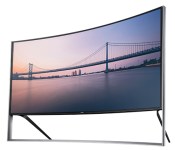
Samsung’s curved, 105-inch 4K TV can be yours for just $129,000

There were so many TVs on display back at CES, that you’d be forgiven if they all blended together. So allow us to give you a recap: The Samsung UN105S9W was, in the company’s own words, the “world’s first, largest and most curved 105-inch curved UHD TV.” Well then! Sounds like an expensive piece of kit, huh? You have no idea. Sammy just put its flagship TV up for pre-order and it’s kind of a doozy. The whole thing costs $129,000 — also known as, a mortgage. For the money, you get 5,120 x 2,160 resolution on an unusually large screen, with an unusually wide aspect ratio of 21:9. Additionally, you’ll receive a visit from one of Samsung’s “Field Engineers” to walk you through all the features, if that’s any consolation. It’s also a Smart TV, with all the usual built-in apps, and the ability to separate the screen into four quadrants for watching live TV and surfing the web at once. Honestly, though, we’d be offended if a TV this expensive didn’t do that. You can pre-order now if you like, but let’s be real: Most of you are probably saving $129,000 for your future child’s college tuition.
Filed under: Home Entertainment, HD, Samsung
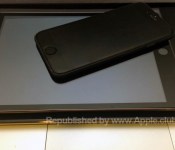
Questionable Claim of 30% Slimmer ‘iPad Mini Air’ Launching in Late 2014
According to a new report from Taiwan’s Economic Daily News, Apple’s third-generation iPad mini will be an “Air”-like model, featuring a design that shaves 30 percent off the thickness of the device. This thinness along with a powerful new A8 processor will be among the main selling points for the next generation iPad mini, claims the Asian sources (via GforGames).

While the sources of the rumor are given only as from the supply chain, the claim of a 30 percent thinner iPad mini seems to be an overly optimistic one. The original iPad mini measured 7.2 mm thick, and the device saw a slight increase to 7.5 mm with the move to a Retina display last year. The larger iPad Air moved in the opposite direction last year, slimming down from 9.4 mm in the fourth-generation iPad to match the Retina iPad mini at 7.5 mm.
A 30 percent reduction in thickness for the iPad mini would put it in the range of 5.25 mm, and how Apple would achieve such a reduction is unclear, especially given the increase in horsepower seen with the move to a Retina display last year. That move made the iPad Air and Retina iPad mini essentially identical with the exception of display size.
Apple is expected to release the updated iPad mini in the third quarter of 2014, likely following the iPhone 6 launch in September. Besides a possible thinner form factor and A8 processor, the next generation iPad mini also is expected to include a more durable Touch ID fingerprint sensor containing tin. Similar to the iPhone, the next generation iPad is expected to support iOS 8′s new SDK that allows third-party developers to access the fingerprint scanner for verification purposes.
Besides the iPad Air and iPad mini, Apple is rumored to be expanding its iPad lineup with a larger 12.9-inch iPad. Dubbed the “iPad Pro,” the larger model may not be released until 2015, claims DisplaySearch analyst David Hsieh. This prediction echoes a earlier report from KGI Securities Ming-Chi Kuo who also predicted a 2015 launch date for the oversized tablet device.
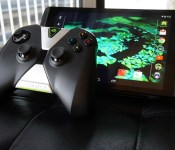
NVIDIA’s new Shield is a tablet built for gaming

In January 2013, NVIDIA unveiled its first end-to-end consumer product: NVIDIA Shield. In our review, I wrote, “NVIDIA Shield is a truly strange device” One year later, that statement stands — only now it applies to NVIDIA’s second consumer product as well: the Shield tablet. Okay, okay, Shield Tablet isn’t quite as bizarre as the original Shield, but it’s a close second.
Shield Tablet dumps the original Shield’s 5-inch screen in favor of a bigger 8-inch, 1080p display, swaps the original Tegra 4 in favor of K1, and drops the controller bit entirely. Should you wish to pair a controller with Shield Tablet — and NVIDIA thinks you should — NVIDIA’s making one (it’s even got WiFi Direct for lower latency than Bluetooth), but it’s totally optional and doesn’t come packed in with the tablet. So, what is this thing? Who is it for? And is it any good? Let’s find out.
Here’s NVIDIA’s logic: just like automakers originally started with a few base model sedans and eventually diversified into trucks, vans, coupes and much more, so NVIDIA sees the tablet market. The Shield Tablet is the so-called “ultimate tablet for gamers,” in that it has a powerful processor (K1), runs NVIDIA’s GameStream tech (which streams full PC games to the tablet), it can stream out to Twitch (on a system level, no app required) and it has WiFi Direct for ultra low-latency wireless gamepad connectivity. It also runs Android and does all the normal stuff you’d expect from an Android tablet. But that’s not the point of the device.
Let’s be clear up front: we find some of Shield Tablet’s suggested use cases — pairing the tablet with a stand and playing with a controller in public — to be off-base at best. Who is doing that? Are there people using wireless gamepads with their laptops in coffee shops? If you’re one of those people, stop it.
But what about, say, using the tablet in your house via HDMI-out? That seems a bit more reasonable. If nothing else, Shield Tablet could act as the streaming component of your gaming PC, living in your living room as a conduit for playing PC games on the big screen. An expensive conduit, no doubt, but it makes a heck of a lot more sense to us than pairing a tablet with a controller and playing games at the local Starbucks.
IMPRESSIONS — TABLET

The Shield Tablet is a nice piece of electronics: it’s well-built and sturdy, it has a slick design, it’s got nice angles, it’s got a sharp screen, and it’s a good size at just over 8-inches. It’s a bit on the thick side, but that’s a measure of Shield Tablet running a cutting edge mobile chip and needing more battery power. We’re not talking Microsoft Surface levels of thickness — let’s not get crazy — but it’s thicker than an iPad Mini, for instance.
Speaking of the Surface, there’s a stylus included in the Shield Tablet package (dubbed “Directstylus 2″). While there are certainly applications for the stylus in terms of the tablet’s uses as a tablet, there are no gaming applications that use it. NVIDIA’s including a program called “Dabbler” for drawing images; we’re gonna go ahead and guess that the folks buying a gaming tablet will never use this functionality, but hopefully we’re wrong. It’s not that Dabbler isn’t neat — it’s totally fine, and hey, drawing is fun! — it’s that it’s incongruous with the rest of the package.
SPECS:
- NVIDIA Tegra K1 SoC
- 8-inch “Full HD” screen (1920 x 1200, IPS LCD display)
- Front-facing stereo speakers (think: HTC One)
- 5MP front-and-rear facing cameras
- Directstylus 2
- 16/32GB of internal storage, expandable to 128GB via microSD
- WiFI a/b/g/n, Optional LTE
- 19.75 Watt hour Lithium Ion battery
But what about gaming? Like the original Shield before it, gaming on Shield Tablet is a smooth, easy experience. While Android games continue to lack control standardization and therefore lack predictability in how they’ll function on a paired gamepad, PC games continue to both look and feel great. We (briefly) tried out a demo of Grid 2 and had no issue… turning the in-game car sideways and driving directly into a wall. But the controls were responsive! We’re just bad at rally racing.
We were also shown an update to NVIDIA’s “TegraZone” software, which is transforming into the “NVIDIA Shield Hub” (the update will also be pushed to the original Shield). This takes your Android games, PC games, cloud streaming games, and media options, and puts them all in one place. While it’s a necessary step for Shield given how it’s intended for use at home, it’s a halfstep on the way toward a real console UI. Anyone with a game console used for media knows the plight of the accidental controller input: you put down your PlayStation controller after selecting the latest episode of Orange is the New Black, a trigger accidentally gets pushed, and suddenly you’re halfway through an episode, fumbling to get back to the start. Such is the case with Shield Tablet: you have to use a paired gamepad to control it, even for media playback, when in “console mode.” Not a huge issue, but a step below what other devices offer.
IMPRESSIONS — GAMEPAD

You remember the gamepad that was built into the first Shield? It’s broken away from the trappings of the portable Shield and is its own device now. When we say it’s very similar to the first Shield’s gamepad, we mean “nigh identical.” With the exception of the buttons in the middle — the Android control buttons, a new NVIDIA button, volume controls and a touchpad — the controller feels very similar.
One major, hugely important difference is analog stick placement. Since there’s no screen sitting on top of them, the analog sticks were heightened, making it a much more comfortable experience. It’s not a bad controller. It’s not a great controller. But considering that it uses WiFi Direct in place of Bluetooth, we’re inclined to suggest the Shield Gamepad over other options. But know that it feels a little undercooked.
THE SHIELD FAMILY

With Shield Tablet and Gamepad, NVIDIA is expanding its line of consumer products by two. The original NVIDIA Shield becomes “Shield Portable” and, NVIDIA says, it’ll remain in feature parity with the new Shield Tablet for the foreseeable future.
Of course, if you didn’t snag the first Shield and the concept of a gaming tablet sounds enticing, you’ll be glad to hear that it’s going up for sale on July 29th in US and Canada, August 14th for Europe, and other regions at some point in the fall. The base model — 16GB of internal storage, no LTE — costs $299, while 32GB of internal storage and LTE adds another $100. The gamepad is another $59, and the cover (which you’ll need if you want to use Shield Tablet as a game screen) is another $39. All that is to say that you could spend $500 in total on Shield Tablet. You probably shouldn’t, but you could.
Filed under: Gaming, Handhelds, Tablets, Software, Mobile, NVIDIA

The next Dance Central launches September 2nd on Xbox One

So the Kinectless Xbox One has arrived, and you’re now left wondering if the motion sensor from your launch-era system will ever be useful for more than starting games and taking orders from Aaron Paul. Thankfully, it should for at least a little while — Harmonix has announced that Dance Central Spotlight will be available to download from the Xbox Store on September 2nd. The $10 rhythm title will include 10 core songs from big-name artists (the full list is below), with five extra tracks purchasable from the get-go. If you’re a veteran from Dance Central‘s Xbox 360 days, any tunes you bought in the past will carry over to the Xbox One. We can’t promise that your Kinect will get much more attention in the long run, but it’s nice to have a reason to keep the once-standard peripheral attached for just a bit longer.
- Avicii – “Wake Me Up”
- Cher Lloyd – “I Wish”
- David Guetta ft. Sia “Titanium”
- Jason Derulo ft. 2 Chainz – “Talk Dirty”
- Kid Ink ft. Chris Brown – “Show Me”
- Lorde – “Royals”
- OneRepublic – “Counting Stars”
- Pharrell Williams – “Happy”
- Rihanna – “Diamonds”
- will.i.am ft. Justin Bieber – “#thatPOWER”
Filed under: Gaming
Source: Harmonix
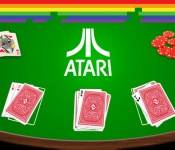
Atari’s betting its future on gays and gamblers

“If I had a hole in New Mexico, maybe that one [the Project Runway game] would have made it there.”
Todd Shallbetter, Atari’s chief operating officer, is just joking of course. He’s referencing the company’s infamous 1983 move to bury countless amounts of unsold gaming hardware and E.T. game cartridges under a slab of cement in the desert. Shallbetter doesn’t deny his company’s rocky legacy. On the contrary, he embraces it, using its failures as a counterpoint for a new version of Atari he’s helping to build. To push the company past the €31.7 million (about $42 million) in revenues it earned in the 2011-2012 fiscal year (PDF), Shallbetter is targeting markets that most companies would rather ignore; markets that represent hundreds of billions of dollars. Atari is going after gays and gamblers.
“We have a love for the brand and a love for the company and the things it represents — that’s not bullshit; that’s the truth.”
By December, Atari will release Pridefest, a mobile city-building game focused on the lesbian, gay, bisexual and transgender (LGBT) community. It’s also launching an online casino service. Yes, both of these initiatives are coming from the same company responsible for Pong. But when you look at the amount of money those two seemingly disparate sectors represent, it’s clear why Atari is making such a huge push in those directions. Online gambling may be having trouble gaining a foothold in the US due to regulatory laws, but it’s booming in Europe. By 2015, the European Union predicts the industry will pull in some €13 billion (over $17 billion). Witeck Communications, which specializes in the LGBT consumer market, forecasted that 2013 would see the LGBT community’s total buying power reach $830 billion in the United States alone. For a company that’s been struggling for the better part of the last four decades, all of that money must look incredibly attractive — regardless of where it comes from.
In the Asian board game Go, a checkers-like pastime favored by such game-industry luminaries as Nintendo’s Hiroshi Yamauchi, calling “atari” is akin to putting someone in check in chess. Typically, this leaves the player with one last move before losing it all. And yet, as irony would have it, Atari — the company named after such a move — has consistently found itself on the other side of that call.

A woman plays a virtual reality demo for Atari’s 64-bit Jaguar video game system at E3 in 1995.
It hasn’t always been that way, though. Once upon a time, the company sold millions of its 2600 console and, despite competition in the early 1980s, it managed to become synonymous with video games. Its fall from that great height, however, was swift and it’s now a well-documented bit of gaming history: New management took over and put profits ahead of quality. This strategic turn actually pushed the firm deep into the red, forcing it to bury unsold inventory in the New Mexico desert rather than pay to store it somewhere. In late 1982, then-CEO Ray Kassar dumped 5,000 shares of company stock mere minutes before issuing a press release that Atari’s earnings would be “substantially” lower than expectations. This triggered the eye of the Securities and Exchange Commission and set the tenor for decades to come.
The company attempted to reenter the gaming hardware market twice. Once in 1989 with the Lynx handheld, and again in 1993 with the Jaguar home console — both of which failed pretty spectacularly. Later, in 2008, Atari was delisted from the NASDAQ, something that happens when a stock’s value drops below $1 per share. During that time, the company also made a bid to publish big-budget retail games — an attempt to go toe to toe with the likes of Activision. Despite a few successes, this endeavor was ultimately weighed down by a number of high-profile failures, namely the aforementioned Project Runway. In 2013, Atari filed for, and exited, bankruptcy.

The logo for Pridefest, Atari’s upcoming LGBT-themed city-builder game.
“We’ve done stuff over the years where we’ve been in some challenged positions,” Shallbetter admitted. “We’re not in those positions anymore.” Despite its prior stumbles, Atari has managed to stay afloat thanks to being bought, sold and divvied up throughout its 40-plus year history. Shallbetter attributes the company’s recent success, though, to loyalty. “Anybody could have bailed and walked away from this and let the thing fall to ashes,” he said. But a core 11-person team in New York that’s been with the company for over a decade is the reason why it hasn’t, he said. “We have a love for the brand and a love for the company and the things it represents — that’s not bullshit; that’s the truth.”
Loyalty alone isn’t enough to help Atari find a niche of its own. In fact, it appears as if the company has just been playing a game of follow the leader; taking direction from other, more successful companies’ models for success. If Atari has an identity now, it feels like one of desperation — throwing anything at the wall to see if something sticks, including a YouTube channel and unremarkable endless-runner games on the App Store.
At some point early this fall, Atari Casino will go online with both virtual- and real-money games where you can win, and almost assuredly lose, playing at blackjack and poker tables plastered in Asteroids and Centipede branding. It’s an approach Shallbetter said would help to broaden the company’s gaming culture. You don’t need to have grown up playing Atari’s classic hits to appreciate the irony of betting money on a company that’s had more financial downs than it has ups. But Atari’s wagering that the generation that did grow up on those titles has quite a bit of discretionary income that, coupled with a built-in nostalgia factor, could help pad its bottom line. Much like its forthcoming money-grab approach to the LGBT community, these branded casino games seem to be no more than a hastily applied veneer atop a proven framework.
On paper, Pridefest reads like an uninspired checklist of “gay” culture; it’s little more than Atari ticking several boxes off on a list of conditions for fiscal success.
On paper, at least, Pridefest reads like an uninspired checklist of “gay” culture; it’s little more than Atari ticking several boxes off on a list of conditions for fiscal success. The game, a simulator, doesn’t approach LGBT themes the way a cross-platform AAA blockbuster like Mass Effect 3 did. In that game, players had the option to create a range of avatars, including an openly gay or lesbian character. Or consider the example of indie hit Gone Home, the story of which centers on a teenage girl coming out to her family. There’s a striking difference between these two notable approaches to LGBT themes and Atari’s own: inclusive versus opportunistic. That’s because the developers of those games were more motivated by providing players with a welcoming experience rather than making an obvious play for profits from an underrepresented segment.
And while inferences from numbers or how a game has been described are one thing, Shallbetter’s words drive the real point home. In the same breath as talking about how the LGBT community is long overdue for a game to call its own, he said the following: “We’re in business. We do love the craft, but, at the end of the day, we’re trying to return something to the shareholders. [Pridefest] makes sense from a business perspective.”

Attendees at this year’s GaymerX2 convention dressed up as characters from the Super Mario Bros. franchise.
That profit-driven intention, though bold-faced, doesn’t matter as much to prominent members of the LGBT community. What ultimately matters is that a firm of Atari’s stature is even considering an LGBT-themed game at all. Regardless of perceived exploitation, the existence of Pridefest is viewed as progress. It’s a coup for gay gamers everywhere.
“We’re in business. We do love the craft, but, at the end of the day, we’re trying to return something to the shareholders. [Pridefest] makes sense from a business perspective.”
“Even if it’s a pure business decision, I think that it’s actually a very strong step forward,” Matt Conn, the CEO of MidBoss, said. MidBoss organizes the annual GaymerX convention, which celebrates the LGBTcommunity’s place in the video game industry. Conn said that when you see companies like Atari or developer Naughty Dog including LGBT elements in their titles (the latter with its recent game, The Last of Us), it sends a larger message to the game industry that the community is worth representing.
By getting out in front of the topic, Atari is addressing an issue that some companies would either not acknowledge or pretend doesn’t exist. Shallbetter emphasized this point, saying, “Don’t think this LGBT thing isn’t without risk.”
Consider the recent controversy surrounding Nintendo, a company that prides itself on being a family-friendly brand. Its bizarre life-simulator Tomodachi Life recently came under fire when it was discovered that a glitch in the original Japanese release allowed same-sex marriage. The company moved quickly to patch this “error,” urging players to download a software update if they noticed “human relations that became strange.” That specific phrasing was Nintendo’s indirect way of referencing occurrences of same-sex couplings — e.g., male couples having kids and living together as heterosexuals would.

Nintendo’s life-simulator, Tomodachi Life, courted controversy for patching the ability to pair same-sex couples.
When the bug resurfaced prior to the game’s stateside release, Nintendo faced a different public reaction: an internet campaign for the company to include same-sex marriage as a future patch. The firm issued a comment saying that it never intended to make any form of social commentary with the game. But, after online uproar to what many perceived as a non-response, Nintendo apologized and bowed to the pressure, promising to make any potential sequel “more inclusive, and [to] better represent all players.”
Whereas Nintendo intentionally sidestepped LGBT inclusion, and suffered a PR nightmare as a result, Atari is being proactive. Matt Kane, director of entertainment media for GLAAD, doesn’t think this focus on the LGBT community should necessarily be seen as an underhanded move. “If they’re specifically trying to attract LGBT gamers, well, there [are] worse things they could do in the world than that,” Kane said, laughing.
“Don’t think this LGBT thing isn’t without risk.”
Shallbetter is adamant that Pridefest isn’t a shallow attempt at pandering to the gay community. He said that Atari worked with various Pride organizations around the country for input and collaboration on the game, though he didn’t name any specifically. What’s more, he thinks that Atari is uniquely positioned to tackle the project given the company’s history with simulations like the long-running Civilization and Rollercoaster Tycoon franchises.
Based on his descriptions, Pridefest should play like a typical city-builder — something along the lines of, say, SimCity. But despite its somewhat imminent end-of-year release, Atari wasn’t able to share screenshots or videos of it in action. That’s because the game is still in the early stages of development, making Shallbetter’s 2014 launch promise a bit dubious.
Though he admitted that his descriptions of the game were vague, Shallbetter maintained that there was more to Pridefest than planting rainbow flags and building successful LGBT-owned-and-operated businesses. “We’re certainly not reskinning FarmVille and calling it something else,” he said. Players will be able to design their own parade floats, as well as solve puzzles — there’s even a planned social aspect to the game. Even though it sounds otherwise, Shallbetter said that Pridefest is more than just a rote laundry list of tasks seen in other titles, albeit with an inclusive theme.
Or is it? According to a prominent LGBT member of the game industry who has seen Pridefest in action, and agreed to speak under the condition of anonymity, Atari’s secrecy could be justified: “It does seem like a reskinned Rollercoaster Tycoon kind of thing.” The source also noted that the game felt like a way for the company to recycle an existing franchise into something that was LGBT-focused, adding, “I don’t know how badly queer people are craving [the ability to design] their own Pride Festival.”
The source noted that the game felt like a way for the company to recycle an existing franchise into something LGBT-focused, adding “I don’t know how badly queer people are craving [the ability to design] their own Pride Festival.”
“I don’t think that it’s made by the community,” the source continued. “I think that it’s made by a company that’s predominantly straight, white dudes. I honestly don’t have super-high expectations of its quality, but I don’t think that [quality] is that important.” It’s a confirmation of the point Conn and Kane both expressed; that Pridefest exists at all is important because it’s a positive LGBT portrayal from a major company.
Conn likens it to the iOS title based on RuPaul’s Drag Race, Dragopolis, saying that simply having LGBT-themed games approved for Apple’s App Store represents a major shift in attitudes toward the LGBT community. “I think you’re going to see more iterations of that now,” he said. “Even if [the games] aren’t good, they’re helping break down the wall [to positive mainstream representation].” This, however, could send the wrong message to companies in murky financial straits like Atari; that all you need to drive success and profits is a surface-level LGBT theme.
Shallbetter’s aware that Pridefest has the potential to court controversy, and he defended the company’s decision to go after that market, saying that Atari is “incredibly selective” with the products it produces. “We have to be sure that we’re creating relevant products or we should just hang it up,” he said. Given that the company recently transformed the classic Breakout into a game about Denny’s breakfast food, though, those words ring somewhat hollow.
[Image credits: Marissa Roth/The LIFE Images Collection/Getty Images (Atari Jaguar VR); Atari (Pridefest logo); Matt Baume/MidBoss (GaymerX2); BagoGames/Flickr (Tomodachi Life)]
 AIVAnet