



PlayStation 4 still best-selling console, six months running

It looks like Sony still has bragging rights that the PlayStation 4 is the top-selling console. Not to be outdone by the latest NPD report, the PlayStation Twitter account announced that the Sony’s new console is still outselling the Xbox One, for the sixth month in a row. Yesterday, Microsoft said that following the Xbox One’s $100 price drop it’d seen a “strong spike in interest” and sales of the console jumped by “more than double” the previous month. It’s worth noting however, that Redmond didn’t release specific sales numbers for May and, to be fair, neither did Sony. The latest report from the NPD Group plays it a bit vague, too, but says that combined sales of the PlayStation 4 and Xbox One were higher than combined totals for the PlayStation 3 and Xbox 360. What’s more, compared to last June, hardware sales saw a 106 percent increase overall. Sales of home consoles combined represented a 200 percent jump compared to last year, which is likely due to the two new consoles being available.
In terms of software, the reason most people buy new consoles in the first place, six of the same games from last month’s top ten remain the same. including Mario Kart 8, Wolfenstein: The New Order and Watch Dogs. However, overall software sales for June dipped some 67 percent compared to last year, which the NPD group attributes to last June’s launches of The Last of Us on PS3, Animal Crossing: New Leaf on Nintendo’s 3DS handheld and the disc-based version of Minecraft for the Xbox 360. It seems like the summer drought is a bit drier this year than last, but hey, at least we’ve got the Destiny beta now, right?
Breaking news: PS4 is #1 top-selling US next-gen console in June, 6th month in a row. Thanks for your support! ❤ pic.twitter.com/r5bTKg4wYf
– PlayStation (@PlayStation) July 17, 2014
Ok, #NPD time: Hardware sales still jumping (up 106% to $292.7M) while game sales fall again (down 5% to $298.2M). Accessories were up 1%
– Ian Sherr (@iansherr) July 17, 2014
Filed under: Gaming, Home Entertainment, HD, Sony, Microsoft, Nintendo
Source: PlayStation (Twitter), Xbox Wire
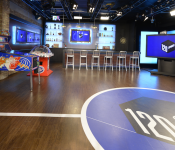
With big ambitions, 120 Sports aims to be the internet’s ESPN

Despite being crowded by major networks such as Fox Sports, NBC Sports and, of course, ESPN, surely this space could still make room for one more. At least that’s what the new, young brand 120 Sports is hoping for. As opposed to the rest of them, however, 120 Sports isn’t trying to make broadcast TV its bread and butter; instead, it is seeking all-digital avenues to distribute video content, with a website and mobile applications that offer 24/7 sports coverage, live and on-demand. But, perhaps most importantly, it’s delivering content without requiring authentication from a cable or satellite provider, and that’s something made possible by having some high-profile backing.
Thanks to partnerships with Time Inc. and MLB’s Advanced Media branch, both of which have equity stakes in the network, 120 Sports is able to access copyrighted content to use in its daily, two-minute segments. Such content, produced at the Harpo Studios campus (Oprah’s old stomping grounds) in Chicago consists of roughly 10 hours of live programming every day, featuring on-air talent, like former NBA player Antoine Walker, and other guest analysts. Then there’s NHL and NASCAR on the content side, both also part of the project; Jason Coyle, president of 120 Sports, told us that the network is actively working to strike more programming deals with entities from other sports. Before doing any of that, though, Coyle believes it must win over you, the sports fan. “We want to listen [to the viewers] before we make our next move.” Coyle said. “It could be more programming throughout the day. It could be more social features. It could be more sports-specific programming.”

“Whatever we did, we needed to be fundamentally different than television, without also undermining [it].”
Those social features he’s referring to are key to the core of what 120 Sports is doing. The quick-bite shows on the network all use social media as a way to keep fans engaged — not just with what’s being discussed (news, highlights and more), but also the hosts and guests. “ESPN meets Twitter, infused with the soul and pace of digital, with great journalism and talent,” Coyle replied when I asked him to describe his network. In the grand scheme of things, 120 Sports may not be ready to compete toe to toe with the media heavyweight that is ESPN, not right now anyway. But that’s not something that necessarily concerns Coyle and 120 Sports. “We started with the initial premise that, whatever we did, we needed to be fundamentally different than television, without also undermining [it],” he stated. “We needed to create a product that was really different, with all the qualities, but also being social- and mobile-focused. Having editorial credibility was also important.”

“We just want to become part of the media diet of sports fans.”
Naturally, that “mobile-focused” mentality means having a footprint on smartphones and tablets. To do so, 120 Sports has had an iOS app since it launched last month, which was recently followed by the network’s arrival on Google’s Android platform. “As we go to Android, we’re looking to grow an audience base there and continue to expand our programming,” Coyle told me. “As we start to grow our audience, I think you’ll see us continue to expand our offering. We’re really excited about whatever might come next.” What’s ahead could, perhaps, be heading to streaming devices including Apple TV and Roku — or, better yet, adding support for AirPlay and Chromecast to its apps.
At the end of the day, Coyle told me that, for 120 Sports, it’s all about earning a way into each fan’s day, not about ESPN or any other existing sports network. “We just want to become part of the media diet of sports fans,” he stated. “We think we have a chance to become a trusted brand, right alongside the rest of them.”
Filed under: Home Entertainment, Internet, HD, Mobile

IRL: A 24-inch AOC monitor that doubles as a gigantic Android tablet

What can you do with 24 inches of Jelly Bean that you can’t do with 10? Manufacturers like Acer, Asus and ViewSonic have been building oversized Android-powered devices for a couple years now; I was determined to find out why, so I spent a few weeks with AOC’s own all-in-one. The hybrid external monitor will run you $370 on Amazon — more than twice what you’ll pay for a comparable 1080p screen — but this pricier model adds stock Android 4.2.2 with a touchscreen interface. With the tap of a button, the integrated quad-core processor and eight gigs of storage spring into action, effectively converting this otherwise ordinary monitor into a complete Android-powered machine. There’s even an integrated 720p webcam, and with stock Jelly Bean on board, you can install whatever apps you’d like from Google Play.
But where exactly should you install such a device? Based on the AOC A2472PW4T’s marketing materials, it seems that the company thinks its all-in-one would be a good fit for the kitchen. So that’s where I put it. There aren’t any water-resistant elements to speak of, so I kept it away from the sink and did my best to avoid spills. Greasy fingers are inevitable when you’re preparing a scratch-made meal, however, so I did a fair amount of wiping after I worked through my one and only Android-powered cooking session.
I’ve used a laptop to display web recipes before, but this was my first experience cooking with an app. I went with the first one I spotted in the category, Allthecooks, which had plenty of user-submitted options and a handy shopping list feature that could sync with my phone. I typed in my two key ingredients of chicken and maple syrup (of which I seem to have an infinite supply) and after a few taps and swipes, I landed on lunch. The finished product looked nothing like the picture, but I can hardly fault AOC for my inability to follow instructions. It tasted delicious, at least, though I’m still not convinced that protein and syrup should ever meet on the dinner plate.

Even though I’ve since moved the AiO back to my desk, I consider my first (and probably last) Android-in-the-kitchen experience to be a success. I just don’t need a gigantic tablet in my life. Thankfully, there’s quite a bit of flexibility here. The display tilts at either 15 or 57 degrees, depending on whether you want to use the AiO as a monitor or as an extra-large slate. There’s a standard VGA connector and an HDMI port, so you can plug in just about any PC.
On the “Smart All-in-One” microsite, AOC plays up the device’s multimedia capabilities, including what the company describes as “superior sound,” which supposedly comes from the integrated 2-watt speakers. The music I played sounded distorted and tinny — “superior” to a low-end smartphone, perhaps, but not much else. You also get an audio input, headphone jack, an SD card slot, three USB ports and even an Ethernet port. There’s also integrated WiFi — getting online is as easy as it is with an Android tablet or a smartphone. You can attach a wired keyboard and mouse, using the same peripherals with Android as you do with your PC.

PC mode (or Mac mode, in this case) is my preference going forward. If you prefer Android to Windows or Mac OS, or your home doesn’t have enough computers to go around, it might make sense to use the AOC with Android, but the mobile operating system is designed for media consumption, not creation — Jelly Bean can’t replace a desktop OS, regardless of how large it may scale. If you’re looking for a very basic all-in-one, this should meet your needs, but while it’s capable of serving as a dedicated second screen to your laptop or a primary display for your desktop, there are plenty of far cheaper alternatives that offer better performance in a slimmer form factor, to boot.
 AIVAnet