


What you need to know about 3D motion capture

Close your eyes and go back… back in time. Picture Jar Jar Binks or Polar Express, movies that put the “Uncanny Valley” on the map. I know these aren’t pleasant memories, but new technology like motion capture (mocap) can be… awkward in its youth. Now, let’s forget all that and move forward to a time when the tech started hitting its stride — from Lord of the Rings’ Gollum to Avatar to The Avengers’ Hulk. And let’s not forget games — The Last of Us has some of the best mocap done in any medium and Electronic Arts has used the technique since Madden NFL ’94. But what is mocap, exactly, and how is it done? Will it ever replace live actors or put 3D animators out of business? To answer all that, let’s head back in time 100 years.
WHAT IS IT?
You probably get that motion capture involves performers prancing around in tights that have ping-pong balls attached. But what the heck is going on, exactly? Simple: The producers of a game or film want to transmit the complex motion of the performer’s body (and face) to an animated character. The process doesn’t even need a computer. Animator Max Fleischer invented “rotoscoping” in 1914, a method of creating cartoons like Out of the Inkwell by tracing live-action footage, frame by tedious frame. The first use of rotoscoping in a feature film was in Disney’s Snow White and the Seven Dwarfs from 1937.

Even when animators are creating character movements by hand, they often reference video footage, study someone acting out a scene or even look at themselves in a mirror. Creating digital animation by hand is known as “keyframing” — or filling in the movement of a character between different “keyframe” poses over time.

To automate that process, animators looked to motion capture. Bio-kinetic researchers like Simon Fraser University’s Tom Calvert were breaking new ground with mechanical capture suits. One company created “Waldo” face and body capture devices (shown above), used by an actor to drive a Nintendo Mario avatar who interacted with crowds at tradeshows. Meanwhile, the Massachusetts Institute of Technology developed its LED-based “graphical marionette“: one of the first optical motion tracking systems. An early animation exploiting that tech is the infamous, creepy Dozo music video from pioneering firm Kleiser-Walczak (seen below).
Early on, mocap was a studio-only process where tight-suited actors were alone in barren sets surrounded by special cameras and lights. Avatar introduced “performance capture,” that added multiple performers, facial expressions and lip movement. Games like L.A. Noire also drastically improved realism by combining facial and full-body capture. Lord of the Rings, meanwhile, brought mocap out of the studio and onto the set, allowing pioneering mocap actor Andy Serkis to interact with other actors as Gollum. On-set performance capture (including the face) is now the norm for feature films with digital characters, as seen below in Dawn of the Planet of the Apes (yes, that’s Serkis again — he’s pretty popular).

HOW DOES IT WORK?
Motion capture transfers the movement of an actor to a digital character. Systems that use tracking cameras (with or without markers) can be referred to as “optical,” while systems that measure inertia or mechanical motion are “non-optical.” An example of the latter is XSens MVN inertial capture suit worn by Seth Rogan playing the alien in Paul. Other tech has emerged lately, like Leap Motion’s finger-tracking depth camera system and MYO’s wristbands, that detect muscle activity in the hands and wrists. Project Tango from Google is being used mostly for mapping, but with Kinect-like depth sensors, also has the potential for mocap.
Optical systems work by tracking position markers or features in 3D and assembling the data into an approximation of the actor’s motion. Active systems use markers that light up or blink distinctively, while passive systems use inert objects like white balls or just painted dots (the latter is often used for face capture). Markerless systems use algorithms from match-moving software to track distinctive features, like an actor’s clothing or nose, instead of markers. Once captured, motion is then mapped onto a virtual “skeleton” of the animated character using software like Autodesk’s MotionBuilder. The result? Animated characters that move like real-life performers.
It’s difficult to predict how an actor’s movement will translate to an animated character, so “virtual cinemetography,” developed by James Cameron for Avatar, is often used. In a nutshell, that shows the digital character moving with the actor in real time — on a virtual set — so the director can see a rough version of the “performance.” That involves plenty of math, but computers and graphics cards are now fast enough to pull it off. The video below from Weta Digital for The Hobbit: Desolation of Smaug illustrates the process.
HOW MUCH DOES IT COST?
Nothing to do with 3D animation is cheap, motion capture included. But, like anything digital, prices have come way down as of late. On the low end of the scale, you or I can do markerless motion capture at home with a Kinect and iPi Motion Capture software for $295. On the other end of the scale, EA’s new Capture Lab (pictured below) covers 18,000 square feet, and uses the latest Vicon Blade mocap software and 132 Vicon cameras. We don’t know exactly how much that cost them, but a two camera Vicon system with one software license is $12,500. (Bear in mind that you’ll also need software like MotionBuilder to map the capture data to a character, which runs about $4,200 per seat.) Despite those prices, doing motion capture reportedly costs anywhere from a quarter to half as much as keyframe animation, and results in more lifelike animation.

WHAT’S THE ARGUMENT?
Lifelike? Meh. Lots of folks hate mocap, plain and simple. If you’re one of them, it’s hard to beat classic Nintendo-style games and old-school, hand-animated cartoons like Spirited Away or Warner Bros. Loony Toons. Those were done by animation giants like Chuck Jones and Hayao Miyazaki, who applied an artistic sensibility — and thousands of hours of hand-drawn animation — to create memorable characters. Though Andy Serkis’ mocap performance is indelibly etched into Gollum’s schizo character, considerable work was done by keyframe animators to improve the character. Serkis, however, famously took full credit and called the animators’ jobs “digital makeup.”
For producers, motion capture might be a tempting way to save money. But most of the time, mocap data isn’t ready to be used “out-of-the-box,” and often requires considerable (expensive) cleanup. The end result may also not be what producers expect. When animation movement is almost, but not quite human-like, then you’re in Uncanny Valley territory and risk repulsing your audience. By contrast, we recently saw a video game called Cuphead (below) that charmed us using ’30s style, hand-made animations.
Yet, motion capture has its place. Modern video games demand realistic character movement to ratchet up the realism. Mocap cinema characters like LOTR‘s Gollum, Captain Davy Jones from Pirates of the Caribbean and Benedict Cumberbatch’s Smaug have all become classics, thanks in part to the actors who portrayed them. And that’s the essence of mocap, isn’t it? The best way to get a memorable digital character is from an equally memorable performance by a talented, larger-than-life performer.
WANT EVEN MORE?

Are you looking to get into 3D animation and/or motion capture? There’s lots of free stuff! Autodesk will let you try most of its programs without restrictions free for 30 days (students get it free for three years) — MotionBuilder and Maya or 3DS Max is a good place to start. Autodesk also has plenty of tutorials and tips in its Area section. If you have a couple of Sony PS Eye cams or a Kinect lying around, you can also play with a free trial from Ipisoft. To skip that part and try motion files that have already been captured, Carnegie Melon University has thousands of them here, and you can use a viewer like this to preview them. If you’re just a fan of 3D and mocap porn, you can check the sites for digital effects and gaming shops like Weta digital, EA’s Capture Lab, Digital Domain and of course, Industrial Light & Magic.
[Image credits: Disney Studios/JamieLeto/Reddit (Snow White rotoscoping), The Character Shop (Waldo suit), Chernin Entertainment/20th Century Fox (Serkis in Dawn of the Planet of the Apes), EA Capture Lab (studio, dog)]
Filed under: Cameras, Gaming, Home Entertainment, Software

August 13th is the release date of the Samsung Galaxy F (or Alpha), says ETNews
 The Samsung Galaxy F has been in and out of the news lately with nothing particularly concrete surfacing; apart from knowing what the device will likely look like thanks to quite a few press renders of the device, the release date of the Galaxy F has been a grey area. Thankfully though, ETNews has come out and given us something relatively specific, saying that August 13th is the release date of the Samsung Galaxy F, or as what they are calling it in Korea, the Samsung Galaxy Alpha.
The report alleges that this release date was chosen to combat the imminent release of the iPhone 6, so it makes sense for Samsung to release its first ever “luxury” device in its wake. The Galaxy F is expected to have a slightly larger screen than the Galaxy S5, but instead house a Snapdragon 805 processor which powers a Quad HD display. All previous rumours also point towards the Galaxy F having a metal body, which would be a nice change for typically plastic Samsung devices.
What do you think about seeing a Samsung Galaxy F release in a month’s time? Let us know your thoughts below.
Source: ETNews via Phone Arena
//<![CDATA[
ord = window.ord || Math.floor(Math.random()*1E16);
document.write('’);
//]]>
The post August 13th is the release date of the Samsung Galaxy F (or Alpha), says ETNews appeared first on AndroidSPIN.

iCloud Mail Outage Hits Small Number of Users for 17 Hours and Counting [Mac Blog]
Users experiencing difficulties accessing their iCloud Mail are not alone, as Apple is currently reporting an outage affecting the ability to receive mail through the service (via Business Insider).

While the issue affects only 0.1% of users, it is notable that it has persisted for approximately 17 hours now, having begun at roughly 1:30 PM Pacific Time yesterday.
Apple has not yet provided an estimate of when the problem will be resolved.
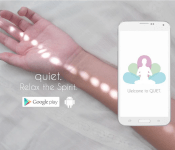
Get at peace with Quiet Meditation

Overstressed? Having trouble meditating? Quiet Meditation is an app designed to help you reach the achievement of the Psycho-Physical Well-Being.
This app promotes simple and practical exercises that will help you get your balance back while getting rid of stress and negativity. The app uses a minimalist design and neutral colors in order to not to distraction your attention from the exercises. After using the app, the colors and the and design did assist with making the app feel clean and definitely helped the app achieve its goals. In addition to the relaxation exercises, the app also includes basic exercises for Autogenic Training to help the user experience a total fulfillment.
Some other highlights of the app include:
- Exercises designed for specific types of well-being;
- 5 different musical themes plus the added sounds of nature, or you can work in silence if preferred;
- Automatic presetted timer for alerts with an acoustic signal;
- The app helps you to prepare for mediation with it’s easy to use interface
Quiet Meditation aims to give you the right balance around you, making your experience not only unique but also satisfying as well. This is accomplished by perseverance and exercise. You are training both your body and mind to get used to a feeling of both peace and well-being, which is a huge struggle for many of us.
The step by step execution of each exercise will not let you behind as long as you speak either English or Italian. The app is only available in those two languages.
Quit Meditation is a paid app and available on the Google Play Store for a minimal price of only $1.35.
The post Get at peace with Quiet Meditation appeared first on AndroidGuys.

Google Glass founder heads to Amazon

The optics savant that helped Google create Glass has just announced that he’s “super excited” to be joining Amazon. Babak Parvis was one of the original members of Google’s Project X skunkworks lab, and the first head of the Glass project team. Prior to that, the Seattle resident was a researcher at the University of Washington where he developed the first contact lenses with integrated circuits. Later, he worked with Microsoft on research for blood-glucose monitoring contacts with Microsoft, a project he eventually brought to Google. Parvis didn’t say exactly what he’d be doing with Amazon, but projects like Google’s Tango, the Oculus Rift and Amazon’s new Fire phone and Firefly app have made optics designers a hot commodity. Meanwhile, Glass is well past the research stage where Parvis shined, so Google now has design guru Ivy Ross in charge for a likely consumer launch.
[Image credit: loiclemeur/Flickr]
Filed under: Wearables, Science, Amazon
Via: Android Police
Source: Google+

Online ticket companies could soon face the music over expensive booking fees

Nothing beats going to watch your favourite singer or band play live. Ticket companies know this, so they’ve been penalising by charging exorbitant booking and delivery fees for years. That practice could soon be brought firmly into the spotlight, however, thanks to consumer pressure group Which?. The Guardian reports that the charity has given online ticket companies until Wednesday to explain the reasons behind their high mark-ups, which, on average, add 18 percent to face-value ticket prices, or it’ll refer the evidence it’s been collecting on them to the UK’s Competition and Markets Authority. It’s highly likely the sellers will choose to remain silent in the face of criticism, but we may finally understand why these so-called fulfilment fees, transaction fees and service charges are appearing when we buy tickets online.
[Image credit: Thomas Bone, Flickr]
Filed under: Internet
Source: The Guardian

Tesla gets the go-ahead for five dealerships in Pennsylvania

If you Keystone Staters are looking for a more elegant, environmentally friendly way to transport cheesesteaks and Wawa hoagies, your time has nearly come. Pennsylvania governor Tom Corbett signed a bill yesterday allowing Tesla to open up five “dealerships,” which means you’ll soon be able to buy yourself a Model S without jumping through all those traditional (and awful) hoops. Once you’ve visited a location to see Elon Musk’s work in action, you order one online and wait. Simple as that. As the Associated Press points out, the law opens the door for any other electric car company to do the same, assuming it doesn’t try to sell (or have a vested interest in selling) cars from other manufacturers. Hilariously, neither Senator John Rafferty — the guy who sponsored the bill — nor other state officials could explain how Tesla got the go-ahead when it opened one such store in mid-2013.
Credit where credit is due, the Pennsylvania House of Representatives laid the groundwork earlier this month by voting to limit the number of open Tesla retail stores to five. Why? Well, the same reason as always, really — plenty of traditional car dealerships don’t like the idea that a car manufacturer can hire its own sales staff and pitch vehicles straight to folks like you and me. You can’t really blame them for it that much either, since plenty of states have longstanding laws in place that make such sales verboten. We’re slowly starting to see those restrictions erode though, and that’s a very, very good thing for a generation raised on the simplicity of the single-click purchase.
Source: Philly.com
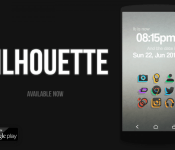
Silhouette Icon Pack Review: Another set of unique icons from Joshua Masih
 Joshua Masih is one of the hardest working icon designers I know; that’s not to sully the efforts of other designers out there, but Joshua’s output of icon packs is astounding. We’ve reviewed quite a few on AndroidSPIN already, including Faint, DAB and Crease, and here we are with yet another, the Silhouette icon pack. This pack goes with borderless icons and adds a nice coloured shadow to a black logo in the foreground. It’s a very interesting effect, so for a better look, take a look at our icon pack review video:
As I mentioned in the video, Silhouette currently has a library of 900+ icons in its banks, including 20 wallpapers to go along with that. I realise I incorrectly quoted the price in the video as being $1.35 USD; it’s actually $1.70 USD by virtue of the fact there is another icon pack with the same name. Having said that, Joshua’s Silhouette icon pack is worth the extra few cents particularly seeing as he is extremely active in updating and coming up with fresh ideas; make sure to circle him on Google+ here. And if you’re not ready to drop the cash on the full icon pack, Joshua also has a free version of the Silhouette icon pack which has 140 icons just as a taste; links to both version are below.
What do you think of the Silhouette icon pack? Let us know your thoughts in the comments.
//<![CDATA[
ord = window.ord || Math.floor(Math.random()*1E16);
document.write('’);
//]]>
The post Silhouette Icon Pack Review: Another set of unique icons from Joshua Masih appeared first on AndroidSPIN.

UK plans to build first spaceport outside the US by 2018

The UK may not have the best history when it comes to space exploration, but that doesn’t mean it’s not interested in boldly going where only a few people have gone before. According to Sky News, Britain could play host to one of the first spaceports built outside of the US, with a shortlist of eight possible sites expected to be confirmed later this week. As it stands, six of the possible locations are in Scotland, suggesting places like Prestwick, Stornoway and Kinloss, with one in Wales (Llanbedr) and the other in England (Newquay). According to the report, construction could begin as early as 2018, although we’re not sure what effect the Scottish Independence referendum would have on the plans. Still, we’re loving the fact that any visiting aliens who’ve hitched a ride on a Virgin Galactic flight will be able to load up on Irn Bru or Teisen radell before heading back to space.
[Image credit: Jeff Foust, Flickr]
Filed under: Transportation
Via: Pocket-lint
Source: Sky News

Week Calendar for iPhone now for free!
 The most downloaded calendar app, Week Calendar for iPhone will be totally free for two days! This will be between July 15, 2014 and July 16, 2014. Why? As a Dutch company we are very proud our Dutch national team reached the third place at the Football World Cup 2014 and we want to celebrate this with the entire world!
“As a Company based in the Netherlands, we are very proud of what our guys achieved in Brazil. With their courage, strength and cleverness they strive to reach their goal just like us, to be the best! They fought like lions and never gave up. We want to celebrate this extraordinary achievement not only in the Netherlands, but with the entire world!” says David van Brakel, CEO Week Calendar.
| Default price | New Price |
| USD 1.99 | Free |
Download
Week Calendar for iPhone is available for download in the App Store. Requires iOS 4.3 or later.
https://itunes.apple.com/app/id381059732?mt=8
 AIVAnet
