


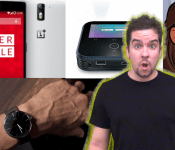
One Plus TWO Already in the Works?! Kim Kardashian Needs to be Stopped! – The ManDroid Show

Happy Friday Android friends. Time for some Android news from yours truly. The One Plus TWO might be already happening, which is normal for an OEM to already be working on the next-gen version of their phone immediately after the first releases. Kin Kardashian really needs to be stopped guys. Her name alone made an app $200 million, and I fear for the people who were apart of that money. I rant about it a little bit in today’s show , so please check it out.
Android News
One Plus Two codenamed Lettuce?
Sprint announces the LivePro
Kim Kardashin makes $200 Million for app
Moto 360 video
//<![CDATA[
ord = window.ord || Math.floor(Math.random()*1E16);
document.write('’);
//]]>
The post One Plus TWO Already in the Works?! Kim Kardashian Needs to be Stopped! – The ManDroid Show appeared first on AndroidSPIN.
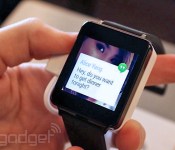
Android Wear Mini Launcher makes it easy to get to apps

Google didn’t design Android Wear to emulate a smartphone’s interface for a reason: the company believes it makes no sense doing so on such a tiny screen. Sadly, many early adopters find it cumbersome to launch third-party apps on the current design, prompting a developer to come up with the Wear Mini launcher to solve the problem. On vanilla Android Wear, you’d need to issue a voice command (which doesn’t always conjure up the right app) or scroll through a list if you want to launch Evernote, Lyft, Duolingo, or any other app you have. If you install the Wear Mini Launcher, though, you’ll get an app drawer (showing all your apps’ icons like your phone does) that you can access by swiping from the top left edge of the screen. You can download it right now from Google Play, but note that its performance might vary depending on your device.

Filed under: Wearables, Mobile, Google
Via: 9to5google
Source: Google Play
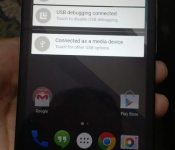
[ROM] The Android L preview has been ported to the HTC One M7, currently in Alpha
 For many of us with Nexus devices, the Android L preview has only been a pipe dream that we can, for now, only gawk at from a distance. Well, thanks to the boffins at XDA, there is another device to gawk at now, and that device is the HTC One M7. The Android L preview has been ported to the HTC One M7, a photo of which is shown above, and although the ROm is currently in alpha, it’s undoubtedly better than nothing.
This alpha build comes courtesy of XDA Senior Member, ssrij, and his team, achieved the feat by making changes to ramdisk and the kernel; for those in the know (which doesn’t include me), this has had some side-effects on the device’s performance and stability. As it stands, there are outstanding issues with the Wi-Fi, Bluetooth, data, sensors, camera and sound, and predictably there is a lot of work to do before it is stable. But the fact they achieved it at all is extremely impressive, and if you’re interested in trying out their work so far, be sure to visit the forum page here for instructions on how to do so.
Are you pining for a chance to try Android L on your device? Which device would you like to see it on next? Let us know in the comments.
//<![CDATA[
ord = window.ord || Math.floor(Math.random()*1E16);
document.write('’);
//]]>
The post [ROM] The Android L preview has been ported to the HTC One M7, currently in Alpha appeared first on AndroidSPIN.

Applebee’s wants you to put your phone away on Tuesdays

For awhile, Applebee’s wanted its customers to be using more tech at the dinner table — embedding tablets throughout its restaurants. Then third-parties caught on and created Applebee’s specific social networks. Now the restaurant seems to be backing away from the future of devices-assisted eating, and has filed a trademark application for “No tech Tuesday.” In all seriousness, Applebee’s wouldn’t be the first restaurant to try and keep its customers focused on each other instead of their phones, but a “No tech Tuesday” promotion could make it the first to implement such a policy on a large scale. Still, the gimmick will be a hard sell at restaurants that have already installed the aforementioned table tablets.
Filed under: Misc
Via: Huffington Post
Source: Today
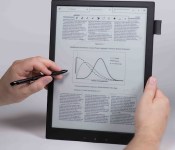
Sony’s latest target market for its $1,100 ‘Digital Paper’: legal researchers

Sony’s still searching high and low for the kind of folks that need a replacement for regular paper and aren’t too worried about the cost ($1,100). The latest potential buyers (after lawyers and HR departments) of its 13.3-inch E Ink Digital Paper? Legal researchers. Sony’s teamed up with William S. Hein & Co. (which runs the LexisNexis-like HeinOnline database that gives access to documents from legal libraries) so anyone who uses the device can pull from its more than 100 million pages and see them just as they were originally laid out, without zooming or scrolling. It’s still a pretty pricey upgrade from tech that’s worked effectively for around 2,000 years, but legal librarians and law students can probably do without the reams of paper they’ve been printing out until now.
Source: William S. Hein & Co.
Microsoft’s Climatology Android app is all about what the weather’s usually like

Microsoft’s new Climatology app makes it simple to check weather conditions anywhere on Earth. Funny thing is, the company just released it for Android devices, with no Windows Phone app in sight. If you do use Android, the Microsoft Research-developed app can show you a location’s temperature, humidity and the average amount of rain and sunshine it’ll get during a particular month. Say, you’re going to Thailand on a vacation in November — just look up the place and choose a month to know if it’s sunny enough to hit the country’s beaches. It could be pretty useful if you travel a lot and need a quick way to check the weather. A single look at the app’s Play page shows that most people find its feature set quite limited, though, so you may want to hold off on deleting your other weather apps.

Filed under: Cellphones, Mobile, Microsoft
Via: Droid Life
Source: Google Play
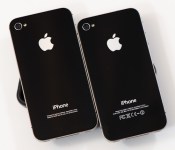
Apple May No Longer Be Required to Etch FCC Labels on iPhone [iOS Blog]
Currently, the FCC requires any device that wants its certification to have a nameplate or etched label that displays an ID and approval from the agency. Today, the FCC has loosened its rules (via MultiChannel) regarding labeling, allowing manufacturers to bypass etching FCC labels on its devices, like Apple’s iPhone.
 Verizon iPhone 4 without FCC label on left, iPhone 4 with FCC label on right.
Many consumer devices have very small surface areas for a label, or when etched on the surface, the labeling may cause damage or require very expensive techniques. In such instances, the rules permit the Commission to approve alternative means of displaying the required information.
The change comes shortly after Senators Deb Fischer (R-Neb.) and Jay Rockefeller (D-W.Va.) introduced the E-Label Act, which allows companies to meet the FCC’s label demands using digital stamps on the device rather than etching labels onto the hardware. The two Senators argue the change would allow manufacturers to save money, allowing them to pass the savings on to consumers.
“As manufacturers continue to produce groundbreaking technologies, it only makes sense that federal labeling requirements for these products are updated to further promote innovation and create new opportunities in the digital age,” Fischer said in a statement. “This bipartisan measure will provide relief for job creators, benefit consumers, and promote modern regulations that better suit a 21st century marketplace.”
The FCC’s solution is fairly similar to the one the Senators proposed, and would require companies like Apple to place the digital labels three menus deep within a phone’s device menu. The device’s user manual must include where to find the FCC labels, or the information must be on the manufacturer’s website.
It’s highly likely Apple takes advantage of either the FCC’s new rules or the E-Label Act, as the labels sit counter to Apple’s focus on clean, minimal design on its devices. However, it’s unclear when or how Apple would take advantage of the new rules.
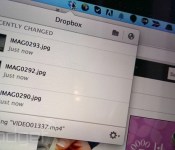
Dropbox makes syncing your large files faster

Cloud storage service Dropbox has announced a feature called Streaming Sync, which promises to improve the way its platform handles the syncing of large files. Thanks to Streaming Sync, which is part of a revamped desktop client, users will get a major speed boost when syncing any file over 16MB — up to twice as fast as any regular sync, according to the company. Dropbox notes that it was able to accomplish this by overlapping the upload and download phase of the file synchronization, meaning it can use its servers to push the data to your device, rather than letting your smartphone, tablet, laptop or desktop do all the work. Along with Streaming Sync, Dropbox also brought support for four additional languages to the app, as well as the ability to view your most recent account activity via a new notifications menu.
Filed under: Storage, Internet, Software
Source: Dropbox
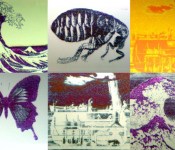
Images created with nano-pixels are smaller than the width of a human hair

A group of Oxford University scientists have accidentally created a new display technology — one that could enable a new era of smart glasses, bendable displays and even artificial retinas. The team refers to its discovery as ‘nano-pixels;’ it’s a tiny sandwich of phase change material and transparent electrodes that change color when given a tiny jolt of current. These stacks can be used to draw tiny images, like the examples above, each one smaller than the width of a human hair. “We didn’t set out to invent a new kind of display,” explained research lead Harish Bhaskaran, his team was just exploring the relationship between the electrical and optical properties of phase change materials. Creating nano-pixels just sort of happened along the way.
“Because the layers that make up our devices can be deposited as thin films, they can be incorporated into very thin flexible materials,” Bhaskaran says. “We have already demonstrated that the technique works on flexible Mylar sheets around 200 nanometers thick.” Eventually, the technology could be used to embed displays in windshields or eyeglasses. Bhaskaran says it can even be used to mimic the photoreceptor cells in human eyes, eventually making it possible to create an artificial retina.
Oxfords team is confident that the tech will be able to display almost any color, and has filed a patent for the technology under Isis Innovation, the University’s commercialization arm. It’s still too early to say when this discovery will bear fruit, but it could be the foundation for a new kind of high resolution, embeddable and extremely low-power display.
[Image credit: Oxford University]
Filed under: Displays, Misc, Science
Source: Oxford University

A rocket scientist at Oxford University is designing better cookware

What do rocket scientists do in their spare time? Design cookware, apparently. A Oxford University professor has created a new kind of saucepan that heats up 30-percent faster than traditional cookware. He calls it “Flare,” and it borrows from the same principals used to efficiently transfer and distribute heat in jet engines. The pan gets its name from a series of ridges that run around the circumference of its base — these fins draw flames up the side of the pan and distribute heat evenly over its aluminum body. This design not only cooks food faster, but it uses significantly less energy to do it. It just goes to show: you don’t have to be a rocket scientist to make cookware, but it helps. The £49.99 saucepan will go on sale in the UK next month.
Filed under: Misc
Via: Daily Mail
Source: Lakeland
 AIVAnet