



This is what Samsung’s virtual reality headset, Gear VR, looks like

Wondering what Samsung’s virtual reality headset looks like? Well stop wondering, because when it’s announced at IFA 2014 later this year, it’ll look something like what you see above. That’s a render straight from Samsung, care of Sam Mobile. Our sources confirm that, while what they’ve seen isn’t exactly like what’s pictured above, it’s very similar; we’re guessing the render is a closer target to the retail model than the developer kits currently in the wild. Keep in mind Samsung still hasn’t even teased the headset we detailed last month across two reports.
The headset remains a peripheral: you’ll use it in conjunction with your phone, which plugs in via USB and acts as your screen. The hardware is built by Samsung, the software is built by Oculus VR — the folks behind the incredibly impressive Oculus Rift.
Beyond the image seen above, Sam Mobile also says the headset will be showcased at IFA 2014 in early September. Moreover, it’s named — fittingly — “Gear VR,” like Samsung’s other wearable line. The image highlights another feature we’re first hearing about today: a touchpad along the right side. Presumably his will help solve the issue of interaction within the headset’s Oculus VR-built software, which was handled by nodding last we heard.
The report also states that Samsung will make the headset’s software development kit available shortly after it’s announced, just ahead of Oculus VR’s first ever dev conference. Imagine that! We wouldn’t be shocked to hear that every developer at Oculus Connect walks away with a free Gear VR headset, fresh for development.
For now, however, Samsung’s Gear VR is both known about widely and officially unconfirmed by Samsung itself. If it weren’t clear enough, this thing is happening, and it’s happening soon.

Wall Street wants more government help to combat cyber attacks

Wall Street is worried. Not about government regulation or investigations by law enforcement agencies. No, the countries financial institutions are concerned about cyber attacks. The Securities Industry and Financial Markets Association, or SIFMA, has proposed that it and the government join forces in an effort to combat the 21st century threat. As Wall Street’s biggest trade group, the organization already wields plenty of influence, but to help convince the American government it has hired former NSA director Keith Alexander.
According to a document obtained by Bloomberg the banks are not confident in their ability to fend off or cope with increasingly destructive and sophisticated digital weapons aimed at them.
“We are concerned that the industry may not have the capabilities that we would like to effectively defend against this newer form of potential attack, the capability that we would like to stop such an attack once commenced from spreading to other financial institutions, or the capability we would like of effectively recovering if an initial attack is followed by waves of follow-on attacks.”
There is even concern that unaffected banks could be the victims of runs as consumers lose confidence. And to make matters worse, the industry is almost completely reliant on the nation’s power grid to function, which is vulnerable not only to cyber attacks, but physical ones as well.
The solution SIFMA has come up with involves creating a council of financial executives and deputy-level representatives from eight government agencies including the Treasury, NSA, Homeland Security and the White House. The hope is that this group would not only prove more powerful in combating hacks of banks, but also more efficient in disseminating information to appropriate parties and the public. The collaboration could ensure a more coherent and effective response to an impending or ongoing cyber attack, but some in congress (like Florida Democrat Alan Grayson) are concerned tactics to turn to pre-emptive strikes. If private industry leaders were sitting on a council that launched even a digital offensive against a group or nation it could set a very bad precedent.
Filed under: Internet
Source: Bloomberg
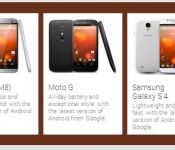
Out of stock Play Store devices get yanked, except for One
We have all been impatiently watching the Play Store every day or so to see what is going to happen to the Google Play Edition devices that have been out of stock since June 20th. Seems Google is cleaning house on the Play Store device page and has removed the listing for most of them, but curiously enough left the Samsung Galaxy S4.

There have been a few leaks and tips that a Samsung galaxy S5 GPE device is on the way, so it would make sense that the Galaxy S4 variant hasn’t totally been removed yet. However, we wonder if GPE variants could be falling off by the wayside entirely. They were never really meant to be HUGE sellers. More so options for consumers who wanted the flagship device look and feel but with a straight Google experience. I personally wouldn’t lose any sleep if they did move away entirely. I would like to see the manufacturers offer up the ability to have the stock Google OS or their bloated OS somehow. The first manufacturer/carrier to bring that to consumers will do pretty well I think.
If you have been hesitant to grab a GPE device, you might want to consider pulling the trigger sooner rather than later. Who knows, they might disappear entirely.
Via AndroidPolice
//<![CDATA[
ord = window.ord || Math.floor(Math.random()*1E16);
document.write('’);
//]]>
The post Out of stock Play Store devices get yanked, except for One appeared first on AndroidSPIN.

“No, I Said…” lets you fix a wrong word in Google Search, beats cursing at It
 How many times have you done a voice search with Google Search and the interpretations of what you said was WAY off? I would have to say more than a few times. It happens. We speak to fast, to slow, don’t enunciate, have background sounds and any other number of potential problems. Rather than cursing up a storm and calling Google a stupid….. I know you have done that a few times too, I know I have. Instead simply say “No, I said..” and say the word you meant and Google ‘should’ replace it with the correct word for you.
I will use 9to5Googles example, if you were searching for the nearest bars and Google for some reason picked up cars. Simply say, “Ok Google, No I said bars” and it will change the word. Pretty cool little command. Give it a shot the next time Google makes a mistake and see if it fixes it correctly. This small addition doesn’t need any updating from you and is available on iOS and Android right now.
Source: 9to5Google
//<![CDATA[
ord = window.ord || Math.floor(Math.random()*1E16);
document.write('’);
//]]>
The post “No, I Said…” lets you fix a wrong word in Google Search, beats cursing at It appeared first on AndroidSPIN.
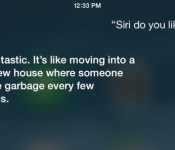
Siri ‘Just Thrilled’ About iOS 8, but Sad About Lack of Stage Time at WWDC
Developers running the beta version of iOS 8 can ask Siri for an opinion on the new operating system, prompting Apple’s virtual assistant to provide one of several humorous responses.
Asking “Siri, do you like iOS 8?” will result in tongue-in-cheek answers that hint at new features in iOS 8 like “It’s just swift,” alluding to the company’s newly introduced programming language.

Siri’s answers also allude to new Apple’s HomeKit home automation platform, which will allow Siri to control various connected devices such as Philips’ line of Hue lights.
“I’m just thrilled about iOS 8 — It’s like moving into a bigger, nicer house. And I get to turn the lights on and off.”
The virtual assistant also pokes fun at the limited amount of time Apple spent going over new Siri features during its keynote event at the Worldwide Developers Conference.
“Impressive, but… you’d think they could have talked about me for more than thirty seconds. Sniff.”
Siri has gained several major new features in iOS 8, including Shazam integration that allows the voice assistant to identify songs upon request, and the ability to open the App Store for the first time. Siri’s also able to be activated hands-free with the voice command “Hey Siri,” when plugged in, and it supports streaming voice recognition for real-time feedback on requests.
Apple has worked hard to improve Siri since its 2011 introduction alongside iOS 5, adding new capabilities and a never-ending stream of funny responses and quips to requests and queries. As of late, rumors have suggested that the company is planning to bring Siri development in-house, working to build a strong speech recognition team.
Apple seeded the third iOS 8 beta to developers yesterday, with plans to release the operating system to the public in the fall following an extended beta testing period.

Apple Updates iTunes U With New Course Creation and Discussion Features for iPad [iOS Blog]
Apple today launched a new version of its iTunes U app, adding several new iPad-related features designed to make it easier for both students and teachers to use the iPad for online courses. Apple first announced plans to update iTunes U in late June.
Today’s version 2.0 update allows teachers to create full courses entirely on the iPad, importing content from other Apple software like iWork, iBooks Author, and other educational apps in the App Store. The camera can also be used to add photos and videos directly to course material and teachers can easily track student progress online.

Students gain a new discussion feature that lets them collaborate both with classmates and teachers, and they’re able to follow discussions and receive push notifications when new topics or comments are added.
Let the discussion begin
– The new iTunes U makes it simple for students participating in private courses to pose questions on the course or any post or assignment
– Other students in the class can jump into the discussion and ask more questions or provide answers
– Teachers and students can keep up with the conversation when they receive push notifications as the discussion progressesCreate courses on iPad
– Teachers can now create and update their courses using the iTunes U app on their iPad–getting started is fast, simple, and completely free
– Provide every student a course outline, write posts, distribute assignments, upload class materials, easily track participating students, and much more
– Take advantage of the built in camera on iPad to easily capture photos or videos and upload them for course assignments
– Create materials using Pages, Numbers, and Keynote–or other apps from the App Store–and add them to your course by using “Open in iTunes U” from within each app
– Teachers affiliated with qualified institutions have the option to publish their courses to the iTunes U Catalog–making them available to everyone for free
iTunes U can be downloaded from the App Store for free. [Direct Link]

Amazon appeals directly to authors in ongoing e-book dispute

Despite sounding like a rogue militant organization from G.I. Joe, Hatchette is actually a book publishing group. Tame as that may sound, Hatchette is currently engaged in a high-stakes game of Chicken with a juggernaut in the book sales world: Amazon. It’s all part of a long-running dispute between book publishers and “the everything store”; even the book titled after Amazon’s moniker was involved in the dispute. It goes like this: Amazon wants to price its e-books one way, and publishers want things another way. While the negotiations occur, Amazon pushes back by slowing delivery of physical books by publishers involved in negotiations or, sometimes, carrying limited stocks intentionally so the books are unable to be ordered. Another tactic Amazon’s now employing in the dispute? Appealing directly to authors. With cash.
Amazon’s promising select writers “100 percent of the sales price of every Hatchette e-book we sell,” Amazon executive David Naggar said in a letter sent to a group of authors, acquired by The New York Times. The letter allegedly also promises to suspect previous tactics employed by Amazon in the ongoing power struggle.
If nothing else, the attempt shows that Amazon’s willing to work negotiate with the parties involved. Authors Guild president Roxana Robinson points out that this tactic could serve to drive a wedge between authors and their publishers. “This seems like a short-term solution that encourages authors to take sides against their publishers,” she said.
Hatchette and Amazon aren’t offering statements. Brad Stone’s The Everything Store is available once more on Amazon.
[Image credit: AP Photo/Reed Saxon]
Filed under: Handhelds, Amazon
Source: The New York Times

Uber won’t gouge you as much during disasters

Folks who have nabbed a ride from Uber during major snowstorms in New York City know all too well about the car service’s price gouging during those events. Now, the outfit is capping rates during disasters and “relevant states of emergency” in the US, donating commissions from those surge trips to the American Red Cross. Fares will vary between locales, but prices during a state of emergency will remain under the three highest-priced, non-emergency days of the last two months. If you’ll recall, the app-based service calculates rates based on periods of high demand and low driver availability, jacking up pricing to match and ruffling a few feathers in the process. “This policy intends to strike the careful balance between the goal of transportation availability with community expectations of affordability during a disaster,” said Uber CEO Travis Kalanick.
Filed under: Transportation
Source: Uber

Blocks’ modular smartwatch concept is ambitious to a fault

As one of the Blocks smartwatch team reminded us today, modularity has played an integral role in modern computing. A desktop PC is only a collection of components, after all, which can swapped out and upgraded based on what you need from that particular machine (a process Razer hopes to simplify with Project Christine). Recently, Google and others have been working out how to bring the same level of customization to the smartphone. With smartwatches and fitness trackers a burgeoning tech category, both in terms of consumer interest and product development, the Blocks team see no reason why wrist-worn technology can’t benefit from being modular, too. They’re in the process of creating such a gadget and today we caught up with them at a London event, hosted by the Bluetooth Special Interest Group, to talk about their progress and check out an extremely early prototype.
The puzzle of plastic above may not look like much (and it’s far too big to be considered wearable), but it’s been a successful proof-of-concept device. With it, the Blocks crew have confirmed their design is viable, in that all the components can communicate freely. They’re now working on miniaturizing everything so it’s wrist-friendly, though the finished product won’t look anything like the colorful, 3D-printed mock-ups we saw today, or early renders Blocks has shared previously . Instead, it’s going to have a more refined and premium appearance. Hopefully, something like:

It’s easy to grasp the potential of a modular wearable like Blocks. If you wanted insane battery life for example, you could turn the whole band into a secondary power source. Simple fitness tracking could be done by one link containing a gyroscope and accelerometer, while another housing a heart rate monitor and blood oxygen sensor could offer richer analyses. Similarly, outdoorsy types could pair a GPS module with one packing an altimeter, thermometer and barometer. Modules with SIM-card slots and cellular radios, RFID and NFC chips, cameras and microphones — all useful features alone and in combinations. And then there’s anything third-party module-makers dream up.
Software is obviously a big part of the equation, and while a platform for Blocks was being developed in-house, the team are currently experimenting with Android Wear. The final call is far from made, however, as Wear immediately cuts iOS users from the potential customer pool. That’s a pretty big deal when what you’re building is, in most use cases, a smartphone companion device. The company is also considering separate operating system modules, so Blocks hardware could run on various platforms.
One key benefit of Google’s OS is support for different screen shapes. The plan is for Blocks to have several display options, including round, square and band-like faces, in OLED and e-ink variants (though stock Android Wear doesn’t support the latter). These display modules will also run the rest of the show, each accommodating a processor and other necessities, a Bluetooth chip and the primary battery. Naturally, they’ll be the most expensive.

The Blocks crew have a lot to refine, but they hope to be ready to seek crowdfunding this fall, with delivery well into the following year. A basic package with all the functionality of your standard smartwatch is expected to be $200-250/£150-200, and a premium tier with additional modules a little pricier at $300-350/£250-300 (bear in mind these are rough estimates). The concept itself is pretty sound, in the same way a modular smartphone looks to be a viable, albeit niche proposition. However, there’s always the chance of thinking too big. Doing too much. Blocks is attempting to create a hardware platform from scratch, both building modules and hoping to attract others to do the same. Multiple face designs, display technologies and even operating systems complicates the situation further, not to mention the need for compatible apps and third-party developer support. Needless to say, it’s an ambitious undertaking.
Filed under: Cellphones, Wearables, Mobile
Source: Blocks
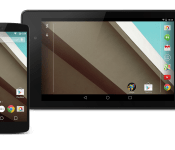
Android L theme available for Xposed devices

So you want to receive the Android L visual goodness of Material design, but don’t want to or can’t install the developer preview. If you’re rooted and running the Xposed framework then the Android L theme package may be for you.
Whilst it is only the visuals of the Android L version, and doesn’t include the functionality, it sure beats installing a buggy ported ROM or early developer preview.
The Android L module contains themed statusbars, calculator, settings app, boot animations, fonts, and ringtones.
Couple this with the Android L app package and you’re pretty close to that Android L experience. Hit up the source link to get started.
SOURCE: XDA
The post Android L theme available for Xposed devices appeared first on AndroidGuys.
 AIVAnet