


Microsoft wearable rumors suggest more fitness tracker, less smartwatch

You may want to dial back your expectations for Microsoft’s oft-rumored smartwatch. According to sources speaking to the historically well-informed Paul Thurrott, the wearable isn’t intended as a watch — it’s a Gear Fit-style health tracker that happens to deliver phone notifications and timekeeping. The tipsters also back earlier rumors, suggesting that there will be a host of fitness sensors along with support for Android, iOS and (naturally) Windows Phone.
We may have already received a glimpse of what the device looks like, too. A trio of recently published Microsoft patent applications (including the one pictured here) have discussed wearable interface concepts that let you track runs, navigate and send text messages. One patent even shows a vertical charging dock, suggesting that the crew in Redmond has sweated all the little details. There’s no guarantee that these elements will show up in any finished product, let alone a gadget expected late this year, but they at least provide a good look at the company’s thinking.
Would you buy a fitness wearable from Microsoft?
Filed under: Wearables, Microsoft
Via: The Verge
Source: SuperSite for Windows

Researchers teach a computer to predict teen binge drinkers

Intervention during someone’s teenage years is frequently the key to preventing alcohol abuse in adult life. It’s good to know, then, that a group of scientists has found a way to predict that abuse at an early age using computer modeling. The approach teaches the compute how to spot a likely teen binge drinker by weighing 40-plus biological and social factors that include brain structure, any enabling genes, past events and personality traits. If a 13-year-old is already smoking because of an addictive personality or family influences, for instance, it’s more likely that this child will pick up a dangerous drinking habit a few years later.
The early technology produced some false positives, but it was good enough to predict the likelihood of binging with 70 percent accuracy. It could become more reliable if given time — lead researcher Robert Whelan tells The Verge that he’d like future modelling to account for peer pressure from social networks, which wasn’t a major concern when prepping the study years earlier. While it’s doubtful that computer predictions will ever be completely accurate, they might get close enough that concerned parents and schools would often know when to take action.
[Image credit: Spencer Platt via Getty Images]
Filed under: Science
Via: The Verge
Source: Nature

Engadget Daily: Facebook’s emotional experiment, social media activism and more!

Today, we break down the phenomenon of social media activism, investigate Facebook’s user experiment, ponder NVIDIA’s next Shield console and get excited about the reboot of Chumby’s smart alarm. Read on for Engadget’s news highlights from the last 24 hours.

What you need to know about social media activism
What do the “OccupyWallStreet” and “CancelColbert” hashtags have in common? They’re both examples of what’s been termed “social media activism.” Read on as Ben Gilbert dissects this modern form of protest and what it means to you.

Facebook used you like a lab rat and you probably don’t care
Smiles are contagious. So are depressing Facebook posts, apparently. In 2012, Zuckerberg and Co. manipulated its users’ happiness (gasp) by secretly bombarding their news feeds with waves of positive and negative stories.

Chumby’s smart alarm clock relaunches with 1,000 apps
Good news Chumby owners, the tiny smart alarm’s network is back online and better than ever. What’s more, the company’s reboot includes 1,000 apps and a more efficient Chumby performance.

NVIDIA’s Shield successor is a tablet
NVIDIA’s next Shield console might not be a “console” at all. According to a listing from the Global Certification Forum, the gaming company mistakenly leaked information about an upcoming “Shield Tablet,” including some specs.
You also might like:
Filed under: Misc

Scientists have figured out how to create blood vessels in 3D printed organs

While 3D-printed organs sound like a great idea — imagine no longer waiting around for a transplant — a major hurdle for printing internal ones thus far have been creating intricate blood vessels and ventricles that are required for the organ to actually, you know, work. Now, a collaboration between scientists from the University of Sydney, Harvard, Stanford and MIT have discovered a way to do just that. The team used an advanced bioprinter to create tiny interconnected fibers, and then coated them in human endothelial cells and a protein-based material, which hardens under light. They then removed the fibers, and voilà — a network of capillaries was born.
Lead author and University of Sydney researcher, Dr. Luiz Bertassoni, said: “While recreating little parts of tissues in the lab is something that we have already been able to do, the possibility of printing three-dimensional tissues with functional blood capillaries in the blink of an eye is a game changer.” We can’t help but agree. If you want to learn more about 3D-printed organs, we’ve got a handy explainer to do so right here.
Filed under: Science
Via: 3D Print, TechCrunch
Source: University of Sydney
Microsoft Working on Fitness Band That Will Work With Windows, iOS
Microsoft, like Google, Apple, and Samsung, has been working on its own wrist-worn device for more than a year. While early rumors suggested the device would be a smart watch with a 1.5-inch display, a new report from Windows blogger Paul Thurrott suggests that Microsoft’s project is actually more of a fitness band than a smart watch.
More akin to the band-style Samsung Gear Fit than the watch-style Galaxy Gear, Microsoft’s band is said to have a wristband form factor that’s able to display smart phone-based notifications. Like the offerings from Samsung and Apple’s rumored iWatch, the band is expected to include several different sensors, tracking fitness metrics like calories burned, heart rate, and more.
 Samsung’s Gear Fit
Unlike other products from Apple, Google, and Samsung, however, Microsoft is said to be designing its smart wristband to be cross platform, working not only with Windows devices, but also iOS and Android. Given Microsoft’s small share of the smartphone and tablet market in comparison to Android and iOS, it’s a smart move for the company.
From a differentiation standpoint, Microsoft’s wearable will do something that no other wearable platform does. It will work with everything and not just the device maker’s smart phone platform. Where Samsung wearables only work with Samsung phones, Android Wear devices only work with modern Android devices, and Apple’s rumored iWatch will obviously only work with iPhone, Microsoft will take a different approach. It will work with Android, iPhone and Windows Phone.
According to Thurrott, Microsoft’s smart wristband will be priced similarly to Samsung’s smart watch offerings, which start at $199. It is expected to be released during the fourth quarter of 2014, suggesting it might launch in the same timeframe as Apple’s iWatch. Currently, rumors indicate the iWatch will launch in October of 2014, with 10 different health-related sensors and wireless charging.
Pricing on Apple’s iWatch remains a mystery, but rumors have pointed towards multiple sizes and designs at several different price points.
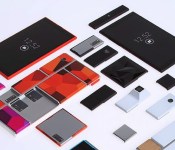
Project Ara reaches beta status, 100 testers will receive the device

Remember Phonebloks aka Project Ara? Yeah, that “crazy” modular smartphone concept by Motorola which Google took over and has been working on ever since. Well, it turns out Google has some great news for us, Project Ara reached beta status.
So, here’s the gist. Google launched “Scouts” program in October last year. That very same program attracted 30,000 people who answered questions and completed all sorts of challenges in order to help Project Ara. Out of 30,000 people Google picked only 100 lucky ones who will be Project Ara’s beta testers. They’ll receive a physical device, for free of course, and will then test it. It is unknown when will this happen though. Google said that it will take another 8 months until Project Ara hits the market though, which is a bit longer than the earlier report suggested, but that’s not so far away when we think about it. Until then you can sign up for future updates if you follow the source link below, just scroll down to the bottom of the page.
We are eagerly expecting more information on this and basically can’t wait until the product hits the market. How about you?
Source: Google
The post Project Ara reaches beta status, 100 testers will receive the device appeared first on AndroidGuys.

Woz not happy with the “worthless” Samsung Gear Live
 Steve Wozniak, co-founder of Apple, is known to be extremely picky when it comes to technology. He’s been known to complement Android, heap dislike onto Siri and disdains patent wars, so it’s always interesting listening to what he has to say, even if it’s a bit outlandish. His latest tirade comes after using the new Android Wear Samsung Gear Live smartwatch for only “half a day”. According to Woz:
“…threw [it] out after half a day, sold it on eBay because it was so worthless and did so little that was convenient.”
It should also be noted that Woz uses a Martian Watch as his usual device. Somehow, I’m not surprised that Woz was dissatisfied; not because the Samsung Gear Live is inherently bad (at least, the jury is still out on that), but because smartwatches are such an inherently subjective accessory. If the smartwatch doesn’t do what you want, chances are you’re going to feel dissatisfied with it. Still, we’d like to hear what Woz has to say when he tries the LG G Watch or the Motorola Moto 360.
What do you think about the Samsung Gear Live? Are you going to get one? Let us know your thoughts.
Source: Xconomy via Phone Arena
//<![CDATA[
ord = window.ord || Math.floor(Math.random()*1E16);
document.write('’);
//]]>
The post Woz not happy with the “worthless” Samsung Gear Live appeared first on AndroidSPIN.

Playdate: We’re livestreaming ‘Shovel Knight’ for Wii U!

Welcome, ladygeeks and gentlenerds, to the new era of gaming. The one where you get to watch, and comment, as other people livestream gameplay from next-gen consoles. Because games! They’re fun!
In Shovel Knight, you’re a knight with a shovel. Seems pretty simple, right? Well, that’s kind of the point. The latest from developer Yacht Club Games is a trip back to the 8-bit days of yore, and it aims to scratch that nostalgic itch without requiring you to dig the Nintendo Entertainment System out of your closet. Depending on how you spend your gaming time, though, you might have to dust off your Wii U before giving this retro platformer a spin. Shovel Knight takes the best parts of classics like Mega Man, Castlevania, Legend of Zelda and a handful of others, tosses them in a blender and adds a few modern conveniences. Curious to see the outcome? Well, come back here at 4 PM Pacific/7 PM Eastern and watch as I hit everything with a shovel and try not to die whilst doing so.
Watch live video from Engadget on www.twitch.tv
Filed under: Gaming, Home Entertainment, HD, Nintendo

Amazon refuses to bend to the FTC’s demands over in-app purchases

The Federal Trade Commission (FTC) wants Amazon to update some of its policies regarding in-app purchases, but the retail giant is having none of it. According to documents obtained by the Wall Street Journal the company is facing a lawsuit that would require it to pay hefty fines and dramatically alter its record keeping and disclosure practices. In particular the government is concerned about purchases being made by children, but Amazon thinks its approach is sound. In fact, not only is the company refusing to change its rules, it said in a letter (PDF) that it’s prepared to go to court.
The FTC wants Amazon to require passwords for all in-app purchases, make notices of additional charges more obvious and simplify the refund process. Those are rules similar to what Apple was forced to agree to last year. After receiving thousands of complaints from parents whose children racked up unauthorized charges via in-app purchases its no surprise that the agency decided to target Amazon. The company claims it has handed out prompt refunds to customers who have complained, but it seems that it wasn’t until June that all in-app purchases required any form of authentication.
Amazon may be ready to take its battle to court, but the FTC has already made Apple bend to its will.
Source: Wall Street Journal, Amazon

Radical.FM debuts on Android; Another ad free streaming radio service to try Out
Yesterday you might have seen the news that Google bought up Songza. Good for Songza and good for Google Music All Access. While Songza is still up and running as normal, there will be a time when it will be absorbed by Google and the current apps will cease to exist. There are more streaming services out there than one can possibly count and now there is one more that is looking to give you your streaming music fix, Radical.FM.
“Tremendous effort has gone into making these powerful new apps faster and more intuitive,” said CEO Tom McAlevey. “But unlike Beats, which offers nothing Spotify hasn’t offered for years, or Amazon Prime Music, which is missing half the music iTunes has offered for a decade, Radical.FM offers a truly unique concept built on one of the world’s most comprehensive music libraries.”
The app seems pretty simple to use. You set up your account for free and cruise through the set up process and add the genres and styles you want to hear. You can adjust and fine tune what is delivered on a separate settings screen or search for specific songs and artists. The service has been out on iOS for quite sometime and one can tell that is where it got its roots when you look at the screenshots below.


 Very iOS like isn’t it? While it could use a major UI overhaul for Android, it does stream music to your device and is commercial free for free. Random.FM claims access to over 25 million searchable tracks too. So how does a free app, without ads, without commercials be available legally? Well, Radical.FM compensates artists, composers, and labels for all the music streamed and runs solely on a “Pay What You Can” model. In a nutshell, you drop a few bucks here and there so they can pay the guys for the tunes you are listening too. If you don’t pay anything, you can still listen.
“It’s a radical revenue model, and people wonder how we can pay music streaming’s high royalties on a free app without commercials,” continues McAlevey. “When I drove my dune-buggy across Africa, I was confronted by Arabic police, spear-wielding natives, and AK-47-toting militia. More often than not, they helped rather than hindered me, reminding me that if treated with respect, people tend to do the right thing. As users discover Radical’s outstanding service, many of them will be proud to support it.”
It has some potential if they can get someone with some Android skills at the helm for a redesign. Feel free to give it a download and try via the nifty box below. Oh, and it is US only for now. Sorry everyone else in the world.
//<![CDATA[
ord = window.ord || Math.floor(Math.random()*1E16);
document.write('’);
//]]>
The post Radical.FM debuts on Android; Another ad free streaming radio service to try Out appeared first on AndroidSPIN.
 AIVAnet