


Swatch’s robot-made wristwear offers classic Swiss time at a tiny price

For many watch lovers, Swiss mechanical movement is the gold standard. However, it’s also staggeringly expensive — it’s all too common to spend several hundred (if not several thousand) dollars just to see “Genève” on your wrist. That’s what makes the US launch of Swatch’s Sistem51 so special. While the watch still behaves like a conventional Swiss automatic with visible mechanisms, it’s built using a fully robotic process that gets rid of the elaborate hand-crafting that drives up the price. As a result, you’ll only pay $150 for the privilege, or about as much as an ordinary quartz timekeeper.
The Sistem51′s transparent, brightly-hued look isn’t for everyone; you probably wont wear it to a high-brow social function. However, it does have a few technical advantages over some pricier watches. There’s a 90-hour power reserve to keep it ticking when idle, and the sealed body should keep out the dust or moisture that could lead to a costly repair. Just be ready to make a pilgrimage if you want one as soon as possible. The Sistem51 is only available at Swatch’s Times Square store in New York as we write this, and the West coast will have to sit tight until the July 8th launch in San Francisco. It may take considerably more time to reach other parts of the country. If you’ve already been waiting ages to brag about owning a watch with Swiss mechanicals, though, it won’t hurt to hold out for a little while longer.
Filed under: Wearables
Source: Swatch

Apple Launches $49 Mac Pro Security Lock Adapter in Online Store [Mac Blog]
Apple today launched a new $49 Mac Pro Security Lock Adapter in its online store, offering users of the new Mac Pro a way to easily secure their machines using existing Kensington locks. Previously, users had to resort to custom building their own locks or ordering more expensive third-party solutions.
Apple’s lock adapter is a simple metal bracket that secures the lift-off cover of the Mac Pro to the base of the machine with a security cable, preventing access to the machine’s internals. The cable lock can then of course be secured to a bulky object or dedicated security ring found on some desks to make it difficult for thieves to steal the machine.
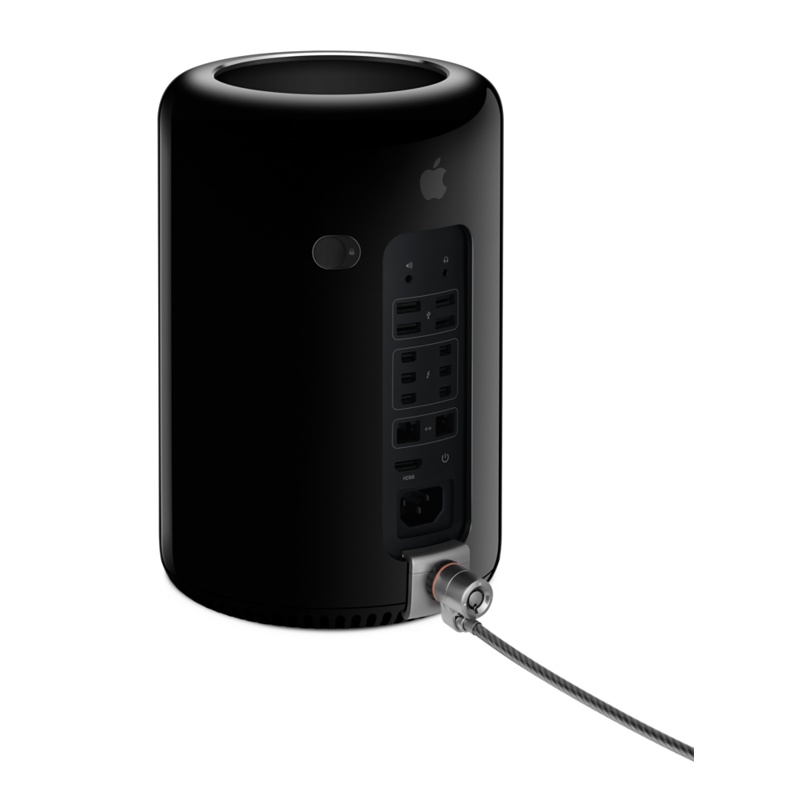
The Mac Pro Security Lock Adapter lets you use a compatible Kensington or similar style third-party lock (sold separately) to keep your Mac Pro secure. The adapter attaches without tools and does not modify or damage the Mac. With a compatible lock connected, the Mac Pro Lock Adapter secures the housing to the enclosure, preventing access to internal components.
Since the Mac Pro’s appearance in its retail stores, even Apple has had to use alternate methods to secure the machines, opting for an Ethernet-based alarm system that simply sets off an alarm when the Mac Pro is removed rather than securing it in place.
The Mac Pro Security Lock Adapter is available now in the Apple Online Store for $49. The adapter is not yet being offered for immediate pickup in Apple’s retail stores, but will presumably be making its way to the company’s stores around the world in the coming days.

Android 4.4.4 for HTC One M8 and M7 Google Play editions is now Available
 Android 4.4.4 was a surprise release that happened just over a week ago, apparently to stem a security risk. So far, only a handful of devices have received the update, including Nexus, Sony and Motorola handsets. The Google Play edition devices have been slowly getting the update, and today, Android 4.4.4 for HTC One M8 and M7 Google Play editions has now been made available.
The update should be rolling out as we speak, so if you have either of these devices and get the notification to update, do let us know in the comments below.
What do you think about HTC’s update schedule so far: are you satisfied? Let us know your thoughts in the comments below.
Source: TalkAndroid
//<![CDATA[
ord = window.ord || Math.floor(Math.random()*1E16);
document.write('’);
//]]>
The post Android 4.4.4 for HTC One M8 and M7 Google Play editions is now Available appeared first on AndroidSPIN.

Facebook used you like a lab rat and you probably don’t care

Companies perform A/B testing — minor site variants to see what users like or don’t like — all the time. Twitter does it with its experimental features, and sites like ours tweak designs for a sample of users to see which ones they prefer. In January 2012, researchers at Facebook did something like that too. When people heard about it last week, however, they were outraged. Facebook, in the course of the study, messed with users’ emotions without explicitly letting them know about it. But as outrageous as that is, it likely won’t make a difference.
In the span of seven days, researchers rejiggered the News Feeds of 689,000 users to surface either more positively or negatively worded stories to the top. The study found that users who saw the positive stories were more likely to write more positive words in their own posts, and users who saw negative ones were more likely to write negative words. According to the published paper in the Proceedings of the National Academy of Sciences, the study found that “emotional states can be transferred to others via emotional contagion” and that it can happen “without direct interaction between people.”
Let’s face it: Most people don’t read policies and terms of service before agreeing to them, and even if they did, the terms are pretty difficult to understand
It seems like a relatively innocuous study, right? Even Adam Kramer, the study’s author, wrote that the impact of the study was fairly minimal. But this experiment goes beyond the pale, for several reasons. For one thing, we didn’t know it was happening. The American Psychological Association (APA) states in its Code of Conduct that in the process of doing psychological research with human beings, informed consent is required — it needs to be offered in a “language that is reasonably understandable to that person or persons.” The part of Facebook’s Data Use Policy that seems to allude to this states that the company would use your information “for internal operations, including troubleshooting, data analysis, testing, research and service improvement.”

According to Forbes, however, this particular language didn’t even appear in the agreement until four months after the study took place. And, let’s face it: Most people don’t read policies and terms of service before agreeing to them, and even if they did, the terms are pretty difficult to understand. Plus, that sentence is vague enough that it doesn’t convey the possibility of a psychological study. It’s logical to assume that the “research” stated here alludes to something harmless — like making a button red instead of blue rather than studies that probe into the inner workings of your mind. That’s not “informed consent” as the APA defines it, even if Facebook claims that it underwent a strong “internal review” process.
It’s bad enough that the study occurred without Facebook users’ permission. But it didn’t just observe users’ actions — it intentionally meddled with their emotions. When we go on Facebook, we generally expect to catch up on our friends’ lives unencumbered by any emotional sleight of hand. Sure, the advertising on Facebook is a form of emotional manipulation too, but many of us understand what we’re getting into when we see an ad — we expect to be pandered to and cajoled. We don’t expect that same manipulation in our regular News Feed.
A local review board had approved the methodology “on the grounds that Facebook apparently manipulates people’s News Feeds all the time.”
But — and here’s the part that many people don’t necessarily realize — Facebook has been messing with your News Feed anyway. Susan Fiske, a Princeton University professor who edited the study for publication, told The Atlantic that a local institutional review board had approved the methodology “on the grounds that Facebook apparently manipulates people’s News Feeds all the time.” And she’s right — your News Feed is filtered based on a variety of factors so that some stories float to the top, while others don’t. It’s all part of Facebook’s unique News Feed algorithm that intends to surface the “right content to the right people at the right time” so that you don’t miss out on stories that matter to you. So, for example, you’ll see a best friend’s wedding photos over what a distant relative said she was having for lunch if your behavior on Facebook leads it that way.

In a way, the algorithm makes sense. According to Facebook, there are on average 1,500 potential stories every time you visit your News Feed and it’s easy for important and relevant posts to get lost in the mix if you have to sift through it all. And from Facebook’s perspective, surfacing more pertinent stories will also get you to stick around and engage more, and maybe help the company get more ad impressions in the process. The flip side, of course, is that Facebook is actually deciding what to show to you. Most of us probably don’t really care about this because we’re usually unaware of it, and as it’s actually beneficial at times. But sorting out posts just because they’re positive or negative is taking it too far. It turns us from customers into lab rats. Yet, we’re all so used to this sort of manipulation that many of us probably never noticed.
In response to the negative reactions that the study caused, Kramer said in his post that the company’s internal review practices would incorporate some of the lessons it’s learned from the reaction to the study. Facebook also sent us the following statement:
“This research was conducted for a single week in 2012 and none of the data used was associated with a specific person’s Facebook account. We do research to improve our services and to make the content people see on Facebook as relevant and engaging as possible. A big part of this is understanding how people respond to different types of content, whether it’s positive or negative in tone, news from friends or information from pages they follow. We carefully consider what research we do and have a strong internal review process. There is no unnecessary collection of people’s data in connection with these research initiatives and all data is stored securely.”
Facebook’s mea culpa is certainly appreciated, but it still doesn’t quite resolve the biggest pain point: The experiment altered our moods without our consent. Also, let’s not forget that Facebook has messed up with privacy issues before — one of the more famous examples is the company’s Beacon program, where it broadcasted your online shopping habits without your knowledge. This isn’t exactly a company that can afford any further damages to its reputation. The firm has certainly made strides in recent years to show it’s committed to user privacy by defaulting posts to friends only and making privacy options clearer. But it only takes a mistake like this to have everyone question their allegiance to Facebook again.
Facebook’s mea culpa is appreciated, but it doesn’t quite resolve the biggest pain point: The experiment altered our moods without our consent.
Or will it? The fact is that even with this controversial study revealed, most people will still continue to use Facebook. The company continues to grow — it went from a million users in 2004 to almost 1.2 billion in 2013 — despite the multiple privacy faux pas throughout the years. The social network has commanded such a loyal and dedicated following that none of these breaches in public trust have seriously damaged it. Most people just don’t seem to care that their feeds are being manipulated, with or without their consent, as long as they still get to play Candy Crush Saga and see photos of their grandkids. After all, if you really cared about controlling your privacy, you’d look into getting off the internet entirely.
[Image credit: Bloomberg via Getty Images, AFP/Getty Images]
Source code for Android “L” preview is now available in AOSP, Nexus 4 and 7 (2012) included

Android L preview is hot at the moment. Everyone is talking about it and we can’t wait for Google to release it when it’s done, hopefully this Fall. Google released Android “L” preview for Nexus 5 and Nexus 7 (2013) only, but there seems to be hope for Nexus 4, first-gen Nexus 7 and a Nexus 10.
Thanks to Android Police we managed to find out that Google released a source code for Android “L” preview. We were surprised to find out that they did it for both Nexus 4 and Nexus 7 (2012), even the Nexus 10, considering people feared Google might not push the “L” update to those device, me included.
Here are the links:
- LG Nexus 4
- LG Nexus 5
- Asus Nexus 7 2012 ( Wi-Fi)
- Asus Nexus 7 2012 (LTE)
- Asus Nexus 7 2013 (Wi-Fi)
- Asus Nexus 7 2013 (LTE)
- Samsung Nexus 10
Finally some indication we might se “L” pushed to some older Nexus devices, way to go Google!
Source: AOSP
Via: Android Police
The post Source code for Android “L” preview is now available in AOSP, Nexus 4 and 7 (2012) included appeared first on AndroidGuys.

Daily Roundup: Windows 9 gets morphing powers, Reading Rainbow wins Kickstarter and more!

Today, we watch Reading Rainbow become the most popular Kickstarter project ever, look at a mood-sensing blanket from British Airways, evaluate Samsung’s new flash memory and learn about Windows 9′s morphing abilities. Read on for Engadget’s news highlights from the last 24 hours.

Windows 9 will morph to fit the device it’s running on
ZDNet’s Mary Jo Foley is reporting that Microsoft’s next operating system (Windows 9) will ship as a three-in-one of sorts (desktop, tablet and mobile). Codenamed “Threshold,” the OS will recognize the hardware it’s running on and morph to the occasion.

‘Reading Rainbow’ is the most popular Kickstarter to date
After reaching over 91,600 backers yesterday, Reading Rainbow dethroned the original Pebble smartwatch as the most popular Kickstarter project ever. With less than a day to go, there are still quite a few backer options available. So get in while you can!

British Airways needed a mood-sensing blanket to prove life is better in First Class
What you’re looking at is the Happiness Blanket: a fiber-optic cloth paired with an EEG headset that displays your mood in bright colors. Why? So British Airways can be positively sure its First Class passengers are enjoying themselves.

Samsung’s new consumer SSDs shoot to the top of the benchmark league
Samsung’s range of new 3D V-NAND flash memory hit enterprise-class servers almost a year ago, but now it’s arrived for regular consumers. What’s more, HotHardware is reporting that the tech beat out performance scores from competing Intel and Crucial products “almost across the board.”
You also might like:
Filed under: Misc
Microsoft is testing a fix for Windows 8.1 upgrade woes

There are many Windows 8 and RT users who want to upgrade to Windows 8.1 and RT 8.1, but can’t; a glitch has kept a seemingly random batch of PCs from installing this latest revision through the Windows Store. Thankfully, relief is in sight. Microsoft tells SuperSite for Windows that it’s testing a patch which automatically upgrades these stubborn computers to their respective 8.1 releases. If you’re eligible, you only need to check Windows Update (not the Store) to get the ball rolling. Windows RT users, at least, can also download the solution if they’re impatient. Microsoft isn’t saying if and when the fix will spread worldwide, but it likely can’t come soon enough if you’re stuck with outdated software.
Filed under: Software, Microsoft
Source: SuperSite for Windows, Microsoft Support
Moto Maker hits Germany

Motorola’s Moto Maker isn’t exactly a new service, but it’s an awesome one. Luckily for people in Germany, the service is now available there as well.
Similar to what we said about Moto Maker, Moto X is also not a new device. Far from it actually, considering we’re waiting for Motorola to announce Moto X+1, which is probably going to happen this summer. Still, Moto X is a great phone and if you want one and live in Germany you now have the option to customize it to you liking. The offer goes through Germany’s Phone House. So after you buy the phone from them you’ll get the option to customize it. You have 30 options for the back cover alone, black or white color option for the front, 12 color options for accents and finally you can put a custom message on the back case.
Anyone here still interested in the Moto X? From Germany by any chance?
Source: Motorola
Via: TechnoBuffalo
The post Moto Maker hits Germany appeared first on AndroidGuys.
Android L preview source code is available for all current Nexus devices on AOSP
 The Android L preview has been out in the wild for almost a week now and owners of the Nexus 5 and Nexus 7 2013 have been enjoying the benefits of a new and slick operating system. Owners of the other Nexus devices have been wondering whether they would get the chance to experience to see what Android L is like, and it looks like they might just get to very soon. The Android L preview source code for all current Nexus devices have been released on AOSP, including the Nexus 4, Nexus 7 2012 and the Nexus 10. This will hopefully mean that eager developers can start tinkering with the source code and produce their own Android L builds in the very near future.
A full list of the available source code files includes (as seen on Android Police):
- Nexus 4 – https://android.googlesource.com/device/lge/mako/+/l-preview
- Nexus 5 – https://android.googlesource.com/device/lge/hammerhead/+/l-preview
- Nexus 7 (2012 Wi-Fi) – https://android.googlesource.com/device/asus/grouper/+/l-preview
- Nexus 7 (2012 LTE) – https://android.googlesource.com/device/asus/tilapia/+/l-preview
- Nexus 7 (2013 Wi-Fi) – https://android.googlesource.com/device/asus/flo/+/l-preview
- Nexus 7 (2013 LTE) – https://android.googlesource.com/device/asus/deb/+/l-preview
- Nexus 10 – https://android.googlesource.com/device/samsung/manta/+/l-preview
The Android L preview has made many impressive improvements, ranging from significantly increased battery life to the complete UI design makeover known as Material Design. It’s truly captured what we expected from the next version of Android, and even if it isn’t that different under the hood, it’s definitely got the looks to convince us.
Are you excited to hear that the Android L preview files are now available on AOSP? Let us know your thoughts.
Source: AOSP via Android Police
//<![CDATA[
ord = window.ord || Math.floor(Math.random()*1E16);
document.write('’);
//]]>
The post Android L preview source code is available for all current Nexus devices on AOSP appeared first on AndroidSPIN.

The PS4’s gamepad now works wirelessly with your PS3

If you’ve wanted to use the PlayStation 4′s (arguably superior) DualShock 4 controller with a PS3, you’ve so far had to plug it in; that’s not easy if your couch and TV are at opposite ends of the living room. It’s a good thing, then, that Sony has quietly enabled wireless support for the newer DualShock through its latest PS3 firmware update. It’s still treated as a generic controller without motion or vibration, and game compatibility is somewhat spotty, but it’s now relatively safe to ditch the USB cable while playing. You can check out Reddit’s instructions for pairing the gamepad with your PS3 at the source link, and here’s hoping that it eventually gets first-class treatment.
Filed under: Gaming, Peripherals, Sony
Source: Reddit
 AIVAnet