



Optical zoom tipped to hit HTC handsets in 2015

Like most companies in the smartphone game, HTC wants to pack its top-of-the-range devices with powerful camera tech, and that’s no longer just a case of adding more megapixels. The new HTC One (M8), for instance, hosts a pair of Ultrapixel cameras on its rear that allow you manipulate depth-of-field, among other special features. Talking with UK carrier Vodafone on HTC’s roadmap for camera tech, imaging guru Symon Whitehorn claimed “we could be 4K ready now,” if it actually made sense to do so (burn, Sony). Whitehorn also mused that with phones well on their way to making point-and-shoot cameras obsolete, we could see performance encroach on DSLR territory within two years. To make that happen, however, handsets need to incorporate optical zooming, which according to Whitehorn “is not too far off at all for HTC.” He wouldn’t “give too much away,” he said, “but within 12-18 months we’ll see huge advances in phone optics.” If HTC is indeed this close to adding optical zoom to it camera tech repertoire, let’s hope it can keep things classy — something previous attempts have universally failed to do.
Filed under: Cellphones, Cameras, Mobile, HTC
Source: Vodafone

Watch Google test its 3D-sensing phones on robots in zero gravity

Wonder what Google’s Project Tango-equipped SPHERES robots will look like when they’re in action aboard the International Space Station? The company is more than happy to show you. It has posted video of a recent test that took the machines on a zero gravity simulation flight to see how the 3D environment sensors and other systems will work in practice. As you’ll see in the clip, it wasn’t quite as easy as testing on the ground — Google’s ATAP team had to work during brief bursts of weightlessness that could challenge both the employees and the devices.
You won’t hear much about the results in the footage, but it’s evident that the upgraded SPHERES can both fly and map locations without much trouble. Google is quick to note that this is just the beginning of its efforts; the robots going into orbit this summer are proofs of concept that could eventually lead to sophisticated, autonomous helpers aboard the ISS and other vehicles. For now, it’s just good to know that Google’s current depth-sensing technology holds up in real world (or rather, real space) conditions.
Filed under: Cellphones, Robots, Mobile, Google
Source: Google ATAP (Google+)

‘Wearable eyes’ take all the work out of having emotions

Ever seen one of those funny novelty spectacles with eyes drawn on them? Dr. Hirotaka Osawa from Tsukuba University in Japan has designed a high-tech version of those called AgencyGlass, and they have eyes that actually move. The digital eyes blink when you nod or shake your head, look up when you tilt your head down and (best of all) it stays open even while you doze off, all thanks to a gyroscope and an accelerometer that detects head movement. That’s not all they can do, though — the eyes also automatically look up when the system determines that a person is looking at you, as taken by the accompanying camera. In fact, Osawa designed the bizarre smartglasses for that purpose: to make you look friendlier and less socially awkward than you actually are.
Osawa apparently thought of creating AgencyGlass to take the weight of emotional labor (or emotions expected of some professionals like doctors and wait staff) off people’s shoulders. He believes the device could alleviate some of the stress these people feel when they’re expected to behave a particular way. The glasses, however, could also be an effective companion for autistic individuals and others with similar conditions that affect social skills. While Osawa seems to be fully aware of how kooky the wearable eyes look (just watch his tongue-in-cheek demo video below), that isn’t stopping him from exploring emotional cybernetics further. His next project is even something very similar and possibly ten times creepier: a wearable smile to turn your frowns upside down.
Filed under: Wearables

Rogers’ widened LTE support gives Canadians speedier data indoors

Canada got LTE relatively quickly, but that fast data currently has a big catch: since it doesn’t run on low frequencies like in the US, you sometimes drop to 3G when you head indoors. Thankfully, those slowdowns won’t be an issue for much longer. Rogers has officially switched on its 700MHz network in parts of Calgary, Toronto and Vancouver, bringing LTE to your basement and other places where it was previously off-limits. It may help American travelers, too, since AT&T customers (who already have 700MHz support) can roam on Rogers’ airwaves.
You may not have to upgrade your hardware, since Rogers says that the “majority” of devices in use can take advantage of the extra cellular band. As for other carriers? Bell tells us that it started building in rural areas earlier in the month, but it hasn’t said just where its 700MHz support is available. Telus also hasn’t outlined its plans just yet. However, we’d still expect the improved LTE to reach much of the country relatively quickly. The upgrade should be considerably easier than rolling out LTE in the first place, so it may not be long before many Canucks’ data is consistently fast.
Filed under: Cellphones, Wireless, Mobile, AT&T
Source: Rogers RedBoard

Skitch makes sharing annotated pics easier for iPhone and iPad

Skitch’s share screen for iOS just got a makeover, making it easier to send out and save your annotated, doodle-filled masterpieces. The latest iOS update now shows a preview of your image on the Share screen, where you can type in and attach a caption to the bottom of the photo, as well. On the same screen, simply swipe left to send a pic to friends or co-workers attending a meeting you’ve listed, or swipe right to save modified images. Once you’re done uploading, the updated app will now show a confirmation screen, which comes with options to edit and share the same image again or annotate a brand new pic. As a nice plus, a “Frequents” section will appear to speed things up once you’ve performed the same action several times.
Other than the shared screen overhaul, the updated app now also forms paragraphs when you resize the text box and comes with the option to buy PDF Annotation even if you’re not a premium user. You can get these and a few more changes by updating the Skitch app for iPhone and iPad, or by downloading it from iTunes.
Source: Evernote

UNU Enerpak Maximum Review: 17,000mAh of power in a mean-looking Package
 Is there such a thing as having too much power? Probably not, which is why we’ll be taking a look at a high capacity portable battery charger from uNu. The battery pack we’re looking at today is called the uNu Enerpak Maximum which carries a massive 17,000mAh of battery charge ready to be dispensed.
What’s in the box?
 Much like its smaller brother, the uNu Enerpak Plus (read the review here), the Enerpak Maximum comes with the bare minimum of gear in the box: the battery itself, a micro-USB cable and a user manual. I have to say that the Enerpak Maximum is quite the looker; that piano black finish is very good looking and the edges on it make it appear quite beefy; that might just be me though. The included micro-USB cable is about 40cm long but unfortunately there is no AC adapter for the cable despite the massive amount of charging required before the battery is full.
How does it perform?
 During my tests on the Enerpak Maximum (done using Battery Monitor Widget), I found that overall the battery pack has a pretty standard charge rate, around 45% per hour. This puts it right around the same performance as the cheero Power Plus battery packs we checked out yesterday. While it’s nothing to write home about, you can definitely be sure that the Enerpak Maximum is going to give you the performance you need from your portable charger.
What do I like about the UNU Enerpak Maximum
 I’m a big fan of the styling of the uNu Enerpak series and the Enerpak Maximum doesn’t disappoint; its piano black finish is very sleek and you could be forgiven for not realizing it was actually a portable battery charger.
 Compared to the Enerpak Plus which had a 1A input, I’m glad that the Enerpak Maximum has adopted a 1.5A input to charge the internal battery which will stop this process taking longer than it needs to. Also, with a 17,000mAh, you’ll be able to charge most devices more than 4-5 times before needing to charge it up again.
 While the Enerpak Maximum does seem quite large at first, it’s actually barely wider than my Moto G which means it could comfortably fit in a shirt or pants pocket. Obviously this isn’t always an option as it is quite heavy, however it is quite a slimline battery pack for its capacity compared to other large capacity battery packs which can only be transported in a carry bag.
What don’t I like about the UNU Enerpak Maximum
 While I am a fan of how the Enerpak Maximum is styled, I’m not a fan of how it is designed; it’s a bit confusing to me that the outputs to the battery pack are located on opposite ends of the body. I also found it a bit weird that the included flashlight is on a different face to either of the outputs meaning that it’s actually quite hard to utilize the flashlight to help you get your charging set up in the dark.
 I’m also slightly disappointed that the Enerpak Maximum only has two outputs; with 17,000mAh on tap, it’s entirely feasibly to charge a whole host of devices, even if it’s only at 1A for each port, but it seems like a bit of a waste not to have the option. That said, 17,000mAh is obviously a prime option if you are backpacking and don’t know when your next charge up is going to come from.
 One of my past concerns with the Enerpak Plus arose again while reviewing the Enerpak Maximum; the battery charge level LED on the top of the unit is a great tool for seeing how much charge there is left in the unit, however once plugged in, the LED turns off, giving no indication of whether it is charging your device or how much charge is left. I realise this is probably done to conserve power, however with devices that don’t have LED indicators for charging, it can be a bit frustrating to need to do this.
Overall Thoughts
 There’s a lot to like about the uNu Enerpak Maximum, particularly for the perennial traveller that requires a lot of battery power on the go. Unfortunately, there’s also a lot about the Enerpak Maximum that is relatively pedestrian; only two outputs, average charge rate, and a few other niggling issues keep it from really standing out from the crowd. Which brings us to the price: MSRP $129.95 USD. That’s a pretty steep price for a portable battery charger that really has no stand-out features besides its sleek looks. That said, if you’re happy to shell out the extra few dollars because you like the look of the Enerpak Maximum, you likely won’t be disappointed as it does exactly everything you would expect it to do.
If you’re interested in taking a closer look at the uNu Enerpak Maximum, you can visit the Amazon page (links are down below) or you can visit the uNu website here to see what else they have in their product range.
//<![CDATA[
ord = window.ord || Math.floor(Math.random()*1E16);
document.write('’);
//]]>

Hail Britannia: One third of trade-ins for the Samsung Galaxy S5 in Britain have been iPhone owners, report Says
 I can’t say I’m surprised, but it’s always nice to see it in action. A report from The Telegraph in the motherland (Britain) has said that one third of trade-ins for the Samsung Galaxy S5 seen by website CompareMyMobile have been lodged by iPhone users. The most traded-in device in this period has been the iPhone 4S, followed by the Sasmsung Galaxy S3 in second place, and perhaps most surprisingly in third place is the iPhone 5S.
While you might be thinking that this is completely down to iPhone users just jumping ship to the Galaxy S5, that’s actually not the whole truth. Though the report stops short of saying it directly while talking about depreciating trade-in values, these trade-ins may have more to do with the fact that the iPhone does not depreciate in value as quickly as the Samsung Galaxy phones do. That said, whatever the actual reasons for people trading in for the Galaxy S5, people being converted to Android can probably be counted as a win regardless.
What do you think about this report? Do you think the Galaxy S5 should be as wildly popular as it is turning out to be? Let us know what you think in the comments.
Source: The Telegraph via Phone Arena
//<![CDATA[
ord = window.ord || Math.floor(Math.random()*1E16);
document.write('’);
//]]>

Turkey to censor tweets with ‘malicious’ content

Twitter might not be banned in Turkey anymore, but the country’s government isn’t quite done putting it through the censorship wringer yet. In fact, Turkish Communications Minister Lütfi Elvan just released a written statement that says: “We [Twitter and Turkey] have reached a consensus to ‘neutralize’ malicious content that is the object of court decisions by pixelating.” He didn’t expound on what he means by “pixelating,” but it’s typically associated with the mosaic-like classic approach to censorship. If Turkish authorities can indeed blur out tweets, then this saga might have taken an even crazier turn. Since that’s bordering on the absurd, though, it’s possible that “pixelating” might have just been the term Lütfi used for Twitter’s Country Withheld Tool, which the website uses to hide tweets and accounts from a whole nation.
The minister says the decision was made during back-to-back meetings between Turkey’s telecommunication authority (called TIB) and Twitter’s execs who’ve reached a consensus to “neutralize malicious content.” Twitter also gave the TIB super-tagging powers (after deleting over 200 offending tweets, that is), allowing officials to flag posts and accounts that they want to be censored ASAP.
For those who haven’t been following this crazed roller-coaster ride closely, it all started when Turkish authorities blocked access to Twitter hours after Prime Minister Recep Tayyip Erdoğan threatened to do so. Erdogan, who’d previously called social media “the worst menace to society,” claimed his detractors were using the social network as a platform to spread lies that he was corrupt. A few days later, the ban was overturned after the country’s court deemed it a violation of people’s right to free speech, and just recently, Erdoğan vowed to go after Twitter for tax evasion. It’s now unclear if he’ll follow through, as the two entities have promised to “keep in touch,” but let’s not forget that the prime minister called Twitter a “scourge” once in the past.
Filed under: Internet
Source: Hurriyet Daily News
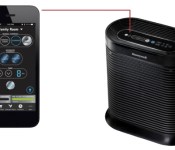
Honeywell’s Bluetooth air purifier gets pollen alerts from your smartphone

Your air conditioner may already be connected to the web, but what about that lowly air purifier gallantly battling dust in the corner? If a completely connected home is on the docket, prep your 270 bucks and get ready for an upgrade. Honeywell’s latest air purifier includes integrated Bluetooth, letting you use your Android or iOS smartphone to turn the device on when you enter the room, control cleaning levels, set a schedule and track when it’s time to swap out the HEPA filter. But it takes automation even further, pulling pollen and mold alerts from the web via your smartphone and adjusting fan levels automatically. The HPA250B, which can accommodate rooms of up to 310 square feet, is available from Best Buy for $269.99.
Filed under: Household
Source: Best Buy

Toshiba’s ultra-fast microSD cards will let you shoot like a pro with small cameras

It’s easy to find fast storage if you have a big camera, but not so much if you have a very tiny mirrorless cam that uses microSD cards — more often than not, you’re stuck in the slow lane. You won’t be held back for much longer if Toshiba has its way, though. The company has just revealed the first-ever microSD cards to meet the speedy UHS-II spec, giving them the same performance as the quickest full-size SD storage — and up to eight times the write speed of Toshiba’s earlier microSD lineup. Data reads, meanwhile, are nearly three times faster.
The upgrade should help even smaller cameras and smartphones shoot burst photos as quickly as some pro hardware, and 4K video recording will be relatively pain-free. Toshiba is only providing samples of 32GB and 64GB cards to chip and gadget makers at this stage, and you’ll need to check that whatever device you get supports UHS-II before you splurge on the newer flash memory. However, it shouldn’t be long before you can get truly rapid-fire photography from a device that fits in your pocket.
Source: Toshiba
 AIVAnet