



Apple Could Benefit as Samsung and Globalfoundries Standardize Mobile Chip Production [iOS Blog]
Samsung and Globalfoundries announced yesterday that the two companies will adopt the same chip production process as they upgrade their manufacturing facilities in preparation for the next generation mobile devices. (Via Wall Street Journal) This announcement adds credence to an earlier rumor that Apple was negotiating with GlobalFoundries to start making the A-Series chip in the company’s Malta, New York Fab 8 facility, with Samsung helping in the early stages of production.

As part of the agreement, Globalfoundries has agreed to drop its current 14 nanometer circuit technology and will instead license Samsung’s 14 nanometer process. This standardization of production processes could have a significant impact on Apple, which can now source its A-series processors from either Samsung or GlobalFoundries without any additional engineering effort.
“What really drove us to this agreement was a strong pull from customers,” said Ana Hunter, Globalfoundries’ vice president of product management. “They see the value in really having one process where they have choice and flexibility in the manufacturing options that they have.”
Intel is the first company to start producing chips based on 14-nanometer technology with production starting in the current quarter. Apple supplier Samsung is expected to begin volume production of its 14 nanometer chips in late 2014, while Globalfoundries may introduce the process in early 2015.
There is no information on how this agreement affects Apple’s current chip manufacturing deal with Taiwan Semiconductor Manufacturing (TSMC). Apple reportedly contracted with TSMC to start producing its A-series chips in early 2014 using 20-nanometer technology. Apple turned to TSMC for its chip manufacturing needs as the Cupertino company strives to lessen its reliance on Samsung to meet its production needs. This balance of suppliers helps alleviate supply constraints that result from production problems at a single supplier. 
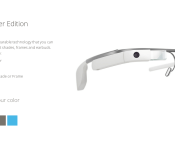
Prospective Google Glass buyers can “try on” before buying

Google is making it easier for those wanting to purchase Google Glass but are hesitant in spending the rather large $1500 for a pair. Google has launched a new free Home Try-On Program allowing potential customers to find what color and frame style they want before committing to the purchase.
The package allows customers to receive a package with Glass in four different colors along with the different styles of prescription frames. Google place a $50 hold on your credit card until they receive the home kit back, but otherwise the Home Try-On kit is completely free.
Now before you think that $50 is a small price to pay to not send back four Google Glass devices, they are non-functional. You’ll get Google Glass devices in Charcoal, Tangerine, Shale, and Sky, and have 10 days to return the kit to Google using the prepaid shipping label.
So if you were wondering what Glass feels like before purchasing, then the Home Try-On program is for you.
The post Prospective Google Glass buyers can “try on” before buying appeared first on AndroidGuys.

Flickr 3.0 debuts with new look, filters, and more

Flickr on Thursday rolled out a new version of its Android and iOS applications. Redesigned with a new UI and Instragram-inspired features, the app lets users take and share pictures as well as videos (up to 30 seconds). What’s more, the app provides editing tools like crop, rotate, exposure, and colors. Those who like to dig deeper into metadata can also do so with the mobile app.
On Flickr, everyone gets 1,000 gigabytes of storage free, enough space for more than 500,000 photos, pretty much all the space you’ll ever need. Our new Auto Sync feature lets you seamlessly upload all your original quality photos from your phone automatically to your account, so that Flickr can be your camera roll in the cloud.
The post Flickr 3.0 debuts with new look, filters, and more appeared first on AndroidGuys.

Google could be working on an even cheaper Nexus

If the Nexus 5 wasn’t budget enough already. a new report has surfaced that suggests Google has partnered with MediaTek for a very low-priced Nexus smartphone.
With Nokia lining up their budget Android handsets aimed at developing markets, it’s expected that the MediaTek processor will power the Nexus device that could sell for only $100 in order to further spread the Nexus brand.
Whilst details are scarce at the moment, it certainly makes sense for Google to offer a budget Nexus device running pure Android to not only advertise Nexus, but also promote Android as Google intended.
SOURCE: mtksj
The post Google could be working on an even cheaper Nexus appeared first on AndroidGuys.
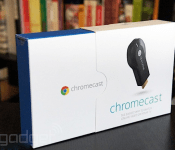
Google kicks off Chromecast offers program with £5 of free Play credit

With Google’s Chromecast streaming dongle now fully settled in the UK, the great provider (of search results) has kicked off a promotional program rewarding new and old customers alike. You’ll find the offer highlighted in the Play store, where (browser) window shoppers are being tempted with “£4.99 credit towards a movie rental.” The truth is, however, that you can spend your free fiver on anything available on Play, like music, books or Android apps. Furthermore, anyone with a Chromecast purchased in the UK is eligible, regardless of when you bought it. The only catch really is you must redeem the credit online by mid-July and spend it before the same time next year. It would appear this is just the first freebie in an ongoing offers program, so don’t be surprised to see others in the future that sweeten the deal for newcomers, as well as thank old hands for their patronage.
Filed under: Home Entertainment, Peripherals, Google
Via: Android Central
Source: Google (1), (2), (3), (4), Play store

Samsung’s Milk Music will soon cost $4 per month to listen ad-free

You know what they say about all good things in life. Samsung has been offering an ad-free version of its Milk Music service for no charge since launch, but the company has posted a new infographic revealing that Americans will soon have to pay $4 per month for a Premium tier to escape marketers. You’ll also get some “exclusive features” as a bonus, although it’s not clear just what they’ll entail. We’ve reached out to learn more about both the paid service launch and what those perks will be. For now, you’ll want to cherish the current listening experience — it may not be around for much longer.

Filed under: Cellphones, Internet, Mobile, Samsung
Via: The Next Web
Source: Samsung Tomorrow

Oculus Rift helps terminally ill woman take one last stroll in the sun

A terminally ill woman has reminded us of the limitless potential for devices like the Oculus Rift beyond just gaming and entertainment. After Roberta Firstenberg’s cancer treatments failed last year, she was told she had just a few months to live. That prompted her game artist granddaughter Priscilla (“Pri”) to send a moving note to the Oculus Rift support team, who quickly decided to send a dev unit. Using the 3D headset, Roberta was able to experience mobility again with the Tuscany Villa demo, complete with virtual trees, stairs and butterflies. She was even able to see her younger self and a beloved, deceased pet via a fortuitous Google Street View snap — which inspired another idea.
After seeing Street View, Roberta compiled a list of spots she wanted to visit virtually, and Pri hatched a more ambitious plan for a VR world complete with forests, fairies and waterfalls. Unfortunately, her grandmother’s condition took a serious turn shortly after that, and she died about four weeks later. To preserve her memory, Priscilla created a video documenting her grandmother’s early experiences using the device (after the break). It’s a reminder that while such devices can entertain us, they could mean a whole lot more to those who can’t get around much anymore.
[Image credit: Priscilla Firstenberg]
Filed under: Wearables
Via: Polygon
Source: Priscilla Firstenberg (YouTube)

Elite soldiers will soon ride into battle on stealthy hybrid motorcycles

The US’ special forces units frequently can’t rely on conventional ground transportation for their covert ops — a loud engine is guaranteed to blow their cover. To tackle this problem, DARPA has just awarded Logos Technologies a contract to build a stealthy hybrid motorcycle for the military. The design modifies BRD’s all-electric RedShift MX (pictured here) with a quiet hybrid power system that can run on multiple fuel types. The overhaul lets soldiers travel long distances while keeping a relatively low profile, and they can run solely on electric power for shorter periods if silence is absolutely vital. It’s too soon to say when the bike will go into service or just how well it will perform, but it could be a lifesaver for troops that need both speed and secrecy.
Filed under: Transportation
Via: Wired
Source: Logos Technologies
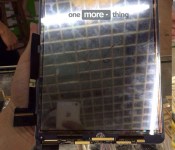
Alleged iPad Air 2 Front Panel with Integrated Display Shown in New Photos
Following the leak of an alleged iPhone 6 front panel earlier this week, the iPad is now getting its turn with a pair of photos showing what is said to be a front panel for the next-generation iPad Air, shared by Dutch site One More Thing [Google Translate]. Notably, the part appears to include an integrated display in contrast to the separate panel and display parts used on the current model. A move to an integrated front panel/display would reduce overall thickness, potentially allowing Apple to further slim down the iPad Air or make room for other components such as a slightly larger battery.

MacRumors spoke with iFixit co-founder Kyle Wiens, who noted that the assembly could indeed be legitimate and use a manufacturing process similar to that seen on the Retina MacBook Pro. The move to an integrated panel/display would increase repair costs, but ease of repair has not been a particularly major focus for Apple and the company already uses an integrated display on the iPhone.

The next-generation iPad Air is expected to launch later this year, with notable analyst Ming-Chi Kuo predicting that upgraded iPad Air and Retina iPad mini models will debut in the third quarter of this year and adopt the Touch ID system introduced on the iPhone 5s last year.
(Thanks, Rogier!)

Employees File Request to Include Steve Jobs Evidence in Anti-Poaching Lawsuit [Mac Blog]
Apple, Google and two other large technology companies should not be allowed to block evidence in an upcoming trial involving their participation in “no solicitation” agreements that date back to 2005. This request to expand the evidence presented in the trial was filed on behalf of tech workers who initiated the class action lawsuit in 2011, reports Reuters.

In this latest filing, the tech workers argue that all evidence pertaining to the companies involved, including the “bullying” personality of Steve Jobs, the personal wealth of Google co-founder Sergey Brin and other information gleaned from outside sources should be included in the case.
“That the jury might draw conclusions about Mr. Jobs’ character based on evidence showing the manner in which he pursued the conspiracy at the heart of this case is not grounds to exclude such evidence,” they wrote.
Additionally, the plaintiffs seek to introduce evidence about the personal wealth of executives like Google co-founder Sergey Brin – and how it could be enhanced by holding down workers’ salaries and boosting margins, according to the filing.
The plaintiffs also seek to include information on an earlier investigation by the U.S. Department of Justice that prevented the companies from entering into future no-hire agreements. “The jury should know the reason the companies eliminated their no-hire agreements,” argue the employees.
Apple, Google and five other large technology companies were caught signing “no solicitation” agreements that prevented the companies from trying to hire away each others’ employees. Engineers, programmers, and other technical professionals who believe they were negatively affected by these non-poaching agreements filed a class action lawsuit in 2011 that is slated to begin this May. Damages could reach $9 billion in this case.
Currently, both sides are locked in negotiations, with the hope that a settlement can reached before the trial begins next month. Some companies, such as Pixar and Intuit, have already agreed to settle the case with Disney paying about $9 million and Intuit paying $11 million.
 AIVAnet