



Recon’s deal with the ‘other’ Motorola could see a rugged Glass rival

Head-mounted computing specialists Recon Instruments is building quite a team to take on Google Glass. Last year, Intel offered both cash and its manufacturing and technology expertise, and now the “other” Motorola has followed suit. Motorola Solutions has opened its checkbook and pledged to share its product development and distribution know-how with the Canadian outfit. Why has a company with a pedigree in walkie-talkies and barcode scanners teamed up with Recon? Not only does it have plenty of experience making rugged gadgets that’ll likely improve the Jet and Snow2′s hardiness, but it also already makes wearable computers on the side. The Motorola HC1, you see, is an enterprise device that’s designed to work in extreme environments where it’d be too dangerous to use a phone. Perhaps the two of them will develop a new wearable platform that’s as comfortable on the slopes as it is on the oil rig.
Filed under: Wearables

Scribd brings Lonely Planet guides to its book subscription service

Scribd’s e-book subscription service is only six months old, and already it’s working hard to hook some big names to convince you that it’s worth $9 a month. The company has now snagged a deal with publisher Lonely Planet that’ll see hundreds of the latter’s travel guides appear on the former’s platform. At the same time, the company has added in bookmarking across all devices, so you’ll always be able to find that list of restaurants when you’re roaming without WiFi. Great, now we’ve got the theme to the Lonely Planet TV series stuck in our head.
Source: Scribd Lonely Planet, Scribd press room

High school seniors conquer watery ketchup with 3D-printed bottle cap

3D printers have produced some pretty amazing (and scary) stuff, and now a pair of high school seniors have successfully used the tech to ensure they’ll never have to eat a soggy hotdog again. Tired of the watery, separated ketchup you get from a bottle that’s been sitting unused for a while, the two seniors went about solving the issue with the help of their school’s 3D printer. What they ended up with was a replacement cap for bottles that forces the sauce out through an internal, raised tube. As ketchup leaves the bottle at a higher point, the standing water at the cap end stays inside. The simple but elegant fix may seem like a trivial use of 3D printing, but it’s the perfect example of rapid prototyping, and the make-it-yourself attitude the technology is all about. There’s even talk of the young dudes turning the project into something of a business venture, but if that doesn’t work out, there’ll almost certainly be scholarship spots for them at the MIT’s ketchup vessel innovation department.
Filed under: Misc
Via: Sky News
Source: KCPT

Verizon and Google have spent over $6 million on lobbying in 2014

Two of the biggest names in American communications, Verizon and Google, are also two of the highest spenders in the world of political lobbying. In the last two years alone, the two spent a combined $63 million attempting to sway legislation in their favor, and 2014 is gearing up to be another landmark year in Silicon Valley’s profits flowing into Washington: the two are already $6 million deep in 2014, with Comcast and AT&T nipping at their heels. Google leads contributions, with over $3.8 million already spent in 2014.
Not that anyone’s surprised; Google’s been involved with politics for some time now, even openly joining the lobbying group The Internet Association in 2012.

Some of the company’s subtler tactics were recently uncovered by The Washington Post, such as hosting a conference at George Mason University and stacking the invite list with Federal Trade Commission regulators and other folks instrumental in deciding the fate of Google’s 2011 FTC investigation (which ended in a settlement).
Verizon’s also no slouch in the world of politics, having previously thrown its weight into the ongoing battle between the companies using wireless spectrum and the government agency which regulates said spectrum (the Federal Communications Commission). Both Verizon and Google are on track to match and exceed previous contributions — the only question is which company will contribute more.
[Image credit: Getty Images, Brand X]
Filed under: Cellphones, Desktops, Handhelds, Tablets, Internet, Software, Google, Verizon
Source: Consumer Watchdog

GameStop Expanding Beyond Video Games with Aggressive Growth Plans for Simply Mac Stores
Major video game retailer GameStop is making a significant push to broaden its business, expanding its retail operations with new brands and stores that will focus on Apple gear and AT&T Mobility products, reports The Star-Telegram.

While the diversification will include a move into AT&T mobile services through GameStop’s acquisition of Spring Mobile, of more interest for Apple users is GameStop’s plans for Simply Mac, a chain of authorized Apple resale and repair shops that focuses on smaller markets where Apple has not shown interest in opening its own stores. Founded in 2006 in Utah, Simply Mac grew to eight stores by October 2012 when GameStop acquired a 49.9 percent stake in the Apple reseller. In November 2013, GameStop exercised an option to purchase the rest of Simply Mac, which now includes 23 locations focused in the western half of the United States, and GameStop has plans for a significant expansion of the Simply Mac network.
[GameStop CEO Paul] Raines said GameStop’s confidence in rapid growth at the small chains, acquired for about $110 million last year, is buoyed by their strong ties to industry leaders AT&T and Apple.
Steve Bain and Jason Ellis, the executives who built Simply Mac and Spring Mobile, continue to run the operations for GameStop and see strong growth opportunities. After opening 23 stores this year, Bain said, the company plans to open 50 more Simply Mac stores in 2015.
While its stores are smaller and lower profile than many of Apple’s retail stores, Simply Mac’s push to open nearly 75 stores through the end of 2015 appears to dwarf Apple’s own plans in the United States. Apple typically opens around 30 stores per year, but at this point the majority of those are outside of the United States.
The “transformation,” as CEO Paul Raines dubbed it, is intended to keep GameStop growing and leverage its expertise in store operations and buying and selling used devices. He said he envisions GameStop as a “family of specialty retailers that make your favorite technologies affordable and simple.”
As GameStop expands into the lucrative mobile phone and Apple device market, the retailer plans to downsize its video games operations by closing up to 130 of its 6,400 GameStop stores sometime this year. Though video games will remain its primary focus, GameStop CEO Rob Lloyd believes the company’s new technology brands could generate up to $1 billion in revenue and contribute up to 10 percent of GameStop’s revenue by 2016.
This move into Apple’s retail segment comes at a time when Apple is in the middle of a retail transition. The company is awaiting the arrival of retail head Angela Ahrendts, who is completing her transitionary period at Burberry. Apple also is rumored to be working on a mobile payments system under the leadership of Jennifer Bailey, who allegedly left her executive role in online retail to spearhead this new mobile initiative.

AT&T to relaunch Cricket by end of quarter

AT&T expects to relaunch Cricket Wireless by the end of this, the second quarter of 2014. According to the carrier, the prepaid arm will give its customers devices that work on AT&T’s 4G LTE network as opposed to the Cricket network.
AT&T will fold the Aio Wireless brand into Cricket; a nationwide presence of 3,000+ locations is expected. The entire transition should take around 18 months to pull all Cricket customers off the CDMA network over to AT&T’s LTE network.
The post AT&T to relaunch Cricket by end of quarter appeared first on AndroidGuys.
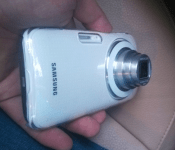
Photos of Samsung Galaxy K emerge ahead of expected April 29 debut

Photos recently posted on Baidu provide us with the best look at Samsung’s upcoming Galaxy K device. Presumed to be the successor to the Galaxy S4 Zoom, the slimmer, more powerful experience is a camera-centric take on the flagship device. Specifications are purported to include a 20-megapixel rear camera with 10X optical zoom and Xenon flash with a front-facing 2-megapixel camera. Internally, details could include an Exynos 5 Hexa processor, 2GB of RAM, and a 4.8″ AMOLED screen.

Samsung has a press event for April 29th in Singapore, and has been teasing it with the phrase “Kapture The Moment”.
Baidu via PhoneArena
The post Photos of Samsung Galaxy K emerge ahead of expected April 29 debut appeared first on AndroidGuys.
Defiantly plastic: designing the Galaxy S5

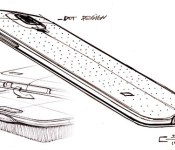
“Our major aims were usability, friendliness and a more humanistic design. We wanted something with a pleasing feel … and better grip. If we used metal, [we felt] the designs felt heavy and cold,” explains Senior Product Designer Dong Hun Kim, pointing to why Samsung still plays in polycarb. “But with plastic, the texture is warmer. We believe users will find [the device] both warmer and friendlier. This material was also the best at visually expressing volume, better at symbolizing our design concepts.” The design concept for Samsung’s Galaxy S5? Modern and flash — and boy, that blue GS5 is certainly flashy. In the middle of a design library deep inside Samsung’s “Digital City” in Suwon, Jeeyeun Wang, Samsung’s principal user experience designer continues, putting it to me this way: the smartphone is no longer a cold slab of technology; “it’s a fashion product now.”
“We’d prefer to focus on the software improvements.”
“This interview is more about the new camera interface.”
We expected the designers (or the corporate comms team flanking me) to interrupt with something like the above when I asked why they persist with plastic, but they didn’t. In fact, the designers barely missed a beat. Perhaps they’ve been itching to answer this for a while. I’d certainly been waiting to ask them. “With the GS5, we looked into all kinds of designs and materials. We were open to all options,” adds Kim.
To date, the Galaxy S4 has unit sales in the millions. So did the Galaxy Note series, and well, the rest of the top-drawer Galaxy S series hasn’t done badly either. The phones (and tablets) have become an ensemble, a symbol of Samsung’s domination of Android. To a certain section of the public, smartphones are either iPhones or “a Galaxy” — no doubt to Google’s chagrin. Despite all that success, when it came to the Galaxy S5, we were promised something we hadn’t seen in the last three iterations: a return to the basics. But what, exactly, would that mean in design terms?

“It’s not as if one specific feature screams ‘back to basics.’ It’s the entire experience — you just feel it throughout,” says Wang. “In the past, we’ve tended to put a lot of emphasis on fancy, showy features … things that you might only use once or twice a year, but here (in the GS5), there’s a new focus on core features [like the camera, the internet browser, sharing]. We made sure these worked better, worked well. That’s the spirit of going back to basics.”
“Can I tell you an episode?” Wang then asked me. Yes! Please. Tell me all the episodes was my eager response. “During the GS5 development, I was responsible for the software design — how it looked. For that to work, we also needed to see the mood, the language of the hardware.” But security at Samsung, being Samsung, meant that seeing the final model was something offered only to a few designers. “At the start, we were like spies.” Desperate for a peek at more finalized hardware, when the designer finally got to see the hardware, the first impression was “fun” — but she was far more enthusiastic than it sounds when I write ‘fun’.
Then, when it came to the Galaxy S5, we were promised something we hadn’t seen in the last three iterations: a return to the basics.
“On previous devices, the discussion was always around one color or another, but with the S5 … my eyes lit up — you could feel three to five different textures and finishes. [Within the UX] I focused on that sense of fun. It’s no longer just a hard, smart machine.”

Hyejin Bang — colors material and finish (CMF) senior designer — agrees: “The smartphone is something we’re going to use every day.” While the CMF team wanted to give the phone a metallic luster, they also wanted to temper it so that it appeared friendlier, softer. She refers to the final, tactile finish as lambskin, made to “give off a variety of finishes” in light. But will these explanations satisfy those of us looking for a Galaxy smartphone made of something other than polycarbonate? Probably not.
I was also surprised the team didn’t make a reference to the hardiness of plastic as a material. I told one Engadget editor, for me, a scratched metal phone is a ruined metal phone. Even if (barring Nokia’s efforts) I’m still not sold on the plastic stylings of the Galaxy S series, I have to admit that, from a stack of personal anecdotal evidence, it can take more of a beating.

Min Cho’s job — as director of product marketing — involves synthesizing what consumers say about, and how they use, his company’s smartphones. The questions are pretty specific: Why did you buy a Galaxy S4? What do you use most? As the UX designers noted earlier, those are the very features that S5 development has homed in on: camera, internet, messaging. “Oh, and calling,” adds Cho. Everyone in the room laughs, but yeah, voice calls.
That’s not enough though, the Samsung exec wants to know more than that. As he puts it, he wants to be able to tell what they want next. “We want to know what drives them. What are their desires?”
“The top purchase driver for people that bought Galaxy S4 was the viewing experience … the screen.”
“The top purchase driver for people that bought Galaxy S4 was the viewing experience … the screen.” It’s not a huge surprise: It’s one of the (literally) big reasons many smartphone users have hopped from iOS to Android, but it’s interesting to hear that Samsung’s research comes to a similar conclusion, and certainly explains the trend in ever-larger displays. This is work Cho’s team takes seriously. In the run-up to the Galaxy S5 reveal, Samsung’s user research encompassed 3,000 Galaxy S4 users globally. “With some participants, we followed them, 24 hours a day, for several days.” Wait… “With their agreement,” he quickly adds. “Actually, they wanted to participate. A lot of people want to help to create new experiences — for themselves.”
A lot of the conversations I have with Samsung’s designers and engineers touch again on this idea of increasing the degree of personalization. Even if that starts with more color options, or exchangeable bands, it explains what’s happened inside the heart of the GS5′s software, too.
“Prior to the GS5, our camera app used to have over 15 modes. Back then, we wanted to brag about it.”
There’s been almost uniform praise for Samsung’s efforts to roll back the swell of software fluff seen in the GS3 and GS4. It sounds like the design team got the feedback. “Prior to the GS5, our camera app used to have over 15 modes. Back then, we wanted to brag about it, but now we’ve identified what the majority of Galaxy phone users want,” says Wang. But what about, well, people like me, who (try to) use those slightly ungainly modes like Surround Shot? “High-level users will still be able to adjust the settings plenty, while we’ve now added the option to download further modes in the future.”
That’s probably one of the things Samsung has to balance. Streamline everything too much, and you’re likely to lose something. Who exactly is the Galaxy S series for these days? “Up until the launch of the Galaxy S2, we used to focus on technical users, but after that, our audience became much broader.” And with a wider range of customers, according to Wang, the team felt increasingly responsible to this (likely less vocal) segment.

“Even if we hide complicated functions, our hardcore users will find them.” However, for older users, smartphone beginners or anyone with disabilities, it’s understandably a completely different experience. That’s where a lot of the software design and UX work has gone into, adding a new “easy mode” that scatters the screen with giant contact tiles, and a camera app that shows you how an HDR photo will look before you even take it. Even the heart rate monitor is arguably more skewed toward the layperson than the tech fan. For those fans, you’d think (and I’d be with you) that after all that research and consideration, it’s odd to arrive at a phone that still riffs so closely to the phone that appeared a year before — especially considering the lack of a differently made (material-wise) Galaxy phone for those that want one (and some people really want one).
S Health seemed like the software equivalent of the S Band, forever lost in the mists of corporate development and press release bluster.
Cho says that a lot of people use the company’s S Health app/platform, although Samsung wasn’t willing to divulge numbers. If it’s true, it’s a surprise to me — the feature, first announced alongside the Galaxy S3, seemed like the software equivalent of the S Band/S Circle, forever lost in the mists of corporate development and press release bluster. “No, really. With older users, they’re looking to stay simply healthy, while with 20- to 30-year-olds we’ve surveyed — well, they just want to look better.” There’s certainly a chunk of people that are interested in checking their heart rate, but aren’t rushing to buy a fitness monitor — and there’s the appeal.

“The way we see it, this is only the beginning.” Strange as that may sound, he’s probably right. Samsung currently makes hardware for Android, Windows Phone, Windows 8, Tizen — not to mention the unfortunately hobbled Galaxy Gear, and yet another new smartwatch, powered again by Android and promised for later this year. Cho finishes by adding that Samsung’s continuing to work toward “meaningful innovation,” and as the long list of product variations will attest, it’s not for lack of trying.
Filed under: Cellphones, Mobile, Samsung

AOL bringing Miramax movies to its online video platform

AOL doesn’t just want short clips of newsy content on its online video platform, AOL On. That’s why the company (which, disclosure, owns Engadget) has signed a non-exclusive deal with Miramax to screen some of its movies on the service. The first flicks from the agreement will go up on April 30th, with “tens” of films from the catalog being made available on a rotating basis each month. Neither company was ready to disclose what particular titles we could expect, so while most of us are hoping to catch Clerks, Trainspotting and Pulp Fiction for free, don’t be surprised if they wind up being the lesser lights contained on this list.
Via: Variety
Source: BusinessWire

Samsung’s Galaxy Tab 4 lineup reaches the US on May 1st

Americans no longer have to splurge on the high-end Galaxy Tab Pro or Note Pro if they want a modern Samsung tablet — the more affordable Galaxy Tab 4 range is headed to the US. WiFi versions of the Tab 4 7.0, 8.0 and 10.1 should hit shelves on May 1st at respective prices of $200, $270 and $350. Travelers craving cellular data can expect LTE variants from AT&T, Sprint, T-Mobile and Verizon sometime this summer. Pricing hasn’t surfaced for these 4G models, but it’s safe to presume that they’ll carry a premium over their WiFi-only counterparts.
The devices don’t carry the biggest bang for the buck. The Nexus 7 offers a sharper display and overall faster performance, for example. However, the two largest Tab 4 WiFi models cost significantly less than their Tab 3 equivalents did when new — they’re potentially good bargains if you’re not concerned about raw performance.
Filed under: Tablets, Samsung, Verizon, Sprint, AT&T, T-Mobile
 AIVAnet