



The world’s smallest magazine cover is 2,000 times smaller than a grain of salt

No, National Geographic Kids didn’t forget to buy colored ink — that’s a blown-up view of the smallest-ever magazine cover, created by IBM to set a Guinness world record. The tech firm used a miniscule, heated silicon “chisel” to etch a polymer image measuring just 11 micrometers by 14 micrometers, or 2,000 times tinier than a grain of salt. The image is more detailed than you might expect at such a miniscule size, too. IBM’s instrument responds to subtle changes in pressure in the same way that a 3D printer might, giving it accuracy down to a single nanometer.
The technology doesn’t exist solely for bragging rights. IBM believes its tiny carving tool could be used to prototype nano-sized transistor devices, virtually invisible security tags and light-based connections for quantum computers. Finished products aren’t likely to show up any time soon, but the ball is already rolling on further development. The company has licensed its design to SwissLitho, a startup that’s selling related hardware to other researchers; it may not be long before we see more practical uses of IBM’s small-scale machinery.
[Image credit: IBM Research, Flickr]
Filed under: Science
Source: IBM

Nokia is now officially part of Microsoft

As expected, Nokia’s devices and services business has been officially acquired by Microsoft today. The date was set earlier this week, and it seals the deal the two companies entered into last September. Nokia has long been allied with Microsoft, committing fully to Windows Phone, but as explained when the merger was announced, Microsoft’s new arm will continue to support feature phones like the Asha and Nokia X ranges, as well as smartphones (we’ll have to wait to see what “support” means exactly). The obligatory press releases from both companies don’t reveal any grand plans or shift in focus, but each side has issued some closing remarks, if you like.
Microsoft CEO Satya Nadella said:
“Today we welcome the Nokia Devices and Services business to our family. The mobile capabilities and assets they bring will advance our transformation. Together with our partners, we remain focused on delivering innovation more rapidly in our mobile-first, cloud-first world.”
Stephen Elop, former Nokia CEO who’s moved over to become head of Microsoft’s hardware division, penned an open letter with similar sentiment:
“As Microsoft and Nokia Devices and Services come together as an expanded family, we will unify our passion, dedication and commitment to bringing you the best of what our joint technologies have to offer.”
Filed under: Cellphones, Mobile, Microsoft, Nokia
Source: Nokia, Microsoft, Elop open letter (Nokia)

British Gas’ smart Hive thermostat can now respond to a home owner’s location

Since its launch nearly seven months ago, British Gas’ connected thermostat, the Hive, has enjoyed steady succcess. Now operational in more 75,000 British homes, it recently gained another competitor in Nest, the learning thermostat now owned by Google, so news of the company’s new feature rollout could not have come at better time. In an iOS update that went live earlier this week (not yet live on Android), British Gas added geolocation support to the Hive app, allowing users to receive notifications or set triggers depending on where they are. For instance, Hive owners now receive alerts when the heating has been left switched on and they leave the house, or set the app to automatically begin heating the house as soon as it detects the owner has left their workplace. They’re features that Nest users will already be familiar with, but will be welcome additions for those who decided to go smart with their existing energy provider.
Filed under: Household, Internet, Software, Mobile
Via: The Guardian
Source: Hive (App Store)

Netflix finally comes to cable in the US

Filed under: Home Entertainment, Internet, HD
Source: Fierce Cable
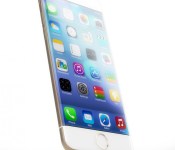
New iPhone 6 Renderings Highlight Curved Display, Rounded Corners
Following a report from Mac Otakara yesterday claiming the iPhone 6 will feature a curved glass display and an all-aluminum rear shell, French website Nowhereelse.fr [Google Translate] and designer Martin Hajek have partnered up to showcase renders visualizing such a device based off of the recent information.

The renderings show an iPhone 6 that emphasizes rounded corners, complete with display glass that slightly wraps around the front of the device. Similar to other previous renders, the phone is shown with a power button on its upper right side, with rectangular volume controls on its left. The bottom of the device is also shown housing a headphone jack, Lightning port, and speaker.

To this point, multiple reports have indicated that the iPhone 6 will feature slightly rounded edges, which would be a departure from the straight edges seen on the iPhone 4 and 5s. However, only Bloomberg noted that the device will carry a curved glass display, with a report last December stating that Apple would be releasing two iPhones will large curved screens in the second half of 2014.
 iPhone 5s (left) and iPhone 6 with curved glass display (right)
Apple is expected to launch the iPhone 6 later this year in two different sizes of 4.7 inches and 5.5 inches. According to recent reports, the 4.7-inch version will be the first to ship, while the larger 5.5-inch version will ship later as Apple attempts to solve issues with the phone’s battery life and display.
Aside from a larger display, both models of the iPhone 6 are expected to feature a thinner profile, faster A8 processor, an improved camera with optical image stabilization, and Touch ID fingerprint sensor. According to Jefferies analyst Peter Misek, Apple is also negotiating with carriers for a $100 price increase on the iPhone 6.

Google documents confirm plans for faster public WiFi in Fiber cities

Google is floating the possibility of public WiFi to upcoming Fiber cities, according to IDG News Service. In a planning document sent to candidate cities, the search giant said it will be “discussing our Wi-Fi plans,” which corroborates information we reported earlier about its US expansion plans. It already has extensive WiFi services in 7,000 Starbucks and other public places, and may soon have an app that makes it easier to log on. It could have more frequencies to play with too — thanks to its lobbying, the FCC will likely reserve extra “unlicensed spectrum” for WiFi in an upcoming auction. Finally, it might even launch its own MVNO cellphone service alongside the WiFi using leased carrier spectrum, if a report from The Information has any merit. Bear in mind that Google hasn’t publicly confirmed any of this yet, but we’ve reached out for more information.
Filed under: Wireless, Internet, Google
Source: IDG News Service

Samsung and Iberia team up to put boarding passes on smartwatches

You wouldn’t instantly associate Iberia with cutting-edge technology, but the Spanish airline is a paragon of modernity. The Madrid-based business already lets you print your own luggage tags, and now it’s teamed up with Samsung to bring boarding passes to your smartwatch. A forthcoming update to the Iberia Android app will enable you to cross the skybridge with just a Gear 2 — assuming, of course, that you’ve already got a Galaxy S5 (or another compatible device) stashed in your pocket.
Filed under: Wearables, Samsung
Via: WSJ
Source: Iberia (Translated)

EE and Three’s voicemail systems hacked using number-cloning trick

With the phone-hacking scandal still playing out in the courts, it should be safe to assume that UK mobile operators have put measures in place protect customers’ own voicemail inboxes. Unfortunately, that’s only half true. We know thanks to an investigation by The Register, which showed that two of the big four carriers had neglected to close a loophole that allows nefarious third-parties to spoof a customer’s phone number and immediately gain access to their voicemails. Those two companies? EE and Three.
Armed with a target’s phone number and VoIP calling system, researchers were able to trick both carriers’ voicemail systems into believing a call originated from one of their SIMs. Attempts to hack into Vodafone and O2, however, were unsuccessful. Vodafone blocked attempts with PIN requests, while O2′s systems always timed out. When pressed about the issue, Three simply pointed to the voicemail security pages on its website and warned users to set a PIN (which isn’t enforced by default). EE immediately set about fixing the flaw and sent out an announcement just a few hours later telling customers it had “patched the issues raised in the article.” The company said it also plans to run “a full review of all [its] voicemail platforms,” to head off any future issues.
Filed under: Cellphones, Wireless, Mobile
Source: The Register, EE Support Forum

Watch this six-way trailer for Evolve, the latest shooter from the makers of Left 4 Dead

With each successive round of gaming consoles, developers get a little more inventive with the available technology — the same goes for how they tease their audience ahead of a game’s launch, too. Turtle Rock Studios (the team behind Left 4 Dead) recently released an interactive trailer for its upcoming co-op shooter, Evolve. The clip follows a session of four players as they stalk and then battle the gigantic, player-controlled creature that’s out to end them. The rub of it is that with a single mouse-click you can swap between the perspectives of each combatant on-the-fly, and watch how the game unfolds from their respective points of view. Want jump from bipedal-monstrosity to soldier and back again just before the former attacks the latter? Go for it.
This flies in the face of how hype trailers are typically assembled, and almost makes a game out of watching the video itself. The trade-off, though, is that the footage is horribly compressed and falls victim to YouTube’s frame-rate limit. If you want a better idea of how the game will look when it releases this fall, Gamersyde is hosting a 1080p at 60fps version of the video for download. The downside of that is you lose the interactivity: it’s a meticulously edited super-cut with play-by-play and color commentary from the dev team and E-sports announcer Aaron Chambers. For now, however, it’s the best way to experience the game — short of actually playing it yourself, of course.
Filed under: Gaming, Home Entertainment, HD
Source: Gamersyde, Evolve (YouTube)

FCC fights back against claims it’s abandoned net neutrality, but few are convinced

Recent news that the FCC is drafting new net neutrality rules caused an uproar once it came out that they could let ISPs give certain traffic special access. That goes against the principles conventionally ascribed to net neutrality, which so far have required ISPs to treat any traffic on their networks the same. FCC Chairman Tom Wheeler called those claims “flat out wrong” in a short statement, and in a blog post titled “Setting the Record Straight on the FCC’s Open Internet Rules” says his proposal does not abandon the FCC’s earlier policies. According to the chairman, the proposed draft is simply following the roadmap established by the court when the previous net neutrality standards were struck down and “would establish that behavior harmful to consumers or competition by limiting the openness of the Internet will not be permitted.” So, should you be worried about the new rules?
FCC Chairman Tom Wheeler:
To be clear, this is what the Notice will propose:
- That all ISPs must transparently disclose to their subscribers and users all relevant information as to the policies that govern their network;
- That no legal content may be blocked; and
- That ISPs may not act in a commercially unreasonable manner to harm the Internet, including favoring the traffic from an affiliated entity.
The problem is that net neutrality as it’s often understood and the way the FCC claims it can actually be implemented under the current laws, aren’t exactly the same. At issue here is if you believe the FCC’s claim that it can and will set a “high bar” for what kind of traffic management is “commercially reasonable.” The Chairman’s argument defending this position is that even redefining internet service as a public utility and regulating it under Title II rules (the way phone service is) would only ban “unjust and unreasonable discrimination” — potentially leaving a loophole for ISPs to sell the “fast lane” many worry they’ll use to tier internet services in a manner similar to cable TV. Additionally, the FCC claims the new rules would increase transparency, requiring ISPs disclose “all relevant information” about the policies in place on their networks.
The FCC claims it’s doing what it can to stop ISPs from potentially harming their competition or gouging customers, but not everyone is convinced. Consumer advocacy groups like Public Knowledge and Free Press have spoken out against the change, referencing Wheeler’s history as a cable industry lobbyist and calling the plan “internet payola.” The belief is that instead of going this route, the correct response to the court ruling that struck down the previous Open Internet rules is to reclassify ISPs as “common carriers” and regulate them like phone companies. Tim Wu of the New Yorker calls out President Obama’s campaign promises to protect net neutrality and based on the reports, says the new policies are a clear violation of that stance. Former FCC commissioner Michael Copps says that “If true, this proposal is a huge step backwards and just must be stopped. If the Commissioner subverts the Open Internet, it is an insult to both citizens and to the promise of the Net.” A main worry is that ISPs will either cause congestion or through inaction allow it to build up (sound familiar?) in order to extract extra fees for better connections
Reclassification of internet services remains an option, but not one that the FCC is floating yet. The next step now is for commissioners to “review, add, subtract, compromise,” from the draft until it comes to a vote at their meeting on May 15th. If three of the five commissioners vote to adopt it at that time, then it will go in front of the public for comments that could be included in the final rules, if they are adopted by the majority of the FCC. Whether you believe the proposed policies would allow for something no more harmful than Express Mail service or the end of the internet as we know it, your voice can be heard. There are always petitions to sign, and of course, contacting your elected officials in Washington is an option.
[Image credit: Andrew Harrer/Bloomberg via Getty Images]
Source: FCC, Free Press, Public Knowledge
 AIVAnet