



OnePlus One Smash the Past campaign seems like a sure way to get Disappointed
 We’ve seen pretty interesting marketing campaigns over the years but this one takes the cake. You may have heard of the OnePlus One Smash the Past campaign which OnePlus has gone live with today; essentially the basis for it is for people to destroy their phones in the hopes of being one of the first 100 owners of the OnePlus One. Think they’re joking? Check out the trailer for the campaign:
I’m all for phone manufacturers being cocky and showing each other up in clever advertising and marketing campaigns, but this campaign seems terribly thought out and unnecessarily destructive. According to the Smash the Past website, all you need to do is:
- Step 1: fill out an application form (stating your desctruction method);
- Step 2: be one of the 100 people chosen to destroy your phone;
- Step 3: then share your entry on YouTube.
Step 2 is probably the most crucial detail where OnePlus will actually contact you to give you the go ahead to destroy your device; predictably, however, some eager beavers on YouTube preempted the official rules and destroyed their phones anyway:
I almost feel sorry for the guy at the end of the second video when he dejectedly says “I hope I’m going to get my OnePlus One”. Sorry buddy, not this time.
I can’t imagine OnePlus will be reimbursing these particularly eager people which is part of the reason why this was such an oversight on their behalf. This is a shame because OnePlus has such a bright future ahead of them but has slightly tarnished it now with this misleading marketing campaign. Let’s hope they don’t do anything quite as radical for its next device. Oh, and if you are actually planning on entering the competition, be aware that there is a shortlist of devices that can be entered to be destroyed; shame, I was looking forward to destroying my Nokia 5110.
What do you think about the OnePlus One Smash the Past campaign? Let us know your thoughts in the comments below.
Source: Smash the Past via Phandroid
//<![CDATA[
ord = window.ord || Math.floor(Math.random()*1E16);
document.write('’);
//]]>

Judge rules US search warrants still apply to info stored overseas

A New York judge just made a ruling that could set a dangerous precedent: he’s decided that US search warrants still apply to email accounts and other digital info, even if they’re stored overseas. US Magistrate James Francis made that decision to make sure a search warrant issued to Microsoft for a user’s account whose emails are stored on a Dublin, Ireland server goes through. The tech giant’s thankfully fighting that decision, and in a statement says:
A U.S. prosecutor cannot obtain a U.S. warrant to search someone’s home located in another country, just as another country’s prosecutor cannot obtain a court order in her home country to conduct a search in the United States. We think the same rules should apply in the online world, but the government disagrees.
Sadly, Judge Francis doesn’t share the same thinking and believes search warrants for digital contents should be executed no matter where in the world they’re stored. He also says internet companies like Google and Microsoft have no right to refuse if a court orders them to hand over a user’s details.
Sadly, Judge Francis doesn’t share the same thinking and believes search warrants for digital content should be executed no matter where in the world they’re held.
Filed under: Microsoft
Source: Reuters
YouTube for Android now auto-generates playlists of your favorite artists

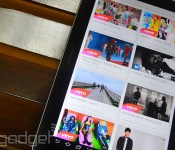
Making YouTube playlists can be a real pain, especially if you just want to veg out listening to music after a long day at work. If you’re using an Android phone or tablet, though, you can now just type in an artist’s name and voilà — YouTube will auto-generate a playlist with the artist’s most popular videos. The results, however, are mostly Vevo clips, and (sadly) it might not work for lesser-known artists. According to Android Police, this feature (called YouTube Mix) recently made its way to Android after popping up for desktops first in 2013. The lack of fanfare suggests it’s just something Google’s been experimenting with, so we wouldn’t be surprised if this is the first time you’ve heard of it. Since Mountain View hasn’t officially announced anything, we can’t say whether all Android users can access YouTube Mix — but it’s the weekend anyway, so have fun trying it out.
Filed under: Cellphones, Tablets, Mobile, Google
Via: Android Police
Source: Brandon Lall (Google+)

Android is reportedly getting voice commands everywhere

Outside of the Moto X, hands-free voice commands on Android are limited; pick up a Nexus 5 or Galaxy S5 and you’ll find that “OK Google” only works at the home screen. If Android Police‘s sources are accurate, though, you’ll soon get to bark out orders no matter where you are in the interface. Google is reportedly trying out an “OK Google everywhere” feature (mocked up here) that, much like the Moto X, is always listening and responds only to your voice. It might also pay attention to what you’re running. If you’re browsing snapshots, for example, you could tell your phone to “share this photo.”
That may not be the only change in store. Experiments are reportedly underway with a new navigation bar that replaces the usual home button with a “Google” item. Hit that and you’d start a search without having to speak first. If you need to return to the main screen, you’d use the “recents” (read: multitasking) key. Suffice it to say that this would be a big break for Google, which hasn’t changed its basic approach to navigation since Ice Cream Sandwich (Android 4.0) in 2011.
Don’t count on either the voice or search features coming to a phone near you, however. While AP believes that at least some of these Android revisions will reach shipping software, they’re not guaranteed to make the cut. Also, these may only show up in the official Google Now launcher — third-party phones could mix things up. Still, we wouldn’t rule out seeing any of these features on stage at the I/O conference this June.
Filed under: Cellphones, Internet, Mobile, Google
Source: Android Police
U.S. Cellular pushing out Android 4.4.2 to their Galaxy S4
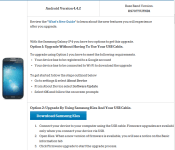
Hot on the delayed heals of Verizon, or possibly the other way around, U.S. Cellular customers are being treated to Android 4.4.2 KitKat for their respective Galaxy S4′s too. In their “What’s New” guide they talk about memory optimization, faster touch screen response time, and better multitasking.
 The update is trolling out via a typical OTA and could take a little while to hit every user out there. If you are a bit impatient, you can hook your Galaxy S4 up to your PC and use Samsung Kies to push the update onto your device. Either way, be sure you have well over 50% battery life before you get going on this.
Via U.S. Cellular 1 / 2
//<![CDATA[
ord = window.ord || Math.floor(Math.random()*1E16);
document.write('’);
//]]>

Engadget Podcast 394 – 4.25.14

Ben and Terrence are serving up a big bureaucratic burrito this week, chock full of net neutrality, legalese and corporate self-interest. To help you digest this gut-buster of a mind meal, we’ve enlisted Engadget’s Editor-in-chief and self-proclaimed armchair attorney Michael Gorman. It’s refreshing to know that the Supreme Court is having an intelligent discussion about Aereo’s conflict with the big wigs in broadcast TV, but the outcome is anyone’s guess at this point. As always, laws are laden with doublespeak and nebulous terms, leaving lots of wiggle room for greedy corporations that favor the bottom line over customers desires. Please join us for this week’s lawyerly edition of the Engadget Podcast.
Hosts: Terrence O’Brien, Ben Gilbert
Guest: Michael Gorman
Producer: Jon Turi
Hear the podcast:
04:41 – FCC claims it hasn’t abandoned net neutrality at all, opens a new inbox for comments
23:26 – What you need to know about Aereo’s battle with broadcast television
35:05 – The Supreme Court heard Aereo’s case, whether they understood it could mean everything
Subscribe to the podcast:
[iTunes] Subscribe to the Podcast directly in iTunes (enhanced AAC).
[RSS MP3] Add the Engadget Podcast feed (in MP3) to your RSS aggregator and have the show delivered automatically.
[RSS AAC] Add the Engadget Podcast feed (in enhanced AAC) to your RSS aggregator.
Download the podcast:
Contact the podcast:
Connect with the hosts on Twitter: @terrenceobrien, @realbengilbert, @numeson
Email us: podcast [at] engadget [dot] com
Filed under: Podcasts
Nike CEO: Focusing on software, ‘excited’ about relationship with Apple

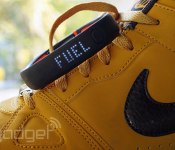
Just a week after a report emerged that Nike could be ending its Fuelband division, CEO Mike Parker confirmed that the company would be focusing more on software rather than just hardware. In an interview with CNBC, Parker said, “We are focusing more on the software side of the experience […] It’ll be integrated into other products that we create.” He also appears bullish on the Nike Fuel system, and hopes to increase the number of users on that platform.
As for the fate of the Fuelband itself, he wouldn’t comment on its reported demise or the related layoffs. However, he did say that there are currently over 30 million Fuelband customers and he hopes for that number to reach a 100 million, so it seems sales of the wearable won’t be ending just yet. When asked about a possible hardware collaboration with Apple, Parker was coy but did say that they’re “excited about where that relationship will go forward.” He also said “I will say that the relationship between Nike and Apple will continue” and that he was “very excited about what’s to come.” If this at all points to the possibility of an iWatch, we’re sure he won’t be the only one.
Filed under: Apple
Via: CNET
Source: CNBC

Apple Initiates iPhone 5 Sleep/Wake Button Replacement Program
 Apple has initiated a recall of some iPhone 5 models because the Sleep/Wake button may “stop working or work intermittently”, according to an Apple statement given to The Loop.
The company has created a special support website for the recall where customers can enter their iPhone serial number and see if their phone is one of the “small percentage” of iPhone 5 models that are affected.
Affected phones can be brought to an Apple Retail Store or Apple Authorized Service Provider, though the phone will need to be sent to an Apple Repair Center for servicing. Stores will have some iPhone 5 16GB models available as loaners. Another option is mailing the iPhone to Apple, with details available on the recall program’s website.
Replacement of the sleep/wake button mechanism is done at an Apple Repair Center. There are two ways to send your iPhone to the repair center—carry-in or mail-in. See below for details. The replacement process takes approximately 4-6 days from the time your iPhone is received at the repair center until it is returned to you. Your iPhone will be examined prior to any service to verify that it is eligible for this program and is otherwise in working order. Before sending your iPhone to Apple for service, you will need to back up all your data and erase all your content and settings.
Users who believe they have paid for an out-of-warranty replacement to rectify this issue should contact Apple regarding a refund and the company notes that this does not extend warranty coverage for any other issues. Additionally, the program is only effective for two years after the initial retail purchase of the iPhone 5 unit in question, meaning buyers who purchased the iPhone 5 when it first was released have at least five months to have their machines repaired.

What you need to know about Microsoft’s acquisition of Nokia

Nokia hasn’t always been a phone manufacturer. The company dabbled in paper products, footwear and tires before it became involved in the wireless industry. Starting today, it begins a new chapter as its Devices and Services division gets swallowed up by Microsoft in a $7 billion deal. Change is in the air, but very little is known about what exactly will be different now that the two companies are coming together in holy matrimony. Neither party was legally allowed to discuss details about the acquisition in public.
Today, Microsoft gets to flip the switch and Nokia gets to switch its business cards. (A shame, since its cards are very happy-go-lucky.) But this is just the beginning of a lengthy move-in process in which the two companies can finally start working together as one. Chances are we’ll still be asking questions about the merger several months down the road, but as execs explained to us, these kinds of procedures take time to get everything sorted out. For now, what should we know about the merger?
What is it?

Microsoft will take over Nokia’s Devices and Services business, which includes both Smart Devices and Mobile Devices. In other words: The Lumia, Asha and X series are now all under Microsoft’s umbrella. Design teams, supply chain, accessories, employees, developer relations and most of Nokia’s manufacturing plants and testing facilities are also on Microsoft’s side, as are most of the company’s services like MixRadio, Store and more. Here, Nokia’s mapping entity, is considered a separate business and isn’t included as part of the deal, but Microsoft has agreed to a 10-year licensing agreement.
Microsoft will also control IP agreements and any third-party contracts related to Nokia’s devices. Symbian should fit in this category, as well as any partnerships Nokia had with Qualcomm and other silicon companies. And in case you were wondering, the company’s imaging talent will make the switch over to Microsoft as well.
Since Microsoft retains rights to the Lumia and Asha brand names, the company will take advantage of them for the time being. Anything Nokia had in the pipeline will likely still come out in the next several months (unless Microsoft decides to veto certain products). A true Microsoft phone probably won’t be seen for at least 10 months, since it usually takes a long time to push a device through the development process.
Stephen Elop, who served as Nokia’s president and CEO, is now executive VP of Microsoft’s Devices Group and will report directly to CEO Satya Nadella. In this role, he oversees the company’s entire hardware lineup: phones, tablets, Surface, Xbox, Perceptive Pixel products (PPI) and even accessories. Additionally, 25,000 Nokia employees will make the transition over to Microsoft.
Why is this happening?
Microsoft and Nokia were already the closest of BFFs, but they still had to act as separate companies. Even though the two collaborated frequently, they each had to go through different development processes; both companies had their own resources, tools, culture and trade secrets, which created a lot of inefficiencies. By bringing Nokia into the fold, Microsoft can now work on both firmware and hardware from day one, theoretically making the process of developing, manufacturing and distributing a new phone or tablet much more efficient.
Additionally, Microsoft claims that with a greater understanding of how hardware and software work together, it will be able to apply that knowledge to its relationships with existing partners, developers and operators.
What will happen to my phone?

If you own a Nokia device, nothing should change. Your phone won’t mysteriously stop working or explode, but even if it does, Microsoft will honor any warranties you had in the first place. In a blog post, Elop reiterated his commitment to continued support for featurephones, as well as the Lumia, Asha and X lineups. We’d like him to be more specific, of course, but he likely means that Microsoft will stick to the current roadmap of new devices and firmware updates. Whether the company drifts away from this strategy later on is a different matter entirely, but existing Nokia users shouldn’t notice any changes to their phones as a result of this transition.
In a similar fashion, owners of other Windows Phones won’t see any changes either. At the moment, there isn’t any reason to suspect that Microsoft will magically stop working with other companies on updates or new devices; this wasn’t the case with the company when it launched the Surface, and it appears that Microsoft is actually expanding its relationships with other partners, as we’ll discuss shortly.
How do Microsoft’s partners feel?
Aside from generic press statements, most of Microsoft’s partners aren’t discussing how they feel about the acquisition, but we’re guessing there are mixed emotions. Reports say that Samsung teamed up with Google in China last month, arguing with regulatory officials that Nokia’s patent-licensing fees would go up under Microsoft rule; in fact, licensing in general has always been, and will continue to be, a concern. However, a handful of new companies have stepped forward as Windows Phone partners, including LG, ZTE and Lenovo and several Indian phone makers, which suggests that many companies are embracing the change instead of shunning it.
Perhaps these new partners are just open to the idea of launching a Windows Phone and are just waiting to see what happens after today’s merger. After all, few if any of the listed companies have announced their plans, and the rumor mill is curiously dry. Granted, it’s never a bad idea to have a partnership like this in your back pocket just in case it comes in handy. If any of Microsoft’s partners (outside of Samsung) are worried about not getting equal treatment, they aren’t speaking up about it — of course, this wouldn’t be anything new, since Nokia was considered the Windows Phone poster child ever since it started supporting the platform in 2011, so not much has actually changed in that sense.
How does the future look?
According to Microsoft, the future looks bright. However, mergers are historically much messier than the flowery press releases lead you to believe. They’re often riddled with layoffs, and customer-support issues, so it’s hard to believe that everything will just go as smoothly as planned.
As more details about the transaction come to light, there are two areas that we’ll be paying close attention to. The first is organizational: Will Microsoft keep all 25,000 employees for the long term, or will it have to streamline the workforce as is often the case? The second is in the form of device support. While Microsoft says it will continue to support Nokia’s entire portfolio, will it eventually drop the X because it runs on Google’s mobile OS? Will Lumia phones get Windows Phone updates before everyone else, or will the company treat all of its partners fairly? We still have plenty of questions, and now that Nokia’s device division is part of “One Microsoft,” the company can finally start answering them.
Filed under: Cellphones, Wireless, Mobile, Microsoft, Nokia
Fraggle Rock returns from the ’80s as Hulu’s first original kids show

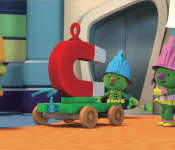
For video services like Hulu and Netflix, there’s no doubt that having a solid lineup of original content is imperative for the future. But, it is also very important to cover as many demographics as possible, whether it be that of people who love a good drama, or kids who need to watch something a little more colorful. With the debut of Doozers on the streaming platform today, Hulu now has a show that a young audience can enjoy and, in the process, continues to grow its portfolio of original series.
Doozers, a spinoff of the 80′s kids show Fraggle Rock, was announced by the company back in February, along with some added new and classic shows from a deal with CBS. This Hulu Original is described as a show that “encourages kids to design, create and innovate,” which is definitely something that could be great for your kids to get into. All seven launch episodes of Doozers are now on Hulu Plus, though you can also watch five of them for free on Hulu’s website; new episodes are set to arrive every three weeks, including some which will be produced over the course of the year to celebrate special holidays.
Filed under: Home Entertainment, Internet, HD
 AIVAnet