



Good luck, Microsoft: Nokia’s phone sales are down 30 percent

Nokia, at least in the form that we once knew it, is no more. The handset business has been cleaved off and sold to Microsoft, but that union isn’t beginning on a happy note. In Nokia’s final earnings report as an independent phone manufacturer, the outfit revealed that it isn’t just feature phone sales that are dwindling, but that people are spending less on Asha and Lumia handsets too. In fact, the company’s overall sales fell by 30 percent compared to the same period in 2013. Nokia blamed the lack of interest in its low-end devices by saying that the industry was in a race to the bottom, while at the top, it let out the usual refrain of “competitive industry dynamics” — a polite way of saying that Nokia and Microsoft have been unable to topple the behemoths of Android and iOS. That’s been proven with the latest Kantar figures, where it remains a long way behind the big two in both the US and China.
But what about Nokia, the company that, post-merger, is a mapping, telecoms and research outfit based in Finland? The report details that there’s $2.8 billion in the bank, not counting the cash that Nokia will receive in payment for its phone business, but without a failing handset manufacturer to prop up, the picture’s looking a lot rosier. In fact, Nokia’s patent licensing business pulled in roughly $119 million in profit in the last three months, while HERE maps brought in $13.8 million and the networks unit adding a further $300 million. Under new CEO Rajeev Suri, the company is planning on becoming a research and mapping giant that’ll feed the industry with lots of juicy tech and provide an alternative to Google’s location-based data. Whatever becomes of it now, however, we’ll be keeping our eyes on ‘em to see how they do.
Filed under: Cellphones, Mobile, Microsoft, Nokia
Source: Nokia (.PDF)

Apple’s MacBook Air is now $100 cheaper and has a marginally faster processor

Been waiting for a MacBook Air refresh? Breathe easy, friend, because one has arrived — well, sort of. Cupertino has quietly updated its online store with a familiar looking ultraportable, matching last year’s model almost spec for spec: 4GB of RAM, 128 or 256GB of flash storage, a 1,440 x 900 resolution display, Intel HD 5000 graphics and a slim wedge frame with all the trimmings — Thunderbolt and USB 3.0 ports and a SDXC card reader. The laptop’s processor, on the other hand, has been upgraded: We’re still talking about Intel’s Haswell architecture, but the standard 2014 MacBook Air now boasts a 1.4GHz Core i5 CPU. That’s only a hair faster than last year’s 1.3GHz processor while idling, but it also has a higher Turbo Boost speed (2.7GHz compared to 2.6GHz) and could well have better efficiency too, by virtue of the fact that it represents the best of what Intel’s fabs are currently capable of. The other big change is in the price, as these new units are $100 cheaper than the ones you could pick up yesterday. If you were looking for some Retina action, however, or a major step-change in battery life, then that’s probably still some way off.
Source: Apple UK
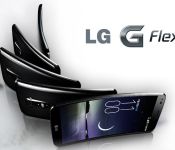
Sprint LG G-FLex Gets Android 4.4! More Android 4.4.2 for Moto X! – Device Updates

Monday is over with, and now it is time to see if your device has an update. Sprint is updating their LG G-FLex to Android 4.4, so make sure you’re on the lookout for that. Republic Wireless has a nice little lottery where 2,000 people are getting Android 4.4.2. Interesting way to do, but hopefully you are one of the lucky ones.
Device Updates
Sprint LG G-Flex gets KitKat
Verizon Galaxy Note 10.1 gets KitKat
US Cellular updates Galaxy S4 with Android 4.4.2
Verizon Galaxy S4 gets Android 4.4.2
Republic Wireless gives Android 4.4.2 to 2,000 Moto X users
//<![CDATA[
ord = window.ord || Math.floor(Math.random()*1E16);
document.write('’);
//]]>
LG one of the few making money from TVs as profits triple

While LG’s earnings and profits are dwarfed Samsung, at least it has some bragging rights this quarter. Unlike its Korean arch-enemy, LG actually made money with its home entertainment and display division, which it chalked up to better sales in large TVs. In fact, the company claims it now sells more big-screen displays than any other, including Samsung, with a 27 percent share of the market worldwide. That helped contribute to 14 trillion won ($13 billion) in total sales, with an operating profit of 504 billion won ($471 million) — triple what it managed the same time last year. (For a sense of scale, Samsung pulled in around $52 billion dollars and made $8 billion or so in profit.)
LG didn’t do bad in mobile, either, as it shipped 12.3 million smartphones, almost 20 percent more than last year. (Again, for a little perspective, Samsung sold 112 million smartphones in the same period.) Another feather in its cap was a 79 percent increase in LTE smartphone sales over last year — though that also reflects a significant uptick in 4G infrastructure around the world. Despite those bright spots, the company still lost a bit of money from its mobile division. However, LG confirmed that it’s set to launch the G3 during the next quarter, as expected. That should boost sales, since that handset will succeed its best-selling G2 model.
Filed under: Cellphones, Home Entertainment, LG
Source: LG

Microsoft donates $1 billion to help US schools buy PCs

Microsoft isn’t just supporting White House’s ConnectED education program by lowering the cost of Windows — it’s also giving schools the cash they’ll need to buy Windows PCs. The company is donating $1 billion to make sure that students have the tech they’ll need for both getting online and learning technology skills. The funding comes alongside a new device pricing program that should make the PCs more affordable — to start with, it’s offering sub-$300 systems from Acer, ASUS, Dell, Fujitsu, HP, Lenovo, Panasonic and Toshiba.
The company isn’t shy about having a commercial incentive behind its generosity; its Education CTO, Cameron Evans, tells CNET that there’s a hope that kids will become loyal Windows fans down the road. However, he adds that any eventual sales are secondary to the more immediate focus on improving education. The influx of cash should reduce the technology gap for less fortunate students, many of whom could miss out on digital learning without a little help.
[Image credit: Getty Images]
You can now use the iPhone for free, as long as you don’t mind old gear

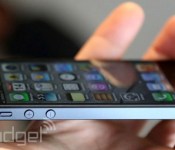
To date, FreedomPop’s no-cost phone service has been attached to older Android phones. That’s fine for many, but not exactly diverse. Your choices are a little better now that carrier has added iPhone support to its lineup, though. You can get 200 voice minutes, 500 messages and 500MB of data per month on Apple’s handset without paying a dime; it costs the equivalent of $5 per month if you need unlimited calls and texting. It sounds great, so what’s the catch?
As you might suspect, device selection is the big gotcha. Much like Ting, FreedomPop isn’t carrying the latest Apple technology. You’ll have to be happy with either buying a refurbished iPhone 5 for $349 or bringing over a Sprint-ready iPhone 4, 4S or 5 you already own. This isn’t the choice for those who want to live on the bleeding edge, then. Still, it does give you free LTE phone data — a major advantage when the only alternative on FreedomPop with similar speeds is a hotspot.
Filed under: Cellphones, Wireless, Mobile, Sprint
Via: Recode
Source: FreedomPop

Nokia moves on without its phones under new CEO Rajeev Suri

Where ever the future of Nokia lies, starting on May 1st it will get there under the leadership of new CEO Rajeev Suri. Known to be on the short list of candidates, he’s been with the company for over 20 years and took over as CEO of Nokia Solutions & Networks (aka Nokia Siemens, now renamed just “Networks”) in 2009 — experience that will prove relevant to the first of three focus points for Nokia going forward. Besides expanding its Networks business, Nokia is also investing in its Here services for location and mapping, and Technologies, which will license out its existing patents and develop new tech. Nokia is forming a whole new executive structure with other executive moves, as interim CEO Risto Siilasmaa goes back to his role as solely Chairman of the Board of Directors and Michael Halbherr takes over as CEO of Here. In a video address (embedded after the break), Suri says he anticipates that coming changes in tech “will be as profound as the creation of the internet,” and sees opportunities in front of Nokia that are “as great as I have ever seen.”

Now that the sale of “substantially all” of its Devices & Services business to Microsoft is complete, the remaining portions of Nokia will focus on broader problems for the telecom industry. We’ve seen hints at what else Nokia is capable of in the development and application of its Here mapping technology, which the company says can be found “in four out of five cars in North America and Europe with integrated in-dash navigation.” There’s even time for a shot at Google, as Suri points out that “Our view is that only one other company has location services that come close to the depth and breadth of those from HERE – and HERE has the advantage of being independent from any operating system or single business model” To develop new tech, it’s seeking out external inventors through the “Invent with Nokia” program, and its Networks business counts 90 of the world’s top 100 phone companies among its customers. The new company will continue to operate under the Nokia brand, and we’ll be watching closely to see what its post-Lumia trajectory is like.
Source: Nokia, Nokia (YouTube), Here Blog
Samsung introduces 20.7-megapixel Galaxy K Zoom

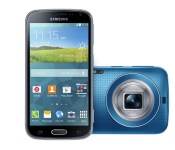
Samsung on Tuesday announced its latest member of the Galaxy family of devices, introducing the 20.7-megapixel Galaxy K zoom. Powered by Android 4.4 KitKat, the camera-centric unit features a hexa-core processor, 4.8-inch 720p display, 2GB RAM, and 8GB internal storage. Indeed, all of the familiar smartphone features are present, including 4G LTE connectivity, microSD, and NFC.
The main draw for the Galaxy K zoom, however, is the 20.7-megapixel rear camera with 10x optical zoom. Details here include a 1/2.3-inch CMOS sensor, 24-240mm lens (up to f/3.1), 1080p video up to 60 frames per second, and slow-motion video. All of the shooting modes found in the Galaxy S5 are present, as are a number of new features.
AF/AE Separation (Auto Focus/ Auto Exposure Separation) for the precise balance of light and clarity, next-generation Pro Suggest mode which offers 5 optimized filter settings, Selfie Alarm that allows users to take timed selfies with ease, and object tracing for a clear, focused shot of a moving subject.
The Galaxy K zoom will be offered in the same black, white, and blue dimple finishes as the Galaxy S5; pricing and availability is not clear.
The post Samsung introduces 20.7-megapixel Galaxy K Zoom appeared first on AndroidGuys.
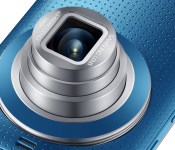
Samsung Galaxy K Zoom gallery

Take a look at Samsung’s latest member of the Galaxy family, the camera-centric Galaxy K zoom.


The post Samsung Galaxy K Zoom gallery appeared first on AndroidGuys.
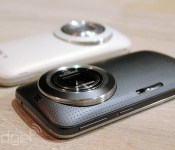
Samsung blurs the line between phone and camera (again) with the Galaxy K zoom

Last year, Samsung tried something a little kooky: it made a mash-up of a middling smartphone and a solid point-and-shoot camera (you know, the kind smartphones have nearly driven to extinction). The resulting chimaera was called the Galaxy S4 Zoom, and it was… not great. To absolutely no one’s surprise, though, Samsung’s fixation on fusion is still going strong and the company’s trying to crack the code again with a new camera/phone combo called the Galaxy K zoom.
Mildly silly name aside (the “K” stands for “kamera,” seriously), the international K zoom packs 2GB of RAM and one of Samsung’s hexa-core Exynos chipsets into its chubby, dimpled frame. In this case, the chip combines quad-core 1.3GHz and a dual-core 1.7GHz processors — the pairing isn’t as snappy as a Galaxy S5, but it’s still beefy enough to handle most people’s daily routines. Toss in 2GB of RAM, 3G and LTE radios, 8GB of internal storage and a spacious 4.8-inch 720p screen and you’ve got yourself a package that’s a bit more robust than most. If the name wasn’t a dead giveaway though, the K zoom’s 20.7-megapixel BSI CMOS camera sensor is the star of the show here. Samsung’s rear shooter is kitted out with optical image stabilization, the ability to shoot 1080p video at 60 frames per second and a slew of software features that aim to make your on-the-go photos less terrible. That all sounds fine enough on paper, but here’s the bigger question: what’s it like to actually use?
Long story short, better than you might expect.
The first thing you notice upon laying eyes on the K zoom is how much it looks like an actual phone, a design philosophy that stands in stark contrast to the mixed signals the S4 Zoom gave off. This time around, Samsung chose to make the K zoom sleeker and more comfortable to hold — we’d argue that’s a net positive, though we almost miss the curvaceous rump that acted as a grip on the K zoom’s ancestor.
It’s not just the design that’s been improved. To no one’s surprise, it’s image quality is much better than its predecessor’s too — images the K zoom captured looked pretty sharp and reasonably vivid on its bright display, but we’ll refrain from passing judgment until Samsung gets around to shipping final hardware. That has a lot to do with the optics though, and at first glance that 10x zoom lens is a treat. You can pinch to zoom in and out just like you can on nearly any other smartphone, but there’s no cropping here — your gestures make the 10x optical zoom lens swoop in and out of the phone’s body. This, frankly, is beautiful. You don’t need to reset your expectations for how to interact with a smartphone camera, but the end result is significantly better shot than what you’d get out of a competitor without a moving lens.

As always, Samsung went on a bit of a software spree to make it a hair easier to capture some quality shots. The Pro Select feature, for instance, automatically recommends five of the myriad available filters depending on what sort of environment and lighting conditions it sees. In the mood for a little tweaking? There’s also a full manual mode (naturally), but here’s the kicker: if you happen upon a combination of settings you really dig, you can make it a preset and upload it into an online store front where others can download it. And we of the selfie generation would be remiss if we didn’t mention the Selfie Alarm, which will automatically snap three shots of your own face using the main camera once your head wanders into the proper pre-defined position in space
All things considered, we didn’t get to spend much time with the Galaxy K zoom at all. What does seem clear is that Samsung took a formula that was in dire need of polish and finally managed to do it some justice. At this point, the company hasn’t said exactly what the K zoom will cost or where specifically it’ll be available, but we’d expect it won’t be long before the full global onslaught begins in earnest.
Filed under: Mobile
 AIVAnet