



Scratch Wireless Service review
<img width="640" height="360" src="http://www.androidguys.com/wp-content/uploads/2014/04/ScratchWirelessLogo.jpg" class="attachment-medium wp-post-image" alt="Scratch Wireless Offers Free Cellular Service to Those on WiFi as well as free off network SMS." style="display: block; margin-bottom: 5px; clear:both;" data-attachment-id="65636" data-orig-file="http://www.androidguys.com/wp-content/uploads/2014/04/ScratchWirelessLogo.jpg" data-orig-size="640,360" data-comments-opened="1" data-image-meta=""aperture":"0","credit":"","camera":"","caption":"","created_timestamp":"0","copyright":"","focal_length":"0","iso":"0","shutter_speed":"0","title":""" data-image-title="ScratchWirelessLogo" data-image-description="<p>Scratch Wireless Offers Free Cellular Service to Those on WiFi as well as free off network SMS.</p>
” data-medium-file=”http://www.androidguys.com/wp-content/uploads/2014/04/ScratchWirelessLogo.jpg” data-large-file=”http://www.androidguys.com/wp-content/uploads/2014/04/ScratchWirelessLogo.jpg” />
Scratch Wireless is the way to free wireless service for many. Let’s face it, unless you’re always on the road, most of us are connected to WiFi for a great portion of the day. This is where Scratch Wireless comes in hand at no cost, provided you have their device.
The Scratch Wireless Logic

Scratch operates on a WiFi First outlook, in a general 24-hour period, most of us are going from home to work, schools, friends’ homes, family’s homes, etc, and back where you’ll be on WiFi. Scratch Wireless wants to make things much easier for those who don’t want the hassle of being tied to a hefty monthly bill.
WiFi Connectivity is all around us – from home to work, friends homes, coffee shops, bars, book stores, and so much more. Why not take advantage of these connections?
So when you purchase a Scratch device, (more on that below), you’ll get a phone number assigned (or transferred) once you’re hooked up to WiFi, you’ll be free to make and receive phone calls, send and receive text and picture messages, browse the internet and more – just like you would on any traditional network. Now whenever you happen to be away from WiFi networks, Scratch is partnered up with Sprint, so with that same phone number, you can stay connected to everyone via text messaging. So the wonderful thing about Scratch is that everything I’ve just mentioned is for the low price of free, with a Scratch Wireless device.
Day Passes are available for those who need limited voice and data access away from WiFi.
Scratch Service
Again with a great price (or lack thereof), great plan features, and unlimited off-network SMS, Scrach is definitely ideal for the less travelling of us adults, collage students, and even teens. At first experience, the service was superb – I was able to make and receive calls without issue, clear call volume, no significant delay issues, no issues with SMS or MMS, etc. Odd enough, using the same WiFi networks, my starting process had a few big bumps in the road.
While at first quality was great, that changed a bit soon after. I had difficulty with call quality, occasional call drops, and delay issues. I soon got in touch with Scratch Customer Support and did basic checks to make sure I was connected to a strong network, had the latest versions of the Scratch application, etc. While it may have taken a bit, I had to make some changes to my WiFi and service was once again optimal.
So on some networks there may be connection issues from time to time, usually quality is great.
The Scratch Device

Scratch Wireless uses a specially pre-programmed Scratch/Sprint Motorola Photon Q. This device, (pictured above), is not quite your newest generation Android device, but it certainly gets the job done. The Q is running Android 4.1.2 Jelly Bean and is compatible with just about all applications found on the Google Play Store.
A bit bulkier than you’ll see with today’s devices, the Q is more akin to the Droid 4. You can still play your favorite games, use your favorite apps, and optionally use the sliding physical back-lit QWERTY keyboard.
Overall
Scratch Wireless is a great is a great alternative to the money-thirsty vampires that we call carriers for those almost always connected to WiFi. The takeaway is the service plan and quality, as Scratch plans to add more devices to the lineup in the upcoming years.
Head on over to learn more about Scratch Wireless and the WiFi-First revolution, and get your invite to join.
The post Scratch Wireless Service review appeared first on AndroidGuys.

Sprint expands 4G LTE and Spark networks

Sprint on Tuesday confirmed the expansion of its 4G LTE and Sprint Spark networks, with new cities around the country. The 4G LTE network reaches another 41 markets today, bringing the total to 443 cities and 225 million people across the United States. As for the tri-band Spark coverage, it is now available in six additional markets. With downloads speeds up to 60Mbps, Sprint’s service is available to 14 different devices. The goal, according to the carrier, is to blanket 100 million people by the end of 2014.
Sprint Spark is available in the following 24 cities: Austin, Texas; Baltimore; Chicago; Dallas; Fort Lauderdale, Fla.; Fort Worth, Texas; Houston; Jacksonville, Fla.; Kansas City, Kan./Mo.; Los Angeles; Miami; New York; Newark, N.J.; Oakland, Calif.; Orlando, Fla.; Philadelphia; Provo, Utah; Salt Lake City; San Antonio; Tacoma, Wash.; Tampa, Fla.; Trenton, N.J.; Waukegan, Ill.; and West Palm Beach, Fla.
The post Sprint expands 4G LTE and Spark networks appeared first on AndroidGuys.
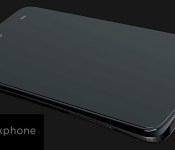
Privacy focused Blackphone to feature a Tegra 4i chipset

Running a modified version of Android called PrivatOS, the smartphone for the privacy concerned, made by Swiss mobile manufacturer SGP, just got a decision on the chipset it’ll be using.
SGP, a joint venture between Silent Circle and Geeksphone, have settled on using a Tegra 4i chipset for their Blackphone. SGP have also updated the spec sheet for the device, so here’s the full rundown:
– Tegra 4i quad-core 2GHz ARM Cortex-A9
– HSPA+/WCDMA, LTE
– 4.7-inch 720p HD display
– 8-Megapixel rear-facing camera
– 5-Megapixel front-facing camera
– 2000mAh battery
– MicroSIM and MicroSD slot.
The Blackphone is built on a custom Android 4.4 KitKat build which, hence the name, implements a number of security and privacy features for those who are concious of the issues with their device impacting their privacy.
“Blackphone’s design offers the best features on the market, from stunning video displays and app multi-tasking to enhanced battery life—in addition to signature features such as award-winning private-encrypted voice and video calls and text messaging with attachments from Silent Circle, anonymous browsing and mobile VPN protection from Disconnect, and private-encrypted cloud storage from SpiderOak”
The Blackphone has been up for pre-order since 24th February for $629 or $375 and is due to ship in June. At least now with the full specs disclosed early adopters will see how much phone their money will get them.
The post Privacy focused Blackphone to feature a Tegra 4i chipset appeared first on AndroidGuys.

The Samsung Galaxy K Zoom is official, perfect for the obsessive mobile Photographer
 The Samsung Galaxy S4 Zoom was one of the more interesting devices to come from Samsung last year. Combining the general shape of the Galaxy S4 with more of a photography focus was an intriguing combination, and at the very least, an impressive niche product. Whatever you thought of it, Samsung is obviously confident enough to follow that device up with this year’s offering, the Samsung Galaxy K Zoom.
The Galaxy K Zoom combines the design and look of a fully functional Galaxy S5 smartphone with a 20.7MP camera lens with 10x optical zoom. In addition to the beefy camera specs, the Galaxy K Zoom also benefits from OIS which should help immensely with stabilizing images and videos. The 4.8-inch device is more than just a pretty face, however, as it possesses a hexacore Exynos 5 Hexa processor, 2GM RAM, Android 4.4 and a 2,430mAh battery. What’s probably most interesting is that Samsung didn’t name the devices the Galaxy S5 Zoom, possibly implying that they don’t necessarily want the Zoom line to be inherently tied to their flagship releases. Whatever the truth, it looks like Galaxy Zoom devices are here to stay, for now.
What do you think about the Samsung Galaxy K Zoom? Are you considering getting one over, say, the Sony Xperia Z2? Let us know your opinion in the comments below.
Source: SamMobile
//<![CDATA[
ord = window.ord || Math.floor(Math.random()*1E16);
document.write('’);
//]]>

The new Engadget: It’s all about you… except when it’s about us

When Engadget started 10 years ago, flip phones were ubiquitous; Firefox was still the new kid on the block; and EDGE was cutting-edge wireless technology. Clearly, things have changed. There’s never been a more exciting time in the consumer electronics industry. Innovation occurs at an astonishing pace; crowdfunding gives anyone with a good idea the means to bring it to fruition; and, hell, we can print functional rocket engine parts now. We live in a magical future, and to best tell you all about it, Engadget needs to evolve. How? I’ll get to that, but first, let me introduce myself. I’m Michael Gorman (the bearded fellow seen above), your new editor-in-chief, and, along with new Executive Editor Christopher Trout, I’m steering the good ship Engadget on its revised course.
Covering an industry as fast-paced and robust as consumer technology, it’s easy to get lost in the minutiae. For 10 years, Engadget has been laser-focused on exhaustive coverage of that industry and in the process, we’ve become the go-to source for “phone gets update” posts and stories that read like a spec sheet. All at the expense of telling you what it all actually means. Today, that changes.
It’s not that we’re tossing screen resolutions and processor speeds into the bin, but we are going to focus on telling the stories behind those specs. Technology is changing our world in astonishing and sometimes devastating ways, and it’s our mission to tell you how and why with the same wit and insight you’ve come to expect from Engadget. As always, we still want to be your go-to source for info on all the gadgets (new and old), and if you’re interested in the nitty-gritty of gadgetry, our database is there to break it all down for you.
It’s time to take a step back and look at the big picture. And if you haven’t noticed, we’re literally dedicated to that mission with the rollout of much larger article images. Not all of the new photos will be so self-serving (promise), but size-wise at least, there’s plenty more where that came from.
We’re just getting started.
Filed under: Announcements, HD, Mobile, Alt

Google Glass users can now say ‘Explore Nearby’ to launch Field Trip, discover the world around them

When Google released its Field Trip app for Glass back in August last year, it made perfect sense. You could finally use the wearable computer as a handy visual tour guide when you’re out and about, which in our opinion is a far better use-case for it than checking email or reading text messages. That said, the original Field Trip wasn’t the smoothest experience, as you still had to tap the eyewear’s touchpad to launch it. That changes today, however, with a new voice command feature that lets you activate the app simply by saying “OK Glass, Explore Nearby,” effectively making it a top-level command similar to “Take a picture” or “Get directions.” Given that the app was developed by Niantic Labs, an internal startup within Google, it’s no surprise that it works so seamlessly with the Google hardware.
Once you utter “OK Glass, Explore Nearby,” the Field Trip app will appear, showing you nearby attractions and restaurants along with details from categories like History, Art, Architecture, Food and Cool Stuff. I tried out an early version of the app, and it does indeed work as promised, allowing me to find out the history of a nearby building simply by using my voice. I still needed to tap and swipe the touchpad to narrow down to a particular category, but here’s hoping even that can be relegated to your voice some day. After that though, the app remains relatively passive and notifies you of anything interesting as you walk around. We’ve included a promo video here that demonstrates how that works.
If you’re wondering why it took so long for Field Trip to incorporate the voice command feature, Leif Wilden, a Google software engineer who’s also a part of Niantic Labs, tells us that Glass is still an evolving platform. He states that “the capability to integrate apps such as Field Trip with voice commands has become available only recently.” Aside from the voice command, Field Trip has also been updated with content from more publishers — a little over 200, in fact. Some of the more recent additions include Happy Vermont and Guide to Copenhagen. Yennie Solheim Fuller, a Niantic Labs marketing associate, tells us that they’re constantly scouring the web for hyperlocal content that they can incorporate into the app, with sources that range from Zagat all the way to smaller blogs and community sites. “We want content on tiny towns like Belmont too,” she said, emphasizing that Field Trip won’t just have info about big cities.
Glass Explorers can go ahead and get the new Field Trip today using the MyGlass software. If you’re an existing user, you’ll need to toggle it off and on again to get voice commands. We’re not sure if this app is quite enough to justify the $1,500 for Glass though, so if you’ve just got yourself a new pair, do let us know if it’s worth it.
Source: FieldTrip, FieldTrip (Google+)

Sprint loses hundreds of thousands of customers due to ‘service disruption’

Now that T-Mobile has upped its game, Sprint is left as the only major US carrier still struggling with financial losses. That didn’t get much better this quarter, as the company lost 364,000 pre-paid and 231,000 valuable postpaid customers. It says the losses were anticipated, and were largely due to “service disruption” caused by the ongoing overhaul of its network infrastructure. Whatever the reason, the end result was the same old story: It finished with a net loss of $151 million for the quarter. The good news, however, is that Sprint’s losses seem to be getting smaller as time ticks on — it actually lost four times as much money in the same period last year.
Filed under: Cellphones, Wireless, Sprint

iPhone 6 Camera May Feature Electronic Image Stabilization, Bigger Pixel Size
 Apple may be planning to use electronic image stabilization instead of optical image stabilization in the iPhone 6, according to new details shared on Weibo [Google Translate] by ESM China analyst Sun Chang Xu (via GforGames). Xu suggests that the iPhone 6′s camera will also boast a larger pixel size of 1.75 um compared to the 1.5 um pixel size of the iPhone 5s’ camera, which would result in a higher picture quality as more light can be taken in.
While previous reports have indicated that Apple is looking to integrate optical image stabilization into the iPhone 6, adding an electronic image stabilization system would allow for the device to have a slimmer camera that does not protrude out of its body. To this point, a number of alleged iPhone 6 images, including renders posted by Japanese magazine MacFan last month, have depicted the iPhone 6 with a protruding camera.
Xu also previously reported on her Weibo account that the iPhone 6 will add pressure, temperature, and humidity sensors, and that the iWatch will utilize optical sensors to measure heart rate and oxygen levels.
Apple is expected to launch the iPhone 6 this fall in two different sizes of 4.7-inches and 5.5-inches. The smaller 4.7-inch version of the iPhone 6 will likely ship first, while the larger 5.5-inch version is estimated to ship later due to challenges with the device’s display technology and battery life.
In addition to a larger display and an improved camera, both models of the iPhone 6 are expected to include a thinner, bezel-free design, faster A8 processor, and Touch ID fingerprint sensor. The device will also likely debut with Apple’s iOS 8 mobile operating system, which will feature improvements to Maps, Siri, and iCloud in addition to a new “Healthbook” app. Apple is also said to be negotiating with carriers to increase the price of the iPhone 6 by $100.

LG is making a webOS TV range just for John Lewis stores

John Lewis is a big fan of cornering retail exclusives on gadgets, and it now appears that this love is extending to smart TVs. Pocket-lint has noticed that the department store chain is teasing the JL9000 series, a line of self-branded, LG-designed webOS TVs that should be more than just a rehashes of the sets we saw at CES this year. The 49-, 55- and 60-inch models will all include stands with built-in 2.1-channel soundbars, giving you decent (if likely unremarkable) audio out of the box. There’s also promises of support for local streaming services such as BBC iPlayer and Now TV, although we’d frankly be surprised if these didn’t appear on a UK-specific set.
The catalogue only promises that the JL9000 range will be available “next month,” so it’s not clear exactly when you’ll get to swing by the local shop for a look. However, these models will certainly be pricier than garden variety webOS sets. The 49-inch variant will start things off at £1,499, while the 55- and 60-inch editions will respectively cost £1,899 and £2,299 — apparently, those speakers command quite a premium.

Filed under: Home Entertainment, HD, LG

Apple Launches Updated MacBook Airs with Faster Haswell Processors and Drops Price
As indicated last week and yesterday, Apple today launched updated MacBook Airs, which feature faster versions of Intel’s Haswell processors at $100 less across the board. The updated models are currently out in Apple’s European Online Stores, and are expected to be available in Apple’s U.S. Online Store shortly.

All standard models of the 11-inch and 13-inch MacBook Air now come with a faster 1.4 GHz dual-core Intel Core i5 processor along with the same 4GB of RAM. Both entry-level configurations of the 11-inch and 13-inch models now sell for £749.00 and £849.00 with 128GB of flash storage, while the higher-end 11-inch and 13-inch models come in at £899.00 and £999.00 with 256GB of flash storage, respectively.
Build-to-order options include a 1.8 GHz dual-core Intel Core i7 processor with up to 8GB of RAM on both the 11-inch and 13-inch MacBook Airs.
Apple is also rumored to be working on a 12-inch MacBook with a new ultra-slim design and a high resolution Retina display.
The updated 11-inch and 13-inch MacBook Airs are available today through Apple’s various retail locations and online store, with all standard configurations showing availability of “within 24 hours.”
 AIVAnet

