



My VCR taught me about sex

Sex. The word alone still makes me giggle. But that’s more to do with my status as a self-described man-child, and a proud one at that, than any real sexual immaturity. Blame my parents. They never sat me down for a serious talk about the proverbial “birds and the bees.” Neither did my older brother and sister, the supposed torchbearers of all pre-teen sex how-tos. So I got my education elsewhere; from a keen bit of advanced (for the time) videocassette-recording technology called the VCR and premium cable. Timeshifting made me a man.
It was the early ’90s. A Wednesday; I remember as much because hump day always meant a half day of school and a few hours free of parental supervision. The television was a Mitsubishi model: 30 imposing inches housed within kitschy wood paneling. In the uncommon quiet of my TV room that afternoon, you could hear the hum of the JVC-brand VCR as it turned the wheels of a home-recorded VHS tape inside. Onscreen, a badly dubbed, low-quality copy of a French film called College Dormitory was playing, requiring occasional adjustments to the tracking. And, in front, four pre-teen boys sat awkwardly gawking at the screen in rapt silence. This was a porno-viewing party I’d arranged for some neighborhood friends. This was my self-taught introduction to sex.
This was a porno-viewing party I’d arranged for some neighborhood friends. This was my self-taught introduction to sex.
At 10 years old, I was already too smart for my parents. I had the cable remote’s Favorites button programmed to skip through an innocuous trail of blasé basic channels should the siren sound of my parents’ approaching heavy footsteps impede on my illicit TV watching. Which, let’s be clear, wasn’t even anything that risqué to get upset about. It was mostly R-rated movies, like Coming to America, that played on HBO before my bedtime. I never actually got to stay up late enough for HBO and its sister channel in soft-core programming, Cinemax (now lovingly referred to as Skinemax), to let down the curtains and go full-tilt on the bare boobies-laden B-movies. And, yet, I saw more simulated sex (and bad acting) by the age of 11 than most other boys on the cusp of double-digit preadolescence.
Three things made this possible: the timer on the VCR, a roll of black electrical tape and a heady dose of precociousness. See, back then, HBO would issue a monthly paper guide to its programming schedule replete with an index in the back for all the movies. Each month, I’d set time aside to research what movies were rated for nudity and when they’d air. Then came the scheming. I’d cook up outlandish excuses and distractions for my parents so I could stay up late enough to watch TV. But no matter how brilliant my diversions, I always failed at this. My parents may not have been up and up on the nuances of new home electronics, but they did make it a point to have the house quiet by 9PM each night.

And then I discovered the ability to set timed recordings on the VCR. This knowledge, nay, this epiphany came to me by accident. I’d only been messing around with the various buttons and menu settings on the VCR remote when I chanced upon it. That was all it took to send my juvenile brain into mischief mode. I knew I could record things — naughty things — that aired while I was asleep, but there remained a pesky flaw in my plan: the telltale, glowing-red VCR recording light of doom.
As luck would have it, our VCR was jet black and in the darkness of the TV room at night, that box became little more than a shadow obscured by the brightness of the tube below. Except for when it was recording. Then, and only then, did you notice the VCR screaming out from its perch atop the TV set. I needed a way to silence that red alert. So I obfuscated it with an expertly cut swatch of black tape. Problem solved.
In this era of streaming video and high-speed downloads, porn’s just a simple Google or Tumblr search away…
The only obstacles left in the way of my premium-cable sex education were my parents’ sleeping habits. My mother wasn’t an issue. She barely ever watched TV and struggled to power on both the TV and cable box. My dad was the one to worry about. His schedule was unpredictable. Sometimes, he’d stay up late watching sports or Steven Seagal movies, leaving me no time to sneak into the TV room, set the timer and channel and affix the black tape. Other nights, he’d go to bed right when we did. But he was reliable in one very crucial way: When he went down for the count, he didn’t wake up until morning. That’s when I’d make my move. That’s how I amassed a VHS library of Skinemax’s greatest hits.
College Dormitory. Blown Away. Takin’ It All Off. Emmanuelle (and all the sequels). Real Sex. Before I’d even hit puberty, I’d become a connoisseur of soft-core erotica; the go-to for any friend that needed a quick VHS porn fix, and probably the youngest boy to ever see Shannon Tweed’s entire B-movie oeuvre. My tastes and preferences have mercifully evolved since then.
It’s easy to forget where we come from; to ignore the way technology has shaped us when you’re growing with it in tandem. In this era of streaming video and high-speed downloads, porn’s just a simple Google or Tumblr search away… on a phone. Someday, someone’s going to reminisce about Snapchat — maybe even in a thousand-word piece for Engadget. But this is my moment to remember the way things were and salute a bygone era of crude VCR timeshifting and shitty Skinemax soft porn.
[Image credit: Getty]
Filed under: Misc, Home Entertainment

Acer’s Switch 10 is a shape-shifting tablet with four display modes

You gotta hand it to Acer for giving its products self-explanatory names. The company just announced the Aspire Switch 10, and it’s pretty much exactly what it sounds like. Which is to say, it’s a 10.1-inch Windows device that switches (get it?) from one mode to another. In particular, it’s a tablet with a magnetic keyboard dock, allowing you to use it as a tablet, a clamshell laptop, or in one of two hybrid modes: “Display” (with the screen facing away) and “Tent” (upside down). In practice, then, it’s kind of a cross between Lenovo’s Yoga series and Lenovo’s reversible ThinkPad Helix tablet. The big difference: it has a much lower-power processor than the Helix, and doesn’t accept pen input. Even so, we suspect Lenovo’s laughing somewhere.
Though the dock has a pair of spiky anchors to guide the tablet in, it’s mainly magnets holding the two pieces together. In my brief hands-on with it, I was surprised to find that, despite the otherwise cheap build quality, the tablet and dock do indeed click together instantly, with very little effort required on the part of the user. At the same time, they’re easy enough to pull apart when need be. As for the dock, it brings a full-sized USB port, microSD slot and a miniature HDMI port, and there will apparently also be another dock with a built-in hard drive.
Under the hood, it runs an Intel Atom Z3745 CPU. No battery life rating as of yet, though if this Bay Trail tablet is like other 10-inch Bay Trail tablets, we wouldn’t be surprised if it delivered 10 hours on a charge. On the outside, you’ll notice front-facing speakers — placed so that the sound won’t get muffled in any of the four positions. The display, meanwhile, is of IPS quality with Acer’s “Zero Gap” bonding technique promising minimal glare. Indeed, the screen held up well in a mix of flourescent and natural light, though that was all indoors, mind you — none of the press here at Acer’s New York City press event had the chance to test it outside. Aside from those details, that’s all we know right now in terms of specs, though we can at least give you a price: Acer says it will cost $380 in the US and Canada when it arrives in June.

Firefox gets a big redesign that’s all about customization

Firefox has had a tough time standing out among browsers — Chrome gives you Google’s ecosystem, while both Internet Explorer and Safari have the luxury of being system defaults. Why would you choose Mozilla’s software over the others? As of today, customization may be the answer. The organization has just released the finished version of Firefox 29, a major overhaul that makes personalization easy on the desktop. Its new customization mode lets you put any feature or service in the toolbar or menu bar; if you just have to keep a Pinterest add-on available at all times, you can make it happen. It’s quicker to customize your bookmarks, too.
The redesign minimizes clutter beyond just the new menu bar, with an overall slimmer design that hides tabs you’re not using. Syncing between devices is also simpler — whether you’re using the browser on the desktop or an Android device, you now just have to sign in to get your open tabs, bookmarks and login details from other devices you use. There’s no certainty that the Firefox makeover will tempt you away from competing web clients, but it may be time for another look if you haven’t checked out Mozilla’s work in a while.
Filed under: Internet, Software
Source: Mozilla, Google Play
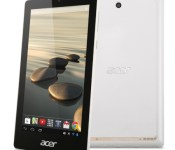
Acer outs Iconia Tab 7 phone-tablet hybrid, upgrades its 7-inch Android slate

Another day, another tablet launch. Just a few months after announcing the 7-inch B1-720 Android tablet at CES, Acer has decided it can do better. The company just announced the Iconia One 7 (aka the B1-730), another 7-incher, this time with a sharper screen (1,280 x 800 resolution, up from 1,024 x 600). Just as important, perhaps, Acer went with a faster Intel Atom Z2560, which should be an improvement over the bargain-basement MediaTek CPU used in the last edition. Not just faster, mind you, but perhaps more energy-efficient, too: Battery life is now rated at a more respectable seven hours, whereas before it could only last five. As for software, Acer says it will ship with Android 4.2 (Jelly Bean), but will be upgradeable to Android 4.4 (KitKat). Look for in the US and Canada in May, starting at $130.
Meanwhile, speaking of 7-inch slates, the company announced the Iconia Tab 7, a tablet that doubles as a proper phone — a concept we’ve seen before. Like the new Iconia One, it rocks a 1,280 x 800 screen on some models (Europe gets the 1,280 x 800 version, while Mexico gets a lower-specced 1,024 x 600 edition). Under the hood, meanwhile, it runs off a quad-core MediaTek CPU, suggesting it won’t be quite as robust as the other tablet announced today.
If that weren’t evidence enough that this is a budget tablet, get a load of the connectivity options: the tablet tops out at 3G speeds, as opposed to LTE. On the plus side, it ships with Android KitKat and Acer says it coated the screen in a special finish that’s supposed to reduce fingerprints (we’ll see about that). All told, with specs that skew so far toward the lower end, this is mainly a device for emerging markets. Indeed, Acer says the tablet will be available in Latin America, Asia and parts of Europe, but not the US or Canada. If you happen to live in a qualifying country, though, you’ll be able to get it for €149 (around $206) or 1,990 Mexican pesos (about $152).
Image credit: Liliputing

Engadget giveaway: win a Toshiba Chromebook and Aries Pro courtesy of Nyrius!

Wireless connectivity and streaming have become standards today, but not all devices are created equal. If you’re looking for 1080p HD quality and full 5.1 surround, then this week’s giveaway has your name all over it. The folks at Nyrius have provided one of its Aries Pro wireless HDMI streaming devices and even chucked in a Toshiba Chromebook to help one lucky Engadget reader get on with the show. The Aries Pro not only lets you fling HD audio and video from your laptop, but it also plays well with desktop PCs and gaming consoles. It’s a capable tool for sending business presentations to the big screen and can save on wiring for ceiling mounted projectors, too. Just head on down to the Rafflecopter widget below for up to three chances at winning this wireless streaming combo.
- Entries are handled through the Rafflecopter widget above. Comments are no longer accepted as valid methods of entry. You may enter without any obligation to social media accounts, though we may offer them as opportunities for extra entries. Your email address is required so we can get in touch with you if you win, but it will not be given to third parties.
- Contest is open to all residents of the 50 States, the District of Columbia, and Canada (excluding Quebec), 18 or older! Sorry, we don’t make this rule (we hate excluding anyone), so direct your anger at our lawyers and contest laws if you have to be mad.
- Winners will be chosen randomly. One (1) winner will receive one (1) Toshiba Chromebook (CB35 A3120) and one (1) Nyrius Aries Pro wireless 1080p HDMI streaming device.
- If you are chosen, you will be notified by email. Winners must respond within three days of being contacted. If you do not respond within that period, another winner will be chosen. Make sure that the account you use to enter the contest includes your real name and a contact email or Facebook login. We do not track any of this information for marketing or third-party purposes.
- This unit is purely for promotional giveaway. Nyrius, CWD and Engadget / AOL are not held liable to honor warranties, exchanges or customer service.
- The full list of rules, in all its legalese glory, can be found here.
- Entries can be submitted until April 30th at 11:59PM ET. Good luck!
Filed under: Announcements
HTC’s flagship phone is getting audio help from Harman Kardon

Well, can’t say we saw this one coming — rather than dig into the complexities of an HD Voice rollout, Sprint CEO Dan Hesse confirmed that it, HTC and the folks at Harman/Kardon have created a special Harman Kardon version of the HTC One M8. Why? Apparently because the way most other smartphones play music leaves much to be desired.
No one has waved around one of these things yet, but that’s OK. All of the magic happens in software anyway (although it apparently has a “champagne streak” to let everyone know how much more premium it is). The star of the show is a software feature called Clari-fi — while it’s easy to look at it as the successor to Beats Audio, it sounds a lot more substantial than a glorified audio profile. To hear Harmon Kardon tell it, Clari-fi leans heavily on algorithms that analyze music and aim to restore the complexity of sound lost in the production process. At this point, it’s anyone’s guess as to how good the end result actually sounds, but you won’t have to wait long to find out: the special edition M8 will hit Sprint stores on May 9.
This is a developing story, please refresh for updates.

Sprint’s giving out six-month Spotify trials for folks on Framily plans

Sprint’s holding a little shindig in New York, but it was a little lighter on the HD Voice detail than we expected. The carrier just announced an exclusive tie-up with Spotify that’ll give big swaths of subscribers the chance to rifle through streaming music service’s hefty catalog.
Here’s the skinny: if you’re on one of Sprint’s Framily plans, you get an six month free trial of Spotify’s premium plan (which boils down to ad-free music access, offline listening, and the ability to actually choose the song you want to hear). You’ll get a tidy little discount should you choose to stick with Spotify after the trial too, though your price break actually depends on how many other people are on that plan with you. And if you’re not someone’s Framily member? You still get a three month extended trial, though you’ll have to pay the usual $9.99 per month after that.
This is a developing story, please refresh for updates.
Filed under: Mobile

Lunecase Uses Electromagnetic Energy to Display iPhone Notifications [iOS Blog]
Ukranian company Concepter today debuted a new Kickstarter project for the Lunecase, a new iPhone case that uses electromagnetic energy emitted from the iPhone to detect and alert users when a text message or phone call is placed.
The Lunecase does does not require a battery or a connection with the phone, but it is able to determine when the iPhone receives an SMS message or a phone call, at which point it lights up an LED on the back of the phone to create a visual notification.

The case is smart enough to tell the difference between the two types of notifications and the LED in the case is powered by energy emitted by the iPhone itself. Eliminating the need for a battery allows the Lunecase to retain a thin form factor while being able to provide notifications. Lunecase was initially shown off at CES 2014, where it received positive reactions.

“Accessories made for the iPhone can sometimes take the beauty and easy functionality away from the phone,” said Concepter founder Vlad Tislenko. “Lunecase brings the back of your phone to life and enhances the natural iPhone functionality with no batteries, no cords and no bulk.”
Currently, Concepter is creating Lunecases for the iPhone 5/5s and the iPhone 5c.
A limited number of black Lunecases can be preordered on Kickstarter for $30, with a white Lunecase also available for the iPhone 5/5s for a pledge of $39. Personalized engraving is available for $99, and all Lunecases are expected to ship in August of 2014.

CNBC Recognizes Steve Jobs as Most Influential Business Leader in the Past 25 Years
To commemorate its launch in 1989, CNBC today ranked the most influential business and financial leaders from the past 25 years. Topping the list in the number one spot is Apple’s own “iVisionary” Steve Jobs.

Steve Jobs was recognized by CNBC not only for his work at Apple, but also for his influence on the wider culture both in business and in people’s personal lives.
His creative genius revolutionized not just his industry and its products, but also everything from music and movies to smartphones. He provided a platform for others to create and distribute apps, bringing innovation and change to an even wider sphere. Apple’s co-founder tops our anniversary list of the 25 most transformative leaders, icons and rebels of the past-quarter century. More than any other member of our group of extraordinary entrepreneurs and executives—all outstanding leaders—his vision spurred changes far beyond his industry and put an indelible stamp on the wider culture.
When assembling the list, the editorial board at CNBC focused on business, eliminating politicians and government leaders from its top 25. They considered only those business men and women who were transformative both in their own field and beyond. Though most are well-known billionaires, the list was not based on personal financial success or popularity.
We made the decision early on to eliminate heads of government and state from our deliberations. This is a list, after all, about business people, not politicians. It’s about the men and women who, for better or worse, have had the most transformative effect on commerce, finance, markets, human behavior and global culture over the past 25 years. So out went Bill Clinton, Angela Merkel, Jiang Zemin, Hu Jintao, Lee Kuan Yew and Vladimir Putin. In came Oprah.
Also included on the list are other notable technology leaders including Microsoft’s Bill Gates at number two, Amazon’s Jeff Bezos at number five, Facebook’s Mark Zuckerberg at number eight and Google’s trio of Sergey Brin, Larry Page and Eric Schmidt, who collectively share the number four spot.

Fleksy Keyboard for iOS Overhauled with New Design, Improved Help System [iOS Blog]
Earlier this year, Fleksy updated the Android version of its keyboard alternative to version 2.0 with a new badge system and cloud syncing features. Today, the company followed up that release with a major overhaul to its iOS App.
The newest version of Fleksy for iOS offers a significant redesign that brings a new user interface, six new themes and a few new features to the universal iOS app. The biggest addition is an in-app tutorial and FAQ guide to help new users start using the alternative keyboard.
Fleksy is known for its predictive text engine that compensates for your sloppy typing with accurate word replacement. It also supports gestures that make it easy to enter punctuation, add returns and more.
Though Apple’s restriction on keyboards prevents Fleksy from replacing the default iOS keyboard systemwide, the company offers a workaround that allows developers to integrate Fleksy on an app-by-app basis. This iOS software development kit was made available to all iOS developers earlier this year.
Fleksy is popular among consumers with the keyboard software reaching the one million total cross-platform downloads. Despite its limitations on iOS, demand for the keyboard is strong.
“We get about half our downloads from iOS, a platform our competitors have publicly criticized as doomed for failure for third party keyboards. Our success shows that iOS is a genuine opportunity for really innovative keyboard technologies, and today’s major update is the first step of us doubling down our efforts on this platform,” said Ioannis Verdelis, Founder and COO of Fleksy.
Fleksy is free for users to install and for developers to integrate into their apps. iPhone and iPad owners can download Fleksy [iTunes] from the iOS App Store, while developers can visit Fleksy’s website for SDK information. 
 AIVAnet