



A traveler’s guide to in-flight WiFi

You’re on a nice, long domestic flight. In coach. There’s a screaming baby two rows up; the pages of the in-flight magazine are stuck together with someone else’s chewing gum; and the 9-inch overhead CRT is showing a 2-year-old episode of New Girl that you’ve already seen a half-dozen times — without sound, because you always end up in the seat with a broken headphone jack. Oh, and you have five hours left to go to LAX.
If you play your cards right (and pack some noise-canceling headphones), your next cross-country haul could be a whole lot more pleasant, thanks to in-flight WiFi. Nearly all of the major US airlines now offer WiFi in the sky. Thousands of passengers flying above North America are online right now, watching adorable kittens meow on YouTube, reading up on their destinations or researching a new device right here on Engadget. But while some carriers offer service on many of their planes, few have it available fleet-wide, making it difficult to plan your travel around connectivity. So, which airlines offer the best service and how can you sort what you’ll have on board? Join us here as we explore the turbulent world of WiFi at 30,000 feet.
How it Works

The technology getting you online in the air is actually very straightforward, functioning in much the same way as it does when you’re sitting at home. The biggest challenge is maintaining a connection as an aircraft barrels through the stratosphere at 600 miles per hour. Regardless of whether the plane is pulling data from a tower on the ground or a satellite far above, it moves between cell sites or satellite beams throughout a flight, requiring frequent handoffs. And while your roof-mounted dish is stationary, an airplane travels horizontally, vertically and at an angle, requiring a special antenna that rotates under its dome with every movement of the plane, or, in the case of Gogo, one installed just below the cargo hold.
Assuming a plane doesn’t leave its coverage area, satellite services, such as Panasonic’s eXConnect, Row 44′s Ku-band solution or ViaSat’s speedier Ka-band Exede, maintain a line-of-sight connection with the aircraft from the moment it leaves the gate to when it lands at its destination. The rotating antenna is mounted on the top of the plane, and the signal travels from the jet to a satellite orbiting some 22,000 miles above the Earth and back again in a bit over half a second. You may notice this delay when loading a page for the first time, but it won’t have any effect on video streaming, which stores a few seconds of video on your laptop or tablet in a process called buffering.
The biggest challenge is maintaining a connection as an aircraft barrels through the stratosphere at 600 miles per hour.
The current version of Gogo, meanwhile, uses antennas mounted on the bottom, which communicate with a network of 160 cellphone towers positioned throughout North America. These towers are similar to what your smartphone connects to on the ground, but with antennas that point up instead of out to the side. Because the plane is much closer to these towers than it is to satellites in orbit, there’s significantly less latency. Still, while text or compressed images on a web page may load right away, larger files often take much longer to appear than they do with a satellite connection. Also, an antenna on the bottom means you can only get online when your plane’s in the air; satellites are connected while you’re still on the ground.
Airlines may use a mix of any of the above networks. United, for example, offers service from Gogo, Panasonic or ViaSat, depending on the aircraft you fly. Despite having the greatest number of partners, however, the majority of the carrier’s fleet doesn’t offer internet at all. Older planes like the Boeing 747 have WiFi, while a brand-new aircraft like the 787 Dreamliner, which features United’s latest cabin design, does not. Understandably, this causes significant confusion with customers, who, more often than not, don’t know if there will be WiFi on their flight. Add to this frequent downtime and inconsistent pricing (even within the same airline), and it’s easy to understand why travelers are frustrated with the experience.
Frontier, Hawaiian and Spirit have yet to add WiFi to their fleets, but most other US-based carriers have it installed. Let’s break it down.
Alaska Airlines
 If you’re traveling aboard Alaska, you’ll most likely be able to hop online above 10,000 feet every time you fly. The airline’s partnered with Gogo to outfit nearly all of its 737s with air-to-ground connectivity. Pricing ranges from $5 for one hour of access to $16 for 24 hours, including connecting flights also operated by Alaska. Keep in mind that while Gogo can get you online as you travel throughout the continental US and Alaska, you’ll be in the dark en-route to Hawaii and as you travel over parts of Canada. Gogo’s service isn’t the fastest in the sky, but Alaska scores big points for consistency — popular business routes are covered from start to finish, and a standard pricing model is in place across the fleet.
Service: Gogo | Price: from $5 per hour | Availability: most 737s
American Airlines
 American Airlines, which now also includes US Airways’ fleet, offers Gogo service on many domestic flights. If you’re traveling overseas, however, you’ll need to fly American’s new 777-300ER, which can get you online via satellite throughout many international flights. Domestic Gogo pricing matches Alaska’s above, at $5 per hour or $16 for a full day, while international WiFi will run you $12 for two hours, $17 for four hours or $19 for the entire flight. As of this report, AA’s latest 777 only flies from New York, Los Angeles and Dallas to London and Sao Paulo. Generally, many of American’s 737s offer service, too, but to ensure connectivity, look for the WiFi insignia when booking a flight.
Service: Gogo, satellite (int’l) | Price: from $5 per hour | Availability: 737, 767, some 777s
Delta Air Lines
 Delta has a tremendous number of airplanes online — more than 850, in fact. Gogo’s providing service, so expect pricing to come in at $5 per hour or $16 for a full day, just as with the airlines above. Even some of Delta’s international aircraft appear to be Gogo-equipped, but overseas service is via third-party satellites, and often pricier than what you’ll pay for domestic use. Native (air-to-ground) Gogo service is available on domestic routes, including those within Alaska. Expect pages to load slower than what you’re used to at home, but if email and basic web surfing are what you’re after, you should have a generally positive experience. Delta identifies WiFi-equipped flights with a special insignia, so keep an eye out for that during the booking process.
Service: Gogo, satellite (int’l) | Price: from $5 per hour | Availability: all domestic, some int’l
JetBlue
 A latecomer to the connected age, JetBlue began offering satellite service on select Airbus A320s just last year. Thanks to ViaSat-1 and its super-fast connection, the airline’s fleet offers bandwidth that’s consistent with what you’re used to getting on the ground, which means you can even stream video from YouTube or Netflix without issue. The challenge here is figuring out how to book a WiFi-equipped flight. JetBlue only has a few dozen planes online so far, with a complete list of tail numbers here. The easiest way to tell if your flight has Fly-Fi (that’s what JetBlue’s calling it) is to pull up this page the night before you fly. There you’ll find a complete list of the next day’s WiFi flights. Pricing has yet to be finalized, but a free version is on offer for the time being, with Fly-Fi Plus streaming service available for a somewhat-ambitious $9 per hour.
Service: Satellite | Price: free or $9 per hour | Availability: select A320s
Southwest Airlines
 It shouldn’t come as a surprise that Southwest does things a little differently. The airline’s WiFi service, installed on more than 425 planes and available gate to gate, is provided by Row 44, which uses Hughes’ network of satellites. Service costs $8 per day (including multiple flights) and comes with free access to 17 channels of streaming TV. Southwest will also offer WiFi on international flights beginning this summer, albeit without the free TV. The airline’s subsidiary, AirTran, uses Gogo’s air-to-ground service instead, with prices ranging from $5 per hour to $16 for a full day.
Service: Satellite | Price: $8 per day | Availability: most 737s
United Airlines
Until last year, United only offered WiFi on flights from New York’s JFK airport to Los Angeles and San Francisco. That version, provided by Gogo, is still available today. If you’re flying on one of UA’s Airbus A319s or A320s in the US, however, you’ll probably find Panasonic’s WiFi, as will passengers traveling on a Boeing 747 to destinations abroad. Complicating matters even further, United recently began offering ViaSat WiFi (the same version you’ll find on JetBlue). This latest offering should be very fast — when it works (I only got as far as that error page above on a recent flight) — and it’s currently rolling out to the airline’s Boeing 737s. Gogo service starts at $5 per hour, while you’ll pay a flat fee depending on the length of your flight for satellite internet.
Service: Gogo, satellite (int’l) | Price: from $5 per hour | Availability: A319, A320, 747, some 737s, 757
Virgin America
 Virgin America’s fleet currently consists of just over 50 Airbus A319s and A320s, and every single one of them is equipped with Gogo’s air-to-ground service. The same Gogo pricing above applies here: $5 per hour or $16 per day. You’ll be able to connect for entire flights that don’t leave the country. If you’re flying Virgin to Mexico, however, you’ll only have WiFi within 100 miles of the US border. And, unlike some of the other airlines listed above, Virgin America has power outlets at every seat on every plane, so you can juice up as you surf to your heart’s content.
Service: Gogo | Price: from $5 per hour | Availability: all
The Bottomline

With few exceptions, you’re going to need to employ some careful planning to guarantee connectivity on your next flight. While some airlines, like Alaska, AA, Delta, Southwest and Virgin have WiFi on nearly all of their domestic planes, others are hit or miss. Even if your plane has a WiFi sticker on the fuselage and a wireless signal on board, you may still run into some issues getting online. All of the service providers have maintenance facilities around the country, but planes may need to be scheduled for repairs days or weeks in advance — if something goes wrong, there could be dozens of flights before a technician manages to get on board.
With few exceptions, you’re going to need to employ some careful planning to guarantee connectivity on your next flight.
Fortunately, if you’re flying with a new airline or internet provider, you can take the service for a free spin to get a feel for performance before pulling out your credit card and committing to an entire flight. Airlines often offer free access to their own websites or the sites of select retail partners, and if you have a pleasant experience browsing there, that’s generally representative of the speeds you’ll see with a paid plan. You probably won’t get a great feel for how streaming video will perform until you pay, but unless you’re on a JetBlue or United flight with ViaSat’s Ka-band service, you can rule out YouTube, Netflix or Hulu.
With speedy service from ViaSat and faster offerings from Gogo on the horizon, it’s definitely an exciting time for in-flight communication. Even services like two-way calling are possible, but are currently (and hopefully forever) banned. Some people love having an excuse to disconnect, and if that’s you, you’re going to want to book a plane that doesn’t have WiFi, while they’re still on offer. For the rest of us, though, there are more options than ever to get online in the sky.
(Illustrations by Eve Binder)
Filed under: Cellphones, Tablets, Transportation, Wireless, Internet, Mobile

Netflix data didn’t feed House of Cards’ success, ‘the bliss of ignorance’ did

The opening scene of the Netflix original House of Cards, in which a dog is killed by the lead character, certainly isn’t for the faint of heart. So much so that some people made the decision to stop watching right as Frank Underwood finished saying he has “no patience for useless things,” and ended the canine’s life shortly after it had been run over and left to suffer on the street. And if you’ve watched the show, then you know Frank wouldn’t be Frank without doing such unsettling things. Yes, it was a powerful and very risky way to kick off a new style of series, but it is one that set the tone for the House of Cards we’ve now become familiar with, regardless of how appalling it may have been. For Beau Willimon, the man responsible for turning an old UK TV series into a show based on American politics, if you can’t handle that scene, then you’re not meant to watch the show.
This topic was brought up at the Tribeca Film Festival, during a Future of Film panel titled Stories by Numbers, which focused on how viewer data could affect narrative in film and journalism. Was Willimon afraid of losing viewers by killing a dog within the first few minutes of his show? The short and simple answer: no. Chances are most screenplay writers would tell you the same thing, and that’s because a scene like that can instantly tell you a lot about a character. “If people don’t watch, that doesn’t mean I won’t kill dogs in the future. Knowing feedback can be a liability,” said Willimon. However, that’s not to say he doesn’t recognize the importance of how the audience feels about his work: “If people enjoy it, that’s a happy by-product.”
A scene like that can instantly tell you a lot about a character.
The dog-killing scene, being essential to introducing an ambitious and ruthless main character, is an example of when negative viewer reception could have led the writer to shift the way the story was approached. Which wasn’t what happened here. Because, regardless of the data Netflix might be able to provide about its viewers, Willimon said working on House of Cards is all instinct for him since he doesn’t have access to any of the stats, including the total number of people who watch the show. And even if he was able to view this data, it likely wouldn’t have affected his writing — Willimon said it is best to not focus “too much on causality.”
It is fiction, after all.

In a more private conversation, Willimon told me that he’s completely aware of the great response to House of Cards. “Netflix is happy. In terms of it being a hit, that’s a designation that in years past [was] still related to ratings. The good thing nowadays is that there are a lot of ways to measure a show’s success.” Not surprisingly, one of these methods of measurement is social media, which he believes is great since it allows viewers to share their enthusiasm for the show. “That sense of community is a new phenomenon that used to be relegated to friends and a work environment,” he added.
Such enthusiasm from House of Cards fans has undoubtedly turned the show into Netflix’s hottest property.
Such enthusiasm from House of Cards fans has undoubtedly turned the show into Netflix’s hottest property. But before the Underwoods could invade our living rooms, the video-streaming giant had to outbid networks such as HBO to acquire the rights to the TV drama. And Willimon, along with Director David Fincher and Executive Producer Kevin Spacey, couldn’t be happier that this was the case. “On non-Netflix shows, you’re only as good as your last week’s ratings. Having a 26-episode deal helped the writing. We had the bliss of ignorance,” said Willimon during the Tribeca Film Festival panel.
That guaranteed number of episodes, which were split into two seasons, was a huge factor in the excitement to go the binge-watching route, as was the creative freedom promised by Netflix, Willimon told me. “Finally, we were excited at the prospect that no one had done it before. It allowed [us] to ask a lot of questions: How do we release it? How do we market it? It was nervousness. Whenever you do something new, there’s a risk. We were all drawn to that. None of us had really worked on television; it was a certain thing that complemented the partnership. But at the time, there was an excitement for the unknown.”
“My only responsibility is to tell a great story.”
As with any type of success, there comes an added pressure. In the case of Netflix, people may be getting a subscription just to watch House of Cards. Willimon said that’s great, if that’s the case, but added that they’re also getting a good bang for their buck by having access to other content. “My only responsibility is to tell a great story. I don’t think about that on the set or as I’m writing.” Naturally, that same success has led the likes of HBO and Showtime, which have been producing TV shows for years, to now view Netflix as a real threat. He doesn’t see this as a problem, however: “I love HBO, too. Really, what’s happening is that the land is becoming more diverse. It’s vital and fascinating.”
And that, in the end, is fantastic news for you, the almighty viewer. “I think it’s an exciting time to work on TV, because it feels like anything is possible,” Willimon told me.
[Image credit: Astrid Stawiarz/Getty Images]
Filed under: Home Entertainment, Internet, HD

GameStop is treading into smartphone territory

GameStop has long been a giant in the world of video gaming, but soon they are stepping up into the smartphone world as well.
As much as we love to go dig through pre-owned games, we may be going to GameStop for something a little different soon. Their new plan of action is to open up several locations that sell Android and Apple products. They are naming this new project “GameStop 3.0.”
Having recently bought out AT&T’s Spring Mobile, GameStop is no stranger to the cell phone industry. Not only that, but they currently operate around 30 Cricket stores across the country as well. They are looking to broaden their horizons on both of these fronts, and open hundreds of Spring Mobile locations throughout the nation.
According to Digital Trends, GameStop is also looking into other markets to expand their presence. This means that they’ve also looked towards kitchen equipment and undergarments as well. It only goes to show that GameStop is desperate to increase the variety of its stores.
Trying to break from their gaming roots, and cater to more types of people may be one of GameStop’s greatest decisions yet, in our opinion. It could help in that period of time when those current generation consoles are starting to become outdated, and games begin to sell less. It will also be a great opportunity to offer avid smartphone users (like us) another place to shop for the latest and greatest tech gear. This is something I’m sure everyone can be glad about.
SOURCE: Digital Trends
The post GameStop is treading into smartphone territory appeared first on AndroidGuys.

Hints of Touch ID Support for iPad Found in iOS 7.1 Code
Since the release of the iPhone 5s last September, most observers have expected that the Touch ID fingerprint feature will be making its way into the iPad lineup as Apple is able ramp up production on the sensors, so it is no surprise that KGI Securities analyst Ming-Chi Kuo earlier this month predicted that both the iPad Air and Retina iPad mini will be gaining the feature later this year.
Actual evidence of iPad Touch ID support has now been discovered by a French iOS developer, as noted by iDownloadBlog. The evidence comes in the form of a BiometricKit bundle in iOS that serves as the framework for the Touch ID functionality, with the bundle being listed as compatible with both iPhone/iPod and iPad families.

Apple classifies its iOS devices into three families, with iPhone/iPod receiving a “1″ designation, iPad receiving a “2″ designation, and Apple TV classified as “3″. BiometricKit is currently showing compatibility with both 1 and 2 families, although it is not exactly clear when iPad was added to the list.
Apple is likely to stick to its typical yearly upgrade cycle for this iPad generation, meaning that new iPads should appear in the latter part of this year. Kuo predicts that the new iPads will appear in late Q3 around the same time as new iPhones and perhaps Apple’s much-rumored iWatch.

iOS 8 Concept Video Features Siri with Shazam, iWatch-Synced Healthbook App [iOS Blog]
A concept video of what iOS 8 would look like if it was tailor made for the iPhone 6 has been created and posted by TechRadar. The video features a mockup iPhone 6 handset with an edge-to-edge display and no discernible Touch ID home button. The presentation style and background audio takes its inspiration from Apple’s own highly polished product videos.
The video shows a revised iOS 8 notification center with multiple panes that allow you to swipe between a “Today” view, a calendar view and a messages view. Items are actionable, allowing you to tap an unread email and open the mail app in a slide-up shade, which can be swiped down when you are done reading.
Pulling from the most recent round of rumors, the concept envisions a Healthbook app that syncs with the iWatch, a supercharged Siri with Shazam and an even better version of Apple’s new CarPlay feature.
Unlike an earlier concept that combined the notification center with the multi-task switcher, the Tech Radar concept keeps the radical ideas to a minimum, focusing on the core foundations of iOS 7 and exploring how they would look with a refreshed interface and few new features rumored to debut in iOS 8. 

Google acquires Foxconn portfolio for undisclosed amount

It was announced on Friday that Google had purchased a number of “Communications Technology” patents from Foxconn. The company, which is based in China, manufactures hardware for a number of companies, including Apple. Reportedly, the deal centers around Foxconn’s (AKA Hon Hai Precision Industry) patents; the WSJ indicates Foxcoon is one of the top patent holders in the world.
WSJ (Subscription req’d)
The post Google acquires Foxconn portfolio for undisclosed amount appeared first on AndroidGuys.

Crystal Edition Samsung Galaxy S5 due in May

A Swarovski crystal-clad version of the Samsung Galaxy S5 is coming next month, according to a recent YouTube video. The so-called Crystal Edition S5 figures to be encased in the glamorous and flashy gems an should find a home at least in Korea. Pricing and color options are not yet clear however we expect to learn more in the coming days. There’s no indication that this (or these) Galaxy S5 units would make their way to the United States however we do sometimes get the rare designs for Fashion Week.
The post Crystal Edition Samsung Galaxy S5 due in May appeared first on AndroidGuys.

‘Explore’ tab on Instagram getting more personal, offers less One Direction for all

For the entire time Instagram has existed, there has been one stand-out feature that seems neglected: the Explore tab. Usually filled with photos of One Direction, food, or fashion companies, the Explore tab kept users away rather than inviting them to explore. Thankfully, Instagram is working on it by trying to offer more personalized content.
The revamped Explore tab will now show the top photos and videos ‘liked’ by your friends, rather than the top posts ‘liked’ around the world. It’s a start, definitely, but it’s still difficult to decipher why exactly those photos made it to the tab in the first place. Some stuff can still be tailored to your liking, but for the most part, we’d bet the tab isn’t going to be used any more frequently than it already is.
Let’s hope these changes stick around, and the folks at Instagram keep making improvements!
Source: TechCrunch
The post ‘Explore’ tab on Instagram getting more personal, offers less One Direction for all appeared first on AndroidGuys.
Save the Date: Big Android BBQ returns October 16-18

Mark your calendars, the fifth annual Big Android BBQ returns this October. Well, October 16-18 to be exact. Pricing, speakers, accommodations and all that other stuff will be announced in due time so be sure to follow the even on Google+. In other words, you cannot actually buy tickets yet, despite that sharp-looking teaser invitation.
Returning to Dallas for a third straight year, this is the event that brings together developers, enthusiasts, hardware makers, and lovers of good ol’ fashioned food.
See ya’ll in the fall!
The post Save the Date: Big Android BBQ returns October 16-18 appeared first on AndroidGuys.
Amazon giving away one dozen music apps worth $40 today

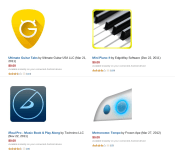
Amazon on Friday is giving away twelve music-related Android apps as part of its Free App of the Day program. Indeed, the entire collection is worth $40 and you can grab all of them if you choose. There are a number of familiar and popular names here, including TuneIn Radio Pro and Shazam Encore. If you don’t plan to use or play with it in the short term at least grab it today. You’ll have the rights to it down the road and won’t have to worry about paying for it later.
- TuneIn Radio Pro ($3.99)
- Shazam Encore ($4.99)
- WavePad Master’s Edition ($9.99)
- Mini Piano ($0.99)
- Ultimate Guitar Tabs ($2.99)
- Metronome: Tempo ($1.25)
- edjing Premium DJ mix rec studio ($9.99)
- jetAudio Music Player Plus ($3.99)
- iReal Pro – Music Book & Play Along ($10.99)
- Treble Cat – Learn to Read Music ($4.99)
- Guitar Riff Pro ($2.99)
- G-Stomper Studio ($7.99)
The post Amazon giving away one dozen music apps worth $40 today appeared first on AndroidGuys.
 AIVAnet