


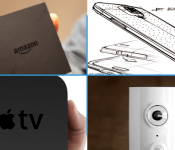
Daily Roundup: Samsung’s love of plastic, Siri for Apple TV and more!

You might say the day is never really done in consumer technology news. Your workday, however, hopefully draws to a close at some point. This is the Daily Roundup on Engadget, a quick peek back at the top headlines for the past 24 hours — all handpicked by the editors here at the site. Click on through the break, and enjoy.

Defiantly plastic: designing the Galaxy S5
Many of you might be wondering why the Samsung Galaxy S5 is crafted from polycarbonate instead of metal. According to Senior Product Designer Dong Hun Kim, plastic is warmer, friendlier and better symbolizes the company’s design concepts.

A Siri-controlled Apple TV may be on the way
A few lines of code in the iOS 7.1 software development kit suggest that you might soon be able to control your Apple TV with your voice. All thanks to Siri, of course. There’s also mention of a mysterious new device, identified by a solitary “3.” A new set top-box, perhaps?

Your connected home could one day save your life
Imagine that your house could notify you of a slight heart murmur or make diet suggestions based upon your sugar levels. Today’s smart gadgets aren’t quite there yet, but the connected house may one day play a much larger role in healthcare.

Amazon will add older HBO shows to Prime Instant Video, HBO Go to Fire TV
Today, HBO signed a deal with Amazon to bring a few of its classic shows to Prime Instant Video members for free. What’s more, the Fire TV is getting its own HBO Go app. Let the marathons begin.
You also might like:

Amazon’s Prime Pantry service lets you ship 45 pounds of groceries for a $6 fee

Amazon’s dead-set on killing off the grocery store, with a same-day delivery service and even a Dash gadget for restocking items around the house. Now the retailer’s going one step further, taking on Costco and Walmart with a new program called Prime Pantry. If you’re a Prime member living in the 48 contiguous states, you can ship 45 pounds’ worth of household essentials — in “everyday sizes,” not in bulk — for a flat fee of $6. (Yes, that’s on top of your Prime membership payment.) Amazon told us the items available include “popular soft drinks and bottled water, a new range of paper and laundry products in popular pack sizes, single boxes of breakfast cereal, potato chips, convenience-sized personal care products and more.” Rumors about an Amazon Pantry service began circling late last year, and while the service is live now, the company hasn’t formally announced it.
To help you stay within that weight limit, a virtual Amazon cardboard box will show you how much room is left. While you could easily fill a Prime Pantry box with obscene amounts of Fruit by the Foot and gummy bears, the program is especially attractive for customers who want to stock up on heavier and bulkier items that don’t usually ship for free. Check out a video introduction below, and find more info at the source link.
Source: Amazon Prime Pantry

One of Activision’s top moneymakers gets a new entry in Skylanders: Trap Team

Like taxes, iPhones and, well, Madden, you can count on a new Skylanders game every year. If you’re unfamiliar with the franchise, that may just be a symptom of not being around kids — the toy / video game series is a dominant force in the kids gaming market, sharing responsibility with biggies like Call of Duty and World of Warcraft for bringing in 80 percent of Activision’s earnings in 2013. Each new entry in the game series comes with a new physical device for reading toy figurines; when said figurines are placed on the device (called a “portal”), they’re transported into the game world and playable in-game.
Between the figures ($5 – $7 apiece, on average) and the games (anywhere from $7 to $60), it’s easy to understand why the franchise is so profitable. Thankfully, the franchise is also lauded by most critics as a pretty decent game, too. The next entry, Skylanders: Trap Team, arrives this October — the first time the series is on PlayStation 4 and Xbox One — and it’s the largest game in the franchise to date.
When Skylanders: Trap Team launches on October 5th in North America (the 10th in Europe), it arrives with a new portal, and also even larger Skylanders figures than before. The hook this time around (beyond the whole “putting a toy from the real world into a game” thing) is the ability to “trap” in-game enemies. Using one of eight “Traptanium Traps” — that’s eight colored real-world toys that must be purchased — you can “trap” enemies (store the character data from the game). That enemy can then be used in-game, just like a Skylander. This enables players to quickly switch between two characters, one Skylander and one boss character, on-the-fly. There’s also a neat interactivity aspect wherein the portal now has a speaker and the boss character, once captured, will comment on the game in real-time.

We spoke with Toys for Bob’s Paul Reiche, head of the studio that both created the Skylanders franchise and headed up development of Skylanders: Team Trap. Before you ask: yes, all previous Skylanders toys work with this new one. All the parents in the crowd say “Yay-a!” Reiche (pronounced “Richy”) walked us through the new game, the scope of the series, and spoke to the design of the new characters. What’s with the new traps? Why are the characters larger? And what the heck is “traptanium”? Allow him to explain in the video above, and get a much closer look at all the new hardware while you’re at it.
Video produced by Edgar Alvarez and Daniel Orren.
Filed under: Gaming, Software, HD, Sony, Microsoft, Nintendo

Brazil passes an internet bill of rights enshrining net neutrality and privacy

While the world has been deciding who governs the internet, Brazil has been busy establishing internet rules of its own — and they may just set an example for everyone else. The country has passed a bill of rights that goes some length towards protecting net neutrality and privacy. To start, law promises equal access to the internet; carriers can’t charge more for bandwidth-heavy services like streaming video.
Privacy is also cornerstone of the bill. While the law dropped a measure that would have forced internet companies to store data in Brazil, it’s limiting the reach of metadata — the country wants to avoid the surveillance controversies it saw in the US. International companies will still be subject to local laws whenever there’s a case involving Brazilians’ data, although a safe harbor provision will protect telecoms from liability for whatever their users do.
The legislation isn’t a perfect match for what open internet advocates want. It protects free speech, but providers will still have to take down content if a court deems it offensive. However, it ticks a lot of familiar checkboxes. It also stands in sharp contrast to the US, which may be drifting away from a neutral internet and is still grappling with surveillance collection reforms.
[Image credit: AFP/Getty Images]
Filed under: Internet

Apple Has Acquired 24 Companies in Last 18 Months
 During today’s second quarter earnings call which is still ongoing, Apple CEO Tim Cook revealed that Apple has purchased a total of 24 companies during the course of the last 18 months, some that are known and some that remain unknown.
Just over half of Apple’s acquisitions have come to light, which means the company has purchased many additional companies that have not yet been discovered. In 2014, Apple’s known purchases included SnappyLabs, a company that produced a burst photo app, and Burstly, the company behind the Testflight iOS beta testing platform.
2013 saw the purchase of several different mapping apps, including BroadMap, Embark, HopStop, Locationary, and WiFiSlam, along with other notable additions like 3D company PrimeSense and Novauris, a speech recognition company. Back in October, Tim Cook noted Apple had completed 15 strategic acquisitions in 2013, pointing towards a number of new acquisitions in 2014.
The technology from both Apple’s known acquisitions and their unknown purchases will likely make their way into products that we may see in the future. For example, all of the mapping acquisitions are expected to be put to use in iOS 8, which will see the addition of transit directions and possibly improved indoor mapping techniques.
During the call, Apple noted that investing in research and development along with hardware, software, and services were top priorities for the company.
Apple CEO Tim Cook: It ‘Means More to Us to Get it Right’ Than to Be First
During the question and answer section of today’s financial earnings call Apple CEO Tim Cook explained why the company has been slow to put products out in 2014, pointing towards the company’s attention to detail and desire to “perform at a really high level of quality” Apple’s customers expect.
Cook noted that Apple did not ship the first MP3 player, smartphone, or tablet, but he said that the company did release the first “acceptable” and “modern” smartphone, tablet, and MP3 player.

“We care about every detail and it takes us a bit longer to do that. That’s always been the case,” he said. “It means more to us to get it right than to be first.”
Cook pointed towards examples in the marketplace where the clear objective was to be first, possibly referring to Samsung and its poorly received Galaxy Gear smart watch. Apple customers “want great, insanely great,” said Cook, and “that’s what we want to deliver.”
According to Cook, Apple has many products in the pipeline that the company is excited about, but it is not ready to “pull the string on the curtain.” He did say, however, that Apple has expanded the number of things the company is working on.
Apple: iPad Sales at High End of ‘Internal Expectations’, 2/3 of Users New to Device [iOS Blog]
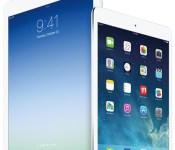
During its financial results conference call for the first calendar quarter and second fiscal quarter of 2014, Apple shared new details on the state of the iPad, including information on sales expectations, the launch of Microsoft Office for the device, the education market, and the use of the tablet compared to competitors.

While the company’s 16.35 million iPad sales fell short of analyst expectations, Apple notes that sales came in at the high end of internal expectations citing two factors: An increased iPad channel inventory in the March 2013 which has since been “significantly” reduced this year, and the ending of the December quarter with a substantial backlog of iPad mini units that were shipped in 2013. The company also added that it hit iPad supply/demand balance earlier this year.
Apple also noted that two-thirds of people registering an iPad in the last six months were new to an iPad, while half of people registering an iPhone were also new to an iPhone. Citing research from App Annie and Chitika, the company stated that the iPad generated 4x mobile web traffic than all Android tablets combined, and that two-thirds of people planning to purchase a tablet within 90 days would be purchasing an iPad.
CEO Tim Cook commented on the recent launch of Microsoft Office for the iPad, stating that the addition of the program suite “helps” and that it would have been better for Microsoft to release the program “earlier.” Overall, Cook noted that customers were “responding well” to Office in a field of many alternatives that were brought to the market, including Apple’s own iWork suite of apps for the iPad and others.
Cook also commented on the use of the iPad in education and elsewhere, stating that Apple has a 95% share in the market and that the company’s focus in getting into more schools to use the tablet. Calling the iPad “the fastest growing product in Apple’s history,” Cook added that the company is determined to stay focused on the things “we do best” and noted that launching the iPad was about getting the details the right as opposed to launching first.
Apple is expected to introduce updated models of the iPad Air and Retina iPad Mini this year, with some rumors suggesting that the company will add a larger “iPad Pro” to its tablet lineup in the near future.

Next Gen NVIDIA Shield Benchmarks Relay Tegra K1, 4GB RAM and a lot of WOW
NVIDIA’s current Shield is one hot little portable gaming device. Just like any other device, the OEM works to improve the original with software updates and functionality while working on the next iteration. An AnTuTu benchmark report has been picked up that gives us all a little indication towards what the next gen Shield is packing inside. While benchmarks are a good starting point to what is to come, they most definitely aren’t set in stone.
The results show us that the next gen Shield is packing in NVIDIAs Tegra K1 processor. This is the processor that made headlines during CES in January due to its 32-bit and 64-bit versions and the 192-core GPU.
Tegra K1 provides full support for the latest PC-class gaming technologies — including DirectX 11, OpenGL 4.4 and tessellation. These capabilities will enable PC and console game developers to finally bring their stunning, visually rich titles to mobile devices.
 Beyond the processor the benchmarks also outlined 4GB of RAM, 16GB internal storage and a screen resolution of 1440 x 810. There is also mention of a 0.3MP + 0MP cameara which would refer to a 0.3MP from facing and no rear facing.
Compared to the current Shield device that is out this new next gen version is going to be beast. The current Shield sports the Tegra 4 processor with a 72-core NVIDIA GeForce GPU, 2GB or RAM and a 1280 x 720 display. The next gen NVIDIA Shield is practically tripling the processing power and doubling the RAM while increasing the screen resolution. No screen size is mentioned though. I am thinking that they may have bumped the screen size up from the current 5-inch to a 5.5-inch. That could just be wishful thinking and solely a thought. The inclusion of a camera, even a lower resolution camera makes you wonder what their intentions could be. It could simply be in place for using the device for video calls, but I am thinking there will be a heavier gaming focus.
Any of our wonderful readers going to be keeping an eye peeled for the sequel to the Shield? What would be the sweet spot price point for all that tech to make it a no brainer purchase?
Source: Tomshardware Via: Droid-Life
//<![CDATA[
ord = window.ord || Math.floor(Math.random()*1E16);
document.write('’);
//]]>

Apple’s iPhone sales soar while the iPad slumps slightly

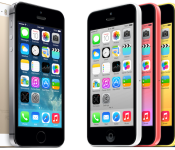
It’s that time again: Apple has just posted its Q2 2014 financials, and there are some interesting device sales numbers to peep at. Apple saw a big year-over-year jump in the number of iPhones sold (43.7 million this time vs. 37.4 million in the same quarter last year), thanks at least in part to a deal that brought the 5s and 5c to China Mobile — a carrier that has over 750 million subscribers. Alas, Apple never breaks down its sales figures between models, so how many people opted for the colorful (and cheaper) 5c instead of the 5s is still a mystery. It didn’t warrant a mention in the earnings release, but the company’s moved 20 million Apple TVs (the hobby days are well behind it) and Mac sales surged slightly, too. The iPod did about as well as we thought… which is to say not well at all. The company sold fewer than half this quarter than it did during the same time last year, but it’s no secret the venerable music players were slowly falling by the wayside.
But then there’s the iPad.
Apple sold 16.4 million of them in Q2, which sounds pretty great… until you realize that the company sold closer to 20 million of them in Q2 2013. So far, there have been a few reasons as to why Apple didn’t knock it out of the park with its tablets this time. There’s the very simple fact that Apple hasn’t unveiled a shiny new tablet since the Air and the Retina mini last year — the allure of a new product (even an Apple product) can erode very quickly, and it’s not like Apple doesn’t have some top-tier competition to contend with. Some have also argued that the iPad’s main market consists of high-income consumers, and they’ve already got their iPads. After all, we nerds may upgrade at the slightest provocation, but the iPad isn’t bound by a mobile contract that promises you a good deal on a new one in two years. It’s more fixed than that, so it shouldn’t be surprising that people tend to hold on to them. Even Jean-Louis Gassée — one of Apple’s most prominent execs during the late ’80s and early ’90s — can’t help but opine. To him, the iPad is “a tease,” a device that people hoped would be able to replace a full-blown PC, but hasn’t lived up to expectations.
Update: Apple couldn’t not address the iPad issue, and CEO Tim Cook came out swinging by chalking it up to differences in channel inventory. He later reiterated that the iPad has been the fasting growing product in the company’s history.
“We’ve sold over 210 million [iPads], which is more than we or anyone thought was possible,” he said. “It’s interesting to note that that’s over twice as many iPhones as we had sold in a comparable period of time and over seven times as many iPods as we had sold in the period of time.” To no one’s surprise, Cook is still awfully bullish on the iPad’s future and believes that things look “very, very good” over the long haul, even if Apple occasionally can’t put up sales numbers “every 90 days that everyone’s thrilled with.”
Etsy acquires indie-gadget marketplace Grand St.

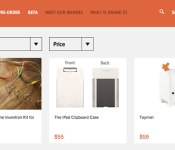
Gadgets are probably the last thing you’d look for on Etsy’s DIY-heavy marketplace, but that could soon change. Today the NY-based company announced that it’s acquiring Grand St., an online retailer focused on electronics with a creative, maker bent (think app-enabled piggy banks and Wifi-enabled kids’ toys). In the short term, at least, Grand St. will continue to operate as its own marketplace, but it’s possible that such hardware could someday have a home on Etsy.
In a blog post announcing the acquisition, Etsy CEO Chad Dickerson said, “What unites Etsy and Grand St. is a shared vision of the way making is changing, and we’re excited to learn from their community.” Grand St., which is also based in New York, curates all the products on its site, and a beta feature lets buyers give feedback to makers. The deal is still closing — and financial details haven’t been shared — but it definitely seems to be positive news for those in the small-batch maker space.
Filed under: Internet
Via: TechCrunch
Source: Etsy News Blog, Grand St.
 AIVAnet