


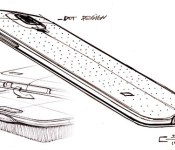
Defiantly plastic: designing the Galaxy S5

“Our major aims were usability, friendliness and a more humanistic design. We wanted something with a pleasing feel … and better grip. If we used metal, [we felt] the designs felt heavy and cold,” explains Senior Product Designer Dong Hun Kim, pointing to why Samsung still plays in polycarb. “But with plastic, the texture is warmer. We believe users will find [the device] both warmer and friendlier. This material was also the best at visually expressing volume, better at symbolizing our design concepts.” The design concept for Samsung’s Galaxy S5? Modern and flash — and boy, that blue GS5 is certainly flashy. In the middle of a design library deep inside Samsung’s “Digital City” in Suwon, Jeeyeun Wang, Samsung’s principal user experience designer continues, putting it to me this way: the smartphone is no longer a cold slab of technology; “it’s a fashion product now.”
“We’d prefer to focus on the software improvements.”
“This interview is more about the new camera interface.”
We expected the designers (or the corporate comms team flanking me) to interrupt with something like the above when I asked why they persist with plastic, but they didn’t. In fact, the designers barely missed a beat. Perhaps they’ve been itching to answer this for a while. I’d certainly been waiting to ask them. “With the GS5, we looked into all kinds of designs and materials. We were open to all options,” adds Kim.
To date, the Galaxy S4 has unit sales in the millions. So did the Galaxy Note series, and well, the rest of the top-drawer Galaxy S series hasn’t done badly either. The phones (and tablets) have become an ensemble, a symbol of Samsung’s domination of Android. To a certain section of the public, smartphones are either iPhones or “a Galaxy” — no doubt to Google’s chagrin. Despite all that success, when it came to the Galaxy S5, we were promised something we hadn’t seen in the last three iterations: a return to the basics. But what, exactly, would that mean in design terms?

“It’s not as if one specific feature screams ‘back to basics.’ It’s the entire experience — you just feel it throughout,” says Wang. “In the past, we’ve tended to put a lot of emphasis on fancy, showy features … things that you might only use once or twice a year, but here (in the GS5), there’s a new focus on core features [like the camera, the internet browser, sharing]. We made sure these worked better, worked well. That’s the spirit of going back to basics.”
“Can I tell you an episode?” Wang then asked me. Yes! Please. Tell me all the episodes was my eager response. “During the GS5 development, I was responsible for the software design — how it looked. For that to work, we also needed to see the mood, the language of the hardware.” But security at Samsung, being Samsung, meant that seeing the final model was something offered only to a few designers. “At the start, we were like spies.” Desperate for a peek at more finalized hardware, when the designer finally got to see the hardware, the first impression was “fun” — but she was far more enthusiastic than it sounds when I write ‘fun’.
Then, when it came to the Galaxy S5, we were promised something we hadn’t seen in the last three iterations: a return to the basics.
“On previous devices, the discussion was always around one color or another, but with the S5 … my eyes lit up — you could feel three to five different textures and finishes. [Within the UX] I focused on that sense of fun. It’s no longer just a hard, smart machine.”

Hyejin Bang — colors material and finish (CMF) senior designer — agrees: “The smartphone is something we’re going to use every day.” While the CMF team wanted to give the phone a metallic luster, they also wanted to temper it so that it appeared friendlier, softer. She refers to the final, tactile finish as lambskin, made to “give off a variety of finishes” in light. But will these explanations satisfy those of us looking for a Galaxy smartphone made of something other than polycarbonate? Probably not.
I was also surprised the team didn’t make a reference to the hardiness of plastic as a material. I told one Engadget editor, for me, a scratched metal phone is a ruined metal phone. Even if (barring Nokia’s efforts) I’m still not sold on the plastic stylings of the Galaxy S series, I have to admit that, from a stack of personal anecdotal evidence, it can take more of a beating.

Min Cho’s job — as director of product marketing — involves synthesizing what consumers say about, and how they use, his company’s smartphones. The questions are pretty specific: Why did you buy a Galaxy S4? What do you use most? As the UX designers noted earlier, those are the very features that S5 development has homed in on: camera, internet, messaging. “Oh, and calling,” adds Cho. Everyone in the room laughs, but yeah, voice calls.
That’s not enough though, the Samsung exec wants to know more than that. As he puts it, he wants to be able to tell what they want next. “We want to know what drives them. What are their desires?”
“The top purchase driver for people that bought Galaxy S4 was the viewing experience … the screen.”
“The top purchase driver for people that bought Galaxy S4 was the viewing experience … the screen.” It’s not a huge surprise: It’s one of the (literally) big reasons many smartphone users have hopped from iOS to Android, but it’s interesting to hear that Samsung’s research comes to a similar conclusion, and certainly explains the trend in ever-larger displays. This is work Cho’s team takes seriously. In the run-up to the Galaxy S5 reveal, Samsung’s user research encompassed 3,000 Galaxy S4 users globally. “With some participants, we followed them, 24 hours a day, for several days.” Wait… “With their agreement,” he quickly adds. “Actually, they wanted to participate. A lot of people want to help to create new experiences — for themselves.”
A lot of the conversations I have with Samsung’s designers and engineers touch again on this idea of increasing the degree of personalization. Even if that starts with more color options, or exchangeable bands, it explains what’s happened inside the heart of the GS5′s software, too.
“Prior to the GS5, our camera app used to have over 15 modes. Back then, we wanted to brag about it.”
There’s been almost uniform praise for Samsung’s efforts to roll back the swell of software fluff seen in the GS3 and GS4. It sounds like the design team got the feedback. “Prior to the GS5, our camera app used to have over 15 modes. Back then, we wanted to brag about it, but now we’ve identified what the majority of Galaxy phone users want,” says Wang. But what about, well, people like me, who (try to) use those slightly ungainly modes like Surround Shot? “High-level users will still be able to adjust the settings plenty, while we’ve now added the option to download further modes in the future.”
That’s probably one of the things Samsung has to balance. Streamline everything too much, and you’re likely to lose something. Who exactly is the Galaxy S series for these days? “Up until the launch of the Galaxy S2, we used to focus on technical users, but after that, our audience became much broader.” And with a wider range of customers, according to Wang, the team felt increasingly responsible to this (likely less vocal) segment.

“Even if we hide complicated functions, our hardcore users will find them.” However, for older users, smartphone beginners or anyone with disabilities, it’s understandably a completely different experience. That’s where a lot of the software design and UX work has gone into, adding a new “easy mode” that scatters the screen with giant contact tiles, and a camera app that shows you how an HDR photo will look before you even take it. Even the heart rate monitor is arguably more skewed toward the layperson than the tech fan. For those fans, you’d think (and I’d be with you) that after all that research and consideration, it’s odd to arrive at a phone that still riffs so closely to the phone that appeared a year before — especially considering the lack of a differently made (material-wise) Galaxy phone for those that want one (and some people really want one).
S Health seemed like the software equivalent of the S Band, forever lost in the mists of corporate development and press release bluster.
Cho says that a lot of people use the company’s S Health app/platform, although Samsung wasn’t willing to divulge numbers. If it’s true, it’s a surprise to me — the feature, first announced alongside the Galaxy S3, seemed like the software equivalent of the S Band/S Circle, forever lost in the mists of corporate development and press release bluster. “No, really. With older users, they’re looking to stay simply healthy, while with 20- to 30-year-olds we’ve surveyed — well, they just want to look better.” There’s certainly a chunk of people that are interested in checking their heart rate, but aren’t rushing to buy a fitness monitor — and there’s the appeal.

“The way we see it, this is only the beginning.” Strange as that may sound, he’s probably right. Samsung currently makes hardware for Android, Windows Phone, Windows 8, Tizen — not to mention the unfortunately hobbled Galaxy Gear, and yet another new smartwatch, powered again by Android and promised for later this year. Cho finishes by adding that Samsung’s continuing to work toward “meaningful innovation,” and as the long list of product variations will attest, it’s not for lack of trying.
Filed under: Cellphones, Mobile, Samsung

AOL bringing Miramax movies to its online video platform

AOL doesn’t just want short clips of newsy content on its online video platform, AOL On. That’s why the company (which, disclosure, owns Engadget) has signed a non-exclusive deal with Miramax to screen some of its movies on the service. The first flicks from the agreement will go up on April 30th, with “tens” of films from the catalog being made available on a rotating basis each month. Neither company was ready to disclose what particular titles we could expect, so while most of us are hoping to catch Clerks, Trainspotting and Pulp Fiction for free, don’t be surprised if they wind up being the lesser lights contained on this list.
Via: Variety
Source: BusinessWire

Samsung’s Galaxy Tab 4 lineup reaches the US on May 1st

Americans no longer have to splurge on the high-end Galaxy Tab Pro or Note Pro if they want a modern Samsung tablet — the more affordable Galaxy Tab 4 range is headed to the US. WiFi versions of the Tab 4 7.0, 8.0 and 10.1 should hit shelves on May 1st at respective prices of $200, $270 and $350. Travelers craving cellular data can expect LTE variants from AT&T, Sprint, T-Mobile and Verizon sometime this summer. Pricing hasn’t surfaced for these 4G models, but it’s safe to presume that they’ll carry a premium over their WiFi-only counterparts.
The devices don’t carry the biggest bang for the buck. The Nexus 7 offers a sharper display and overall faster performance, for example. However, the two largest Tab 4 WiFi models cost significantly less than their Tab 3 equivalents did when new — they’re potentially good bargains if you’re not concerned about raw performance.
Filed under: Tablets, Samsung, Verizon, Sprint, AT&T, T-Mobile

US government approves Facebook’s purchase of Oculus

We’re not sure there was ever much doubt, but the US government has given the thumbs up to Facebook’s $2 billion purchase of Oculus VR. The Federal Trade Commission examined the deal and found that it would not violate American antitrust laws. Now with most of the regulatory hurdles cleared, the focus can shift to the practical implications of the deal. Joining the Facebook family clearly puts a vast amount of resources at the disposal of Oculus founders like Palmer Luckey. But many in the development community are worried that the move represents something of a loss of innocence. Notch, the man behind Minecraft, in particular is apparently creeped out by Facebook and what it’s business model and culture could mean for the future of the Rift. We can’t pretend to know what’s coming — we’re not even sure that Mark Zuckerberg or Oculus are sure what the future holds yet. All we can say is that we really hope a VR version of Facebook isn’t in the cards.
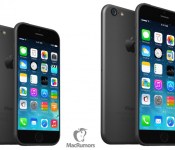
Catcher to Supply Apple With iPhone 6 Casings as Sales Estimates Climb to 70 Million [iOS Blog]
According to Chinese and Taiwanese media sources, Apple again is contracting with Catcher Technology to supply metal casings for the company’s future smartphones, including the rumored iPhone 6. First noticed by GforGames, these reports were published this week in the Taipei Times and The China Post.

Most notably, Catcher is predicted to supply Apple with 10.5 million iPhone 6 casings and 20 million casings for other iPhone models in 2014. These figures are thought to represent 15 percent of the total casings needed for the iPhone 6, suggesting Apple could ship as many as 70 million iPhone 6 units by the end of the year.
Barclays Capital made a similar prediction, noting that Catcher is expected to boost its production between 20 and 40 percent to meet demand for the iPhone 6 in the midst of tight supply. Apple is one of Catcher’s larger clients, contributing approximately 40 percent to the supplier’s revenue.
Barclays said it expects Apple’s next-generation smartphone to be launched in the second half of the year and that shipments of the new model will be 35 to 40 percent higher than the previous one.
Catcher is likely to receive between 10 and 20 percent of the casing orders for the new iPhone, which should help lift its earnings in the second half of the year, Barclays said in a report.
Recent analysis suggests interest in a large-screen iPhone 6 is high in both North America and China, where demand for the iPhone 5s is waning and interest in the iPhone 6 is on the rise. The iPhone 6 is expected to debut this fall with a 4.7-inch display, Apple’s A8 processor, an improved Touch ID fingerprint sensor and iOS 8.


References to Siri for Apple TV Found in iOS 7.1 Code
Amid persistant rumors that Apple is developing a revamped Apple TV set-top box, new code appearing in iOS 7.1 indicates that the company is indeed working on building in support for Siri voice input on the Apple TV, as highlighted by 9to5Mac. The references are included in both iOS 7.1 and iOS 7.1.1, but not in earlier releases such as iOS 7.0.6.

The file is a supporting property-list resource for Assistant (Apple’s internal name for Siri), containing information about the feature. The UIDeviceFamily array declares what platforms are compatible with the feature.
As shown by Apple’s documentation, ’1′ and ’2′ represent the iPhone/iPod touch and iPad families. The ’3′ represents the Apple TV family.
References to a new Apple TV model were previously found in iOS 7 builds, and today’s information suggests that voice input and feedback are likely to be included on the new device.
Apple’s launch plans for a new Apple TV box remain unclear, with rumors of a late 2013 launch giving way to reports centering around an introduction in March or April of this year. Those rumors were then quashed by The Loop‘s Jim Dalrymple, leaving uncertainty about Apple’s television plans. A recent product roadmap prediction from KGI Securities analyst Ming-Chi Kuo indicated that the new Apple TV could arrive around September or October of this year.

Google Maps gets time machine-like feature

One of the more requested Google Maps features has become a reality as Google announces a new archive street view capability. Available in 55 countries and where allowed, the feature lets users “go back in time” and view historical imagery of notable places.
Starting today, you can travel to the past to see how a place has changed over the years by exploring Street View imagery in Google Maps for desktop. We’ve gathered historical imagery from past Street View collections dating back to 2007 to create this digital time capsule of the world.
With more than 6 million miles worth of road photographed, Google has plenty of spots with more than one image available. According to Recode, Google Street View cars have even crossed some of the same roads “every summer for eight years”.

At first it will be offered in the desktop web version of Google Maps. We might expect a mobile version down the road; imagine standing on a corner and tripping back through old images.
The post Google Maps gets time machine-like feature appeared first on AndroidGuys.

Apple’s New ‘Powerful’ iPhone 5s Micro-Site Profiles Apps from Latest TV Ad
Apple today unveiled a new section on its website dedicated to the “Powerful” ad that made its prime time television premiere on Tuesday. The commercial promotes the message that with the capabilities of the iPhone 5s “You’re more powerful than you think.”

The accompanying website continues this “Powerful” theme that promotes the iPhone 5s as having the power “to create, shape, and share your life. The power to do everyday things in extraordinary ways, and to do extraordinary things every day.” The new page includes both a high-definition version of the television commercial as well as links to all the apps showcased in the advertisement. The apps include Star Walk [iTunes], Instant Heart Rate [iTunes], Word Lens [iTunes], AmpliTube [iTunes], Luminair [iTunes] and Pacific Rim [iTunes].
The “Powerful” ad features “Gigantic” by the Pixies [iTunes] playing in the background while iPhone 5s owners use their iPhone to play music, create art and even launch amateur rockets. This new television advertisement follows the company’s earlier “Your Verse” campaign that showcases how individuals are using the iPad in amazing ways.

Free Sonos BRIDGE and 6-Month Spotify Subscription When You Buy a Sonos PLAYBAR

Everyone loves a good deal, right?
If you’ve not heard of Sonos, they are a range of speakers that you can stream media to which interconnect around your house. They come in a variety of shapes and sizes and are easily the rolls-royce of wireless speakers.
Unfortunately the only downside of Sonos is the price, but Amazon are today holding a deal which will help reduce the cost of setting up your own Sonos connected home.
Purchase a Sonos PLAYBAR between March 12 and May 5, 2014, at Amazon, and Sonos is offering a free Sonos BRIDGE and a free Spotify 6-month premium music streaming subscription. See http://www.sonos.com/promospotify for Sonos’ full promotional terms & conditions.
That’s a £40 saving on a £599 purchase for the PLAYBAR so perhaps won’t push you into hitting that order button, but if you’ve been on the fence then this is surely a great deal to convince you.
SOURCE: Amazon
The post Free Sonos BRIDGE and 6-Month Spotify Subscription When You Buy a Sonos PLAYBAR appeared first on AndroidGuys.
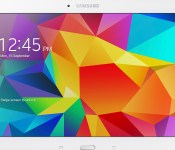
Samsung details Galaxy Tab 4 availability for U.S.

Samsung on Wednesday confirmed the pricing and availability of the Galaxy Tab 4 series of tablets. The newest line of Wi-Fi tablets will be offered starting May 1 and will span the 7-inch, 8-inch, and 10.1-inch models. As we might expect, the various devices will be sold at retail outlets such as Best Buy, OfficeMax, Tiger Direct, and Office Depot. And, to no surprise, you’ll be able to pick one up through Samsung.com and Amazon.com as well.
Pricing breaks down as so:
- Tab 4 7.0 – $199.99
- Tab 4 8.0 – $269.99
- Tab 4 10.1 – $349.99
The Samsung Galaxy Tab 4 line will be offered in a choice of black or white. The new tablets will be available for purchase from major retailers nationwide on May 1 with pre-sales beginning April 24 at Samsung.com, Amazon.com, Best Buy, Fry’s, Office Depot, OfficeMax, PC Richard and Son, Sears, and Tiger Direct. AT&T will offer the 4G LTE Galaxy Tab 4 this summer. Sprint will offer the 4G LTE Galaxy Tab 4 7.0 this summer. T-Mobile will offer the 4G LTE Galaxy Tab 4 8.0 this summer. Verizon Wireless will offer the 4G LTE Galaxy Tab 4 8.0 and 10.1 this summer.
Samsung Galaxy Tab 4 Available in U.S. Beginning May 1
Latest Galaxy Tab series combines value with versatility
RIDGEFIELD PARK, N.J. – April 23, 2014 – Samsung Electronics America, Inc. today introduced three new tablets as part of the Galaxy Tab line. The 7-, 8-, and 10.1-inch Galaxy Tab 4 tablets offer a variety of screen-size options, providing various form factors to meet the needs of consumers and businesses alike. The Wi-Fi-enabled Galaxy Tab 4 portfolio, featuring a lightweight profile with thin bezels and a textured backing, will be available in the U.S. beginningMay 1, with pre-orders starting tomorrow.
“This latest addition to Samsung’s Galaxy Tab family combines versatility with value,” said Michael Abary, senior vice president of mobile computing, Samsung Electronics America. “The HD display, multitasking capabilities and easy sharing features make the Galaxy Tab 4 a great fit for both consumers and businesses.”
With its HD display, the Galaxy Tab 4 makes a great entertainment companion for the whole family. Multi User Mode lets each member of the family make the Tab 4 their own with private, customizable profiles. Kids Mode allows parents to set limits for their children, restricting accessible apps and managing length of play.
Content You Want
Samsung continues to partner with leading news, productivity and entertainment sources to provide premium content for the Galaxy Tab 4. With Galaxy Perks, consumers have access to popular and best-selling news, social media, and cloud storage applications including: Google Play, Dropbox, Sirius XM and Audible.com. For more information, visit www.samsung.com/us/galaxyperks.
Preloaded apps like Netflix and WatchOn instantly make the Galaxy Tab 4 perfect for viewing content and managing your entertainment.
Ready to Work
Whether in-the-field, at home or at the office, the Tab 4 7.0, 8.0, and 10.1 keep users connected securely, with built-in features that support enterprise-grade VPN, corporate email, on-device encryption and scalable mobile device management. The Galaxy Tab 4 lineup gives users the portability and performance they need to work on the go. Powerful quad-core processors and Samsung’s innovative Multi Window functionality provide multitasking capabilities, enabling users to simultaneously view two apps at once and drag and drop content with ease.
The Samsung Galaxy Tab 4 line will be offered in a choice of black or white. The new tablets will be available for purchase from major retailers nationwide on May 1 with pre-sales beginning April 24 at Samsung.com, Amazon.com, Best Buy, Fry’s, Office Depot, OfficeMax, PC Richard and Son, Sears, and Tiger Direct. AT&T will offer the 4G LTE Galaxy Tab 4 this summer. Sprint will offer the 4G LTE Galaxy Tab 4 7.0 this summer. T-Mobile will offer the 4G LTE Galaxy Tab 4 8.0 this summer. Verizon Wireless will offer the 4G LTE Galaxy Tab 4 8.0 and 10.1 this summer.
The Wi-Fi enabled Galaxy Tab 4 7.0, 8.0, and 10.1 will be priced at $199.99, $269.99 and $349.99, respectively.
The post Samsung details Galaxy Tab 4 availability for U.S. appeared first on AndroidGuys.
 AIVAnet