



See the bridge of the USS Voyager with an Oculus Rift

Now that Unreal Engine 4 supports Oculus Rift, any virtual environment built with the platform can easily be pushed right over to the VR headset. Naturally, there’s a Star Trek fan using every bit of bleeding-edge technology, so it’s no surprise to see that a fan has crafted one of the first environment to take advantage of the feature. Oculus developer Thomas Kadlec has crafted the bridge of the USS Voyager for you to wander around, interact with and generally pretend that you’re dodging Borg in the Gamma quadrant. It’s available to download now, so you can relive all of those moments when you hoped that Voyager would finally become any good, but didn’t.
Filed under: Home Entertainment, Peripherals, Internet, HD
Source: Road to VR, Oculus

Run! Black&White is the perfect mix of simple and frustrating [App of the Day]

Run! Black&White is a simple and fun endless runner that you may not be able to put down.
The game is simple: tap the left side of your screen to switch between black and white, and tap the right side to jump. The character needs to be the opposite color of the platform to stand on it, otherwise they will fall through. As the game progresses, the speed picks up, making it very difficult to constantly switch colors.
The game is easy to pick up and play, and it’s free from the Play Store. What more could you want?
The post Run! Black&White is the perfect mix of simple and frustrating [App of the Day] appeared first on AndroidGuys.

RAVPower BOLT 4-Port USB Charging Station review

If you find yourself constantly running out of charging cables or using way too many extension cords, you may want to take a look at this charging station. With 4 ports available, you can plug your devices in without having to mess around with limited power outlets or the length of your charging cords. Let’s take a look at how it performs, and whether you should consider this for your desk.
Design
In the box, comes the charging station, a power adapter, and an instruction manual. There are no power cables included, though that shouldn’t be a problem for most people. The power adapter that’s included is a bit less than 4 feet long, so you’d need to have an outlet nearby your desk or table.
The charging brick is small and plastic, with a matted finish. Though our black model picks up fingerprints very easily, it still remains sleek and attractive. The brick has four feet at the bottom to ensure it stays in place, which is a very nice touch. There are two 2.1A and two 1A outputs, allowing devices of all sizes to charge simultaneously. It also features a bright blue LED light to the right of the ports, which brings us to our one big gripe of the product.

The LED light is way too bright – so much that you wouldn’t be able to sleep if it was sitting next to your bed. Putting a piece of tape over the LED light is a must in order to have it in the bedroom. It’s distracting, and there’s no way to turn it off. A small piece of electrical tape blends in perfectly with the black version, though, so there is a workaround.
In all, the design is great, if you don’t mind using a bit of tape.
Performance
The performance of this charger is great. It does what it’s supposed to do, and we haven’t experienced any problems with the outputs at all. The 2.1A outputs are great for charging tablets or phones very quickly, and the 1A outputs are great for charging phones or smartphones.
Should you buy?

If you’re sick of using countless power outlets and extension cords, you should buy this. Though we had some gripes with the LED light, the design is otherwise great and the performance is spot-on. If you’re interested, you can pick up this charging station from Amazon for $19.99 in white or black.
It’s lightweight, small, and does what it needs to. For $20, it’s a steal!
The post RAVPower BOLT 4-Port USB Charging Station review appeared first on AndroidGuys.

Five bucks will let you stream Joss Whedon’s latest movie early

Joss Whedon might currently be shooting the follow-up to The Avengers, but that hasn’t stopped him from making waves with another of his projects. Just moments after In Your Eyes premiered at the Tribeca Film Festival, the Firefly creator announced that the supernatural love story he penned and executive produced would be immediately available to download on video streaming website Vimeo for $5. It’s a huge coup for the website and its On Demand pay-per-view service, which finds itself in a market dominated by Google’s YouTube. As part of the agreement, it’ll get the chance to distribute the film to fans globally for a period of 72 hours, around three months before it’s due to hit theaters. Unable to attend the premiere himself, Whedon confirmed plans while taking a break from production of the Age of Ultron. “It’s exciting for us because we get to explore yet another new form of distribution,” he said, “and we get $5.”
Filed under: Home Entertainment, HD
Via: BBC News
Source: In Your Eyes (Vimeo)
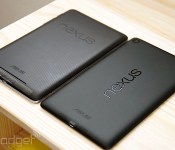
HTC-made Nexus 8 reportedly coming this summer

When it comes to producing affordable Nexus tablets, Google’s on a roll — and it’s looking to take advantage of that momentum. After partnering with ASUS on a 7-inch tablet each of the last two summers, the software giant is now reportedly working with HTC on an 8-inch version slated to launch in the third quarter of this year. The report comes to us from hit-and-miss DigiTimes, which tells us that Google is switching to HTC because it wants to push a new design, and ASUS is more interested in selling tablets and phones under its own brand instead.
Unless you count the Google Play edition of the LG G Pad 8.3, this will be Google’s first time offering a Nexus Android experience on an eight-inch tablet, and will be HTC’s first shot at designing a device for the series since the Nexus One. It’s also an interesting move by the Taiwanese company, which has recently expressed interest in penetrating more segments of the market in the hopes of getting its products in more hands. Of course, DigiTimes explains that Google may not be as aggressive in selling the Nexus 8 as it was with previous tablets; apparently the previous versions did well enough to encourage Android’s penetration into the tablet market, and Nexus slates simply don’t have as significant an influence as they once had.
Since I/O takes place the last week of the second quarter, it’s uncertain if Google would use that opportunity to announce the device and officially release it later, but that’s part of the magic of the show — there’s always a surprise or two.
Filed under: Tablets, Wireless, Mobile, HTC, Google
Via: PhoneArena
Source: DigiTimes
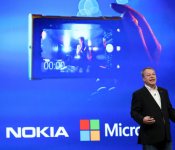
Microsoft and Nokia finally tying the knot on April 25th

Let the wedding bells ring! Microsoft announced this morning that it finally has something we’ve been curious about since September: the actual date the company will complete its proposed acquisition of Nokia’s devices and services business. In a blog post, Microsoft’s General Counsel Brad Smith explained that all of the legal hurdles have been cleared and that the merger will officially take place this Friday, April 25th. “We look forward to introducing the next billion customers to Microsoft services via Nokia mobile phones,” Smith said.
Microsoft will manage the Nokia.com domain and the company’s social media presence for up to a year, and former Nokia CEO Stephen Elop will be in charge of Microsoft’s devices group, reporting directly to CEO Satya Nadella. Aside from this, Microsoft has been pretty tight-lipped on details about what the post-acquisition world will be like, mainly due to legal restrictions. After this Friday, however, we hope the company will open up a bit more about what we can expect going forward.
Filed under: Cellphones, Wireless, Mobile, Microsoft, Nokia
Source: Microsoft Blog

EE’s slow killing of Orange and T-Mobile shows it’s ready to bet big on 4G

Orange, T-Mobile and EE have managed to coexist together for a number of years now, despite them all being essentially the same company, and all selling similar services. While Orange and T-Mobile used to be large, established names in their own right, 4G darling EE has understandably become by far the most prominent brand of the trio. High-street stores once coloured orange or magenta have long been redressed to EE’s preference, and as of fairly recently, the online presence of the 3G-only providers has begun to be absorbed by EE. T-Mobile’s site now forwards directly to ee.co.uk, and although Orange’s homepage still exists, you can no longer purchase anything from it directly. Previously only of interest to “technofreaks,” as Vodafone’s CEO once put it, 4G is more or less mainstream. It’s only a matter of time before all major networks begin to retire old 3G plans in order to structure themselves more around 4G, and in EE’s case, this probably means putting Orange and T-Mobile out to pasture.
It took over two years for the EE as we know it to arise from the merger of Orange and T-Mobile. It was business as usual for both brands as they continued to operate separately under new umbrella company Everything Everywhere, but it was their combined, repurposed airwaves (and the blessing of Ofcom) that begat the UK’s first LTE network, months before the spectrum auction competitors needed for their own 4G services. EE was created and marketed as a completely new network selling only 4G plans, which were noticeably expensive at first. Since then, though, prices have dropped, nearly all other UK players have caught up, and most importantly 4G is no longer a buzzword. A much greater proportion of Brits are aware of 4G, and what’s possible with mobile internet that’s comparable in speed to their hardlines at home.

For other networks, launching 4G services was as simple as adding new tariffs. With EE being distinct from Orange and T-Mobile, though, the latter two brands have faded further into the background as they become less relevant to the market. EE aggressively expanding their LTE footprint, increasing spectrum allocation, signing high-profile MVNO contracts, and even having a go at own-brand hardware (as Orange used to) is the only news you’ll hear from a company that’s supposed to be representing three brands. EE absorbed Orange’s broadband business the day 4G launched, and you can bet upgrading 3G customers to 4G was, and still is seen as EE’s greatest opportunity. Much of this captive audience is yet to be converted, however. Of EE’s 27 million plus total customers across all brands, only around 2 million of them are 4G subscribers (as of January this year).
It’s not just a matter of migrating people to 4G plans, but also to a relatively new company. Naturally, Orange and T-Mobile would become less visible as the focus shifts to 4G, and not just because their customers are wanted elsewhere. Maintaining one website, one physical store format, and one brand in general is obviously much easier than doing the same with three, so it’s good business sense to make less work. All this is not to say 3G is going anywhere soon. It’ll be needed for many years to come as a fallback when 4G gets knocked out, and where it doesn’t exist. Some MVNOs, too, will no doubt exist solely to offer low-cost, 3G-only contracts. The retirement of Orange and T-Mobile could even be an opportunity for EE to build a new set of 3G tariffs by cherry-picking what’s worked best on either network.
Despite the reduced online presence of Orange and T-Mobile of late, you can still find out what they have to offer over the phone and in EE stores. They have an eBay shop, too, but this is heavily EE-branded — another example of how the identity of the 3G brands is slowly being superseded (when was the last time you saw anything but EE in your notification bar?). For now, they remain nestled under EE’s wing, but who knows how long they will survive, especially if customer numbers begin to dwindle as more move over to 4G contracts, with EE or elsewhere. There has to be a good few people out there about to finish up two-year contracts they signed for the flagships of 2012, namely the Galaxy S III and iPhone 5. How they, and others looking to renew or upgrade in the near future act will surely steer the fate of Orange and T-Mobile. Or, we should say it’ll have an affect on the timing — the machinery of their demise is arguably already in motion.
Matt Brian contributed to this report.
Filed under: Wireless
Via: The Guardian

Here’s how Microsoft tried to win the early instant messaging wars

The battle between modern chat services like LINE and WhatsApp is fierce, but it has nothing on the war between Microsoft and AOL (Engadget’s parent company) at the turn of the century. Former Microsoft developer David Auerbach has revealed that his MSN Messenger team fought hard for compatibility with AOL Instant Messenger in the summer of 1999, all in the hopes of attracting some converts. At one point, Auerbach was in a daily struggle — AOL would break MSN support by the morning, and he’d have a fix in place by the evening.
A stalemate came relatively quickly: AOL introduced a security flaw in August that Microsoft couldn’t work around, forcing the two services to remain separate. Of course, we know in hindsight that the conflict was for nought as chat shifted from PC software to mobile apps and social networks. However, the story shows that Redmond was determined to lead the instant messaging space from the word go — its acquisition of Skype was really just the culmination of efforts that began more than a decade earlier.
[Image credit: Nicki Varkevisser, Flickr]
Filed under: Internet, Microsoft
Via: I Started Something, The Verge
Source: N+1 Mag
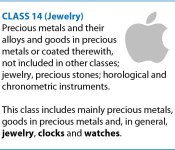
Apple Extends Trademark Protection to Include ‘Jewelry and Watches’
Last June, Apple began registering for trademarks on the “iWatch” name in a number of countries, but since that time the company has been bolstering its trademarks on the actual company name “Apple” to also cover jewelry and watches, MacRumors has discovered.
By international agreement, trademarks are broken down into 45 different classes to organize the types of goods and services being registered for protection. Watches and other jewelry are part of Class 14, which is focused on precious metals/stones and products made from those materials. While some of Apple’s trademarks on the “Apple” name have previously included some goods from Class 14, the company is now broadening and cleaning up its trademark applications in those areas. The moves come as the company is widely expected to introduce its “iWatch” smart watch as soon as later this year.

Among the recent expansions for Apple is Ecuador, where Apple filed a new trademark application in late December specifically to add protection in Class 14 for a long list of product types including jewelry and watches. Google translation of new category application for “Apple” trademark:
jewelry; watches; watches; goods in precious metals or coated therewith; cufflinks or cufflinks; keychains; timers; brooches in precious metals or coated therewith; ornaments in precious metals or coated therewith; tie pins in precious metals or coated therewith; tie clips or tie clips of precious metal or coated therewith; badges of precious metal or coated therewith; bracelets of precious metal or coated therewith; Necklaces in precious metals or coated therewith; medals in precious metals or coated therewith; short chains and ornaments in precious metals or coated therewith; buttons in precious metals or coated therewith; clip in precious metals or coated therewith; boxes of precious metal or coated therewith; decorations in precious metals or coated therewith; jewelry; sculptures and precious metals products.
Applications in other countries have followed in recent months, including a nearly identical filing in Mexico in early January that again solely focused on Class 14. Other expansions have come as part of larger filings, such as in Norway, where Apple in mid-February applied for increased protection in seven different classes including a significant list within Class 14. And just last month that effort extended to the United Kingdom, where Apple filed to broaden its protections in over a dozen classes, including Class 14 for the first time there.
While new applications to protect Apple’s use of its own name in jewelry and watches have appeared in a number of countries in recent months, the company has yet to make the move in all countries where it operates, most notably the United States where the “Apple” name is not currently covered under Class 14 at all.

Target improves online subscriptions, hopes you’ll drop Amazon for monthly shipments

Despite some major (and very public) security setbacks these past few months, Target’s been hard at work positioning itself as a viable Amazon competitor. In September, the retailer introduced an online subscriptions pilot as an answer to Amazon’s “Subscribe and Save” service, offering 200 or so items available for shipping in installments of four to twelve weeks. Now, Target’s improving two of the major weaknesses of that program, increasing the number of products eligible for subscriptions to 1,500 and adding in the incentive of discounts.
Unlike Amazon’s program, Target’s subscription service didn’t originally offer extra savings to customers signing up for product subscriptions — though it has always offered free shipping and a 5-percent discount to those paying with a Target card. Now, you’ll get a 5-percent discount on all subscription orders, and certain products will carry additional price cuts on a promotional basis. Amazon, it’s worth noting, offers up to a 15-percent discount when you order 5 or more subscriptions per month. Still, especially for customers with a store debit or credit card, Target’s offering is starting to look pretty appealing.
Via: TechCrunch
Source: Target
 AIVAnet