



The Guardian’s new US newspaper has a robot editor-in-chief

There’s something a little different about the editor for The Guardian’s new monthly US print edition: there isn’t one. Set to launch Wednesday, #Open001 is being created using a proprietary algorithm rather than people (and we thought the media was dying!). The 5,000 paper run will be available for free at several advertising agencies. Articles are selected from the paper’s online edition, based on how they performed on social networks like Facebook and Twitter. Some of the stories set to be included in this month’s edition include “Robots and sex: creepy or cool?” and “Facebook’s Sheryl Sandberg: who are you calling bossy.” Captivating, right?
In a world where publications are trying to compete with the fast online world and viral news sites packed with automated content, it’s not surprising a newspaper would try to adopt an inexpensive human-free model. This isn’t even the first time The Guardian has replaced people with our digital overlords. It’s already putting out a weekly print edition in London called “Good Long Read” using the same algorithm. The paper’s layout designer is also a robot, which means it can be created even faster. Newspaper Club, that handles the design and printing, says it’s very close to process where one person can create a paper in under an hour. Whether it’s a paper full of stories we want to read is another question entirely.
Filed under: Internet
Via: Venture Beat
Source: Newspaper Club

Twitter’s latest acquisition turns tweets into a commodity

Twitter announced today that it has bought Gnip, a social data company that has packaged and sold data from Twitter to other companies for the past four years. Gnip is one of a few firms that has access to Twitter’s “fire hose” of data — a history of tweets that date back to the company’s beginnings in 2006 — and is one of Twitter’s longest-lasting data partners. Such data is tremendously valuable, as Twitter mentioned in a blog post regarding the acquisition:
“These public tweets can reveal a wide variety of insights — so much so that academic institutions, journalists, marketers, brands, politicians and developers regularly use aggregated Twitter data to spot trends, analyze sentiment, find breaking news, connect with customers and much more.”
Bringing Gnip in-house therefore means that Twitter will now be selling its data directly to third-party outfits like advertisers and brand managers. This lets the microblogging firm provide “more sophisticated data sets” and “better data enrichments” to interested third-parties, which in turn could mean more targeted ads for you and I. It certainly falls in line with a recent report that Twitter is working on 15 new types of ads, most of which will likely be mobile, according to Twitter’s VP of engineering and revenue at a VentureBeat Mobile Summit.
Right now, Twitter’s relationships with other data resellers like Datasift and Topsy (which was purchased by Apple late last year) will continue, as will Gnip’s analytics deal with other social media companies like Tumblr, Disqus and Facebook. However, due to the conflict of interests at play here, we don’t expect many of these to last.
[Image credit: Getty Images]
Filed under: Internet
Source: Twitter

Join the Engadget HD Podcast live on Ustream at 8:30PM ET

It’s Tuesday, which is time for the Engadget HD Podcast and we hope you’ll join us for the live recording at 8:30PM. No big news to kick off the show this week, but a good quarter for primetime rating will have to do. There is a new wireless box from DirecTV to discuss and of course Netflix, Aereo, Chromcast news — like just about every week. We finish up with a few tidbits about TiVo, Mohu, CNNx and some content for virtual reality. If you’ll be joining us, take a peek at the topics after the break and then get ready to participate in the live chat.
Prime-time TV enjoys its highest ratings since 2007
DirecTV’s Genie DVR extenders clip the cord with a wireless version
Netflix speeds soar on Comcast following controversial deal
Broadcasters’ backup plans for thwarting Aereo include live TV streaming
Aereo brings live TV to Chromecast on May 29th
Chrome beta for Android makes it easy to send web video to Chromecast
TiVo update lets you set recording defaults, when it isn’t creating chaos
Mohu Channels wants to give cord-cutters a unified menu
CNNx lets you watch only the news you care about
Sir David Attenborough’s latest wildlife show is coming to VR headsets
Filed under: Home Entertainment, HD
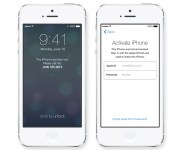
Apple and Other Smartphone Makers Back Global Anti-Theft Measures
Apple, Google, HTC, Huawei, Motorola, Microsoft, Nokia and Samsung have announced a voluntary agreement to include anti-theft technology on all smartphones beginning next year, according to a report by Re/code.
The pledge has device makers agreeing that all devices going on sale after July of 2015 will have capabilities to remotely wipe data and to prevent the device from being reactivated without the owner’s permission.

A number of state and local lawmakers praised the agreement, though it was panned as inadequate by California state Sen. Mark Leno, who has proposed a mandatory kill-switch law.
“The wireless industry today has taken an incremental yet inadequate step to address the epidemic of smartphone theft,” Leno said in a statement. “Only weeks ago, they claimed that the approach they are taking today was infeasible and counterproductive. While I am encouraged they are moving off of that position so quickly, today’s ‘opt-in’ proposal misses the mark if the ultimate goal is to combat street crime and violent thefts involving smartphones and tablets.”
The senator pointed out that all smartphones must have similar kill switch features, or violent street crime and thefts will continue to occur as at least some of the device thefts will still be profitable.
A federal bill introduced earlier this year would mandate the inclusion of such a smartphone “kill switch” after California introduced a similar bill.
It is likely that Apple’s Activation Lock, introduced alongside iOS 7, satisfies the requirements of the agreement already. Activation Lock effectively disables a stolen smartphone by preventing it from being wiped and reactivated without an Apple ID and password. Apple’s Find My iPhone also allows for devices to be remotely wiped and locked.

Apple Seeds OS X Mavericks 10.9.3 Build 13D43 to Developers [Mac Blog]
 Apple today seeded build 13D43 of OS X 10.9.3 to developers, just under a week after releasing the sixth OS X beta, build 13D38, and a little over a month after the first 10.9.3 beta.
The beta is available through the Software Update mechanism in the Mac App Store as well as through the Mac Dev Center.
Apple continues to ask developers to focus on Graphics Drivers and Audio, and Safari. As was discovered with the first beta, 10.9.3 adds new support for 4K displays, offering “Retina” resolutions that improve readability along with support for 60Hz output from the Retina MacBook Pro.

Why Amazon is right to steer clear of Bitcoin

Amazon has quashed the idea that it would be accepting Bitcoin as a method of payment. “We have considered it,” said Tom Taylor, Amazon’s head of seller services in an interview with Re/code, “but we’re not hearing from customers that it’s right for them, and don’t have any plans within Amazon to engage Bitcoin.” That stance might sound strange, given the company’s history of staying ahead of its retail rivals, but there are a number of reasons why it makes sense. Not only is Bitcoin a deeply unstable proposition, despite its growing fame, but it’s also becoming clear that Amazon already has e-currency and payment-platform ambitions of its own.
Bitcoin isn’t currently accepted as a currency in the US, China, Russia or India. It exists in a legal gray area where it’s not legitimate, but not outlawed either. Senator Joe Manchin, once called for a ban on the cryptocurrency, and while his was a lone voice on Capitol Hill, it’s reasonable to assume that other lawmakers could pick up the mantle. With the IRS currently treating the coinage as “taxable property,” every payment made in the US is liable for capital gains tax, adding a further veil of complexity for businesses willing to adopt the currency. Amazon isn’t alone among the big companies that are holding out against it either, although eBay and PayPal are reportedly giving it some serious thought.
If there’s one thing that Amazon strives for, it’s control, and it certainly can’t control Bitcoin
In the interview, Taylor said that adopting Bitcoin was not a priority, and that’s entirely reasonable, considering that it’s a minority currency. There’s no official way to calculate how many people own and use Bitcoin, but according to a report from BitScan, the total number of users is no more than 2.5 million. In fact, the report goes further to suggest that if you exclude people who have the odd cent in a wallet, the Bitcoin community — people who actually use the currency on a regular basis — could be as small as 500,000. If that is the case, then it’s highly unlikely that Amazon would devote the engineering, accountancy and political resources to develop a system that would cater to the same number of people as would turn up for a Seattle Seahawks victory parade.
Between February and March of this year, the better part of $500 million worth of Bitcoin was stolen from the Mt. Gox and Flexcoin exchanges. The currency may have been based on the notion that, so long as more than 50 percent of all users were behaving legitimately, then the system was tremendously secure. Now, however, Bitcoin’s reputation as a safe place to hold your money is gossamer-thin. Any large corporation would leave itself open to a huge amount of risk if it began to accept transactions that aren’t approved by trusted servers, but instead by “the community at large.” Even the most daring of businesses are likely to balk at the idea that the general public, or at least a small subset of it, should have any influence on how it does its banking.

Source: Blockchain.info
If there’s one thing that Amazon strives for, it’s control (which is why it launched its own TV, tablet, e-book and server platforms) and it certainly can’t control Bitcoin. (Honestly, we’re not sure anyone can.) Hell, it’s pretty powerless even when it comes to credit card companies. It may have upwards of 200 million cards on file, but it has a reportedly strained relationship with banks. Much of that animosity stems from the fact that they won’t provide Amazon with the purchasing information that it thrives upon. In the Re/code interview, Taylor said that he is being tasked with developing the company’s commerce tools, but added that he would only build a rival to MasterCard if he “could do a better job” to benefit the consumer.
Perhaps, the company’s ambitions lie elsewhere — a virtual currency of its very own. Amazon launched Coins last year, and while it’s currently only used for app purchases on the Kindle Fire, it’s already developed the infrastructure and discounts to lock consumers in. Since one of the key tenets of a virtual currency is to devalue cash and encourage users to spend more, it would make sense that a retailer like Amazon would want people turning dollars into Coins. Now, we admit that we can’t imagine people buying a latte at Starbucks using Amazon Coins, but it’s significantly more plausible than people using Bitcoin. And it would seem counterintuitive for Amazon to adopt what could turn out to be a potential competitor.
We can’t imagine people buying a latte at Starbucks using Amazon Coins, but it’s significantly more plausible than people using Bitcoin
That being said, analyst Guillermo Escofet doesn’t believe that Amazon will make any sort of larger splash into the virtual currency world. In his mind, “virtual coin currencies are designed to handle small transactions” as they “save on what would be an unsustainable level of interchange fees.” Not to mention that the discounting of Coins “might eat too much into Amazon’s margin in books and music.”
Instead, he feels that Amazon’s direct-billing relationship is where the company’s strength lies, since “hundreds of millions of customers have registered their payment details on the Amazon platform.” Now that seems to make a lot more sense. Especially with Amazon already muscling in on Square’s and PayPal’s territory as an enlightened middleman with its Login and Pay system, which allows people to use their Amazon credentials to purchase goods and services at other outlets.
Of course, running a store across the world is likely to involve several issues regarding currency fluctuations. For a company of Amazon’s scale, these minute shifts in values against the dollar are a technical and logistical headache to deal with — even when those changes amount to just a few cents. Compare that to Bitcoin, however, and it’s a drop in the ocean. In just four months, the system has fallen from a high of $1,151 during the holiday season to under $500 yesterday. Imagine purchasing an item on Monday, but by the time the transaction cleared on Tuesday, the value of the payment had halved. Who do you think would pick up the bill for the lost cash?
Amazon is a company that won’t even reveal how many Kindles it sells, so we’re not likely to get an early tip-off as to its plans in the commerce space. However, Amazon has a lot of power, and we can’t imagine it would use that to its, and its customer’s, disadvantage. In his annual shareholders’ letter, Jeff Bezos said that Amazon Login and Pay now accounts for a large proportion of transactions with its partners, and that we should all “look for more in 2014.” Whatever happens, the next nine months are going to be very interesting and it’s pretty clear it won’t involve Bitcoin.
(Correction: This article originally stated that Senator Manchin was still seeking to ban Bitcoin. He has since taken a less stridently anti-Bitcoin stance. Though, we’re sure this isn’t the last time the currency will face challenges on Capitol Hill.)

Google built a machine to test the speediness of laptop trackpads

An unresponsive trackpad can ruin a laptop. But how do you test for that without having access to ready-made equipment? If you’re Google, you build your own machine. The company’s Chrome OS team has created the Quickstep, a USB add-on that uses a laser to gauge trackpad latency on Chromebooks. Whenever you break the laser’s beam with your finger, Quickstep measures the delay between that and the registered touch input. The device only looks for drag activity, but it’s simple — you can even build it yourself, if you’re handy with electronics. Whether or not you’re that interested, Google’s project should take some of the frustration out of future Chrome hardware.
Source: Francois Beaufort (Google+), Google Docs

Google’s Project Ara wants to revolutionize the smartphone industry within a year

Not that last night’s fiasco would’ve made much of a difference. Attendees at this week’s Project Ara developer conference wouldn’t have been able to boot up the prototype and play around with it like any typical smartphone — in this case, “functional” is not the same as “functioning” — but at least it would’ve made for a better presentation. Regardless of how it looked, however, we were able to briefly handle the Project Ara prototype and some of its first modules. To be clear, this is an extremely early model and there’s a long way to go before seeing the light of day, but it at least allows us to get a good glimpse of what’s to come over the next year as Ara continues to prepare for launch.

At first blush, it almost sounds like this project only appeals to the same consumers that enjoy building their own computers from scratch, but ATAP insists that it’ll transform emerging markets — more specifically, the five billion people on Earth who own featurephones but cannot afford to get anything more expensive. Today, the division announced that it’s planning to ship a “Grey Phone,” which is simply a pre-packaged device that comes with only a screen, processor and WiFi module. From there, users can easily add and take away components as they see fit. It’ll be relatively cheap — the product would cost Google $50 to make, though retail price hasn’t been determined yet — and users on a tight budget can easily add or upgrade modules whenever they can afford to do so.
Longevity is another huge factor; whereas most smartphones today can barely make it through a two-year contract, Ara is meant to last for several years. This means it’ll likely be much less expensive over the long run, and fewer phones winding up in dumpsters.

According to ATAP, a device like Ara will also bring power of choice to consumer hands. Buying a smartphone often feels like a gamble — a matter of sacrificing some features in favor of others. With Ara, you’ll finally be able to determine exactly what kind of stuff you want in your phone. In essence, it sounds like Google’s hoping to “disrupt” the traditional phone makers like Samsung, HTC and LG (as well as carriers), since the average consumer wouldn’t need to go through those companies to buy a phone anymore.
When it comes to what kind of modules would be available, the sky’s the limit. ATAP has already begun offering a development kit to anyone who wants to put together modules of their own, so there are plenty of possible use cases. One example shown was a pulse oximeter, featured in a long module that extended beyond the rest of the phone’s chassis; there was a thick camera module that could easily be swapped out with different kinds of lens; and we even listened to developers as they floated the idea of a credit card reader similar to a Square dongle. As of this week, it’s now up to these partners and devs to explore the space and figure out how to make Ara successful.

This all sounds fine and dandy, but it doesn’t come without a setback or two. Despite ATAP’s efforts, it’s still larger, heavier and thicker than your run-of-the-mill smartphone, and there are some concerns with battery efficiency (although the ability to hotswap batteries certainly helps). Naturally, the team understands that such matters could be a turn-off for potential buyers, so they hope to resolve these issues by the time the next prototype comes around later this year.
Project Ara is halfway through a two-year mission. The deadline is a driving motivation for the handful of full-time employees and contractors involved in the project, as the expected timeframe was brought up several times during today’s conference. There isn’t any time to make delays, which makes this project even more exciting — if it’s going to happen, it has to be ready to go this time next year. Not only is ATAP facing a ticking clock, it’s doing so with a pretty hefty to-do list: it has to entice developers, conduct demonstrations at convincing scales and get consumers interested in taking a chance on a brand new type of smartphone. It’s not going to be easy, but the journey will be fascinating to watch.
Filed under: Cellphones, Wireless, Mobile

iPhone 6 Mockups and Case Designs on Display at Hong Kong Electronics Fair
As we progress further into 2014, iPhone 6 rumors have begun to pick up, with case designs, schematics, molds, and alleged iPhone parts surfacing over the past few weeks to give hints at what Apple’s larger iPhone might look like.
Today Japanese site Mac Otakara [Google Translation] (via 9to5Mac) has shared some additional images of iPhone 6 mockups and accessories being displayed in several different booths at the Hong Kong Electronics Fair.
One image shows a physical iPhone 6 mockup that has allegedly been used to create cases for the next version of the iPhone next to an iPhone case made using the dummy version.

While few details can be gleaned from the model, it does appear to be larger in size with rectangular volume buttons and a sleep/wake power button on the right hand side of the device, which is in line with some previous rumors. It also possesses a round camera flash, as was described in schematics that leaked in March.

The site has also published a video displaying some lightning cables aimed at the iPhone 6 as well as a close-up look at the iPhone 6 mockup.
It is unclear whether the mockups and the cases are representative of the actual iPhone 6, but thus far, the iPhone 6 leaks coming out of Asia have all shared many of the same design similarities outlined above.
Apple’s iPhone 6 is expected to come in two sizes, at 4.7 inches and 5.5 inches. The majority of leaks we have seen so far have depicted the 4.7-inch version, as it is said to be in production for a September or October release. The 5.5 version has seen some production delays, which could see it being released later in 2014 or in early 2015.
In addition to two display sizes, the iPhone 6 is expected to include an upgraded A8 processor, camera improvements in the form of optical image stabilization, slimmer bezels, a thinner chassis, and Touch ID support.

Criterion Collection streaming library to remain a Hulu exclusive

The Criterion Collection became a part of Hulu’s lineup back in 2011, quickly turning into an essential feature within the company’s premium video streaming service, Hulu Plus. Today, Hulu announced it has reached yet another multi-year deal with Criterion, allowing it to keep the streaming rights for over 800 films from the popular Criterion Collection. Hulu says this agreement will also allow it to offer previously unreleased films as Hulu Plus exclusives, adding that the goal is to “create a destination to drive discovery and appreciation of some of the greatest films from around the world.”
To celebrate the extended partnership, Hulu’s now letting Plus subscribers stream The Great Beauty, an Oscar-winning film by Paolo Sorrentino. And in case you’re not familiar with it, perhaps the trailer after the break will help spark your interest.
Filed under: Home Entertainment, Internet, HD
Source: Hulu
 AIVAnet