


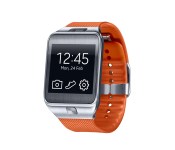
Samsung rumored with Gear Solo, a SIM-enabled smartwatch experience

Samsung may soon introduce a SIM-enabled Galaxy smartwatch experience known as the Gear Solo, reports The Korea Herald. Allegedly, the device will include a USIM module with built-in radio support for making and receiving phone calls. According to a source close to the newspaper, the device will only be available in South Korea; we might expect a global roll out eventually. It’s possible this comes out in a concept-like experience which is tested in specific markets with a second-gen model arriving later.
A number of questions come to mind when we hear about something of this nature. First, and foremost, we wonder about the battery life of something that connects to a cellular tower. What happens when we’re in places that don’t work, such as the metro or subway?
Second, and almost equally important, is whether it runs Android or Tizen. Will it allow for us install standalone apps to enhance the experience? Given the name of the device we might look for Tizen.
The Gear 2 made its debut only a few months after the Galaxy Gear touched down so we know Samsung is able to act fast. Reportedly, the so-called Gear Solo is expected to be released with SK Telecom in the coming weeks.
The Korea Herald via SamMobile
The post Samsung rumored with Gear Solo, a SIM-enabled smartwatch experience appeared first on SmarterWatching.
Read the rest at the source, SmarterWatching.com
The post Samsung rumored with Gear Solo, a SIM-enabled smartwatch experience appeared first on AndroidGuys.

American Express Offers $5 off a $5 iTunes/App Store Purchase [iOS Blog]
 American Express is offering a $5 statement credit to users who spend $5 on the iTunes and App Stores by April 30th. The rebate, part of AMEX’s “Offers for You” promotion, requires that users opt-in to the offer on the American Express website, and then spend at least $5 on iTunes by the end of the month.
AMEX cardholders need to ensure that their card is set up as the default billing method within iTunes itself. Once a $5 purchase is made and charged to the American Express card, a $5 statement credit will appear on their account.
OFFER DETAILS
Spend a total of $5 or more on iTunes using your enrolled American Express Card by 4/30/14 and get a one-time $5 statement credit.
American Express runs a number of these promotions, though availability does vary based on previous card usage. Some users may not be able to see the iTunes promotion because of how they use their card, for example.

WWDC 2014 Ticket Lottery Ends, Winners Being Notified Via Email
Because of overwhelming demand for its annual Worldwide Developers Conference, Apple enacted a lottery to determine who would be able to attend the 2014 event, accepting entries from Thursday, April 5 to April 7 at 10:00 AM PT.
The ticket lottery has now ended and Apple has begun notifying lottery winners by email. According to the WWDC site, all applicants who submitted an entry were supposed to know if they had won (or lost) by 5 PM PT, but it appears the emails are taking a bit longer to be sent out.

In 2012, Apple sold tickets on a first come first serve basis, with the available tickets selling out in just under two hours. A year later, in 2013, those tickets were gone in just two minutes, though Apple later invited additional developers to attend. Demand for WWDC prompted Apple to reinstate its Tech Talk sessions for developers throughout the fall of 2013, which will likely be repeated this year.
Lottery winners will be able to purchase an all-inclusive ticket for the Worldwide Developers Conference that includes access to Sessions, Labs, and special events for $1,599. 200 scholarship tickets are also available for students.
Apple’s 2014 WWDC event is set to begin on June 2 and will likely open with a keynote where the company will unveil upcoming hardware and software products, giving us glimpses of iOS 8 and OS X 10.10, among other things.

This skin-sensitive controller ramps up game difficulty when you’re bored

The concept of using your emotional state to alter gameplay is nothing new, but the technology to make that happen has frequently relied on cameras and other special add-ons. Stanford University’s Corey McCall has a far more elegant solution — he recently developed technology that builds skin-based emotion detection into an otherwise ordinary gamepad. The controller changes the intensity of a game based on the feelings you convey through breathing, heart rate and motion. It can boost the difficulty level if you’re obviously bored, or tone things down if you’re taking a challenge way too seriously. There may not be a great need for McCall’s approach when systems like the Xbox One can check your pulse at a glance, but it could let console and peripheral makers offer emotion-aware gaming without requiring cumbersome (or costly) extras.
Filed under: Gaming, Wearables
Via: Fast Company
Source: Stanford University

Red adds wireless camera control module, software development kit

Another Red introduction at NAB is RedLink. This $395 wireless module serves as a bridge between your camera and other wireless devices, letting you use a smartphone, tablet or computer to operate your cam. We caught it in action at NAB today, and the demo iPad app worked well. The wireless module currently only supports single device connections, so if you’re operating over WiFi, you’ll only be able to control one camera from the app. Networking your devices via Ethernet, however, lets you interact with an unlimited number of Red cameras. Red’s releasing an SDK as well, complete with Android, iOS and Windows templates, so it should be no time at all before a variety of compatible apps hit the market. Or, if you’re looking for a customized level of control, you can always create your own. The $395 RedLink Bridge ships today.
Filed under: Cameras, Wireless
Source: Red Digital Cinema

Neil Young on digital audio: You’re doing it wrong

When news first broke of Neil Young’s plans to serve up high-resolution listening to audiophiles last year, we wondered how he’d get folks to splurge for a $400 player and re-buy their existing libraries. Sure, six to 30 times the resolution of MP3s looks great on paper, but will we really be able to hear the difference? The rock icon says yes, and it’s because there’s nothing that’s currently available that even comes close to Pono. Young says that existing audio formats are unable to adequately present a full range of tones, so he “decided to create an ecosystem that provided exactly what the artist created.” From the bits of info we’ve seen so far, the outfit claims people who love music and really want to be able to hear songs as those artists tracked them will be sold easily.
“We’re not competing with streaming services. I view streaming services as radio,” Young continues. “The quality is so poor that I’m not impressed, and I’m not moved by it. They just fill the air and I’d rather hear the birds singing than some very low-grade digital reconstitution.” He went on to compare those options to going to an art gallery and looking at xeroxes or copies of xeroxes. As Young sees it, these content libraries are best when used as tools for discovery, but not for really hearing and feeling a song. Now, listeners will have a choice when it comes to audio quality.
“They just fill the air and I’d rather hear the birds singing than some very low-grade digital reconstitution.”
He’s super clear about one detail: PonoMusic isn’t offering a new file format or standard. What the repository will serve up is FLAC (Free Lossless Audio Codec) files that range from CD-quality 1,411 kbps (44.1 kHz/16 bit) up to 9,216 kbps (192 kHz/24-bit), depending on what’s available from that album’s master recordings. This means that listeners will have access to the highest-resolution version of an album that exists and the player needed to do them justice. You may be wondering how the PonoPlayer differs from other FLAC devices. From the info that’s available now, two of the key bits are a combination of zero-feedback circuitry and the unit’s DAC (Digital-to-Analog Converter) chip. As you might expect, all we know is that it’s “widely recognized in the audio and engineering community as one of the best-sounding DAC chips available today,” according to Pono’s FAQs. Even those CD-quality albums will get a boost from the Player.

There’s also a selection of devices in the works that are “Pono-approved” being developed by third-party companies. “A dedicated device is the only way that I could see to do it and be in control of the quality,” adds Young. With these offerings still in the works, there’s not much more to go on here, but there will be more than just the outfit’s own PonoPlayer to choose from at some point.
“A dedicated device is the only way that I could see to do it and be in control of the quality.”
So, what can we expect? Well, folks that have heard Pono claim it’s like having vinyl LPs in your pocket. However, you can use in-ears, headphones or directly plug it into your car or speaker of choice and the recordings and PonoPlayer will do all the heavy lifting needed to make a difference. Of course, that means that the high-res files will be much larger — about five or six times the size of a normal MP3. “We’re now in the 21st century. We can have good sound, big files and play them back,” Young notes. He’s quick to add that space is no longer a concern for ecosystems like Pono.
Bob Weir of the Grateful Dead is already sold. “This is the closest thing to analog I’ve heard, and from a consumer device, no less. Given that a lot of our stuff is on reel-to-reel, it’s gonna sound great,” Weir told us. We’d surmise those analog reel-to-reel recordings are what’s going to sound best with Pono, and we’ll just have to wait and see how the heavily digitized tracks fair. But for now, Weir isn’t alone in his excitement, as Pono has already amassed $5.6 million in funding on Kickstarter.
[Lead image credit: David Paul Morris/Bloomberg via Getty Images]
Filed under: Portable Audio/Video

Daily Roundup: $200 Micro 3D printer, Xbox One now shares to YouTube, and more!

You might say the day is never really done in consumer technology news. Your workday, however, hopefully draws to a close at some point. This is the Daily Roundup on Engadget, a quick peek back at the top headlines for the past 24 hours — all handpicked by the editors here at the site. Click on through the break, and enjoy.

The Micro is a $200 3D printer that can make a teacup in an hour
If you’ve been expectantly waiting for 3D printer that wouldn’t require you to wring out your wallet, now might be your chance to pick one up. Starting today, M3D’s Micro is available for pre-order on Kickstarter — and it’s only $200.

Xbox One now shares gameplay footage direct to YouTube
Previously, Xbox Owners have been able to share their gameplay through Skydrive and Twitch, but that’s about it. Starting tomorrow, however, those with Microsoft’s latest console will receive an update that let’s them share gameplay directly to their YouTube channel.

NASA is offering code from more than 1,000 programs for public use
Building your own home-grown life support system? Probably not. But thanks to NASA’s technology transfer program, such an endeavor might be possible. The administration plans to release thousands of its software systems for functions like life aeronautics and cryogenics to the public.

30 years of mobile phones, all jamming together (video)
South Korea’s SK Telecom celebrated 30 years of business by remixing its jingle with cell phones. And not just any mobile devices — we’re talking about the likes of the Motorola StarTAC and several car phones from the eighties.
You also might like:
Filed under: Misc

HTC One Max on Verizon Picking up Android 4.4.2 KitKat Update
HTC has certainly been doing their very best to keep true to their word with updates for their devices lately. Those of you rocking a stock HTC One Max via Verizon should see an OTA update pop-up on your device today, or soon, as they have begun the Android 4.4.2 KitKat update process.
 The update brings the One Max up to build number 2.16.605.2. Along with the update to 4.4.2, it is supposed to fix issues with device management running during OTA download, Bluetooth issues related to the 2012 BMW X5, copy function icon not working and the Verizon app not directing SMS messages properly. On top of all of that, the notification light now shows pending messages, emails and missed calls. A number of sneaky Verizon apps and services make their way into the build as well like Verizon Cloud, Verizon Location Agent and Verizon Support and Protect.
Verizon also lists a ‘master switch’ that turns all location settings on/off, a list of apps that use location services, estimated battery use of each app and 3 location profile s to choose from. Those are High accuracy, battery savings and device sensors.
All-in-all, a pretty good sounding little update for the One max owners out there. Anyone see the update hit their device yet?
Source: Verizon
Via Phandroid
//<![CDATA[
ord = window.ord || Math.floor(Math.random()*1E16);
document.write('’);
//]]>
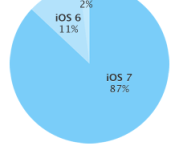
iOS 7 Adoption up to 87% Ahead of WWDC’s Likely iOS 8 Announcement
iOS 7 adoption continues to grow, with Apple seeing the operating system on 87 percent of devices connected to the App Store, according to Apple’s App Store developer support page. The numbers come seven months after the operating system’s original release and two months ahead of the expected preview of iOS 8 at Apple’s Worldwide Developers Conference in two month’s time.
Apple has traditionally seen speedy adoption of its new iOS releases because it makes it easy for customers to upgrade to the new operating system without too much trouble, and it’s likely that iOS 8 will see similar adoption after its expected release this fall.
iOS 8 is expected to include upgrades to Apple’s Maps app, including possible support for public transit directions and enhanced points of interest, a Healthbook app that assists users in aggregating personal health data like blood pressure, heart rate, and more — perhaps in concert with a smart watch product — as well as improvements to Siri and iTunes Radio, two of the more recent additions to Apple’s mobile operating system.

In contrast to Apple, Google sees only 5.3% of its users running the latest version of its Android operating system, version 4.4 or KitKat, which came out in October 2013 — a month after iOS 7 was released.
The increasing adoption rate of iOS 7 has also led to a drop in iOS 6 usage, with the older operating system now installed on just 11 percent of devices. 2 percent of devices are using older versions of iOS. In early December, iOS 7 usage was at 74 percent, jumping to 78 percent later in December, 80 percent in late January and 85 percent towards the end of March.
Apple’s data, which comes directly from the App Store, represents concrete iOS 7 adoption information for developers.

Dolby’s vision for the living room includes abundant audio options

Why should you have to listen to a sports commentator who’s obviously pulling for the other team — or one who’s just plain boring? That’s the question Dolby’s out to answer with its personalized audio demo here at NAB. The company’s showing attendees how they could enjoy a TV experience tailored to their preferences. Following through with the sports example mentioned above, this means different options for commentators during a hockey game. If you’re a basketball fan watching the Spurs take on the Pacers while talking with friends on Skype, the system will recognize the VoIP service and mute other audio when they’re speaking. Maybe you’re more into The Voice; Dolby’s tech could bring you audio from your favorite judge, excluding the opinions you don’t want to hear.
Though Dolby’s only demoing this audio experience now, the plan is to take the tech to market working with specific content providers. It’s not clear how the company plans to distribute multiple audio streams simultaneously — be it with the existing infrastructure or over IP — but we imagine there will need to be new hardware on both ends in order to take advantage. That’s for Dolby to sort with content partners, but in the meantime, you can get an idea of how it’ll work in the hockey game demo below.
Zach Honig contributed to this report.
Filed under: Home Entertainment
 AIVAnet