



GoPro’s new Blackout housing is ideal for shooting those covert operations

Still mounting your GoPro on a helmet? Get with the times. There’s like, a zillion other ways to mount that thing. Your choice is getting even bigger, too, as the action-cam behemoth has just announced a new “Blackout” housing ($49). As the name suggests, this is all about stealth filming. The dark, matte-finish case not only hides the shiny silver camera, it also conceals all the LEDs, making it ideal for situations where lights or reflections can ruin a shot (such as startling wildlife). Bonus: it’s also waterproof to over 130 feet. If you prefer to show your GoPro off in all its glory, then maybe the updated “Frame” housing is your thing ($39). As before, it’s a minimal frame-like housing, but with the ports exposed for easier access. A new latch mechanism also make it easier to lock in and release the camera. Lastly, remember that funky dual-case that allowed two Hero HD cameras to be combined for 3D footage? Well a new version of that is incoming too, updated for the Hero 3 and Hero 3+ models. No price and date on that, but hopefully enough time to save up for a second camera to go a long with it.
Filed under: Cameras, Wearables
Source: GoPro

The US started a social network in Cuba to foster dissent

At first glance, ZunZuneo had all the markings of your average Silicon Valley startup: a silly name, a focus on messaging, and plans to make a splash abroad. That wasn’t exactly the case though, as the Associated Press reports. No, ZunZuneo was a social messaging service (think of it as Twitter over SMS) cooked up by the U.S. Agency for International Development to help foment political unrest in Cuba. The plan? To hook users on a steady stream “non-controversial” updates on banal topics, before subtly injecting political messages into the mix in hopes of sparking a movement.
The AP says that some 40,000 unsuspecting Cubans used the service in its heyday, but it suddenly went dark in 2012 when it ran into the problem most startups inevitably do: it ran out of money. In a bid to polish its veneer of legitimacy, USAID apparently had a sit-down with Jack Dorsey to discuss funding and attempted to install a outsider as CEO. This situation, while utterly fascinating, is loaded with questions. Was it legal? The USAID argues it was – a spokesperson told the AP that a congressional investigation found the organization’s programs legally bueno. Was it ethically questionable? That’s another story entirely. ZunZuneo’s mass messaging was valuable in a country where internet access is limited at best, but Senator Patrick Leahy (D-VT) lays out the issues nicely:
“There is the risk to young, unsuspecting Cuban cellphone users who had no idea this was a U.S. government-funded activity. There is the clandestine nature of the program that was not disclosed to the appropriations subcommittee with oversight responsibility. And there is the disturbing fact that it apparently activated shortly after Alan Gross, a USAID subcontractor who was sent to Cuba to help provide citizens access to the Internet, was arrested.”
Source: Associated Press
Facebook Messenger updated with group chat, other features
Facebook has updated its Messenger application for Android devices, tying in a feature already available in the iPhone version. First and foremost, the app now lets users create group chats, tag them with images, and save them. What’s more, users can place shortcuts to said group conversations on the home screen of their device. Also, the app now allows for forwarding of messages from one user or conversation to another. As always, Facebook Messenger is free to download.
The post Facebook Messenger updated with group chat, other features appeared first on AndroidGuys.

KISS’ Photo Bomb app will glam up your photos in the worst way possible

Hey you! Have you ever wanted to use a mobile app to relive the heady glam-rock days of the late 1970s? If so, the newly released KISS Photo Bomb app for iOS and Android is not the way to go. The name says it all, really: with the app you can digitally insert members of KISS into your photos, as well as lather your face in iconic makeup (see above) and stick Gene Simmons’ crimson tongue just about anywhere you like. The end results are… just as absurd and facepalm-y as you’d imagine. Yes, this is a real thing. No, we don’t know why. Wait, yes we do: it’s a ridiculous, naked money grab, with additional sticker and frame packs priced at $1 a pop. Then again, we’d expect nothing less from the guys who thought sticking their faces on caskets was a rad idea.
Source: KISS Photo Bomb

Google reportedly wants to offer mobile phone service in Fiber areas

Many see Google Fiber as an attempt to disrupt the stagnant world of internet service providers, and it now sounds like Google wants to shake up the wireless industry, too. Sources for The Information claim that the search firm wants to offer mobile phone service in Fiber areas. It’s not yet clear how this would work, but Google reportedly told Verizon in January that it would like to become an MVNO (mobile virtual network operator) piggybacking on Big Red’s network. None of the companies involved are commenting on the rumor, and there are no guarantees that Google’s dreams will become reality. We certainly wouldn’t count on Verizon’s cooperation given its vehement opposition to the net neutrality principles that Larry Page and crew hold dear. However, Google is the sort of company that’s willing to supply internet access by any means necessary — if it’s really bent on offering phone service, it’ll find a way.
Filed under: Cellphones, Wireless, Internet, Mobile, Google, Verizon
Source: The Information
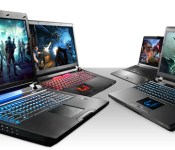
Digital Storm’s revamped gaming laptops boast high-end GeForce 800M graphics

If you’ve been waiting for a gaming laptop that wrings the most performance out of NVIDIA’s new GeForce 800M graphics chips, you may want to check out Digital Storm’s freshly revamped laptop line. The Javelin, Lance, Krypton and Behemoth all carry fast dedicated video, ranging from the GeForce GTX 860M (in everything but the Behemoth) all the way to dual GTX 880M chips in higher-end Krypton and Behemoth models. Beyond that, you’re mostly paying for screen size and frills. The Lance starts things off at $1,196 for a 15.6-inch 1080p screen, a quad-core 2.4GHz Core i7, 8GB of RAM and a 750GB hard drive. Step up to the $1,430 Lance and you’ll get both improved cooling and audio alongside minor spec bumps; the $1,478 Krypton adds a 17.3-inch screen, while the $2,289 Behemoth takes a big leap forward in speed with a GTX 880M GPU, 16GB of RAM and a 128GB solid-state primary drive. All of Digital Storm’s latest portables are available to order today.
Filed under: Gaming, Laptops, NVIDIA
Source: Digital Storm

Turkey finally lifts Twitter ban, but YouTube is still blocked

It’s official: Turkey’s Twitter ban has officially come to an end. The country’s high court ruled that the ban was unconstitutional just yesterday, and access to the service was finally restored this morning after two weeks of social silence. In case you hadn’t been following this odyssey, Turkish Prime Minister Tayyip Erdogan promised to “root out” the service after recordings of reportedly corrupt government officials made the rounds ahead of nationwide elections.
Savvy users managed to bypass the block with tools like Tor, but Erdogan seems to have gotten what he wanted anyway: his party trounced the competition in municipal polls held over the weekend. Censorship is as powerful a tool as ever, sad to say. Twitter wasn’t the only social service that came under fire, as YouTube was blocked once illicit recordings of a high-level meeting about sending troops into Syria began to circulate. At this point there’s no word on when access will be reinstated, though this isn’t the first time YouTube has fallen into the country’s crosshairs: it was blocked between 2007 and 2010 because it hosted videos critical of Turkey’s founder, Ataturk.
Source: Reuters

White House miffed after Samsung uses an Obama selfie as an ad

Did you catch the selfie that the Red Sox’s David Ortiz took with President Obama? That was a great instance of cultural zeitgeist, wasn’t it? However, Samsung also has a deal with Ortiz that let it use the shot (taken with a Galaxy Note 3) in a Twitter ad — and the White House isn’t very happy. The administration tells CBS that it didn’t realize the baseball star’s photo could be used as an Oscars-style marketing ploy. Officials aren’t asking anyone to take pictures down after the fact, but they hint that they might not have approved the photo if they’d known about the possible financial incentives. For his part, Ortiz insists that it was a sincere, spur-of-the-moment shot — while Samsung pays him, he couldn’t exactly promise an Obama photo op. We’re inclined to believe Big Papi, but something tells us that the President may be a little more camera shy in the future.
[Image credit: David Ortiz, Twitter]
Big Papi, Big Selfie. RT @DavidOrtiz What an honor! Thanks for the #selfie, @BarackObama pic.twitter.com/3I7ckLjquf
– Samsung Mobile US (@SamsungMobileUS) April 1, 2014
Filed under: Cellphones, Internet, Samsung
Source: CBS Boston, Samsung Mobile US (Twitter)
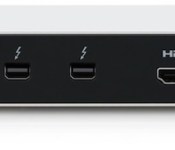
Elgato Becomes Latest Company to Launch Thunderbolt Docking Station [Mac Blog]
Since late 2012, a number of accessory manufacturers have released docking stations taking advantage of Thunderbolt technology to allow users to connect a number of different types of devices to their machines with a single cable. Matrox was the first to reach market with its DS1, and similar offerings from Belkin and CalDigit have since been released.
Popular TV and video accessory maker Elgato has now released its own dock, offering three USB 3.0 ports, a pair of Thunderbolt ports to support pass-through, HDMI and Ethernet ports, as well as headphone and microphone jacks.
In addition to the hardware, Elgato has also released a free menu bar utility that allows for easy ejection of mounted storage devices while also enabling high-power USB support.

In terms of connectivity, Elgato’s dock is most similar to CalDigit’s Thunderbolt Station, with each supporting the same set of ports. Matrox’s docking station offers only a single USB 3.0 port (plus two USB 2.0 ports) and only a single Thunderbolt port, which limits users to placing the dock at the end of a Thunderbolt chain. Belkin’s Thunderbolt Express Dock does away with a dedicated HDMI port and instead expects users to use one of the dock’s two Thunderbolt ports for display connectivity. Belkin’s dock does, however, include a FireWire 800 port.
Sonnet announced an even more expansive dock including internal storage and DVD/Blu-ray drives a year ago, although its release has been pushed back as Sonnet redesigns it to include support for the new Thunderbolt 2 standard supported on the latest Mac Pro and Retina MacBook Pro models.
Elgato’s Thunderbolt Dock launches today on Amazon (although currently listed as out of stock) with a suggested retail price of $229.95 with a Thunderbolt cable. A $199.95 version without cable is also available.
     |

Micron’s DDR4 RAM May Improve Battery Life in Apple’s 2014 Products
Apple’s customers may receive a boost in performance and improved battery life from the company’s 2014 products thanks to improvements in Micron’s LPDDR4 DRAM technology, claims Matt Margolis (Via 9to5Mac).

According to Margolis, Micron is ramping up production of its DDR4 RAM and will supply Apple with memory chips for its 2014 iPad, iPhone and Mac models, which are expected to debut later this year. Margolis believes a “mystery” $250 million payment Micro received for “product to be supplied through September 2016″ is from Apple as part of a multi-year deal.
Apple is a current DRAM customer of Micron Technology, having last used Micron’s LPDDR3 DRAM memory in 2013. Micron presented detailed benefits and product highlights regarding their LPDDR4 DRAM Memory technology almost a year ago. Furthermore, just yesterday Micron’s Vice President of Wireless Solutions Marketing published an article highlighting the benefits of Micron’s next generation DRAM LPDDR4, which tells me this technology is ready for the big show. Lastly, Micron received a mystery payment of $250m from one customer that was reported during their Q1 2014 conference call and their 10-Q indicates that the payment was “for product to be supplied through September 2016″.
Apple is in an arm’s race to improve the performance of their mobile, tablet and ultrabook devices and improve overall battery life. There appears to be little doubt that Apple is going to be showing off Micron’s LPDDR4 DRAM memory across their 2014 iPhones, Macbook and Tablets. You can take my word for it that Apple users are going to love how “lightning quick” the 2014 devices will be compared to the 2013 devices.
Though not confirmed, this transaction is plausible as Apple currently uses Micron’s LPDDR3 DRAM in its 2013 models under the brand name of Elpida, a company that Micron acquired in July 2013. Even earlier, Apple reportedly inked a deal for DRAM chips with Elpida in 2012 that purchased half of the capacity at the firm’s main manufacturing facility in Japan.
This new DDR4 RAM technology offers two times the bandwidth performance of the previous genration LPDDR3, while keeping power consumption low, claims Reynette Au, Micron’s Vice President of Wireless Solutions Marketing, in an article at Wirelessweek.
These technological advancements in DDR4 RAM may complement Apple’s 64-bit A-series processor, which powers the iPhone 5s, iPad Air and Retina iPad mini. Detailed analysis from Anandtech claims Apple’s current A7 processor is so powerful that users are likely to encounter RAM bottlenecks and battery consumption limitations before overextending the CPU.
| |
 AIVAnet