


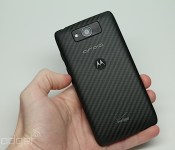
Verizon’s 2013 Droid line now does KitKat

Maybe it was the marketing or the battery life, or just an aggressively convincing Verizon rep — but whatever the reason, you chose a 2013 Droid over Motorola’s fine Moto X. And then, maybe you kicked yourself as you watched Verizon update the Moto X to KitKat while your handset sat neglected like the red-eyed stepchild it is. Oh chin up, because KitKat’s finally coming to the Droid line as of today. Yes, that means owners of the Droid Ultra, Maxx and Mini should start seeing that Android 4.4 update hit their devices. Although cool your jets on the System Update refreshes because it’s “being pushed out in phases.” We know the wait can be painful, but take comfort in knowing you’re almost in the clear.
Filed under: Cellphones, Wireless, Software, Mobile, Google, Verizon
Source: Verizon Wireless (Twitter)
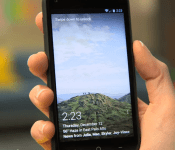
Facebook Home update to bring new lockscreen and gestures to select Android phones

Facebook hasn’t forgotten Home, the Android launcher that originally came out this past April and has trickled out to a few select handsets since. The social network just posted a video showing an upcoming update to Home, although it still hasn’t shown up in the Play Store yet. According to the video, the new update will feature a new lockscreen which lets you use your own wallpaper, rather than being surprised with a random picture and status update every time you wake up your phone; at the bottom you’ll also see details on which of your friends has recently posted a status update, as well as the current weather and quick access to your Home settings. A swipe down from the top will now unlock the phone and take you to your apps, and each status update will have a menu in which you can hide posts from that particular friend. There’s no word from Facebook on when we can expect to see this update, but we’ve reached out to the company for more details and will update the post as soon as we get more details. In the meantime, check out the video below to see if this makes you want Home any more than you did (or did not) before.
Filed under: Cellphones, Wireless, Mobile, Google, Facebook
Source: YouTube

Dolphin Zero Android browser protects your privacy, hides your shame

The latest mobile browser from the team at Dolphin promises “the highest level of privacy possible.” A big claim, to be sure, but privacy is unquestionably Dolphin Zero’s central focus, auto deleting your input data, history, cache, cookies and password — basically anything you’re not already saving on your device. We’re not talking top-level encryption here, more something akin to a permanent version of the Incognito Mode you get on Chrome. Though bonus points here for the shredder animation Dolphin incorporates to further the notion of the browser’s ephemeral nature. You can download Zero in the source link below.
Via: Fone Arena
Source: Play
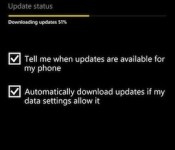
Nokia Black update brings imaging enhancements to Lumia 1020

Nokia likes to bundle Microsoft’s Windows Phone updates with a set of its own improvements specific to the Lumia line, and the latest such version — known as the Black update — is finally making its way to the Lumia 1020 on AT&T. In addition to the standard firmware enhancements that comes as part of the “GDR3″ update to Windows Phone 8 (such as screen rotation lock, custom ringtones for specific types of notifications and the ability to close running apps in the app switcher more easily), you can also enjoy some of the same imaging features that were integrated into the Lumia 1520: the Nokia Camera, which combines the Pro Cam and Smart Cam into one fantastic app, and other unspecified performance enhancements. You’ll also get the new and improved Glance Screen also seen on the 1520, Bluetooth 4.0 LE support, better battery monitoring and other miscellaneous stability fixes. The download is hitting our devices right now, but as usual, it may take a while to roll out to everyone.
Filed under: Cellphones, Wireless, Mobile, Microsoft, Nokia, AT&T
Via: WPCentral

SwiftKey update simplifies setup process, adds festive keyboard theme

SwiftKey’s spreading a little Christmas cheer today, having updated its popular keyboard app for Android with a festive “Ice” theme. In addition to looking generally chilly, the theme frames letter pop-ups in snowflakes and generates snowy residue from Flow strokes. There is a little more to version 4.4, though; namely, a new installer that claims to simplify the setup process, which any current SwiftKey users may remember as being more complicated than perhaps it needed to be. The new version doesn’t include the richer emoji suite or number row — those features are still in beta — but you do get a bunch of bug fixes as consolation. The update is live in the Play store and is awaiting Bezos’ approval for Amazon’s Appstore, although he might be preoccupied with all the pre-Christmas orders steadily making him rich(er).
Filed under: Cellphones, Tablets, Software, Mobile
Via: Coolsmartphone
Source: SwiftKey, Google Play
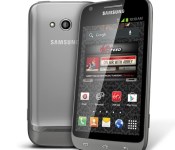
Win a Samsung Galaxy Victory [12 Days of Giveways]
Today marks the sixth day of our 12 Days of Giveaways promotion which sees us giving out all sorts of wonderful Android-related stuff. We’ve already given away hundreds of dollars worth of stuff and we’re just hitting the halfway point! Among other great prizes, the next few days will see us offering up an NVIDIA Shield, Nexus 5, and Moto G!
Prize #1 Samsung Galaxy Victory 4G LTE

Today’s prize is a brand new Samsung Galaxy Victory 4G LTE from our friends over at Virgin Mobile USA. Powered Android 4.1 Jelly Bean, the phone features a 4-inch display, 5-megapixel rear camera, and 4G LTE connectivity. With nary a contract to worry about, this guy offers a dual-core 1.2GHz processor, memory expansion up to 32GB, and a 2100mAh battery. Indeed, there’s zero commitment and all win here!
Learn more about Virgin Mobile or follow them on Facebook and Twitter.
Prize #2 Bundled Goodies


The second prize we’re hooking you up with is a Kensington Vesto Case for Galaxy S3 and an iHome BT Speaker. The former is a stylish, leather textured case for the popular flagship smartphone; the latter is a Bluetooth speaker to listen to music, podcasts, or movies on when connected to your Android or smartphone. As an added bonus, it also connects via NFC!
Learn more about Kensington or follow them on Facebook and Twitter!
Learn more about iHome or follow them on Facebook and Twitter!
Prize #3

The third prize we’re awarding to a random winner, the Home or Away Power Station, provides 3 surge protected outlets, a folding power plug, and a pair of USB ports. Perfect for the home, even better when you need to travel!
Learn more about Accell or follow them on Facebook and Twitter.
Daily Prizes
Oh… don’t forget we’re also giving out Google Play credits over the remainder of the month. On some days we’ll randomly pick someone to win $10, others will be $25 and higher!
How to Enter
We’re going to keep this short and simple. To enter today’s contest all you need to do is leave a comment below! We’ll let this run for 24 hours and then randomly select the winner(s).
Win Google Play Credits!
To enter to win one of the Google Play credits all you need to do is share the following on your social media platform of choice: “I want to win Google Play Credits, AndroidGuys! http://goo.gl/dGQhG6 #12DaysAndroid”
Yes, you can share over Facebook, Instagram, Twitter, and Google+. Yes, you can enter as often as you like.
Finer details
This post will be updated with the name(s) and we’ll reach out via the comments as well. Also, be sure to keep an eye on the 12 Days of Giveaways page where we’ll keep a running tally of prizes and winners.
Note that we’ll give each winner a 24 hour window to respond. Should the winner not reply in time, we’ll re-draw and announce a new name. Be sure to check back!
Here’s the rub: We’re limiting this contest to U.S. residents only. Yes, we know it sucks – we hate doing it. Also, you can only win one prize per household. If you happen to win a Google Play Credit as well, then so be it!
The post Win a Samsung Galaxy Victory [12 Days of Giveways] appeared first on AndroidGuys.
Apple Maps App with Interactive Data Layers Detailed in New Patent
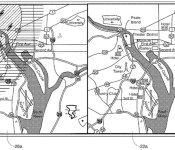
Apple has filed for a United States patent (via AppleInsider) detailing an interactive mapping program that allows users to view different layers of information based on factors such as location, points of interest, and the context of a current situation. While the concept of various layers of information for digital maps is not new, Apple seeks to enhance layering by drawing upon several types of information based on the user’s needs through various “modes”.
The patent introduces itself by describing the problem with existing maps applications and the need for a user to rely on multiple ones in order to gain a complete set of information relevant to a current situation. For instance, the patent gives an example of a user who views a weather map and sees that a storm is coming, and then has to switch to another app to locate a shopping mall or nearby building to take refuge while the storm passes.

The application described in the patent however, would essentially contain all of the various types of information for quick and unified access. With the application in patent, the user in the first example would be able to reveal the weather layer to note that a storm was coming, and then hide that layer and reveal another one giving the locations of nearby buildings to reach safety.
In another aspect, user input can be directed at specific features displayed on the map, such as clicking a mouse button while a cursor is positioned over a dot representing a city, or touching a highway indicator on a map displayed on a touch screen device. In response to such input, the map displays information that pertains to the feature of interest. For instance, clicking on a city dot might result in the display of information pertaining to the city, such as demographics, hotels, flight schedules, etc. Touching a highway indicator, such as a route number shield, may cause the map to display the locations of fueling stations, hotels and restaurants along the route.
Users would also be able to select different modes in order to emphasize map layers that could be useful to a particular interest, such as a commuting mode that would reveal the locations of nearby trains or bus stops and their specific transit times. Other modes could include a shopping mode that would reveal information while in a mall about special deals and sales, similar in nature to how shopping app Shopkick and Macy’s teamed up for the first retail-based iBeacons last month that allowed customers to find location-specific deals, discounts and recommendations while looking at items in the store.
This would also be relevant to search results, as searching the word “food” in tourist mode would give results for locations such as restaurants and cafes, while searching the same term in the outdoor recreation mode would give the locations of camping supply stores.

Another application would be the ability to create routes by touching two points on a map with distance calculations, which would also give the best possible route to select based on context. For instance, if a person is deciding what route to take across a certain area, the mapping application would show the best possible route in terms of traffic density, possible restaurants, weather, and so forth.
Finally, the application would also include geospatial capabilities that can be integrated to provide information based on a specific location. For instance, if a user had a tourism mode toggled and walked through a location of historical significance, then information about facts related to the area could pop up to compliment an experience.
While it is unknown as to whether Apple will actually integrate the technology detailed in the patent into its existing Maps application, the company clearly continues to look to improve its mapping services, as evidenced by a number of recent acquisitions.
For instance, Apple’s purchases of companies such as Embark, HopStop, and Locationary would allow it to pursue some of the mapping capabilities discussed in the patent, and could also be bolstered by the technology provided by PrimeSense, another recent acquisition. With Apple Maps now the clear-cut favorite among iOS users, it would only make sense that Apple look to improve the app beyond any other effort from its competitors.
     |

Cyanogen gets serious about its OS aspirations, ponders a future in TV and wearables

It’s been three months since Cyanogen announced it was stepping out as a profit-seeking business. Flush with $7 million in funding, the company has been pushing harder than ever to achieve its goal of making CyanogenMod the third major mobile ecosystem, after iOS and Google’s Android. Now with “tens of millions” of installs, the company announced today that with help from VC firm Andreessen Horowitz it’s added further $23 million to its funding pot, and with this investment it believes has everything in place to bring in more talent and expand CyanogenMod to other devices like TVs, wearables and even cars.
Cyanogen’s mission is to refine the Android experience while still giving consumers (and pro users) the things that made it stand out in the past: freedom from manufacturer and carrier update cycles, and the ability to customize their device just how they like it. That focus is evident in its open-source software, which is now based on Google’s Android 4.4 KitKat and has recently gained encrypted text message support and built-in screencast video recording.
“We feel that the existing devices you can currently buy aren’t really designed for the end user. They’re essentially designed as cash registers for the companies that make them,” says CTO Steve Kondik, who created CyanogenMod back in 2009. “A lot of people are starting to mistrust the software and devices that they use because of that fact. It’s an opportunity for us to make really good software.”
“We intend to hit the mass market in late 2014 or early 2015 with a new brand.”
Right now, Cyanogen operates as a small company with 22 employees. That’s set to change in the next six months as the company looks to bring in fresh talent. Kirk McMaster, the CEO, sees Cyanogen hiring between 30 and 50 new employees during that time, helping to evolve its mobile platform and deliver new products even quicker.
“We intend to hit the mass market in late 2014 or early 2015 with a new brand, complete focus on the mass market and a new design language,” says McMaster. “We’ll bring to the market some new signature experiences that differentiate Cyanogen and any other brands we create.”
Cyanogen’s software is already available on Oppo’s N1 smartphone, but we could see the software appear on future smartphone models with a new, friendlier brand name in the coming months.
In the past, installing CyanogenMod was far from simple. That all changed when the team made switching from a phone’s original Android setup to its own flavor of the OS much easier, with automatic mobile and desktop installer apps. The presence of a Cyanogen installer on the Play Store made Google a little uneasy, however, and the search giant politely asked the team to pull the app, citing violation of its terms of service. Looking back, Kondik understands why Google had concerns: Cyanogen had made installation almost too easy.
“Google was very civil, its concern was that we made things too easy.”
“Google was very civil,” notes Kondik, “its concern was that we made things too easy — users could download an app, connect their device to a computer, type in a URL and boom, they had CyanogenMod.” Having spoken with the support teams at Google, Cyanogen recognized that users could blindly use its tool, overwrite the data already on the device and be left with new software that they weren’t familiar with.
The team had experimented with including a backup option it is first version of the app, but its backup process, which cached a copy of the user’s original ROM and settings, would take as long as 20 minutes to complete. The feature didn’t resonate with usability testers, so it didn’t make the cut. Cyanogen intends to restore backup options in a new release and will include more how-to guides for new users — or “putting on the training wheels” as Kondik likes to say — in the hope it will gain the necessary clearance to return to the Play Store, which is planned for the new year.
Developing an open-source platform can make it harder to make money. So how does Cyanogen intend to provide a return for its investors? Kondik thinks the key lies in building Cyanogen’s userbase, with a little help from consumers in China, the US or Europe, based on a freemium model that will see a mixture of free and paid-for apps, services and add-ons launching in the next 8-12 months. The company believes that if it can reach 100 million-plus users, interest in its app store will bring developers to the platform and, in turn, allow it to explore wearables, cars, TVs and other form factors further into the future.
Filed under: Cellphones, Software, Mobile, Google

Microsoft’s first Xbox-exclusive documentary is digging up Atari’s past

Microsoft’s Xbox Entertainment Studios will launch its first original documentary production next year, a film exploring the rise and fall of game industry legacy Atari. You read that right: a modern game console manufacturer is creating a documentary about a failed game console manufacturer. A bit meta if you ask us!
Anyway, the documentary will focus on digging up the symbolic grave of the early game industry: a burial site with “millions of unsold game cartridges” in New Mexico. The game in question was the Atari 2600 adaptation of E.T., a holiday 1982 release — often called one of the worst games ever made. A new production studio co-founded by Simon and Jonathan Chinn (Man on Wire, FX’s 30 Days), named Lightbox, is heading up production; filming is slated to start in early 2014, with an exclusive debut on both Xbox 360 and Xbox One at some point later in the year.
It’s unlikely that the Atari doc will be the first product from Xbox Entertainment Studios to launch in 2014, as shows are scheduled to roll out starting in early 2014.
Source: Microsoft
Motorola shows how it could make smartwatches with flexible displays

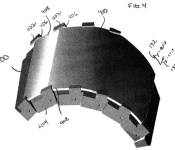
Motorola has already filed for patents on both wrist-worn gadgets and flexible displays. Today, we’re seeing what happens when the company merges the two technologies. A newly published patent application has revealed a Motorola concept for a smartwatch-like device where both the screen and the shell underneath can flex in tandem. Much like a metal watch band, the chassis would be made of links; grips on each link would bend the display. It’s a simple idea, although we’re not expecting a product out of it any time soon — the company will need flexible circuits before any bendy wearables can reach its roadmap.
Filed under: Peripherals, Wearables, Google
Source: USPTO
 AIVAnet