


Fieldrunners HD and Fieldrunners 2 on sale for $0.99

We assume you have loaded up on a number of great game over the last few weeks. SEGA has been running some sweet deals on the Sonic line up, Square Enix has the Final Fantasy line on sale and various other promotions are slowly eating away at what little money you have left after the holidays. Subatomic Studios is looking to help alliate you of $1.98 more.
Like all the rest of the big guys out there, Subatomic Studios has put Fieldrunners HD and Fieldrunners 2 on sale for the holidays. Taking both down from $2.99 to just $0.99 each. Why not grab both for less than the cost on what one is?
Fieldrunners has been around for quite some time, but we know there are THOUSANDS of new Android users joining up learning everyday. For those of you that haven’t seen either of these games, then you should definitely take a closer look. Assuming you enjoy strategic tower defense style games with great graphics and even better game play.
To get your hands on both titles, just head to the Subatomic Studios Developer page in the Play Store.

The biggest stories of 2013: Console wars, Bitcoin’s boom and the NSA’s very bad year

2013 was a bust! Or so we’ve been told. Whether you follow that line of thinking or reflect on the last 363 days in a more optimistic light, it’s clear the year wasn’t all big breakthroughs and great triumphs. This was the year of government surveillance revelations, fallen giants and lackluster product releases. But it was also the year Netflix took on the studios, patent reform became a real priority in DC and two new game consoles hit the scene. No, we won’t be riding our hoverboards into the sunset at the close of 2013, but the stories that rocked the industry had a profound impact not only on technology, but also on society as a whole. So let’s raise those half-empty glasses and make a toast as we recap the year that was: Here’s to the glassholes!
The NSA’s very bad year

Former NSA contractor Edward Snowden took online privacy concerns to a whole new level when he leaked documents to The Guardian, proving the agency tapped into user data from Apple, Facebook, Google and others as part of its larger PRISM surveillance program. Companies initially denied knowledge of the NSA’s activities, but Snowden’s additional leaks showed that this was more than an isolated incident: The agency collected bulk call records from Verizon and other carriers thanks to a warrant from the secret Foreign Intelligence Surveillance Court.
Further revelations revealed the UK government also used PRISM to gather data on internet companies; the NSA’s spying covers as much as 75 percent of US online traffic; and custom software allows the government to sort collected data by country. Of course, this is only what we know so far.
Though President Barack Obama claimed that PRISM collected only metadata (rather than listening to your phone calls) and that internet monitoring pertains only to “those outside the United States,” the leaks put both the government and internet companies on the defensive. Google petitioned the FISA court – with no success — for the ability to release aggregate numbers of government data requests, and a presidential task force is currently exploring an overhaul of the NSA program. In the meantime, sites are trying to appease reluctant users with transparency reports and additional file encryption. Oh, and Mr. Snowden remains one of America’s most wanted during a one-year asylum in Russia, which he accomplished with the help of Julian Assange and the larger WikiLeaks team. – Sarah Silbert
tl;dr The NSA has your number, and yours, and yours and yours, too.
Microsoft’s mega-tough transition
 Microsoft CEO Steve Ballmer (AP Photo/Elaine Thompson)
Microsoft’s vision for itself and the road ahead is clear: It has designs on becoming a “devices and services” company. Steve Ballmer, Microsoft’s outgoing CEO, has repeatedly said as much from the moment he announced his seemingly forced “retirement” in late August and throughout all the subsequent Nokia-acquisition news. The Redmond-based tech giant is in the midst of a difficult transition; one that Ballmer couldn’t quite engineer. As it clamors for an ever-increasing slice of the mobile market — a roughly 4 percent share it wants to quadruple — and folds in much of Nokia to do so, the company’s left to ponder just who will effectively lead that charge.
The Redmond-based tech giant is in the midst of a difficult transition; one that Ballmer couldn’t quite engineer.
Though Microsoft’s $7.35 billion purchase of Nokia’s devices and services business — patents and mapping tech will simply be licensed — may seem to outsiders as if it’s following Apple’s vertical integration, that doesn’t mean it’s abandoning support for Windows Phone manufacturers. On the contrary, Microsoft believes it needs to create a halo Windows Phone product to drive adoption of the platform, which could in turn attract more manufacturer interest in the number three mobile OS. And let’s not forget about Nokia’s Asha line. Microsoft’s already laid bare its intentions to reach “the next billion” in emerging markets and with Asha under its belt, it’s positioned advantageously to do just that. Now it just needs a CEO to see it through.
Much of the press’ speculation has focused on Stephen Elop, former Nokia CEO and future head of Microsoft’s Device and Services division, as candidate numero uno for the role. And given its new slant toward a unified Windows platform and its push for a “first-rate Microsoft phone experience,” the charismatic and able Elop does seem a fitting choice. But it’s not a guaranteed coup, as other potential candidates have surfaced, most notably Ford CEO Alan Mulally and two internal picks: Enterprise head Satya Nadella and Skype’s Tony Bates. Whoever the board finally decides upon, we know that a conclusion to this CEO succession saga is still a ways off, as the board’s issued a vague “early part of 2014” target to conclude its search. Just don’t be surprised if that date slips even further into the future. – Joseph Volpe
tl;dr Ballmer’s out; Nokia’s in.
Wearables make a play for the mainstream

Google seemed to open the floodgates of consumer curiosity with the release of its first dev-focused version of Glass this April, and there was one question on everyone’s lips: Is that thing recording? Of course, there were a number of other notable gadgets in the category and a number of other unanswered questions. Among them: Is the world ready for wearable computers? It’s clear that manufacturers are, with Sony, Samsung and Pebble all offering their own takes on the smartwatch, a slew of new fitness trackers hitting the market and the promise of the Oculus Rift and similar headsets capturing the imagination of gamers everywhere. Even Apple’s Tim Cook has his eye on the market, dubbing wearables “very interesting” in an interview with AllThingsD — sounds familiar, right?
Despite the onslaught of head-mounted and wrist-friendly devices, it’s still early days. Google has yet to release a consumer version of Glass; the much-rumored iWatch is still just that; and Oculus VR still hasn’t committed to a release date. That’s not to say we won’t see head-mounted displays on every Tom, Dick and Harry in the coming years, or that mainstream interest in wearables doesn’t exist, but most of the devices we’ve tried on are still dependent on the smartphones many of them aim to eliminate. The limitations don’t stop there. Detractors have pointed to the actual wearability of most of today’s wearables — despite the fashion industry’s fetishistic embrace — and limited functionality has positioned them as playthings of the wealthy and truly nerdy. – Christopher Trout
Deep Dive: Living with Glass; Gaming the system: Edward Thorp and the wearable computer that beat Vegas; Google Glass review; Oculus Rift: Follow the saga; Sony SmartWatch 2 review; Pebble smartwatch review; Samsung Galaxy Gear review
tl;dr Like it or not, the glassholes have arrived.
Bitcoin Ballin’
 (Photo by George Frey/Getty Images)
In 2013, Bitcoin’s value against the dollar skyrocketed, suddenly thrusting the nascent system into the spotlight. At the start of the year, one Bitcoin was worth around $20, but by the end of November, it was more than $1,000. The most famous names involved with the system are the Winklevoss twins, who have plowed a reported $11 million into Bitcoin in the hope of making a fortune when its value rises even higher. With the advent of Bitcoin ATMs, people can even walk in off the street and swap their cash for the digital money.
Before it went mainstream, however, Bitcoin had a reputation for being used by the more nefarious of internet citizens. Unregulated, difficult to trace and without a central bank to keep things in check, it’s very easy to buy and sell goods without interference, which explains why it was the currency of choice for the now-defunct online black market, Silk Road. With increased notoriety comes the interest of governments, and when Fed chief Ben Bernanke says that Bitcoin may have “long-term promise,” it seems as if regulation isn’t far behind. Recently, China moved to block people from buying Bitcoins with yuan in an attempt to control the nation’s planned economy — causing the currency’s values to plummet from a high of more than $1,000 to less than $500 in the course of a few days.
At the start of the year, one Bitcoin was worth around $20, but by the end of November, it was more than $1,000.
Bitcoin differs from regular currencies in two ways. Firstly, there’s a total limit on the number of coins that can be created through “mining,” and secondly, if a coin is destroyed, there’s no way to get it back, forever reducing the total liquidity of the Bitcoin economy. Now, while dropping a few coins down a drain won’t cause you to go bankrupt, feel sorry for Briton James Howells, an early Bitcoin adopter who accidentally threw out the hard drive that contained his coinage. By the time he realized his mistake, around $8 million worth of BTC was crushed at the bottom of a Welsh trash heap.
While 2013 saw Bitcoin make headlines, 2014 will determine whether or not it’s a flash in the pan. Not only does it need to fend off the threat of rival currencies, but it also has to deal with the pressures of maturing into a stable and useful currency as both profiteers and governments begin to pull the system in two very different directions. Whatever happens, money will never be the same again. – Daniel Cooper
Deep Dive: Primed: The rise (and rise?) of Bitcoin
tl;dr The digital currency captured hearts, minds and the Winklevoss twins.
Cracking the Carrier Model

This year marked the beginning of the end for carrier subsidy models in the US, and it all started with “Crazy Eddie” himself, T-Mobile CEO John Legere. Until 2013, the carriers remained steadfastly committed to the traditional subsidy-pricing model in which you get a discount on the phone when you agree to a multi-year contract. T-Mobile, however, made a few key changes to its plans: You can now pay off your phone in monthly increments and the carrier lets you upgrade to a new phone much sooner. The “UnCarrier” strategy (as the company calls it) became quite popular, and the result was infectious — before the end of the year, the other three national networks had come up with similar plans. Unlike T-Mobile, though, its competitors chose to offer that option alongside the traditional postpaid plans. A win for consumers who like choice, we suppose.
What’s more, carriers like T-Mobile and AT&T now promise discounts on monthly service when you’re either out of contract or you’ve paid off your device. This is fantastic news for anyone who’d rather procure their phone or tablet from outlets outside of carrier stores. Additionally, there are so many more unlocked devices sold at affordable prices now: The Nexus 5 delivers flagship phone features for a mere $350, while the Moto G offers tempting value for $179, and the Nokia Lumia 520 proves that cheap Windows Phones can still be solid performers. All of these, as well as new Firefox OS phones, low-cost Asha devices and others, are setting the stage for what should be some intense competition in 2014 for emerging markets like China and India. – Brad Molen
tl;dr You can hate the phone company a little bit less now.
PlayStation 4 vs. Xbox One and the year Valve Attacked

At this time last year, Microsoft’s Xbox One and Sony’s PlayStation 4 were still “Durango” and “Orbis,” respectively. Nintendo’s Wii U was still in the spotlight — even selling well in early reports — and Valve had yet to officially unveil its “Steambox” at CES 2013. This year was transformative and evolutionary for gaming, with not just new consoles from entrenched players, but also major moves from players across the spectrum: Valve, Oculus VR, NVIDIA, Razer, OUYA and myriad others.
In January, we called 2013 “The Year That Valve Attacks.” That turned out to be truer than we expected. With the exception of Android gaming consoles, every other major volley in 2013 came with at least a dash of Valve’s handiwork. From NVIDIA Shield’s streaming tech playing nice with Steam, to Oculus VR’s direct work with Valve and the Steam Machines/Controller hardware initiative, this year marks more than an attack by the Bellevue, Wash.-based game company — it’s the beginning of a new era for PC gaming altogether.
Of course, next-gen console coverage consumed much of our time this year. The two boxes are out now and we’ve reviewed each — spoilers: Both the Xbox One and PlayStation 4 are pretty OK! — but let’s not forget all the ballyhoo leading up to their November launches. There’s the obvious (Microsoft’s DRM debacle, Sony’s YouTube cheek), the unfortunate (Watch Dogs delayed, late releases in Asia, $500?!) and the downright nasty (both consoles are paperweights before major day one updates).
We’ll assuredly see even more balkanization of gaming in 2014. Apple and Google have yet to really go after traditional gaming. Oculus VR’s retail headset is on the way, and Avegant’s competition isn’t far off either. Heck, in just over a week, we’ll see what Valve’s bringing to market with help from third-party PC makers in Steam Machines. Like late December 2012, we don’t have a perfectly clear view of the year ahead. What we can see, however, is more exciting than ever. – Ben Gilbert
Deep Dive: 2013: The Year Valve Attacks; Xbox One vs. the PlayStation 4: A battle over services, not chips; Xbox One Review; PlayStation 4 review; How the internet ruined game consoles
tl;dr It’s all about the consoles, except when it’s not.
Netflix is the new black

It’s easy to find Netflix’s low point: that mid-2011 decision to go all-in on streaming, and spin off discs-by-mail as its own business under the Qwikster brand. After a sudden drop in subscribers, however, things are looking up and 2013 will be remembered as the year Netflix cemented its place as a major industry player. Outbidding several traditional TV networks for House of Cards gave it the centerpiece for a lineup of original programming that changed its reputation. It’s hard to imagine anyone calling Netflix — the home of several series up for prestigious Primetime Emmy awards — “rerun TV” anymore.
It’s hard to imagine anyone calling Netflix — the home of several series up for prestigious primetime Emmy awards — “rerun TV” anymore.
Viewer demand for Netflix has led to partnerships with several pay-TV services in Europe for placement alongside traditional channels. There are rumors that Netflix is pursuing similar deals in the US, as it chases the revenue stream of entrenched competitors like Time Warner’s HBO. This year, Netflix passed HBO in customer count, and a second go-round for series like HoC and Orange is the New Black will be taken as seriously as anything cable channels produce. On the flipside, former video-rental king Blockbuster has trailed in its transition to the internet and announced in November that it’s closing most of its remaining retail locations.
Netflix’s subscriber base has made it a must-have for anyone launching a device that plugs into your TV — even new consoles from Microsoft, Sony and Nintendo. Now it’s using this industry clout to push a new DIAL protocol that makes streaming video on TV as easy as launching its app on your phone or tablet. Next year, its slate of original programming will include shows tied to the Wachowskis and Marvel superheroes, while in Europe, it will be the first place to watch the new Breaking Bad spin-off. Amazon and Hulu are gearing up to provide some competition with new original shows of their own, but as Netflix expands into comedy and documentaries, its lead is only getting bigger. With more than 40 million paying customers, in-demand content and a reach that spans across countries, the question for 2014 is if Netflix will go from complementing existing channels to completely replacing them for a larger number of its viewers. – Richard Lawler
tl;dr Qwikster who?
BlackBerry’s last gasp
 Thorsten Heins, president and CEO of Research In Motion (AP Photo/Reinhold Matay)
For BlackBerry, 2013 was supposed to be a turnaround year. It was finally going to make smartphones that could compete with the best from other mobile platforms. Unfortunately, the past 12 months have been anything but pleasant for the folks in Waterloo. BlackBerry 10′s inaugural devices, the Z10, Z30, Q5 and Q10, weren’t popular enough to stem the tide of customers jumping to rival products. The firm wrote off billions of dollars in unsold BB10 devices, and its quarterly shipments dwindled from 6.9 million a year ago to 1.9 million in its most recently concluded quarter. In its heyday, BlackBerry had a fifth of the market and fended off powerhouses like Apple and Google; it’s now left fighting for survival in niche markets.
Poor sales only served to fuel the corporate drama that began in 2012. Executive departures and layoffs were all too common at BlackBerry in 2013, and the once fiercely independent company spent months courting potential buyers. Even that didn’t go smoothly, however. The phone maker ultimately settled for selling itself to its largest shareholder, only to lose the deal weeks later. Thorsten Heins’ ouster in the wake of that failure was less of a tragedy and more of an inevitability. He had come to the CEO position in early 2012 to streamline the company and keep pace with nimbler rivals, but he was ineffective in reversing the firm’s decline.
Still, there is some hope left for the one-time mobile giant. New CEO John Chen is taking a different tack than his predecessor: He has a long-term plan to restore profitability, and he’s focused on growing the company rather than slimming it down. A decision to hire two key executives in December was a welcome relief from the mass exodus of the past two years. BlackBerry remains on extremely shaky ground at the end of 2013, and Chen may serve as little more than a crisis manager trying to make the best of a very bad situation. Still, he’s the first outsider to take the helm in nearly 30 years and he may represent the sort of fresh thinking that BlackBerry needs. – Jon Fingas
Deep Dive: Back to BlackBerry; RIM: A brief history from Budgie to BlackBerry 10; Cracking up: A brief history of BlackBerry’s fall from smartphone dominance
tl;dr And BlackBerry still can’t get it right.
Rethinking the Troll Toll

Odds are, you’ll have to pay the troll toll if you have anything to do with consumer electronics these days. Which is why we’re closing out 2013 with another round of patent reform winding its way up Capitol Hill. This time around, the Innovation Act, which already has the House of Representatives’ stamp of approval, aims to change the legal rules governing patent lawsuits to discourage trolls from filing them.
Under the current laws, trolls can file suit against small businesses and end users who simply sell or use products that allegedly infringe, as opposed to the company that manufactured them. Additionally, trolls don’t currently have to specify exactly how a company has infringed their patents — which makes it easier to accuse folks of infringement. The Innovation Act would let manufacturers stand in for end users and retailers in court, require trolls to specify how their patents are being infringed, reduce the costs of discovery and force those who file suit and lose to pay for the legal costs of those they accused.
In 2011, Obama signed the America Invents Act in an attempt to improve the US patent system and curb the number of patent suits clogging court dockets (and, consequently, Engadget’s pages). It did not have the desired effect. The two years since have seen more patent lawsuits filed than ever, and a disproportionate number of such cases — 62 percent of those filed in 2012 — involve patent assertion entities, aka patent trolls. So, here we are, waiting to see if this new round of reforms can have the desired effect and reduce that number.
Of course, it’s not just the quantity of patent lawsuits that’s the problem. There’s also the matter of quality — patents being granted when, maybe, they shouldn’t be. A troll without valid patents can’t cause any courtroom trouble, after all. The patentability of software has long been at issue both in the tech world and the legal world. And, late this year, the Supreme Court finally decided to weigh in on the issue when it agreed to review a case about patentability of software. Suffice to say, we won’t know whether lines of code should persist within the purview of patent law by the time Baby New Year shows up, but we should get our answer at some point in 2014. – Michael Gorman
tl;dr Patent trolls a dying breed?
Capturing Higgs boson

The decades-long search for the Higgs boson came, more or less, to a happy ending in 2013 when Peter Higgs and Francois Englert were awarded the Nobel Prize in Physics “for the theoretical discovery of a mechanism that contributes to our understanding of the origin of mass of subatomic particles.” While a preliminary announcement came in the summer of 2012, it wasn’t until several months later, in March of this year, that CERN was finally confident enough to declare the new elementary particle it had discovered was indeed the Higgs.
To call the discovery monumental would be an understatement. Scientists didn’t simply identify a new fundamental chunk of matter. The existence of the Higgs boson would seem to confirm the existence of the Higgs field, an important aspect of the Standard Model of particle physics. It would also explain why some elementary particles have mass — through interaction with the field — when other evidence suggests they should be massless. Initial reports held that the Higgs was “exotic” beyond scientists’ expectations, but further analysis showed that it was actually quite mundane — for a boson, anyway.
There’s still much, much more work to be done. Study of the Higgs boson and field could lend insight into cosmic expansion, and has implications for the so-called cosmological constant problem. The cosmological constant is, for those that don’t know, a mysterious force that Albert Einstein suggested counteracted gravity, which he eventually abandoned, calling it his “greatest blunder.” The idea has since been resurrected following the discovery that our universe is not just expanding, but also accelerating. And, of course, there are the countless researchers out there now looking for a practical application for the discovery. All of this work will need even more powerful tools, however, and so CERN shutdown the Large Hadron Collider and its many multi-story detectors to give them a healthy upgrade. (Though, its PR department is still plenty active.) – Terrence O’Brien
Deep Dive: Primed: The smashing science behind particle accelerators; Into the heart of CERN
tl;dr Physics, y’all!
Illustration by Greg Grabowy. Photos: Steve Ballmer (AP Photo/Elaine Thompson); Bitcoins (George Frey/Getty Images); Edward Snowden (AP Photo/The Guardian, Glenn Greenwald and Laura Poitras); Higgs Boson (CERN)
Filed under: Cellphones, Misc, Gaming, Home Entertainment, Wearables, Science, Internet, Software, HD, Mobile, Alt, Samsung, Sony, Microsoft, Google, Verizon, AT&T, Blackberry, T-Mobile
Tech’s biggest misfires of 2013

You can’t win ‘em all. The adage certainly holds in the fast-paced world of technology, where one small slip can put a damper on your entire year. Every year, among all of the celebrations of top gadgets and big news stories, we like to take a moment to acknowledge the other side of things. This time out, it’s a pretty diverse list, from flubbed Kickstarter launches to massive governmental privacy breaches and yet another really lousy year for one smartphone manufacturer. But don’t worry everyone; the year 2013 is nearly over.
Microsoft gets DRM-happy with the Xbox One

After nearly a decade between consoles, Microsoft’s Xbox One got off to a bit of an inauspicious start. What should have been a celebratory time for the gaming powerhouse was preceded by something of a muddled mess, thanks to a jumble of confusion surrounding the admittedly obtuse digital strategy put forth by Redmond. One thing was for sure: Gamers were pissed about the console’s DRM, most notably the 24-hour physical disc check-in for used games. The plan was even more problematic for those without access to a stable internet connection. Anyone who’s ever spouted that tired cliche about there not being any such thing as bad press has clearly never been on the wrong side of a video game flame war, and with its chief competition, the PlayStation 4, launching at virtually the same time, Microsoft saw fit to make a change.
Xbox head Don Mattrick took to the console’s official site to confirm that the gamers had won, thanking them for their “assistance in helping us to reshape the future of Xbox One.” It was a pretty sweeping reversal on a policy for which the company had seemingly been unwilling to budge. It’s tough to say how much of an impact such a policy would have ultimately had on the next-gen console’s sales, but with a price $100 greater than Sony’s offering already working against it, the added negative publicity certainly couldn’t have helped. In the end, plenty of zombies were shotgunned via the Xbox One — and isn’t that what really counts?
The NSA gets caught reading everyone’s email

Granted, it’s not as if all this went down in the 2013 calendar year, but given the sorts of revelations that were uncovered, we’d be remiss if we didn’t include it this time out. The question, then, is where precisely to start with the government agency’s laundry list of civil liberties violations? After all, while it’s likely that few were genuinely surprised that the government’s been doing this manner of snooping, the information revealed by Edward Snowden was shocking in precisely how deep, thorough and extreme the NSA’s collection methods were.
Given the nature of this here site, PRISM seems as good a place to start as any. One particularly incriminating slide highlighted the NSA’s information-skimming from the servers of technology’s biggest names, including Apple, Microsoft, Google, Yahoo and Facebook. After denying foreknowledge of such spying, a number of often adversarial companies teamed up for an open letter to the US government. As the saying goes, clandestine mass-electronic surveillance programs make strange bedfellows.
DMCA phone-unlocking ban is back in action

Remember that great exemption by the Library of Congress that made it legal to unlock your phone? Remember how it sounded too good to be true? Remember how unsurprised you were when the three-month window ended and the Copyright Office wasn’t exactly jumping to renew it. And while the legality of unlocking is still pretty murky, the situation raised alarms for pretty much everyone from the ever-vigilant Electronic Frontier Foundation to President Barack Obama. In fact, in September, the White House petitioned the FCC to require carriers to let consumers unlock their handsets.
Pretty Much Everything BlackBerry

Listen; we’re as sick of including BlackBerry on this last as you are reading about it — the company’s managed to make its way onto this list in some form or another since we started compiling it back in 2011. And while we’ve been holding out hope that the Canadian smartphone manufacturer would have turned things around by now, each new piece of news out of Waterloo seemingly confirms that it hasn’t quite found the bottom yet. By all accounts, it should have been a banner year for the company, wrapping up January by launching the long-awaited BlackBerry 10 with a bang. The release arrived with two new handsets — the Q10 and Z10 — and a complete rebranding for the company, finally shedding the stuffy Research in Motion moniker for the more familiar BlackBerry. Shortly after the announcement, the company’s newly named creative director (and sometime singer-songwriter) Alicia Keys tweeted from her iPhone. It wasn’t a make-or-break moment for the smartphone wars, but it was hard not to read the gaffe as symbolic of the company’s larger struggles.
In March, new CEO Thorsten Heins announced that the company wasn’t interested in targeting the developing world, and the following week, BlackBerry’s tone-deaf band was at it again with an Etta James parody announcing that the OS was finally ready to ship. When we got our hands on the new phones, it was pretty clear that they weren’t the game-changers BlackBerry was clearly gunning for. Revenue proved disappointing, as well, as the smartphone maker continued hemorrhaging jobs again and again. And as for the “budget” Q5, well, if you can’t say anything nice… In September, it was announced that the company had lost a billion dollars in a three-month period. Later that month, amidst much speculation, an Ontario-based financial holdings company was set to take over, only to have the deal fall through, instead opting for an investment, while ousting Heins, who joined the CMO, CFO and COO in the long line of Blackberry job losses. Just last week, it was revealed that the company’s continued financial woes put the kibosh on plans for two budget handsets.
New CEO John Chen has, naturally, remained bullish (if, understandably, grounded), projecting profitability by 2016. In the meantime, don’t be too shocked if BlackBerry winds up on another of these lists before it’s all over.
Ouya’s lukewarm launch

This one kind of hurts. Like many of you, pretty much everything about OUYA excited us, not the least of which was the prospect of a small hardware startup disrupting a gaming industry dominated by three giants. And heck, the company deserves some points for delivering a product at all, in an age when Kickstarted hardware projects feel like a crapshoot, at best. When the Android console finally launched, however, it was pretty clear that the first-generation console wasn’t ready to take on the heavy hitters.
By most accounts, the device still felt like a beta unit. The controller was a bit crummy and the game selection wasn’t quite there — hardly the sort of launch it needed to compete with the Nintendos, Sonys and Microsofts of the world. Since then, however, the team has been hard at work on improving the console’s overall experience, adding games, improving the controller, expanding storage (see above image) and even taking a break to mess around at E3.
Illustration by Greg Grabowy; Photos: National Security Agency (NSA) Director Gen. Keith Alexander (AP Photo/Manuel Balce Ceneta); Thorsten Heins, president and CEO of Research In Motion (AP Photo/Reinhold Matay)
Filed under: Cellphones, Gaming, Peripherals, Software, Mobile, Microsoft, Blackberry

LG makes Knock a standard feature, update coming for L Series II models

LG first rolled out its Knock feature on the G2 earlier this year, but now that item will become a standard feature on future handsets. If you’ll recall, the power button on that smartphone is situated around back, so Knock allows users to turn the unit on by double tapping on the screen. In addition to those upcoming devices, the outfit will add Knock to existing L Series II gadgets via a maintenance release update starting next month. Of course, specific availability will depend on region and carrier, so you might have to wait a bit longer for the add-on.
Filed under: Cellphones, Software, Mobile, LG
Source: LG

Microsoft connects Windows 8 for PCs, phones with new Solitaire, Minesweeper and Mahjong

As a late holiday gift, Microsoft is finally syncing up some of the popular software from its desktop and tablet Windows OS with the latest version of Windows for phones. We are, of course, referring to classic Windows games like Microsoft Solitaire Collection, Minesweeper (which also has a WP7 version) and Mahjong, which as of today are available on Windows Phone 8. Better still, they’re enhanced for Xbox leaderboards, achievements and stat-tracking, with the ability to pause and resume games across Windows PCs, phones and tablets. They’re all free, so hit the links to download them and waste time on the go just like you do at work.


Filed under: Cellphones, Gaming, Software, Mobile, Microsoft
Source: Windows Phone Blog

Tesla Model S software update guards against faulty wiring

Amidst a recent spate of Model S fires, Tesla has upgraded the software on the EV to prevent unsafe charging, according to a tweet from Tesla S owner @ddenboer. If input power fluctuations are outside a safe range, the software will automatically reduce the charging current by 25 percent — from 40 amps to 30, for instance. The change is supposedly a response to a recent Tesla S blaze, which happened in a California garage in November. Citing investigators, Tesla said the incident wasn’t caused by the EV but by an overheated wall charger in the garage, a problem that the system can apparently now detect and help mitigate. Meanwhile, per Tesla’s request, the National Highway Traffic Safety Administration is still looking into several recent fires, two of which were caused by road debris puncturing the batteries. Though the company has already changed the warranty to cover any and all fire damage, CEO Elon Musk hopes that such an inquiry will prove that the Model S is safe.
Filed under: Transportation, Software
Via: Autoblog Green
Source: @ddenboer (Twitter)

Update rolling out for the NVIDIA Tegra Note 7 Tablet
 NVIDIA has started pushing out an over-the-air update to all who happen to own a Tegra Note 7 tablet. The update is nothing to sneeze at either. It moves the tablet to Android 4.3 and brings in a slew of updated features.
- DirectStylus help options
- Stylus removal and insert notifications
- Ability to capture the notification bar with full screen capture
- Always on HDR (AOHDR) capability
- Video stabilization
- Ability to transfer app and data files between internal and external memory
- Security and bug fixes
- Tuning and optimizations to improve camera performance
A pretty good looking update. While it isn’t Android 4.4, Anyone holding onto one of these $200 tablets from NVIDIA is sure to be pleased by the update.
Look for this update now on your Tegra NOTE 7 tablet from EVGA, ADVENT, Gigabyte, Shenzhen Homecare Technology, ZOTAC and XOLO.
Via NVIDIA

NYPD’s cruiser of the future knows if you’re on the lam, can detect radiation

New York City’s Police Department is one of the most well-financed in the world, and the prototype for its next-generation patrol car clearly reflects that. A rear-mounted infrared sensor scans, records and checks license plates against a database (yes, in real-time), not too far from a new radiation detector in the rear window. An in-car, dashboard-mounted surveillance camera captures video, which can be livestreamed to headquarters via a modem and power supply sitting in the trunk. If this all sounds spookily like Demolition Man‘s future police (pictured above), that’s because it’s very similar.
Only one such prototype is cruising the streets thus far (in Brooklyn Heights), though the Wall Street Journal‘s report says the data it gathers is being implemented city-wide. It’s unclear how much (all?) of this tech will make its way to the rest of the NYPD’s vehicle force, though a variety of components are already in place on other cars. It’s all part of a 13-page report prepared for exiting New York Police Commissioner Ray Kelly centered on the concept of “NYPD2020″ — the NYPD in 10 years’ time. A variety of other projects from that report are also in the works, though many are distinctly less exciting (an online, public database of incident reports, for instance).
Filed under: Cameras, Transportation, Software
Source: Wall Street Journal

Call of Duty: Strike Team Updates with Sale and More Device Support
 There certainly is no shortage on great deals floating around the web and inside our beloved Play Store. Another great Holiday discount has just surfaced from Activision. Starting today through February 1st at 2 pm PST, you can pick up Call of Duty: Strike Team for just $2.99. That would be just over 50% off the full cost that it landed at when it was launched, which was $6.99.
Call of Duty: Strike Team offers up multiple modes, switching between 1st and 3rd person action, customizable gear for your team members and quite a bit more.
With today’s update that brought along the discount are a number of new devices that are now able to pick up the game. The Nexus 5, the Note & Note II, the Nexus 10, the Xperia S and the Z models.
Be prepared for a massive download if you choose to pick this up while it is on sale though. The Play Store stats 1.9GB’s. Normally we tell you to not sit on your hands and go grab it now, but you do have over a month to pick it up. Maybe that Google Play Gift card you asked for hasn’t arrived just yet. When you are ready, just hit the link below to go grab it.
Call of Duty®: Strike Team Play Store Link
Apple may let you describe iPhone photos with your voice

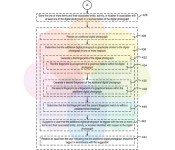
Tagging greatly simplifies photo searches, but it can be a cumbersome process — just ask anyone who has typed in keywords for dozens of vacation shots. It may be more intuitive if Apple implements the voice tagging from a newly published patent application, though. The technique would let mobile-device users describe images using natural-language voice commands, with social networks and other info filling in the gaps. Say “this is us at the beach” and the software would tag not only you and the location, but also anyone else who was scheduled to come along on the trip. It could even auto-tag photos once it recognizes people and scenes. There’s no certainty that iOS will get any of the new voice features, but don’t be surprised if you can eventually ask Siri to sort out your iPhone photo gallery.
Filed under: Cellphones, Software, Mobile, Apple
Via: AppleInsider
Source: USPTO

