



Google’s Made with Code encourages girls to embrace computer science

Less than one percent of high school girls are interested in computer science, but Google wants to alter that script with a new initiative called Made with Code. Created in conjunction with heavy hitters like the MIT Media Lab, Chelsea Clinton and the Girl Scouts of the USA, the campaign connects girls with coding resources, inspirational videos and more. The effort sprung from Google’s own research showing that kids are more likely to get excited about computer science if they try it at an early age and are shown how it can benefit their careers. It hopes the effort will help girls to not just consume technology, but also use it as a creation tool in whichever profession they choose.
One project will have girls designing 3D-printed Shapeways bracelets using Blockly visual coding and creating animated GIFs or music beats. Meanwhile, The Girl Scouts will introduce its network to Made with Code and encourage them to complete their first coding experience. There are also videos featuring high-achieving women who use programming to fight cancer, create 3D animations and design dance sets, to name a few. Google has also created resources for parents and put aside $50 million over three years to encourage female students to get into computer science. The event will kick off tonight in New York with 100 local teenage girls, who’ll try some coding first-hand and see it used by women like Danielle Feinberg from Pixar. Overall, Google’s message to girls is that coding isn’t just for engineers, but is rather a “tool that lets you write your story with technology.” Naturally, we couldn’t agree more.
Source: Google

Intel launches messaging app that lets you speak through video avatars

It’s easy to think of Intel as a hardware company, the sort of chip-making giant that helps build wearables, cable-free laptops, smart baby onesies. Today, though, the company is showing off software, for a change. The chip maker just unveiled Pocket Avatars, a mobile messaging app that lets you send video messages to friends. Actually, “video messages” doesn’t really describe it. These aren’t so much videos as 3D avatars that happen to speak in your voice. In particular, the app makes use of facial recognition — a pet project of Intel’s — to mimic gestures like nodding, blinking, sticking out your tongue, and raising your eyebrows. All told, it’s a lot of real-time processing, which means the messages are going to be fairly short: You’ve got 15 seconds to say what you want to say.
The app, available today for iOS and Android, includes an avatar store of sorts, where you can download 45 avatars, either for free or 99 cents. Of the bunch, you’ll find some familiar characters, including those from the Lego series, Gumby, Care Bear and The Jim Henson Company (gotta give Intel credit for being thorough in its avatar-making deals, we suppose). In addition to sending to folks in your contact list, you can also post your clips to the usual services — Facebook, Twitter, et cetera. That doesn’t mean you should (we might unfollow you), but hey, at least it sounds less annoying than Slingshot.

The Fire phone is Amazon’s ultimate hardware weapon

Amazon’s first phone is finally here. But what makes it such a curious little device isn’t all that (lackluster) 3D, head-tracking stuff; it’s Firefly, the company’s new visual search engine. Amazon may have been born unto the internet as a modest bookseller, but it’s now become a services company: There’s the Kindle Lending Library for e-books, plus streaming services like Amazon Instant Video and Prime Music.
Amazon’s also a hardware maker. And this time, the company’s made something that lets you text mom and use a powerful image-based search system to shop Amazon.com with one touch. It’s the Fire phone, and it feels like the inevitable marriage of Amazon’s device and services initiative.
The thing to remember about the gadgets that Amazon and Lab 126 (its Research and Development division) craft is that they’re, on some level, mere shells. You don’t buy a Kindle Fire tablet because it’s intrinsically beautiful — you buy it because you want to read e-books, or watch movies or listen to music that comes as part of your annual Prime subscription. These Fire devices feed directly into the company’s myriad services. They’re no more than conduits for the sheer amount of content Amazon has on offer.
That said, the physical device still matters. As Amazon CEO Jeff Bezos pointed out today, making hardware is, well, hard and making good, truly valuable hardware is doubly so. The annals of smartphone history are littered with high-profile failures like Microsoft’s Kin and both of Facebook’s now forgotten phones. It’s a problem the Fire phone team grappled with, as Bezos even admitted on stage today. How do you make a smartphone that stands out amidst a sea of competitors with more experience? The answer, Bezos found, had nothing to do with specs.
“The thing to remember about the gadgets that Amazon and Lab 126 craft is that they’re, on some level, mere shells.”
Amazon’s approach to smartphone differentiation was multi-pronged: a focus on real-time customer service with pre-existing features like Mayday and alternative user interface controls and perspectives — what Amazon calls Dynamic Perspective — made possible by all those front-facing cameras. But really, it’s Firefly that seems like the real game changer for Amazon’s Fire phone.
It’s hard to overstate just how important Firefly really is. With a single press on the dedicated Firefly key, your Fire phone can recognize the material world around you. Firefly can detect and identify audio from the radio or TV similar to the way a service like Shazam does. It can also scan works of art, DVDs, books or tchotchkes sitting in front of you and return relevant information and shopping links.
Amazon’s tried stuff like this before, naturally. Remember the Dash? You could use that little LED scanner to identify your groceries by bar code and stick them in your virtual shopping cart. With the Fire phone and Firefly, Amazon has lifted that restriction on bar codes. In a sense, it’s turned the world around you into one giant showroom. Scan what you want — anything at all, really — and there’s a decent chance you’ll be redirected to an info page with a “Buy From Amazon” link mere millimeters away from your fingers.

Amazon CEO Jeff Bezos demos the Fire phone’s new visual search.
Firefly’s beauty is that it does more than just let you buy stuff; Amazon isn’t that shortsighted. It’ll show you related Wikipedia articles for objects of interest. It can show you book reviews and recognize phone numbers from street signage. It’s just useful. And if you decide you want to buy anything you’ve discovered, well, it’s right there. That lack of friction, that inherent usefulness, that subtle blurring of the line dividing the real world and Amazon’s virtual shelves — those factors could make the Fire phone the most potent selling tool the company has ever created, and you may not even notice it.
“With the Fire phone and Firefly, Amazon has lifted that restriction on bar codes. It’s turned the world around you into one giant showroom.”
Of course, all this won’t amount to much if Amazon can’t move massive numbers of Fire phones. In the months and weeks that led up to today’s unveiling, pundits called for a phone that merged worthy performance and a rock-bottom price tag. Clearly, Amazon wasn’t paying attention to the hoi polloi — the Fire phone starts at $199 with a contract and it’s an AT&T exclusive. Right out of the gate, Amazon’s looking at a limited market with that carrier lockdown. Sure, the Fire phone might be a tempting lure for customers that have already gone all-in on Amazon’s Prime ecosystem. But with so many impressive smartphones currently retailing for that same price, the Fire phone’s likely to go unnoticed by the iPhone crowd Amazon’s chasing after.
Filed under: Cellphones, Wireless, Software, Mobile, Amazon

Google Hangouts v2.1.311 Update Rolling Out [APK Download]

It is that happy time of the week where we all expect Google to push out updates to a wide range of their apps that we all use and love. So far this morning we have seen a small bug fix and performance update go out for Google Drive and an update for Google Hangouts. The new Hangouts update moves it v2.1.311 from v2.1.224. It isn’t a milestone update with a ton of new features, at least not that I can tell. The only significant visual change that I noticed is a drop down menu to change which account you are using.
Seems to me that this used to be there before, but as you can see in the screenshots above it wasn’t present in the previous version of the app. Also the settings for your accounts has changed. Now it gives you all your accounts in one list to change the settings for each. (as seen below. New on the left, old on the right.)
I did notice one other minor change, one Emoji got a color change from orange to white. Not a big deal really.
Head to the Play Store and check and see if the update is waiting for you and pick it up. If it isn’t and you just can’t wait, then hit the link below to pick up the APK and install it on your own.
[Update] Well, that didn’t work out so well now did it. I didn’t notice the change account on the previous version that was on my other phone because I just flashed it and only signed in with one email address.
Google Hangouts v2.1.311 APK download
//<![CDATA[
ord = window.ord || Math.floor(Math.random()*1E16);
document.write('’);
//]]>

Atari to bring RollerCoaster Tycoon 4 Mobile to Android this Winter
Atari is a name that many of you will be familiar with. The younger generation might not be very familiar with the company that pioneered the gaming industry so many years ago. In a recent press release that just hit our inbox Atari announced a few things that they will be doing to make a corporate comeback.
“Atari is more than a game publishing company; it’s an iconic brand that has established a passionate and timeless culture,” said Fred Chesnais, Chief Executive Officer, Atari, Inc. “Known across multiple generations around the world, Atari will continue to embrace all audiences. What the company has accomplished over the years is no small feat, but there is more to come. We’re looking forward to delivering on our new strategy and engaging with our audience in new ways across multiple channels as the next era of Atari unfolds. We are leading a rebuilding exercise in a highly volatile industry, so at the same time we are also aware of the challenges that lay ahead.”
 A few bullet points from the release shed light on plans for social casinos, real-money gambling and YouTube with exclusive video content. We are a bit more interested in their mobile endeavors though. The current Atari offerings in the Play Store are slim with a greatest hits title and a stand alone Centipedes: Origins and Circus Atari. A small mention near the end of the release is what caught our attention though. Later in the winter of this year, Atari will be bringing RollerCoaster Tycoon 4 Mobile to Android.
Unfortunately that means the iOS users have a big jump on the game as it has been available for a number of months already. Such is the way of mobile games though. I remember spending countless hours building parks and creating roller coasters from the ground up. Atari also mentions there will be a multiplayer PC version coming around the same time. So that should be cool, as long as they don’t make it some silly Facebook game.
Will RollerCoaster Tycoon 4 Mobile be on your wishlist until it is launched? I know I will be setting reminders to check back in the next few months.
//<![CDATA[
ord = window.ord || Math.floor(Math.random()*1E16);
document.write('’);
//]]>

‘No Man’s Sky’: the game that ‘won’ E3 2014

Ever heard of Joe Danger? That’s okay, you’re not alone — most folks haven’t heard of the motocross-based platformer, despite it receiving glowing praise from critics and earning healthy sales from gamers. That said, if you followed last week’s annual game industry trade show, E3, you’ve likely heard of No Man’s Sky. The same small team of scrappy Brits that created the cartoony Danger series, Hello Games, is applying its years of game industry experience to a much more ambitious project in No Man’s Sky. This is how Hello Games lead Sean Murray described the game at Sony’s E3 2014 press conference:
“We’ve created a procedural universe. It’s infinite, and it’s one that everyone can share. We’re gonna start every player on a different planet so no two people will have the same experience. This universe we’ve created…it’s so vast, it’s so boundless, it’s actually infinite, and we don’t even know what’s out there.”
So, how in the world did a team of four game developers transition from indie hit makers to triple-A rogues? We asked Hello Games just that, late last week in an evening demo session for No Man’s Sky.
” I couldn’t picture myself turning around and working on a game that’s the same scale of Joe Danger.”
The last time I saw Sean Murray and David Ream, they weren’t quite so serious. The previous games from their 10-person studio, Hello Games, are great in their own way, but not anywhere near the scope or scale of No Man’s Sky. Not by a long shot. Let’s run a quick comparison, just so you’re clear. Here’s Joe Danger for PlayStation 3:
Here’s No Man’s Sky for PlayStation 4:
Pretty major difference, no? Murray says it was an intentional move to go bigger, but not their only intention. “We were really pleased with the success and stuff, but our ambitions were much bigger, I think. I couldn’t picture myself turning around and working on a game that’s the same scale of Joe Danger,” Murray says.
Beyond that, Murray and co. wanted to break out of the game-development formula. They were tired of beginning development by asking, “What type of game are we making?” and going from there. “You start to have conversations like, ‘We’ll make a platformer next! We’ll make a point-and-click adventure,’ or something like that. And you’re not pushing yourself as a developer. We wanted to try and do something really landmark,” Murray says.
Sound arrogant? That’s a measure of text not conveying tone. Every time Murray made a statement like that during our half-hour meeting, he’d couch it with a statement like, “But we didn’t talk about it [in] that kind of arrogant way or cocky way,” abashedly looking away. Even in his statements above, he can’t help but add caveats like, “I think,” as he goes (I’ve cut out most, for your sake). This is a man with grand ambitions and, thankfully, a sense of self-awareness.

I begin our piece on No Man’s Sky with this profile of Murray and co. for good reason: There’s pedigree, heart and passion backing up the seemingly too grand plans for the space-exploration game. It’s important to understand not just the background of the team in terms of resume — Criterion, Kuju, Sumo Digital — but also the people that make it up. These are the kind of guys who appear on a podcast late at night after a long day of showing their game on a loud conventional hall show floor. It’s for all these reasons I have tremendous faith in their ability to pull off No Man’s Sky as they describe it.
“Can I see myself doing this on that indie circuit? Going to PAX every year and killing myself on something that long-term isn’t … am I gonna look back on it? Will they all blur into one?”
Hello Games is an indie studio. There are 10 staffers. Four of them went dark internally to concept No Man’s Sky (including Murray and Ream), and even now, the four-person team that initially created the project works closely together. They’re not scaling up for No Man’s Sky, either; the game was built around the concept of a small team creating a massive project. It’s procedurally generated and it’s made of voxels. But what does that mean?
For one, it means that the usual army of artists required to create the artwork of a massive game aren’t required. Murray explains: “Our artist, just like on any normal game, builds something like this: a tree. And he would have to build dozens, or maybe a hundred of these, to create a forest. And then if you had another forest with a different type, then you have to build a different type of tree. Another several dozen.”

All of those trees take time and money! While third-party solutions like SpeedTree exist (which creates a whole bunch of virtual trees), small teams aren’t exactly flush with cash for extra software. So, instead of the standard operating procedure for game development, Hello Games built a system to create all that time-intensive stuff — known as “assets” — for them. Even better, that system creates on the fly, based on a variety of parameters, meaning no two planets/creatures/ships/trees are exactly the same. The system solves two problems at once: producing all the assets of the game (music included) and making the game infinitely explorable.
If no two planets are the same, then the world is infinite — there’s no reason to stop exploring, which is exactly what Murray wants. There aren’t defined goals or conflict in the game just yet, nor a quest log or some form of points/scoring. He’s only vaguely hinted at the gameplay of No Man’s Sky beyond exploration; your ship has a weapon to fire, and the dinosaur-like creatures in the E3 demo could absolutely stamp you out with a single step. There are resources to gather, and Murray sent out a pulse to scan for said resources in the demo we were shown. What you’ll do with those resources is another question; there are many, many questions about the game of No Man’s Sky, though we’ve got a pretty clear picture of what its world will be.
“If you play it, I want you to play it not because you’re interested in indie games. I want you to play it because you prefer it to Call of Duty, not because it’s more ‘legitimate’ or ‘credible’ or something like that, but because it’s more entertaining.”

No one I spoke to at E3 2014 said, “No Man’s Sky looks pretty great for an indie game.” They all just said, “That game looks crazy!” This is an important distinction, and one that Hello Games says it’s glad to hear. This was also intentional. “That’s really meaningful to me,” Murray says. “I wanted to make games, and have spent a long time being ‘the indie dev.’”
Not that there’s anything wrong with that, of course. Indie devs make great games, and even some of the world’s most popular. Minecraft was created by a single man. Rovio was a small studio when it stumbled on a hit with Angry Birds. Hell, Oculus VR mostly exists from Palmer Luckey tooling around in his spare time.
But there’s still a separation. The three aforementioned indies all broke out of that world into the mainstream, and Murray’s aiming to repeat that success for Hello Games. It’s not the only goal, of course, but it is a concern to Murray personally with No Man’s Sky. “We don’t actually want the story to be, ‘Oh they made it with a handful of people,’ or whatever. We just want it to be good.”
The good news for Murray and co. is that all of us — the folks who play games — also “just want it to be good.” With an unannounced release date and only PC and PlayStation 4 platforms named thus far, Hello has the flexibility with expectations to impress us all. Now all they have to do is do it.
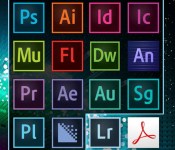
Adobe overhauls Creative Cloud with new touch features and cheaper pricing

Adobe updates don’t get the same amount of attention that they used to. No doubt, this is largely due to the company’s Creative Cloud platform, which pushes gradual improvements to more than 1 million subscribers automatically. But the company reckons there’s still room for major overhauls every once in a while, and it claims today’s is the “biggest software release since CS6.” The update brings new features to pretty much all of Adobe’s desktop applications, as well as four new mobile apps (which we’ll get to in a minute), plus a permanent $10-per-month subscription deal for access to Photoshop CC and Lightroom CC (which has already been widely available through time-limited offers.)
There’s no room here to go through all the new features — Adobe’s website can take care of that — but there are a couple of Photoshop additions that stand out to us as especially useful. These include pinch-to-zoom and enhanced brush strokes on Windows 8 touch devices, as advertised during the launch of Microsoft’s Surface Pro 3, plus a Focus Mask for quickly selecting and editing areas of an image that are in or out of focus — something that sounds very handy for portrait shots.
Finally, a quick look at the new mobile apps: Two of these, Sketch and Line, are designed to accompany Adobe’s latest digital pen and ruler peripherals for the iPad, which Billy Steele has just written about in a separate article. Photoshop Mix is a third app that lets you work with PSD files stored in your Adobe cloud drive, and it was built using an SDK that will soon allow third-party developers to integrate PSD workflows and Creative Cloud access into their own apps. Lastly, Lightroom mobile has arrived on the iPhone as well as the iPad, allowing quick access to organization and editing tools right from your handset — check out our full review of the iPad version for more.
Filed under: Software

Fleksy brings a predictive messaging app to the Gear 2 smartwatch

Fleksy’s already brought its intuitive touch keyboard to the Galaxy Gear, but now Samsung’s smartwatches all run Tizen, it needed an upgrade to operate on the phone maker’s own OS. That’s exactly what the company has done with the release of a new messaging app for the Gear 2 smartwatch, which delivers a diminutive yet fully-featured predictive keyboard capable of accessing your SMS conversations and contacts. As a dedicated messaging app, it also handles all of the heavy lifting, letting you send and receive messages directly from your wrist. In order to operate, the app syncs with your Samsung smartphone, which Fleksy says “integrates all information from both devices.” There’s no word on whether you’ll be able to load Fleksy Messenger on the original Gear, but it is now available as a free download from Samsung Apps. Hopefully an enterprising developer will port it over.

Twitter restores accounts and tweets previously blocked in Pakistan

The reversal of the block might answer critics that argued that the social network’s current policy gave too much power to the already powerful — allowing censorship from agencies and agents even if their country hasn’t afforded them the right to do so. We’ve added the rest of Twitter’s explanation after the break.
“We always strive to make the best, most informed decisions we can when we’re compelled to reactively withhold identified content in specific jurisdictions around the world. On May 18, 2014, we made an initial decision to withhold content in Pakistan based on information provided to us by the Pakistan Telecommunication Authority. Consistent with our longstanding policies we provided notice to all of the affected account holders and published the actioned takedown requests on Chilling Effects to maximize transparency regarding our decision.”
Filed under: Software
Source: Chilling Effects

Adonit’s latest Jot Touch stylus works with Adobe’s cloud software

Adonit, the company known for its artist-oriented iOS styluses (stylii?) has just released a new model: the Jot Touch with Pixelpoint. The “Pixelpoint” term refers to the fine point 3.1mm tip that Adonit claims is more artist friendly than a regular stylus. For further fine control, the pen has a thinner design and 2,048 levels of pressure sensitivity (which requires an iOS device with Bluetooth 4), along with 2 shortcut buttons. Finally, the company says the new Jot Touch is the first stylus to work with Adobe Creative Cloud (via Adobe’s Line and Sketch apps), allowing users to access their Jot files, copy and paste between devices and use Adobe’s Kuler color picker. The Jot Touch with Pixelpoint is now available from Adonit for $120, and you should be able to grab Adobe’s Sketch and Line apps soon at the App Store.
Filed under: Cellphones, Tablets, Software
Source: Adonit

