


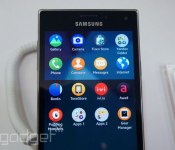
Samsung’s first Tizen phone slips further into the future

Samsung’s Tizen mobile OS already powers a pair of smartwatches, but what about those smartphones we’ve been promised for so long? Well the company’s first consumer-ready Tizen phone — the Samsung Z — was supposed to make its official debut at a developer event in Moscow yesterday. Of course, the key words there are “supposed to”. To hear the folks at the Wall Street Journal tell the tale, there was a Tizen event for enthusiasts, but Samsung quietly pulled the plug on the Z’s launch days earlier.
Don’t worry, the phone’s not dead yet. Samsung eventually confirmed to The Verge that it plans to keep fleshing out the OS and the ecosystem that sustains it, but phone no longer has an official launch date. Why? No one’s quite sure yet, though at least a few who attended that Russian shindig thought Samsung might’ve pushed back the launch because of a dearth of decent apps. That may well be the case, but if it is, it isn’t for lack of effort on Samsung’s part. The Korean mobile giant has a list of notable software partners and has tried to inspire developers with Tizen app contests. Maybe, just maybe that’s not enough.
This isn’t the first time a Tizen device launch has gone awry, either. Samsung originally planned to release one in Japan earlier this year before carrier NTT DoCoMo put the kibosh on it, citing an already-crowded field of competitors. That’s not going to change. If anything, those entrenched players are going to hunker down ever more as time marches on. If Samsung decides to wait for the golden moment to release its side project unto the world, we may be waiting for our Tizen phones for a long while.
Filed under: Mobile
Via: The Verge
Source: Wall Street Journal
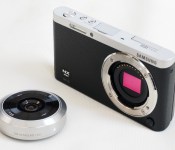
Samsung NX mini review: a $450 mirrorless cam that fits in your pocket

It’s been a long journey, but Samsung’s managed to build out a compelling camera lineup that has something for everyone. Pros can get the high-end NX30; cameraphone addicts can pick up the Galaxy K Zoom; and selfie fanatics will probably go for the $450 NX mini, a tiny interchangeable-lens camera with a flip-up LCD that fits in your pocket. It’s that latter model we’re checking out today, and while it’s hardly a professional workhorse, Samsung’s entry-level mirrorless cam is a practical choice for the largest demographic any electronics manufacturer could hope to target: regular people.
The biggest selling point here is a super-slim, lightweight body that you can slip into a handbag, or even a pants pocket. Without a lens attached, the NX mini is no larger than many compact point-and-shoots, and when you stick on the 9mm (24.3mm, 35mm equivalent) f/3.5 kit lens, it’s not much thicker. There’s a 1-inch, 20.5-megapixel CMOS sensor that’s identical in size to what you’ll get with very high-end compacts, like the $800 Sony RX100 M3, but quite a bit smaller than the APS-C sensor manufacturers include with mirrorless cameras like the Alpha 6000 or the aforementioned NX30.
Hardware

Of course, a slim design also means you’ll have to put up with some limitations. There are only a few buttons on the rear, and they’re adorably small. They’re adequate for petite hands, but many adults will need to use a fingertip to do things like accessing the menu, switching to a different mode or reviewing captured images. There are miniature buttons on the top, too, for turning on the power or launching into Samsung’s WiFi mode. Fortunately, the shutter release is nearly full-size, and once you launch the menu, you can adjust many settings simply by tapping the 3-inch, 480 x 320 touchscreen, which also flips up 180 degrees for self-portraits, or at any angle in between for shots below eye-level, or overhead if you flip the camera upside-down.
Another peculiarity is the microSD card slot, which Samsung’s now including with many of its point-and-shoot cameras. It’s not like microSD cards are difficult to come by or much more expensive than their full-size counterparts these days, but they are tricky to insert. Plus, they’re incompatible with most laptops for downloading pictures and video (without an adapter), and very easy to misplace. The battery, however, is large enough for full-day shoots, at 2,330mAh, and the camera charges via micro-USB, which I prefer personally, though some users will want to have an external charger (which you won’t find in the box).
User interface

As for the UI, there’s nothing out of the ordinary here. You can control just about everything using the touchscreen, though you can also use the four-way controller on the side to navigate if you prefer. Settings are limited, and therefore relatively straightforward, so you should be able to find what you’re looking for with only a few taps.
There is a dedicated mode button, but there’s no room for a dial, so you need to tap the screen to move among auto, smart, program, aperture or shutter priority and manual options. Once you’ve made your pick, you can tweak settings using a touchscreen function menu. In manual mode, this can be a bit cumbersome, since you need to go back in the menu to adjust aperture and shutter speed. But this probably isn’t a camera most owners will use with a manually dialed-in exposure.

There’s also a WiFi mode, which lets you access a variety of wireless sharing options. You can use MobileLink to send photos from the camera to a smartphone or tablet, or Remote Viewfinder, which miraculously lets you access all of the NX mini’s shooting modes, including manual, from another device. You also have access to Samsung Home Monitor, which requires its own smartphone app and lets you use the camera to keep an eye on a child, for example, assuming your camera and phone are connected to the same WiFi network. Additionally, you can back up photos via WiFi, post directly to the web or send pictures in an email, all directly from the camera.
Performance and battery life

I really enjoyed shooting with the NX mini. The camera performed as expected every time when shooting outdoors or in decent lighting conditions — low-light photos didn’t turn out nearly as well (more on that in the image quality section below). The camera is fairly quick to boot up and you only have to wait a moment for the bundled 9mm lens to extend. There is a noticeable amount of focus hunting, but in bright light you can fire off a shot very quickly. Dim scenes are another story, but the NX performed reasonably well when the (oddly green) focus-assist light was turned on.
The camera offers a few positive surprises on the performance front, including a 6 fps consecutive-shooting mode that lets you capture full-resolution RAW or JPEG images. If you’re willing to settle for 5-megapixel shots, you can also choose from three burst modes, including 10, 15 and 30 frames per second. The clever selfie mode launches as soon as you flip the display forward — you can access it directly even when the camera’s powered off. When you press the shutter release, the camera will start a three-second countdown, giving you enough time to reposition before it captures an image.

There’s a 1/16,000-second maximum shutter speed, letting you shoot at larger apertures in bright sunlight, though even at f/3.5, you won’t capture much bokeh (blurred backgrounds) due to the smaller sensor size. The sensitivity ranges from 160-12,800, or 25,600 in extended mode, while videos can be captured at 1080p, 720p, VGA or 320 x 240, all at 30 frames per second. Battery life is rated at 650 shots with the 9mm lens or 530 shots with the 9-27mm zoom lens. That should get you through a full day of shooting on vacation, assuming you don’t spend hours reviewing pictures on the display or transmitting photos via WiFi.
Image quality
The NX mini has a 1-inch sensor, so it’s reasonable to expect image quality to be superior to what you’d get with a typical point-and-shoot. But the camera’s no match for higher-end mirrorless models or even an entry-level DSLR. I did some casual shooting over the span of one month in San Francisco, Taipei and Austin, Texas. Results were generally quite solid with daytime shoots, but indoor photos and shots captured at night fell a bit short. The 9mm pancake lens excludes optical image stabilization, so captures at slower shutter speeds are often quite blurry, particularly when you’re holding the camera at a distance to shoot a selfie. Let’s take a look at some samples.

Here’s a typical group selfie. The camera opted for an f/3.5 aperture at 1/30 second, with a sensitivity of ISO 3200. That would have been fine when paired with image stabilization, but without OIS, what you get is a blurry mess. If you’re taking similar selfies in low light, capture several frames at once or use the built-in flash to guarantee a usable image.

This f/3.5, 1/30-second exposure was much more successful, thanks to a nearby table that helped to prop up the NX mini. Noise is barely visible at ISO 1600, even in the 1:1 inset view, and colors and exposure are accurate.

With instant access as soon as you flip up the LCD, it’s easy to capture spur-of-the-moment selfies, such as this f/3.5, 1/30-second exposure at ISO 1600. Unfortunately, the camera opted to focus on the background, though even details there are slightly blurry due to the absent OIS.

Ordinary daytime shots turn out just fine, such as this f/6.3, 1/125-second exposure in downtown Austin. Details are sharp, and there’s not much noise to speak of, thanks a sensitivity of ISO 200.

Like the supported selfie up above, this f/3.5, 1/8-second night scene in San Francisco is relatively sharp thanks to a nearby table, which served to anchor the camera. Captured at ISO 3200, noise is visible in the 1:1 inset, but wider views look fine.

We call this a Tuna taco (Tuna’s the cat). She held perfectly still for this f/3.5, 1/50-second shot, which sports relatively sharp details and low noise despite the high sensitivity of ISO 6400.
The NX mini shouldn’t be your first pick for shooting video. Quality is decent in brighter conditions, but without integrated image stabilization, hand-held shots are shaky at best, as you can see in the sample reel above. The camera also struggled with focus, especially when moving between subjects. The onboard microphone also failed to capture clear audio from a subject just a few feet away. Sharpness and exposure, however, are perfectly fine.
The competition

Samsung’s in a unique position with the NX mini. There isn’t anything quite like it from another manufacturer, though the $450 Nikon 1 S2 offers an attractive, colorful design with a similar sensor size and kit lens range. It’s also quite compact, though noticeably thicker than the NX. If you’re a pro looking for a high-quality camera that you can slip into a pocket, the $800 Sony RX100 M3 is a stronger contender, with a superior lens, better image and video quality and much more comprehensive manual controls. It also has a flip-up LCD and a pop-up electronic viewfinder.
If you’re in the market for a mirrorless camera, but you’re not set on the mini’s compact size, Sony’s $800 (with kit lens) Alpha 6000 is an excellent pick. The sensor is significantly larger, so you’ll get better image quality, particularly in low light, and Sony has a much broader selection of lenses available for its mirrorless series. Samsung’s NX30 is also a solid option, priced at about $800 with an 18-55mm lens. The NX mini is also available in a kit with a 9-27mm (24-73mm, 35mm equivalent) f/3.5-5.6 zoom lens for $450.
Wrap-up

I was skeptical when Samsung first demoed the NX mini, having seen several manufacturers fail to deliver a great camera within a very small package. Pentax’s infamous Q was tiny, but it was also spectacularly overpriced and an underperformer across the board, due in no small part to its small sensor and inadequate lenses. Nikon’s initial lineup of mirrorless cameras, the V1 and J1, fell short as well. Samsung’s NX mini introduction is well-timed, however, with young casual photographers now focused on style and selfies above all else. The NX mini is hardly the most capable mirrorless camera on the market, but at $450 with a lens, it’s a very solid buy.
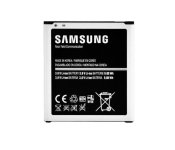
Accessory of the Day: Samsung Galaxy S4 replacement battery

Are you among the millions of Samsung Galaxy S4 owners running around out there? How’s your battery treating you these day? Does it hold up as well as it did when you first got it? Maybe you’re looking for a backup battery to charge up for days when you expect to be out and about more than usual. Why not pick up a new one?
The Samsung Galaxy S4 replacement battery is everything you got in the original model, except way cheaper than you’d expect. At 2600mAh, it’s the same amount of juice in the out-of-box experience. And, yes, the NFC antenna is also present.
At this price you might as well buy a few of them.
The post Accessory of the Day: Samsung Galaxy S4 replacement battery appeared first on AndroidGuys.
Samsung Gear VR is coming and this is what it looks Like
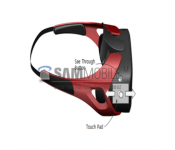
 A few months ago, we heard the rumour that Samsung was ambitiously working on a virtual reality headset that would eventually be used with their own smartphones and tablets. Today, another piece of the puzzle falls into place with the name of the device, the Samsung Gear VR, being leaked and renders and a logo for the device showing up, courtesy of SamMobile. This information was also accompanied by a release date; the Samsung Gear VR will launch alongside the Samsung Galaxy Note 4 at IFA 2014 in September.
 While we’re sure Samsung is perfectly capable of developing their own virtual reality technology, the Samsung Gear VR will actually be developed in collaboration with the best in the business: Oculus Rift. It’s reported that the Gear VR will adopt a similar approach to Google’s recently released Cardboard VR, using your own device docked within the headset to create your environment. That should ideally make the Gear VR quite affordable, much like Google Cardboard, however we don’t know how that lines up with Samsung’s idea of pricing. Probably the only thing that would make the Gear VR more attractive than Google’s offering is better apps at launch, but we’ll have to wait till September to see if it has what it takes.
What do you think about the Samsung Gear VR? Would you consider getting one? Let us know your opinion.
Source: SamMobile via Droid-life
//<![CDATA[
ord = window.ord || Math.floor(Math.random()*1E16);
document.write('’);
//]]>
The post Samsung Gear VR is coming and this is what it looks Like appeared first on AndroidSPIN.
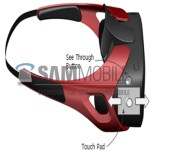
This is what Samsung’s virtual reality headset, Gear VR, looks like

Wondering what Samsung’s virtual reality headset looks like? Well stop wondering, because when it’s announced at IFA 2014 later this year, it’ll look something like what you see above. That’s a render straight from Samsung, care of Sam Mobile. Our sources confirm that, while what they’ve seen isn’t exactly like what’s pictured above, it’s very similar; we’re guessing the render is a closer target to the retail model than the developer kits currently in the wild. Keep in mind Samsung still hasn’t even teased the headset we detailed last month across two reports.
The headset remains a peripheral: you’ll use it in conjunction with your phone, which plugs in via USB and acts as your screen. The hardware is built by Samsung, the software is built by Oculus VR — the folks behind the incredibly impressive Oculus Rift.
Beyond the image seen above, Sam Mobile also says the headset will be showcased at IFA 2014 in early September. Moreover, it’s named — fittingly — “Gear VR,” like Samsung’s other wearable line. The image highlights another feature we’re first hearing about today: a touchpad along the right side. Presumably his will help solve the issue of interaction within the headset’s Oculus VR-built software, which was handled by nodding last we heard.
The report also states that Samsung will make the headset’s software development kit available shortly after it’s announced, just ahead of Oculus VR’s first ever dev conference. Imagine that! We wouldn’t be shocked to hear that every developer at Oculus Connect walks away with a free Gear VR headset, fresh for development.
For now, however, Samsung’s Gear VR is both known about widely and officially unconfirmed by Samsung itself. If it weren’t clear enough, this thing is happening, and it’s happening soon.

Samsung says they are losing profit due to a weak demand for their low-mid tier smartphones

When you think of Samsung you think of high sales numbers. Well, it looks like those numbers are lower than we thought, at least as far as low and mid tier devices are concerned.
Samsung says that their profits will be approximately 24% lower this quarter than it was a year ago. They had to invest extra funds in marketing for their low and mid tier devices in order to sell them, considering they have too much of those lying around in warehouses. Samsung says that there are various reasons for this turn of events.
One of those reasons is a stiffer competition, they don’t mention from which OEM but we’re going to guess Motorola with their Moto G and E smartphones. Although LG and HTC probably have something to say there as well. Another reason they mention has nothing to do with competition though but currency fluctuations. They emphasize this to be the main reason. Won is increasing its value compared to the dollar and that is creating problems for Samsung. Korean-based OEM is quite positive looking forward though, they expect things to change later this year. It is to be expected their upcoming Note 4 device will help with the profits significantly.
Samsung is still selling lots and lots of smartphones. They’re far from being in trouble or anything of the sort. We are hoping this will make them change certain things when it comes to their smartphone offerings though, in other words work a bit harder to bring some improvements to them. What do you think?
Source: NewsWire
Via:: Engadget
The post Samsung says they are losing profit due to a weak demand for their low-mid tier smartphones appeared first on AndroidGuys.
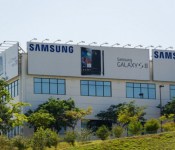
The Brazilian Job: Thieves hit Samsung’s Campinas factory, steal $36 million worth of Gear
 All the action really is happening in Brazil. While the World Cup has been going on, an ambitious heist has occurred in Campinas, Brazil, specifically at Samsung‘s Campinas factory, where thieves have allegedly taken around 40,000 laptops, phones, and tablets that are estimated to be worth $36 million. Samsung has since downplayed the cost of the goods stolen, but that doesn’t take away from the magnitude of the heist itself.
In fact, so impressive was the heist that it is suspected that the thieves had inside help within the factory. It is alleged that the thieves hijacked a company shuttle to get inside the complex, where they then took hostages and took their phone batteries so they could not call for help. Furthermore, stealing that number of devices could not have been so efficient without precise knowledge of exactly where those things were within the complex. That, or they might have been Ocean’s Eleven. Either way, it’s unlikely that the devices will ever be returned, and it’s unclear if Samsung is going to investigate their staff to uncover potential insiders.
What do you think about Samsung getting stolen from? Let us know your thoughts in the comments below.
//<![CDATA[
ord = window.ord || Math.floor(Math.random()*1E16);
document.write('’);
//]]>
The post The Brazilian Job: Thieves hit Samsung’s Campinas factory, steal $36 million worth of Gear appeared first on AndroidSPIN.
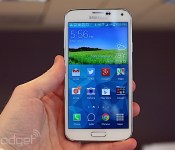
Samsung admits ‘weak demand’ for its phones is damaging profits

Samsung’s marketing budget has always been vast, but in the last quarter it was far larger than even the manufacturer itself would have liked. The company admits that it’s been forced to spend extra money on promotions for older and lower-end devices that have been filling up its warehouses due to “weak demand.” This dip in trade, combined with the extra spend on publicity, is causing the company’s recent, gradual profit decline to quicken: it now expects to earn around 24 percent less this quarter than it did a year ago, with underlying sales down by an estimated 8-11 percent.
Samsung claims the main underlying causes are stiffer competition in Europe, especially in the low- and mid-range parts of the market (presumably from the likes of Motorola), as well as a tougher climate in China, where many buyers are choosing to hold out for 4G phones rather than picking up current 3G models. The manufacturer also says that its 7- and 8-inch tablet sales, which have already been suffering from a slow upgrade cycle, are further being cannibalized by sales of 5- and 6-inch phablets.
On the other hand, Samsung claims that one of the biggest sources of its financial pain has nothing to do with smartphones or market saturation, but instead results from currency fluctuations: the won has been steadily increasing in value against the dollar, which isn’t good news for any Korean exporter. The company “cautiously” expects a “more positive outlook” later in the year, thanks to the release of a new smartphone lineup (likely a reference to the Galaxy Note 4 and other devices coming during the fall), while also hoping that its marketing spend will fall back to normal levels.
Filed under: Cellphones, Tablets, Mobile, Samsung
Via: WSJ Digits
Source: Newswire
Intel, Samsung join forces to streamline connectivity for the Internet of Things

The upside to connected devices is pretty obvious: From smart thermostats to smartphone-controlled light bulbs, these gadgets have the potential to make our lives easier. There is a downside, though and it’s a pretty significant one; with so many companies trying their hands at the Internet of Things, there’s an ever-growing list of protocols for getting gadgets connected. And considering that the IoT market is projected to reach 212 billion devices by 2020, it’s pretty much guaranteed to be a huge mess if products continue to run independently of each other. One universal spec allowing interoperability across all kinds of devices would help to simplify things, and that’s what Intel, Dell, Samsung and other tech giants hope to achieve with the just-announced Open Interconnect Consortium.
Another IoT consortium, you ask? Truth be told, there are already several groups pushing for standards in this space. LG, Qualcomm and others have put their weight behind the AllSeen Alliance, and Intel’s even involved in another called the Industrial Internet Consortium, which addresses the architecture and data requirements for connected machines on a larger scale. The new OIC, on the other hand, is more concerned with consumer and enterprise use cases (at least for the time being), and it will produce an industry standard to improve device-to-device connectivity. According to Intel, the participating companies will develop a certification program along with the new IoT protocol spec. The OIC will initially focus on open-source code for smart home and office scenarios, with specs tailor-made for connected cars and the healthcare industry to follow. For consumers, though, the bottom line is that connected devices could someday be sold with a OIC sticker on the package, letting you know that the smart door lock you’re eyeing meets the consortium’s requirements for interconnectivity.
Filed under: Networking, Internet, Samsung, Intel
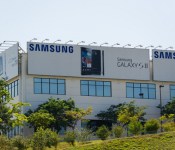
Thieves nab 40,000 Samsung devices through a daring Brazilian heist

When you think of gadget thefts, odds are that you picture muggings or smash-and-grabs at stores. Apparently, one group of thieves in Brazil had far more ambitious plans — it raided Samsung’s factory in Campinas (shown here) and stole more than 40,000 laptops, phones and tablets that police estimate are worth $36 million. Reportedly, the heist played out much like a movie. The bandits both hijacked a company shuttle to get inside and took some of the workers hostage, going so far as to confiscate phone batteries so that no one could alert the police.
None of the culprits have been identified, and Samsung contends that the actual value of the stolen goods is lower. However, authorities suspect that the crooks had inside help; they knew not just how to get in, but also where they would find certain valuables. Samsung will try to prevent a “repeat incident,” but a lot of damage has already been done. Those devices likely aren’t coming back, and future production runs might not be safe if the robbers really did get assistance from corrupt workers.
[Image credit: Yasuyoshi Chiba/AFP/Getty Images]
Filed under: Cellphones, Laptops, Tablets, Mobile, Samsung
Source: MSN (translated)

