


Samsung Galaxy S6 Full Spec List Gets Supposedly Leaked
Bits of information about the Samsung Galaxy S6 have come about recently, but today it looks like the full spec list has leaked out to the public. BGR got a hold of the list, and apparently they have also seen the new flagship phone in images that were sent to them from a reliable source. […]
The post Samsung Galaxy S6 Full Spec List Gets Supposedly Leaked appeared first on AndroidSPIN.
Size does matter: larger iPhone 6 brings the smartphone war to Samsung’s home ground

For years, consumers have been demanding larger screens and have placed their buying power behind original equipment manufacturers (OEMs) willing to give them what they want. Apple, slowly accepting the consumer demand despite the vocal minority’s laments, has finally delivered a modern screen size to its iPhone products with the launch of the iPhone 6 and iPhone 6 Plus.
This news is old and has been talked about for months now, obviously. What is new, though, is the data showing that Apple’s size upgrade with the iPhone has hit Android OEMs in an unlikely location: their home countries. Counterpoint Technology Market Research, an Asian-based consulting firm that delivers data-driven analyses of market trends, has released a report detailing Apple’s newest attack on the Asian front.
If you’ve ever wondered where Android OEMs get their huge competitive strength from despite Apple’s dominance in western markets, it’s due to their widespread popularity in the eastern and emerging market regions. Apple has been fending off the likes of Samsung in places like the United States, while not being able to make much headway against them, because the iPhone simply wasn’t that desirable of a product on the other side of the Pacific. Until now, that is.

Counterpoint reports that from May 2014 to November 2014, Samsung’s presence in Koreans’ pockets dropped nearly 20%, while Apple saw a huge boost of nearly 25% especially after the iPhone 6 and 6 Plus’ release. Tom Kang, Counterpoint’s research director in Korea had the following comment: “No foreign brand has gone beyond the 20% market share mark in the history of Korea’s smartphone industry. It has always been dominated by the global smartphone leader, Samsung. But iPhone 6 and 6 Plus have made a difference here, denting the competition’s phablet sales. Korea being the world’s highest penetrated phablet market (handsets with 5” above screens) earnestly needed a large screen iPhone for quite a time and now this thirst has been quenched. If there was a better supply of iPhone 6 & 6 Plus 64GB & 128GB models during the month then Apple’s share could have climbed to the 40% level.”

An even bigger jump for Apple took place in Japan, a location where Apple sales have generally done better historically than in other Asian markets. In November 2014, it finished out with a record 51% in sales.
In China, iPhone sales rose sharply as well, but still fell behind Chinese favorites Xiaomi and Lenovo. It took the two combined, however, to stay ahead of the singular Apple entry.
Perhaps Apple took a page from Samsung’s playbook: don’t listen to the old-guard technology junkies and look to what real people want. Apple die-hards in the blogosphere might rail against the larger screens and other new technology, but at least half of the US segment owns a large-screen Android device and an unfathomable percentage of the population overseas owns one as well. So Apple ditches the squeaky wheel in order to compete directly across all fronts and, apparently, it’s working.
As I mentioned back in December, I expect Android OEMs to have a tough 2015 unless they pull their collective heads out of, well, you get the idea.
Source: Counterpoint Technology Market Research
Come comment on this article: Size does matter: larger iPhone 6 brings the smartphone war to Samsung’s home ground
The Galaxy S 6 probably won’t stop Samsung’s profits from sliding for two consecutive years

Samsung has already reported a profit drop for 2014, and many are hopeful things will pick up in 2015. Unfortunately, analysts believe that profits will continue to slide in 2015.
Although final numbers aren’t in for 2014, it’s expected that Samsung’s net profits will have dipped 27.3 percent this year to 22.1 trillion won ($2.03 billion). 2015 will also show a drop, but the good news is that it won’t be as much. Analysts are predicting only about a 6 percent drop to 20.8 trillion won ($1.91 billion) for 2015.
Analysts are still predicting sluggish sales for the Galaxy flagship, which will be the Galaxy S 6 this year. There is just too much competition from other Android manufacturers and Apple has finally joined the larger display party. Better performance from memory chips could help, but analysts appear to be split on that issue.
Once the king of the ring is now the underdog. This is going to be a crucial year for Samsung.
source: Korea Herald
via: G4Games
Come comment on this article: The Galaxy S 6 probably won’t stop Samsung’s profits from sliding for two consecutive years
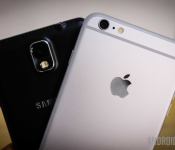
Samsung loses market share to Apple in its home stomping grounds

New market research is showing that Apple has gained market share in Japan, China and Korea. In fact, iPhone sales reached a record high in Japan and Korea during October and November, at the expense of Samsung, Sony and LG.
Samsung is clearly one of the top smartphone makers globally. But in Korea, its home country, it is nothing less than dominant. Samsung historically commands anywhere from 60% and upwards of the smartphone market. However with the launch of the larger iPhones, Samsung has seen some of that dominance erode away.

According to Counterpoint Research’s latest markets report, Apple’s market share in South Korea jumped from below 15% to over 30% during October and November, primarily due to demand for the iPhone 6 and 6 Plus. Tom Kang, Counterpoint’s Research Director in Korea, has even suggested that if there was a better supply of 64GB and 128GB iPhones then Apple’s market share could have reached 40%.
Japan is one of the top premium smartphone markets in the world. Apple has a good track record in Japan, but it was often behind Sony in terms of market share. However with the launch of the iPhone 6 in September, Apple’s market share has jumped significantly. Apple managed to command more than half of the smartphone sales in October, as well as November 2014. Sony was the biggest loser dropping from a high of 30% to just 17%.

In China the iPhone 6 helped Apple achieve a 12% market share, making it the third largest OEM in China behind Xiaomi and Lenovo. According to Counterpoint’s Research Director Neil Shah, “Apple with iPhone 6 & 6 Plus has been able to impact Samsung’s premium Galaxy S5 & Note 4 sales. But with the launch of Xiaomi Note & Note Pro it is going to be a fierce battle in the premium segment, with Samsung being attacked from both ends.”
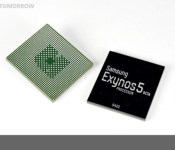
Bloomberg: Samsung to drop Snapdragon 810 in favor of the Exynos chip for the Galaxy S 6

Samsung has been making their own Exynos-branded chips for a while now, and it was only a matter of time until they utilized them on most of their devices. Whether it was production issues or the ability to play nice with LTE, Samsung has always to utilized both the Exynos and the Qualcomm Snapdragon for specific markets, but that might change with the Galaxy S 6.
We have heard a number of rumblings that Qualcomm’s latest and greatest chip, the Snapdragon 810, has overheating issues. Qualcomm wants you to believe there isn’t an issue because the LG G Flex 2 and the Xiaomi Mi Note were both announced using the said chip, but those manufacturers might have made modifications. It was already rumored that Samsung might tone down the use of the 810 in the Galaxy S 6, but Bloomberg is now reporting that Samsung plans on using the Exynos exclusively. According to them, Samsung will go with just the Exynos for all markets.
This is going to be interesting since Samsung has yet to go full-on with the Exynos. Will production keep up and/or will their be communication problems with the LTE bands. We can only assume that Samsung has their ducks in a row, but you can never know for sure until the devices are launched into the real world away from the test kitchens.
source: Bloomberg
Come comment on this article: Bloomberg: Samsung to drop Snapdragon 810 in favor of the Exynos chip for the Galaxy S 6
Samsung Galaxy S6 to launch at MWC 2015, but no LG G4

Mobile World Congress 2015 will be upon us before we know it, and plenty of big names in the industry are preparing to launch new smartphone and wearable products in just over a month’s time.
For starters, Samsung is expected to launch its Galaxy S6 flagship in Spain on March 2nd, as it did in previous years for its Galaxy S2 and S5 smartphones. Apparently, Samsung is still undecided about the final design of the Galaxy S6 and is mulling over a number of prototypes. A Note Edge style curved screen on one or both sides of the display is potentially on the cards and an employee from one of Samsung’s contractors has recently restated the likelihood of a metallic case for the Galaxy S6.
With Samsung smartphone shipments taking a hit last year, the company has some tough decisions to make about this year’s flagship. Samsung is also rumored to have some smartwatches and possibly Tizen related technologies to show off at this year’s event as well.
One company that won’t be unveiling its next flagship at MWC 2015 is LG. A company executive has ruled out a G4 launch so soon, as LG typically launches its flagship smartphone around early May time. Not to mention that it has recently unveiled the high-end G Flex 2 as well.
“We rolled out the G3 in May last year so we do not plan to unveil the G4 at this year’s Mobile World Congress and spend more time perfecting the new phone.”
However, LG will be present to show off some new wearable and IoT devices, possibly in the area of internet connected appliances and more TVs. There is also the potential for LG’s mysterious webOS smartwatch, which was spotted at CES 2015, to make another appearance, perhaps in a more official capacity this time.
Don’t forget, HTC is also expected to unveil its latest flagship on March 1st, along with the company’s first smartwatch. There will be plenty of other gadgets and mobile products unveiled in Barcelona too, and we’ll be there to bring you coverage directly from MWC 2015.
Bloomberg also reporting that the Samsung Galaxy S6 won’t be using the Snapdragon 810 due to overheating
A week ago we heard the first suggestions that the Samsung Galaxy S6 won’t be using the Snapdragon 810 due to overheating issues that Samsung has been experiencing. Today, Bloomberg has also made the same claims, with its sources saying that overheating issues were found during testing and that Samsung isn’t willing to take a risk […]
The post Bloomberg also reporting that the Samsung Galaxy S6 won’t be using the Snapdragon 810 due to overheating appeared first on AndroidSPIN.
Samsung drops Snapdragon 810 in favor of Exynos for Galaxy S6 – Bloomberg

Samsung will be using in-house Exynos chips for the Galaxy S6, dropping Qualcomm’s Snapdragon 810 processor due to overheating issues, a credible report claims.
The report comes from Bloomberg, which cites “people with direct knowledge of the matter.” This isn’t the first time we’re hearing that Qualcomm’s latest high-end chip is suffering from overheating issues – our Robert Triggs explained the problem in detail here, while several independent reports from Taiwanese industry publication Digitimes claimed the same thing.
Samsung has tested the eight-core Snapdragon 810, but the overheating prompted it to opt for one of its own solutions for the Galaxy S6, which is due in March. The Bloomberg report does not specify whether Samsung will use Exynos chips exclusively or just for a majority of its devices. Digitimes previously claimed that Samsung would go for a mix of 90% Exynos to 10% Snapdragon, and gradually increase the share of Snapdragon as Qualcomm irons out its issues.
Overheating aside, Samsung has other reasons to favor its own chips – putting Exynos in the high-volume Galaxy S6 would keep more profits in-group, and the big.LITTLE technology used on Exynos is more mature than Qualcomm’s. Snapdragon 810 is Qualcomm’s first eight-core big.LITTLE chip, while Samsung announced its first big.LITTLE chip in January 2013.
Qualcomm has been a big winner of Samsung’s run at the top of the mobile industry, having supplied chips for a majority of Samsung’s flagship phones. Meanwhile, Exynos chips have been plagued by sub-par LTE integration and performance issues.
LG and Xiaomi both announced Snapdragon 810-powered devices this year. Answering to a Bloomberg inquiry, LG said: “There will be no problem with the G Flex2 phones. We are taking every measure to ensure there will be no overheating problem.”
Samsung Galaxy S6 won’t be waterproof, and neither will the Galaxy S6 Edge
The Samsung Galaxy S6 rumours are still coming in thick and fast today. Today’s rumour says that the Samsung Galaxy S6 won’t be waterproof, and neither will its expected curved edge variant, the Galaxy S6 Edge. This is significant as its predecessor, the Galaxy S5, surprised everyone with its IP67 rated certification, allowing it to be […]
The post Samsung Galaxy S6 won’t be waterproof, and neither will the Galaxy S6 Edge appeared first on AndroidSPIN.
Boost Mobile now offering Samsung Galaxy Prevail LTE
Boost Mobile on Monday began offering its latest Android smartphone, the $130 Samsung Galaxy Prevail LTE. Powered by Android 4.4 KitKat, the handset features a 4.5-inch display, 5-megapixel rear camera, and 2-megapixel front-facing camera. Under the hood you’ll find 8GB storage, a 1.2GHz quad-core processor, 1GB RAM, and a 2000mAh battery. As a refreshed take on the Galaxy Prevail 2, this one also comes with LTE support.
The Samsung Galaxy Prevail LTE can be paired with a variety of Boost Mobile rate plans, starting as low as $35 per month.

